Author: ListingBooster Team

  • AI Marketing for Real Estate Agents: How It’s Used and Where It Fits

    AI Marketing for Real Estate Agents: How It’s Used and Where It Fits

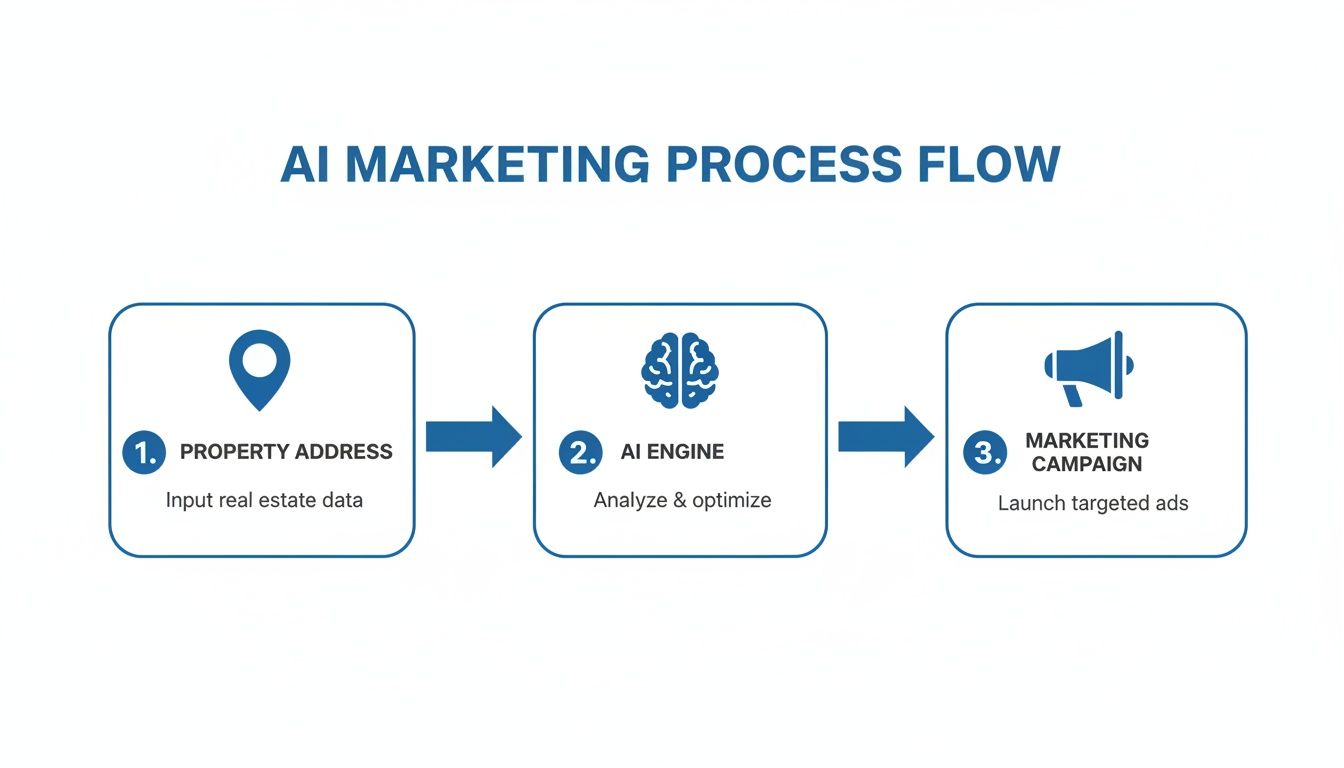
    You've likely heard the buzz around "AI marketing for real estate agents," but what does it actually mean for your business? Forget the complex jargon. At its core, AI marketing is about using smart technology to automate and improve the repetitive, time-consuming parts of your job, allowing you to focus on client relationships and closing deals.

    Think about the hours spent writing property descriptions, creating social media posts, or preparing materials for a listing presentation. AI tools can handle much of that heavy lifting, providing a consistent and professional foundation for your marketing efforts. This guide explains what AI marketing means in practice, how agents are using it, and where it fits into a modern real estate workflow.

    What AI Marketing Means in Real Estate

    A laptop shows real estate listings next to a sign 'AI for Agents', a coffee, and a notebook.

    In plain language, AI marketing for real estate agents isn't about robots replacing agents. It’s about leveraging technology as an efficient assistant that handles critical marketing tasks with speed and consistency. Instead of staring at a blank page trying to find a new way to describe "natural light," you can input a property's key features and receive a polished, MLS-compliant description in seconds.

    The practical value of AI is how it streamlines day-to-day operations. It supports agents in several key areas:

    • Listing Descriptions and Property Content: Generate compelling property narratives that meet MLS guidelines and are optimized for different platforms.
    • Search Visibility: Structure listing content to improve how it appears on Google, major portals, and even in new AI-powered search tools.
    • Social Media Content at Scale: Create and schedule a consistent stream of posts, market updates, and property highlights without the daily grind.
    • Listing Presentation Preparation: Quickly assemble marketing plans and competitive analysis to present to potential sellers.
    • Time Savings and Consistency: Reclaim hours previously spent on manual content creation while ensuring every marketing piece maintains a professional tone.

    The goal isn't to replace your expertise—it's to amplify it. AI handles the grunt work, freeing you up to focus on strategy, building relationships, and negotiating deals.

    Common AI Marketing Use Cases for Agents

    Let’s move from theory to practice. Savvy agents are integrating AI into their workflows to work smarter, not just harder. This isn't a futuristic concept; it's a real advantage being used today. Here are the most common use cases, framed as workflow support rather than a magic solution.

    Content Creation for Listings

    The most immediate application is generating marketing content for new listings. Agents use AI to create multiple versions of property descriptions from a single set of details. This means getting a concise, MLS-compliant description while simultaneously producing a more detailed, story-driven narrative for a personal website or blog.

    Platform-Specific Optimization

    Different platforms have different rules and audiences. AI helps tailor content for specific channels like the local MLS, Zillow, and Realtor.com. This includes adjusting character counts, formatting, and highlighting features that perform best on each site, improving a listing’s visibility and appeal.

    Social Media Scheduling and Post Generation

    Consistency is key to social media, but it's incredibly time-consuming. Agents use AI to generate an entire month's worth of social media posts for a listing, including captions, image suggestions, and relevant hashtags. This ensures a steady online presence without the daily effort.

    Presentation and Pre-Listing Materials

    One of the most powerful uses is in preparing for listing appointments. Instead of scrambling to pull together examples of past work, an agent can use AI to generate a custom marketing preview for a prospective seller's property. This includes a draft listing description, a sample social media plan, and a competitive marketing analysis, demonstrating proactive expertise.

    Authority and Market Content

    Beyond individual listings, AI is used to establish local expertise. Agents can quickly draft insightful neighborhood guides, market trend analyses, and helpful blog posts. By consistently publishing valuable information, they build their brand and become a trusted resource in their community.

    Real Estate AI workflow diagram illustrating three steps: Win Listing, Market Property, and Build Authority.

    This isn't just a trend; it's a massive shift. Projections show that by 2026, AI will be a core part of real estate, with 70% of professionals adopting new tools annually. Morgan Stanley even estimates that automating just 37% of an agent's tasks could unlock $34 billion in efficiency gains. You can read the full 2026 State of AI in Real Estate Marketing report to dig deeper into the data.

    Tools Agents Use to Support AI-Driven Marketing

    Once agents understand the use cases, the natural next question is about the tools. It’s crucial to see these tools as assistants that execute a strategy, not as replacements for an agent’s judgment. They make tasks faster and more consistent.

    AI marketing for real estate agents typically combines content creation, distribution, and consistency. While some agents rely on general-purpose AI writing tools, others use real estate–specific platforms that account for MLS formatting, platform requirements, and presentation needs. Tools in this category include a mix of general AI assistants and industry-focused platforms such as ListingBooster.ai, depending on how structured an agent’s marketing workflow needs to be.

    Listing Content & Presentation Tools

    These tools focus on preparing listing descriptions, platform-specific content, and materials agents use during listing appointments. They are designed to streamline the pre-listing and active marketing phases.

    • ListingBooster.ai – A real estate–specific AI platform used by some agents to generate MLS-compliant listing descriptions, platform-specific marketing content, and presentation materials as part of their overall marketing workflow.
    • General AI Writers – Tools like ChatGPT can be used with specific prompts to draft property descriptions, blog posts, and other marketing copy. They require more detailed instruction to ensure real estate compliance.

    General AI Assistants and Schedulers

    Another common approach is pairing a general-purpose AI writer with a social media scheduling tool that has AI features.

    • AI-Powered Social Schedulers: Many popular social media management platforms now integrate AI to suggest optimal posting times, generate caption variations, or create simple graphics, helping agents maintain an active presence.

    The choice between a general tool and one built for real estate often comes down to workflow preference. Specialized platforms save time because they understand industry terminology and compliance from the start. General tools offer flexibility but require more effort to guide.

    Recent data shows the impact of these strategies: 60% of agents report their highest ROI is coming from social media marketing, often powered by AI, and 52% of leads generated through these efforts are higher quality. You can find more eye-opening AI agent statistics on warmly.ai to see how quickly the landscape is changing.

    How AI Shapes Your Brand and Puts You on the Map

    Laptop with marketing analytics dashboards and 'BOOST YOUR BRAND' text overlay, set against a blurred background of houses.

    Adopting AI into your marketing is more than a time-saver; it’s an upgrade to your brand's digital presence. Consistent, high-quality content is the foundation of online visibility. By using AI to produce polished, platform-specific content for every listing, you expand your digital footprint and improve your visibility on traditional search engines and emerging AI-powered search platforms.

    This consistency presents your brand as a sophisticated, modern marketing operation, which is increasingly important to potential sellers.

    Moving Beyond Automation to Build Real Authority

    The true value of AI marketing emerges when it helps you build authority at scale. By consistently publishing insightful market updates, neighborhood guides, and helpful content, you position yourself as the go-to local expert.

    Seller expectations are rising. They seek partners with a clear, tech-forward marketing strategy. The AI sector in real estate is projected to grow from $222.65 billion in 2024 to $303.06 billion in 2025, signaling a massive industry transformation. You can find more real estate marketing statistics here to understand the full scope.

    AI isn't about replacing what you do. It's about amplifying your expertise, building your reputation, and showing sellers you're equipped to win in a competitive market.

    Answering Your Questions About AI in Real Estate

    Adopting new technology naturally brings up questions. Here are answers to some of the most common inquiries from agents considering AI for their marketing.

    Do I Need to Be a Tech Whiz to Make This Work?

    Not at all. Modern real estate AI platforms are designed for agents, not developers. If you can enter a property address or copy and paste information, you have the necessary skills. The purpose of these tools is to simplify your job, not add another complex system to manage.

    What About Fair Housing Compliance?

    This is a critical consideration and a significant benefit of using a real estate-specific AI tool. The best platforms are trained on Fair Housing guidelines to help avoid discriminatory language. AI focuses objectively on a property's features—like granite countertops or a fenced yard—rather than making assumptions about potential residents. While you are always the final reviewer, the AI provides a compliant foundation to build upon.

    Can AI tools real estate agents use help me win more listings?

    Yes, by making you appear more prepared and professional. When you walk into a listing presentation with a complete, ready-to-launch marketing plan—including a sample MLS description and a 30-day social media calendar—you demonstrate a level of marketing savvy that builds immediate trust and sets you apart from the competition.

    Is This Going to Replace My Professional Copywriter?

    Think of AI as a powerful assistant, not a replacement for human expertise. It can get you 80% of the way to a finished piece of marketing content in seconds. Your role is to add the final 20%—the unique neighborhood insights, personal voice, and local details that only an expert can provide. The AI handles the heavy lifting, freeing you to focus on the high-value strategic touches.

    Conclusion

    AI marketing in real estate isn’t about replacing agents—it’s about reducing manual work and improving consistency. As expectations around digital presence and content quality increase, agents are experimenting with different ways to integrate AI into their marketing workflows. The specific tools matter less than understanding how AI fits into listing preparation, presentation, and ongoing visibility. To learn more, visit the real estate marketing blog.

  • AI Search Optimization for Real estate Listings: How It Works and Why It Matters

    AI Search Optimization for Real estate Listings: How It Works and Why It Matters

    The old way of thinking about online real estate marketing is officially over. It's no longer about just stuffing keywords into a listing. Instead, the focus is now on creating structured, descriptive, and consistent property information. This shift in strategy is a direct response to a fundamental change in how people find homes. As AI systems increasingly summarize information for buyers asking real, conversational questions, they need to clearly understand a home's features to surface it accurately. This guide explains the mechanics of AI search optimization for real estate listings and what actually affects visibility.
    What AI Search Means for Real Estate Listings

    A man uses his smartphone in front of a modern house with an 'AI HOME SEARCH' sign.

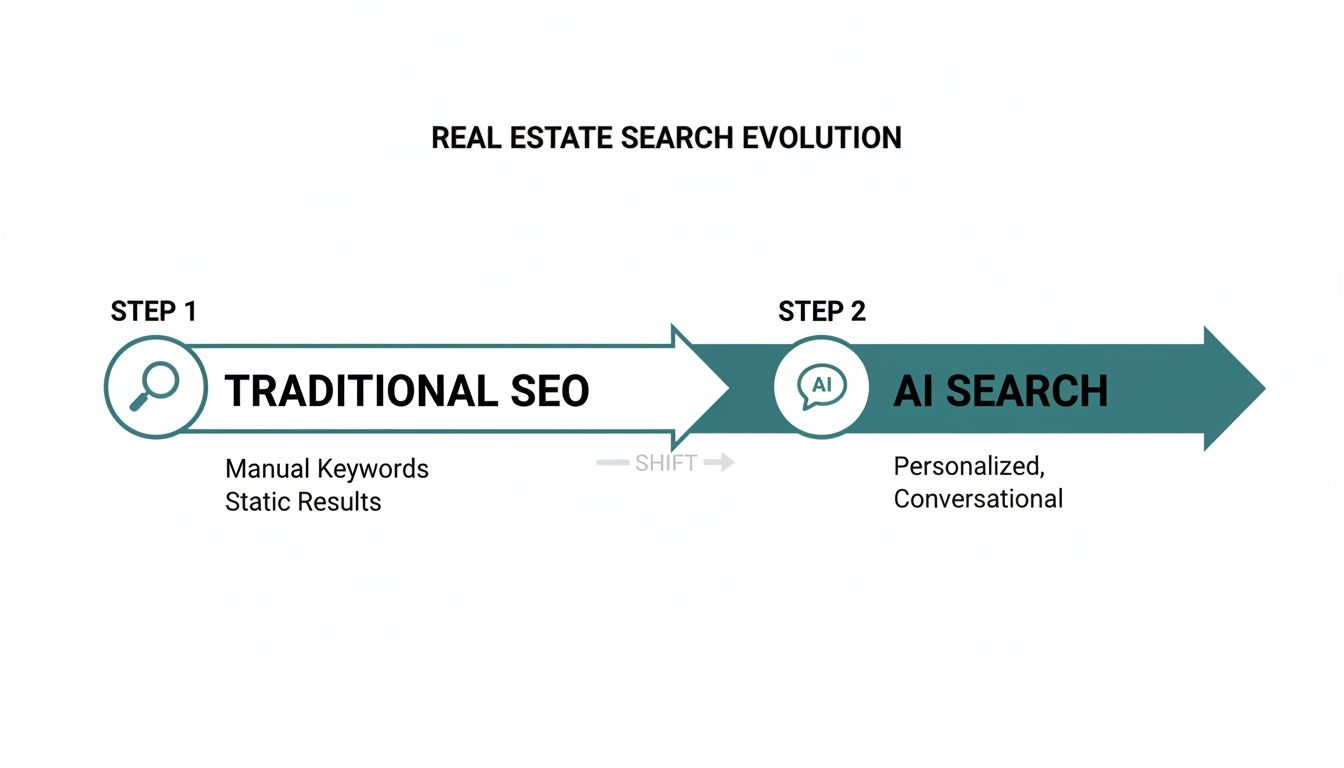
    The way people find their next home is changing. For years, it was a simple keyword game. A buyer would type "3 bed 2 bath Boston" into a search bar, and the system would pull up listings matching those exact terms. Success depended on having the right words in the right places.

    Today, AI-driven home search works on a different level. It’s about understanding what a buyer really wants, often expressed through natural language.

    Natural Language vs. Keyword Search

    Think about how people actually talk. A modern home search sounds less like a computer command and more like a conversation. A buyer might now ask, “Find me a home with a large backyard for entertaining near good schools.”

    This kind of query isn't just a string of keywords; it expresses a lifestyle, a specific need, and a set of priorities. This is where old search methods fall apart.

    • Traditional Keyword Search: This was about matching words. If a buyer searched for "fenced yard," a listing had to contain that exact phrase to appear.

    • AI-Driven Discovery: This is about interpreting natural language and context. An AI understands that a description mentioning "a perfect space for summer barbecues" and "fully enclosed for privacy" likely satisfies the buyer's need, even if the exact keywords are missing.
    AI Summarization vs. Traditional Ranking

    This evolution is happening because AI doesn't just deliver a list of links anymore. It aims to provide direct, synthesized answers. It pulls information from the MLS, major portals, your website, and neighborhood data to construct a complete, coherent summary of a property for the user.

    Why are listings increasingly discovered through questions? Because modern search tools are designed to provide immediate, comprehensive answers, not just links. Your goal is no longer just to rank in a list; it's to be understood so deeply that an AI can confidently summarize your listing as the perfect answer to a buyer's question. Vague or incomplete information simply gets lost in translation.

    How AI Systems Interpret Listing Information

    Hands typing on a laptop displaying a real estate listing of a modern house, with 'Listing Intelligence' text overlay.

    To make a listing visible to AI, you have to think like the machine. Modern AI search acts like a meticulous research assistant, pulling together every scrap of information it can find to build a complete profile of a property. Its purpose is to understand a listing so deeply that it can confidently recommend it as the perfect answer to a buyer's complex, conversational question.

    These systems are hungry for clarity and structure. If your information is jumbled—contradictory, vague, or incomplete—the AI can't form a clear picture, and the listing gets lost.

    The key idea is simple: AI systems summarize what they can clearly understand.

    Clarity and Structure of Listing Descriptions

    The public remarks in the MLS are the heart of a property’s story. AI doesn't just scan for "granite countertops." It analyzes sentence structure and how different ideas connect to paint a picture.

    • Old way: "3 bed, 2 bath, granite counters, new roof."
    • AI-friendly way: "Enjoy morning coffee at the spacious granite-topped kitchen island in this updated 3-bedroom home. With the peace of mind of a brand-new roof, this home is ready for its next chapter."

    The second example gives the AI context. It connects features with real-life activities and tangible benefits, which is gold for an AI trying to answer a query like, "find me a move-in ready home with an updated kitchen."

    Consistency Across Platforms

    An AI doesn't just look at the MLS. It’s a detective, cross-referencing information with what it finds on Zillow, Realtor.com, your own website, and anywhere else the listing appears. It’s searching for a single source of truth.

    When the price on one site doesn't match another, or the square footage is different, it creates data conflicts. To an AI, these inconsistencies are red flags signaling unreliable information. That confusion can cause the system to demote the listing in favor of one with clean, consistent data.

    Contextual Signals and Structured Data

    Beyond the words you write, AI systems analyze contextual information to understand the lifestyle a home offers.

    • Neighborhood Context: It cares about proximity to popular cafes, parks, and schools. Mentioning "a short walk to Elm Street Park" provides invaluable local context.
    • Lifestyle Qualities: Photos and descriptions that highlight specific uses are key. A "perfect home office with abundant natural light" or a "backyard designed for entertaining" gives the AI tangible data points.
    • Structured Data and Metadata: Behind the scenes, details like property type, year built, and specific amenity checkboxes provide structured data that AI systems can easily process and compare. Ensuring this information is complete and accurate is crucial.

    Ultimately, it’s not just about what you say about the property; it’s about how that information connects to a web of external data to create a compelling picture for a buyer.

    How Agents Are Adapting Their Listing Content for AI Search

    Flowchart illustrating the Agent AI Adaptation Process with manual audit, AI interpretation, and platform assist stages.

    The shift from simple keyword searches to AI-powered discovery is already changing real estate marketing. It’s no longer about just listing features; it’s about telling a story that an AI can easily understand, summarize, and recommend. Agents approach AI search optimization in different ways. Some manually audit and rewrite listing content to improve clarity and structure, while others rely on real estate–specific platforms to standardize descriptions and marketing materials. The common thread is improving how listing information is presented and understood, regardless of the tools used.

    As AI-driven search becomes more common, some agents are changing how they prepare listing content. Instead of relying only on traditional MLS descriptions, they focus on clearer structure, platform-specific wording, and consistency across channels. Industry-specific platforms such as ListingBooster.ai are sometimes used to help agents generate structured, MLS-compliant listing descriptions and supporting marketing materials designed to be more easily interpreted across search engines and AI-driven discovery tools.

    The goal is always better clarity and structure, whether you're doing it by hand or using a tool to help. For a deeper dive into these strategies, you can explore the ListingBooster.ai blog or learn more about how AI is reshaping real estate marketing. For agents ready to explore platform-driven solutions, information is available on services like ListingBooster.ai.

    Core Principles for Creating AI-Ready Real Estate Listings

    Getting your listings to show up in AI-powered search isn't about learning secret code. It’s about clarity, consistency, and great storytelling. This is your playbook for making a property’s story so clear that both buyers and AI pay attention.

    Ditch the Feature List, Tell a Story

    Today’s AI understands context and sentiment. A dry, fact-only description gives it little to work with when a potential buyer asks, "Find me a home with a great backyard for parties." Your job is to paint a picture with words, describing the experience of living there.

    • What we used to do: "Large backyard, deck, mature trees."
    • What we do now: "The expansive backyard is an entertainer's dream, featuring a multi-level deck perfect for summer barbecues. Mature oak trees provide ample shade for relaxing afternoons."

    The second example gives the AI contextual clues like "entertainer's dream" and "summer barbecues," directly connecting features to a buyer's desires.

    Your Data Must Be Consistent. Everywhere.

    AI constantly cross-references your listing details across the MLS, Zillow, and your own website. When it spots a discrepancy—a different price or square footage—it sees a red flag. This data conflict signals unreliability, which can cause an AI to push your listing down in favor of one with a clean data trail. Think of your MLS entry as the single source of truth.

    Go Hyperlocal to Add Authenticity

    A house is part of a community. AI looks for hyperlocal signals to build a complete lifestyle profile. Simply mentioning specific, named locations adds a powerful layer of verifiable detail.

    • Instead of "close to parks," try "just a five–minute walk to the Elm Street Park playground."
    • Instead of "near coffee shops," write "around the corner from The Daily Grind, a local favorite."

    These specific names are data points an AI can verify, allowing it to confidently recommend your listing.

    Structure for Scanners (Both Human and Robot)

    Nobody likes a wall of text. Both people and AI prefer information that is well-organized and easy to scan.

    • Short Paragraphs: Stick to 2-3 sentences per paragraph.
    • Bullet Points: Use bullets to call out key features or recent upgrades.
    • Subheadings: If your listing portal allows, break up your description with simple headings like "Gourmet Kitchen" or "Outdoor Oasis."

    Good structure helps an AI parse your listing efficiently, ensuring your property's best assets are instantly identifiable.

    The Future of AI Discovery for Real Estate Listings

    The future of getting your listings found by AI isn't about a secret tech hack; it's about going back to basics. The listings that will rise to the top are the ones that are structured, consistent, and full of rich detail. Why? Because that’s not only what an AI can easily understand and summarize, but it’s also what a human buyer finds most compelling.

    Adopting this mindset is about building a more trustworthy digital footprint for your entire business.

    • Better Conversations with Clients: When you can explain how AI finds property listings, you can articulate your marketing strategy to sellers in a new way, building confidence and setting yourself apart.
    • A Stronger Brand: Consistency across your website and major portals builds a brand that looks reliable and professional to both potential clients and AI systems.
    • Future-Proof Your Business: The core principles of clarity, structure, and consistency are timeless. Building them into your workflow now sets you up for success no matter what technology comes next.

    As AI-driven home search gets smarter, the agent's role becomes more important, not less. You're the human expert who makes sure the story of a home is told right. AI can crunch data, but it can't replicate your deep neighborhood knowledge.

    Conclusion: Clarity Is the New Optimization

    AI search optimization in real estate is less about gaming algorithms and more about clarity. As AI tools increasingly summarize information for buyers and sellers, listings that are structured, consistent, and descriptive are easier to understand and surface. Agents who understand how AI interprets listing information are better positioned to explain modern marketing strategies—regardless of which tools they choose to use. When you focus on making your listings easy to understand, you automatically make them more discoverable.

    Frequently Asked Questions

    Does this mean I need to write my listings for robots instead of people?

    Absolutely not. It's the opposite. These AI search tools are built to think more like humans. The best thing you can do is write clear, compelling, and well-organized descriptions that a real buyer would love. A description that paints a picture resonates with both people and the AI trying to understand them.

    What is the single most important thing I can do for AI search optimization for real estate listings right now?

    If you do only one thing, make it consistency. Go through your listings and make sure the core data—price, square footage, bed/bath count—is 100% identical everywhere it appears online. When an AI sees conflicting information, it raises a red flag that can hurt your listing's visibility.

    Do I need to be a tech whiz to do this?

    Not at all. This is about effective communication and organization—skills you already use every day. The foundation is built on things you control: writing high-quality copy, taking great photos, and ensuring your data is consistent. It’s about being more intentional with the content you’re already creating.

    Article created using Outrank

  • AI Tools for Real Estate Agents: What They Do and When to Use Them

    AI Tools for Real Estate Agents: What They Do and When to Use Them

    Artificial intelligence has become a practical asset for today's real estate market. For busy agents, the right ai tools for real estate agents can automate tedious tasks, generate compelling marketing content, and provide data-driven insights that win over clients. But with a crowded market of apps and platforms, knowing where to start can be overwhelming. This guide is designed to cut through the noise, helping you identify which tools are best suited for your specific business needs.

    This resource breaks down what AI tools do and how they fit into a modern agent's workflow. We will explore how AI helps with everything from writing listing descriptions and optimizing search visibility on major portals to creating engaging social media content and preparing for high-stakes listing presentations. The goal isn't just to save time; it's about leveraging technology to work smarter, deliver superior service, and maintain a competitive edge.

    What AI Tools Do for Real Estate Agents

    Artificial intelligence assists agents by handling repetitive, data-intensive, or creative tasks, freeing up time for client-facing activities. The primary applications fall into several key areas:

    • Generating Listing Descriptions: AI can take basic property details (bedrooms, baths, key features) and instantly draft compelling, well-structured descriptions for the MLS, Zillow, and other portals, often with an awareness of Fair Housing language.
    • Improving Search Visibility: Advanced tools can analyze listing content and suggest optimizations to improve how a property appears in portal searches and emerging AI-driven search engines.
    • Creating Social Content: AI can quickly generate ideas, captions, and even scripts for social media posts, videos, and blog content, helping agents maintain a consistent online presence.
    • Streamlining Presentation Prep: From generating market analysis talking points to creating presentation slides, AI helps agents prepare for listing appointments and client meetings more efficiently.
    • Saving Time on Administrative Tasks: Many AI-powered CRMs and platforms automate lead follow-up, email drafting, and other administrative duties that consume a significant portion of an agent's day.

    By offloading these tasks to specialized software, agents can focus on building relationships, negotiating deals, and providing strategic advice to their clients.

    Categories of AI Tools Real Estate Agents Use

    AI tools for real estate agents generally fall into distinct categories based on the problems they solve. Understanding these categories helps in choosing the right tool for a specific business need.

    • AI Writing & Content Tools: These are often general-purpose platforms (like ChatGPT) or specialized writers that help draft property descriptions, blog posts, emails, and social media captions.
    • Listing Optimization & Presentation Tools: These tools focus on preparing listing materials, platform-specific descriptions, and presentation assets agents use during listing appointments.
    • CRM & Lead Nurturing Platforms: Integrated systems that use AI to automate lead follow-up, predict client behavior, and manage marketing campaigns.
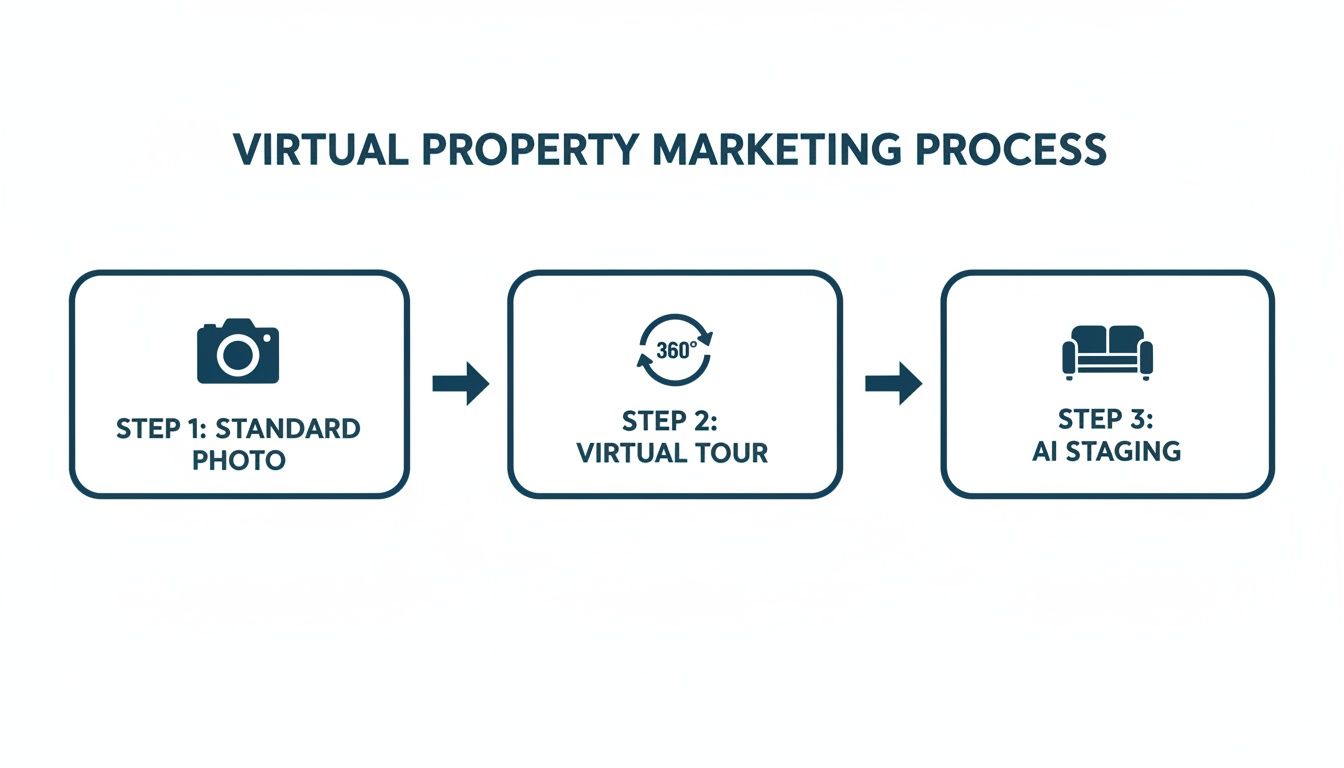
    • Visual & Media Enhancement Tools: This category includes software for virtual staging, photo editing, floor plan creation, and 3D tours, often using AI to automate the process.
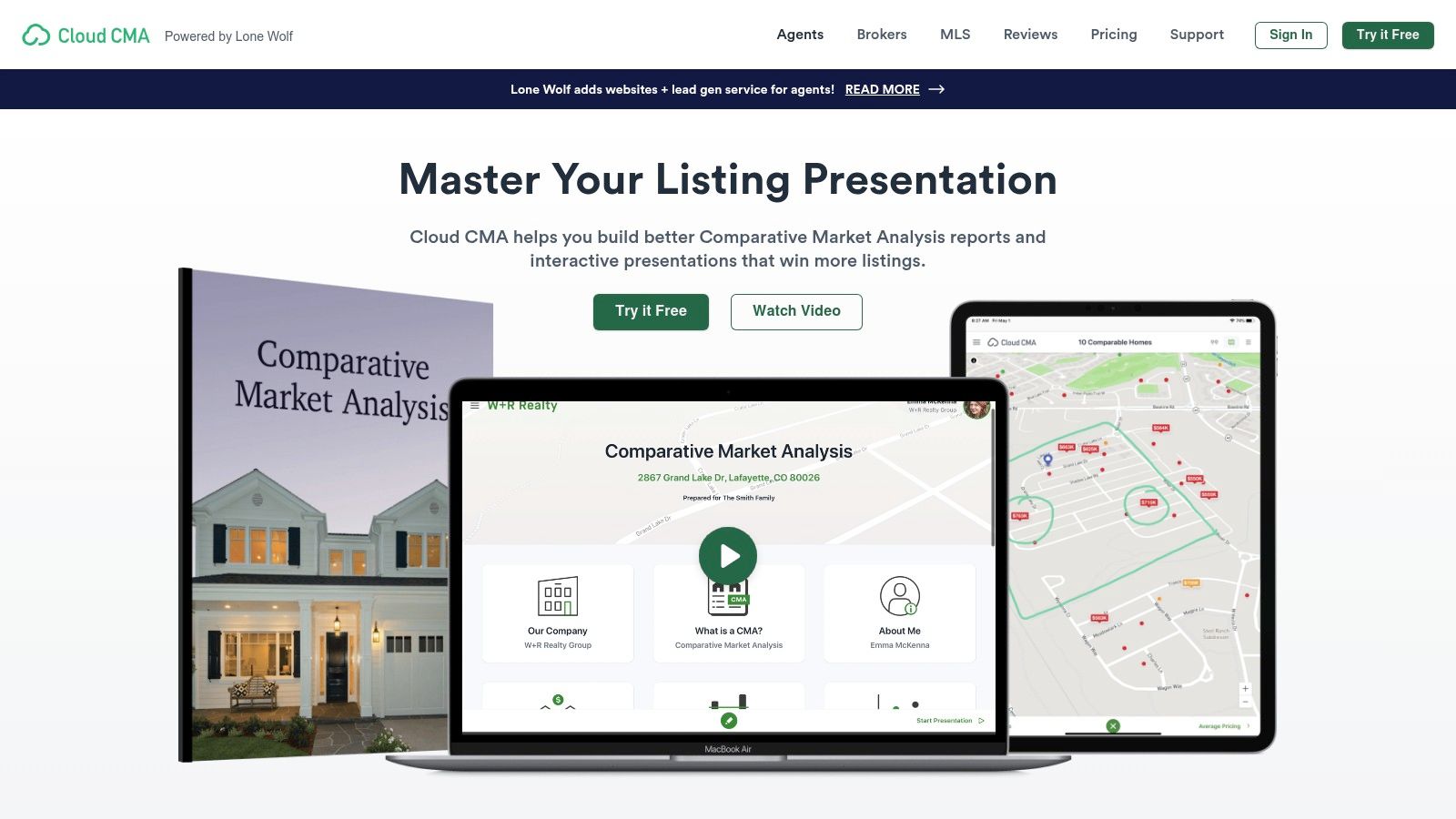
    • Data & Market Analysis Tools: Platforms that leverage AI to analyze market data, generate comparative market analyses (CMAs), and provide property-specific insights.

    Agents often use a combination of these tools to create a comprehensive tech stack that supports their entire business workflow.

    AI Tools Real Estate Agents Commonly Use (By Category)

    Here is a list of commonly used tools, organized by their primary function.

    AI Writing & Content Tools

    • Canva: A design platform with AI "Magic" tools for generating text and images, ideal for creating social media posts, flyers, and marketing materials from templates.
    • OpenAI ChatGPT: A versatile, general-purpose AI assistant used for drafting listing descriptions, brainstorming marketing ideas, scripting videos, and composing client emails.
    • RPR (Realtors Property Resource): An NAR member benefit that includes an AI ScriptWriter to generate social media content and scripts directly from verified MLS and market data.

    Listing Optimization & Presentation Tools

    These tools focus on preparing listing materials, platform-specific descriptions, and presentation assets agents use during listing appointments.

    • ListingBooster.ai: A real estate–specific AI platform focused on generating MLS-compliant listing descriptions, platform-specific content, and presentation materials that agents use when preparing for listing appointments.

    CRM & Lead Nurturing Platforms

    • BoldTrail (formerly kvCORE): An enterprise-grade platform with an AI-powered Smart CRM that automates lead nurturing and triggers intelligent marketing campaigns based on user behavior.
    • Lofty (formerly Chime): An end-to-end real estate solution with a built-in AI Marketing Assistant for creating social media content, blog posts, and ad copy directly within the CRM.

    Visual & Media Enhancement Tools

    • BoxBrownie: A service for professional photo enhancements, including virtual staging, item removal, and day-to-dusk conversions, blending AI assistance with human editors.
    • CubiCasa: An AI-powered app that creates 2D and 3D floor plans from a simple smartphone video scan of a property.
    • Matterport: A platform for creating immersive 3D virtual tours ("digital twins") with AI features that automatically label rooms and provide measurements.
    • ReimagineHome: An AI design tool for virtual staging, decluttering, and visualizing renovations like new flooring or kitchen updates.
    • Virtual Staging AI: A self-serve platform that uses AI to instantly furnish photos of empty rooms, offering a subscription-based model.

    Data & Market Analysis Tools

    • Restb.ai: A computer-vision AI platform used by MLSs and large brokerages to automatically analyze and tag property photos for features, compliance, and enhanced search.

    Below are more detailed descriptions of some of the tools mentioned above.

    BoldTrail (formerly kvCORE)

    BoldTrail, the platform formerly known as kvCORE, is an enterprise-grade ecosystem from Inside Real Estate designed for brokerages and large teams. It centralizes an agent's entire workflow, integrating an IDX website, a powerful Smart CRM, and comprehensive marketing automation into a single front-office solution. This platform stands out by embedding AI not just as a feature, but as the connective tissue across its entire suite of tools, from lead follow-up to back-office management.

    BoldTrail (formerly kvCORE)

    Unlike standalone AI tools for real estate agents that solve a single problem, BoldTrail aims to be the all-in-one operating system. Its AI-powered Smart CRM automatically analyzes lead behavior, suggests optimal times for contact, and triggers intelligent marketing campaigns, saving agents significant manual effort. For brokerages, the integrated BackOffice and recruiting modules use data-driven insights to streamline operations and talent acquisition. The platform's extensive adoption, including a notable rollout with RE/MAX, speaks to its scalability and industry trust.

    Website: https://boldtrail.com/

    Lofty (formerly Chime)

    Lofty, the platform previously known as Chime, is an end-to-end real estate solution designed with a mobile-first workflow and a deeply integrated AI marketing assistant. It combines lead generation via IDX websites, a comprehensive CRM, and powerful marketing automation tools into a single ecosystem. Lofty distinguishes itself by embedding practical AI tools for real estate agents directly into their daily marketing and client management tasks, making advanced technology accessible on the go.

    Lofty (formerly Chime)

    Unlike platforms that bolt on AI as an afterthought, Lofty's AI Marketing Assistant is a core component used for creating social media content, blog posts, and ad copy. This allows agents to execute sophisticated digital marketing campaigns directly from their CRM. The system focuses on the entire lead lifecycle, from initial capture on a Lofty-powered website to long-term nurturing via automated, AI-driven communication, all manageable from its mature mobile app.

    Website: https://lofty.com/

    RPR (Realtors Property Resource)

    Realtors Property Resource (RPR) is a comprehensive data and reporting platform provided as an exclusive benefit to members of the National Association of REALTORS®. While known for its property data, RPR has integrated AI to streamline content creation for its members. The standout feature, an AI ScriptWriter, leverages RPR's vast repository of verified MLS and market data to instantly generate marketing assets, positioning it as a unique tool for data-driven agent promotion.

    Unlike general-purpose AI writing tools, RPR's AI works directly from hyper-local, trade-area-specific data that REALTORS® trust. This direct integration means agents can convert complex market trends and property details into ready-to-share social media videos, client presentations, and marketing cards in seconds. By grounding its AI outputs in proprietary, member-only data, RPR offers a level of market-specific accuracy and authority that third-party tools cannot replicate, making it an invaluable resource for NAR members.

    Website: https://www.narrpr.com/

    Restb.ai

    Restb.ai is a computer-vision platform designed specifically for the real estate industry, serving MLSs, portals, and large brokerages. Its core function is to analyze property photos, automatically identifying and tagging rooms, features, and overall property condition. This technology automates critical aspects of listing intake, compliance monitoring, and visual search capabilities, making it an essential back-end tool for data-heavy real estate operations.

    Restb.ai

    Unlike agent-facing AI tools for real estate agents, Restb.ai operates at an enterprise scale to enhance data quality and user experience across entire platforms. By auto-tagging images with details like "hardwood floors" or "natural light," it powers more granular, visual-based property searches. The platform also flags potential MLS and Fair Housing violations in photos, such as brand logos or people, which helps brokerages and MLSs maintain compliance automatically and reduce operational risk.

    Website: https://restb.ai/

    Matterport

    Matterport is the market-leading platform for creating and sharing immersive 3D virtual tours, often referred to as "digital twins." It allows agents to capture a property's complete layout and feel, offering prospective buyers an interactive walkthrough experience from anywhere in the world. The platform has evolved beyond simple tours by incorporating AI-enhanced "Property Intelligence" to automatically identify and label rooms, measure spaces, and generate photo galleries from the 3D scan.

    Matterport

    Unlike basic video tours, Matterport provides a true-to-life spatial model that buyers can navigate at their own pace. Its AI capabilities streamline the post-capture process, saving time on manual labeling and photo selection. With broad support across multiple capture devices, from professional cameras to smartphones, and wide adoption by major MLSs and real estate portals, Matterport has become a standard for modern listing presentations. The platform's tiered subscription model offers solutions for individual agents and large-scale enterprises.

    Website: https://matterport.com/

    CubiCasa

    CubiCasa transforms a standard smartphone into a powerful floor plan generator, leveraging AI to produce professional 2D and 3D layouts from a simple 5-minute video scan of a property. This tool automates what was once a time-consuming and expensive process, making floor plans an accessible and standard part of any listing package. Its primary value lies in its speed, simplicity, and direct integration with many MLS platforms across the U.S.

    What sets CubiCasa apart from other AI tools for real estate agents is its singular focus on a high-demand listing asset. Instead of tackling broad marketing or CRM functions, it solves one problem exceptionally well. Many agents gain access to its free "Lite" version directly through their MLS membership, removing any friction to adoption. For a small fee, agents can upgrade to receive detailed GLA (Gross Living Area) reports, furnished 3D plans, and other assets that elevate a listing's appeal to prospective buyers.

    Website: https://www.cubicasa.com/

    BoxBrownie

    BoxBrownie is a specialized media editing service that enhances listing photography using a blend of AI-assisted and human-touch-up processes. It offers a suite of a-la-carte services like virtual staging, day-to-dusk conversions, item removal, and virtual renovations, all designed to make property photos more appealing. The platform stands out by offering professional-grade edits with a simple, per-image pricing model and fast turnarounds, often within 24 hours.

    BoxBrownie

    Unlike fully automated AI photo editors that may produce inconsistent results, BoxBrownie provides a service-based solution where agents submit their images for specific enhancements. This model is ideal for agents who need high-quality, reliable results for critical marketing assets without committing to a monthly software subscription. Agents use it to digitally furnish empty rooms, clean up cluttered spaces by removing unwanted items, or showcase a property’s potential with a virtual renovation, directly addressing buyer visualization challenges.

    Website: https://www.boxbrownie.com/

    Virtual Staging AI

    Virtual Staging AI is a self-serve platform that uses artificial intelligence to digitally furnish photos of empty properties, transforming them into appealing, staged images. It offers a low-cost, predictable alternative to traditional staging or per-image virtual staging services. The platform is designed for rapid turnarounds, allowing agents to upload vacant room photos and receive staged versions in seconds, ready for MLS listings, social media, and marketing materials.

    Virtual Staging AI

    Unlike manual services that can take days, Virtual Staging AI delivers instant results through a subscription model, which is a key differentiator. Agents can choose from tiered monthly plans based on their typical listing volume, providing budget predictability. This makes it one of the more accessible AI tools for real estate agents who need to consistently market properties without incurring high, variable costs for each new listing.

    Website: https://www.virtualstagingai.app/

    ReimagineHome

    ReimagineHome is an AI-powered design studio built to enhance real estate listing media. It moves beyond simple virtual staging, offering a comprehensive suite of tools for agents to visually transform properties. This platform allows users to declutter rooms, redesign kitchens, swap out flooring, improve curb appeal with landscaping edits, and even add features like pools, all from a single interface. It’s designed for agents who want to help potential buyers visualize a home's full potential, not just its current state.

    ReimagineHome

    Unlike traditional staging services, ReimagineHome uses generative AI to create multiple design variations quickly. Agents can use its conversational AI to describe desired changes, making the creative process more intuitive. This makes it one of the more versatile ai tools for real estate agents looking to create compelling before-and-after marketing assets, show renovation possibilities, or simply present a vacant home in its best light. The platform provides a powerful way to address buyer objections about a home's cosmetic flaws directly within the listing photos.

    Website: https://www.reimaginehome.ai/

    Canva

    Canva has become the go-to design platform for agents who need professional-grade marketing materials without the steep learning curve of traditional graphic design software. While not a real estate-specific tool, its massive library of templates for flyers, postcards, social posts, and presentations makes it indispensable. The platform's "Magic" suite introduces AI tools for real estate agents, including text and image generators, to speed up content creation.

    Canva

    Unlike dedicated real estate marketing platforms, Canva's strength lies in its versatility and affordability. An agent can quickly create an entire suite of branded collateral for a new listing, from social media announcements to printed "just listed" mailers, all within a single interface. Features like Brand Kits ensure consistency across all assets, while Magic Resize instantly adapts a design for different platforms, saving hours of manual work. The optional print and fulfillment service further streamlines an agent's marketing workflow.

    Website: https://www.canva.com/

    OpenAI ChatGPT

    OpenAI's ChatGPT is a general-purpose AI assistant that has become one of the most widely adopted AI tools for real estate agents due to its versatility and accessibility. Unlike industry-specific platforms, ChatGPT acts as a flexible creative partner, capable of drafting compelling listing descriptions, scripting social media video content, brainstorming ad copy, and composing professional client emails. Its conversational interface allows agents to refine outputs with simple follow-up commands, making it an excellent tool for on-the-fly content creation and problem-solving.

    OpenAI ChatGPT

    The platform's power lies in its adaptability. An agent can start by generating a property description, then ask the AI to repurpose it into a short blog post, a series of tweets, and talking points for a client presentation, all within a single conversation. With paid plans like ChatGPT Plus, agents gain access to more advanced models (like GPT-4), web browsing for current market data, and the ability to upload files or images for analysis. This makes it a powerful, multi-functional asset for agents who are comfortable with prompt engineering.

    Website: https://openai.com/chatgpt

    Choosing the Right AI Tools for Your Real Estate Business

    The landscape of real estate is rapidly evolving, and the integration of artificial intelligence is no longer a futuristic concept but a present-day reality. Throughout this guide, we've explored a wide spectrum of AI tools for real estate agents, from comprehensive CRMs to specialized solutions for visual marketing. The common thread is clear: AI is not here to replace agents but to empower them, automating tedious tasks and unlocking new levels of efficiency and marketing sophistication.

    The key takeaway is that the right technology acts as a force multiplier, giving you back your most valuable asset: time. This reclaimed time can be reinvested into high-touch, relationship-building activities that AI cannot replicate, such as client consultations, negotiations, and community engagement.

    A Strategic Framework for AI Adoption

    Integrating AI into your business is fundamentally a strategic decision. The sheer number of options can feel overwhelming, but a methodical approach will ensure you invest in solutions that deliver a tangible return. Start by performing a simple audit of your daily and weekly workflow.

    Identify the biggest bottlenecks and points of friction.

    • Time-Consuming Tasks: Are you spending hours writing and rewriting property descriptions for different platforms?
    • Marketing Inconsistencies: Do you struggle to maintain a consistent, high-quality social media presence for your listings?
    • Preparation Overload: Is the process of preparing for a listing appointment a major time sink?
    • Lead Nurturing Gaps: Are potential leads falling through the cracks because you lack an automated follow-up system?

    Your answers to these questions will point you toward the right category of tools.

    Implementation and Evaluation: Start Small, Scale Smart

    The most effective approach to adopting new technology is incremental. Resist the temptation to overhaul your entire tech stack at once. Instead, select one or two AI tools that solve your most pressing, recurring problems.

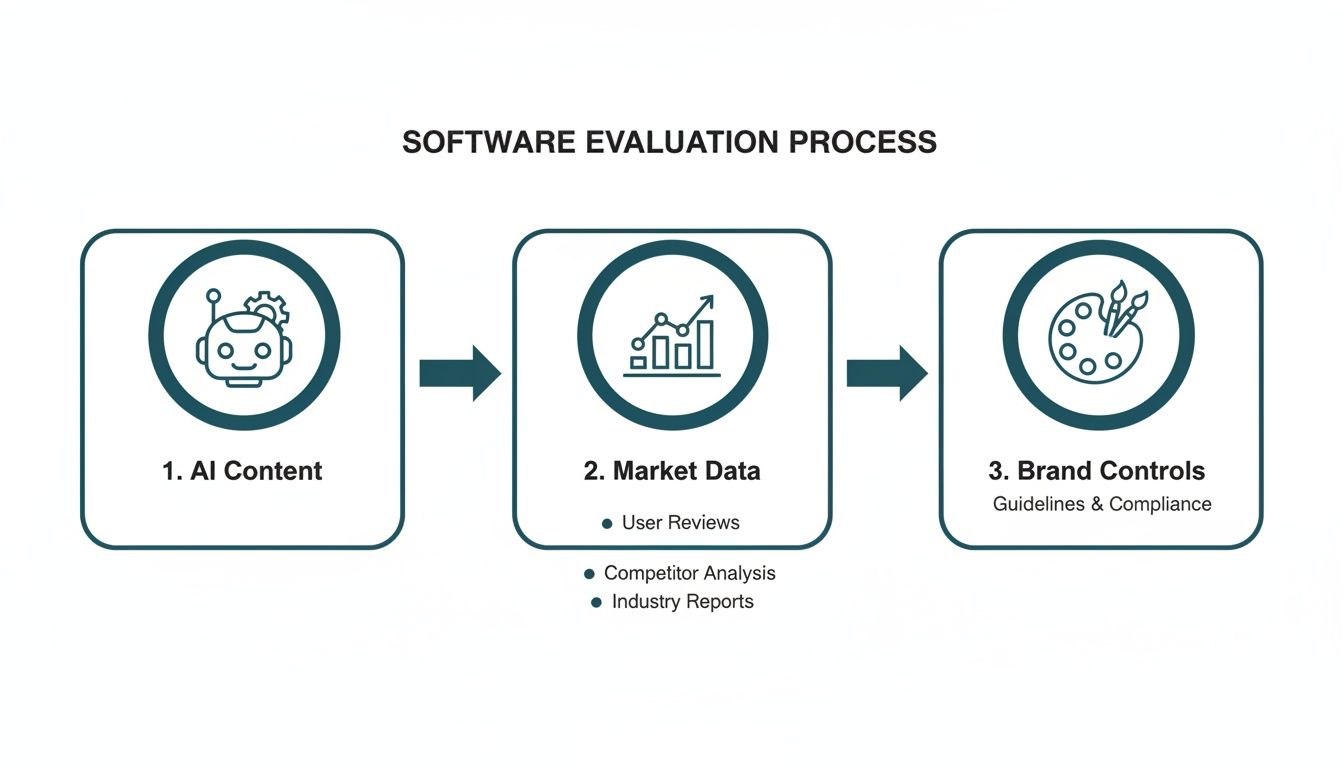
    Consider these factors during your evaluation:

    • Ease of Use: How intuitive is the platform? A tool with a steep learning curve can create more friction than it resolves.
    • Integration Capabilities: How well does the tool play with your existing systems, such as your CRM, MLS, or social media scheduling tools?
    • Specific Use Case: Does the tool solve a niche problem exceptionally well, or is it a generalist platform? Agents evaluating AI tools for real estate often use a mix of general-purpose writing tools and industry-specific platforms. General AI tools can help with drafting, but real estate–specific platforms tend to focus on MLS formatting, platform-specific descriptions, and presentation materials. Tools in this category include options like ListingBooster.ai, which focuses on structured listing content and presentation prep, as well as broader marketing automation platforms agents use for social and content workflows.
    • Return on Investment (ROI): Your ROI isn't just financial. Measure it in hours saved, quality of marketing materials produced, and consistency achieved.

    The ultimate goal is to build a tech stack that supports your unique business objectives, enhances your professional brand, and allows you to focus on what you do best: building meaningful relationships and closing deals.

    Note: This article lists commonly used AI tools for real estate agents for informational purposes. Inclusion does not imply endorsement, and agents should evaluate tools based on their own workflow and market needs.

    Article created using Outrank

  • A Real Estate Listing Presentation Template That Wins Sellers

    A Real Estate Listing Presentation Template That Wins Sellers

    A great real estate listing presentation template isn't just a slide deck. Think of it as your most powerful tool for proving your value, justifying your commission, and walking out with a signed listing agreement. The best ones masterfully weave together hyper-local data, a marketing plan that stands out, and a story that cements you as the go-to expert in your market.

    Why Your Presentation Needs a Modern Overhaul

    A man uses a tablet to modernize a real estate listing presentation, with a model house nearby.

    Let's be honest, showing up with a generic Comparative Market Analysis (CMA) and a handshake just doesn't cut it anymore. Today's sellers have done their homework. They expect you to be a data-driven, tech-forward marketing pro, and your presentation is often your one and only shot to prove you're the right agent for the job.

    The competition is fierce. The North American listed real estate market is worth a mind-boggling $1.3 trillion USD. In a market that massive, especially when inventory is tight, your presentation is what separates you from the pack. You can dive deeper into this global market analysis to see how it shapes local competition.

    This is exactly why a modern, AI-enhanced template isn’t just a nice-to-have; it’s essential. It’s about moving beyond a passive report and creating an active, persuasive pitch that tells a compelling story.

    Moving Beyond Pretty Slides

    A truly modern presentation anticipates and answers the questions every seller is thinking but might not ask aloud:

    • How will you market my home differently than the agent down the street?
    • What specific data are you using to come up with that price?
    • How will your tech give my listing an advantage on sites like Zillow and Redfin?
    • Why should I pay your commission?

    Your goal is to turn a simple slideshow into a strategic narrative. It needs to showcase your marketing chops and make it crystal clear why you offer more value than agents who are stuck in the past.

    To see what this looks like in practice, here’s a quick comparison of how to upgrade your approach to meet modern seller expectations.

    Modern vs Traditional Presentation Elements

    Presentation Element The Traditional Approach The Modern AI-Powered Approach
    Market Data A printed CMA with recently sold comps. Dynamic, real-time market data, trend charts, and absorption rate analysis.
    Marketing Plan A checklist of standard marketing activities (MLS, yard sign, flyers). A detailed 30-day marketing calendar with specific digital ad campaigns and content examples.
    Property Description A basic description highlighting features like beds, baths, and square footage. AI-generated listing copy optimized for SEO and written to evoke an emotional connection.
    Pricing Strategy A suggested list price based on past sales. A multi-tiered pricing strategy supported by predictive analytics and competitor positioning.

    This table really highlights the shift. It’s about showing, not just telling.

    The AI-Powered Advantage

    This is where things get exciting. Weaving AI-driven insights into your presentation completely changes the game. It shows a level of preparation and strategic thinking that most agents simply can't match.

    Imagine walking in and using AI to analyze competing listings on the spot, generating an optimized property description right there, or even mapping out a 30-day social media plan before they’ve even signed.

    This isn't just about flashy tech. It demonstrates that you're not just a salesperson; you're a forward-thinking marketing partner. By showing that your strategy is built on hard data, not just gut feelings, you build incredible trust. Suddenly, justifying your commission becomes easy because you’ve already proven the superior return they’ll get from your modern approach.

    Win the Listing Before You Even Arrive

    The race for a new listing is often decided long before you’re sitting at the seller’s kitchen table. Think about it: your real presentation starts the moment they first hear your name or see your email. If you can establish yourself as a trusted authority from that very first digital handshake, you've already started to frame the entire conversation. You're no longer just another agent—you're a strategic partner.

    This is exactly why a digital pre-listing package is so powerful. I’m not talking about sending your entire slide deck and spoiling the big reveal. That’s a rookie mistake. Instead, this is a strategic preview—a carefully curated package that showcases your expertise and proactive mindset. It warms up the seller so when you do meet, you can skip the fluff and get right down to strategy.

    Ditch Generic Data for Hyper-Local Insights

    Anyone can pull city-wide stats from the MLS. It’s unimpressive and, frankly, lazy. What really makes a seller lean in is when you can demonstrate a deep, almost intimate, understanding of their specific pocket of the neighborhood. You need to tell a story with the data.

    Your report should directly answer the questions already swirling in their heads about their micro-market:

    • Absorption Rate: How fast are homes just like theirs actually selling? Break down what the current pace means for them. Are they in the driver's seat in their zip code?
    • Pricing Trends: A simple, clean chart showing the price per square foot shifts over the last 12-18 months in their subdivision is incredibly powerful. It visually grounds your future pricing strategy in solid evidence, not just opinion.
    • Neighborhood Intel: Did a new coffee shop just open? Are there whispers of school rezoning? Mentioning these details shows you’re not just an agent in their area; you’re embedded in the community.

    A truly great pre-listing report doesn't just dump data on a seller; it interprets it for them. You're effectively saying, "I see the unique market forces at play on your street, and here's how we're going to use them to your advantage."

    This level of detail instantly sets you apart from the competition, who will likely show up with a stack of generic MLS printouts. It proves you've already invested real thought into their home.

    Tell a Story with Your Successes

    Testimonials are nice, but well-structured case studies are absolute gold. A great case study lets a potential seller see their own success story in your past work. Forget the generic quotes. Instead, craft a compelling one-page summary that clearly lays out a problem, your solution, and the stellar result.

    Here's a simple framework that works every time:

    1. The Challenge: "The owners of 123 Maple Street had a tight timeline to relocate for a new job. They were worried because their home’s unconventional layout had sat on the market with a previous agent."
    2. Our Strategy: "We brought in a virtual stager to showcase the layout's potential for a home office and family room. Then, we launched a targeted social media campaign to buyers we knew were looking for those specific features."
    3. The Result: "We generated multiple offers within 72 hours of listing and sold for 103% of the asking price, getting the sellers to their new city right on schedule."

    See the difference? This narrative is far more convincing than a simple "They did a great job!" It provides tangible proof you're a problem-solver, which is a key part of any winning real estate listing presentation template.

    Polish Your Digital First Impression

    You can bet that before they meet you, every single seller is going to Google your name. What they find on Zillow, your personal blog, or social media channels needs to reinforce the expert image you’re building. Your digital footprint has to be clean, professional, and consistently providing value.

    Something as simple as a two-minute video on your blog explaining your marketing process or analyzing recent local sales trends can work wonders. Share a link to it in your pre-listing package. This invites sellers to get to know you and your expertise on their own terms, building a foundation of trust before you even walk through their door.

    Structuring Your Winning Presentation Slide by Slide

    Think of your listing presentation not as a collection of slides, but as a story. You're guiding a potential client from a place of uncertainty to one of absolute confidence in you. Forget the generic, one-size-fits-all approach. Every single slide needs to build on the last, creating undeniable momentum that leads straight to a signed agreement.

    I've put together a blueprint here that breaks down the essential slides you'll need. This isn't a rigid script, but a flexible framework. The goal is for you to inject your own personality and deep local knowledge into it, while making sure you hit all the critical points that matter to sellers today.

    The Foundation: Introduction and Agenda

    Your first few slides are crucial for setting the right tone. This isn't just about you; it's about showing the seller, right from the jump, that you understand them. I always start by briefly recapping their goals and what's driving their decision to sell. It's a simple move, but it immediately shows you were listening.

    Next, pop up a clear agenda slide. This small step does a lot of heavy lifting—it manages expectations, showcases your professionalism, and reassures the seller that you have a plan and you respect their time.

    • Slide 1: Personal Intro: Keep it clean. A professional headshot, your brokerage logo, and a single sentence that captures your value. That's it.
    • Slide 2: Understanding Your Goals: A quick recap of their "why." For instance, "My understanding is you're looking to upsize before the next school year starts, so our timeline is key."
    • Slide 3: Our Roadmap for Today: Just a simple outline of the meeting—market analysis, marketing plan, pricing, and next steps.

    Diving Deep into Hyper-Local Market Realities

    This is your first real chance to stand out. So many agents walk in with a generic CMA printout. You're going to do better. You’ll tell the story of their specific micro-market, positioning yourself less like a salesperson and more like a trusted market analyst.

    Go way beyond just showing comps. Your real estate listing presentation template needs visuals that make data easy to grasp. Think clean charts and simple graphs that illustrate local trends.

    Your market data isn't just a report; it's a strategic tool. Use it to build the case for your pricing and marketing strategy, showing the 'why' behind every single recommendation you're about to make.

    Key Data Points to Visualize:

    • Absorption Rate: Put this in plain English. "Right now, homes in your price range are selling at a rate of 2.5 per month. With only five active listings, we have a two-month supply of inventory, which tells us it's a strong seller's market."
    • List-to-Sale Price Ratio: A simple chart showing the average ratio in their neighborhood over the last six months is incredibly powerful for setting realistic expectations around negotiations.
    • Average Days on Market (DOM): This is my favorite. Show a visual comparison of the DOM for homes priced correctly versus those that needed a price drop. It’s a powerful way to get them on board with the right initial price.

    This data-driven approach builds massive credibility. You're not just sharing an opinion; you're presenting cold, hard facts about their market.

    Your Differentiated Marketing Blueprint

    Frankly, this is the most important part of your entire presentation. It directly answers the seller's biggest unspoken question: "What are you actually going to do to sell my home that's different from everyone else?" This is where you unveil a proactive, multi-channel strategy that goes miles beyond the old "3 Ps" (Put it on the MLS, Put a sign in the yard, and Pray).

    Get specific. Vague promises sound like every other agent. Provide tangible examples of what your marketing actually looks like in the real world.

    Example Marketing Plan Breakdown:

    1. Pre-Launch Buzz: "Our marketing actually starts before your home officially hits the MLS. We'll launch a 'coming soon' campaign to our agent network and run teaser ads on social media to build a list of interested buyers."
    2. Digital Dominance: "Your property gets the full treatment: professional photography and a cinematic video tour. We then push that content to Zillow, Redfin, and Realtor.com with AI-optimized descriptions designed to show up first in search results."
    3. Targeted Social Promotion: "We don't just post and hope. We run paid ad campaigns on Facebook and Instagram, targeting potential buyers based on their demographics, online behavior, and recent real estate interests in this specific area."
    4. Reporting and Feedback Loop: "Every week, you'll get a simple performance report from me showing online views, feedback from showings, and any strategic adjustments we should consider."

    A detailed plan like this shows you have a proven, repeatable system for getting results. It turns marketing from a fuzzy concept into a tangible, value-packed investment.

    Presenting a Data-Backed Pricing Strategy

    After you’ve established the market conditions and showcased your superior marketing, the pricing conversation becomes much smoother. You’ve already laid all the groundwork with data. Now you just need to connect the dots. The key is to present a logical strategy, not just a single number.

    I always frame it as a collaborative decision. A pricing pyramid or a tiered model works wonders here, as it shows the likely outcome at different price points.

    • Aggressive Price: "This price is designed to create a frenzy, likely generating multiple offers and selling above the asking price. The small risk is we might leave a little money on the table."
    • Market Value Price: "This is the sweet spot. The data suggests this price will attract the biggest pool of qualified buyers and get you sold within the average days on market for the neighborhood."
    • Aspirational Price: "We can start here to leave room for negotiation, but we run the risk of sitting on the market longer, which can sometimes result in lower offers later on."

    This approach empowers the seller. You're not telling them the price; you're the consultant, providing the expert analysis they need to make the best possible decision.

    Articulating Your Unique Value and Proof

    Finally, bring it all home. Clearly state what makes you different and back it up with undeniable proof. This is where you connect your skills and track record directly to their wallet. Data from Realtor.com PRO shows that agents who can make specific claims—like "my listings sell 12 days faster than the market average"—are far more effective. It shifts you from making promises to stating facts. If you want to dive deeper into market trends, learning more about global real estate market perspectives can show you just how powerful data is in building credibility.

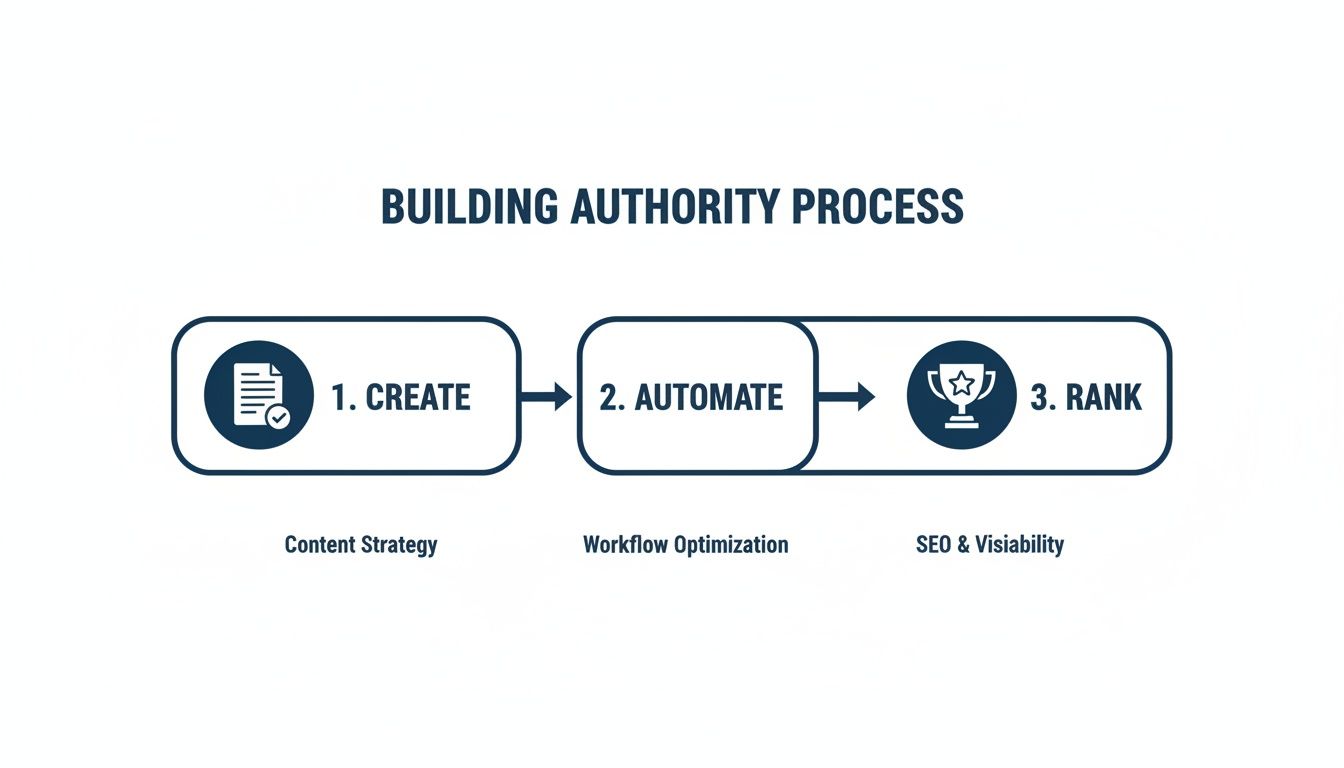
    This visual shows how you can build authority before you even walk in the door.

    A visual representation of the pre-listing authority process with three steps: market reports, case studies, and online presence.

    When you move smoothly from data-driven market reports to compelling case studies and a polished online presence, you create a powerful story of expertise. It's a structured approach where every piece builds on the last, solidifying your position as the only logical choice for the job.

    Making Your Data Speak Volumes with Smart Visuals

    A laptop on a wooden desk displays various data visualizations, with a sign saying 'Visualize the Data' in the background.

    Let's be honest: a spreadsheet full of raw numbers is boring at best and completely overwhelming at worst. The top agents I know are part translator, part storyteller. Your job is to take all that dense market data and spin it into a clear, compelling story that a seller can actually understand and remember long after you've left their kitchen table.

    This is where data visualization is your secret weapon.

    Good visuals aren't just about looking professional; they're about building trust. When you show sellers the why behind your pricing and marketing strategy with a few clean charts, you shift the entire conversation. It’s no longer your opinion versus theirs. It’s a fact-based analysis. You’re not just telling them it's a seller's market—you’re showing them with a simple "Months of Inventory" chart that proves it.

    Turning Key Metrics into Persuasive Graphics

    Instead of just rattling off a list of comparable sales, you need to turn that information into a visual story. The whole point is to make complicated ideas like market velocity and pricing strategy feel simple and intuitive. A handful of powerful graphics will make a much bigger impact than pages of raw numbers ever could.

    Here are the essential metrics you absolutely should be visualizing:

    • List-to-Sale Price Ratio: A simple bar chart is perfect for this. Show the average ratio in their zip code right next to your personal average. This one visual instantly proves your ability to price homes correctly and negotiate effectively, which translates directly to more money in their pocket.
    • Average Days on Market (DOM): I love using a comparative graph here. Show the DOM for homes priced right from the start versus those that needed a price drop. It’s an incredibly powerful way to handle potential objections to your recommended list price before they even come up.
    • Absorption Rate Analysis: You can simplify this into a "Months of Supply" graphic. For instance, "Right now, there are 6 months of inventory in our area. Here’s how that’s changed over the last year." This one visual tells them everything they need to know about whether they're heading into a buyer's, seller's, or balanced market.

    A well-designed chart can make your most important point without you having to say a word. It lets the seller connect the dots and arrive at the conclusion you want them to reach on their own. That's always more powerful than just telling them.

    This approach elevates you from a sales agent to a trusted market analyst—and that’s how you win the listing.

    The Power of Professional Imagery and a Cohesive Brand

    While your data visuals build the logical case, it's the professional photography and videography that create that crucial emotional connection. Sellers are handing you the keys to one of their biggest assets. Your presentation must reflect the high-end marketing you're promising to deliver. Dropping in a few examples of stunning twilight photos or a cinematic property tour from a past listing shows them exactly the caliber of work they can expect.

    It's not enough to just say that 88% of agents use professional photography. You have to connect that to real-world results. Show them how professional shots lead to 61% more views online and an incredible 1,200% more shares on social media. This reframes your marketing plan from a simple cost into a smart investment designed to get them the highest possible return. For more data-backed ideas, you can check out some great strategies for crafting a winning real estate presentation on Bounti.ai.

    Beyond the photos, your entire presentation needs to feel connected and polished. This is a subtle detail, but it speaks volumes about your professionalism.

    Essential Branding Elements:

    1. Consistent Color Palette: Stick to your brokerage's colors or your personal brand colors on every single slide, chart, and graph. No exceptions.
    2. Uniform Fonts: Choose two, maybe three, complementary fonts and stick with them. A clean heading font and a readable body font are all you need to create a clear visual hierarchy.
    3. Clean Layouts: Embrace white space. Cluttered slides are a nightmare to read and just look amateurish. A more minimalist design forces the seller to focus on what truly matters on each slide.

    This level of detail shows you have a polished, repeatable system for success—not just for presentations, but for every step of selling their home.

    Bringing Your Presentation to Life and Handling Tough Questions

    Look, even the most stunning presentation is just a PDF until you, the agent, breathe life into it. Your confidence, how you connect with the seller, and the way you navigate the inevitable tough questions—that's what seals the deal. This isn't about memorizing a script; it's about leading a natural, strategic conversation.

    The only way to get that confidence is to practice. Seriously. Run through the whole thing a few times. Don't just read the slides. Get a feel for the rhythm and the flow between sections. You want to move smoothly from the market data into your marketing blitz and then land perfectly on your pricing strategy. When you practice, the slides become your visual backup, not a crutch.

    Reading the Room: Adjusting Your Delivery

    No two sellers are the same. Trying to use a one-size-fits-all pitch is a surefire way to lose the listing because it shows you aren't listening. The real magic happens when you identify who you're talking to and adjust your focus accordingly.

    • The Analytical Seller: This person lives for data. They want the numbers, the charts, the logic. Spend extra time on your CMA, really dig into the absorption rates, and show them your list-to-sale price ratios. When you talk marketing, frame it in terms of ROI and measurable results.
    • The Emotional Seller: For this seller, the home is full of memories, and this is a huge, emotional step. Acknowledge that. Show them your best photography and video examples. Talk about how you’ll honor the story of their home while finding the perfect buyer to start their own chapter there.
    • The Bottom-Line Seller: This client cares about two things: how much they'll walk away with and how fast it will happen. Be direct. Get straight to the point. This is where you highlight your negotiation stats, your average days on market, and how your commission isn't a cost—it's an investment in hitting their net number.

    When you tailor your presentation like this, you're not just a salesperson. You're a problem-solver who gets them.

    Turning Objections into Opportunities

    Let’s be real: objections are coming. But they aren't a "no." They're a request for more information, and you should be ready for them. The two big ones are always about your commission and the price you're recommending. Instead of getting defensive, see these as your chance to shine.

    When a seller pushes back on your commission, they aren't calling you expensive. They are asking you to demonstrate your value. This is where your marketing plan and negotiation track record do the talking for you.

    Here's how you can pivot back to the value you've already laid out in your presentation:

    • On Commission: "That's a completely fair question. The difference in my fee directly funds the comprehensive marketing plan we just went over. An agent who discounts their fee has to discount their marketing budget, too. That can mean fewer buyers seeing the home, which ultimately leaves money on the table. My entire strategy is designed to get you a higher sale price that more than covers the investment in my fee."
    • On Price: "I understand you want to get the absolute most for your home, and I want that for you too. If we look back at the 'Days on Market' data, you'll see that homes priced right from the start sell for a much higher percentage of their asking price. Starting too high and then dropping the price often makes buyers nervous. My approach is to create a sense of urgency right out of the gate to bring you the strongest offers possible."

    By using your own data to handle objections, you reinforce your expertise and keep the conversation moving forward.

    Nailing the Technical Details

    Finally, don't let a tech glitch kill your momentum. You might have a slick, interactive slideshow planned, but you absolutely must have a polished PDF version ready to go. Laptops die, Wi-Fi fails. Be prepared.

    Make sure your presentation looks fantastic on any screen, from a giant TV in the living room to an iPad at the kitchen table. A smooth, professional delivery—both in your words and your tech—shows the seller you're in control and ready for anything. That's the kind of confidence that wins listings.

    Common Questions (And My Straight-Up Answers)

    As you start putting these pieces together to build your own killer listing presentation, some questions will inevitably come up. It happens to everyone. Let's tackle some of the most common ones I hear from other agents so you can move forward with total confidence.

    Think of this as your personal cheat sheet. It’s here to iron out those last-minute wrinkles and get you focused on what you do best—connecting with sellers and winning their business.

    How Long Should My Presentation Actually Be?

    Keep it tight. You're aiming for a 20-30 minute conversation, which usually means around 15-20 slides. Anything longer and you risk losing their attention completely. You'll see their eyes start to glaze over, and that's a sign you've lost them.

    Remember, this isn't a college lecture; it's the start of a partnership. Each slide needs to make a single, powerful point that moves the conversation forward. The goal is to leave ample time for their questions and for a real discussion to unfold. Honestly, that back-and-forth is where you build the most trust and often seal the deal.

    What's the Single Most Important Slide?

    If I had to pick just one, it’s the Differentiated Marketing Plan. This is your money slide. It’s where you prove you’re not just another agent who’s going to stick a sign in the yard, pop it on the MLS, and pray.

    This is your chance to show them exactly how you'll give their home an unfair advantage over the competition. Are you using AI to write compelling descriptions that rank higher on sites like Zillow? Are you running targeted social media campaigns to find buyers before they even know they're looking? This slide turns your commission from an expense into a smart investment for a better, faster sale.

    Don't just give them a bulleted list of tasks. Show them your system. When a seller sees you have a repeatable, proven process for getting results, it builds massive confidence and makes your fee a no-brainer.

    How Do I Make My CMA Not Look Like Everyone Else's?

    Stop just handing them a stack of comps and a number. You need to turn your Comparative Market Analysis (CMA) from a data dump into a compelling story about the market. Use visuals to make the numbers meaningful.

    Here's how to make your CMA truly stand out:

    • Absorption Rate Charts: A simple chart can show them exactly how fast (or slow) homes in their price bracket are selling. It’s a powerful reality check.
    • Sale Price vs. List Price Graphs: This is your best tool for setting realistic expectations from the get-go about offers and negotiations.
    • Days on Market Trends: Show them the difference in selling time between active and sold properties. This is the perfect way to underscore why pricing it right from day one is so critical.

    When you do this, you shift from being just another agent to becoming their trusted market analyst. That's a huge difference.

    Should I Send My Presentation Before the Meeting?

    Absolutely not. Send a pre-listing package, but never, ever email your full presentation ahead of time. Sending the slides first completely deflates the impact of your meeting. It robs you of the chance to guide them through your strategy, read their reactions, and answer their questions as they come up.

    Your pre-listing package is the teaser trailer, not the whole movie. It should have your bio, your best testimonials, a few case studies, and maybe a high-level market overview. Use it to build your authority and warm them up, so when you walk in that door, you're not a stranger—you're the expert they've been waiting for.


    Ready to stop building from scratch and start winning? ListingBooster.ai hands you the AI tools to craft a modern, data-backed pitch in minutes. You can generate everything from your competitive analysis to AI-written property descriptions and a complete 30-day marketing calendar. Give it a try for free and see what a difference a truly modern real estate listing presentation can make.

    Article created using Outrank