Category: AI Tools & Technology

  • Real Estate Agent Marketing Automation Platform 2026

    Real Estate Agent Marketing Automation Platform 2026

    You already know the feeling. A new listing goes live, your phone is buzzing, your inbox is filling up, and by the end of the day you still have to write the MLS description, build social posts, queue email alerts, create flyer copy, and follow up with leads who asked about three different properties last week.

    Most agents do not have a marketing problem. They have a workflow problem.

    The old model still looks productive because you are always doing something. Posting. Editing. Rewriting. Copying listing details from one place to another. Chasing leads manually. But that activity hides a hard truth. If your marketing only happens when you personally touch every task, your visibility rises and falls with your calendar.

    A real estate agent marketing automation platform changes that. Not by replacing your judgment, and not by turning your brand into robotic filler, but by turning repeated marketing actions into systems. That matters now for two reasons. First, it gives you back time you should be spending on conversations, appointments, negotiations, and closings. Second, it helps you stay visible in a search environment that no longer depends only on Google rankings or social posting habits.

    Buyers and sellers are discovering agents in new ways. If your content is inconsistent, scattered, or missing structure, you are harder to find. If your listings, expertise, and market presence are published in a steady, machine-readable way, you are easier to surface across the places people search.

    That is why automation is no longer a nice-to-have for large teams. It has become operating infrastructure for solo agents, growing teams, and brokerages that want to stay visible and responsive without burning out the people doing the work.

    Beyond Busywork The New Era of Real Estate Marketing

    A lead comes in during a showing. A price change needs to go live before lunch. A seller asks why the home is not showing up consistently across search results, portals, and AI-generated answers. By the end of the day, the real problem is usually not effort. It is that marketing still depends on too many manual handoffs.

    A lot of agents are still working from a patchwork stack. One tool holds contacts. Another handles email. Design happens in Canva. Social posts go out when someone has time. Listing copy gets updated in between calls, tours, and contract deadlines.

    That setup can limp along when volume is low. Once listings, leads, and client communication start stacking up, the weak points become expensive.

    What busywork really costs

    Manual marketing rarely fails in one dramatic moment. It slips.

    A new inquiry sits too long before follow-up. A price improvement reaches Instagram but not email. A listing description gets shortened on one platform, expanded on another, and rewritten again for a flyer. Past clients fall out of touch because no one remembered to restart the nurture sequence after closing.

    None of those tasks are difficult. They are repeated, time-sensitive, and easy to miss when the day gets crowded. That is what wears agents down and creates inconsistency buyers, sellers, and search systems can all see.

    The cost is not just lost time. It is uneven visibility.

    AI search has changed the standard. ChatGPT, Google AI, and similar tools do not discover agents the way consumers used to. They pull from content that is current, structured, repeated across channels, and tied to clear signals of local expertise. If listing updates are delayed, if content appears sporadically, or if your market presence depends on spare time, you become harder to surface.

    The shift from task-doing to system-building

    The practical shift is simple. Stop asking whether marketing got done today. Ask whether the system handled the events that mattered today.

    When a listing moves from coming soon to active, content should update across the channels you use. When a lead requests information, follow-up should start without waiting for someone to remember. When a client goes quiet for six months, the relationship should not disappear with them.

    Agents with the least stress are usually not the agents with the smallest pipelines. They are the ones with fewer manual steps between a business event and a marketing response.

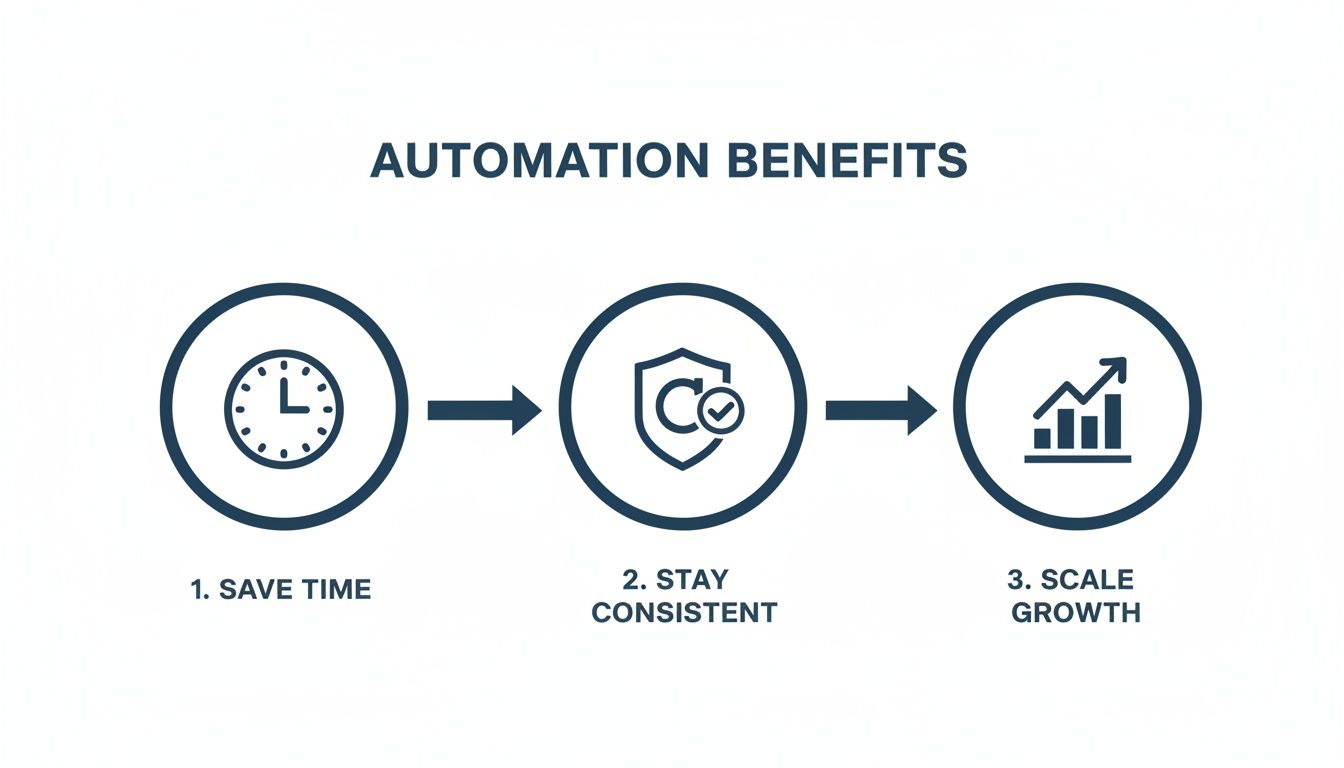
    That is the new era of real estate marketing. Automation saves time, yes. More importantly, it helps your listings, your brand, and your local expertise stay visible in a search environment that rewards consistency and structure, not heroic last-minute effort.

    Understanding Your Digital Marketing Command Center

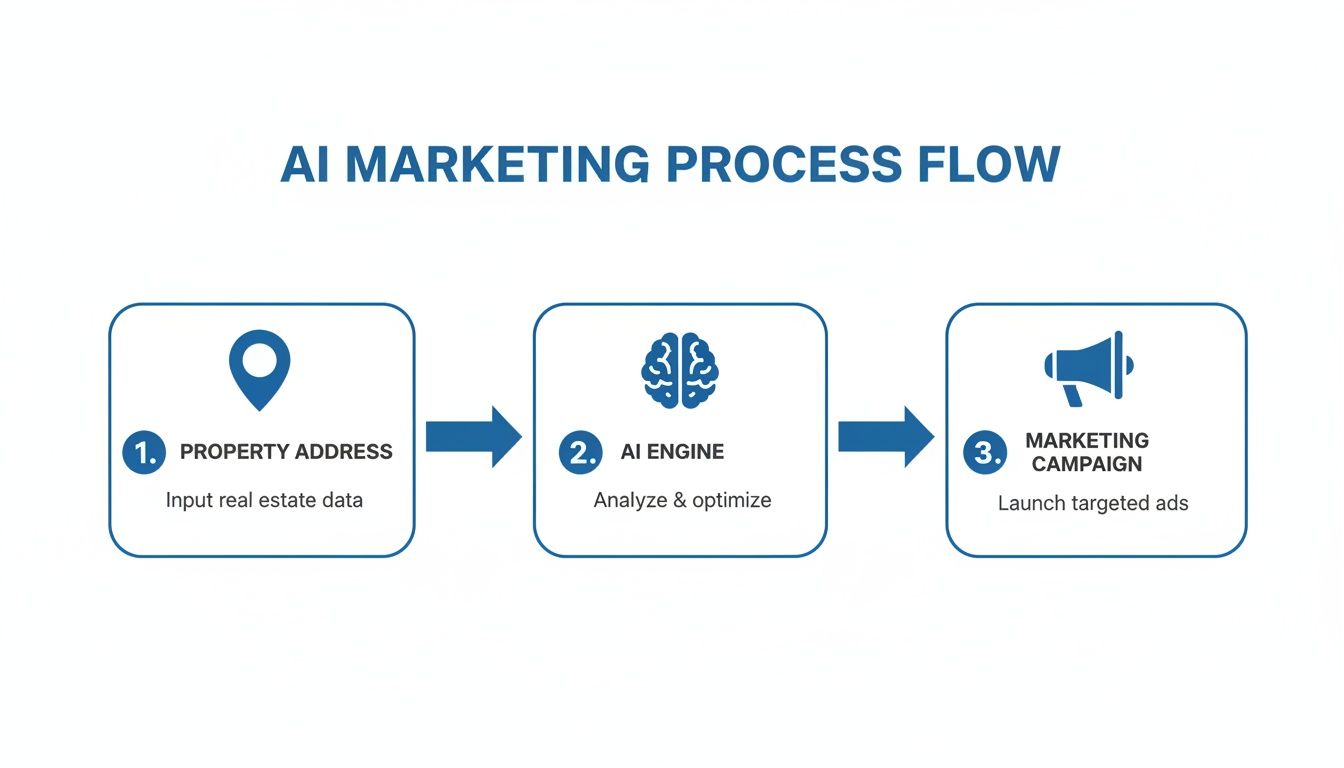
    A real estate agent marketing automation platform functions as the operating system behind your marketing. It connects listing data, CRM activity, follow-up rules, content distribution, and reporting so your business responds as one system instead of five disconnected tools.

    That matters for more than convenience. In AI search, fragmented marketing creates weak signals. If your listing status changes in one place, your email copy says something else, and your website updates two days later, search systems and consumers both see inconsistency.

    Infographic

    What it is and what it is not

    A CRM keeps records. An email tool sends campaigns. A social scheduler publishes posts. Each tool handles a task. None of them, by itself, coordinates the full chain from listing event to lead response to multi-channel visibility.

    A real marketing automation platform ties those actions together. It should:

    • Capture leads automatically from forms, portals, ads, and website activity
    • Send lead data into the CRM without manual entry
    • Trigger follow-ups based on behavior, timing, or listing events
    • Publish content across channels from one workflow
    • Track performance so you can see which actions produce inquiry and response
    • Keep listing promotion synchronized when price, status, or availability changes

    That difference shows up fast in daily work. Teams stop re-entering the same data. Agents stop chasing missed follow-ups. Listings get promoted while they are still fresh, not after someone finds time.

    Why this category keeps growing

    The demand is easy to explain. Real estate marketing now depends on speed, coordination, and consistent digital signals across every place a listing or agent appears.

    As noted earlier, analysts expect strong growth in this software category over the next decade. That lines up with what broker-owners and top-producing agents already see firsthand. Sellers want wider exposure. Buyers expect immediate follow-up. Teams need cleaner handoffs. Brokerages need more control over brand and compliance.

    There is another pressure point that gets less attention. AI-driven search tools reward clear, current, structured information. A platform that keeps property data, local content, and campaign activity aligned is not only saving admin time. It is improving the odds that your listings and market expertise are visible where search behavior is heading.

    How the command center changes daily work

    When the setup is right, one business event creates a chain of marketing actions without extra coordination.

    A new listing can trigger property data import, draft copy, social variations, email alerts to segmented contacts, and task reminders for internal follow-up. A price change can launch a different campaign with updated messaging for active buyers, past inquiries, and retargeting audiences. A contact who clicks listing links three times can move into a higher-priority path without anyone manually reviewing activity logs.

    This is also where content production becomes more strategic. Instead of creating each asset from scratch, agents can build repeatable workflows around listing status, audience type, and channel. For a closer look at that process, see this guide to real estate content marketing automation.

    The practical test

    Use a simple filter when evaluating platforms.

    Can the system connect listing activity, lead behavior, and content distribution without forcing your team to copy information between tools?

    If not, you are probably looking at a collection of point solutions with a nicer dashboard.

    The right platform reduces handoffs and keeps your marketing visible, current, and usable across channels. The wrong one leaves the manual work in place and hides it behind better design.

    Core Platform Features That Automate Your Growth

    The strongest platforms do not win because they have the longest feature list. They win because they remove bottlenecks in three places where agents lose time and momentum: content creation, lead nurturing, and operations.

    Dashboard of a real estate marketing automation platform featuring lead management, campaign performance analytics, and property visuals.

    Listing and content marketing features

    The first pillar is listing promotion. Many agents still spend too much time on repetitive production work in this area.

    Strong platforms help generate and distribute:

    • MLS-ready property descriptions
    • Channel-specific listing copy for social, email, and portal promotion
    • Status-based campaign assets for new listing, open house, price drop, and sold announcements
    • Print-ready materials such as flyers or handouts
    • Authority content like neighborhood guides and market updates

    Every listing has a short attention window, so prompt production is important. If marketing assets take too long to produce, the listing loses momentum early.

    Enterprise-grade systems also need direct MLS connectivity. Saleswise notes that enterprise-level real estate marketing automation requires direct API connectivity with MLS databases, eliminating manual data entry that can consume 15 to 20 hours weekly and reducing setup to under 10 minutes per property.

    That single capability changes a lot. It cuts duplicate entry, lowers the chance of inconsistent listing details, and allows status changes to cascade into your marketing automatically.

    For a deeper look at how content workflows fit into this process, this guide on real estate content marketing automation covers the operational side well.

    Lead nurturing and engagement features

    The second pillar is follow-up. Most agents do not struggle because they lack leads. They struggle because leads enter the business at different temperatures, from different channels, and need different next steps.

    The platform should handle that complexity without turning your pipeline into a spreadsheet exercise.

    Look for systems that can:

    • Score leads by behavior
    • Segment contacts by interest and timing
    • Trigger email drips automatically
    • Alert agents when behavior signals urgency
    • Route leads to the right person on a team

    Behavior-based lead scoring matters because not every inquiry deserves the same response path. Someone who clicks one listing link once is different from someone who repeatedly visits a property page, opens emails, and requests details.

    Modern platforms also use machine learning to read what some providers call digital body language. That includes signals like email opens, listing clicks, page time, and form submissions. The practical value is simple. You stop treating every lead as equal and start prioritizing the ones showing active intent.

    Many agents see the biggest difference between “having a database” and “running a system” in this area.

    Operations and analytics features

    The third pillar is internal control. This gets less attention because it is not flashy, but it often decides whether a platform is usable under pressure.

    Three operational features matter more than most buyers realize.

    Compliance support

    Real estate marketing carries legal and brand risk. A platform should help review content before publishing, especially when multiple agents are using the same system. Fair Housing checks, brand templates, approval workflows, and version control all matter here.

    Reporting that answers real questions

    Avoid dashboards that look impressive but do not guide action. Useful reporting tells you:

    • Which lead sources are producing responsive contacts
    • Which campaigns are generating inquiry
    • Which listings are getting engagement but not conversion
    • Which follow-up paths stall out

    If a report does not help you decide what to do next, it is decoration.

    Cross-platform synchronization

    Your platform should not let one channel drift away from another. If a property goes pending, your emails, queued social posts, and client alerts should reflect that. Mismatched information confuses clients and creates avoidable cleanup work.

    A good automation platform does not just publish faster. It keeps your business from saying three different things in three different places.

    What usually does not work

    Some platforms fail in real use because they over-index on one part of the workflow.

    Common weak points include:

    • Strong CRM, weak content tools
    • Nice social scheduling, poor listing integration
    • Good email automation, no MLS sync
    • AI writing tools that create generic copy
    • Reports with no connection to agent action

    That is the trade-off many agents discover too late. The product demos well, but daily work still requires manual patching between systems.

    The strongest setup is not the platform with the most tabs. It is the one that makes listing marketing, lead follow-up, and operational control work as a connected process.

    How Automation Scales for Solo Agents Teams and Brokerages

    Automation does not create the same value for every business model. A solo agent needs greater operational power. A team lead needs coordination. A brokerage owner needs scale without chaos.

    That difference matters when you evaluate a platform. The same feature can feel optional in one environment and mission-critical in another.

    HubSpot’s overview of real estate marketing automation reports that agents using these platforms free up 10 to 15 hours weekly, with some firms seeing a 41% revenue increase per salesperson and up to 400% increases in closed deals. Those outcomes land differently depending on how your business is structured.

    Automation Benefits by Real Estate Business Type

    Business Type Primary Pain Point Key Automation Benefit
    Solo Agent Too many roles handled by one person Reclaims time by automating follow-up, content production, and listing campaigns
    Team Inconsistent execution across multiple agents Standardizes brand voice, lead routing, and campaign timing
    Brokerage Scaling agent support without adding risk Delivers repeatable marketing systems with stronger oversight and compliance control

    For the solo agent

    A solo agent often acts as marketer, coordinator, copywriter, and lead manager all in the same day.

    In that environment, automation works like a staff multiplier. It handles the repeated work that usually gets pushed to nights and weekends. New listings can move into promotion faster. Past clients can hear from you consistently. Leads do not go cold just because you are in back-to-back appointments.

    The biggest gain is not convenience. It is continuity. Your marketing keeps moving when your day gets crowded.

    For the team

    Teams run into a different problem. They usually have activity, but not consistency.

    One agent follows up quickly. Another waits. One writes strong listing captions. Another publishes weak copy. One uses the right brand message. Another improvises. Over time, that inconsistency hurts conversion and brand trust.

    Automation helps teams by giving them shared workflows:

    • Lead routing rules
    • Campaign templates
    • Pre-approved messaging
    • Listing event triggers
    • Performance visibility across agents

    The result is not uniformity for its own sake. It is predictable execution.

    For the brokerage

    Brokerages need more than productivity. They need governance.

    A brokerage can provide agents with stronger marketing support through automation, but the genuine advantage comes from building a system agents will use. If every agent chooses different tools, publishes in different formats, and follows different processes, the brokerage loses visibility and control.

    A centralized automation stack helps brokerages:

    1. Support agent marketing at scale
    2. Reduce brand inconsistency
    3. Create cleaner review processes
    4. Lower compliance exposure
    5. Give newer agents a stronger starting system

    The larger the organization, the more valuable standardization becomes. Not because creativity is bad, but because unmanaged variation creates operational drag.

    The key trade-off to accept

    Solo agents often want simplicity. Teams want flexibility. Brokerages want control.

    No platform serves all three perfectly without configuration. That is why the right choice depends less on the feature checklist and more on whether the product matches your operating model.

    If you are solo, choose speed and ease of execution.

    If you run a team, prioritize routing, templates, and shared visibility.

    If you run a brokerage, prioritize governance, scalability, and content controls before flashy front-end features.

    Your Checklist for Choosing the Right Automation Platform

    A platform demo can look polished and still fail in day-to-day use. The safest way to evaluate a real estate agent marketing automation platform is to test it against operational questions, not sales language.

    Start with integration, not appearance

    If the system cannot connect to the places your data already lives, everything else gets harder.

    Ask:

    • Does it connect directly to MLS or IDX data where needed
    • Can it pull in leads from website forms, portals, and social campaigns
    • Does activity sync to the CRM automatically
    • What still requires manual entry

    You are looking for fewer handoffs. Every extra copy-and-paste step creates delay, inconsistency, and missed follow-up.

    Test the intelligence behind the automation

    Some vendors say “AI” when they really mean templates with a text box.

    The stronger platforms use machine learning to prioritize people based on engagement signals. AgentPulse describes modern platforms using dynamic lead scoring based on digital body language such as email opens, listing clicks, and time on page. The same source notes these systems can instantly segment audiences and have shown up to 400% increases in closed deals through hyper-targeted campaigns.

    That does not mean every platform will produce that result for every agent. It does mean the underlying capability matters.

    During a demo, ask:

    1. How does the platform score lead intent
    2. What behaviors trigger a workflow
    3. Can I change scoring rules or segments
    4. How quickly does activity update the contact record

    For a practical comparison framework, this breakdown of real estate marketing software comparison is a useful reference.

    Review content quality and compliance support

    A weak platform can automate bad content at scale. That is not efficiency. That is faster dilution of your brand.

    Look at actual outputs:

    • Listing descriptions
    • Open house promotions
    • Price-drop announcements
    • Market update content
    • Evergreen authority posts

    Then ask the harder questions:

    • Can content be edited easily
    • Does it support approval workflows
    • Are there Fair Housing safeguards
    • Can teams preserve a consistent voice

    If the content sounds generic, your audience will feel it immediately.

    Check whether it can grow with you

    The platform that works for a solo agent may break down once you add two assistants, five agents, or multiple office locations.

    Ask:

    • Can permissions be customized
    • Can campaigns be duplicated across agents
    • Does reporting work at both agent and manager level
    • Can the system support brand templates without blocking local customization

    Many buyers make a mistake at this stage. They buy for the current month, not the next stage of the business.

    Prioritize usability under pressure

    A platform is only valuable if people use it during busy weeks, not only during onboarding.

    If your system requires too much setup, agents stop using it when listings pile up. That is the moment the software has to be easiest, not hardest.

    Request a live walk-through of three common workflows:

    • Launching a new listing campaign
    • Following up with a newly captured lead
    • Adjusting marketing after a price change

    If those actions feel clunky in a demo, they will feel worse in production.

    Winning the AI Search Race with ListingBooster.ai

    Most real estate marketing conversations still focus on email drips, CRM hygiene, and social calendars. Those matter. But they do not fully address the visibility problem agents are about to feel more sharply.

    People are increasingly asking AI systems for recommendations, summaries, local guidance, and agent suggestions. That changes what it means to “show up” online.

    A digital graphic featuring a house listing overlay on a surreal landscape with abstract textured walls.

    Why traditional visibility is no longer enough

    A polished website and occasional posting schedule are not enough if your content is thin, inconsistent, or difficult for AI systems to interpret.

    The overlooked issue is not just ranking. It is recommendation. When someone asks an AI tool a question like who to work with in a specific market, agents with a stronger digital footprint are more likely to surface.

    That gap has been under-served in most platform discussions. ActiveCampaign’s analysis identifies this as a neglected angle, noting that over 40% of homebuyers now start in AI-driven search environments and that many existing resources focus on CRM and email nurture rather than how agents become recommended in AI queries.

    What makes this a platform issue

    AI visibility is not built by one blog post or one listing description.

    It comes from structured, repeated publication of:

    • Property content
    • Market expertise
    • Neighborhood knowledge
    • Agent positioning
    • Consistent digital signals across channels

    That is why this belongs inside the automation conversation. If the content depends on you producing everything manually, your AI footprint will stay thin and uneven.

    Where ListingBooster.ai fits

    One option built around this visibility problem is ListingBooster.ai. Its model centers on two engines.

    Listing Commander handles property-level marketing output, including AI-optimized listing descriptions, channel-specific promotional content, and schema-marked assets tied to discoverability.

    Authority Builder focuses on the broader body of content agents need if they want to build an ongoing digital footprint, such as neighborhood guides, market updates, buyer education, and positioning content.

    That combination matters because AI search does not reward only listing activity. It also responds to sustained evidence that an agent is active, specific, and relevant in a market.

    In the next phase of real estate marketing, the question is not only whether your content converts. It is whether your content exists in a format and volume that helps AI systems recognize you.

    The practical takeaway is straightforward. If your automation stack handles efficiency but ignores AI-readable visibility, it solves only part of the modern marketing problem.

    Common Questions on Real Estate Marketing Automation

    Most hesitation comes down to three concerns. Cost. Complexity. Authenticity.

    All three are reasonable. None of them should stop a serious evaluation.

    Is it worth paying for if I am still building my business

    If you are early in your career, every software decision feels loaded. That is fair.

    The better way to think about automation is not as an expense line for convenience. It is a system that protects consistency. Newer agents often lose momentum because they disappear online when they get busy or because they spend too much time making marketing from scratch. A platform helps maintain a visible, active presence while reducing repeat work.

    That matters even more when you do not have an assistant, coordinator, or in-house marketer.

    Is setup going to be a technical headache

    It depends on the platform. Some tools are overloaded with options and demand too much configuration. Others focus on common real estate workflows and feel much lighter.

    The key is choosing software that matches the way agents work. If you need a consultant just to launch a listing campaign, the setup burden is too high for most working agents.

    Ask the vendor to show a complete workflow live. Not slides. Not a feature tour. A real new listing, a real lead intake, and a real follow-up path.

    Will automation make my brand feel generic

    It will if you use it badly.

    Automation should handle the repetitive parts of the process. It should not replace your point of view, local knowledge, or client conversations. The strongest use of automation is to standardize what must happen every time, then leave room for judgment where personal expertise matters most.

    A useful way to divide the work looks like this:

    • Automate the repeatable such as campaign triggers, reminders, distribution, and first-draft content
    • Personalize the meaningful such as negotiations, consults, listing strategy, and client-specific advice
    • Review the public-facing output so your brand voice stays recognizable

    Good automation does not remove the personal touch. It removes the need to spend your best energy on tasks that never needed your full attention in the first place.

    Do I need one platform or several connected tools

    That depends on how fragmented your current setup is.

    If your CRM, content process, listing promotion, and reporting already work smoothly together, you may not need a single all-in-one system. But most agents are not operating in that kind of clean environment. They are stitching tools together and managing the gaps manually.

    In practice, the more disconnected your stack is, the more valuable a true command-center platform becomes.

    What should I do next

    Do not start with the longest feature list. Start with the work that breaks most often in your business.

    If listing marketing is inconsistent, solve that first.

    If lead follow-up is slow, solve that first.

    If your online visibility depends on whether you had time to post this week, solve that first.

    Then evaluate platforms against real workflows, not promises.


    If your current marketing depends too heavily on manual effort, take a close look at ListingBooster.ai. It is built for agents, teams, and brokerages that need faster content production, stronger consistency, and a more visible digital footprint in the age of AI search.
  • Automated Real Estate Email Marketing with AI: A 2026 Guide

    Automated Real Estate Email Marketing with AI: A 2026 Guide

    You already know the feeling. New leads come in from a portal, your website, an open house, a sign call, maybe a relocation partner. You mean to follow up well, but the day gets eaten by showings, offers, inspections, and the constant back-and-forth that keeps transactions moving.

    So the database turns into a graveyard of half-worked leads. Some people get a quick manual reply. Others get dropped into a generic drip. Past clients hear from you only when you remember. And the emails you do send often sound like marketing, not guidance.

    That is the gap automated real estate email marketing with AI can close, if it is built correctly. Not as a blast machine. Not as a shortcut for lazy copy. As a system that turns contact data, listing activity, and behavior signals into relevant follow-up that helps agents book conversations and stay visible without creating legal risk.

    The part many agents miss is that automation in real estate has to do two jobs at once. It has to scale communication, and it has to stay compliant. If your AI system writes fast but pulls your business into Fair Housing trouble, it is not efficient. It is expensive.

    Why AI is Rewriting Real Estate Email Marketing

    The old model was simple. Build a list, load a drip, swap a few names into a template, and hope repetition creates response. That model still exists, but buyers and sellers no longer move through the market in a straight line.

    A lead may browse listings for weeks, disappear, come back after a rate change, save a property late at night, ask a question in an AI tool, then reopen an old email because your subject line matched what they were thinking that day. Static campaigns do not handle that well.

    The bigger shift is visibility. More than 40% of homebuyers now start searches in AI tools like ChatGPT, according to the verified publisher background provided for ListingBooster.ai. That changes how agents stay discoverable. Email is no longer just a follow-up channel. It is part of the content footprint buyers encounter before they ever call.

    There is still a strong business case for email itself. AI-driven email marketing delivers a 13% boost in click-through rates, with AI personalization reaching up to 13.44% CTR improvement, and email in real estate remains valuable because it delivers $38 ROI per dollar spent according to Artsmart.ai’s AI in email marketing statistics. The point is not the CTR number by itself. The point is that better relevance compounds in a channel that already matters.

    What changed in practice

    Agents used to choose between two bad options.

    One option was manual follow-up that felt personal but collapsed under volume. The other was automation that scaled but sounded generic. AI sits in the middle and fixes that trade-off when it has the right inputs.

    That means an email platform can respond to behavior, not just time delays. It can send different market updates to a long-term browser than to a seller preparing for a listing appointment. It can adapt messaging to viewed property types, financing signals, neighborhood interest, and stage in the transaction.

    Key takeaway: Better automated real estate email marketing with AI is not about sending more emails. It is about sending fewer irrelevant ones.

    What still does not work

    Some teams install AI and expect magic. They upload a messy CSV, connect a generic prompt tool, and let it produce content with no segmentation and no review process. That usually creates three problems:

    • Weak relevance: The messages sound polished but disconnected from the lead’s actual intent.
    • Workflow clutter: Agents get duplicate tasks, conflicting tags, or emails triggered from the wrong event.
    • Compliance exposure: AI fills in details you did not explicitly approve, including language that can create Fair Housing issues.

    Strong execution starts with the database. If the contacts are vague, stale, or poorly tagged, the AI just produces cleaner-looking noise.

    For a practical look at how AI is reshaping agent visibility more broadly, this guide on AI marketing for real estate agents is a useful companion to email strategy.

    Building Your Smart Contact Database

    Most email problems start before a single message is written. They start in the CRM.

    If your records only contain a name, an email address, and a lead source, your automation cannot do much besides schedule generic follow-up. A smart database works differently. It treats every contact as an active record shaped by behavior, stage, and context.

    A conceptual diagram showing interconnected data spheres labeled with business analytics terms like Real-time Analytics and Database.

    The market is already moving this direction. 46% of REALTORS® use AI-generated content, and 73% of top producers rely on AI weekly or daily, according to the NAR 2025 Technology Survey coverage. That matters because AI output gets better when the underlying contact data is structured well.

    Start with fields that matter to deals

    Many agents over-collect and under-structure. They ask for everything on a form, then store it in notes no automation can read.

    Use fields your CRM and email platform can act on. In practice, the most useful ones are:

    • Lead type: Buyer, seller, investor, renter, past client, sphere, vendor.
    • Source: Portal, website, open house, sign call, referral, social inquiry, direct email.
    • Geographic interest: City, neighborhood, ZIP, school area, relocation target.
    • Property intent: Condo, single-family, luxury, investment, downsizing, first-time purchase.
    • Timeline: Immediate, short-term, long-term, unknown.
    • Finance status: Cash, preapproved, financing needed, not discussed.
    • Lifecycle stage: New lead, engaged, appointment set, active client, under contract, closed, nurture.
    • Compliance flags: Consent status, do-not-email, attorney involved, special handling notes.

    You do not need every possible field. You need a clean set that supports actions.

    Replace static lists with dynamic segments

    A static list says “buyers.” A dynamic segment says “buyers who viewed multiple properties recently and clicked mortgage content.” That difference drives actual follow-up.

    Three dynamic groups usually create immediate gains:

    Hot buyers

    These are contacts showing recent intent through listing views, return visits, inquiry activity, or repeated engagement with property emails.

    Send property alerts, price-change notices, tight market commentary, and direct scheduling prompts. Keep the copy short. A hot buyer does not need a long newsletter. They need clarity and momentum.

    Long-term nurture

    These leads are interested but not moving yet. They may be renting, waiting on rates, planning a move after a lease ends, or researching neighborhoods.

    This group needs authority content. Think buyer prep guidance, neighborhood education, financing basics, or seller timing considerations. The goal is to stay credible without acting like every email requires an immediate reply.

    Past clients and sphere

    Most databases bury the highest-trust contacts under new lead activity. That is backwards.

    Past clients should sit in their own segment with home anniversary campaigns, seasonal maintenance reminders, local market updates, referral prompts, and occasional personal check-ins triggered for the agent. This group responds best to consistency and familiarity, not heavy automation language.

    Tip: If an agent cannot explain why a contact belongs in a segment, the segment is too vague to automate well.

    Use tags carefully

    Tags help when they describe something stable or action-oriented. They create chaos when agents use them like sticky notes.

    Good tag examples include:

    • Open house attendee
    • Luxury buyer
    • Investor lead
    • Needs lender intro
    • Listing presentation completed

    Bad tags usually reflect emotion or ambiguity, such as “good lead,” “check later,” or “maybe seller.” Those force human interpretation every time.

    Put the CRM at the center

    The CRM should hold the master contact record. Your email platform should receive updates from it, not become the place where records are fixed manually.

    That matters because brokerages often end up with conflicting data across the CRM, website forms, IDX tools, and agent inboxes. Then one platform thinks the lead is a buyer, another labels them as a seller, and the automation sends both campaigns. Contacts notice.

    A practical system uses the CRM as the source of truth, with email, website forms, calendar tasks, and lead routing feeding into it. If you are evaluating systems, this breakdown of the best real estate CRM software is a good place to compare what supports that model.

    A simple segmentation model

    Segment What defines it What to send
    New inquiry Fresh lead with limited behavior history Fast welcome, agent intro, next-step prompt
    Active buyer Repeated listing engagement and reply activity Matching properties, market movement, tour CTA
    Seller prospect Home valuation interest or listing intent Pricing education, prep guidance, consultation CTA
    Long-term nurture Interest present, transaction not immediate Educational content and periodic check-ins
    Past client Closed transaction and ongoing relationship Anniversary, referral, homeowner content

    A smart database does not have to be complicated. It has to be usable. If your agents cannot maintain the fields, trust the tags, and understand the segments, the automation breaks no matter how strong the AI looks in a demo.

    Generating Personalized Content at Scale with AI

    Once the database is structured, the creative side gets much easier. Many agents observe the first visible improvement here.

    The shift is not from “writing emails” to “letting AI write whatever it wants.” The shift is from building every message from scratch to using AI to assemble relevant content from live signals. That is a very different job.

    A digital graphic showcasing AI personalization for real estate email marketing with subject lines and home listings.

    The best systems pull from search behavior, saved listings, CRM notes, prior email engagement, and stage in the pipeline. Then they build content that feels specific without forcing the agent to hand-write every line.

    The difference between generic and useful

    A generic buyer email sounds like this:

    “Hi Sarah, I wanted to check in and see if you are still interested in buying a home. Let me know if you would like to schedule a time to talk.”

    Nothing is technically wrong with it. It is just empty.

    A better AI-assisted email might reference the property style the lead keeps viewing, mention that inventory appears to be changing in the neighborhoods they watch, and offer the next logical action such as comparing similar homes or setting a tour. It feels timely because the system uses real inputs.

    That is where performance changes. Using liquid variables and natural language generation, AI inserts recipient-specific details that yield 29% higher open rates and 41% higher click-through rates compared with generic emails, based on iHomefinder’s explanation of AI lead scoring and personalization.

    What AI should personalize

    Good personalization goes beyond first name tokens. In real estate, useful variables include:

    • Property patterns: Price band, bedroom count, style, and listing type viewed most often.
    • Geography: Neighborhoods, commute zones, school-area interest, relocation targets.
    • Timing signals: Recently active, cooling off, reactivated, under deadline, planning ahead.
    • Role in the transaction: Buyer, seller, investor, past client.
    • Conversation history: Whether the lead asked about financing, timing, renovation, or pricing.

    The key is restraint. Personalization should feel informed, not invasive. If a lead senses you know too much or infer too much, trust drops.

    A practical before-and-after example

    An agent working buyer leads from an IDX site often sends the same weekly template to everyone. It includes a few listings, a generic market note, and a broad “reach out anytime” line.

    With AI, that same weekly send can branch into several versions.

    One version goes to condo buyers focused on walkable neighborhoods. Another goes to suburban move-up buyers looking for more space. A third goes to people who have slowed down and need a softer re-engagement angle instead of an aggressive property pitch.

    The agent does not write three separate campaigns manually. The system builds variants from the segment and available data.

    Where AI helps the listing side too

    Seller nurture is often weaker than buyer nurture because agents default to one of two messages. They either send home valuation prompts too often or they disappear for months.

    AI can support seller campaigns with content built around:

    • Listing prep education
    • Pricing expectations
    • Local market summaries
    • Timing considerations
    • Objection handling around “wait or list now”
    • Post-appointment follow-up suitable for the homeowner’s situation. Content tools also become useful outside the email platform itself. If you already create listing descriptions, neighborhood copy, and market commentary in separate places, AI can turn those assets into email-ready components much faster than a manual process.

    Practical rule: Write the strategy once. Let AI adapt the wording by audience, stage, and property context.

    What to approve manually every time

    AI can draft quickly. It should not publish unchecked. In real estate, I always want a human review of:

    1. Property claims that could be inaccurate or outdated.
    2. Neighborhood language that could create compliance issues.
    3. Tone around urgency so the email does not feel manipulative.
    4. Calls to action that may be too aggressive for the segment.
    5. Merge fields and dynamic inserts that can break and embarrass the sender.

    That review does not have to take long. It just has to exist.

    Content formats that work well in automation

    Email type Best use Why it works
    Property match email Active buyers Ties directly to current browsing behavior
    Market update Sellers, past clients, nurture leads Keeps authority high without forcing urgency
    Re-engagement note Dormant leads Gives an easy reason to restart the conversation
    Educational sequence Early-stage leads Builds trust before the transaction is active
    Milestone email Past clients and active deals Feels personal with minimal manual effort

    The strongest AI content systems still sound like an agent, not a software tool. If every email feels polished but interchangeable, the automation is doing too much of the talking and not enough of the listening.

    Designing Automated Workflows That Nurture and Convert

    Most real estate automations fail because the workflow logic is too simple. A lead enters the database, gets the same sequence as everyone else, and then nothing adapts unless a human intervenes.

    A good workflow behaves more like a responsive playbook. It uses time, behavior, and stage changes to decide what happens next.

    Infographic

    New lead workflow

    This is the one most agents care about first, and for good reason. The first few touches shape whether the lead sees you as helpful or forgettable.

    The trigger is usually a fresh inquiry from your website, portal sync, open house form, landing page, or referral handoff.

    The early sequence should do a few things quickly:

    • Confirm receipt and establish a human identity.
    • Acknowledge what the lead likely wants.
    • Offer one simple next step.
    • Route the right task to the agent if intent looks strong.

    Do not overbuild the first sequence. New leads do not need a full autobiography, your entire team history, and five links. They need one useful message and a clear reply path.

    What belongs in it

    A practical new lead workflow often includes:

    • Immediate welcome email: Short introduction and direct reply invitation.
    • Follow-up based on source: Buyer inquiry gets different messaging than a seller valuation lead.
    • Behavior branch: If the lead clicks listings, send matching inventory or schedule options. If not, shift to educational follow-up.
    • Agent task trigger: Notify the assigned agent when behavior crosses your internal threshold for active engagement.

    Long-term nurture workflow

    Pipeline value often hides here. Many contacts in a database are not ready now. They are still worth nurturing.

    Long-term nurture should feel calm, informed, and consistent. Too many teams turn it into a monthly sales push and train people to ignore everything.

    Use this workflow for:

    • Early-stage buyers
    • Future sellers
    • Relocation leads with uncertain timing
    • Past internet leads who are still subscribed
    • Sphere contacts who are not active clients

    The best cadence is the one your team can maintain with quality. Consistency beats volume.

    Good long-term nurture content

    Long-term emails work when they teach, orient, or reassure. Examples include neighborhood guidance, buying prep, homeowner tips, market interpretation, and answers to common timing questions.

    The content should make a lead think, “This agent understands the process,” not “This agent wants me to convert today.”

    Tip: Every nurture workflow needs exit rules. If someone becomes active, stop the long-term campaign and move them into a stage-appropriate sequence.

    Cold lead re-engagement workflow

    Dormant leads are usually mishandled in one of two ways. Agents either keep sending the same content forever, or they stop entirely.

    A re-engagement workflow needs a different tone. It should acknowledge distance without sounding desperate.

    Try prompts built around changed needs, renewed search activity, timing shifts, or a practical offer to update preferences. Keep the pressure low. A cold lead rarely responds to “Are you still looking?” for the fifth time.

    Sometimes the best outcome is not a reply. It is a preference update, a renewed click, or a quiet move into a more relevant segment.

    Workflow comparison

    | Workflow Type | Primary Goal | Typical Duration | Target Audience |
    |—|—|—|
    | New Lead Drip | Start conversation and qualify intent | Short-term | Fresh inquiries and newly captured leads |
    | Long-Term Nurture | Build trust and maintain relevance | Ongoing | Future buyers, future sellers, sphere |
    | Cold Lead Re-engagement | Restart interaction or clean the list | Short burst | Dormant contacts with prior interest |

    Keep workflow logic simple enough to trust

    Complicated automations impress people in demos and confuse them in production. If your team cannot answer “why did this person get that email,” the workflow is too opaque.

    A reliable setup usually includes:

    Clear triggers

    Use events your systems can capture accurately. New lead created, form submitted, listing clicked, reply received, stage changed, or inactivity period reached are all workable triggers.

    Suppression rules

    Stop overlapping emails. If a contact is under contract, in an an active appointment cycle, or assigned to a one-to-one manual follow-up process, the broad nurture sequence should pause.

    Agent handoff points

    Automation should not try to close the whole deal itself. It should surface the right moment for a person to step in. That might happen after a reply, repeated listing engagement, or a direct scheduling action.

    What converts better than extra volume

    The difference between average and effective automated real estate email marketing with AI usually comes down to orchestration, not volume. One well-timed property email after a burst of search activity can do more than a month of generic nurture.

    You do not need dozens of campaigns on day one. You need three workflows that your team understands, trusts, and maintains.

    Integrating Your Tech Stack for Seamless Automation

    Email automation breaks when the systems around it are disconnected.

    This disconnection often frustrates agents. The CRM has one version of the contact. The website captures another. The IDX tracks behavior in a separate environment. The email platform knows engagement but not full client history. Then an AI writing tool sits off to the side producing content no one can route cleanly into the rest of the process.

    That is not a strategy. It is a stack of partial truths.

    A desk with a computer, laptop, tablet, phone, and VR headset showing interconnected digital devices and seamless integration.

    Use a hub-and-spoke model

    The simplest mental model is this:

    • Your CRM is the brain.
    • Your email platform is the delivery layer.
    • Your IDX or MLS-connected tools provide behavior and property context.
    • Your AI content system generates and adapts messaging assets.
    • Your calendar, task, and transaction tools support handoff and follow-through.

    The CRM should sit in the middle. Everything else should feed it, pull from it, or both.

    If agents manually update records in five places, data drift starts immediately. A lead unsubscribes in one system and still gets messages from another. A seller inquiry gets tagged as a buyer because the website form mapped incorrectly. A high-intent lead never gets escalated because the activity event failed to sync.

    Where integrations usually go wrong

    The biggest issues are rarely technical in the deep sense. They are operational.

    Field mismatch

    One system says “Lead Type.” Another says “Contact Category.” A third uses a hidden dropdown. If they do not map cleanly, segmentation becomes unreliable.

    Duplicate records

    Portals, website forms, and manual entry often create multiple versions of the same person. That produces duplicate sends and weak reporting.

    Event gaps

    A lot of teams assume listing views, saved searches, reply status, and stage changes are all flowing through the stack. They are not always connected by default. Confirm that property actions and email engagement can influence segmentation.

    Content bottlenecks

    If AI-generated copy lives in a document tool, but the email platform requires manual pasting and formatting every time, the team stops using it consistently.

    A practical integration checklist

    Before adding more tools, test these basics:

    • One owner for contact truth: Decide which platform owns the master record.
    • Standardized fields: Keep naming consistent across forms, CRM, and email software.
    • Lead source hygiene: Every contact should enter with a usable source label.
    • Behavior visibility: Confirm that property actions and email engagement can influence segmentation.
    • Agent notification logic: Make sure human follow-up tasks fire when they should.
    • Compliance review point: Add a check before AI-generated messaging goes live.

    Key takeaway: Most automation failures are not caused by weak AI. They are caused by disconnected systems and unclear ownership.

    Choose tools that reduce manual glue work

    A stack does not need to be enormous. It needs to pass information cleanly.

    When evaluating vendors, ask practical questions. Does this tool sync to your CRM without custom workarounds? Can it read useful property and contact context? Does it support editable templates rather than locking the team into fixed outputs? Can brokerages control permissions, branding, and review?

    If the answer to those questions is vague, implementation usually gets messy fast.

    Navigating Compliance and Tracking Your ROI

    This is the part agents tend to postpone until something goes wrong.

    Compliance gets treated like legal cleanup. ROI gets treated like an end-of-quarter report. Both should be built into the system from the beginning.

    Real estate is different from general ecommerce or SaaS email marketing. Your AI is not just writing product copy. It is touching property descriptions, neighborhood references, household assumptions, and timing language that can create real exposure if no one is reviewing it.

    A serious warning already exists. A 2023 HUD investigation into AI chatbots steering buyers by race and family status resulted in settlements exceeding $100K, and 2025 FTC guidelines mandate “human oversight” for AI marketing, as summarized in Realtor.com’s discussion of AI in real estate email marketing.

    Where email compliance risk shows up

    It often appears in language that sounds harmless to the writer.

    Phrases about who a home is “perfect for,” assumptions about family structure, coded neighborhood descriptions, or AI-generated summaries that infer protected-class preferences can all create problems. The risk grows when teams automate at scale and stop reading what the system is sending.

    Brokerages should be especially strict here. If multiple agents share templates, one flawed prompt or reusable block can spread risky language across a large volume of campaigns very quickly.

    Human oversight is not optional

    A compliant workflow needs more than a disclaimer. It needs actual review points.

    That usually includes:

    • Template approval: Review the core campaign language before launch.
    • AI output review: Check dynamic content before broad deployment.
    • Spot audits: Periodically inspect what the system sent, not just what it was supposed to send.
    • Permission controls: Limit who can edit high-risk templates.
    • Escalation process: Give agents a clear path when they are unsure about wording.

    This is one reason many teams prefer tools with built-in compliance scanning and controlled content generation. It reduces the chance that a rushed agent sends something they never should have approved.

    Practical rule: If no one on the team is accountable for reviewing AI output, the business is not using AI responsibly.

    Track business outcomes, not vanity metrics

    Open rates and clicks are useful signals, but they are not the scoreboard.

    An email campaign can get decent engagement and still fail to create appointments, consultations, signed clients, or closings. I would rather see a quieter campaign that consistently moves the right people forward than a flashy one that inflates dashboard numbers.

    Focus reporting on questions like these:

    • Are email leads booking conversations?
    • Which workflow creates the most qualified replies?
    • Which segments progress to appointments?
    • Does email help revive dormant opportunities?
    • Are agents following up when the system flags intent?

    For a useful framework on measuring channel performance beyond surface metrics, these real estate marketing ROI tools can help structure the analysis.

    The core trade-off

    Automation saves time, but only if it is trusted. Trust comes from two things. The messages must stay compliant, and the reports must prove the system contributes to pipeline movement.

    If either side is missing, adoption falls apart. Agents stop relying on the automation, or leadership stops believing in it.

    Your AI Email Marketing Questions Answered

    Is this too expensive for a solo agent

    Not if you build in layers.

    Start with one CRM, one email platform, and one clear workflow for new leads. Add AI-assisted content after the data structure is clean. Most agents get in trouble by buying too many tools before they have a process worth automating.

    Is AI email marketing just a fancier drip campaign

    No. A traditional drip sends a fixed sequence on a timer. Automated real estate email marketing with AI changes messaging based on behavior, segment, and stage.

    That is the difference between “day three email” and “email triggered because this lead returned to the same neighborhood search and clicked two listings.”

    How long before it helps the business

    Engagement improvements can show up early. Deal impact usually takes longer because real estate timing is uneven.

    New lead workflows can influence conversations quickly. Long-term nurture and past-client systems pay off over time because they support trust and memory, not just immediate action.

    Do agents still need to write anything themselves

    Yes.

    Agents still need to review sensitive copy, send one-to-one responses, and add personal judgment where context matters. AI should reduce blank-page work and repetitive assembly. It should not replace professional responsibility.

    What should be built first

    Start with these:

    1. A clean contact model in the CRM.
    2. One new lead workflow.
    3. One long-term nurture sequence.
    4. A review process for AI-generated copy.
    5. Reporting tied to appointments and pipeline progression.

    That foundation beats a complex setup no one maintains.


    If your team wants AI-powered marketing that supports visibility, scalable content creation, and Fair Housing-aware workflows, ListingBooster.ai is built for that job. It helps agents, teams, and brokerages generate compliant marketing assets, maintain brand consistency, and stay discoverable in an AI-first search environment without turning content production into a second full-time role.

  • Authority Building Content Tool for Realtors: A 2026 Guide

    Authority Building Content Tool for Realtors: A 2026 Guide

    More than 40% of homebuyers now start searches in ChatGPT, Perplexity, and Google AI rather than traditional search engines (YouTube reference). That single shift changes the entire content playbook for real estate agents.

    A lot of agents still believe authority comes from posting a few market updates, writing the occasional neighborhood guide, and sharing listings when they go live. That used to be enough to stay visible. It is not enough now.

    An authority building content tool for realtors is no longer just a posting assistant. It needs to help agents become legible to AI systems, consistent across channels, and credible enough that buyers and sellers encounter their expertise before the first conversation.

    Your Real Estate Content Strategy Is Now Obsolete

    Most agent content strategies are built for an internet that no longer exists.

    They were designed around Google rankings, social engagement, and basic brand presence. The problem is that buyers are no longer relying only on those paths. When a prospect asks an AI assistant who they should hire in a specific market, the old approach breaks down fast.

    A rustic For Sale sign stands on a roadside with modern skyscrapers in the background at sunset.

    Good content can still be invisible

    An agent can publish strong neighborhood pages, clean Instagram reels, and thoughtful buyer tips and still miss the next wave of discovery.

    That is the fundamental crisis. Visibility is no longer just about ranking on a page. It is also about whether your content is structured and consistent enough for AI systems to recognize you as a reliable local expert.

    If your current plan is built around occasional posting, disconnected blog articles, and generic captions, your authority is fragmented. AI tools do not piece together your expertise the way a human might.

    Three old assumptions fail here:

    • Posting occasionally builds presence: It usually builds a scattered footprint instead.
    • A great blog is enough: A strong article can help humans, but AI systems also need clean signals, repeatable themes, and clear market relevance.
    • Social media proves expertise on its own: Social content without structure often creates noise, not authority.

    For agents reworking their approach, this guide on real estate agent content strategy is useful because it pushes beyond generic posting advice.

    The old strategy optimized for clicks, not recommendations

    Traditional SEO was about getting traffic. The AI era is about getting referenced.

    That is a different objective. A neighborhood article written for keyword density is not the same as a body of content that consistently tells AI systems who you serve, where you work, what topics you own, and why your expertise should be surfaced.

    Key takeaway: If your content cannot be easily interpreted by AI systems, it may still look polished to humans while remaining practically invisible where many buyers now begin their search.

    For this reason, an authority building content tool for realtors matters now. The right tool does not just make content faster. It creates a discoverable, repeatable authority footprint that machines can parse and prospects can trust.

    The New Rules for Building Authority in the AI Era

    Authority now has two gates. A client has to trust you, and an AI system has to recognize what you know, where you know it, and who you help.

    That second gate is where many popular real estate marketing guides fall short.

    Infographic

    Authority is now both reputational and technical

    Buyers and sellers still choose agents based on confidence. What changed is how that confidence gets formed. Search results are no longer just ten blue links and a map pack. Prospects now ask ChatGPT, Google AI, and other answer engines direct questions about neighborhoods, timing, pricing, schools, and relocation. If your content is hard for those systems to interpret, your expertise stays hidden.

    This does not require every agent to become an SEO technician. It does require a content system that states your market position clearly and repeats it often enough to be understood across channels. Agents who want a more scalable process usually need real estate content marketing automation, not another batch of disconnected post ideas.

    The practical shift looks like this:

    Old model New model
    Publish content for readers Publish content for readers and AI systems
    Chase rankings Build recommendation signals
    Focus on isolated posts Build consistent topical identity
    Treat every platform separately Create one connected authority footprint

    What AI-readability looks like

    AI-readability means your expertise is easy to parse, categorize, and surface in response to a real question.

    That usually requires four things:

    • Clear entity signals: State your market, niche, audience, and service area plainly.
    • Structured topic coverage: Connect buyer questions, seller concerns, neighborhood commentary, and pricing insights into a coherent body of work.
    • Consistent publishing patterns: Long gaps and random bursts weaken trust signals.
    • Cross-channel alignment: Your site, social posts, listing copy, and email commentary should reinforce the same positioning.

    An agent who posts about luxury condos on LinkedIn, first-time buyers on Instagram, investors on a blog, and relocation on YouTube can still look competent to a human visitor. To an AI system, that often reads as weak topical focus.

    Hyperlocal specificity beats generic advice

    Generic real estate content is easy to produce and hard to win with.

    “Home buying tips” could describe any market in the country. “What first-time buyers in North Phoenix should expect from financing timelines, school-area trade-offs, and current inventory” gives both prospects and AI systems something concrete to work with. Specificity creates relevance. Relevance creates recall. Recall improves the odds that your name gets surfaced when someone asks a location-based question.

    I see this trade-off constantly. Generic content feels safer because it is reusable, but it rarely earns attention or recommendations. Hyperlocal content takes more thought, yet it gives you a defensible position that broad advice cannot.

    Consistency is an interpretation signal

    Consistency is not just a discipline issue. It helps machines decide whether your expertise is real, current, and tied to a defined market.

    When your content appears regularly, follows a recognizable theme, and keeps addressing the same local problems, your authority becomes easier to identify. That matters in AI search because answer engines favor patterns they can interpret with confidence.

    Practical rule: Judge every piece by one standard. Does it strengthen your authority in one market, for one audience, around a clear set of topics?

    The agents who gain ground in the AI era will be the ones whose expertise is easiest to understand and easiest to retrieve.

    Anatomy of an Effective Authority Building Tool

    An authority tool earns its keep by producing content that gets understood, reused, and trusted. For realtors, that means more than a posting queue. It means a system that turns local expertise into consistent, AI-readable assets your market can find.

    A digital dashboard on a tablet showing real estate building assessments, revenue projections, and neighborhood market analytics.

    A real tool starts with content infrastructure

    Agents do not lose on ideas. They lose on production discipline, topic selection, and follow-through.

    A useful authority building content tool creates a repeatable publishing system instead of a pile of disconnected captions. It should help you map topics, assign formats, and maintain a steady cadence without making every post sound the same. ListingBooster.ai describes its Authority Builder as a tool that generates a 30-day content calendar from a property URL, applies psychology-based copy frameworks, and keeps the output editable and MLS-compliant. Those are practical features, not just convenience features, because they reduce the time between insight and publication.

    The calendar itself matters less than the structure behind it. Good systems create coverage across the topics that build trust before a prospect ever reaches out:

    • Market interpretation: Posts that explain what local shifts mean for buyers, sellers, and investors.
    • Neighborhood education: Content tied to specific communities, school zones, price bands, or inventory pockets.
    • Decision support: Answers to recurring questions about financing, timing, prep, inspections, and negotiation.
    • Positioning content: Clear proof of how you work, what you notice, and where your judgment adds value.

    That mix gives AI systems more context to index and gives prospects more reasons to remember your name.

    AI-readable output matters more than pretty templates

    Many popular content tools for agents are built for visual consistency, not machine interpretation. They can keep a feed active and on-brand, yet still fail where search behavior is heading.

    Clients now ask ChatGPT, Google AI Overviews, and other answer engines direct questions about neighborhoods, pricing, timing, and local risk. If your content is vague, overdesigned, or stripped of useful context, those systems have very little to work with. Attractive graphics do not solve that problem.

    The output needs plain language, explicit local references, clear topic labeling, and enough substance that a machine can connect the post to a market, an audience, and an intent. I use a simple test with agents. Remove the headshot and logo. If the post no longer signals who it helps, where it applies, and what expertise it reflects, the tool is producing filler, not authority.

    Team use changes the buying criteria

    A solo agent can get away with a messy workflow for a while. A team cannot.

    Once several agents are publishing under one brand, content becomes an operating system issue. Voice drift shows up fast. Compliance risk increases. Approval delays pile up. Sierra Interactive makes the team problem plain in its real estate content marketing strategy analysis, especially for brokerages trying to balance local individuality with brand control.

    Effective team-ready tools need four things:

    • Brand controls: Shared standards for tone, positioning, and formatting.
    • Fair Housing checks: Guardrails that reduce avoidable compliance mistakes before posting.
    • Editable templates: Enough structure to keep quality high, with room for local insight and agent personality.
    • Approval workflows: Review paths that protect the brand without slowing the team to a crawl.

    Teams comparing software should also review how real estate content marketing automation handles execution at scale, because the workflow often matters as much as the copy itself.

    Psychology helps after the system works

    Many agents get distracted by hooks, urgency tactics, and engagement tricks too early. Those devices can improve response rates, but only after the content operation is sound.

    Start with output that is specific, compliant, and easy for both people and AI systems to interpret. Then improve packaging. That order matters.

    A useful authority building tool should save time, protect brand standards, support multi-agent use, and produce content that answer engines can parse without guesswork. That is the new bar. Anything less is a posting tool, not an authority tool.

    Calculating the ROI for Your Real Estate Business

    Most agents ask the wrong ROI question.

    They ask whether a tool saves a little time on captions. The better question is whether it helps the business create more trust before the first meeting, reduce wasted effort, and make expertise easier to prove.

    For solo agents, ROI starts with maximizing their effort

    A solo agent does not need more marketing theory. They need more usable output per working hour.

    That is why data-driven authority content matters. Realtors Property Resource provides data on over 190 million properties, giving agents a way to create market reports, neighborhood summaries, and property profiles that demonstrate local knowledge and help shorten sales cycles (RPR article).

    For a solo agent, the payoff often shows up in practical ways:

    • Listing appointments feel stronger: You walk in with relevant local insights, not generic promises.
    • Prospects come pre-educated: Content answers common questions before the call.
    • Your brand looks bigger than you are: Consistency makes a one-person business look established.

    The win is not just time saved. It is authority gained without adding staff.

    For team leads, ROI is about control without micromanagement

    A team lead usually sees content break in two places. One agent posts inconsistently. Another posts constantly but off-brand. A third avoids content altogether.

    That creates drag. The team lead ends up acting like an editor, compliance reviewer, and reminder system.

    A stronger authority workflow gives the team a shared content backbone while still leaving room for individual voice. That reduces internal friction. It also makes the team’s market position easier for prospects to understand because every agent reinforces the same expertise themes instead of improvising from scratch.

    Tools tied to reporting and repeatable workflows often earn their keep in this context. Team leads who want a business-case view should review frameworks like these real estate marketing ROI tools.

    For brokerages, ROI includes retention and risk reduction

    Brokerages have a wider lens.

    They care about whether agents feel supported, whether brand standards hold up across offices, and whether avoidable compliance problems get caught before publication. An authority system can support all three.

    The recruiting angle matters too. When a brokerage can give agents a practical content engine instead of vague encouragement to “post more,” it becomes easier to attract agents who want structure without hiring their own marketing team.

    The strongest returns are often indirect

    A lot of the payoff from an authority building content tool for realtors does not show up as a single line item.

    It shows up when:

    • a seller sees your market knowledge before the appointment
    • a buyer already trusts your educational content
    • an agent on your team stops publishing risky copy
    • your brokerage brand looks coherent across many individual profiles

    Those gains compound because they affect trust, speed, and positioning at the same time.

    Your Authority Building Tool Evaluation Checklist

    Most demos make every tool look capable.

    The useful question is not whether a platform can generate content. Nearly all of them can. The useful question is whether it can build authority that is visible, usable, and manageable in a real real estate business.

    The checklist that matters

    Use this table when comparing any authority building content tool for realtors.

    Feature/Criterion Why It Matters for Authority Building Your Rating (1-5)
    AI-readable content structure Helps your expertise show up clearly across web, social, and AI-driven discovery
    Hyperlocal content generation Builds defensible authority in a specific market instead of producing generic advice
    Content calendar automation Solves the consistency gap that weakens authority signals
    MLS-compliant writing support Reduces rework and keeps listing-related content usable in practice
    Fair Housing compliance checks Protects agents, teams, and brokerages from risky language
    Multi-platform publishing support Keeps your authority footprint connected across channels
    Team brand controls Maintains consistency when multiple agents create content
    Editable outputs Preserves authenticity and local nuance
    Data integration Makes content more credible and more useful to prospects
    Reporting and performance tracking Helps you see whether content is producing business value, not just activity

    The questions buyers often forget to ask

    Most agents focus on speed and price first. Those matter, but they are not enough.

    Ask tougher questions:

    • Can this tool generate market-specific authority content, not just general social posts?
    • Can I adapt the voice without rewriting everything myself?
    • Does it support teams and brokerages, or only individual users?
    • Does it reduce compliance risk or just create more content faster?
    • Will this help me become easier for AI systems to understand?

    Evaluation tip: If a tool mainly helps you post more often, it is a productivity tool. If it helps you become more identifiable and credible in your market, it is an authority tool.

    What weak tools usually look like

    Weak tools tend to have the same pattern.

    They produce polished but generic copy, lack local depth, force agents into repetitive templates, and offer no meaningful compliance or team controls. They often create more editing work than they remove.

    A strong tool should make your expertise easier to express. It should not create a new management job.

    Getting Started and Measuring What Matters

    Adoption should be simple.

    If a platform takes weeks to configure, most agents will stall out before they ever create a durable content rhythm. The best setups start with the minimum inputs needed to establish market focus, service area, audience, and brand voice.

    A professional analyzing a digital business performance dashboard on a desktop computer screen in an office.

    A simple rollout plan

    For most agents and teams, a clean launch looks like this:

    1. Define your authority lane
      Choose the market, client type, and core topics you want to own. Keep it narrow enough that your content becomes recognizable.

    2. Build a starter content mix
      Include market updates, buyer or seller education, neighborhood content, and positioning posts. This mix creates a more complete authority footprint than listing posts alone.

    3. Set publishing rules
      Decide what goes to Instagram, Facebook, LinkedIn, your website, and email. One message can be adapted, but each platform still needs a reason to exist.

    4. Create a review process
      Solo agents may just need a quick self-review checklist. Teams and brokerages usually need approval rules and compliance review.

    Stop measuring vanity metrics in isolation

    Likes and comments can be useful. They are not enough.

    When evaluating whether an authority system is working, watch for business indicators such as:

    • Time saved on content production: Is the team spending less time creating from scratch?
    • Inbound conversations tied to content: Are prospects mentioning your market updates, buyer tips, or neighborhood insights?
    • AI visibility checks: When local real estate questions are asked in AI tools, does your market presence appear more coherent and discoverable over time?
    • Consistency across channels: Are you publishing with a steady cadence instead of in bursts?

    Measure the quality of trust, not just the quantity of activity

    A post can perform well and still do nothing for authority. Many agents get misled by this.

    The better test is whether your content is improving the quality of the conversations you get. Are seller leads more educated? Are buyers asking sharper questions? Are listing appointments starting with less skepticism because your expertise is already visible?

    Practical benchmark: If your content system creates more posting but not better sales conversations, it needs adjustment.

    A useful authority building content tool for realtors should make your content easier to produce, easier to trust, and easier to connect to real business outcomes.

    Authority in Action Real-World Scenarios

    A good authority system changes daily operations. That is where its value becomes obvious.

    The newer agent building credibility fast

    A newer agent usually has energy, local knowledge, and not much market proof.

    Without a system, that agent posts listing shares, inspirational quotes, and occasional tips that look like everyone’s content. With a focused authority tool, the content shifts toward neighborhood explainers, buyer education, financing FAQs, and local market interpretation. The result is a profile that feels informed instead of inexperienced.

    The key change is not volume. It is relevance. The agent stops sounding like someone trying to “do marketing” and starts sounding like someone who understands the market.

    The top-producing team fixing brand drift

    A productive team often has the opposite issue. They have momentum, but content quality drifts because each agent improvises.

    One person leans casual. Another sounds corporate. A third posts regularly but says things the broker would rather not review after the fact. The team’s authority gets diluted because the public sees inconsistent expertise.

    A shared authority tool fixes the backbone. Core themes stay aligned, market messaging becomes more coherent, and agents still personalize the final output. The public sees one team with a recognizable point of view instead of several disconnected personal brands.

    The brokerage turning support into a recruiting advantage

    Brokerages often tell agents to build their brand, then leave them to figure out the mechanics alone.

    That creates predictable results. A few self-starters publish well. Many publish poorly. Most publish inconsistently. Compliance risk rises, and the brokerage brand looks uneven across agent profiles.

    When a brokerage gives agents a practical authority engine, support becomes tangible. Agents get usable content, management gets more oversight, and the brand becomes more consistent in public. That makes recruiting easier because the value is visible, not theoretical.

    These scenarios differ, but the pattern is the same. Better authority content reduces chaos and increases clarity.

    Frequently Asked Questions

    Does using an authority tool make my content sound generic

    It can if the tool only produces templates.

    A stronger tool gives you structure, local relevance, and editable drafts. The final standard should be simple. The content should still sound like you, but a more organized and consistent version of you.

    Is this just another social media scheduler

    No. A scheduler distributes content. An authority tool helps define, generate, and reinforce expertise across multiple content types and channels.

    Does this only matter for social media

    No. Authority now spans your website, listing content, market reports, educational posts, email, and any public content that shapes how prospects and AI systems understand your expertise.

    Do experienced agents need this as much as new agents

    Often more.

    Experienced agents usually have deeper knowledge but less time to package it consistently. The tool helps convert that experience into a visible authority footprint instead of leaving it trapped in one-to-one conversations.


    If you want an AI-powered system built specifically for this shift, ListingBooster.ai is designed to help real estate agents, teams, and brokerages create consistent, AI-readable authority content and marketing assets without building the process manually.

  • Maximize Growth with Real Estate Agent Content Automation Software 2026

    Maximize Growth with Real Estate Agent Content Automation Software 2026

    If you're a real estate agent trying to stay relevant in 2026, you've probably noticed a massive shift in how clients find you. It's not just about Google anymore. With over 40% of homebuyers now beginning their search with AI assistants like ChatGPT and Google AI, the old marketing playbook is officially broken.

    Content automation software is your new essential. It’s a tool designed specifically to create marketing materials that AI can find, understand, and recommend to the next generation of buyers, ensuring your listings don’t get lost in the noise.

    Why Your Content Strategy Must Evolve in 2026

    Hand holds a smartphone showing a sound wave next to real estate marketing brochures on a wooden table.

    For years, the game was simple: master Google. We all learned how to sprinkle keywords throughout our websites and listings, hoping to catch the eye of someone typing into a search bar. That era is over.

    In 2026, the first touchpoint for a huge chunk of the market isn't a search box; it's a conversation. People are now asking AI assistants direct, detailed questions like, "Find me a three-bedroom home with a yard in a good school district under $600,000," or "Who is the best real estate agent for first-time buyers in Denver?"

    If your online content isn't built to answer these kinds of AI-driven questions, you are essentially invisible to a fast-growing segment of your potential clients.

    The New Gatekeepers of Information

    Think of your online presence—every listing, your agent bio, your neighborhood guides—as books in a giant library. A few years ago, Google was the librarian, and keywords were the card catalog. Buyers had to know what to look for.

    Today, AI assistants are the new, incredibly smart librarians. They don't just point you to an aisle; they listen to what a buyer wants and then walk over to the shelf, pull out the perfect book, and personally recommend it.

    If your "books" aren't written and structured in a way this new librarian can read and understand, they'll never get recommended. It doesn't matter if you have the perfect listing or unmatched expertise; it will just sit on the shelf, gathering dust.

    This means your content needs to be more than just discoverable by keywords. It has to be explainable to an AI. This is exactly why content automation software has become so critical.

    This isn't some far-off trend; the industry is already scrambling to adapt. The market for real estate marketing automation tools hit a value of USD 1.21 billion in 2026 and is expected to explode to USD 3.46 billion by 2035. That's a compound annual growth rate of 12.54% for a reason: agents are ditching manual work for smart tools that keep them visible. You can explore further details on this market expansion and the forces behind it.

    To put it in perspective, let’s look at the old way versus the new standard.

    Traditional Marketing vs AI-Powered Automation in 2026

    The table below paints a clear picture of how the demands on agents have changed. The old, manual methods simply can't compete with the speed and intelligence required to show up in AI-driven search results.

    Aspect Traditional Marketing (Pre-2026) AI-Powered Content Automation (2026 Forward)
    Effort Hours spent writing one description, copied everywhere. Generates multiple, unique, AI-readable content versions in minutes.
    Messaging Broad, generic content hoping to appeal to everyone. Creates highly targeted messages using proven psychology for specific buyers.
    Consistency Sporadic posts when you have the time, leading to a weak online presence. Schedules a consistent stream of content, building the authority AI algorithms look for.
    Discovery Relied on basic keywords for search engine ranking. Optimized for conversational queries and structured data that AI assistants understand.

    The takeaway is simple. The gap between those who adapt and those who don't is widening every day.

    The core problem is that one agent, working manually, can't possibly keep up. You can't write unique, AI-friendly descriptions, social posts, video scripts, and market reports for every single listing across every channel while also giving your clients the attention they deserve.

    This is where the right software makes all the difference. For instance, a platform like ListingBooster.ai doesn't just write text; it uses proven psychological frameworks to craft messages that actually connect with buyers and drive them to act.

    Agents who adopt content automation aren't just saving time—they're securing their visibility and future-proofing their business. Sticking with the old ways is a surefire path to being overlooked by the modern homebuyer.

    How Content Automation Actually Works for Agents Like You

    Alright, so we've established why you need to automate your content. Now, let's get into the nuts and bolts of what this kind of software really does.

    Forget thinking of real estate agent content automation software 2026 as just a fancy article spinner. It's so much more. The best way to picture it is as a dedicated marketing department that lives inside your computer—one part focused on selling your listings, the other on selling you. This dual-focus system is designed to build a powerful digital presence that both clients and the new AI search engines can't help but notice.

    Let's break down these two functions.

    The Listing Commander Engine

    First up is what we call the Listing Commander. This is your rapid-response marketing team for every single property you list.

    Think about the usual grind. You get a new listing, and the clock starts ticking. You need to write descriptions, create social posts, prep ads… it's a ton of work. The Listing Commander takes that entire process and puts it on autopilot. You feed it the basic details—address, beds, baths, photos, and a few unique features.

    From there, it creates an entire marketing package. We're talking:

    • Polished MLS Descriptions: Not just one, but several versions written to grab attention on the MLS, Zillow, or Redfin, using language that speaks directly to your target buyers.
    • A Full Social Media Rollout: It generates a complete campaign of posts for every stage: "Coming Soon," "Just Listed," "Open House," and "Just Sold." Each one is formatted perfectly for Instagram, Facebook, or LinkedIn.
    • Video and Ad Scripts: Need a quick script for a property tour video or a catchy headline for a Facebook ad? It generates those, too.

    This isn't just about saving time. It's about launching a property with a professional, consistent, and wide-reaching campaign from the moment you get the listing agreement signed.

    The Authority Builder Engine

    The second half of the equation is the Authority Builder. If the Listing Commander sells the house, the Authority Builder sells your expertise. This is what turns you from just another agent into the go-to expert for your area.

    This engine focuses on creating the kind of content that proves your value long before a potential client is ready to make a call. It's the secret to building a brand that attracts business instead of constantly having to chase it.

    This is how you shift from being seen as a salesperson to becoming a trusted advisor. The Authority Builder creates the exact kind of expert content that, when someone asks an AI, "Who's the best real estate agent in [Your Town]?" your name is the answer.

    So what kind of content does it create? Think about things like:

    • Local Market Updates: Sharp, data-driven reports on what's happening in your local market, proving you have your finger on the pulse.
    • In-Depth Neighborhood Guides: Content that dives deep into local communities, covering everything from schools and restaurants to commute times.
    • Helpful Buyer and Seller Guides: Practical, evergreen articles that answer the questions your clients are already asking.

    The demand for this kind of expertise-driven content is exploding. The broader real estate software market is expected to reach USD 15.60 billion in 2026 and then jump to an incredible USD 39.49 billion by 2033, growing at a 14.2% compound annual rate. That growth is being fueled by agents who use tools like the Authority Builder to become a trusted resource. You can see more data on this trend in this in-depth industry report.

    When you put these two engines together in a platform like ListingBooster.ai, something powerful happens. Your listings get top-tier marketing, and your personal brand grows stronger every day. To see this in action, check out our guide on real estate content marketing automation. It's this combined approach that truly separates the top agents from the rest.

    Essential Features of Top Content Automation Platforms in 2026

    When you start looking at real estate agent content automation software in 2026, it’s easy to get lost in a sea of features. But here’s the truth: most platforms are not ready for the AI-first world we now live in. A truly great tool doesn't just help you post more; it helps you create smarter content that gets seen by both algorithms and actual clients.

    What you're looking for is more than a simple content scheduler. You need a strategic partner, a system built with the unique challenges of modern real estate in mind. Let’s cut through the noise and talk about the five non-negotiable features you should demand from any platform you’re considering.

    This workflow shows how the right system separates its work into two key jobs—handling your listings and building your brand—all managed from one central place.

    Workflow diagram showing Listing Commander managing real estate data, connecting to Command Center, which enhances Authority Builder for online presence.

    As you can see, it’s all about connecting your property-specific marketing (the here and now) with your long-term brand building. That's the secret to dominating a market.

    AI Readability and Optimization

    It's 2026. Writing for people is only half the job. Your content—everything from MLS descriptions to neighborhood guides—must be perfectly clear to AI assistants like ChatGPT and Google's AI. This is what we mean by AI-readability.

    This isn't about stuffing keywords. It's about structuring your writing so that an AI can instantly understand the key details and confidently use your content to answer a potential homebuyer's question. If your content isn't easy for an AI to parse, it simply won't get recommended.

    Think of it this way: If your property listing is a book, AI-readability makes sure it's written in a language the world's most influential librarian can understand and recommend. Without it, your book just gathers dust on the shelf.

    The right platform does this automatically, crafting posts that are not only engaging for your clients but are also first in line to be served up in AI-driven search.

    Automated Schema Markup Integration

    If AI-readability is about speaking the right language, schema markup is the behind-the-scenes translator that tells search engines what your words mean. It’s a bit of code that adds context.

    For example, schema tells Google that "123 Main Street" is an address, "$500,000" is a price, and "3" is the bedroom count. This is how you get your listings to show up in those eye-catching map results and special information boxes. It's absolutely critical.

    A top-tier automation platform handles this for you.

    • No Coding Needed: It automatically builds and embeds the correct schema code for every listing, blog post, and community page.
    • Enhanced Visibility: This helps search engines categorize your information perfectly, dramatically increasing your chances of getting featured.
    • Future-Proofs Your Content: This structured data is the foundation of modern search. Having it is no longer optional.

    This one feature takes a highly technical—but essential—SEO task completely off your plate.

    Built-in Compliance Scanning

    In our industry, what you don't say is just as important as what you do. With Fair Housing laws and local regulations, creating content at scale can feel like walking through a minefield.

    That's where automated compliance scanning comes in. This feature is your digital safety net. Before anything goes live, the system scans the text for words and phrases that could get you into hot water. It flags language that might unintentionally violate Fair Housing guidelines by implying a preference or limitation. For a brokerage, this isn't just a nice-to-have; it's a vital risk management tool.

    Seamless Multi-Channel Output

    Your clients are everywhere. They're scrolling Instagram, connecting on LinkedIn, reading emails, and browsing blogs. Trying to manually create tailored content for each channel is a recipe for burnout.

    Multi-channel output is the solution. A smart platform can take a single piece of information—like a new listing hitting the MLS—and automatically spin it into an entire campaign optimized for every single one of your marketing channels.

    That means in one click, the software generates:

    • A short, punchy caption with the right emojis for Instagram.
    • A professional, detailed update for your LinkedIn network.
    • An engaging summary for your weekly email newsletter.
    • A complete, SEO-friendly blog post for your website.

    It’s about being omnipresent without being overwhelmed. You maintain a powerful, consistent brand everywhere your clients are, without spending your days copying, pasting, and rewriting.

    Team and Brand Controls

    For brokers and team leads, the biggest headache is often consistency. How do you ensure dozens of agents are all representing the brand properly and maintaining a high standard of quality?

    Team and brand controls are the answer. These features let you lock in your brokerage’s brand identity at the platform level. You can set up approved templates, define the brand voice, and upload official logos and color palettes.

    Agents can then generate marketing materials that are perfectly on-brand every single time. This gives your agents powerful, effective tools while you retain control over the brand's image and compliance. It's empowerment with guardrails.

    Getting Your Automation Software Up and Running

    Alright, let's get down to brass tacks. Choosing the right real estate agent content automation software for 2026 is half the battle. The other half—the part that actually makes you money—is putting it to work and making sure it’s delivering a real return. We're not just bolting another subscription onto your tech stack; we're integrating a system that should immediately start freeing up your time, bringing in better leads, and making your brand look incredible.

    A great platform goes way beyond a list of features. It needs to sync effortlessly with your CRM and MLS, and the content it creates should feel custom-written, not like it came from a generic template. The real test? You should see its value within hours, not weeks. The goal is to be up and running, seeing results, in less time than it takes to finish your morning coffee.

    Your Quick Start Implementation Guide

    Modern automation tools should be fast and intuitive. Forget about the clunky software setups of the past. You can get from sign-up to a full-blown content machine in under 30 minutes. Here’s how it should look.

    1. Connect Your Accounts (Under 10 Minutes): First things first, you'll link up your essential tools. This means connecting your social media profiles (like Facebook, Instagram, and LinkedIn), your CRM for seamless lead capture, and your MLS feed so the system can pull listing data automatically.
    2. Generate Your First Marketing Suite: Grab one of your current listings and plug in the MLS number. The software should instantly create a complete marketing package—we're talking multiple MLS descriptions, social posts for every marketing stage ("Just Listed," "Open House," "Under Contract"), and even video scripts.
    3. Build a 30-Day Content Calendar: Now, find the "Authority Builder" or brand-building feature. With just a couple of clicks, you should be able to generate a full month's worth of posts like market updates, neighborhood spotlights, and homebuyer tips. This is how the platform proves it can build your personal brand while you're out with clients.
    4. Schedule and Go Live: Give the content a quick once-over, add your personal touch where you see fit, and use the built-in scheduler to set it and forget it. Just like that, your online presence for the next month is completely automated.

    This quick-launch capability is a huge part of your evaluation. If you can’t get high-quality, client-facing content out the door on day one, the tool is probably too complicated for a busy agent's life.

    Evaluating the Real ROI Beyond the Price Tag

    Thinking about the return on investment just in terms of the monthly fee is a rookie mistake. You need to look at how the software impacts your entire business. This is where you find the true value.

    A great platform doesn't just save you time; it creates opportunities. The real ROI is in the listing appointment you landed because you walked in with a complete marketing plan already built, or the lead you caught from an AI search because your content was perfectly optimized while your competitor was invisible.

    To see if your investment is truly paying off, start tracking these key metrics:

    • Time Savings: Add up the hours you used to spend writing property descriptions, creating social media posts, and designing marketing materials. A solid platform should easily give you back at least 5-10 hours per week.
    • Lead Quality and Source: Keep an eye on your CRM. Are more leads coming in from your website and social channels? Are they better qualified? The ultimate sign of success is when a new lead says they found you because of a helpful article or saw your listing pop up in an AI search.
    • Listing Presentation Impact: How do you feel walking into a listing presentation? Are sellers wowed when you show them a pre-built, professional marketing campaign for their home? That "wow factor" is a real metric, and it translates directly into a higher win rate.

    There’s a reason agents are flocking to these tools. The real estate software market is expected to hit USD 14.08 billion in 2026, growing at 10.8% from last year, and is on track to reach USD 21.62 billion by 2030. That explosion is driven by agents who are tired of manual marketing tasks. Platforms like ListingBooster.ai, which know how to create scroll-stopping content for TikTok and LinkedIn using psychological triggers, are quickly becoming essential. To see how these market forces are shaping the industry, you can discover more insights on the real estate software boom.

    In the end, the right software should fit into your daily workflow so naturally that you'll wonder how you ever managed without it. If you're comparing your options, take a look at our detailed real estate marketing software comparison to see how the top platforms stack up.

    Seeing Automation in Action: Real-World Agent Scenarios

    A professional man talks on a phone at a desk with a laptop and photos of real estate and happy clients.

    It’s one thing to talk about features and specs. It’s another to see how this technology actually works on the ground, in the day-to-day chaos of a real estate career. How does content automation really change an agent's workflow and, more importantly, their bottom line?

    To get a clear picture, let's walk a mile in the shoes of three very different real estate professionals. We'll see how each of them uses these tools not just to save time, but to win more listings, build authority from scratch, and protect their brand.

    Scenario 1: The Top Producer Juggling Multiple Deals

    Meet Sarah. She's a rockstar agent, closing over 50 deals a year. Her phone is constantly buzzing, and her calendar is a battlefield of showings, closings, and client meetings. Her problem isn't getting business—it's managing it all while maintaining the high-quality online presence that got her here in the first place.

    Before automation, Sarah’s social media was an afterthought. A "Just Sold" post might go up days late, with a rushed caption copied from the last one. She knew she was dropping the ball on marketing, but there just weren't enough hours in the day.

    With content automation, her entire marketing process gets a reset.

    • Instant Listing Launch: When Sarah lands a new listing, she drops the MLS number into her platform. In minutes, she has three unique, AI-optimized property descriptions to choose from, a full week of social media content scheduled (from "Coming Soon" to "Open House"), and even a script for a quick video tour.
    • Always-On Authority: While she's tied up in appointments, her system is automatically posting pre-approved market updates and neighborhood spotlights. To the public, she looks like a deeply engaged local expert, even on her busiest days.

    The Tangible Outcome: Sarah walks into a listing appointment to compete against two other top agents. The homeowners mention they've been following her market analysis on Facebook and are impressed by her expertise. The deal is sealed when she presents a complete, professionally designed marketing campaign for their home—a campaign the software already built for her. She wins the listing by being more prepared than anyone else. To see more on this, you can check out our guide to real estate social media automation.

    Scenario 2: The New Agent Building Credibility from Day One

    Now, let's look at David. He’s been licensed for six months and has all the hustle in the world, but he’s fighting an uphill battle against agents with decades of experience and huge marketing budgets. His number one goal is to look just as professional and established as the biggest names in town.

    David’s on a tight budget, so hiring a marketing assistant is a non-starter. He has to build a polished, credible brand all by himself.

    For new agents like David, automation isn't just an efficiency tool—it's a great equalizer. It gives him the marketing firepower of a full-time team without the payroll, letting him compete with agents far outside his weight class.

    Here’s how David uses automation to build his brand from the ground up:

    1. Building a Content Foundation: He uses the platform’s "Authority Builder" to generate a 30-day backlog of evergreen content, like guides for first-time homebuyers and articles explaining different mortgage types.
    2. Polished Listing Promotion: Even with just one listing, David’s marketing looks world-class. His automated posts are well-written, have schema embedded for better search engine visibility, and carry a consistent, professional voice.

    The Tangible Outcome: A young couple, starting their home search, finds one of David’s articles about navigating a competitive market through an AI search. Blown away by the helpful advice, they explore his site and see his impeccably marketed listing. Assuming he's a seasoned pro, they reach out. Just like that, David secures his first buyer clients, skipping the painful "newbie" phase many agents get stuck in.

    Scenario 3: The Brokerage Owner Protecting the Brand

    Finally, there’s Maria, the owner of a boutique brokerage with 25 agents. She’s passionate about giving her team the best tools, but she’s also kept up at night by the fear of brand inconsistency and compliance headaches. She’s seen it all: agents using questionable language, off-brand colors, and marketing that looks like it was made in 1999.

    Maria needs to give her agents creative freedom but within a safe, controlled environment.

    • Brand & Compliance Guardrails: Maria sets up the brokerage's official brand kit—logos, color palettes, and fonts—directly in the automation platform. She also works with her legal counsel to customize the compliance scanner to flag risky local terms and phrases.
    • Team Empowerment: Now, her agents can create their own marketing materials with just a few clicks. The best part? Every single piece of content is automatically branded correctly and scanned for compliance before it can be published.

    The Tangible Outcome: One of Maria’s agents, who always shied away from marketing, generates a complete social media campaign for a new luxury listing. The posts are stunning, perfectly on-brand, and 100% compliant. The campaign pulls in two qualified leads within 48 hours, giving the agent a huge confidence boost and strengthening the brokerage's reputation for quality.

    Your Next Steps to Dominate the AI-Powered Market

    Let's be blunt: the way buyers and sellers find real estate agents has changed for good. We've officially moved past the days of simple Google searches. Now, AI assistants are the new gatekeepers, the trusted advisors people turn to first. Sitting on the sidelines and waiting to see what happens isn't a strategy—it’s a surefire way to become invisible to a huge, and growing, part of your market.

    The key takeaway here is that real estate agent content automation software in 2026 isn't some luxury add-on. It's the essential tool for staying visible and competitive. This is what connects your expertise to the new AI platforms that decide which agents get recommended. Getting on board is probably the single most important decision you can make to secure the future of your business.

    From Theory to Action in Minutes

    The good news is that making this change doesn't mean you have to tear down your business and start over. The right platform is built for immediate impact. It’s about taking one small, low-risk step that delivers real, valuable results right away.

    Think about what you could do in the time it takes to brew a pot of coffee. With a solution like ListingBooster.ai, you can go from signing up to holding a tangible, client-ready marketing asset in your hands in less than ten minutes.

    This isn't about spending weeks learning complex software. It's about proving the value to yourself by creating something in minutes that would have normally taken you hours.

    Imagine leaving a seller's driveway and having a complete, AI-optimized marketing suite for their new listing already done. Or picture creating a full 30-day social media calendar packed with authority-building content with just a few clicks. That's the power we're talking about.

    Your Invitation to Lead

    This is where the rubber meets the road. Your competitors are already figuring this out. Sticking to the old playbook is a losing game. You can be the agent who walks into a listing appointment with promises, or you can be the one who walks in with a polished, professional, AI-powered marketing plan already in hand.

    Take the first step today. Don't just read about it—see for yourself what a purpose-built tool can do.

    • Generate an AI-optimized property description. See how it creates a compelling story that speaks to both buyers and the algorithms that find them.
    • Create a social media campaign. Watch it turn a single listing into a full week of engaging, on-brand content for all your channels.
    • Build an authority post. Produce a neighborhood market update that instantly positions you as the go-to expert.

    The choice is pretty clear. By trying a solution like ListingBooster.ai, you're not just testing software; you’re proving to yourself and your clients that you are prepared, differentiated, and ready to lead in this new era of real estate.

    Your Questions, Answered

    I get it. Bringing a new piece of technology into your business can feel like a big step. Let's tackle some of the most common questions and hesitations agents have about using real estate agent content automation software in 2026. I want to give you clear, honest answers to help you feel confident.

    "But will my content sound like a robot wrote it?"

    This is probably the number one concern I hear, and it’s a fair one. Early AI was clunky and impersonal, no doubt about it. But the tools we have today are a completely different animal. The best platforms are specifically designed to learn and adopt your unique voice and brand.

    Think of it this way: the AI is your new marketing assistant. It does the heavy lifting—researching keywords, structuring the blog post, ensuring compliance, and hitting all the SEO marks—to give you a fantastic first draft. You then come in to add your local insights, your personal stories, and that final polish. It saves you hours of work without sacrificing an ounce of your authenticity.

    "Can I actually afford this as a solo agent?"

    Absolutely. In fact, these tools were built with the solo agent and small team in mind. Most solutions have a monthly subscription that costs less than what you’d spend on a few client coffee meetings.

    The real question isn't about the monthly cost, but the return on your investment. Think about the time you'll get back. What if this tool helps you land just one extra client this year because your online presence is suddenly so sharp and consistent? The software pays for itself almost immediately. Most even offer a free trial so you can see the results for yourself before spending a dime.

    "Do I need to be a tech wizard to use this?"

    Not at all. If you can post on social media, you can use this software. The leading platforms are designed for busy agents, not coders.

    Getting started is surprisingly fast—we're talking 5-10 minutes to get fully up and running. You connect your accounts, give it a few details about a new listing, and it can generate an entire marketing campaign in moments. The whole point is to be intuitive and fast, letting you create professional, AI-ready content from day one with zero headaches.

    "Can this really help me go up against the big teams?"

    Yes, and this is where it gets really exciting. This technology is the ultimate equalizer.

    It gives you the marketing firepower that, just a few years ago, was only available to large brokerages with full-time marketing departments. You can now maintain a constant, high-quality online presence, build authority in your niche, and compete based on the power of your ideas and expertise—not the size of your marketing budget.


    Ready to see how ListingBooster.ai can give you that competitive edge? Start your free trial today and feel the power of effortless, expert-level marketing for yourself.

  • Automated listing marketing platform for realtors: Revolutionize Your Business w

    Automated listing marketing platform for realtors: Revolutionize Your Business w

    So, what exactly is an automated listing marketing platform? Think of it as a digital marketing assistant that never sleeps. It's a specialized tool for real estate agents that takes the basic details of a property—usually just from an MLS link—and automatically creates an entire marketing campaign around it. The goal is to save agents dozens of hours of tedious work for every single listing.

    The New Reality of Real Estate Marketing

    Man uses smartphone and laptop to browse real estate listings with location pins.

    The way people find homes has completely changed. Not long ago, a yard sign, a stack of flyers, and a simple MLS entry were enough. But today’s home search is far more complex. Buyers aren't just scrolling through Zillow; they're asking AI tools like ChatGPT, "Who is the top realtor in my town?" or "Find me a starter home in downtown Austin with a backyard."

    This has thrown agents into a new, invisible fight for attention. Your ability to get in front of clients now hinges on whether you show up in these AI-driven conversations. While traditional marketing still has its place, it’s no longer enough to reach a modern, tech-first audience.

    The Problem of AI Invisibility

    If your online presence isn't built to be understood by these new conversational search tools, you might as well be invisible. When someone asks an AI to recommend an agent, it scours the internet for clues that point to your authority, recent activity, and deep local knowledge.

    Without a consistent flow of relevant, high-quality content about your listings and your market, you simply don’t show up. This is the biggest challenge realtors face right now: being completely left out of the AI-powered conversations that are already connecting buyers and sellers with their competition. The end result is a pipeline that starts to dry up and opportunities that just pass you by.

    An automated listing marketing platform for realtors is the most direct way to solve this. It's designed to make sure you're not just found online, but actively recommended by the same AI tools that modern buyers now trust.

    This is precisely where a dedicated platform becomes a non-negotiable part of your toolkit. It handles the heavy lifting of creating and sharing the content that builds your digital reputation.

    Bridging the Gap with Automation

    An automated platform essentially becomes your 24/7 marketing hire, connecting your traditional real estate expertise with the demands of AI-powered search. Instead of losing hours creating social media posts, writing property descriptions, or designing flyers from scratch, you can generate everything you need in an instant.

    Here’s how this technology changes the game for you:

    • Stay Top-of-Mind: You can consistently share great-looking content across all your social channels without the daily grind.
    • Build Your Authority: It helps you publish market reports and neighborhood guides that establish you as the go-to local expert.
    • Get Seen by AI: The platform produces content that’s already optimized to help search engines and chatbots recognize your expertise.
    • Win Back Your Time: You get to focus on what actually makes you money—building relationships and closing deals—while the software handles the repetitive marketing chores.

    Imagine having a full-time marketing pro on your team, but for a fraction of the cost. A platform like ListingBooster.ai, for example, takes a property's basic info and immediately spins it into a complete suite of marketing materials. It’s not just about scheduling a few posts; it’s about launching a strategic, well-branded campaign that makes you visible to both human buyers and the AI assistants guiding them.

    What Is an Automated Listing Marketing Platform?

    Let’s be clear: an automated listing marketing platform is not just another social media scheduler. It’s a complete command center built specifically for real estate agents, designed to take one small piece of information about a property and spin it into a full-blown marketing campaign.

    Think of it this way: you have a new listing. You hand over one thing—the MLS link—and a master marketing strategist instantly gets to work. They don't just schedule your posts; they write the ad copy, design the visuals, and create everything you need to launch. You don't have to do any of the prep work.

    This completely changes the game. It gets rid of the hours agents sink into repetitive tasks for every new property. No more staring at a blank page trying to write catchy property descriptions or messing around with design templates. You get a professional, polished campaign ready to deploy in minutes.

    From One Link to a Full Campaign

    That "master strategist" idea is exactly how a powerful automated listing marketing platform for realtors operates. It pulls the basic data from your MLS—photos, price, square footage, address—and uses that as the raw material for an entire collection of marketing assets. The whole point is to automate the creation and distribution of your content, giving you huge chunks of your time back.

    A real automated platform doesn't just help you schedule posts; it actually creates them for you from scratch. It's the difference between having a kitchen timer and having a private chef who also does all the shopping and prep.

    For instance, a tool like ListingBooster.ai's 'Listing Commander' function is built on this very principle. You feed it a property URL, and it immediately starts generating a wide range of marketing materials for every step of the selling process. This is where automation stops being a simple tool and starts acting like a true business partner.

    The Automated Marketing Toolkit

    Instead of you building every flyer, social post, and email one by one, the platform generates them all at once. Here’s a taste of what you can expect to have created for you automatically:

    • AI-Optimized Property Descriptions: The system writes compelling, descriptive narratives for your MLS, Zillow, and other portals, all crafted to grab a buyer's attention and sell the home's best features.
    • A Complete Social Media Calendar: It builds out a full calendar of social media content for all the key moments, from the big announcement to the final celebration.
    • Print-Ready Materials: Need professional flyers for an open house? They're generated instantly, no graphic designer required.

    And we're not talking about generic, cookie-cutter stuff. The best platforms weave proven marketing strategies into every single asset they create.

    Content for Every Stage of the Sale

    A smart platform knows that selling a home isn't a single event; it's a journey with distinct phases. It automatically prepares tailored content for each of those moments, making sure your message always hits the mark.

    Imagine having a complete set of marketing assets ready to go for these key milestones:

    1. Just Listed: Announce the new property with eye-catching visuals and a strong call to action to create immediate buzz.
    2. Open House: Promote your event with all the essential details, send out reminders, and post content designed to drive foot traffic.
    3. Price Drop: Strategically announce a price change to re-engage buyers who showed interest and attract a fresh set of eyes.
    4. Under Contract: Share the great news that the property is pending. This works as powerful social proof, showing everyone you get results.
    5. Just Sold: Celebrate the successful closing! This highlights your expertise and creates a little FOMO (fear of missing out) for potential sellers watching you online.

    By having all of this content generated for you upfront, an automated listing marketing platform for realtors lets you run a perfect campaign for every single property with almost no effort. All you have to do is review, approve, and post. This frees you up to focus on what really grows your business: building client relationships and closing deals.

    Core Features That Drive Realtor Success

    To really get what an automated listing marketing platform for realtors can do, you have to look beyond the buzzword "automation." It’s the specific, nuts-and-bolts features that actually solve the daily headaches agents face and deliver real results.

    These aren't just flashy add-ons. Think of a good platform as a marketing force multiplier. Imagine getting a complete, professionally branded, and compliant marketing package for every new listing—all done in less time than it takes to brew your morning coffee. That's the power these core features bring to the table.

    AI-Powered Content Creation

    The engine of any modern platform is its AI content writer. This is so much more than just filling in a generic template. Instead, the AI pulls all the property details directly from your MLS feed and spins that raw data into compelling, human-sounding marketing copy.

    This AI can write everything from your official MLS property description to punchy social media captions. Platforms like ListingBooster.ai, for example, use AI to craft descriptions that don’t just list a home’s features but are also optimized to pop on sites like Zillow and Redfin. You get content that appeals to both a buyer's emotions and the search engine's algorithms.

    This diagram shows how a platform takes a single MLS link and turns it into a full-blown marketing campaign.

    A marketing automation hierarchy illustrating data flow from MLS link to a platform and then to marketing campaigns.

    As you can see, the platform sits at the center of your marketing, taking one piece of information and broadcasting it across multiple channels. The whole point is to get the most impact from the least amount of effort.

    Automated Multi-Platform Distribution

    Just creating the content is only half the job. A true automated listing marketing platform for realtors also handles the tedious work of distribution, preparing perfectly formatted assets for all your key marketing channels.

    This means you automatically get content designed for:

    • Social Media: Scroll-stopping posts for Facebook, Instagram, and LinkedIn that are built to drive comments and shares.
    • Listing Portals: Optimized descriptions for your MLS, Zillow, and other major real estate sites, boosting your listing’s visibility.
    • Print Materials: Instantly generated, print-ready flyers and brochures for your open houses and neighborhood mailings.

    This hands-off approach ensures your brand and message are consistent and professional everywhere your listing shows up. No more manually resizing photos or copying and pasting text a dozen times. If you want to explore this further, you can learn more about how to use automated content for real estate agents in our dedicated guide.

    Marketing Psychology That Converts

    The best platforms don't just create content; they create content that actually sells. They achieve this by weaving proven psychological triggers right into the marketing materials they generate.

    For instance, ListingBooster.ai uses a few powerful frameworks to grab a buyer's attention and prompt action:

    • Scarcity: It generates posts with headlines like ‘Hot Home!’ to signal high demand and create a sense of urgency.
    • Social Proof: It creates ‘Just Sold!’ announcements that build your credibility and show potential sellers you know how to close a deal.
    • Aspiration: It writes copy that helps buyers truly picture themselves living in the home, effectively selling a lifestyle, not just four walls and a roof.

    By baking these principles into the automated content, the platform helps you connect with buyers on a deeper, emotional level. The result? More inquiries, more showings, and faster sales.

    These features transform marketing from just another task on your to-do list into a genuine strategic advantage. The question is no longer whether you have time to market a listing, but how powerfully you can do it with the right tools.

    Built-In Compliance Scanning

    Let’s be honest: staying compliant with Fair Housing laws and local board rules is a constant source of anxiety. One wrong word in a social media post or property description can spiral into a serious legal and financial nightmare.

    This is where an integrated compliance scanner becomes an absolute game-changer. This tool, found in any professional-grade automated listing marketing platform for realtors, automatically scans all the AI-generated text. It looks for problematic words or phrases that could violate Fair Housing guidelines.

    It flags potentially discriminatory language related to race, religion, familial status, and other protected classes before you ever hit publish. This automated safety net provides incredible peace of mind, letting you market properties confidently and protecting your license and your brokerage’s reputation. All the guesswork and stress of writing compliant ad copy simply disappears.

    How to Build Authority and Win More Listings

    A real estate agent records another woman with a smartphone in a residential neighborhood for marketing.

    Winning a listing appointment used to be about who had the slickest presentation or the biggest ad in the local paper. Not anymore. To really stand out, you have to do more than just market a property—you need to build a brand that sellers actively seek out. It’s about being seen as the expert in your area before you even walk through their door.

    This means we have to think beyond traditional search engine optimization (SEO). The game has changed, and it's now all about Answer Engine Optimization (AEO). Instead of just stuffing keywords onto your website, the goal is to become the most credible answer to the questions your future clients are asking.

    Think about it. AI assistants are quickly becoming the new gatekeepers. When a homeowner asks their device, "Who is the top agent for selling historic homes in my town?" the AI isn't just scanning for a name. It’s looking for proof of expertise, for an agent who has consistently shared deep, valuable knowledge about that exact topic.

    Proving Your Value in an AI-First World

    So, how do you get recommended by an AI? You have to relentlessly demonstrate your value. Picture an AI that’s constantly scanning the digital world, trying to figure out who really knows their stuff. It's not impressed by claims; it’s convinced by a consistent track record of insightful, helpful content.

    Your objective is to create such a powerful digital footprint of expertise that AI assistants have no other choice but to recommend you. This is how you pre-sell your services and build a pipeline of clients who already see you as the authority.

    Keeping up with this demand for content is a monumental task. That’s exactly where an automated listing marketing platform for realtors becomes your secret weapon. It takes the overwhelming job of content creation and turns it into a simple, automated process humming along in the background.

    Want to go deeper on this? We've put together a full guide on how to build authority as a real estate agent.

    Let an Authority Builder Do the Heavy Lifting

    Platforms like ListingBooster.ai are built for this new reality. They include tools, often called an "Authority Builder," that act like your own personal content team. This feature automatically generates the kind of high-value posts that cement your status as the go-to local expert.

    Here’s a taste of what it can create for you on autopilot:

    • Insightful Market Updates: Go beyond generic stats and share real analysis on local trends that your followers can actually use.
    • Helpful Buyer and Seller Tips: Offer practical advice that demystifies the buying and selling process, building trust with every post.
    • Hyper-Local Neighborhood Guides: Prove you know the community inside and out by highlighting the best schools, parks, and hidden-gem cafes.

    By automating this work, you're doing much more than just saving a few hours. You are systematically building a long-term business asset—your reputation.

    This steady flow of quality information does more than just check the "social media" box on your to-do list. It actively builds your credibility. When a potential seller sees your frequent market reports and neighborhood spotlights, they don’t just see another agent. They see a trusted advisor.

    That’s how you win in today's market. You stop chasing business and start attracting it by proving your worth long before that first phone call. An automated listing marketing platform for realtors is the tool that makes this powerful strategy not just possible, but easy.

    Real-World Impact for Every Real Estate Professional

    The idea of an automated listing marketing platform for realtors isn't just theory; it has a very real, tangible impact on the day-to-day grind for agents at every stage of their career. This isn't a one-size-fits-all gadget, but rather a flexible toolkit that molds to the specific needs of your business.

    Whether you're a solo agent trying to carve out your space, a team leader striving for a consistent brand, or a brokerage focused on smart growth, automation offers a clear and powerful edge. Let's break down how this actually works in three common scenarios.

    The Solo Agent Who Levels the Playing Field

    Meet Sarah. She’s a great solo agent who consistently closes a good number of deals. Her biggest struggle isn’t her skill with clients—it's the simple, brutal lack of time. While she’s out at showings and inspections, her social media feeds are dead, her past clients haven't heard from her, and her marketing for a new listing feels chaotic and rushed.

    She constantly feels like she’s playing catch-up with bigger teams that have their own marketing people. They seem to be everywhere online, posting slick videos, timely market updates, and perfectly branded "Just Sold" announcements.

    By bringing on an automated platform like ListingBooster.ai, Sarah closes that gap almost overnight. The second she lands a new listing, the system creates a complete marketing package for her. Suddenly, she has a flawless online presence without having to sacrifice the face-to-face client time that actually fuels her business. She can finally go toe-to-toe with larger operations, projecting the image of a well-oiled machine, even as a one-person show.

    The impact is immediate. Automation gives solo agents the marketing firepower of an entire team, letting them build their personal brand and win more listings without burning out.

    The Team Leader Who Ensures Quality and Consistency

    Now, let's look at Mark, the leader of a successful team of eight agents. His headache is quality control. Every agent on his team markets listings their own way. Some create decent graphics in Canva, others post blurry photos to Instagram, and a few barely post anything at all.

    This fractured approach is hurting the team's brand. It projects a disjointed and unprofessional image, making it hard to promise sellers a specific standard of marketing service. Mark finds himself spending way too much time chasing agents about their posts or fixing content that's gone off-brand.

    Mark decides to implement an automated listing marketing platform for realtors for his entire team. Now, every agent has the same powerful tool at their fingertips. When a team member secures a listing, the platform generates marketing assets that are automatically locked into the team's brand—the right logos, colors, and messaging, every single time.

    The results for his business are huge:

    • Unified Brand Voice: Every "Just Listed" or "Open House" post looks sharp and consistent, reinforcing the team's high-end brand.
    • Guaranteed Activity: Mark can rest easy knowing every single listing will get a solid baseline of high-quality promotion, without him having to micromanage.
    • Empowered Agents: His agents don't feel controlled; they feel supported. They get access to top-tier marketing that helps them look great and sell homes faster.

    Automation gives Mark the structure he needs to scale his team's marketing properly, ensuring every agent represents the brand with the polish it deserves.

    The Brokerage That Provides Scalable Value

    Finally, think about a brokerage with over 150 agents. The leadership team wants to offer a high-value tech stack that helps them recruit and retain the best talent. But providing individual marketing support for every agent is financially impossible, and the legal risk that comes with inconsistent, non-compliant marketing is a major worry.

    The brokerage makes an automated listing marketing platform for realtors a core part of its agent value proposition. This single move solves several big problems at scale. With a tool like ListingBooster.ai, the brokerage provides something that empowers its agents while protecting the business.

    The platform's built-in compliance scanner automatically reviews all AI-generated content for potential Fair Housing violations, significantly reducing the brokerage's liability. Agents feel like they're getting a massive perk—a sophisticated marketing engine—that directly helps them win more business. This makes the brokerage far more attractive to new recruits and helps keep its current agents productive and loyal. The platform becomes a scalable, compliant, and high-impact benefit that strengthens the entire organization.

    Choosing and Implementing Your Automated Platform

    Picking the right automated listing marketing platform for realtors can feel overwhelming. With so many options, how do you know which one is worth your money? The secret is to find a tool that actually removes work from your plate, rather than adding another new system you have to manage. You need to look past the flashy promises and focus on what the platform actually produces.

    The first thing to look at is the quality of the AI-generated content. Does the copy sound like it was written by a person who knows how to sell a home's lifestyle, or is it just a robotic list of features? Just as important is how easy it is to use. An automation tool with a steep learning curve completely defeats the purpose.

    Key Evaluation Criteria

    When you're comparing platforms, there are a few things that are simply not up for negotiation. Your time is your most valuable asset, and the right tool should guard it fiercely. A platform that takes weeks to master isn't a solution; it's just another problem.

    • Speed to Value: How quickly can you go from signing up to having a full marketing campaign ready to launch? Look for a platform that gets you up and running in under ten minutes.
    • Built-in Compliance: Does the tool automatically check your marketing materials for Fair Housing language and other compliance risks? This is a crucial safety net that helps protect your license.
    • Transparent Pricing and Trials: Steer clear of platforms with confusing pricing tiers or no free trial. A confident company, like ListingBooster.ai, will offer something like a 30-day free trial to give you a risk-free way to see the results for yourself.

    Choosing a platform is like hiring a new team member. You want someone who is effective from day one, understands the rules, and clearly demonstrates their value upfront.

    Your Simple Implementation Roadmap

    Getting started shouldn't feel like a technical project. Adopting an automated listing marketing platform for realtors is supposed to be simple. Here’s a straightforward path to getting your first campaign live in just a few minutes.

    1. Connect Your MLS: The first step is almost always linking your MLS account. This is what allows the platform to pull in property photos and data automatically, so you never have to waste time with manual entry.
    2. Define Your Brand: Next, you’ll upload your headshot, brokerage logo, brand colors, and contact info. The platform uses these assets to make sure every single piece of marketing is perfectly branded to you.
    3. Generate Your First Campaign: Grab the MLS link for an active listing, paste it into the platform, and let the AI go to work. In just a few moments, you should have a complete set of marketing materials ready to go.
    4. Review and Publish: Give the AI-generated content a quick review, add any personal notes you’d like, and start sharing your new, professional-grade marketing everywhere.

    For a deeper look at specific tools on the market, our guide comparing real estate marketing software can help you weigh the pros and cons. The right platform should prove its worth almost immediately.

    A Few Common Questions

    It’s completely normal to have a few questions before jumping into a new system. Let's tackle some of the most common things agents ask when considering an automated listing marketing platform for realtors, so you can feel confident this is the right move for your business.

    How Much Of a "Tech Person" Do I Need To Be?

    Here’s the good news: almost none. These platforms are built for busy real estate agents, not software engineers. If you can copy and paste a link from your MLS, you’ve got all the technical skill you need to get started.

    The whole point is to make your life easier. Everything from entering your listing details to launching a complete marketing campaign is designed to be straightforward. Most agents get their first campaign up and running in less than 10 minutes.

    Can I Still Make The Content Sound Like Me?

    Absolutely. In fact, you should. The best platforms get that your personal brand and unique voice are your biggest strengths. The AI is there to give you a fantastic first draft, but you always have the final word.

    Think of the AI content like a top-notch assistant's work. It does 90% of the heavy lifting, but you add that final 10% of polish and personality that makes it unmistakably yours.

    You can easily edit every single piece of content before it goes live. This is your chance to tweak the tone, drop in a personal story about the neighborhood, or add a specific detail only a local expert like you would know.

    What’s The Real Return on Investment Here?

    The ROI you get from an automated listing marketing platform for realtors is twofold: you get your time back, and you open the door to new business.

    First, think about all the hours you spend creating marketing materials for every new listing. By automating that work, you free yourself up to focus on the things that actually make you money—negotiating contracts, showing homes, and connecting with clients.

    Second, the platform works behind the scenes as a powerful lead-generation engine. By consistently putting out high-quality, AI-optimized content, you build a powerful online presence that establishes you as the go-to expert in your market. This naturally attracts more inbound leads and helps you win more listings without the constant grind of cold prospecting.


    Ready to see how you can win back your time and elevate your marketing? ListingBooster.ai gives you everything you need to create stunning listing campaigns in minutes and build real authority in your market. Start your free 30-day trial and feel the difference for yourself.

  • Discover ai for real estate agents: Elevate Marketing with AI

    Discover ai for real estate agents: Elevate Marketing with AI

    In the world of real estate, we’ve always known the power of a good first impression. But what if your new front door is digital, and the gatekeeper is an AI? That's exactly what's happening. More and more, potential clients are turning to platforms like ChatGPT and asking them directly, “Who is the best agent in my area for a growing family?”

    If you haven’t built a presence that these AI models can see, you’re essentially invisible to a huge new pool of buyers and sellers.

    A smiling real estate agent holds a tablet in front of an open house door, featuring "Digital Front Door" text.

    The New Reality of Real Estate AI

    Let’s be real—artificial intelligence isn't just another shiny new tool. It represents a massive change in how people find and ultimately choose a real estate agent. For years, we focused on website SEO and keeping our Zillow profiles polished. Those things still matter, but they’re no longer enough.

    Today, the home search often begins with a conversation, not with a person, but with an AI.

    Think of it this way: you have to actively teach these AI models who you are and what you do best. Every single market report you publish, every neighborhood guide you write, and every social media post you share acts as a lesson. It’s all evidence that proves your expertise, defines your service areas, and shows exactly why you’re the right agent for a specific kind of client.

    Why You Can't Afford to Be Invisible

    When a potential buyer asks an AI for an agent recommendation, it doesn't just pull a name out of a hat. The AI scours the internet, looking for the most credible and authoritative sources to answer that question. It’s hunting for agents who consistently put their knowledge out there.

    If you haven't been creating content and building your digital footprint, the AI has no data to support recommending you. You simply won't make the shortlist.

    This is why adopting AI for real estate agents is no longer optional; it’s a core part of a modern business plan. It’s not about replacing your hard-earned skills. It's about broadcasting them to make sure the next generation of clients can find you.

    It’s happening fast. A recent survey shows that 82% of agents are already using AI tools in their business. Time savings is a huge perk, with 71% seeing major benefits and 34% getting back more than four hours every week. You can learn more about these AI adoption trends and see how writing assistants for marketing lead the way.

    The Shift in How Homebuyers Find Agents

    To really get a sense of how much has changed, just look at how people used to find agents compared to how they're starting to search now. This difference shows why you can't wait to adapt your marketing strategy.

    The Shift in How Homebuyers Find Agents

    Search Method Traditional Approach (Pre-2024) AI-Powered Approach (2026 & Beyond)
    Starting Point Google Search, Zillow, Referrals ChatGPT, Perplexity, Google AI Overviews
    Key Question "real estate agents near me" "Who is the best agent in my market for first-time buyers?"
    Discovery Factor Website SEO, Paid Ads Consistent, Authoritative Content; Digital Footprint
    Agent Visibility Based on ad spend and basic SEO Based on AI's assessment of expertise and authority

    The takeaway here is pretty clear. Visibility used to be a game you could win with a bigger ad budget. Now, it’s about who consistently provides the most value and proves their authority online.

    Using the right AI tools is the most efficient path to building that digital authority. It’s how you’ll meet clients where they are and stay ahead in a market that’s more crowded than ever.

    Essential AI Strategies That Win More Business

    The high-level talk about AI is one thing, but what really matters is how top agents are actually using it to get ahead. Forget the abstract concepts; success comes from practical strategies that produce real, measurable results. When you fold smart automation into your daily business, you change the game for how you find clients, market homes, and manage your day.

    A person works on a laptop displaying data charts, next to a house model, with "AUTOMATE & GROW" text.

    These strategies aren't here to replace you. Think of them as a way to amplify your own expertise. Instead of getting buried in repetitive tasks, you can spend your time on what matters most—building relationships and closing deals. Let's dig into the core approaches that turn AI from a buzzword into a business-building workhorse.

    Automate Your Lead Nurturing

    Leads that come from AI-powered search don't act like your typical Zillow lead. They’ve already asked very specific, high-intent questions, and they expect an immediate, relevant answer. Following up by hand is just too slow and inconsistent to capture their attention.

    This is exactly where AI-driven lead nurturing steps in. It's like having a tireless assistant working around the clock to engage every new lead with personalized messages. It can answer their basic questions instantly and keep your name at the top of their list, all without you lifting a finger.

    Think about how these automated workflows could run in the background:

    • Instant Welcome Series: The moment a lead signs up, the AI sends a personalized email or text that references their original question and offers something of value, like a guide to the neighborhood they were looking at.
    • Smart Follow-ups: The system can drip out a sequence of messages over days or weeks. Each one can offer a new piece of information or ask a simple qualifying question to gauge their interest.
    • Behavioral Triggers: If a lead clicks on a link for a specific neighborhood in your market report, the AI can automatically send them more listings from that exact area.

    This kind of consistent engagement makes sure no lead ever goes cold. It frees you up to put your energy where it belongs: on the prospects who are actually ready to talk.

    Key Takeaway: An automated nurturing system is your 24/7 front line, building relationships at a scale you could never manage manually. It guarantees the consistent, timely follow-up that is absolutely critical for converting online leads into appointments.

    Generate Hyper-Personalized Property Marketing

    One of the biggest time-sucks for any agent is creating all the marketing materials for a new listing. Writing compelling MLS descriptions, social media posts, email blasts, and ad copy can take hours—valuable hours you could be spending face-to-face with clients.

    AI completely flips this script. You can feed an AI tool the basic details of a property, and it will generate an entire suite of marketing content in minutes. But this isn't just about being fast; it's about creating higher-quality, personalized materials. For instance, a good AI can spit out:

    • Multiple Listing Descriptions: One version packed with keywords for the MLS, another written in a more storytelling style for Zillow, and a third that uses persuasive language for your own website.
    • A Full Social Media Calendar: A month's worth of ready-to-go posts for Instagram, Facebook, and LinkedIn, each written for that platform’s audience and complete with suggested images and hashtags.
    • Targeted Email Campaigns: Drafts for an email to your sphere, an announcement for other local agents, and focused messages for potential buyers you already have in your database.

    This approach gives every single listing the robust, multi-channel exposure it deserves without draining your time and energy. You can learn more about building a complete plan in our guide to AI marketing for real estate agents.

    Establish Your Digital Authority

    To be the agent that AI search engines recommend, you have to prove you're an expert. That means consistently publishing hyper-local content that makes it clear you're the go-to authority for your market. The problem is, creating market reports and neighborhood guides from scratch is a massive time commitment.

    AI-powered tools can automate this entire process. They can pull in local market data and generate insightful, well-written content that builds your credibility while you sleep.

    Imagine being able to publish these kinds of assets every single week:

    1. Hyper-Local Market Updates: Detailed reports on specific zip codes or neighborhoods, breaking down pricing trends, inventory levels, and days on market.
    2. In-Depth Neighborhood Guides: Content that dives deep into local schools, parks, new restaurants, and community events, showing you have your finger on the pulse of the area.
    3. Targeted Buyer and Seller Tips: Articles that answer the exact questions your ideal clients are Googling, from "common first-time homebuyer mistakes" to "how to prep a house for sale."

    By consistently creating this content, you’re not just marketing yourself. You’re actively training AI models to recognize you as the definitive expert for your service area.

    Turn Any Listing Into A Full Marketing Campaign

    Imagine this: you get a new listing, and instead of spending the next few hours (or days) piecing together a marketing plan, you just grab the property's URL. In less than five minutes, you have a complete, multi-channel campaign ready to go. This isn't science fiction; it's exactly what AI for real estate agents can do for you right now, automating the tedious work so you can get back to your clients.

    For most agents, marketing a new listing is a scramble. You’re trying to write a compelling MLS description on a Sunday night, design a flyer, and figure out what to post on social media. AI completely flips that script. The speed is one thing, but the real magic is in the quality and strategic thinking that goes into the content it creates for you.

    From Property Details To A Full Campaign

    The whole process is surprisingly simple. You start with the basics—usually just the address or MLS number—and plug it into a specialized AI platform. From there, the system acts like your own personal marketing assistant, pulling all the necessary pieces together instantly.

    Here’s a look at how this plays out using a tool like ListingBooster.ai's 'Listing Commander'.

    As you can see, you provide a tiny bit of information, and in return, you get a full suite of marketing materials tailored to that specific property. This solves one of the biggest time-sinks for any busy agent: creating content from scratch.

    What used to be a long checklist of separate tasks—writing copy, designing posts, scheduling emails—becomes a single, unified step. This means every property you represent gets the A-list marketing treatment it deserves, no matter how packed your schedule is.

    What A Single Click Can Generate

    The real value hits home when you see just how much you get. This isn't just about generating a paragraph of text. It’s about getting an entire marketing kit built to attract buyers across every platform you use.

    A complete AI-generated campaign typically includes:

    • Optimized Listing Descriptions: You don't just get one, you get several. There’s a keyword-heavy version for the MLS, a more narrative-driven one for Zillow, and another persuasive option for your own website.
    • A 30-Day Social Media Calendar: This is a lifesaver. It gives you ready-to-publish posts for Instagram and Facebook, complete with engaging captions, smart hashtags, and even ideas for visuals. It covers everything from the "coming soon" buzz to open house reminders and the final "Just Sold" announcement.
    • Professional Print Materials: Instantly create sleek, modern flyers and property brochures. These are print-ready and perfect for leaving at the property, handing out at open houses, or distributing locally.
    • Email and Ad Copy: Get pre-written drafts for an email blast to your database and powerful copy designed specifically for running targeted digital ads on platforms like Facebook.

    Think about walking into your next listing appointment. Instead of just bringing a CMA, you can show up with a tangible, ready-to-launch marketing plan. You can actually show the seller the social media posts, descriptions, and flyers that will be used to sell their home. That’s how you demonstrate your value from the very first meeting.

    The 'Why' Behind The AI-Generated Content

    But this isn't just about cranking out generic text. The best AI tools are built on a solid foundation of marketing psychology and search engine logic. Every piece of content is crafted to do a specific job, whether that’s stopping someone from scrolling on Instagram or helping your listing rank higher in a search.

    For instance, the property descriptions it writes often use proven copywriting frameworks. They might tap into the Aspiration Trigger, helping a buyer picture themselves living in the home, or use Scarcity by emphasizing unique features that won't be available for long. If you want to really level up your descriptions, we break it down further in our article on using a real estate listing content generator.

    Beyond that, the content is built with schema markup in mind. This is basically the "language" that AI search engines like ChatGPT and Google's AI Overviews need to understand data. By structuring your property details in a way that these systems can easily digest, you're giving your listing a much better shot at being featured in AI-powered search results. You’re not just writing for people anymore; you're teaching the machines how to sell your listing for you.

    Use AI to Become the Go-To Local Expert

    What if you could “pre-sell” your expertise to clients before they even know your name? With search engines and AI assistants getting smarter, this isn't just a possibility—it's how top agents are getting ahead. To become the agent that a tool like ChatGPT recommends, you have to prove you’re the definitive local authority. It’s all about consistently demonstrating your knowledge in a way that modern search algorithms can understand and trust.

    Think about it. When a potential buyer asks their phone, "Who is the top agent in Austin for lakefront homes?" the system isn't guessing. It’s scanning the web for evidence—articles, market reports, and social media posts that show deep, specific expertise. This is where AI tools built for real estate agents become your most valuable asset, helping you stand out as a true market leader instead of just another name on a list.

    This process isn't as complicated as it sounds. The right AI can take a simple piece of information, like your listing's URL, and automatically create a whole campaign's worth of marketing materials.

    Flowchart illustrating an instant marketing process: input property URL, AI engine generates content and visuals, then marketing assets are distributed.

    As you can see, you no longer need to be a marketing whiz to produce expert-level content. You just need the right system to do the heavy lifting for you.

    Build Your Digital "Authority Engine"

    I like to think of this strategy as building an "Authority Engine." This isn't a single piece of software, but rather a consistent process for creating and sharing high-value information about your market. The goal is to build a deep library of digital content that constantly "teaches" search engines and AI models about what you do and where you do it.

    An Authority Engine automates what used to be a painfully manual, time-consuming job. It works behind the scenes to generate a steady stream of content, positioning you as the go-to resource in your community.

    A solid Authority Engine should consistently produce content like this:

    • Hyper-Local Market Updates: Imagine instantly generating reports on recent sales, inventory stats, and price trends for a specific zip code or even a single neighborhood. This showcases a command of the market that few can match.
    • Helpful Buyer and Seller Guides: You can create guides that answer the exact questions your clients are asking, like "Tips for first-time buyers in Scottsdale" or "How to get a historic home ready for the market."
    • In-Depth Neighborhood Spotlights: Go beyond property data. Generate articles that highlight local schools, new restaurants, parks, and community events to prove you have a real, boots-on-the-ground connection to the area.

    This automated approach keeps your digital presence active and relevant, building your credibility 24/7, even while you sleep.

    When you consistently publish content that answers your ideal clients' most pressing questions, you aren't just writing blog posts. You're building a digital resume that proves your value to both human prospects and the AI gatekeepers who guide them.

    Unify Your Brand Voice for Teams and Brokerages

    For team leads and brokers, keeping the brand's voice consistent while empowering individual agents is a never-ending struggle. An Authority Engine solves this beautifully by creating a central hub for content creation that keeps everything high-quality and on-brand.

    Instead of every agent trying to reinvent the wheel—and creating a mess of off-brand, inconsistent marketing in the process—the AI acts as a single source of truth for polished, professional, and compliant content.

    This strategy offers some huge wins for larger organizations:

    1. Rock-Solid Brand Consistency: Every piece of content, from a social post to a market report, automatically aligns with the brokerage’s brand guidelines. This creates a powerful and cohesive presence in the market.
    2. Elevated Quality for Everyone: It puts an end to poorly written posts or amateur-looking graphics. Every agent is equipped to represent the brokerage with compelling, professional marketing.
    3. Authority at Scale: The brokerage as a whole builds a massive footprint of expert content, dramatically increasing its visibility and authority in AI-driven search results.

    This approach helps your team evolve from a group of individual agents into a unified force of recognized market experts. Building this kind of presence is a game-changer, and you can explore more strategies on how to build authority as a real estate agent in our detailed guide. In the end, your value is proven long before the first handshake.

    Navigating The Risks And Rewards Of AI

    Let's be honest about AI. Every real estate agent I talk to has the same two reactions: excitement about what it can do, and a healthy dose of skepticism. It’s completely understandable. You hear about the incredible potential to save time and boost your marketing, but you also have legitimate questions about accuracy, compliance, and keeping your data safe.

    The upside is pretty clear, and it starts with getting your time back. We consistently see agents save four or more hours per week by handing off tasks like writing property descriptions and social media content to an AI assistant. But this isn't just about working less; it's about achieving a level of marketing consistency that's nearly impossible to do by yourself.

    With a good AI tool, every single listing gets a professional, comprehensive marketing campaign. This means no more missed opportunities or forgotten posts because you got busy. You get to build your brand consistently while you focus on what really matters—your clients.

    Confronting The Top Concerns Agents Have

    Of course, it's not all sunshine and automated social posts. Many agents are rightfully cautious, and their concerns usually boil down to three main issues: the quality of the content, the privacy of their data, and legal compliance. Ignoring these would be a huge mistake.

    Let’s tackle them head-on:

    • Accuracy and Control: A major fear, shared by 63% of agents, is that AI-generated content will be flat-out wrong or sound like a robot wrote it. This is why you must always be the one in the driver's seat. AI should give you a fantastic first draft, never the final, unedited word.
    • Data Privacy: You handle sensitive client information every single day. Knowing where that data goes and how it's being used isn't just a small detail—it's critical. Any professional tool worth its salt needs a transparent privacy policy and serious security.
    • Fair Housing Compliance: Your marketing has to follow strict Fair Housing laws, period. An AI that isn't specifically trained on these regulations could easily spit out biased or problematic language, putting you and your brokerage at serious legal risk.

    These aren't minor worries. They are the exact reason why using a generic, public AI tool like ChatGPT for your professional real estate business is so dangerous. You need something built with a "safe infrastructure" specifically for our industry.

    How Professional AI Platforms Create A Safety Net

    This is where a specialized tool like ListingBooster.ai completely changes the game. Instead of making you figure out all the risks on your own, it builds the safety net right into the software. This turns AI from a potential liability into a protected asset.

    Think of it like this: you can cook a burger over a campfire you built yourself, or you can use a high-end gas grill. Both will cook the burger, but the grill has built-in temperature controls, safety shutoffs, and delivers predictable results. The campfire… well, that carries a much higher risk of things going sideways.

    A professional platform provides this safe grilling environment in a few key ways.

    The Brokerage Perspective: The conversation at the leadership level has shifted. It's no longer 'if' agents will use AI, but 'how' the brokerage can manage it. A 2026 survey found that while 97% of major firms report their agents are using AI, executives are growing more concerned about the risks. For brokers, building a "safe infrastructure" for compliance and data privacy is now a top priority. You can read the full report on brokerage AI adoption and concerns to see why this is so important.

    Key Safeguards To Look For

    When you're looking at any AI tool, make sure it has these specific features. They are what separate a helpful tool from a risky gamble.

    1. Built-In Compliance Scanning: The best platforms automatically check every piece of content for potential Fair Housing violations before it ever goes public. This simple feature is an essential guardrail that protects you from incredibly costly mistakes.
    2. 100% Editable Outputs: You should never be stuck with what the AI gives you. Full editability means you can always review the content, tweak the language, and add your personal expertise. This ensures your voice stays authentic and every fact is double-checked by you.
    3. Real Estate-Specific Training: A platform designed for real estate understands our industry's jargon, nuances, and legal landscape. It's trained on high-quality real estate data—not the entire unfiltered internet—which results in far more relevant, accurate, and safer content.

    By choosing an AI platform that has these safeguards built-in, you get the best of both worlds: the amazing efficiency of automation paired with the control and peace of mind you need to run your business the right way.

    Your Questions About Real Estate AI Answered

    Let's be honest, the buzz around AI is everywhere, and it’s natural to feel a mix of excitement and maybe a little apprehension. When new tech shows up, it’s smart to ask the tough questions. What does this really mean for my day-to-day work? Is this just another complicated tool I don’t have time to learn?

    I get it. So, let’s skip the hype and have a straight-to-the-point chat about the most common concerns agents have. My goal here is to give you clear, practical answers so you can decide for yourself if this is right for your business.

    Will AI Replace Real Estate Agents?

    No, absolutely not. But this is the question on everyone's mind. Here’s the reality: AI won't replace agents, but agents who use AI will replace those who don’t.

    Think of it less like a competitor and more like the best marketing assistant you've ever had—one that never sleeps. It's a tool designed to take over the repetitive, time-sucking tasks that get in the way of what you do best. We're talking about drafting five versions of a listing description or coming up with a week's worth of social media posts.

    The whole point is to automate the busywork so you can double down on the things a machine can never do. That’s where your real value lies:

    • Building genuine trust and relationships with your clients.
    • Navigating the nuances of a tough negotiation.
    • Giving the kind of hyper-local advice that only comes from real-world experience.

    A platform like ListingBooster.ai is built to supercharge your skills, not make them obsolete. It makes you faster and more effective, freeing you up to be the human expert your clients need.

    Is It Difficult To Get Started With AI?

    It used to be. Early AI tools often felt like they were built for tech wizards, not busy real estate agents. Thankfully, those days are over. Modern platforms are designed specifically for our industry, which means they're built to be incredibly easy to use.

    Getting up and running on a system like ListingBooster.ai, for example, can take less than ten minutes. There's no complicated software to install or code to learn.

    You can literally start with just a property address. That’s it. From that one piece of information, the platform generates a whole suite of marketing materials for you. There's no steep learning curve because everything it creates is ready to use and completely editable.

    Most professional tools also offer free trials. This gives you a chance to see the time savings and marketing firepower for yourself, with no strings attached, so you can be confident it’s a good fit for your workflow.

    How Can I Ensure My Content Is Compliant And Accurate?

    This is a huge and valid concern. In real estate, compliance and accuracy aren't just best practices; they're non-negotiable. This is where professional-grade AI tools stand apart from the generic chatbots out there.

    A specialized system like ListingBooster.ai has crucial safeguards built right in to protect you. Here’s a look at how that works:

    1. For Compliance: Before you even see the final output, every piece of content—whether it’s a blog post or an Instagram caption—is automatically scanned for potential Fair Housing violations. This acts as an essential safety net, helping protect you, your brokerage, and your clients from serious legal trouble.
    2. For Accuracy: The AI is there to give you a fantastic first draft, not the final say. Everything it generates is always 100% editable. You have the final control to review the facts, tweak the tone, and add your personal insights and local market knowledge.

    This approach gives you the speed of automation without ever forcing you to give up professional oversight. You get the efficiency of AI while remaining firmly in the driver's seat as the expert.

    How Much Does AI For Real Estate Typically Cost?

    It’s far more affordable than most agents think, especially when you weigh it against the alternatives. Hiring a part-time marketing assistant or paying a freelancer to write your content can easily run you hundreds, if not thousands, of dollars a month.

    In contrast, most top-tier AI platforms for agents run on a simple monthly subscription. A comprehensive tool like ListingBooster.ai, for instance, can start at just $34.99 per month.

    When you look at the return on that small investment, it becomes a no-brainer. Agents using these tools often report saving over four hours every single week. That's 16 hours a month you get back. What could you do with that time? More showings? Better client follow-up? Maybe just a little more time for yourself?

    It's like having a full-service marketing department at your fingertips for less than the cost of a few cups of coffee a week.


    Ready to stop worrying about what to post and start focusing on your clients? ListingBooster.ai gives you a full marketing command center that turns any listing into a complete campaign in minutes. Start your free trial today and see how easy it is to build your authority and win more business.

  • Winning with Technology for Top Real Estate Agents in 2026

    Winning with Technology for Top Real Estate Agents in 2026

    Let's be honest. Technology for top real estate agents isn't just about having a website and an email list anymore. That's table stakes. The real winners today are building a strategic tech stack—a combination of AI, a solid CRM, and smart marketing automation that makes them highly visible, incredibly efficient, and the go-to expert in their market.

    The New Battlefield for Real Estate Dominance

    The way clients find and vet real estate agents has been completely upended. While referrals and yard signs still have their place, they aren't enough to keep you at the top of a packed market. Think about it: the new starting line for over 40% of homebuyers is an AI-powered search on platforms like ChatGPT or Google's AI Overviews. They're asking direct questions, like, "Who is the best real estate agent in Scottsdale?"

    If your digital presence isn't strong enough for an AI to find and understand, you're practically invisible. It’s like spending years building the perfect storefront, only to have the city build a new highway that bypasses your street completely. That's exactly what's happening to agents who are still relying on yesterday's marketing playbook.

    Why Old Marketing Tactics Are Fading

    In this new reality, just posting a "Just Listed" photo on Instagram is like shouting into the wind. To get recommended by AI, you need to be consistently publishing high-quality, relevant content that proves your authority in a way that machines can read. This is precisely where modern technology gives top agents a massive leg up.

    The best agents are using specific tools not just to save time, but to become the definitive answer when a potential client asks an AI for a recommendation. This massive shift is pouring fuel on the real estate tech fire. In fact, the AI in real estate market is projected to jump from $301.58 billion in 2025 to a staggering $404.9 billion in 2026—that's a compound annual growth rate of 34.3%.

    For agents on the ball, this means tools like ListingBooster.ai are becoming essential. They automate the creation of hyper-local, expert content that shows up exactly where clients are starting their search. You can read more about these market projections and their impact on the industry.

    Your Roadmap to a Decisive Advantage

    The goal here is to stop being a reactive agent who chases down every lead and instead become a proactive authority who attracts a steady, predictable stream of clients. You get there by mastering three core technology categories.

    A recent REALTOR® Technology Survey from NAR confirms this shift. It found that 66% of agents adopt new tech primarily to save time, while 64% do it to give their clients a better experience. It’s all about working smarter, not just harder.

    These tools aren't just separate apps; they work together to create a powerful system that finds, nurtures, and converts clients with incredible efficiency. Below is a quick breakdown of the core technologies you need to build a modern, high-performance real estate business.

    Essential Technology Categories for Top Agents

    This table summarizes the foundational tech categories and what they actually do for your business. Think of them as the three legs of the stool that will support your growth.

    Technology Category Primary Benefit Example Use Case
    AI Content Generation Automates the creation of marketing materials, social media posts, and expert articles, establishing you as a visible market authority. Instantly creating a detailed blog post about local market trends for a specific neighborhood to attract organic search traffic.
    Client Relationship Management (CRM) Systematically organizes and nurtures every lead and past client, ensuring no opportunity is missed and follow-up is flawless. Setting up an automated email and text message sequence to follow up with leads from an open house over the next 90 days.
    Marketing Automation Maintains a constant, on-brand presence across multiple platforms without manual effort, keeping you top-of-mind with your entire network. Automatically scheduling and posting your new listing video and photos to Facebook, Instagram, and LinkedIn all at once.

    Mastering these three areas is no longer optional—it's the new standard for building a durable and dominant real estate business.

    Building Your Core Real Estate Tech Stack

    Top agents don't just collect a random assortment of apps and call it a day. They strategically build a tech stack—a set of tools that work together seamlessly to power their business. This isn't about chasing every new, shiny object. It’s about creating a well-oiled machine where every part has a job, making your work more efficient and, ultimately, more profitable.

    Think of it like this: your business needs a solid foundation to run smoothly day in and day out. For a modern agent, that foundation rests on three key pillars: CRM, marketing automation, and transaction management. These are the absolute non-negotiables.

    This diagram shows how these systems form the bedrock of a top agent's success, with AI, CRM, and automation working in concert.

    Diagram illustrating the agent tech hierarchy with Top Agent supported by AI Content, CRM, and Automation.

    As you can see, the most successful agents are supported by a smart combination of tools that manage their content, client relationships, and daily workflows.

    The Digital Brain: Your CRM

    Your Client Relationship Management (CRM) platform is the command center for your entire operation. Consider it your digital brain—one that never forgets a name, a birthday, a kid's graduation, or a client's dream home features. It’s where you keep every piece of contact info, log every conversation, and track your relationships.

    But a CRM is more than just a fancy address book. Its real magic lies in helping you systematically nurture your network. It’s the safety net that stops promising leads from slipping away and reminds you to check in with past clients. Without it, you're relying on memory and a pile of sticky notes, which is a sure-fire way to leave money on the table.

    The 24/7 Assistant: Your Marketing Automation

    If the CRM is your brain, think of marketing and social media automation as your tireless personal assistant. These tools take on the relentless, time-sucking tasks of keeping your brand active and visible online. They can schedule your social media posts for weeks in advance, send out email newsletters, and even run ad campaigns while you sleep.

    Why is this so important? Because consistency is everything in real estate. NAR’s latest research shows that social media is the number one source for tech-generated leads at 39%, blowing past CRMs (23%). And while 75% of REALTORS® are on social media, the top producers use it differently—they automate.

    Most agents follow up whenever they remember to, but the elite players use systems to engage leads methodically. Clients notice the difference, with 45% responding very positively to this kind of tech-savvy service. You can get all the details in the full REALTOR® Technology Survey from NAR.

    The gap between average and elite is clear. While 73% of agents manually follow up with past clients and only 45% have some automation, top producers use technology to build systematic, always-on nurturing campaigns.

    The Deal Closer: Your Transaction Management Software

    Once you've captured a lead and built a solid relationship, your transaction management software steps in to guide the deal smoothly from contract to closing. This is your digital closing room—a central hub where documents get signed, deadlines are tracked, and everyone involved stays on the same page.

    These platforms slash the risk of human error, keep you compliant, and deliver the kind of professional, organized experience clients rave about. They bring order to the chaos of a real estate transaction, turning it into a clear, predictable workflow and freeing you from drowning in paperwork. You can learn more about these platforms in our guide to professional real estate marketing tools.

    These three core technologies—your CRM, marketing automation, and transaction management—are the foundation for a business that can truly scale. They get your business organized and create repeatable processes, which is the perfect launchpad for adding advanced AI tools to accelerate your growth.

    Gaining the AI Advantage in Your Market

    A smiling man in a suit stands next to a large 'Ai Advantage' sign with a map and location pins.

    While a good CRM keeps your business tidy, Artificial Intelligence is what gives top agents a serious, almost unfair, edge. Think of it as having a data-savvy marketing expert on your team who works 24/7 to find your next client. It's the key difference-maker that separates the top 1% from the rest of the pack.

    The gap between tech-forward agents and those sticking to old methods is growing wider every year. Top producers are leaning into AI because it delivers real, measurable results, especially with lead quality. The numbers tell the story: while 61% of agents are curious about AI, a shocking 55% admit they have no consistent way to nurture their leads. This is a massive opportunity that AI helps you capitalize on. You can find more on the future of real estate tech and its impact on agents.

    AI isn't some futuristic idea; it's a practical tool solving real-world agent problems right now. Let’s break down two of the most powerful ways it's changing the game.

    Instantly Market Every Listing

    One of the fastest ways to get an AI advantage is with listing marketing automation. This is where an AI takes a single property listing and, in just a few minutes, turns it into a complete marketing campaign across multiple channels.

    Picture this: you've just signed a new listing. Instead of sinking hours into writing ad copy, crafting social media posts, and designing flyers, you just feed the property details into an AI platform.

    The system immediately gets to work, generating:

    • AI-Optimized MLS Descriptions: It writes compelling property stories designed to grab buyer attention and rank higher in searches.
    • Social Media Content: You get a full schedule of posts for Instagram, Facebook, and more—from "Just Listed" reveals to Open House reminders.
    • Print-Ready Materials: It creates professional flyers and brochures that are ready for the printer, keeping your brand consistent online and off.

    This isn't just about moving faster. Every single piece of content is built to be found not just by people, but by the search algorithms that are now the front door for most buyers. This is a core reason why top real estate agents are adopting advanced technology.

    AI marketing automation completely eliminates the "what should I post today?" problem. It hands you back hours on every single listing, freeing you up for what you do best: negotiating deals and serving your clients.

    Build Your Digital Authority on Autopilot

    The second game-changer is digital authority building. We all know that clients check you out online long before they ever pick up the phone. Being seen as the local market expert is no longer optional—it's essential. Top agents use AI to build that credibility automatically.

    This strategy uses AI to produce a steady stream of expert content that cements your reputation as the go-to professional in your area. For more ideas on this, check out our post on the best AI tools for real estate agents.

    An AI authority-building tool can create valuable assets for you, such as:

    • Weekly Market Updates: Hyper-local reports that analyze sales data, inventory, and price trends for the specific neighborhoods you serve.
    • Neighborhood Guides: Deep-dive articles that spotlight the schools, restaurants, and lifestyle of your key communities.
    • Client-Facing Tips: Genuinely helpful advice for buyers and sellers that answers their biggest questions and builds trust before you even meet.

    This constant flow of high-quality information creates a powerful digital footprint. So, when a potential seller asks their smart speaker, "Who is the best agent to sell a home in my neighborhood?" the AI is far more likely to recommend the agent who has consistently published expert content about that exact area. You become the answer because you've already proven you're the expert.

    Choosing the Right Technology for Your Business

    Picking the right tech for your real estate business can feel like walking onto a massive car lot. The options are overwhelming, and it's easy to get sidetracked by shiny features that sound great but you'll never actually use. The goal isn't to find the single "best" tool on the market—it's to find the right tool for your business.

    A solo agent needs something like a nimble sports car—fast, easy to handle, and built to outmaneuver the competition. A growing team, however, needs a reliable SUV with more seats and cargo space to support multiple agents and a higher deal volume. And a brokerage? They're in the market for a fleet of uniform sedans that are scalable, consistent, and compliant across the entire organization.

    The point is, the best technology fits your specific goals. Before you even sit through a demo, you have to get crystal clear on what truly matters for your business to succeed.

    Define Your Non-Negotiables

    Don't let yourself get hypnotized by long feature lists. Instead, you need to look at any potential tool through a practical lens, focusing on four areas that will make or break its usefulness.

    Think of these as the four pillars of a solid tech choice. A platform might look fantastic at first glance, but if it's weak in one of these areas, it will quickly become more of a liability than an asset.

    Here are the essential questions you need to ask:

    • Scalability: Will this support me as a solo agent today and still work when I’m a team leader with five agents next year? You need a solution that grows with you, not one you’ll have to ditch in six months.
    • Ease of Use: Honestly, does this tool save me time and mental energy, or is it just another complicated system I have to manage? The whole point is to reduce your workload. If it takes hours to figure out, it's not the right fit.
    • Compliance: Does the platform have built-in safeguards? For example, any AI content tool worth its salt must have integrated Fair Housing compliance scanning to protect your license from incredibly costly mistakes.
    • Integration: How well does it play with the tools I already rely on? A new platform should plug right into your CRM and other core systems, not force you to operate on a separate island.

    The most powerful technology is the one you will actually use. A complicated system with a steep learning curve often ends up gathering digital dust, wasting both your time and money. Simplicity and practicality should always win over a long list of confusing features.

    Tailor Tech to Your Business Model

    The right choice comes down to your specific role and the challenges you face every day. What’s an absolute necessity for a broker is often just expensive overkill for a solo agent.

    For the Solo Agent
    Your biggest enemy is the clock. You're the CEO, the head of marketing, and the admin all rolled into one. You need tech that automates the repetitive stuff, like creating social media posts, so you can win back hours for dollar-producing activities like lead follow-up and client meetings.

    For the Team Leader
    Your focus shifts to maintaining brand consistency and driving efficiency across the board. You need tools that ensure every agent on your team projects the same professional image and uses the same proven systems. A platform like ListingBooster.ai is perfect here, as it provides on-brand templates that the whole team can put to work immediately.

    For the Broker
    At the brokerage level, your main concerns are managing risk and delivering real value to your agents. You need technology that not only scales for hundreds of users but also enforces compliance automatically. Offering powerful, easy-to-use marketing tools isn't just a perk—it becomes a serious advantage for recruiting and retaining top talent.

    Putting AI to Work in Your Daily Grind

    Let's get real for a second. What does all this talk about AI actually mean for your typical Tuesday? It's not about becoming a tech wizard or sitting through hours of boring training. It’s about taking a few spare minutes to generate a mountain of marketing materials, giving you a massive leg up in any market.

    Think of this as your new playbook. We're going to turn what used to be a week's worth of marketing headaches into a task you can knock out in less than ten minutes. The right technology for top real estate agents shouldn't feel like another chore; it should feel like you suddenly have a world-class marketing assistant on your team.

    Man working on a tablet displaying an AI workflow calendar, with a keyboard and coffee.

    Let's walk through how a top producer uses a platform like ListingBooster.ai to build out a complete 30-day content plan before they’ve even finished their first cup of coffee.

    The 10-Minute Marketing Blitz

    You just landed a new listing. Awesome. Now the clock is ticking to get the marketing machine rolling. While other agents are scrambling, you’re completely calm because your AI partner is ready to go. The process is almost laughably simple.

    Here’s how it breaks down, step-by-step:

    1. Feed It the Basics: You start by giving the AI some simple info. This can be as easy as pasting the MLS link or just typing in the address, price, and a few standout features. That’s all the raw material it needs.

    2. Unleash the Marketing Suite: You click a single button. The AI engine instantly gets to work, creating a whole universe of marketing assets custom-built for that specific property and written in your unique brand voice.

    3. Build Your Authority: You’re not just marketing one house. You can also tell the AI to generate and schedule posts that cement your reputation as the go-to expert—things like weekly market updates, tips for buyers, or neighborhood spotlights.

    4. Review and Go: In minutes, you have a full content calendar packed with dozens of posts. You give it a quick once-over, make any small tweaks you want, and hit 'approve.' The whole plan is automatically scanned for compliance and ready to launch.

    This entire process—from a blank screen to a fully-stocked 30-day marketing calendar—takes less than 10 minutes. The time you get back is incredible, but the strategic edge it gives you is the real game-changer.

    From Stressed to Prepared

    The real-world difference this makes is night and day. While your competition is frantically trying to write an Instagram post an hour before an open house, you're operating on a completely different level.

    Imagine walking into your next listing appointment not with vague promises, but with concrete proof. You can literally walk in the door with a complete, AI-generated marketing plan already made for their specific property.

    You can actually show the sellers:

    • The exact AI-optimized MLS description you’ll use to attract buyers.
    • A 30-day social media calendar with posts for "Just Listed," open houses, and property features.
    • Print-ready flyers and other marketing materials.

    This isn't just impressive; it's a power move. You’re not just telling them you’re a great agent; you’re showing them you’re already working for them with a level of sophistication they won’t see from anyone else. This is how top agents use technology to win business before the competition even gets a chance to make their pitch. It’s a tangible demonstration of value that speaks volumes more than any sales script ever could.

    Measuring Your Tech ROI with Real-World Success Stories

    Investing in technology can feel like a leap of faith. You see the monthly subscription fee, but the return isn't always as clear-cut as a commission check. The truth is, the right tools don't just add an expense; they give you back your most valuable asset: time. The real return on investment (ROI) is measured in reclaimed hours, more engaged leads, and deals that close with far less friction.

    But what does that actually look like on the ground? Let's move past the abstract and look at how smart technology transforms the day-to-day business of three very different agents. These stories show how the right technology for top real estate agents delivers practical, measurable returns.

    The New Agent Building Credibility

    Meet Sarah. She’s brand new, full of ambition, but she’s up against agents with decades of experience. Her biggest hurdle? Convincing sellers that she’s the right choice when she doesn't have a long list of past sales. Instead of spending years building a portfolio, she uses an AI platform to instantly generate high-quality market analysis reports and hyper-local content.

    Before her very first listing appointment, she walks in with a complete 30-day marketing plan for the seller's property, all generated in minutes. The effect was powerful.

    • Result: The sellers were so blown away by her preparation that they listed with her over two seasoned agents.
    • Metric: She saved an estimated 15-20 hours of manual research and content creation on just her first two listings, time she immediately poured back into lead generation.
    • ROI: By looking more prepared and professional than the competition, Sarah secured two high-value listings in her first 90 days, generating over $25,000 in GCI.

    The Overwhelmed Top Producer Staying Visible

    Now, consider Mark, a top producer who consistently closes 30+ deals a year. He’s drowning in paperwork and client demands, which means his marketing has completely fallen by the wayside. His social media has gone dark, and he's starting to worry about losing his hard-won visibility to hungrier agents. He simply doesn't have the time.

    Mark finds a marketing automation tool that plugs directly into his MLS feed. Now, every new listing, price change, and "Just Sold" update automatically triggers a full campaign of social media posts and email newsletters.

    Mark’s story shows how technology isn’t about replacing what works; it’s about automating the repetitive tasks that drain energy from high-impact activities. He stays visible to his network without sacrificing an ounce of time.

    He spends about 30 minutes a week just reviewing and approving the ready-made content, and the system does the rest. This frees him up to give his active clients the white-glove service he’s known for. If you're interested in digging deeper into tracking these kinds of results, you can explore our guide on tools for measuring real estate marketing ROI.

    The Team Leader Enforcing Brand Consistency

    Finally, there’s Maria. She runs a growing team of eight agents, and her biggest headache is brand consistency. Every agent markets their listings differently—some look great, others not so much. This inconsistency weakens the team's brand and even opens them up to compliance issues.

    Maria implements a platform that gives her entire team access to brand-approved, compliance-checked templates for everything. Instantly, her new agents can produce marketing materials that look like they came from a seasoned pro, and her top agents get to save time. This unified look strengthens their brand across the market, making the whole team appear more polished and reliable. The result is a more professional, scalable, and predictable business.

    Answering Your Questions About Real Estate Technology

    Jumping into new tech can feel intimidating. I get it. Agents constantly ask me about the cost, the learning curve, and whether a robot is coming for their job. Let's clear the air on these common concerns so you can feel confident about the tools you choose.

    Is This Kind of Technology Expensive for a Solo Agent?

    That's a common myth, but the reality is quite the opposite. Modern AI tools are built specifically to be affordable and accessible for individual agents, not just massive brokerages. For instance, a powerful platform like ListingBooster.ai can run you as little as $34.99 per month.

    Think about that for a second. Compare it to the cost of hiring a part-time marketing assistant or the dozens of hours you'd burn trying to write social media posts and property descriptions yourself. The return on investment isn't just fast; it's practically immediate. This new technology for top real estate agents is all about giving you the marketing muscle of a large firm without the hefty price tag.

    I Am Not Very Tech-Savvy. How Difficult Is This to Learn?

    If a tool creates more work than it saves, it's a bad tool. The best platforms today are designed for busy agents, not coders. The whole point is to save you time and mental energy, not add another complicated system to your plate.

    Frankly, you can get a platform like ListingBooster.ai up and running in about 5-10 minutes. You just plug in some basic property details or an MLS link, and the AI does all the heavy lifting. The dashboard is straightforward, and your marketing content is ready to go in moments.

    Will AI Eventually Replace Real Estate Agents?

    Let’s be direct: the answer is a firm no. This is probably the biggest fear I hear, but it comes from a misunderstanding of what AI actually does. AI is here to augment your skills, not make you obsolete.

    Real estate is, and always will be, a business built on human relationships. An algorithm can't replicate the trust, empathy, and local know-how you bring to the table. It can’t calm a nervous first-time buyer, navigate a tense negotiation over repairs, or provide the reassurance that only a human expert can.

    What AI can do is automate the tedious, repetitive tasks that drain your time—writing marketing copy, analyzing data, and posting to social media. This frees you up to focus on what truly matters: serving your clients and closing deals. The smartest agents are already using AI as a tireless assistant, not as a replacement.


    Ready to stop worrying about marketing and start winning more listings? ListingBooster.ai gives you a complete marketing suite for every property and builds your digital authority on autopilot. Start your free trial today and see the difference in 10 minutes.

  • The 12 Best AI Tools for Real Estate Agents in 2026

    The 12 Best AI Tools for Real Estate Agents in 2026

    The way buyers and sellers find agents is fundamentally changing. A significant number now begin their search in AI-powered environments like ChatGPT, Perplexity, and Google's AI Overviews, asking direct questions such as, 'Who is the top real estate agent in Austin for first-time homebuyers?' If your business lacks a consistent, AI-readable digital footprint, you risk becoming invisible in this new search reality.

    This shift is about more than just efficiency; it's about being discoverable. While traditional real estate software helps you manage your existing business, modern artificial intelligence helps you get found in the first place. Sticking to old methods means missing out on a growing pool of high-intent clients who are turning to AI for their initial research and recommendations.

    We've moved past surface-level reviews to deliver a practical analysis of the 12 best AI tools for real estate agents. Our evaluation focuses on concrete, agent-centric applications, from automating listing descriptions and social media content to qualifying leads and generating CMAs instantly. We also examine the real-world limitations of each platform and show you how to integrate them into a powerful, cohesive workflow.

    This guide is built to help you make informed decisions quickly. You will learn not only which tools to adopt but also how to combine them effectively. For instance, you’ll see how platforms laser-focused on AI discovery and marketing, like ListingBooster.ai, are becoming critical for staying relevant and securing listings. We provide direct links and screenshots for each tool, giving you a clear path to building a more intelligent, automated, and visible real estate business.

    1. ListingBooster.ai

    ListingBooster.ai secures the top spot as one of the best AI tools for real estate agents by acting as a complete marketing command center. It is specifically designed to make agents and their properties discoverable in the new era of AI-powered search, where tools like ChatGPT and Google AI are becoming primary sources for homebuyer research. By automatically building an AI-readable digital footprint, it positions you to be the agent these systems recommend.

    ListingBooster.ai dashboard showing marketing materials generated for a property

    The platform operates through two core engines, Listing Commander and Authority Builder, that turn a simple property URL into a full-scale marketing campaign in under ten minutes. The output is extensive and presentation-ready, saving agents dozens of hours per listing.

    Key Features & Agent Use Cases

    ListingBooster generates an impressive suite of assets tailored for maximum impact:

    • AI-Optimized Property Descriptions: It creates distinct, compelling descriptions for the MLS, Zillow, Redfin, and Realtor.com, optimized for both human readers and search algorithms.
    • 30-Day Social Media Calendar: You receive a complete content plan with platform-specific captions for Instagram, Facebook, TikTok, and LinkedIn, all designed to engage your audience.
    • Authority-Building Content: The tool automates the creation of market updates and neighborhood guides, positioning you as a local expert and pre-selling your value to potential clients.
    • Listing Appointment Tools: It produces competitive analysis documents and strategy guides that you can bring directly to a listing presentation to demonstrate your marketing prowess.

    Why It Stands Out: ListingBooster incorporates 23 proven psychological frameworks (like scarcity and social proof) into its content to capture attention. It also scans captions for potential Fair Housing issues and produces MLS-compliant materials, providing a critical layer of oversight for teams and brokerages.

    Pricing, Pros & Cons

    ListingBooster offers a straightforward value proposition. Plans start at $34.99/month for the Pro tier, with a 30-day free trial that doesn't require a credit card. An Enterprise plan at $119/month is available for brokerages. You can find more details about their pricing plans on their website.

    Pros Cons
    Speed & Quality: Delivers a full, high-quality marketing toolkit in 5–10 minutes. Requires Agent Oversight: Outputs must be reviewed for personal voice and local compliance; it's an assistant, not a replacement.
    Future-Proof Marketing: Optimizes your online presence for emerging AI search and recommendation engines. Variable Results: Visibility gains depend on evolving AI algorithms and effective agent implementation.
    Built for Compliance & Teams: Includes Fair Housing scans and ensures a consistent brand voice for brokerages. Limited Public Accolades: The website lacks third-party awards or extensive user testimonials.

    Best for: Solo agents needing a powerful content machine, teams requiring brand consistency, and brokerages looking for a scalable, compliance-aware marketing solution.

    Visit Website: https://listingbooster.ai

    2. Structurely

    Structurely acts as a dedicated AI inside sales agent (ISA), qualifying leads 24/7 through human-like text and voice conversations. Its primary function is to engage new leads instantly, nurture older contacts over extended periods, and either book qualified appointments directly onto an agent's calendar or perform a live transfer for hot prospects. This automated persistence ensures no opportunity is missed, especially from after-hours Zillow, Realtor.com, or social media inquiries.

    Structurely AI Sales Assistant for Real Estate Agents

    The platform integrates directly with most major real estate CRMs, pulling in leads and pushing conversation transcripts back for a complete history. Unlike basic chatbots, its AI assistant, "Aisa," uses local presence numbers and custom scripts to manage conversations for over 12 months, effectively reviving cold leads that agents often don't have time to pursue. While a tool like Listing Booster helps generate initial interest for your listings, Structurely excels at capturing and converting that interest into tangible appointments.

    Core Features & Use Cases

    • AI Conversations: Employs AI for both text and voice calls to qualify inbound leads from any source.
    • Appointment Setting: Automatically books meetings or initiates live call transfers when a lead shows high intent.
    • Long-Term Nurturing: Follows up with leads for 12+ months, ensuring dormant contacts are re-engaged.
    • CRM Integration: Works seamlessly with Follow Up Boss, LionDesk, Chime, and other industry CRMs.

    Pricing & Drawbacks

    Structurely's pricing is geared more toward teams and brokerages, with plans often starting in the hundreds of dollars per month, making it a significant investment for a solo agent. Additional telecom pass-through fees may also apply depending on usage.

    Our Takeaway: Structurely is one of the best AI tools for real estate agents focused on lead conversion at scale. It's a powerful force multiplier for teams struggling to keep up with lead volume, directly translating to more qualified appointments and a higher ROI on marketing spend.

    Website: https://www.structurely.com/

    3. Roof AI

    Roof AI is a conversational AI platform built specifically for real estate brokerages and large teams. It integrates directly with your website and MLS/IDX data, acting as an intelligent chatbot that understands property details, qualifies visitors 24/7, and intelligently routes high-intent leads to the correct agent based on team rules. Its main purpose is to capture and convert website traffic that might otherwise leave without engagement.

    Roof AI

    Unlike generic chatbots, Roof AI’s deep real estate context allows it to answer specific questions about listings and neighborhoods, creating a far more useful user experience. The system also automates follow-up by sending behavior-driven, MLS-powered listing alerts to nurture prospects over time. This functionality keeps your brand top-of-mind with potential clients by delivering relevant properties directly to their inboxes, all without manual agent intervention.

    Core Features & Use Cases

    • Intelligent Lead Routing: Automatically assigns leads to agents based on custom rules like round-robin, location, or performance.
    • MLS-Powered Nurturing: Sends automated property alerts to prospects based on their demonstrated search behavior and interests.
    • Deep CRM & IDX Integration: Connects directly with your MLS feed and CRM for seamless data flow and lead management.
    • Brokerage-Level Analytics: Provides detailed reporting on lead sources, agent performance, and conversation effectiveness.

    Pricing & Drawbacks

    Roof AI operates on a custom pricing model designed for multi-agent organizations, making it less accessible for individual agents. Realizing its full potential requires a dedicated integration and onboarding process, so it is not a plug-and-play solution.

    Our Takeaway: For brokerages and high-volume teams, Roof AI is one of the best AI tools for real estate agents to maximize website lead conversion. Its ability to understand listings and route leads intelligently provides a significant advantage over basic chat widgets, turning your website into a much more effective lead generation engine.

    Website: https://www.roofai.com/

    4. Ylopo

    Ylopo is an end-to-end digital marketing system that combines AI-driven lead engagement with powerful lead generation and advertising tools. Its AI assistant, RAIYA, instantly texts, calls, and qualifies new leads from sources like social media or pay-per-click ads, ensuring no opportunity is missed. This immediate, human-like interaction is designed to secure an appointment or execute a live transfer to an agent the moment a lead shows genuine interest.

    Unlike standalone AI chatbots, Ylopo connects its engagement AI directly to its own lead generation engine, which includes dynamic Facebook ads and branded IDX websites. This creates a cohesive ecosystem from initial ad click to final conversation. The platform also offers a "Database Ignite" feature that uses AI to call and re-engage dormant leads in an agent’s CRM, operating on a pay-per-successful-transfer model. While a tool like Structurely focuses purely on AI conversation, Ylopo provides the full funnel, from traffic generation to conversion.

    Core Features & Use Cases

    • RAIYA AI: Provides instant AI text and voice engagement to qualify leads and book appointments 24/7.
    • Dynamic Advertising: Creates and manages targeted PPC and social media ad campaigns linked to an agent’s IDX site.
    • Database Reactivation: "Database Ignite" feature uses AI to call cold leads and revive old opportunities.
    • Integrated Platform: Combines lead generation, a branded website, and AI follow-up into one system.

    Pricing & Drawbacks

    Ylopo’s pricing is customized and requires a consultation, as costs depend on the package, ad spend, and specific add-ons chosen. It represents a significant commitment and works best when agents are prepared to manage a consistent ad budget and have solid CRM processes in place to handle the qualified handoffs.

    Our Takeaway: Ylopo is one of the best AI tools for real estate agents who want a complete marketing and conversion system, not just a single-function tool. It’s ideal for teams and brokerages looking to outsource their entire top-of-funnel process, from generating traffic to handing off conversation-ready leads.

    Website: https://www.ylopo.com/

    5. kvCORE by Inside Real Estate

    kvCORE is a comprehensive, all-in-one platform combining a CRM, IDX website, and marketing automation. Its AI component shines through its behavioral automation, which tracks consumer activity on an agent's site and triggers intelligent communication based on their actions, such as viewing a property multiple times or saving a search. This system is designed to identify and engage prospects showing signs of intent, ensuring timely and relevant agent follow-up.

    kvCORE by Inside Real Estate

    The platform functions as a complete business ecosystem, supporting everything from lead capture and automated nurturing campaigns to long-term client retention through its CORE Home consumer app. Because it is often deployed at the brokerage level, it offers a standardized, powerful toolset for entire organizations. Unlike standalone AI tools that handle one specific task, kvCORE’s AI is embedded throughout its marketing and CRM workflows, making it a foundational piece of technology rather than a supplementary one.

    Core Features & Use Cases

    • AI Behavioral Automation: Automatically sends texts, emails, and tasks to agents based on a contact's website activity, ensuring no high-intent action is missed.
    • Smart CRM: Organizes and prioritizes contacts, suggesting daily call lists based on who is most active or likely to transact.
    • Integrated IDX Websites: Provides consumer-facing property search sites that serve as the primary data source for the behavioral AI.
    • CORE Home App: A branded mobile app for consumers that keeps agents connected with clients post-transaction, encouraging repeat and referral business.

    Pricing & Drawbacks

    kvCORE's pricing is typically geared toward teams and brokerages, with costs often bundled into company tech fees. Pricing is not transparently listed and generally involves contracts and setup fees. Some users have reported issues with customer support and contract terms, so it is important to clarify all commitments upfront.

    Our Takeaway: kvCORE is one of the best AI tools for real estate agents who want an integrated, "all-in-one" solution managed at the team or brokerage level. Its AI is less about conversational chat and more about intelligent, data-driven automation that works behind the scenes to surface the most promising opportunities in your database.

    Website: https://www.insiderealestate.com/kvcore/

    6. Chime (aka Lofty)

    Chime, also known as Lofty, is an all-in-one platform built specifically for real estate teams that combines a CRM with IDX websites and AI-powered marketing. Its core strength lies in its ability to manage the entire client lifecycle, from initial lead capture via its integrated websites to long-term nurturing through automated "Smart Plans." The platform's AI analyzes lead behavior to predict which contacts are most likely to transact, helping agents prioritize their daily outreach.

    Chime (aka Lofty)

    This system provides a single source of truth for teams, connecting lead generation, client communication, and transaction management in one place. Unlike standalone tools that require complex connections, Chime’s native integrations with sources like Zillow and platforms like Dotloop create a smoother operational workflow. Its AI assistant can handle initial lead conversations, freeing up agents to focus on high-intent clients and income-producing activities.

    Core Features & Use Cases

    • AI-Driven CRM: Uses behavioral analysis to score leads and suggest follow-up actions.
    • Smart Plans: Automates multi-channel communication (email, text) to nurture leads over time.
    • IDX Websites: Provides lead-generating websites that feed directly into the CRM.
    • Pipeline Forecasting: Offers dashboards to track team performance and predict future commissions.

    Pricing & Drawbacks

    Chime is designed for teams and brokerages, with pricing that reflects its extensive feature set, often starting at several hundred dollars per month plus setup fees. This makes it a substantial investment for solo agents. Some users have reported that customer support quality can be inconsistent and that the cost of add-on features can increase the total price significantly.

    Our Takeaway: Chime is one of the best AI tools for real estate agents who lead or are part of a growing team needing a unified system for lead generation, nurturing, and management. It's a powerful operational hub that can replace multiple disparate software subscriptions.

    Website: https://chime.me/

    7. Restb.ai

    Restb.ai applies computer vision to the most time-consuming part of creating a listing: managing photos and data entry. The platform analyzes property images to automatically identify room types, architectural styles, and key features like granite countertops or stainless steel appliances. This AI-driven tagging populates listing details in the MLS, saving agents hours of manual work and ensuring accuracy.

    Restb.ai AI for Real Estate Listing Photos

    Beyond simple tagging, Restb.ai is a powerful compliance tool. It can scan photos to flag potential Fair Housing violations, such as family portraits or religious symbols, and detect branding or watermarks that violate MLS rules. It also generates ADA and WCAG-compliant alt-text for all images, improving web accessibility and SEO. While it operates mostly in the background through MLS or brokerage integrations, its impact on efficiency and risk reduction is significant. You can learn more about effective listing marketing strategies by checking out our real estate marketing blog.

    Core Features & Use Cases

    • AI Photo Tagging: Automatically identifies and tags rooms, features, and home styles to auto-populate MLS fields.
    • Compliance Monitoring: Flags images for Fair Housing risks, branding violations, and other MLS rule infringements.
    • ADA/WCAG Compliance: Generates descriptive alt-text for all listing photos to meet accessibility standards.
    • Data Verification: Cross-references photos with listing descriptions to catch inconsistencies before they go live.

    Pricing & Drawbacks

    Restb.ai is not typically a direct-to-agent tool. It's an enterprise-level solution sold to MLS providers, large brokerages, and real estate portals. Therefore, pricing is custom and agents will experience its benefits through their existing platforms rather than a separate subscription.

    Our Takeaway: Restb.ai is one of the best AI tools for real estate agents working behind the scenes to enforce compliance and dramatically speed up the listing input process. It’s a foundational technology that reduces liability and frees up valuable agent time for client-facing activities.

    Website: https://restb.ai/

    8. Realtors Property Resource (RPR)

    Included as a benefit for National Association of REALTORS® members, RPR provides extensive nationwide property data and powerful reporting tools. Its standout AI feature, ScriptWriter, automatically generates social media content, video scripts, and presentation notes based on authoritative local market trends. This allows agents to create insightful, data-driven marketing materials in seconds without needing a separate subscription.

    Realtors Property Resource (RPR) AI ScriptWriter

    The platform’s AI pulls directly from RPR's vast database, ensuring the content is timely, accurate, and hyper-local. An agent can instantly produce a script explaining market trends in a specific zip code or create talking points for a listing presentation. This direct data connection separates it from general AI writing assistants, which lack access to real-time, proprietary real estate analytics. It’s a powerful way to position yourself as a local market expert.

    Core Features & Use Cases

    • AI ScriptWriter: Instantly generates social media copy, short video scripts, and market update content from local data.
    • Nationwide Property Data: Access to comprehensive property information, valuation tools (RVM®), and market analytics.
    • Branded Client Reports: Create and share professional, branded reports for CMAs, property flyers, and neighborhood profiles.
    • Mobile Accessibility: Full-featured mobile app allows for on-the-go property research and report generation.

    Pricing & Drawbacks

    RPR is available at no additional cost to REALTORS® as part of their NAR membership dues. The primary drawback is its exclusivity; non-NAR members cannot access the platform. Additionally, while the AI-generated scripts are a great starting point, they often require manual polishing to match an agent's unique brand voice and tone.

    Our Takeaway: For NAR members, RPR is an unbeatable value and one of the best AI tools for real estate agents wanting to produce data-backed content without extra cost. It’s perfect for quickly establishing market authority on social media and educating clients with reliable, localized insights.

    Website: https://blog.narrpr.com/support/rpr-app-ai-scriptwriter-market-trends/

    9. Folio by Amitree

    Folio by Amitree is an AI-powered email and transaction assistant that plugs directly into a real estate agent’s Gmail or Google Workspace. Its primary role is to bring order to the chaos of a transaction-heavy inbox by automatically organizing emails, files, and contacts into dedicated "Smart Folders" for each client. This ensures that every piece of communication related to a specific deal is instantly accessible, saving agents from manually searching and sorting.

    Folio by Amitree

    Beyond simple organization, the platform intelligently scans communications to create professional, branded timelines for each transaction. It identifies key dates like inspection deadlines and closing dates, automatically syncing them to your Google Calendar. This client-facing timeline can be shared with a simple link, keeping all parties informed without requiring them to log into another system. It’s a practical tool for agents who live in their inbox and need a way to manage transaction details without a complex, standalone platform.

    Core Features & Use Cases

    • AI Email Organization: Automatically sorts emails, files, and contacts into transaction-specific smart folders within Gmail.
    • Automated Timelines: Creates shareable, branded timelines of key transaction dates that sync with Google Calendar.
    • Document Management: Surfaces important documents and attachments related to each transaction in one place.
    • Key Integrations: Connects directly with Google Workspace, including Drive, and integrates with services like DocuSign.

    Pricing & Drawbacks

    Folio offers a free tier with basic organizational features, but its more powerful capabilities like advanced timeline branding and team controls are reserved for paid Pro and Team plans, which are billed per user. Its biggest limitation is its platform dependency; it is built exclusively for Gmail and Google Workspace, making it unsuitable for agents who primarily use Outlook or other email providers.

    Our Takeaway: Folio is one of the best AI tools for real estate agents who are deeply embedded in the Google ecosystem. It excels at reducing administrative overhead by automating inbox management and transaction tracking, directly translating to hours saved per week and a more professional client experience.

    Website: https://www.amitree.com/

    10. Matterport

    Matterport is the industry standard for creating immersive 3D and VR property tours, allowing potential buyers to walk through a home virtually. Its platform uses AI to stitch together scans from a 3D camera or even a modern smartphone, generating a dimensionally accurate "digital twin" of the property. This technology provides much more than a simple video, giving users control to explore every angle at their own pace.

    Matterport AI-Enhanced 3D and VR Tours

    The platform’s AI extends beyond tour creation. Its Property Intelligence feature can automatically generate measurements, create floor plans, and produce shareable marketing assets. A standout tool is the AI-powered Defurnish feature, which can digitally empty a furnished room, helping buyers visualize the potential of a space without the seller's belongings. This combination of immersive tours and intelligent data extraction makes Matterport a powerful tool for marketing a listing and providing valuable property insights.

    Core Features & Use Cases

    • AI-Generated 3D Tours: Creates interactive virtual walkthroughs and "dollhouse" views from scans.
    • Property Intelligence: Automatically extracts room dimensions, generates floor plans, and provides property data reports.
    • AI Defurnish: Digitally removes furniture from scans to showcase an empty, versatile space for buyers.
    • MLS & Social Media Integration: Easily syndicates tours to Zillow, Realtor.com, and other platforms.

    Pricing & Drawbacks

    Matterport's pricing is based on the number of "active spaces" (tours) you host, with plans scaling from a free tier for a single property to business plans supporting hundreds. The cost can increase significantly with add-ons like schematic floor plans or detailed property reports, and professional-grade 3D cameras represent a separate, substantial investment.

    Our Takeaway: Matterport is one of the best AI tools for real estate agents who want to elevate their listing presentations and offer a premium viewing experience. While it requires an investment in time or equipment, the resulting professional tours drastically increase online engagement and help listings stand out in a crowded market.

    Website: https://buy.matterport.com/plans

    11. CubiCasa

    CubiCasa makes creating professional, accurate floor plans as simple as taking a 5-minute video on your smartphone. The platform uses AI to process a scan of a property’s interior and automatically generates a detailed 2D floor plan, complete with room dimensions and total square footage. This eliminates the need for manual measurements or expensive drafting services, making it an essential tool for every new listing. The speed and accessibility of the tool are its core strengths, turning a once-tedious task into a quick, value-added service for clients.

    What sets CubiCasa apart is its widespread integration with MLS systems across the United States, often providing agents with free floor plans as a member benefit. Beyond the basic layout, agents can upgrade to receive a Gross Living Area (GLA) report that is compliant with ANSI Z765 standards, a critical feature for ensuring appraisal accuracy and mitigating liability risks associated with incorrect square footage reporting. This combination of free access and professional-grade reporting makes CubiCasa one of the most practical AI tools for real estate agents.

    Core Features & Use Cases

    • AI Floor Plan Generation: Create 2D floor plans from a simple smartphone scan in minutes.
    • MLS Integration: Many MLSs offer free scans, making it a no-cost addition to listing packages.
    • GLA Reporting: Optional ANSI-compliant reports provide appraiser-ready area calculations.
    • Digital & Print Outputs: Exports plans as JPG, PNG, and SVG files for use in marketing materials and on listing sites.

    Pricing & Drawbacks

    While the basic floor plan is often free through MLS partnerships, scans for properties over 5,000 sq ft incur a fee. Add-ons like 3D models, rush delivery, and the ANSI-compliant GLA report also come at an additional cost, which can add up if used for every listing.

    Our Takeaway: CubiCasa is a must-have for any agent looking to add professional floor plans to their listings without the cost or hassle. Its ability to produce appraiser-grade GLA reports offers a layer of accuracy and professionalism that both sellers and buyers appreciate.

    Website: https://www.cubi.casa/

    12. BoxBrownie

    BoxBrownie provides an on-demand, AI-assisted media editing service designed to elevate property marketing visuals. Instead of a complex software platform, it functions as a fast and reliable production house for agents who need professional photo enhancement, virtual staging, item removal, or floor plan redraws. Agents simply upload their images or plans, select the services they need, and receive professionally edited assets, typically within 24 hours.

    BoxBrownie

    The service is especially powerful for transforming vacant or cluttered spaces into appealing, move-in-ready visuals without the expense of physical staging. Its day-to-dusk conversion can create stunning twilight hero shots from standard daytime photos, while its virtual renovation service helps buyers visualize a property's potential. This à la carte approach allows agents to purchase exactly what they need for a specific listing, making it a flexible tool for visual marketing.

    Core Features & Use Cases

    • Virtual Staging: Digitally furnishes empty rooms with stylish furniture to help buyers envision living in the space.
    • Photo Enhancement & Item Removal: Includes sky replacement, color correction, and AI-powered removal of clutter or personal items.
    • Day-to-Dusk Edits: Converts standard daytime exterior photos into dramatic twilight images.
    • Floor Plan Redraws: Creates professional 2D or 3D floor plans from sketches or old blueprints.

    Pricing & Drawbacks

    BoxBrownie operates on a pay-per-edit model with no subscriptions, making it accessible for one-off projects. Photo enhancements start at just a few dollars, while virtual staging is priced per photo. The main drawback is that costs can accumulate quickly for agents with high listing volumes, as there are no bulk discounts or flat-rate plans.

    Our Takeaway: BoxBrownie is an essential resource for perfecting listing visuals on a per-project basis. It's one of the best AI tools for real estate agents who need to quickly and affordably stage a vacant home, clean up listing photos, or create professional floor plans without committing to a monthly subscription.

    Website: https://www.boxbrownie.com/

    Top 12 AI Tools for Real Estate Agents — Comparison

    Product Core features Quality ★ Price & Value 💰 Target 👥 Standout ✨/🏆
    ListingBooster.ai 🏆 AI-optimized MLS descriptions, 30-day social calendar, schema markup, authority content ★★★★★ $34.99/mo Pro · $119/mo Enterprise · 30‑day free trial 👥 Solo agents, teams, brokerages 🏆 AI-search visibility, 23 psychology frameworks, Fair Housing scans ✨
    Structurely AI text & voice outreach, live transfers, 12+mo follow-up, scripts ★★★★☆ 💰 Team-focused pricing · possible telecom fees 👥 Teams & brokerages handling high lead volume ✨ Humanlike lead conversations, appointment setting
    Roof AI MLS/IDX-aware chat, lead routing, MLS-powered alerts, analytics ★★★★☆ 💰 Custom / enterprise 👥 Brokerages & high-volume teams ✨ MLS/IDX integration, behavior-driven nurture
    Ylopo AI Text/Voice (RAIYA), IDX sites, dynamic ads, database revival ★★★★☆ 💰 Package-based; consult + ad-spend 👥 Teams/agencies running paid funnels ✨ End-to-end funnel + pay-per-transfer model
    kvCORE (Inside Real Estate) CRM, IDX, AI behavioral automation, CORE Home app ★★★★☆ 💰 Custom/contract pricing; setup commitments possible 👥 Brokerages & enterprise teams ✨ Mature ecosystem, enterprise integrations
    Chime (Lofty) CRM, AI marketing, IDX websites, smart plans & forecasting ★★★★☆ 💰 Tiered packages; can be costly for solos 👥 Scaling teams & lead-gen operations ✨ Smart plans, pipeline forecasting
    Restb.ai Photo auto-tagging, condition ratings, compliance checks, ADA captions ★★★★☆ 💰 Enterprise / MLS integrations 👥 MLSs, brokerages, listing vendors ✨ Vision-driven tagging, compliance risk reduction
    RPR (Realtors Property Resource) Nationwide data, AI ScriptWriter, RVM valuations, branded reports ★★★★☆ 💰 Free to NAR members 👥 REALTORS (NAR members) ✨ Authoritative local data + free member tools
    Folio by Amitree Gmail transaction assistant, smart folders, branded timelines, calendar sync ★★★★☆ 💰 Freemium → paid tiers 👥 Agents using Gmail/Google Workspace ✨ Auto-organize transactions, client timelines
    Matterport 3D/VR tours, Defurnish, measurements, Property Intelligence ★★★★★ 💰 Plans per active space; add-ons for reports 👥 Agents, photographers, brokerages ✨ Industry-standard immersive tours, AI media tools
    CubiCasa Phone-based 2D floorplans, ANSI GLA reports, CAD/3D add-ons ★★★★☆ 💰 MLS-lite free tiers; paid add-ons 👥 Agents needing quick floorplans & appraisers ✨ Fast phone scans, appraisal-grade area reports
    BoxBrownie Virtual staging, photo enhancement, day→dusk, floorplan redraws ★★★★☆ 💰 Per-asset pricing · no subscription 👥 Agents & photographers with ad-hoc needs ✨ Predictable per-image pricing, quick turnaround

    Your Next Move: From Reading About AI to Implementing It

    Navigating the extensive list of AI tools for real estate agents can feel overwhelming, but the goal isn't to master every single platform. The real objective is to strategically select and implement the right technology to solve your most pressing business challenges, freeing you up to focus on high-value, client-facing activities. We've explored everything from comprehensive platforms like kvCORE and Chime to specialized solutions like Restb.ai for image analysis and Folio for transaction coordination.

    The fundamental takeaway is that artificial intelligence is no longer a distant concept; it's a practical, accessible asset. The gap between the average agent and the top producer is widening, and strategic tech adoption is the key factor driving that separation. These tools are designed to automate repetitive tasks, provide deeper market insights, and create marketing materials that attract and convert modern clients.

    How to Choose Your Starting Point

    To avoid getting bogged down, resist the urge to adopt multiple new systems at once. Instead, identify the single biggest bottleneck in your business right now and find the tool that directly addresses it.

    • If you struggle with lead qualification and follow-up, a conversational AI like Structurely or Roof AI is your best first step. It ensures no lead goes cold, even when you're in a closing.
    • If creating compelling listing descriptions and marketing is a time sink, a specialized content generator is a clear winner. This is where you can see an immediate return on your investment.
    • If transaction management feels chaotic, a tool like Folio can bring order to your workflow, improving your client experience and preventing critical details from slipping through the cracks.
    • If you need to win more listings in a competitive market, your focus should be on presenting yourself as the most prepared, tech-forward agent. This means automating marketing preparation and demonstrating superior market knowledge from the first meeting.

    A Practical Implementation Strategy

    Once you've identified your starting point, commit to a simple adoption process. Begin with the highest-leverage activity in any agent's business: winning listings. This is the single action that generates all other business opportunities.

    A tool like ListingBooster.ai is built specifically for this purpose. It prepares you to walk into any listing presentation with a full suite of AI-generated marketing materials already complete. This not only saves you hours of prep time but also positions you as an agent who is ahead of the curve. By starting here, you solve a core problem and generate the momentum (and income) needed to explore other tools for lead nurturing or CRM management down the road.

    The best AI tools for real estate agents are the ones you actually use. Don't just read about this technology; pick one area of your business to improve, select the right tool from this list, and commit to integrating it into your daily operations. Your future self will thank you for it.


    Ready to take the first and most impactful step? Start by automating your listing marketing to win more clients. With ListingBooster.ai, you can generate a complete, professional marketing kit in seconds, positioning you as the clear choice in any listing appointment. See how it works at ListingBooster.ai.

  • Automated Content For Real Estate Agents That Wins Listings

    Automated Content For Real Estate Agents That Wins Listings

    Automated content is essentially an AI-powered marketing assistant that takes your raw property data—the address, beds, baths, and key features—and instantly spins it into a full set of polished marketing materials. It’s the difference between spending hours writing copy and spending minutes reviewing it.

    This technology is what allows top agents to move from being constantly overworked to becoming hyper-efficient, giving them a serious edge in a competitive market.

    What Is Automated Content In Real Estate

    A person uses a laptop displaying a house, with a coffee mug and an 'Automated Marketing' sign.

    Imagine you've just signed a new listing. Instead of blocking off your afternoon to write, you plug the basic details into a system. Almost immediately, it hands you back a complete marketing kit. We're not talking about simple Mad Libs-style templates; this is smart technology that crafts genuinely strategic and engaging content designed to hook buyers and wow your sellers.

    Think of it as a force multiplier for your marketing. You provide the raw ingredients, and the system bakes the entire cake. A single address can generate:

    • Persuasive Property Descriptions: Written to grab attention on the MLS, Zillow, and Realtor.com.
    • A Complete Social Media Campaign: Ready-to-go posts covering every milestone, from "Coming Soon" to "Just Sold."
    • Engaging Email Copy: Perfect for announcing the new listing to your sphere of influence.
    • Professional Flyer and Brochure Text: Ensures your print materials match the quality of your digital presence.

    The whole idea is to do the heavy lifting once and let technology handle the tedious, repetitive parts. This gives you back precious hours to focus on what actually moves the needle in your business: talking to clients, negotiating deals, and building relationships.

    Who Benefits From Content Automation

    This isn't just a fancy tool for big, tech-forward teams. Agents at every stage of their career can see a real impact.

    For the solo agent, it's a game-changer. It means getting your nights and weekends back. Instead of spending 5-7 hours on marketing for every new listing, you can get it all done in under 10 minutes and compete with brokerages that have huge marketing departments.

    Growing teams gain something just as valuable: consistency. Automation makes sure every single agent is putting out top-notch, on-brand marketing. No more inconsistent messaging or sloppy posts that can dilute the brand you've worked so hard to build.

    For brokerages, it's about providing a powerful, scalable tool that helps every agent succeed. It dramatically reduces the need for a large in-house marketing team while ensuring all content is compliant with Fair Housing guidelines and local MLS rules—a huge risk-reduction benefit. This sets a high standard of professionalism for the entire company.

    The reality is, this kind of automation isn't a luxury anymore. It's becoming a fundamental part of running a successful modern real estate business.

    Manual Effort vs Automated Efficiency

    To really grasp the difference, let's look at the time sink of traditional marketing versus the speed of an automated system. This table breaks down the hours spent the old way compared to the minutes it takes with the right tool.

    Marketing Task The Manual Way (Hours Per Listing) The Automated Way (Minutes Per Listing)
    Writing MLS Property Description 1.5 – 2 Hours < 2 Minutes
    Crafting 5-7 Social Media Posts 2 – 3 Hours < 3 Minutes
    Creating Email Newsletter Copy 0.5 – 1 Hour < 1 Minute
    Writing Flyer & Brochure Text 0.5 – 1 Hour < 1 Minute
    TOTAL TIME SPENT 4.5 – 7 Hours < 7 Minutes

    As you can see, the time savings are staggering. What once took up an entire day can now be handled during a coffee break, freeing you to focus on dollar-productive activities that grow your business.

    Why Automation Isn't Just an Option—It's Your New Baseline

    In real estate, speed and visibility aren't just advantages anymore; they're the bare minimum for staying in the game. The race to grab a buyer's attention or land that next listing is won in minutes, not days. While your competition is still fumbling with property descriptions, an agent using automation is already launching a full-blown marketing campaign, cementing their reputation as the go-to expert in their market.

    This isn't about working a little faster. It’s a total shift in how you run your business. When you bring automated content into your real estate practice, you're not just saving a few hours. You're getting back a huge chunk of your life, locking in a consistent brand voice, and scaling your marketing efforts without ever having to hire an assistant.

    Get Your Most Valuable Asset Back: Time

    The biggest, most immediate win with content automation is getting your time back. Think about it. Instead of burning hours writing property descriptions, social media captions, and email blasts for every new listing, you could generate a complete, professional marketing package in less than ten minutes.

    What could you do with an extra five to seven hours for every single listing? That time adds up fast. You could be:

    • Following up on leads: Actually building relationships with the people who want to work with you.
    • Negotiating deals: Giving your full attention to getting the best outcome for your clients.
    • Networking: Hitting local events and forging partnerships that bring in more business.
    • Meeting clients: Spending more face-to-face time earning their trust.

    This is the whole point. Automation moves you from being a content creator back to being a business builder. It lets you focus on the human connections that no AI can ever replace.

    Lock in a Flawless, Consistent Brand

    Your brand is your promise. Every flyer, social post, and newsletter you send out either strengthens that promise or chips away at it. When you’re rushing to get a new listing live, it's easy for inconsistencies to creep in, and suddenly your messaging feels scattered.

    Automation acts as your brand's bodyguard. It ensures every piece of content that goes out the door—from the tone of voice to the visual style—is perfectly aligned with who you are.

    This kind of consistency is what builds trust. When people see your marketing, they instantly recognize it as yours: professional, polished, and reliable. This is how you create a memorable brand that doesn't just blend into the sea of other agents.

    This is even more critical for teams and brokerages. It makes sure every agent, no matter their marketing savvy, represents the company with the same high standard of professionalism. It protects the brand's reputation and guarantees every client gets a consistent experience.

    Platforms like ListingBooster.ai are designed for this, generating a whole suite of marketing materials from a single set of property details to ensure a unified message.

    The interface makes it clear how one entry can power a ton of content, all with a consistent look and feel, taking the guesswork out of branding.

    Scale Your Marketing—Not Your Payroll

    As your business grows, your marketing workload explodes. More listings mean more descriptions to write, more social campaigns to run, and more emails to send. In the past, this meant hiring a marketing assistant or even a small team, which adds serious overhead.

    Automation completely flips that script. It gives you the power to market five, ten, or even twenty listings with the same effort it used to take for one. That's real scalability. The tech handles all the repetitive stuff, freeing you to grow your market presence without growing your payroll. Operating this lean is a massive competitive advantage.

    The numbers don't lie. The AI in real estate market is projected to skyrocket from $164.96 billion in 2023 to a mind-boggling $731.59 billion by 2028. The technology powering this boom is the very same stuff that automates content and turns tedious tasks into powerful marketing. You can dig deeper into these AI agent trends on leewayhertz.com. The takeaway is clear: agents who don't get on board with these tools will find themselves left in the dust.

    How to Build an Automated Content Workflow That Actually Works

    Knowing that automated content can help your real estate business is one thing. Actually putting a system in place is a completely different ballgame.

    The great news? You don't need to be a tech wizard or block out a week on your calendar to get started. Building a smart, automated workflow is surprisingly straightforward. It’s all about creating a repeatable process that takes a new listing and turns it into a full-blown marketing campaign in just a few minutes.

    Let's walk through the five simple steps to make this happen.

    Infographic illustrating automation benefits: save time (clock icon), stay consistent (shield icon), and scale growth (chart icon).

    This isn't just about saving time. It's about creating a powerful cycle where efficiency and consistency fuel the growth you need to scale your business.

    Step 1: Choose the Right Automation Platform

    First things first, you need the right tool for the job. And I don’t mean a generic AI writer. You need a platform built from the ground up for real estate agents. Why? Because generic tools just don't get the nuances of property marketing or, more importantly, the strict compliance rules we all have to follow.

    Think of your ideal platform as the command center for all your listing content. As you vet your options, make sure they have these non-negotiable features:

    • Direct MLS Integration: This is the big one. The tool absolutely must be able to pull data directly from an MLS feed or at least a Zillow link. This single feature eliminates tons of manual data entry and prevents errors from the start.
    • Multi-Channel Content: It has to create everything you need. We're talking MLS property descriptions, social media posts for Facebook, Instagram, and LinkedIn, email newsletters, and even copy for print flyers.
    • Built-in Compliance Checks: A top-tier platform will automatically scan for Fair Housing Act red flags. This is a massive safeguard for your license and your business.
    • Complete Control: Automation should deliver a killer first draft, not a final, unchangeable product. You must have the ability to easily edit, tweak, and personalize every single word.

    Picking the right platform is the foundation for everything that follows. It's the difference between a tool that’s a small help and a system that completely changes how you do business.

    Step 2: Get Your Initial Setup Done

    Once you’ve made your choice, getting set up should be quick and painless. The best systems are designed for busy agents, not IT pros. It’s usually just a matter of plugging in a few key details to establish your brand and professional identity.

    This initial setup typically takes less than ten minutes and involves entering info like:

    • Your name, brokerage, and contact details.
    • Your professional headshot and company logo.
    • Your brand's tone of voice (e.g., "professional and trustworthy" or "friendly and approachable").

    The most powerful tools, like ListingBooster.ai, are ready to go almost immediately. Give them a property address or an online listing link, and they can start generating content right away. This minimal setup means you can go from sign-up to your first full marketing package in minutes.

    Step 3: Generate Your First Marketing Suite

    Okay, this is where the magic happens. With your account set up, you can now generate a complete marketing package for a new listing almost instantly. Just feed the system the property address, and the AI goes to work, crafting a whole suite of materials specifically for that home.

    This is the entire point of an automated content workflow for real estate agents. It replaces hours of tedious writing and design with a few clicks, giving you a professional, cohesive campaign that's ready to launch.

    In just a few moments, you should have a full set of assets at your fingertips—from an SEO-friendly Zillow description to a full social media calendar complete with captions and images.

    Step 4: Review and Personalize the Content

    Automation gives you speed, but your personal expertise provides the soul. This fourth step is probably the most important: a quick review to add your personal touch. This is your chance to inject your unique market knowledge and local flavor into the AI-generated copy.

    The AI can do a great job describing the granite countertops, but only you can add that perfect local detail like, "Just a short walk from the best coffee shop in the neighborhood, The Daily Grind." It’s these human touches that take content from good to great and build real connection with buyers.

    Spending just five to ten minutes here ensures your authentic voice shines through, which is crucial for building trust. You can explore more modern strategies and tools for today's real estate agents to see how this fits into a bigger picture.

    Step 5: Schedule and Distribute Everything

    With your polished content ready to go, the final step is getting it out there. A truly great automation platform doesn't just create the content; it helps you distribute it, too. Instead of logging into Facebook, then Instagram, then your email platform, you can schedule everything from a single dashboard.

    This lets you map out the entire promotional plan for a listing in one go. You can schedule the "Coming Soon" teaser, the big "Just Listed" announcement, the open house reminder, and the "Just Sold" celebration all at once. This organized, set-it-and-forget-it approach guarantees consistent marketing for your listings, freeing you up to focus on what you do best: selling homes.

    The Two Types Of Content Every Agent Needs

    A tablet displaying a house listing next to a printed real estate document on a wooden desk.

    A solid real estate content strategy is a lot like running a successful race. You need the explosive power of a sprinter to get off the blocks and the steady endurance of a marathoner to win in the long run. For agents, this means mastering two distinct but equally crucial types of content: Listing Content and Authority Content.

    Thinking you can get by with just one is a classic misstep that holds so many agents back. Listing content gets you in front of buyers today, but it's the authority content that makes people remember you and seek you out tomorrow. When you get both working together, you create a powerful marketing engine that just keeps feeding you new business.

    Listing Content: The Sprinter for Quick Wins

    This is the content that gets a specific property sold. It’s all about the transaction, it's urgent, and its sole purpose is to grab the attention of active buyers and sellers right now. When most people think of real estate marketing, this is what they picture—the "now" content that drives your daily business.

    Think of it as the sprinter in our race. It's built for speed and immediate impact, designed to achieve a very specific, short-term goal. The job of listing content is to turn a casual scroller into someone who schedules a showing or makes an offer.

    Examples of essential listing content include:

    • Compelling MLS Descriptions: Punchy, optimized copy that makes a property’s best features pop.
    • Social Media Campaigns: A planned series of posts that build excitement from "Coming Soon" to "Just Listed," "Open House," and finally, "Just Sold."
    • Email Announcements: Targeted blasts to your database letting everyone know about a hot new property.
    • Print Materials: Sharp text for flyers and brochures that looks just as good as your online posts.

    This is where automated content for real estate agents shines and delivers an immediate payoff. A good platform can whip up a full set of these materials in minutes, making sure your new listings get a massive wave of exposure from the moment they hit the market.

    Authority Content: The Marathoner for Brand Longevity

    While listing content is all about the house, authority content is all about you. This is your long-term play—the relationship-building content that cements your status as the go-to expert in your market. It’s not focused on one deal; it's about building lasting trust and credibility.

    This is the marathon runner of your strategy. It’s steady, consistent, and builds the brand endurance you need to succeed in any market, up or down. The goal is to educate, inform, and help, so when someone is finally ready to make a move, you’re the first and only agent they think of.

    This type of content answers your clients' questions before they even know they have them. It shows you have a deep-seated understanding of the local market and that you're a valuable resource, not just another salesperson.

    Key authority-building content includes:

    • Neighborhood Guides: Deep dives into local communities, covering everything from schools and parks to the best local coffee shop.
    • Monthly Market Updates: Smart, data-driven analysis of what's really happening with home prices and inventory in your area.
    • Homebuyer and Seller Tips: Genuinely helpful advice that demystifies the buying and selling process for people.
    • Agent Positioning Posts: Content that showcases your unique approach, client testimonials, and professional insights.

    Let's be honest, creating this kind of content from scratch takes a ton of time, which is why so many agents let it slide. But today, modern automation tools can generate this critical content for you, helping you build a rock-solid reputation without the grind.

    Why You Can’t Afford to Neglect Either One

    If you only focus on listing content, you become a commodity. You’re only as relevant as your current inventory, and once a property sells, all that marketing effort vanishes. This transactional cycle puts you on a hamster wheel, constantly chasing the next deal to stay visible.

    On the other hand, if you only publish authority content without showing off your active listings, you risk looking like a market commentator instead of an active agent. You might build a great reputation, but clients won't see tangible proof that you're actually in the trenches selling homes.

    A balanced strategy is the only way to win. The buzz from your listing content grabs immediate attention and pulls new people into your world. Once they're there, your authority content nurtures that relationship, building the trust that transforms a one-time client into a lifelong fan who sends referrals your way for years.

    So, What Are the Real Risks of Using AI?

    Let's be honest, jumping into any new technology feels a bit like stepping into the unknown. When it comes to automating your content, it’s smart to ask the tough questions. If you don't, you could be setting yourself up for some serious headaches down the road.

    The trick is to think of AI as your super-efficient assistant, not your replacement. It still needs you—your expertise, your oversight, your final sign-off. By tackling the big concerns head-on, you can use these tools to build your business without putting it at risk.

    Let's walk through the three main things to watch out for: data privacy, compliance rules, and keeping your brand voice intact.

    Keeping Your Data and Your Clients Safe

    You're dealing with sensitive information every single day—property details, client names, you name it. Handing that over to a new platform can feel a little unnerving. Where does it all go? Who sees it? This is a huge deal.

    A trustworthy automation tool will be crystal clear about how they handle your data. Before you even think about signing up, dig into their privacy policy and look for these non-negotiables:

    • Secure Data Handling: Make sure they use top-notch encryption to protect your information, both when it's being sent and when it's stored.
    • Clear Privacy Policies: The platform should state, in no uncertain terms, that they will never sell your or your clients' data. Period.
    • Limited Data Access: The tool should only access the bare minimum information needed to create the content, with tight controls on who can see it.

    This is why choosing a platform designed specifically for real estate is so important. They get it. They understand the confidentiality you’re bound to.

    Staying on the Right Side of Fair Housing and MLS Rules

    Compliance isn't just a buzzword; it's the bedrock of your business. One accidental slip-up with Fair Housing language could jeopardize your license, and breaking local MLS rules can lead to hefty fines and a reputation you can't easily fix. Honestly, writing descriptions quickly by hand can be surprisingly risky—it’s just too easy for a problematic phrase to slip in when you’re rushing.

    A great automation system is your safety net. The best tools have compliance checkers built right in, actively scanning for and flagging language that could be seen as discriminatory based on race, religion, familial status, or other protected classes. It catches potential problems before you publish.

    This isn't just about avoiding violations. It’s about reinforcing good habits and ensuring every piece of marketing you put out there is professional, ethical, and above reproach.

    Protecting Your Unique Brand Voice

    This is probably the number one fear I hear from agents: "Will this make me sound like a robot?" It’s a totally valid concern. You've spent years building a brand and a reputation based on your unique personality, and the last thing you want is to sound generic.

    The key is to stop thinking of AI as a one-click-and-done solution. The real magic happens in a simple two-step workflow: generate, then personalize.

    Let the AI create a solid first draft. It does the heavy lifting. Then, you swoop in for a few minutes to add your personal touch. Weave in your knowledge of that specific neighborhood, mention a local landmark, or just tweak the phrasing to match your style. That final human layer is what turns a good piece of content into great marketing that actually connects with people.

    For more ideas on this, our blog has a ton of advice on maintaining your brand while scaling your marketing.

    How To Measure Your Content Automation ROI

    It's easy to get excited about new tech, but how do you know if it's actually making you money? When it comes to automated content in real estate, looking at likes and shares just won't cut it. To really figure out your return on investment (ROI), you have to connect the dots to what truly matters: your time, your bank account, and your business growth.

    Getting past the surface-level fluff tells you the real story. Are you closing deals faster? Are your leads getting better? Answering these questions is how you prove your automation strategy is more than just a shiny object—it's a core part of your business.

    Quantify Your Reclaimed Time

    The first and most obvious win from automation is getting your time back. Think about it. Before, you were probably spending 5-7 hours creating marketing materials for every single listing. The first thing you should track is how much of that time you're now saving.

    Calculate the hours saved per listing. Seriously, do the math. If creating a complete marketing package now takes you 15 minutes instead of 5 hours, that's a huge victory. Now, multiply those saved hours by what your time is worth. That number is your immediate ROI, and it's often more than enough to justify the investment.

    Think of it this way: every hour automation gives you back is an hour you can pour into things that actually make you money—like following up with hot leads, meeting with clients, or hammering out a contract. This is the bedrock of your content automation ROI.

    Assess Lead Quality and Engagement

    More leads are nice, but better leads are what grow your business. Good automation shouldn't just pump up your inquiry numbers; it should improve the quality of those inquiries. A sloppy, inconsistent marketing message attracts window shoppers. A polished, targeted campaign gets the attention of serious buyers and sellers.

    So, how do you measure this? Keep an eye on a few things:

    • Lead-to-Appointment Ratio: What percentage of people who reach out actually end up in a meeting or a showing? If this number is climbing, it's a great sign your content is hitting the right notes with qualified people.
    • Inquiry Specificity: Listen to the kinds of questions people are asking. "Tell me about this house" is a weak lead. "Can I schedule a showing for tomorrow at 4 PM to see the backyard and kitchen?" is a buyer with high intent.

    Track Performance on Listing Portals

    How your listings perform on the big portals like Zillow and Realtor.com is a direct report card on your marketing. These platforms give you hard data showing exactly how potential buyers are engaging with your content.

    For every property, dig into these portal metrics:

    • Views and Saves: If you see a jump in how many people are viewing and saving your listings, it means your automated descriptions and professional photos are doing their job—they’re stopping the scroll.
    • Inquiries and Tour Requests: This is the bottom line. A healthy stream of messages and tour requests coming directly from these portals is proof that your content is convincing people to take the next step.

    By focusing on these real-world business results, you can see without a doubt whether your automated content system is working. If you're curious about the specific costs and potential returns of a tool like ListingBooster.ai, you can review our pricing plans here.

    Still Have Questions? Let's Clear Things Up.

    Even when you see the potential, it's smart to ask tough questions before diving into new tech. Let's tackle the most common concerns agents bring up about automating their content.

    "Will This Stuff Sound Like a Robot Wrote It?"

    That's the number one worry, and it's a fair one. We’ve all seen generic, clunky AI writing. But today’s tools are a world away from that. The trick is to think of the AI as your brilliant new assistant—it creates a solid first draft, and you provide the finishing touch.

    You spend a few minutes weaving in your personal insights about the neighborhood, the unique charm of the home, or a specific feature you know buyers will love. This way, you get the best of both worlds: incredible speed and your authentic, expert voice.

    The workflow is simple: generate, then personalize. Let the machine do the heavy lifting, then you add the human element that truly sells the home.

    "What About Fair Housing Compliance? Am I at Risk?"

    This is a big one, and surprisingly, writing everything yourself can actually be riskier, especially when you're in a hurry. It’s easy to accidentally use a word or phrase that could land you in hot water.

    Top-tier automation platforms designed for real estate have Fair Housing compliance checks built right in. They actively scan the text for problematic language and flag potential violations before you publish. Think of it as an essential safety net for your business and your license.

    "Is This Just for Creating Social Media Posts?"

    Not at all. That’s just scratching the surface. A truly powerful automation system is a full-blown marketing engine. You feed it the listing data once, and it produces a complete set of marketing materials.

    It’s not just a few social captions. You get:

    • Polished, optimized property descriptions for your MLS and major portals like Zillow.
    • A complete social media campaign, with posts for every stage from “Coming Soon” and “Open House” all the way to “Just Sold.”
    • Ready-to-go copy for your email blasts, client newsletters, and even print flyers.

    It’s about creating a consistent, professional marketing campaign across every channel for every single listing, without spending hours doing it manually.


    Ready to see how ListingBooster.ai can give you back hours on every listing and elevate your marketing? Start your free trial today and generate your first complete marketing package in minutes.

  • AI-powered real estate marketing: Boost Listings and Close More Deals

    AI-powered real estate marketing: Boost Listings and Close More Deals

    At its core, AI-powered real estate marketing is about using smart software to handle the repetitive, time-consuming tasks that bog agents down. Think about crafting property descriptions, scheduling a month's worth of social media posts, or digging through market data. AI automates and improves these jobs, freeing you up to focus on what truly matters: building client relationships and closing deals.

    It’s the key to gaining a real advantage in a market that waits for no one.

    Winning the First Click in an AI-Driven World

    A hand holds a 'WIN THE FIRST CLICK' sign in front of a modern house and a woman with a brochure.

    The old real estate marketing playbook is officially obsolete. For years, the formula was simple: get your website ranked on Google, throw some money at social media ads, and wait for the leads to trickle in. But that entire model is built on a foundation that's cracking, because the way clients search for homes has fundamentally changed.

    A huge chunk of the market isn't starting on Google anymore. They're asking conversational AI tools for recommendations. This is a massive shift. Traditional SEO was a game of matching keywords. The new game is about becoming such a trusted authority that an AI recommends you by name. If your marketing isn't built for AI to find and understand, you’re basically invisible to this growing group of buyers.

    The New Search Landscape

    Let this sink in: over 40% of homebuyers now begin their search using AI tools like ChatGPT, Perplexity, and Google's AI Overviews, not a standard search bar. This isn't a small trend—it’s a seismic shift that rewrites the rules of digital visibility. For agents sticking to the old ways, this means a huge portion of potential clients will never even see their listings. You can dive deeper into the numbers with these real estate marketing statistics to see just how fast this is happening.

    This is more than just a new tech fad; it's a completely different way for expertise to be discovered online. AI-powered real estate marketing isn't just a nice-to-have; it's the necessary response to meet modern buyers and sellers where they're actually looking for answers.

    Think of it like this: Traditional marketing was like putting a billboard on a busy highway. AI-powered marketing is like having a trusted local guide who personally recommends you to every traveler asking for the best place to live.

    Why Your Old Marketing Habits Are Failing

    The biggest problem with the old way is that manual marketing efforts just can't keep up anymore. The sheer volume of work—fresh social media content every day, perfectly optimized listing descriptions, and up-to-the-minute market analysis—is enough to burn out even the most dedicated agent.

    Take a look at how the daily grind of real estate marketing is being completely reshaped by AI. The table below contrasts the time-consuming tasks of yesterday with the intelligent, automated workflows available today.

    Old Marketing Habits vs New AI Strategies

    Marketing Task The Traditional Manual Approach The Modern AI-Powered Approach
    Listing Descriptions Spending hours writing and rewriting descriptions, trying to fit different portal requirements. Instantly generate multiple versions of a compelling description, each tailored for MLS, Zillow, social media, and more.
    Social Media Posting sporadically "when you have time," leading to an inconsistent and ineffective online presence. An automated calendar posts high-quality, relevant content for you daily, building a consistent and authoritative brand.
    Lead Nurturing Manually responding to every inquiry, often with a delay that costs you the lead. AI-driven chatbots provide instant, 24/7 responses to common questions, qualifying leads while you sleep.
    Market Analysis Spending days pulling comps and manually crunching numbers to understand local market trends. Generate in-depth, hyper-local market reports in minutes, positioning yourself as the neighborhood expert.
    Content Creation Struggling with writer's block to create blog posts or neighborhood guides to boost SEO. Produce well-researched, engaging articles and community content with a few clicks, establishing your digital authority.

    As you can see, the shift isn't just about saving time; it's about producing better, more consistent results that manual methods simply can't match.

    An AI-driven strategy positions you as an authority before you even get the listing. It builds your reputation as the go-to expert in your market, so when a user asks an AI, "Who is the best agent in Anytown, USA?"—your name is the one that comes up.

    Adopting AI-powered real estate marketing is more than an upgrade. It’s a strategic decision to stay relevant and win that all-important first click in this new digital arena.

    How AI Works as Your Marketing Co-Pilot

    Let's cut through the jargon. What is AI-powered real estate marketing, really? It’s not some complicated, futuristic robot taking over your job. It's much simpler and more practical than that.

    Think of it like having a dedicated marketing assistant—a co-pilot—sitting next to you. This co-pilot handles all the tedious, repetitive digital marketing tasks that eat up your day. You know the ones: writing property descriptions, scheduling social media posts, and formatting everything for different websites.

    This isn't about replacing your expertise; it's about amplifying it. The AI does the heavy lifting in the background, freeing you up to focus on what you do best: building relationships, negotiating deals, and being the trusted guide your clients need. It’s a force multiplier that takes one simple input—a property address—and spins it into a complete marketing campaign.

    Turning a Single Address into a Full Campaign

    The real magic happens when you see how an AI system connects the dots. When you give a tool like ListingBooster.ai a property address, it doesn't just see a pin on a map. It instantly dives into a sea of data to build a smart marketing plan from the ground up.

    Here’s a quick look under the hood:

    • It Gathers the Intel: The AI pulls from public records, MLS data, and current market trends tied to that specific property. It instantly identifies the key selling points, neighborhood perks, school districts, and recent comps.
    • It Writes the Story: Using all that data, it starts writing. It doesn't just spit out one generic description; it creates multiple versions tailored for different platforms—a detailed one for the MLS, a punchy one for Zillow, and a short, engaging one for an Instagram caption.
    • It Builds the Campaign: This goes way beyond just descriptions. The AI maps out an entire content plan for you. It designs social media posts for the new listing, graphics for the open house, "just sold" announcements, and even local market updates that establish you as the go-to expert.

    What used to take hours of painstaking work—or even days, if we're being honest—is now done in minutes. Every single one of your listings gets a professional, comprehensive marketing launch without you having to sacrifice your valuable time.

    The Core Jobs of Your AI Co-Pilot

    At its core, your AI co-pilot is built to handle three critical parts of your marketing: creating content, optimizing your listings on portals, and managing your social media. By taking these off your plate, it consistently builds your online presence, almost on autopilot.

    Your AI co-pilot doesn't just save you time—it builds a consistent, professional brand that works around the clock. It's the engine driving your digital reputation, making sure you’re always visible and authoritative online.

    Let's break down what this looks like day-to-day.

    • Compelling Listing Descriptions: No more writer's block. The AI crafts descriptions that are both factually accurate and emotionally resonant, using proven sales copy techniques to grab a buyer's attention and highlight a home's best features.
    • Automated Social Calendars: It actually plans out a full 30-day social media schedule based on your listings and the local market. This means you maintain a consistent, engaging presence on Facebook and Instagram without the daily stress of wondering what to post.
    • Property Portal Optimization: The AI knows that a listing description for your local MLS needs a different touch than one for a national portal like Zillow. It creates unique, optimized content for each one, helping your listings stand out and get seen by more potential buyers.

    By weaving these tasks together, AI-powered real estate marketing creates a self-sustaining system for your brand. Every new listing becomes another opportunity to reinforce your expertise, capture new leads, and solidify your reputation as the agent to know in your market. That consistent, high-quality output is exactly how you build a dominant digital footprint.

    Building Your Automated Content Engine

    Let's be honest, the daily grind of content planning is a huge time suck. That feeling of staring at a blank cursor, trying to figure out what to post on Instagram or how to word a new listing description—it’s exhausting. What if you could get rid of that stress for good? This is where an AI-powered real estate marketing engine comes in, and it's less science fiction and more practical magic.

    The whole idea is to take what used to be a week's worth of marketing prep and shrink it down to just a few minutes. You start with one simple piece of information, usually just the property address, and the system does the rest. It spits out a complete, ready-to-go marketing campaign. This isn't just about saving time; it's about giving every single one of your listings the top-tier, professional launch it deserves, without fail.

    This flow chart breaks it down perfectly. A single address goes in, the AI works its magic, and a full campaign comes out the other side.

    AI marketing process flow for real estate, showing data input, AI analysis, and targeted ad campaigns.

    The real takeaway here is the straight line from a simple input to a sophisticated, multi-channel output. It pulls you out of the most tedious parts of marketing.

    Crafting a Diverse and Engaging Content Mix

    A smart AI tool knows that a successful social media feed isn't just an endless stream of "New Listing!" posts. That gets old, fast. To keep people genuinely interested, you need variety. The goal is to build a dynamic content calendar that tells the full story of a property and, just as importantly, reinforces your expertise.

    An automated engine will generate a whole mix of content, with each piece tailored for a specific moment in that listing's journey.

    • New Listing Announcements: These are your big, flashy first impressions, designed to grab attention with the property's best features.
    • Open House Promotions: Think engaging graphics and captions that create a little FOMO (fear of missing out) and drive people to your event.
    • Price Adjustment Updates: A good AI frames a price drop not as a failure, but as a fresh opportunity for motivated buyers.
    • "Just Sold" Celebrations: This is all about social proof. These posts show off your success and build trust in your local market.
    • Neighborhood Spotlights: You’re selling a lifestyle, not just four walls. This content highlights local parks, coffee shops, and schools to paint a bigger picture.

    With a platform like ListingBooster.ai, this entire suite of content gets created from a single property link. It helps you maintain a consistent, professional, and authoritative voice across Facebook, Instagram, TikTok, and wherever else you’re active. For more ideas on building your brand, you can find a ton of great tips on the ListingBooster.ai blog.

    The Psychology Behind Scroll-Stopping Captions

    The best AI marketing tools don't just state facts; they act like seasoned copywriters. They lean on proven psychological frameworks to write captions that actually stop people from scrolling and get them to engage.

    This has nothing to do with robotic, generic text. It’s about tapping into the very real human emotions that drive big decisions, like buying a home.

    By embedding proven sales psychology directly into the content, an AI engine transforms a simple property update into a compelling call to action. It ensures your marketing resonates on an emotional level, not just an informational one.

    These systems are trained on marketing principles that have worked for decades. They know how to strategically weave these concepts into every post to get the biggest impact and inspire people to take the next step.

    Key Psychological Triggers in AI Content

    Here’s a look at how these triggers work in practice:

    Trigger How It's Used in Real Estate Marketing Example AI-Generated Post
    Scarcity Creates a sense of urgency by highlighting that the property is unique or won't be available for long. "The only home in the district with a walk-out basement under $500k. This one-of-a-kind opportunity won't last long!"
    Social Proof Builds trust by showing that others are interested or have had a positive experience. "We had over 20 groups through our open house this weekend! Don't miss your chance to see what everyone is talking about."
    Aspiration Helps buyers envision themselves living a better life in the new home. "Imagine your summer evenings spent on this beautiful patio. Your dream lifestyle is waiting at 123 Maple Street."

    By automatically baking these persuasive techniques into your posts, AI-powered real estate marketing turns your content from simple announcements into strategic assets that actually produce results. This automated engine doesn't just fill your calendar; it fills it with content that is engineered to convert, helping you build a powerful brand and a healthy sales pipeline with a fraction of the effort.

    Optimizing Listings for Both AI and Human Buyers

    Person holds a tablet displaying a house image and 'AI Optimized Listings' text, promoting real estate.

    In today's market, every property listing has two jobs. First, it has to connect with people on an emotional level, helping them picture their future in that home. But just as importantly, it needs to speak the language of algorithms, making sure it gets found by the AI systems that now power so many property searches.

    This dual focus is where you can find a huge, often overlooked, advantage. Writing a beautiful description isn't enough anymore. You have to strategically build your listings to be discoverable by people and machines, turning every property you represent into a magnet for the right audience.

    Speaking Two Languages at Once

    Think of it like this: your listing description has two completely different audiences. A human buyer is searching for a story. They want to feel the warmth of the "sun-drenched breakfast nook" or imagine hosting game night in the "spacious, open-concept living area." They respond to evocative language that paints a vivid picture.

    An AI algorithm, on the other hand, is scanning for cold, hard facts. It’s looking for structured data and specific keywords like "quartz countertops," "fenced backyard," and "three-car garage." It uses these data points to categorize the property and match it precisely to a user’s search. A truly effective AI-powered real estate marketing strategy delivers both.

    The art of modern listing optimization is crafting a narrative that captivates a human buyer while simultaneously embedding the structured data that AI search engines need to understand and recommend your property.

    Tailoring Descriptions for Every Platform

    One of the most time-consuming parts of marketing a new listing is tweaking the description for every single platform. The MLS has one character limit, Zillow has another, and an Instagram caption needs to be way shorter and punchier. Doing this manually for every property is a grind, and it often results in bland, copy-pasted text that doesn't perform well.

    This is exactly the kind of task an AI co-pilot was built for.

    • For the MLS: The AI can generate a detailed, comprehensive description loaded with all the essential features and keywords that other agents and their automated search tools are programmed to find.
    • For Zillow and Realtor.com: It whips up a more consumer-friendly version, highlighting lifestyle benefits and emotional hooks that grab the attention of buyers scrolling through the portal.
    • For Social Media: It produces short, scroll-stopping captions—complete with emojis and strong calls to action—perfectly formatted for platforms like Facebook and Instagram.

    Tools like ListingBooster.ai handle all of this automatically, generating multiple optimized versions of your description in seconds. This ensures your property looks its best on every channel, maximizing its reach without you lifting a finger. You can see more on how this works for individual agents seeking a competitive edge.

    Making Your Listings AI-Readable

    Beyond just using the right keywords, making a listing truly "AI-readable" involves something called schema markup. That might sound technical, but the idea is simple. It’s like adding invisible tags to your listing data that tell search engines like Google and ChatGPT precisely what each piece of information is.

    For example, instead of just seeing the number "3," schema markup tells the AI, "This number represents the bedroom count." This clarity helps AI systems confidently understand a property's features and serve it up to users asking specific questions like, "Show me three-bedroom homes with a pool near downtown."

    This structured approach is becoming crucial as the real estate AI market is projected to surge from $222.65 billion in 2024 to $303.06 billion in 2025, with AI expected to automate around 37% of industry tasks. By making your listings AI-readable now, you're positioning them to be found in this new search environment, giving yourself a distinct and lasting advantage.

    How to Scale Your Brokerage and Stay Compliant with AI

    As a real estate team or brokerage grows, a huge challenge surfaces. How do you keep your brand voice consistent and your marketing legally buttoned-up when dozens—or even hundreds—of agents are all creating their own content? This is exactly where AI-powered real estate marketing stops being just a cool productivity hack and becomes a critical tool for running the business.

    Left to their own devices, individual agents will naturally develop their own styles. That can lead to off-brand social media posts, wildly different messaging, and visuals that just don't meet the brokerage's standards. Over time, this erodes the brand you've worked so hard to build, making the whole operation look fragmented and less professional.

    Creating One Unified Voice for Your Entire Team

    Think of an AI platform as your central brand guardian. It’s a place where brokerage leadership can set up pre-approved templates, lock in a specific tone of voice, and make sure every single piece of marketing—from a just-listed post to a quarterly market report—sticks to the company playbook.

    This solves a massive operational headache. Instead of a manager having to manually review every agent's content or clean up the mess from a bad graphic, you empower the entire team with a tool that builds quality in from the start. Agents get to use professional-grade marketing assets, and the brokerage protects its identity, no matter how big it gets.

    This isn't about stifling creativity. It’s about giving every agent a professional framework that makes all of their marketing better. It means every agent, no matter their design experience, represents the brokerage with polish and authority.

    Automated Compliance That Manages Your Risk

    Branding is one thing, but the most important job AI can do for a brokerage is automate compliance. The risk of an agent accidentally violating Fair Housing laws with a poorly worded ad is a massive legal and financial liability. For any growing brokerage, trying to manually police every single caption and property description is a fool's errand.

    A smart AI marketing engine has compliance built right into its DNA. Before any content ever sees the light of day, the system automatically scans it for words and phrases that could be flagged as discriminatory or violate Fair Housing rules.

    This built-in check is constantly on the lookout for language that might suggest a preference or limitation based on protected classes, such as:

    • Familial Status: Catching phrases like "perfect for singles" or "no kids allowed."
    • Race or National Origin: Flagging any descriptions of a neighborhood's demographics.
    • Religion: Making sure that mentioning a nearby church or temple doesn't imply a religious preference.
    • Disability: Avoiding problematic terms like "not handicap accessible" in public-facing copy.

    This automated safety net completely changes the game for risk management. It turns AI-powered real estate marketing from a simple content tool into a powerful compliance engine that protects the brokerage from expensive lawsuits and damage to its reputation.

    For any organization ready to give their agents these kinds of safeguards, checking out the team options in a ListingBooster.ai pricing plan is the clear next move. It’s how you get enterprise-level protection that actually works for teams of any size.

    What Comes Next: Predictive and Agentic AI

    The AI tools making waves in real estate right now are mostly about generation—they're fantastic at writing property descriptions, drafting social media posts, and building marketing plans. That’s a huge time-saver, but it's really just the first inning of a whole new ballgame. The next leap forward is moving from creating content to autonomously performing tasks.

    Welcome to the world of predictive and agentic AI. Don't think of this as just a smarter writing assistant. Think of it as a junior agent who works around the clock, 24/7, without ever needing a coffee break.

    The Shift from Reactive to Proactive Marketing

    This jump from generative to agentic AI completely flips the script on how we approach marketing. For decades, our marketing has been reactive: you get a new listing, so you create a campaign for it. Agentic AI makes marketing proactive by figuring out what you need before you even know you need it.

    Imagine an AI that doesn't just write a "Just Listed!" post. Instead, it analyzes local market data and predicts the exact price point that will attract the most qualified buyers before the listing even goes live. Better yet, it could scan your CRM, find potential buyers who’ve looked at similar homes in the past, and have a targeted email campaign ready for your approval.

    This is the future of AI-powered real estate marketing—it’s not just about announcing what’s for sale. It’s about predicting who wants it and automatically reaching out to them. You're always two steps ahead of the market.

    Meet Your Future AI Agent

    The "agentic" part of agentic AI means the system can handle complex, multi-step jobs all by itself. For a real estate agent, this means handing off those time-sucking workflows that bog you down every day.

    Research from Gartner suggests that by 2028, approximately 15% of day-to-day work decisions could be made by AI agents. What does that actually look like? An AI could have a text conversation with a new lead to qualify them, automatically update their profile in your CRM, and even schedule a showing on an open slot in your calendar—all without you lifting a finger. You can get a deeper look into how AI will reshape the industry and what it means for your business.

    This might sound like something out of a sci-fi movie, but it’s the logical next step from where we are today. Every time you use a tool like ListingBooster.ai to whip up a social media calendar or tweak an MLS description, you're building the skills and trust needed for this next phase. Getting comfortable with today's AI is how you prepare to take full advantage of tomorrow's truly autonomous assistants.

    Frequently Asked Questions

    Jumping into AI-powered marketing brings up a lot of good questions. Agents I talk to are usually curious about how authentic it feels, how hard it is to learn, and—let's be honest—what it means for their jobs. Let's tackle these head-on.

    Does AI-Generated Content Feel Authentic?

    It does, but only if you think of it as a creative partner, not a robot doing your job for you. A smart AI tool acts like a skilled assistant, giving you a solid first draft built on marketing principles that actually work.

    Your job is to take that draft and inject your personality and local market knowledge into it. This whole process takes seconds, not hours. You’re not replacing your voice; you’re just getting a massive head start and skipping the blank page altogether.

    How Long Does It Take to Get Started?

    You can be up and running in the time it takes to grab a coffee. Seriously. Today's best platforms are built for busy agents, not software developers. The initial setup usually takes just 5-10 minutes.

    Just paste in a property URL or a few details, and the system can generate everything from social media posts to compelling MLS descriptions almost instantly. The design is so intuitive that you’ll feel like a pro from day one.

    Will AI Marketing Replace Real Estate Agents?

    Nope. AI won't replace agents, but agents who use AI are absolutely going to have an edge over those who don't. Think about it: these tools automate the tedious, soul-crushing parts of marketing—writing endless social posts, analyzing data—so you can focus on what you’re truly great at.

    AI is here to make you a better agent, not an obsolete one. It frees up your time so you can be out there building relationships, negotiating deals, and being the go-to expert your clients need.

    This isn't about replacement; it's about elevation. You get to operate at a higher level, focusing on the high-impact activities that actually close deals and build your reputation.

    Is AI Marketing Technology Affordable?

    Absolutely. Top-tier AI marketing tools are surprisingly budget-friendly. Many platforms start at a price that’s a tiny fraction of what you’d pay for a virtual assistant or social media manager—some plans are as low as $35 per month.

    Most even offer a free trial, so you can see the results for yourself without any risk. This really levels the playing field, giving every agent access to the kind of powerful marketing technology that was once reserved for the biggest brokerages.


    Ready to stop wasting time on marketing and start focusing on what you do best? With ListingBooster.ai, you can generate a complete 30-day marketing campaign in minutes. Start your free trial today and see how easy it is to build your brand and win more listings.