Blog

  • 10 Real Estate Open House Ideas for 2026

    10 Real Estate Open House Ideas for 2026

    Your next open house probably has the same problem as everyone else's. The sign is up, the MLS is live, the cookies are gone by the end, and you still leave wondering whether the event built any real business. The fix isn't more novelty for novelty's sake. It's choosing real estate open house ideas that generate leads, strengthen your market presence, and give you reusable content for the rest of the week.

    The best open houses now work like small campaigns. They need promotion before the event, a strong experience during the event, and fast follow-up afterward. That's especially true in a market where buyers still use open houses, but not as their main discovery path. NAR's 2024 Profile of Home Buyers and Sellers found that only about 4% of buyers found the home they purchased through a yard sign or open house sign, while 52% found their home online and 97% used the internet at some point in the search, which makes the open house a lead-generation and brand-building touchpoint, not a stand-alone traffic machine (OpenDoor summary of NAR 2024 data).

    1. Virtual Tour with Live Q&A Integration

    A hybrid open house gives you more reach without losing the human element. Start with a polished virtual tour, then add a scheduled live Q&A so buyers can ask about layout, finishes, offer strategy, or the surrounding area in real time. That format works well for remote shoppers, relocation clients, and anyone who wants to preview a home before driving across town.

    A digital illustration showing a laptop and smartphone displaying a 360-degree virtual real estate open house experience.

    The strongest version is simple to run and easy to reuse. Schedule the live Q&A 48 hours in advance, test audio and video from inside the property, and keep a short list of property facts and neighborhood details in front of you while you're live. A team can run the same structure every week, while a solo agent can pair a Facebook Live walk-through with follow-up virtual consults booked by email. If you want a faster way to turn that footage into promotion, promote your open house with AI and reuse the tour language across your listing description, email reminder, and social captions.

    Practical rule: Don't use the live session to ramble. Use it to answer what buyers actually ask, then save those questions for your next listing's promo copy.

    2. Themed Open House Events with Staging Concepts

    Generic staging makes a home look finished. Themed staging makes it easier for buyers to understand how the space lives. A three-bedroom listing can show a home office, an entertaining kitchen, and a guest suite concept all in one event, while a condo might shift between a work-from-home setup and an evening hosting layout on alternate weekends.

    A creative illustration depicting a modern home featuring an office, kitchen, and wellness area for balanced living.

    The key is to match the theme to the actual floor plan, not to a fantasy version of the home. Rent neutral, high-quality furnishings, hire a photographer to capture each setup, and post behind-the-scenes staging content a few days before the event. When you're writing the listing copy or social caption, keep the language disciplined. NAR advises agents to describe a home by focusing on three special features and not to force extra selling points (NAR open house guidance). That same rule keeps themed events from sounding gimmicky.

    Use the materials you create everywhere. A clean set of themed photos can feed MLS, email, and social posts, and listing description examples that sell can help you keep the copy focused on the actual room uses instead of empty hype.

    3. Neighborhood Expert Positioning with Walking Tours

    An open house does not need to end at the curb. A short walking tour of the immediate area gives buyers context and gives you a practical way to show local knowledge without turning the event into a scripted pitch. Lead attendees past nearby amenities, transit access, parks, or shopping, then explain how the property fits into the block, not just the house.

    A friendly real estate agent giving a neighborhood tour to a group of potential home buyers.

    The route needs to be planned before anyone arrives. Choose two or three tour times during the open house window, identify four or five stops within a reasonable walking radius, and bring a printed map or QR code with local resources. Keep the commentary objective. Stick to commute access, nearby services, and publicly available school and transit information, and avoid subjective claims about who the area is “for.” That keeps the conversation compliant and more credible.

    The walk also gives you material you can reuse later. Record one clean pass through the route, then cut it into short clips for a “Know Your Neighborhood” series. If you are coordinating multiple stops or trying to map the route efficiently, this route-planning guide for field teams is a useful reference for organizing the logistics.

    4. Pre-Qualified Buyer Speed Networking Format

    A traditional open house invites everyone at once. A speed-networking format lets you turn the event into a series of focused buyer conversations. Pre-register buyers, book 15-minute slots, and use each visit to walk the property, ask a few needs-based questions, and capture the next step while the conversation is still warm.

    The best use case is a listing that attracts serious prospects but gets bogged down by casual traffic. A team can offer several two-hour windows with pre-scheduled slots, while a luxury listing can use longer appointments and provide a custom property packet before the buyer arrives. The advantage isn't just efficiency. You learn who the buyer is, how they're shopping, and whether they already have representation.

    Serious buyers don't need a crowd around them. They need space, clear information, and a fast follow-up path.

    The process should feel organized, not exclusive. Promote the registration link five to seven days out, set a deadline the day before, and collect useful details such as timeline, price range, and whether the buyer is working with an agent. Redfin recommends collecting attendee contact information with permission and sending a personalized thank-you email shortly after the event, then following up with what visitors liked or disliked (Redfin open house ideas). That follows naturally here because each appointment gives you enough context to make the follow-up specific, not generic.

    5. Digital Contest and Giveaway Mechanics

    A giveaway can drive attendance, but only if it feels relevant to the buying journey. The strongest prizes are tied to moving, home setup, or local services, not random swag that has nothing to do with the event. Think in terms of helpful utility, not gimmicks.

    Keep the entry process simple. One QR code, one sign-in flow, and one clear prize are easier to manage than a complicated social scavenger hunt. If you want to add a referral layer, make sure the rules are spelled out clearly and that you've checked local contest and sweepstakes rules with an attorney before launch. For compliance, avoid language that points to protected classes or implies the giveaway is meant for a specific demographic.

    A clean version looks like this:

    • Entry at sign-in: One registration form, one clear explanation of the prize.
    • Optional social action: A share or follow that doesn't interfere with the visit.
    • Fast announcement: Pick a winner within a few days and post the result.
    • Follow-up list: Send the same thank-you note to everyone who registered.

    Use the giveaway to start a nurture sequence, not to create one-time traffic. The point is to collect permission, build familiarity, and keep the open house top of mind after the weekend ends.

    6. Influencer and Local Personality Collaboration Events

    A local creator can bring a new audience into the room, but the collaboration has to fit the property. Interior design creators, lifestyle hosts, and recognized community figures work best when the home has something visually distinctive to show. Their role isn't to replace the agent. It's to amplify the experience with a point of view that their followers already trust.

    A woman recording a professional real estate collaboration video for an open house on a smartphone.

    The deal should be clear before anyone shows up. Set expectations for the content pieces, posting timeline, and what the creator will tag. Bring them in early enough to brief them on the property's actual features, then give them enough structure to talk about the home without sounding scripted. If you're considering creator collaboration more broadly, the examples in these TikTok collaboration ideas can help you think through the audience fit and content angle.

    One thing to avoid is turning the event into a personality show that overshadows the listing. The property still has to carry the story. Your job is to make sure the creator's audience sees a home worth visiting, not just a social post worth liking. Repost quickly, reply to comments while the event is fresh, and use the creator's content as a reminder to your own database that the listing is active and worth a look.

    7. Mobile Open House with Route Optimization

    If you have several listings in the same area, stop running each open house like a separate stop. Group them into a neighborhood route so buyers can compare homes without spending their afternoon resetting directions, parking, and timing. The format saves buyers time, and it helps you present the area as a coherent pocket of inventory instead of a stack of disconnected showings.

    The logistics need to be tight. Keep the homes close enough for a short drive, coordinate the schedule so each agent is available, and hand out a branded map that includes the route, parking notes, and addresses. Use the same yard signs and directional arrows at every stop so the whole event feels planned, not patched together. For teams that are building this process, this guide to mapping routes for field teams is a practical starting point.

    A route format also gives you cleaner follow-up. Collect contact information at the first property, then use it to reconnect around the full set of homes later in the day, based on what visitors saw and liked. That way, the event is doing more than promoting one listing, it is supporting the surrounding inventory and giving you a usable touchpoint for future marketing.

    Best use case: clustered listings, new construction in a subdivision, or a solo agent who needs each open house to support nearby inventory as well.

    If route planning is new to your team, a mapping tool can remove a lot of friction from the process. The workflow in the guide above is a useful template for arranging stops, reducing dead time between properties, and keeping the route easy to follow for both buyers and agents.

    8. Service Partner and Vendor Showcase Integration

    Open houses become more useful when they solve adjacent problems, not just property questions. Bring in a lender, inspector, insurance agent, mover, or contractor, then let each vendor answer the questions buyers are already thinking about. That turns a showing into a resource hub and gives visitors a reason to stay longer.

    The clean version is curated, not crowded. Limit the room to a few credible partners so the event still feels like an open house, not a trade fair. Give each vendor a defined space, brief them on the property, and make sure they know who the likely buyer is. If the listing has renovation potential, a contractor or designer can be a stronger fit than another generic booth.

    A vendor station also supports your follow-up. You can send attendees a short resource guide afterward, along with the vendor contact details they asked for. That gives you a permission-based reason to reconnect without sounding repetitive.

    Practical rule: If a vendor can't answer a buyer's next-step question in plain language, they don't belong at the table.

    This format fits especially well when you're trying to show that you understand the transaction beyond the front porch. Buyers remember the agent who made the process feel more navigable, and vendors appreciate the exposure when the setup is handled professionally.

    9. Multimedia Content Production During Event

    Treat the open house like a content capture day. One well-run event can produce property walkthroughs, visitor reactions, vendor spotlights, and short clips you can reuse across social posts, email, and listing updates. That is a better use of time than trying to build fresh content from nothing after the event ends.

    Plan the shoot around peak traffic, not the quiet opening or the dead stretch at the end. If you are bringing in a videographer, book that person early. If you are handling it yourself, assign one person to capture B-roll, one to manage consent, and one to keep visitor flow moving. If you want to speed up editing and repurposing, pre-production and A/V signal flow principles can help you structure the raw footage into reusable assets without turning the edit into a week-long project.

    Keep the production respectful and tied to the listing experience. Ask before filming identifiable attendees, use a simple backdrop for short testimonials, and do not interrupt serious conversations just to get a clip. The goal is a useful content library, not a polished reel that gets in the way of the showing. Once you have the footage, cut it into vertical, square, and horizontal versions so one shoot can support multiple channels, and use listing video ROI tips to decide which clips deserve the most editing time.

    10. Comparative Market Analysis Station with Buyer Education

    Buyers walk into an open house with one question on their mind, is the price rational. A dedicated CMA station answers that question with data instead of sales pressure. Put together a simple visual that shows the property alongside recent comparable sales, then let buyers read the context for themselves.

    The station works best near the entrance or another natural gathering point. Include recent comparable photos, a one-page handout, and a short verbal explanation ready to go. Use the language carefully. You're not trying to defend the price, you're showing how the property compares to recent sales and what that means for the buyer's decision-making.

    According to NAR's 2015 Profile of Home Buyers and Sellers, 48% of all buyers used an open house as a source in their home-search process, and 92% said open houses were at least “somewhat useful” (NAR open house media hooks). That's exactly why a CMA station matters. Visitors aren't just browsing, they're evaluating, and the agent who can explain the market clearly earns more credibility than the agent who only repeats the listing remarks.

    Use the handout after the event too. A buyer who takes the sheet home may not be ready today, but the data keeps working after the door closes. It also gives you a clean reason to follow up with something useful, not just a reminder that you met.

    10 Open House Ideas Comparison

    Item Implementation Complexity 🔄 Resource Requirements ⚡ Expected Outcomes 📊 Ideal Use Cases 💡 Key Advantages ⭐
    Virtual Tour with Live Q&A Integration 🔄 Medium–High: platform setup, livestream coordination ⚡ Moderate–High: 3D tour platform, reliable internet, streaming tools, agent time 📊 Increased remote attendance, engagement metrics, extended discovery 💡 Remote buyers, cross-time-zone reach, tech-savvy markets ⭐ 24/7 access, real-time answers, reusable AI-readable assets
    Themed Open House Events with Staging Concepts 🔄 Medium: staging design and turnover logistics ⚡ Moderate–High: staging rental, professional photography, setup crew 📊 Longer visitor dwell time, highly shareable social content 💡 Design-forward homes, lifestyle marketing, photo-centric listings ⭐ Distinct branding, multiple visual assets, better buyer visualization
    Neighborhood Expert Positioning with Walking Tours 🔄 Low–Medium: route planning, safety prep ⚡ Low: agent time, maps/QR codes, optional recording gear 📊 Stronger local credibility, improved context for buyers, local content 💡 Walkable neighborhoods, new-to-area buyers, community-focused listings ⭐ Builds trust, highlights amenities, generates neighborhood content
    Pre-Qualified Buyer Speed Networking Format 🔄 Medium: registration systems and slot management ⚡ Low–Moderate: scheduling platform, CRM integration, dedicated agent time 📊 Higher-quality leads, tailored conversations, fewer casual visitors 💡 Competitive markets, luxury listings, time-efficient buyer vetting ⭐ Filters motivated buyers, enables personalized follow-up
    Digital Contest and Giveaway Mechanics 🔄 Low–Medium: rules, compliance and tracking ⚡ Low–Moderate: prize budget, QR/entry setup, legal review 📊 Increased attendance and social reach; risk of lower-quality leads 💡 New-listing buzz, email list growth, community engagement campaigns ⭐ Amplifies reach, builds email list, encourages referrals
    Influencer and Local Personality Collaboration Events 🔄 Medium–High: vetting, contracts, content coordination ⚡ Moderate–High: influencer fees/time, content production coordination 📊 Expanded audience, professional content, third-party validation 💡 Aspirational/luxury properties, design-led listings, social-first campaigns ⭐ Access to new audiences, authentic endorsements, high-quality content
    Mobile Open House with Route Optimization 🔄 High: multi-property coordination and timing logistics ⚡ Moderate: multiple agents, printed/digital route maps, signage 📊 Higher combined foot traffic, neighborhood authority positioning 💡 Multiple nearby listings, new developments, buyer comparison events ⭐ Increases portfolio visibility, enables direct property comparisons
    Service Partner and Vendor Showcase Integration 🔄 High: vendor recruitment, logistics, liability management ⚡ Moderate: vendor coordination, materials, networking efforts 📊 Broader attendance, added buyer value, new referral streams 💡 Buyer education days, first-time buyer events, resource-focused open houses ⭐ One-stop resources for buyers, strengthens vendor referral network
    Multimedia Content Production During Event 🔄 Medium–High: shoot coordination, releases, post-production ⚡ High: videographer/photographer fees, editing time, releases 📊 Large library of reusable, high-quality marketing assets 💡 Content-driven marketing, high-value listings, long-term campaigns ⭐ Professional assets, social proof, efficient multi-format content
    Comparative Market Analysis Station with Buyer Education 🔄 Low–Medium: CMA preparation and display setup ⚡ Low–Moderate: MLS access, print/digital materials 📊 Educated buyers, fewer pricing objections, increased credibility 💡 Market-sensitive listings, negotiations-focused showings ⭐ Demonstrates expertise, provides transparent pricing rationale

    Turn Ideas Into Action with Smarter Systems

    Good open house ideas only matter if you can execute them without burning half your week. The winning pattern is the same across every format, promote early, make the on-site experience intentional, and follow up fast with something relevant. That's hard to do consistently if you're writing every caption, flyer, and follow-up note from scratch.

    Purpose-built tools make a real difference. Generic AI can help you draft words, but real estate-specific systems are better at keeping your materials aligned with listing language, social content, and Fair Housing boundaries. ListingBooster.ai is built to generate listing descriptions, open house captions, and social content for agents, teams, and brokerages, so you can turn one property into a consistent marketing set without rebuilding everything manually.

    The bigger advantage is consistency. If your open house promotion, listing description, and follow-up all sound like they came from the same person, your brand feels stronger and your process gets easier to repeat. That matters whether you're a solo agent trying to stay visible, a team trying to keep voice aligned, or a brokerage trying to scale content without creating compliance headaches.

    Your best next step is to pick one open house format that fits your current listing pipeline and build a repeatable workflow around it. Use one event to test the promotion, the in-person experience, and the follow-up sequence, then refine it before the next weekend.


    If you want a faster way to create Fair Housing-aware open house promotion, listing copy, and follow-up content, visit ListingBooster.ai. It's built for agents who need repeatable marketing systems, not one-off templates, and it can help you turn your next open house into a cleaner, more consistent campaign.

  • Roomvu Reviews: What Real Estate Agents Should Know

    Roomvu Reviews: What Real Estate Agents Should Know

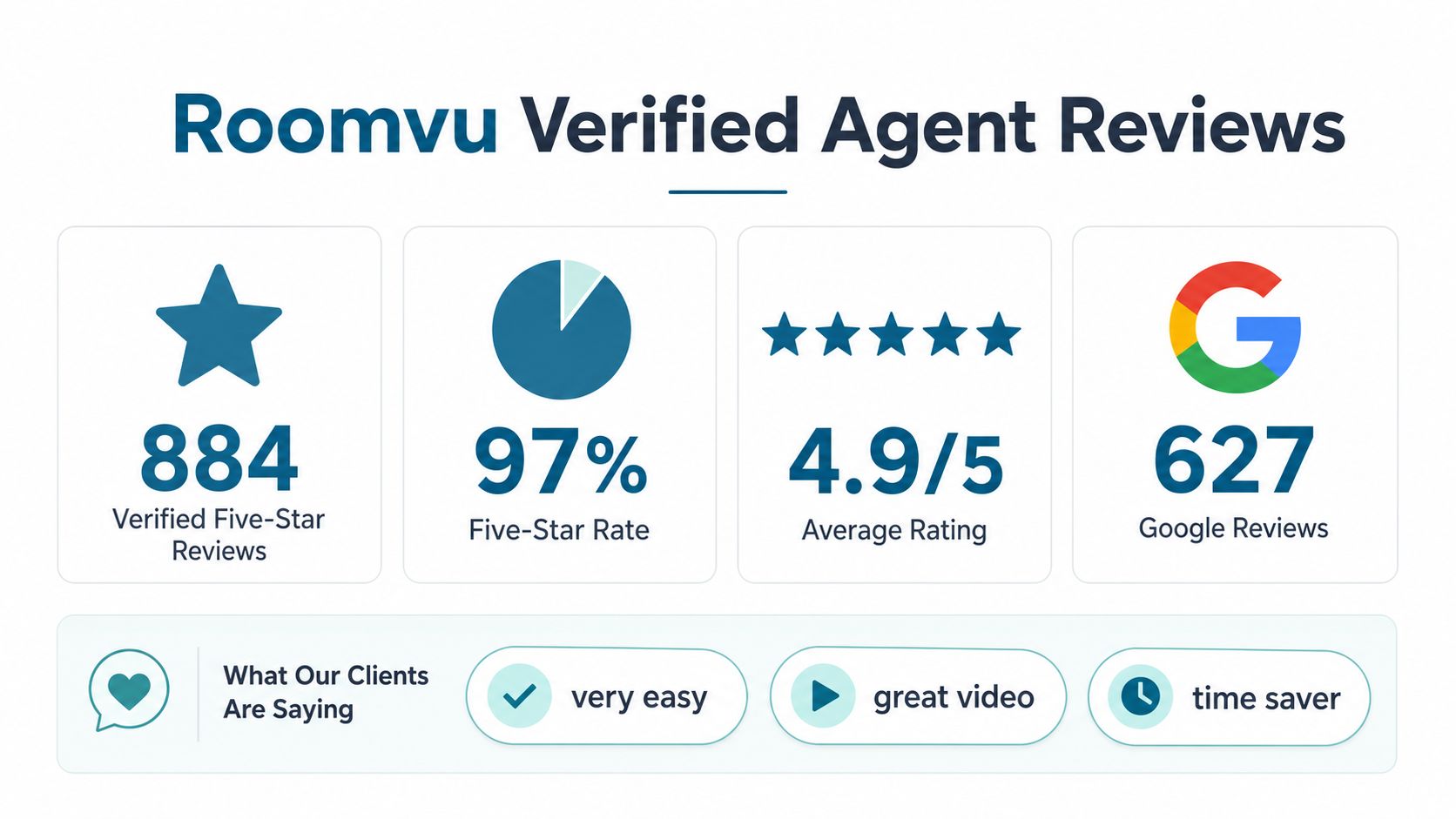
    roomvu's own review dataset says 884 verified five-star reviews and a 4.9/5 average rating, but independent platforms tell a messier story. That gap is the reason agents search for roomvu reviews before they pay for another marketing tool. If you're deciding whether to convert from a trial, the question isn't whether roomvu can produce branded video. It's whether its automation fits your workflow well enough to justify the recurring cost.

    The short answer, based on the evidence, is this, roomvu is a strong fit for agents who want daily video content without filming everything themselves, but it's a weaker fit for anyone who expects deep customization, clean billing, and one platform that handles every part of their content stack. I'm going to be blunt about where it works, where it doesn't, and what I'd test before I'd hand over a card.

    For context, if you're also comparing other automated content systems in adjacent verticals, resources like 24/7 lead capture for HVAC from Expressify AI show how much of the market is shifting toward always-on automation. Real estate is following the same pattern, just with more compliance pressure and more brand sensitivity.

    What Roomvu Actually Is and Why Agents Are Searching for Reviews

    Most agents do not buy Roomvu because they want one more app to babysit. They buy it because they need a video-first content engine that turns local market inputs, listing details, and brand elements into short-form content they can publish on a recurring basis. The company's pricing page says the Monthly plan includes daily auto-post hyper-local videos, AI portraits, AI Actor videos, Voice DNA, a lite CRM with SMS and email follow-ups, a weekly newsletter, and listing-focused formats like open house, sold, testimonial, review, and personal intro videos.

    That is why people search for roomvu reviews in the middle of a trial, not after a polished demo. They are looking at the queue, checking the demands of their own calendar, and deciding whether Roomvu will reduce work or just add another subscription. The practical question is simple, does the automation fit the way they already market themselves.

    What agents are really buying

    Roomvu's value proposition is straightforward. It automates repetitive content production so you can stay present on social channels without recording every clip yourself. Capterra's listing also describes automated publishing, CRM, campaign management, lead capture, and social media integration, which shows the product is built for workflow, not one-off assets. For agents who want a broader automation stack, tools like the Agent Edge listing campaign engine take a more listing-centric approach, while Roomvu stays focused on keeping video content moving.

    Practical rule: If your marketing falls apart when you get busy, automation is worth paying for. If you already have a strong content system, Roomvu has to fit that system, not replace it.

    That is also why the search around Roomvu usually comes from active agents, not casual browsers. They are comparing the platform's promise against the demands of their own calendar.

    Where Roomvu sits in the market

    Roomvu makes the most sense as a recurring video engine, not as a catch-all marketing platform. If you want daily social presence with minimal filming, Roomvu deserves a hard look. If you want custom copy, authority content, and listing marketing in one workflow, you should treat Roomvu as one piece of the stack, not the whole stack.

    The trade-off is clear. Roomvu helps agents publish consistently, but it does not remove the need for judgment, brand oversight, or a separate strategy for the rest of your marketing. That is the same reason some teams use a specialized system for one job and a different system for another, the same way they might use a partner like 24/7 lead capture for HVAC for always-on intake while keeping other campaigns separate.

    How Roomvu's Video Engine Works Day to Day

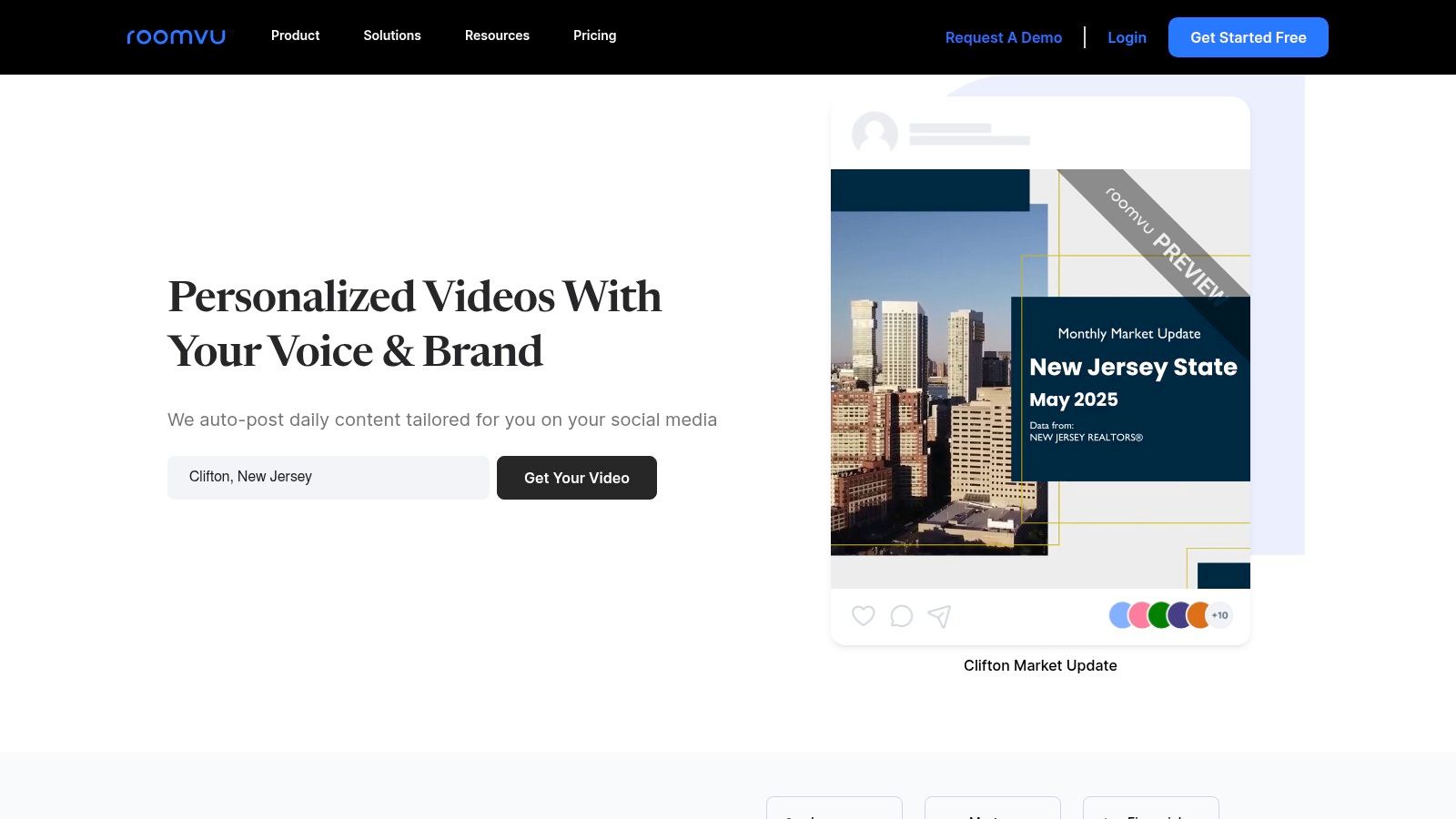
    Screenshot from https://www.roomvu.com

    The day-to-day reality is straightforward. Roomvu's system pulls in hyperlocal content, pairs it with your brand settings or listing information, and turns it into short branded videos you can publish automatically. The time savings come from removing the grind of scripting, filming, editing, and reformatting the same idea for every channel.

    That's the upside. The trade-off is that the platform assumes you're comfortable with template-driven content. If your brand voice depends on long, narrative property stories or highly customized messaging, you'll still need to intervene manually.

    What the automation actually does

    Voice DNA and AI Actor personalization are built to make the content feel less generic. In practice, that means the system is trying to preserve a recognizable speaking style or on-screen delivery while still automating the output. You're not starting from a blank page every time, which is the point.

    A normal week with a tool like this looks pretty simple:

    • Monday: Review the videos queued for the week and make sure the local topics match your market priorities.
    • Midweek: Approve or lightly edit captions, intros, and any listing references that need cleanup.
    • End of week: Check what published automatically and see whether the output still sounds like your brand.
    • Anytime a listing changes: Update the asset details so stale content doesn't keep posting.

    That's very different from shooting a fresh clip every time you need a post. It's faster, but it also narrows how much you can reshape the output after the engine has done its work.

    How to judge whether it saves time

    The true test is whether roomvu reduces the number of decisions you make. If you normally spend an hour deciding what to post, then another hour writing and formatting it, automation can help. If you already have a clean content calendar and a lightweight caption workflow, the savings may be smaller than the marketing copy suggests.

    A good comparison point is your current daily routine, not the platform demo. If roomvu replaces a manual process you hate, it's useful. If it creates another review queue you have to babysit, the automation is doing less than advertised.

    Roomvu Pricing and What Each Plan Includes

    Roomvu's public pricing page puts the Monthly plan at $89.99/month and ties that price to daily auto-post hyper-local videos, AI portraits, AI Actor videos, Voice DNA, a lite CRM with SMS and email follow-ups, a weekly newsletter, and listing-focused video formats. That pricing tells you what the product is built for, an ongoing content engine, not a one-off creative tool.

    Capterra presents roomvu as a feature-priced product, starting at US$39.99 per feature per month and highlighting automated publishing, CRM, campaign management, lead capture, and social media integration. That structure matters because your real spend changes based on which pieces of the stack you turn on.

    Use the trial to judge the workflow, not the marketing page.

    Feature Monthly Plan Add-On / Higher Tier
    Daily auto-post hyper-local videos Included Higher feature usage may change the mix
    AI portraits and AI Actor videos Included More advanced workflow depth if you expand
    Voice DNA Included Best tested during the trial
    Lite CRM with SMS and email follow-ups Included May require broader setup discipline
    Weekly newsletter Included Useful if you send consistently
    Listing-focused video formats Included Fits agents who post around active inventory

    If you are comparing software subscriptions more broadly, it helps to check subscription rates before you commit, because content tools often look similar until you factor in usage, billing structure, and the time it takes to adopt them.

    Who should test the monthly plan

    A solo agent with a steady listing pipeline is the clearest fit. A small team that wants a steady posting rhythm without handing content chores to every agent also fits well. A larger brokerage needs more caution, because the more people touch the system, the more brand control you need.

    Buying rule: Do not pay for automation unless you'll use the cadence it is built around. Paying for a weekly habit and using it monthly is how these tools turn into expensive clutter.

    If you want a comparable pricing lens on another real estate marketing tool, the ListingBooster pricing and plans page shows how purpose-built platforms tend to package value around workflow, not just feature lists.

    What Verified Agents Are Saying in Roomvu Reviews

    A graphic showing Roomvu verified agent reviews with 884 five-star ratings and a 4.9 average.

    Roomvu's own review dataset is polished, and that is part of the sales pitch. The company says it has 884 verified five-star reviews, a 97% five-star rate, and an average rating of 4.9/5, drawn from Google and Trustpilot reviews written by real estate agents across North America (roomvu's review analysis). It also says 627 of those reviews came from Google, and its text analysis highlights repeated praise such as “very helpful” in 272 reviews, patient and knowledgeable support in 188 reviews, and “highly recommend” in 63 reviews.

    That internal picture looks strong. Independent platforms paint a messier one. Trustpilot currently shows 248 reviews and a 4.5/5 rating, BBB's Canadian profile lists an average of 2.33/5 from 15 customer reviews and 18 total complaints in the last 3 years, Capterra's Canada listing reports 2.2/5 based on 16 reviews with only 20% recommendation sentiment, and G2 lists 11 reviews and a 4.0/5 average rating (Trustpilot roomvu profile, G2 roomvu reviews).

    What the spread tells you

    The gap matters more than the praise. Roomvu's strongest fans are agents who accept the automation and value the support. The lower ratings usually point to a mismatch between what buyers hoped for and what the product does.

    That is a common pattern for workflow software. Some users want a hands-off publishing engine. Others want more control over every asset and get annoyed when the platform pushes them toward a fixed structure.

    How I read the sentiment

    I do not read the review mix as a simple yes or no. It shows that roomvu works well for one group of users, then disappoints another group that wants different editing control, more manual refinement, or smoother service handling. The public record says the product has real market visibility, but satisfaction depends on how closely the agent's process matches the automation.

    Roomvu looks strongest when the user commits to the system instead of fighting it.

    That is the practical takeaway. If your style is to tweak every asset by hand, the independent review scores should make you cautious. If you want steady output and can live with templated structure, the review pattern is more favorable.

    Which Agent Types Roomvu Fits Best

    Roomvu fits by workflow, not by personality. That is the cleanest way to judge it. The strongest match is the agent who needs a steady stream of branded video and can accept a tighter creative lane in return for speed. If your operation values output over constant customization, Roomvu deserves a look.

    The solo producer

    A solo producer with enough listing volume to keep content moving usually gets the most value. Roomvu helps when you are juggling showings, follow-up, and listing prep, because it removes the daily question of what to post. If you dislike sitting down to record fresh content every time, the automation has a real job to do.

    The team lead

    A team lead can benefit too, but only if the team has a clear brand standard. The platform works best when one person sets the content rules and everyone else follows them. Without that discipline, you end up with repetitive posts wearing slightly different voices.

    The compliance-heavy brokerage

    Brokerages should be more selective. The platform can support a consistent content cadence, but it also creates more oversight work if multiple agents are publishing under one brand. The more people who can touch the output, the more important review, approval, and messaging consistency become.

    The key question is whether your operation needs video volume more than deep customization.

    If your marketing is already organized and you mainly need another content source, Roomvu can fit. If your agents need one system for listing copy, authority content, and social posting, the stack gets crowded fast. For a broader comparison, best AI tools for real estate agents is the better reference point than generic software lists.

    Practical rule: The more unique your brand voice, the less you should rely on templated video alone.

    That does not make Roomvu bad. It makes it specific.

    Common Complaints and How to Prevent Them

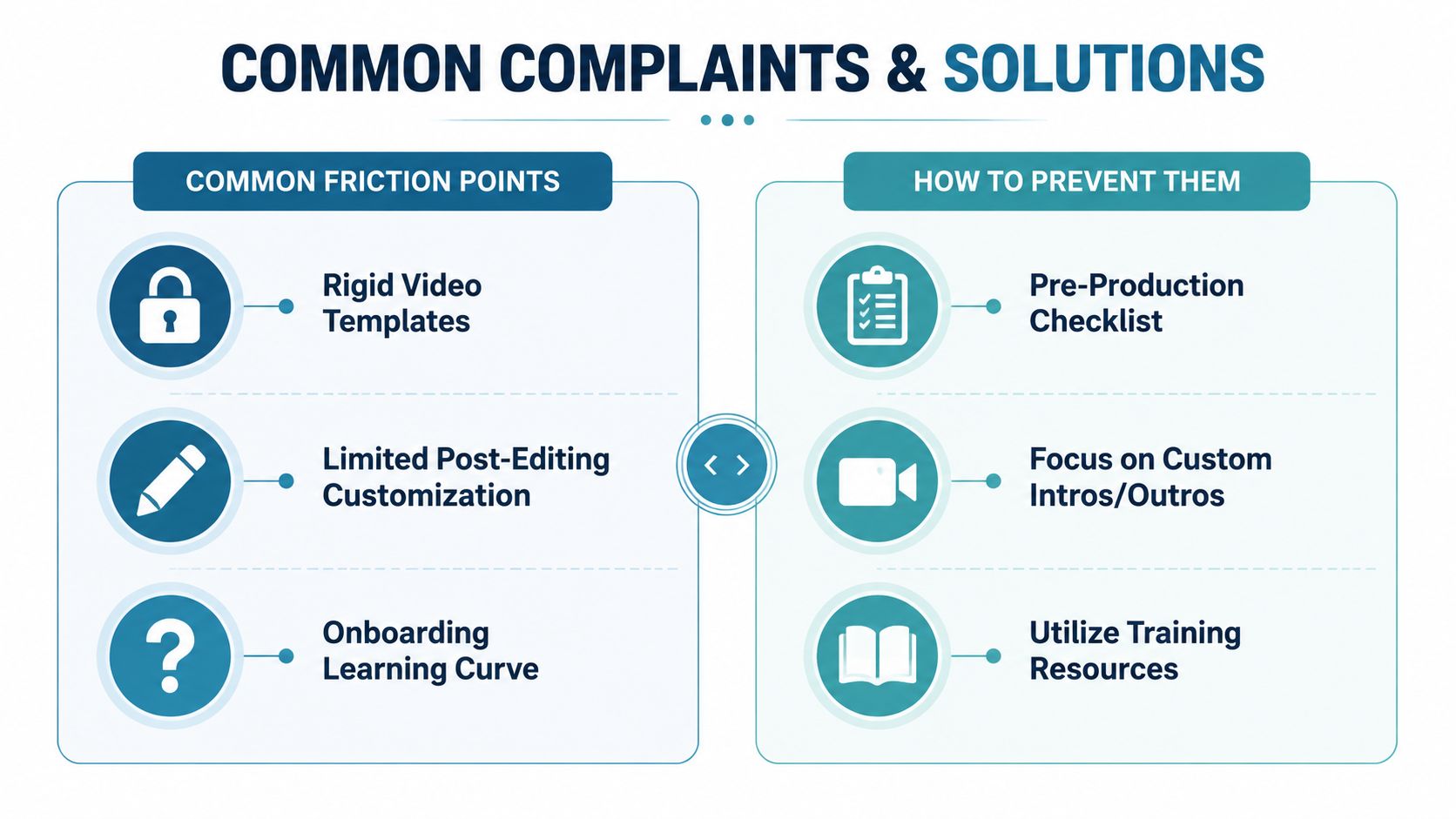
    The negative reviews point to a few recurring frustrations. The biggest ones are rigid video templates, limited post-editing once content is generated, billing disputes, a learning curve around the CRM, and weaker fit for agents whose brand depends on longer-form storytelling. None of that is surprising, but all of it matters if you're deciding whether the trial becomes a subscription.

    A chart showing common video production friction points alongside recommended solutions for overcoming these challenges.

    The fix starts before you pay

    Most of these issues are predictable if you watch the product closely during the trial. If the generated content already feels too boxed in on day one, it won't magically become more flexible after month two. If the billing flow feels unclear, assume it'll stay that way until you document every step.

    Use a simple pre-commitment checklist.

    • Review a full week of generated content: Don't judge roomvu off a single sample.
    • Test your cancellation path: Make sure you know exactly what happens if you stop.
    • Match Voice DNA to your real cadence: If it sounds off, your audience will notice.
    • Check CRM deliverability: Confirm that SMS and email follow-ups behave the way you expect.
    • Edit the same asset twice: If small changes are awkward, the platform may slow you down.

    What the complaints mean in practice

    Rigid templates aren't a dealbreaker if your goal is consistency. They are a dealbreaker if you need every post to feel handcrafted. Billing friction is manageable if you're meticulous. It's a problem if you're the kind of operator who signs up fast and reviews statements later.

    The CRM point deserves special attention. If you're already using another system for contacts, you may not need roomvu's built-in follow-up layer at all. In that case, treat the CRM as a bonus, not a reason to buy.

    How Roomvu Compares to ListingBooster and Other AI Tools

    Roomvu is strongest in one lane, always-on video distribution. That is the product's real value. Generic AI writers can move faster on listing descriptions and social captions, while purpose-built real estate platforms like ListingBooster.ai cover a wider workflow that includes listing descriptions, social content, authority content, and Fair Housing compliance scanning.

    That difference matters because agents rarely need a single task done well. Some need a tool that turns one listing into a full content set. Others need a system that keeps their name visible in AI search and supports their brand across multiple channels. Those are different problems, and they call for different tools.

    The three jobs in a real estate content stack

    • Listing Description and Social Copy: Generic AI writers can draft text quickly, but they are usually not built around real estate workflows.
    • Always-On Video Distribution: Roomvu has the clearest edge here, because the product is built to automate branded video output.
    • Authority Content for SEO: Tools built for real estate visibility have a stronger lane here, especially if you care about consistent expertise content.

    ListingBooster.ai is built for the listing-to-authority workflow, while roomvu is built for video momentum. If you want both, layering tools often makes more sense than forcing one platform to cover everything.

    The better comparison is not who has the flashiest demo. It is which tool removes the most friction from your actual week. If you want a broader market view, the best AI tools for real estate agents comparison helps you sort tools by job, not by buzzword.

    Bottom line: Use roomvu for video volume, use another tool for deeper copy and authority work, and do not expect one subscription to solve every marketing problem.

    Your Decision Framework and Next Step

    Roomvu is a good buy if you're a video-heavy agent who wants recurring output and can live with template-driven content. It's a weaker buy if you want highly bespoke storytelling, if you dislike workflow constraints, or if you need listing copy and authority content in the same place. The review data backs that up, because the platform's strongest praise and its sharpest criticism both point to fit, not universal quality.

    Use the trial like a working audit. Publish a week's worth of content, test the CRM, check how much editing you need, and decide whether the automation supports your cadence or fights it. If you're evaluating broader software options before you commit, compare real estate software options so you can judge roomvu in the context of the rest of your stack, not in isolation.


    If you want a cleaner all-in-one workflow for listing descriptions, social content, and AI-search authority, ListingBooster.ai is built for exactly that. It gives agents and teams a purpose-built real estate marketing system with compliance-minded output, and it pairs well with the kind of decision-making this roomvu review should prompt. Visit ListingBooster.ai to see whether it fits your workflow better.

  • Real Estate Video Marketing: A Practical Playbook for Agents

    Real Estate Video Marketing: A Practical Playbook for Agents

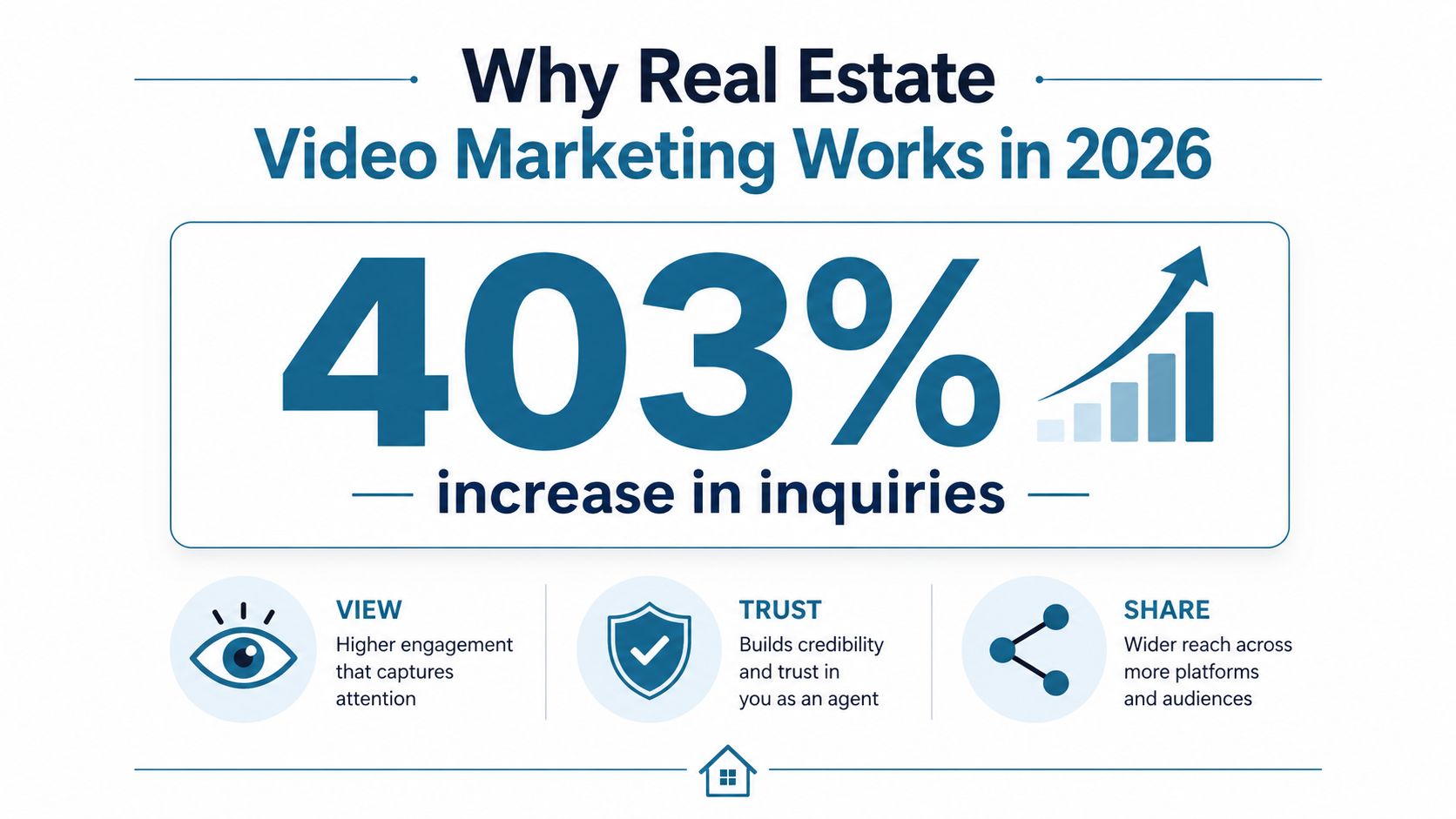
    Listings with video receive 403% more inquiries than listings without video, which is why real estate video marketing has moved from a nice extra to a real acquisition channel. That number matters because it changes the job of video, from brand polish to lead generation, seller attraction, and listing presentation. In practice, the agents who treat video as part of the listing workflow, not an optional add-on, tend to have a cleaner pipeline and a stronger story when a seller asks what they'll do to market the home. That's also where compliance starts, because the best video strategy in the world won't help if the language drifts into Fair Housing trouble.

    An infographic showing that real estate video marketing leads to a 403% increase in property inquiries.

    Why Real Estate Video Marketing Works in 2026

    The clearest reason video keeps winning is still measurable performance. Listings with video get 403% more inquiries than listings without it, according to the most consistently cited real estate video benchmark in the industry real-estate marketing statistics. That is a lead-generation signal, not a vanity number. Buyers use video to sort themselves before they click, so the conversations that reach your inbox are usually warmer and more informed.

    Sellers respond to that same proof. Research cited by real estate video statistics says 73% of homeowners are more likely to list with an agent who offers video marketing. In a listing appointment, that changes the conversation. Video stops being a line item and becomes something you can show, including a clean tour, a feature clip, and a follow-up asset that proves you have a marketing process, not just a camera.

    Why the adoption gap creates opportunity

    The market is still uneven. One source says only 38% of agents use video for their listings, while another says only 26% consistently use video on every listing real estate video statistics. That gap creates room for agents who are willing to present the property with motion, pacing, and context instead of static photos and a short caption.

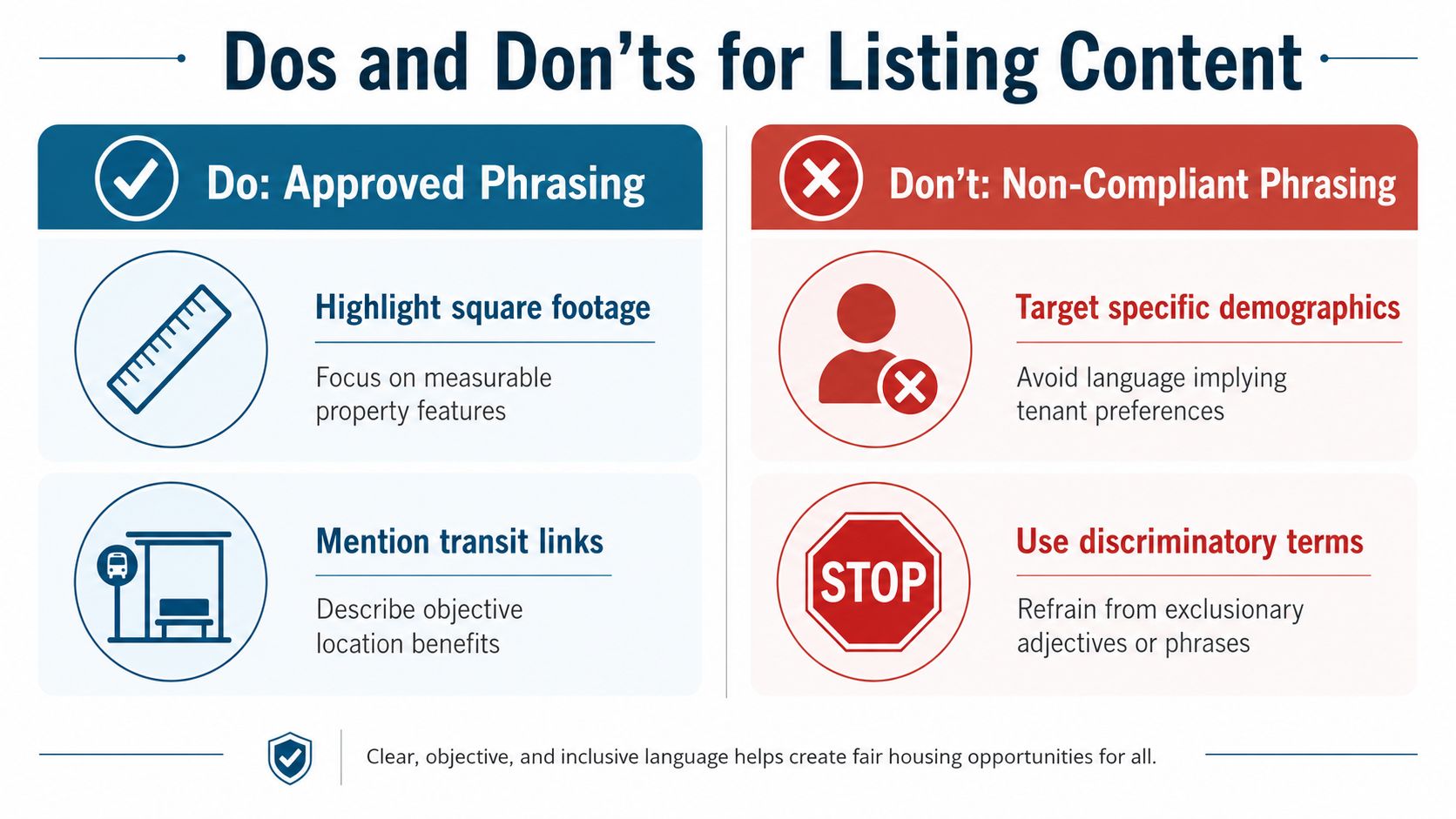
    Practical rule: use video to make the property easier to understand, not to make it look like something it isn't. Feature-driven language wins. Demographic targeting language creates compliance risk.

    That compliance piece matters more than many guides admit. For US agents and brokers, Fair Housing-safe wording should be built into the first script, not cleaned up after the edit. Lead with property features, layout, light, finishes, storage, view corridors, and location descriptors that stay factual. Avoid language that suggests who should live there, even if it sounds harmless in a casual voiceover.

    For a useful outside breakdown of the mechanics, see how video boosts property listings. It matches what shows up in day-to-day production. Video improves attention on the buyer side and strengthens trust on the seller side at the same time, which is why it works as an acquisition channel instead of just a branding asset.

    Who should care most

    Solo agents need video to stand out in listing presentations. Team leads need it to keep a repeatable message across producers. Brokerage marketing directors need it because a visible video system becomes part of the brand, not just a one-off asset. For teams that want a workflow shortcut, ListingBooster.ai can help standardize the process without turning every listing into a custom production project.

    Choosing the Right Video Format for Each Goal

    The mistake most agents make is trying to make one video do everything. A listing tour, a social clip, an authority video, and a testimonial all solve different problems, so they need different lengths, hooks, and calls to action. Once the goal is clear, the format usually becomes obvious.

    Match format to outcome

    A 90 to 120 second walkthrough works best when the goal is listing engagement. Keep the hook grounded in what the viewer can see, then move straight into the flow of the home, the key features, and the cleanest path to a showing request. A direct CTA such as “Request the full property package” or “Ask for the private tour link” keeps the next step specific.

    For quick reach, use 10 to 15 second Reels. These work as highlight snippets, not full tours. The hook needs to land immediately, so open with the strongest visual or one feature moment, then point to a more complete tour or listing page.

    For authority and SEO, 7 to 15 minute videos fit market updates, neighborhood commentary, or educational content. Those videos are less about the property itself and more about making you the person sellers and buyers remember when they need local context. YouTube fits that role better than a short-form feed because the content has a longer shelf life and stronger search utility.

    Testimonials sit in the middle at 60 to 90 seconds. They work when you need social proof without making the viewer sit through a long segment. The hook should be simple and human, then the CTA should move toward a consultation, listing meeting, or buyer conversation.

    Video Format Primary Goal Ideal Length Best Platform
    Walkthrough Listing engagement 90 to 120 seconds MLS, listing page, YouTube
    Reel Reach 10 to 15 seconds Instagram Reels, TikTok
    Market update Authority and SEO 7 to 15 minutes YouTube, website
    Testimonial Conversion 60 to 90 seconds Email, landing page, social

    Two traps to avoid

    The first trap is posting the same cut everywhere. A long walkthrough can work on a listing page, but it usually drags in a Reel feed. The second trap is skipping the CTA entirely. If a viewer watches the video and doesn't know what to do next, the content may get attention without producing a lead.

    A strong video doesn't need to be cinematic. It needs to answer one question fast, then tell the viewer where to go next.

    The right format is the one that matches the business result you need this week. A new listing needs a walkthrough. A seller pitch needs proof. A market position needs long-form authority. Once you stop asking “What video should I make?” and start asking “What outcome do I need?”, production gets a lot easier.

    A Simple Production Workflow That Fits an Agent's Week

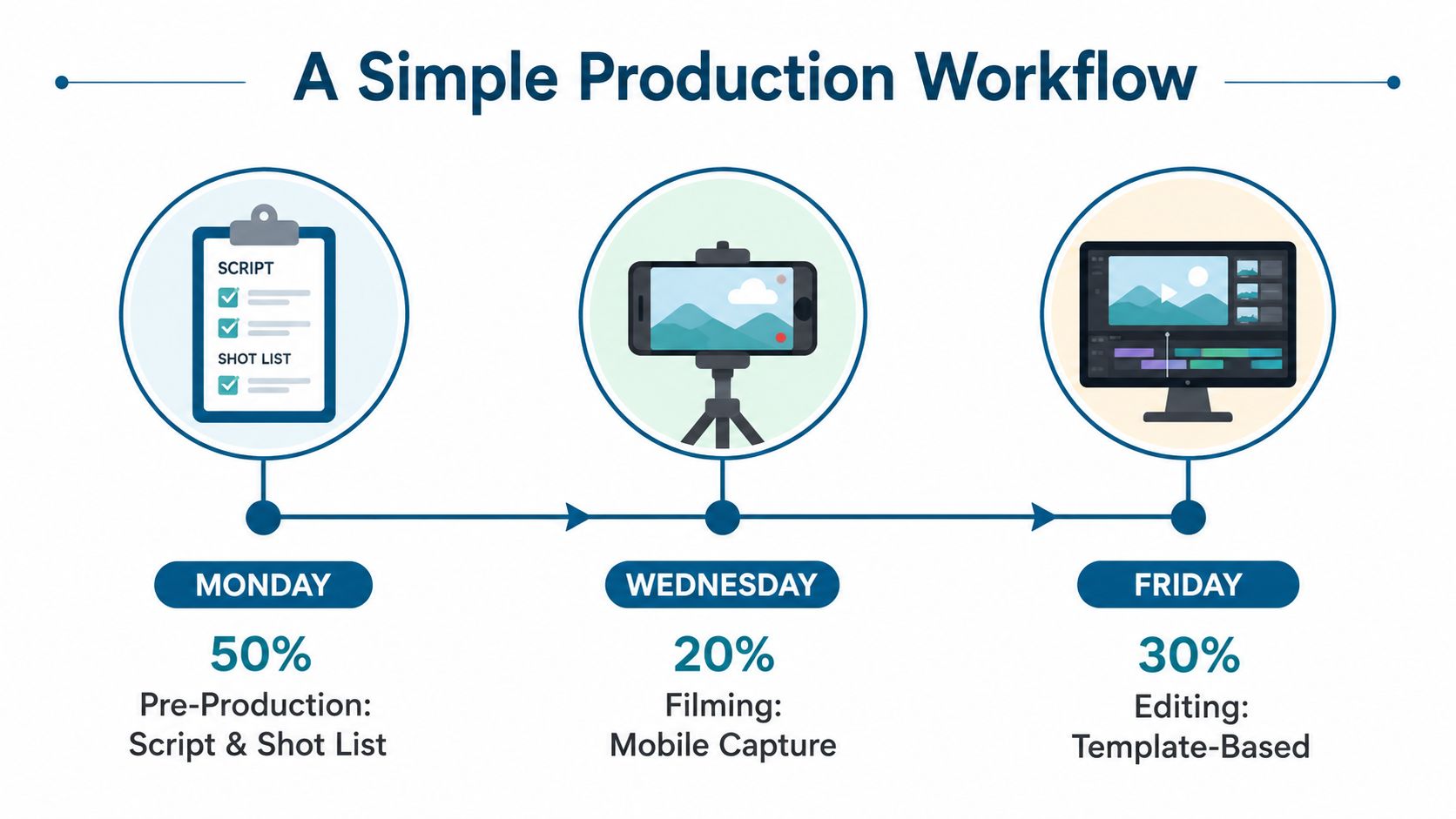
    The cleanest production systems are boring in the best way. A practical real estate video workflow should put about 50% of total effort into pre-production, 20% into filming, and 30% into editing real estate video marketing. That split works because bad planning costs more time than bad camera work. If the sequence is clear before you film, the shoot gets shorter and the edit gets faster.

    A simple production workflow chart showing pre-production on Monday, filming on Wednesday, and editing on Friday.

    A Monday to Friday rhythm

    Monday is for decisions. Define the audience and the CTA, then decide whether the video needs to drive showings, seller interest, or social reach. Build the shot list around the home's flow, natural light, key features, and room connections. If you start with the property URL, tools like ListingBooster.ai can turn that into a description, social copy, and a usable script outline without making you rebuild the same asset by hand.

    Wednesday is for filming in one clean walkthrough pass. A recent smartphone, a $30 to $60 gimbal or stabilizer, a clip-on lavalier mic, and basic editing software are enough for most agents. Expensive gear is usually overkill unless you're producing luxury brand content at scale. The point is consistency, not a film set.

    Friday belongs to editing and distribution prep. Keep the first version short and platform-specific. One guide recommends walkthroughs stay around 90 to 120 seconds and be sped up 1.2 to 1.3x to keep pacing tight, while another notes that viewers often drop off sharply after roughly 2 minutes, with about 60% stopped beyond that point real estate video marketing. That means trimming dead time matters more than adding effects. It also helps to know why viral videos spread, because the same retention and hook discipline that drives social reach also keeps listing videos from feeling slow.

    Operational rule: if the shot doesn't help a buyer understand the layout, the light, or the next step, cut it.

    A realistic 30-day cadence

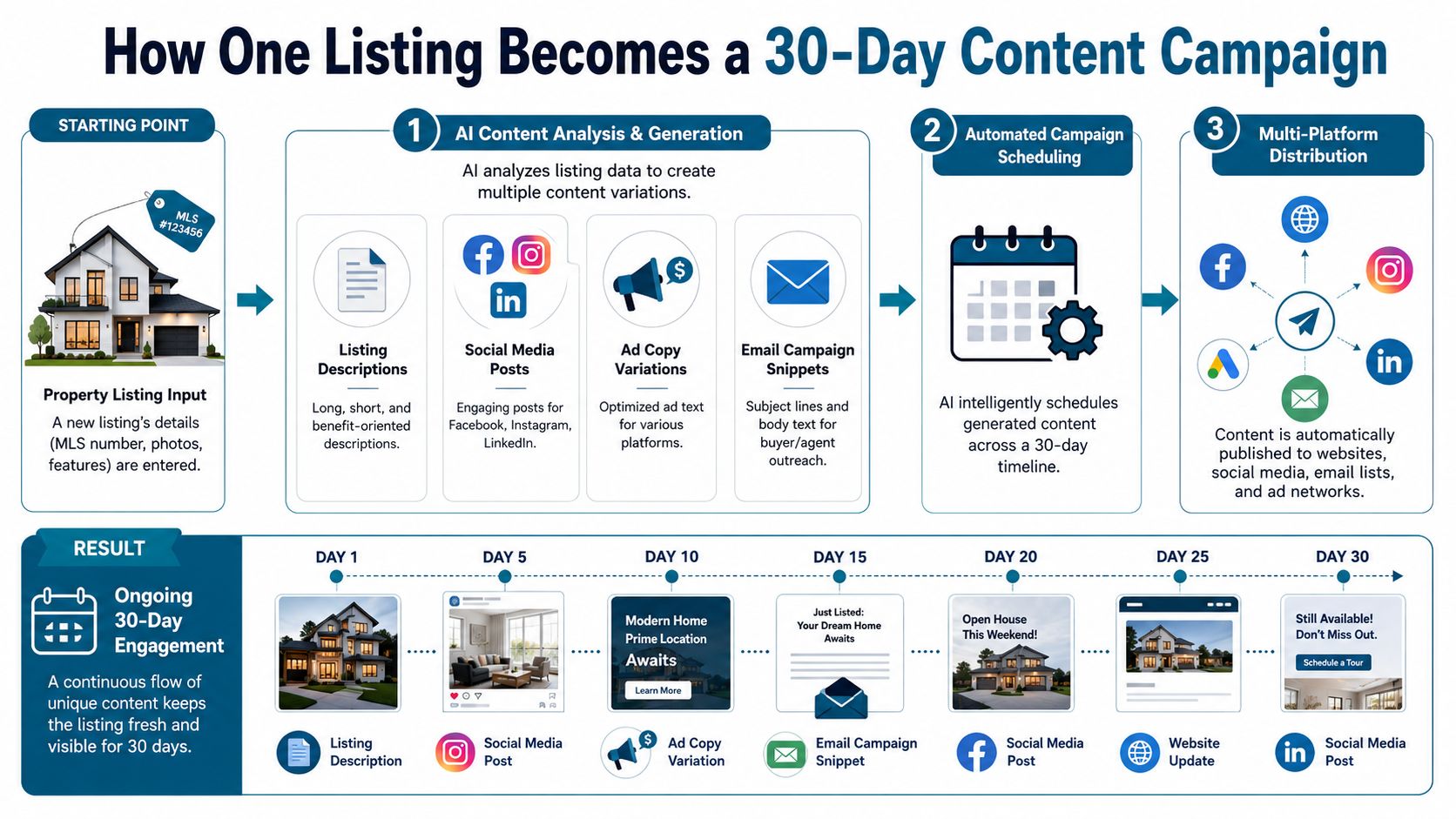
    Week 1 is setup. Week 2 is your first three videos. Week 3 is editing and posting cadence. Week 4 is review and reuse. That pace fits around showings and contracts without turning content into a second full-time job. If you want a practical way to squeeze more material out of each property, this guide on turn one listing into 30 days of content shows how one shoot can support multiple assets.

    Batch the work instead of waiting for inspiration. Film when the property is ready, then repurpose the footage into listing clips, open-house teasers, social posts, and follow-up assets. That is the difference between a one-off video and a workflow that can be measured as part of acquisition, not just branding.

    Distributing Video Across MLS, Social, and AI Search

    Distribution is where a good video either compounds or disappears. The same asset can support MLS visibility, YouTube search, email follow-up, social reach, and AI search discoverability, but only if each channel gets a version built for its own intent. A single upload rarely does that job well.

    An illustration showing a smartphone video connected to MLS email services, social media platforms, and AI search.

    Use each channel for what it's good at

    MLS should host the core tour where allowed, because that's where the listing journey starts. YouTube should carry the long-form version with keyworded titles and descriptions, because that's the channel most aligned with search and long-term discoverability. Email and listing-page embeds should carry shorter clips that move prospects toward a click, a showing, or a reply. The distribution logic is simple. Put the full story where people search, and put the short version where people decide quickly.

    Social needs a different cut. Instagram Reels and similar short-form placements should show a single feature, a strong first frame, or a quick property highlight. That format supports reach, but it doesn't replace the listing page or the tour. If you try to make one video serve every platform, the feed usually punishes the length and the message gets diluted.

    Make AI systems able to read the content

    AI discovery is now part of the distribution job. Your business context notes that over 40% of homebuyers now start in ChatGPT, Perplexity, and Google AI, which means the content needs to be structured so machines can understand it. The practical move is to write descriptions that use clear property features, add transcripts, and keep the wording specific enough that an assistant can quote it cleanly. For a useful operational example, ListingBooster.ai's real estate AI search visibility guidance shows why readable, structured content matters.

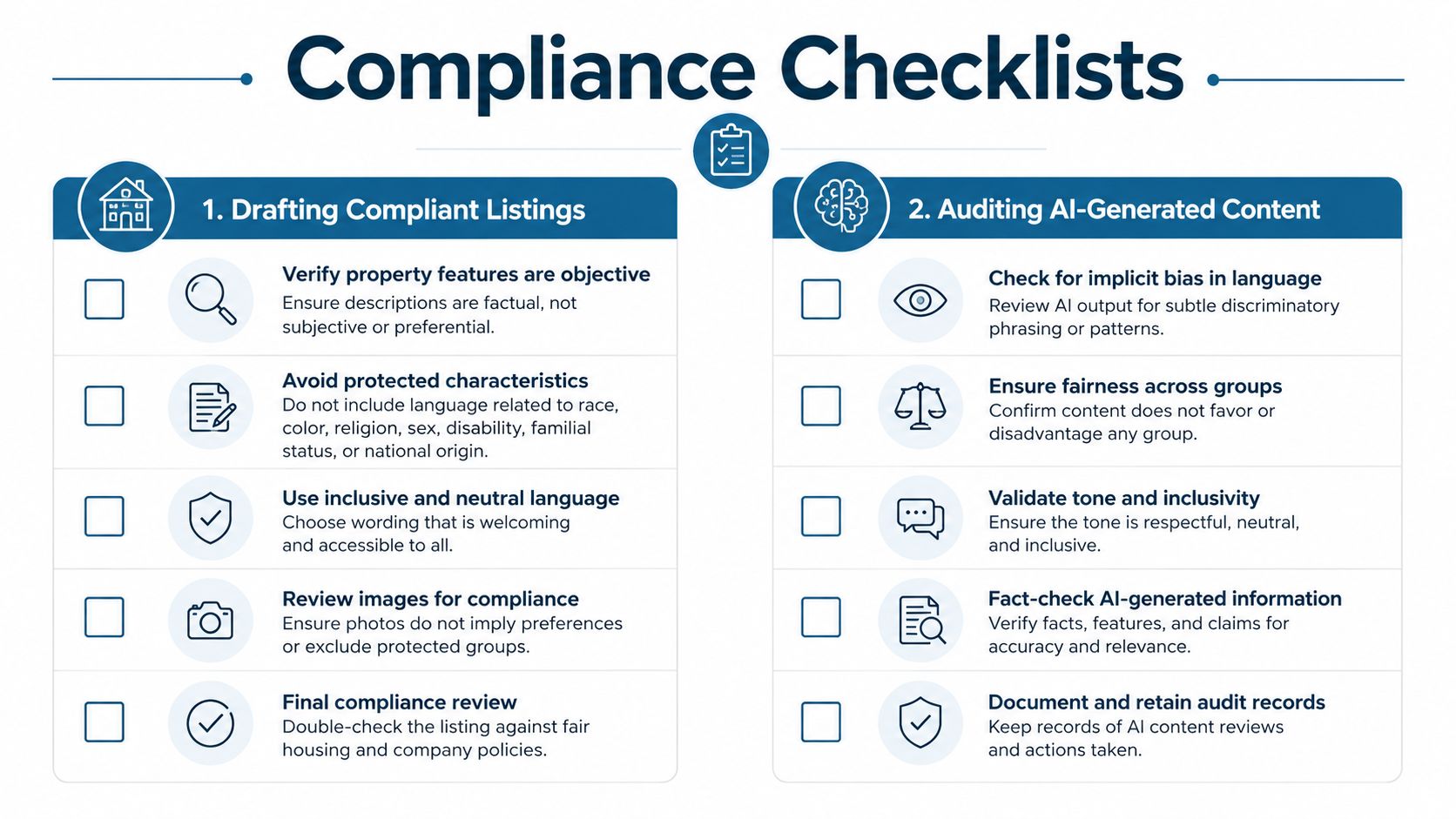
    Fair Housing compliance matters most at the caption stage. Every caption should be checked before publish. Describe the home by features, room layout, finishes, lot characteristics, and geographic identifiers that are factual, not by who the home is for. That keeps the marketing useful and the risk low.

    If the caption starts sounding like a lifestyle filter, rewrite it. If it sounds like a property spec, you're usually on safer ground.

    A connected distribution system gives you more than impressions. It creates a path from listing to inquiry to follow-up to search visibility, which is where the value sits.

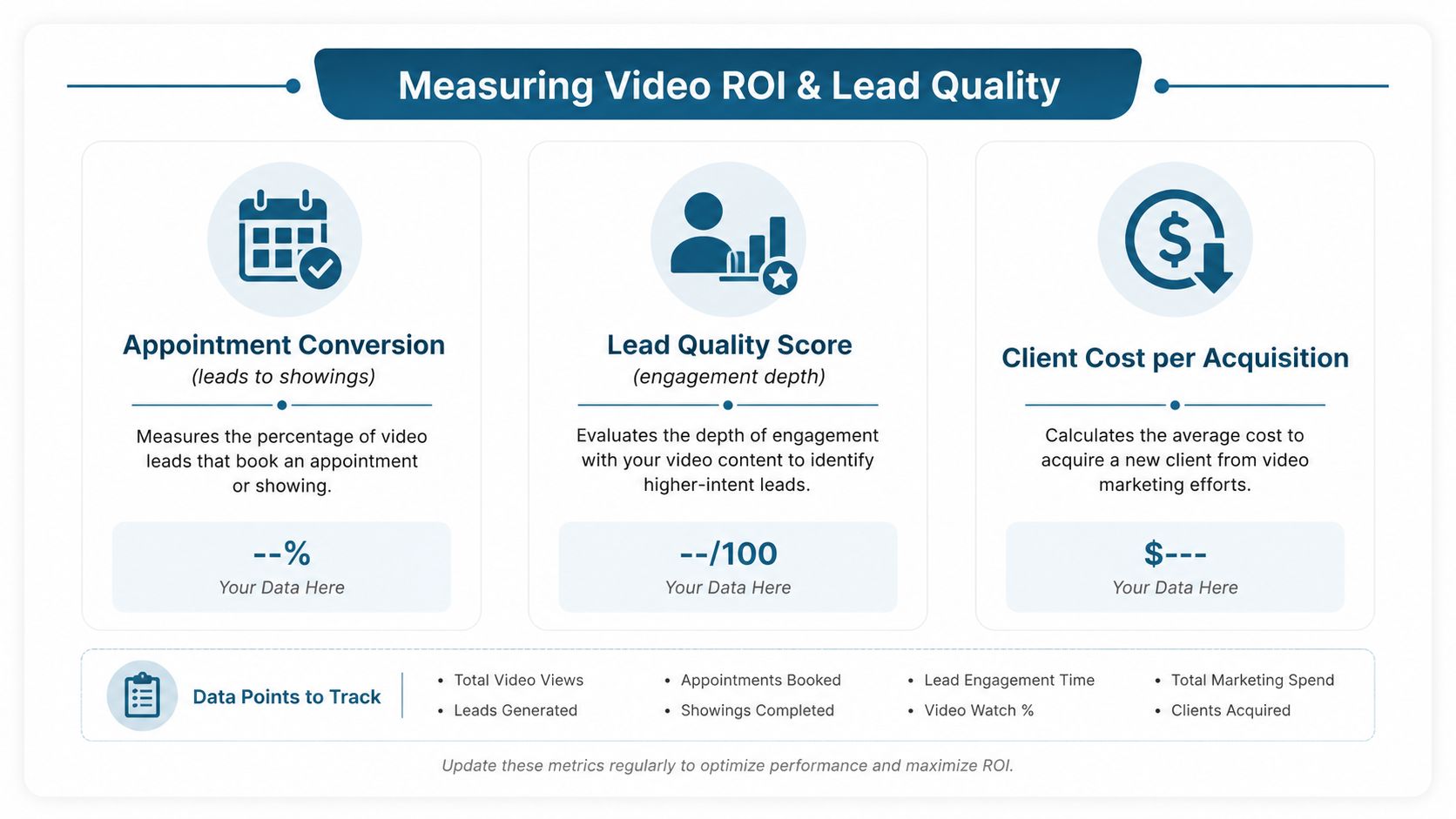
    Measuring ROI and Lead Quality From Video

    Views are easy to collect and hard to trust. A real measurement system has to tell you whether video is getting attention, keeping attention, triggering responses, and producing revenue. That's the point where video stops being content and becomes a channel you can manage.

    An infographic outlining key performance metrics for measuring video ROI and lead quality in marketing strategies.

    Track four metrics, not one

    Reach tells you whether the video got in front of people. Retention tells you whether the opening and pacing worked. Response tells you whether viewers took the next action, such as clicking, replying, or booking. Revenue tells you whether the content helped generate appointments or signed clients. A simple scorecard built around those four buckets is more useful than a dashboard full of likes.

    Measurement work happens with attribution. Use UTM-tagged links, trackable phone numbers, and CRM fields that show which video a lead came from. Then set a 90-day baseline so you're comparing honest patterns instead of one strong week against one weak one. That's the only way to tell whether a video format is pulling its weight.

    Treat lead quality like an operating metric

    BatchData's real estate lead scoring tips are useful context here because lead quality is usually where video outperforms cold traffic. A person who watches a walkthrough, clicks the listing page, and then replies is more useful than a random view count. That's why “engaged lead” should mean more than someone who saw the thumbnail.

    Here's the mistake to avoid. Raw view count and follower growth look good in reports, but they don't tell you whether a seller appointment is coming in. If a video helps generate a listing meeting, a buyer consultation, or a signed listing, that matters more than a spike in impressions.

    The most useful business question is still simple. Which video type produces real conversations? Once you can answer that, you can defend the budget without leaning on anecdotes or brand language.

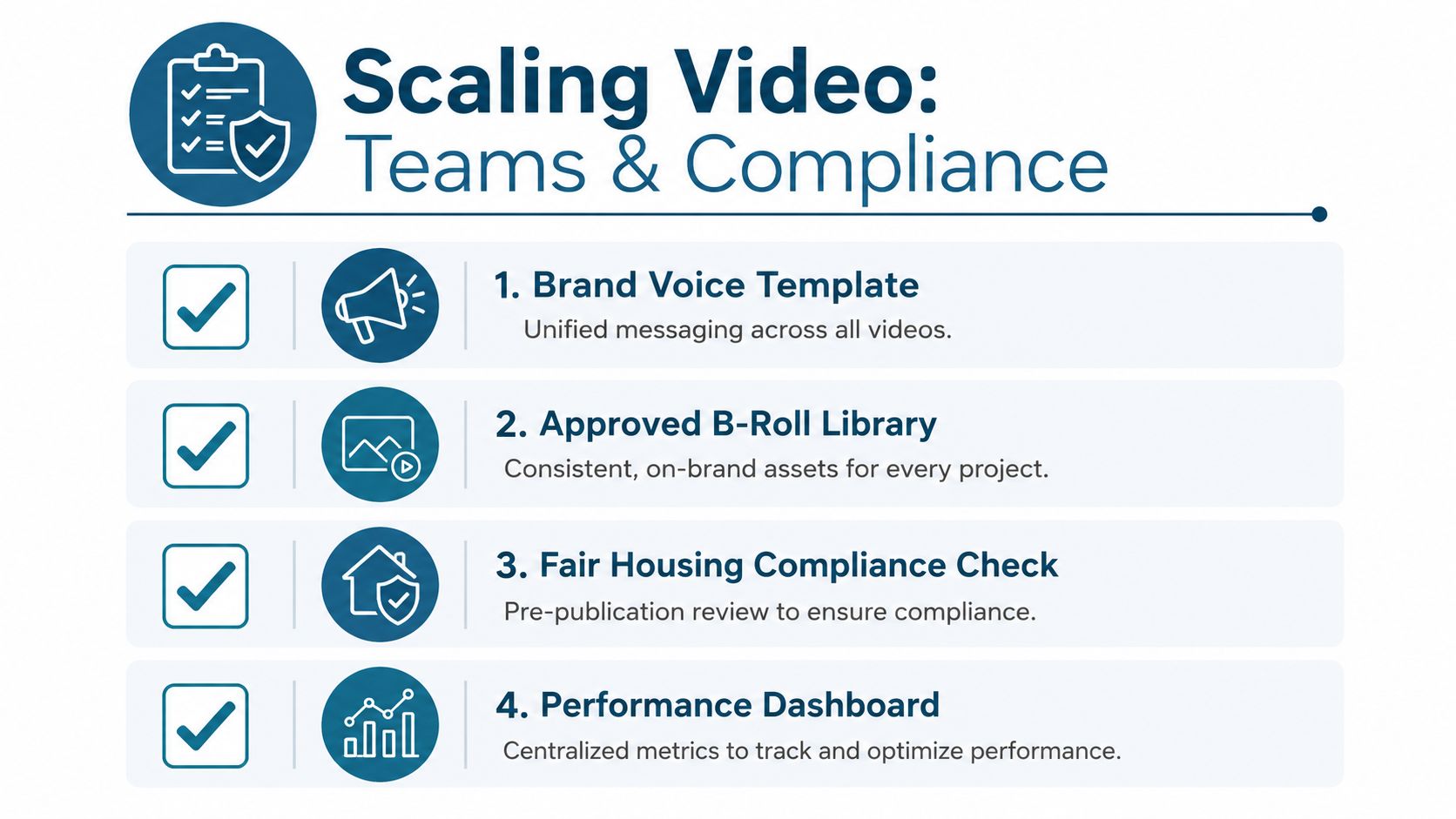
    Scaling Video for Teams and Brokerages Without Compliance Risk

    At the team and brokerage level, the work shifts from making one good video to making the process repeatable. The main risk is inconsistency. One agent writes compliant captions, another improvises, and a third posts a polished reel with wording that creates avoidable Fair Housing exposure. That is how brand value gets diluted, and why video starts to produce mixed results instead of predictable leads.

    A checklist infographic illustrating four essential steps for scaling real estate video marketing and compliance strategies.

    Build one system, not 50 different habits

    Start with a shared asset library. Intros, outros, lower thirds, logo treatments, and approved b-roll should all live in one place. That keeps the brand recognizable without forcing every agent to design from scratch. Then add an approval workflow that flags captions before they go live, especially anything that could drift into protected-class language.

    A content calendar helps too. Reserve slots for listing content and authority content so the feed does not go quiet between closings. A dashboard that rolls up performance by agent and by market gives leadership a way to see what is getting traction without asking everyone to report in different formats. If your team needs a broader workflow reference, automated social media for real estate teams is a useful companion guide because it shows how publishing, review, and scheduling can be handled at brokerage scale.

    Make compliance part of the brand

    Fair Housing compliance should feel like a standard. Template language should describe finishes, layout, square footage, lot characteristics, and neighborhood facts without implying who belongs there. That keeps the message consistent across agents and reduces the chance of a sloppy caption making it to public channels.

    For larger teams, a tool like ListingBooster.ai can serve as a workflow shortcut when the bottleneck is content volume, not strategy. It is useful when one marketing director has to support many agents and still keep the output aligned. The point is not to replace judgment. It is to keep the approval process from breaking under volume.

    The brokerage that scales video best usually is not the one with the fanciest gear. It is the one with the clearest rules, the fastest approval path, and the fewest surprises.

    There is also the human side. Reluctant agents usually participate once they see the process is simple. High producers cooperate when the system saves time and does not force them into a generic voice. If the workflow is easy, compliance becomes a selling point instead of a complaint.

    Your Next Step and a 30-Day Action Plan

    Start with one property and one repeatable workflow. Week 1 is for templates, a shot list, and CTA decisions. Week 2 is for filming your first three videos. Week 3 is distribution, tracking, and follow-up. Week 4 is review, which means looking at response quality, not just views.

    If you're camera-shy, start with property-first content instead of face-to-camera content. If you're worried about Fair Housing, keep every description tied to features and location facts, then remove any line that implies who the home is for. If you're waiting to “feel ready,” you'll probably stay stuck. The first three videos teach you more than planning ever will.

    For solo agents, the goal is simple. Ship one listing video, one short clip, and one authority post within 30 days, then compare what produced actual conversations. For teams and brokerages, the goal is consistency. Get the template approved, the review path clear, and the reporting visible so agents can use the same system without rewriting it every week.

    Pick one property, run the process for 30 days, and measure what happens. If you want a faster setup, ListingBooster.ai turns listing details into the kind of property descriptions and social content that keep the workflow moving, so you spend less time building assets and more time shipping them.


    If you want to turn listing details into compliant video-adjacent content faster, visit ListingBooster.ai and use it as a workflow shortcut for property descriptions, social content, and repeatable listing marketing. It's built for agents, teams, and brokerages that want a cleaner process without adding more manual work.

  • The 10 Best Real Estate AI Tools for Agents in 2026

    The 10 Best Real Estate AI Tools for Agents in 2026

    You're probably seeing the same thing across your inbox, your CRM, and your marketing calendar. Listing copy still needs to get written, leads still need fast follow-up, and social content still has to go out even when you're at showings or in inspections. The difference in 2026 is that the best real estate ai tools aren't novelty add-ons, they're part of a practical stack that helps you respond faster, stay on-brand, and avoid compliance mistakes while you do it.

    That matters because AI adoption in real estate is no longer experimental in major markets. One industry roundup says CRM systems with automated follow-up are used by 56% of brokerages, AI listing-description generators by 63% of agents, and chatbots are among the most common tools for instant lead response, which shows where the ROI sits, lead management and listing marketing, not just back-office analytics (industry statistics roundup). At the same time, the NAR says generative AI is already being used for listing descriptions, property searches, and marketing content (NAR on AI in real estate).

    For agents, brokers, and teams, the practical question isn't whether to use AI. It's which tools reduce time, improve response speed, and hold up under Fair Housing and brokerage review. If you're looking for a broader directory of options, you can also find AI tools for listing agents, but the list below is built around how to assemble an integrated stack that works in the field.

    1. ListingBooster.ai

    ListingBooster.ai is the most purpose-built option here if your bottleneck is listing marketing. It turns one property into a full campaign, including MLS-ready copy, platform-specific social posts, sourced local Market Insights, print-ready assets, and a 30-day content calendar that's built for modern discovery across portals and AI search. The platform also leans into discoverability for ChatGPT, Perplexity, and Google AI Overviews, which matters when buyers start with conversational search instead of a portal search bar.

    You can pull a property in from MLS, URL, CSV, or API, then approve what goes live. That approval-first model is the part I'd care about most in a brokerage setting, because it keeps the workflow controlled while still saving a ton of drafting time.

    A few operational details make it stand out. It includes 23 psychology-backed caption frameworks, Fair Housing checks that flag banned phrases and unsupported claims, and status-aware automation that can rewrite content when a listing goes pending or sold. It also advertises encryption at rest and Stripe PCI Level 1 handling, which is the kind of security language teams should ask for before they let AI touch a production workflow.

    Practical rule: Use ListingBooster.ai when you want the campaign to come from the property data first, not from a generic prompt first.

    The pricing structure is credit-based, so volume matters. The site lists plans starting at $39/month for Agent Edge Solo, then $79/month Growth and $129/month Portfolio, with credits tied to output volume; the product brief also references an offering from $34.99/month, a 30-day free trial, and 25 free starter credits with no credit card required (ListingBooster.ai pricing). For solo agents, it replaces a messy stack of copywriting and scheduling tools. For teams and brokerages, it helps keep one voice, one compliance layer, and one publishing workflow across multiple agents.

    If you need one tool that can serve the listing appointment, the MLS entry, the social calendar, and the compliance review, this is the strongest fit in the list.

    2. ListingAI

    ListingAI works well for agents who need to turn property details and photos into marketing assets fast, without spending time on a heavy setup. It produces MLS-ready descriptions, social copy, listing websites, AI-animated listing videos, and virtual staging or object removal edits. For a solo agent or a small team, that is enough to keep a listing moving without adding another complicated system to manage.

    The workflow is easy to understand. You upload the listing inputs, choose the output you need, and get usable marketing pieces back quickly. That matters in practice, where a listing launch often needs copy, visuals, and a basic web presence on the same day. The free first-listing trial also gives agents a low-risk way to test the copy, a site, social output, and a CMA preview before paying for more volume.

    This is the kind of tool that fits a focused production role. If your team already has a CRM, calendar, and brand guide, ListingAI can sit inside that stack as a content engine. If you need a broader system that connects listing marketing, compliance review, and publishing workflow in one place, a more specialized platform such as ListingBooster.ai is usually the stronger long-term fit. For more on best AI software for listing agents, see our guide.

    The company says it offers transparent pricing tiers and credit-based usage, with higher branding controls and larger media allowances available on higher plans (ListingAI). That trade-off makes sense for individual agents and small teams that care more about speed than enterprise-level depth. One limit to keep in view is the lack of IDX or VOW integrations, so it is not the right choice if lead capture and property search need to live in the same system.

    Best use case and trade-off

    • Best for: agents who want faster listing marketing without a heavy implementation lift.
    • Best output: copy, a lightweight property site, and media enhancements.
    • Main limitation: it is less of a workflow hub than a dedicated real-estate AI marketing platform.

    If you are comparing tools across your stack, judge it by workflow fit, not feature count. A smaller tool that your team uses will usually return better ROI than a bloated system that sits idle after the first launch.

    3. Realtors Property Resource

    RPR is one of the most practical AI tools in real estate for agents who already live inside the REALTOR ecosystem. Because it combines parcel-level property data, comps, demographics, and market intelligence with its AI ScriptWriter, it's especially useful for listing presentations, client follow-up, and market narrative creation. The big advantage is that the content comes from a data environment that already feels native to the business.

    The AI ScriptWriter can help generate market-trend narratives and audience-specific scripts for residential and commercial work. That makes it handy when you need to explain what's happening in a neighborhood, a trade area, or a property's context without spending an hour assembling talking points from scratch. The mobile app is also useful when you need to pull something together between appointments.

    For many agents, the strongest point is cost structure. RPR is included with NAR membership, so there's no separate software bill to defend if you're already paying dues (RPR). That makes it one of the easiest “yes” decisions on this list, especially for solo agents who want data-backed content without adding another subscription.

    What RPR does well is not flashy. It gives you grounded talking points fast, and that's enough to win more listing conversations.

    The trade-off is that the tool is only available to REALTORS, not every licensee, and the quality of some AI outputs depends on local underlying data availability. Commercial users also get a different interface and workflow than residential users, so teams need to test the specific use case they care about before rolling it out broadly.

    Where it fits in a stack

    RPR works best as the data-and-narrative layer beneath your marketing tools. Pair it with a content platform for listing copy, then use RPR to feed the market context, comps, and branded report language that make your presentation feel more credible. If you already have the listing, the follow-up, and the social layer handled elsewhere, RPR fills the “prove it with data” gap well.

    4. Restb.ai

    Restb.ai is the tool on this list that tends to stay behind the scenes, and that is part of the appeal. It focuses on computer vision for real estate, so it can analyze listing images to auto-tag rooms and features, assess condition, generate captions, and flag photo compliance issues. That makes it more useful to MLSs, portals, and larger brokerages than to a solo agent who mainly wants help with one listing caption.

    The value shows up at scale. Manual photo tagging takes time, and inconsistent metadata makes search and sorting less reliable. Restb.ai cuts that work down while also supporting ADA-friendly and SEO-aware content workflows, which is why it comes up in enterprise conversations about real-estate photo pipelines (Restb.ai).

    It also adds duplicate and watermark detection, which matters for organizations that need photo-policy checks before anything goes live. For a brokerage, that can reduce cleanup work later. For an MLS or portal, it can improve the quality of the data before agents ever see the final output.

    For a listing photo to social post AI generator, check this resource. Use that kind of marketing tool when the goal is faster promotion. Use Restb.ai when the goal is cleaner image data and better downstream operations.

    Use computer vision when you need every image to pull its weight, not when you only need one listing description.

    The trade-off is implementation effort. Restb.ai is built more for enterprise integrations than for a plug-and-play solo setup, and pricing is quote-based. If your stack is already standardized and you care about image metadata, compliance checks, and operational efficiency, it fits well. If you are just getting started with AI, it is probably too much tool for too little immediate visibility.

    For agents, the smartest use is indirect. If your MLS or brokerage is using photo intelligence downstream, your listings benefit from better tagging and cleaner presentation without you having to touch every file. If you are comparing it with a marketing tool like ListingBooster.ai, Restb.ai is infrastructure, not promotion.

    5. Structurely

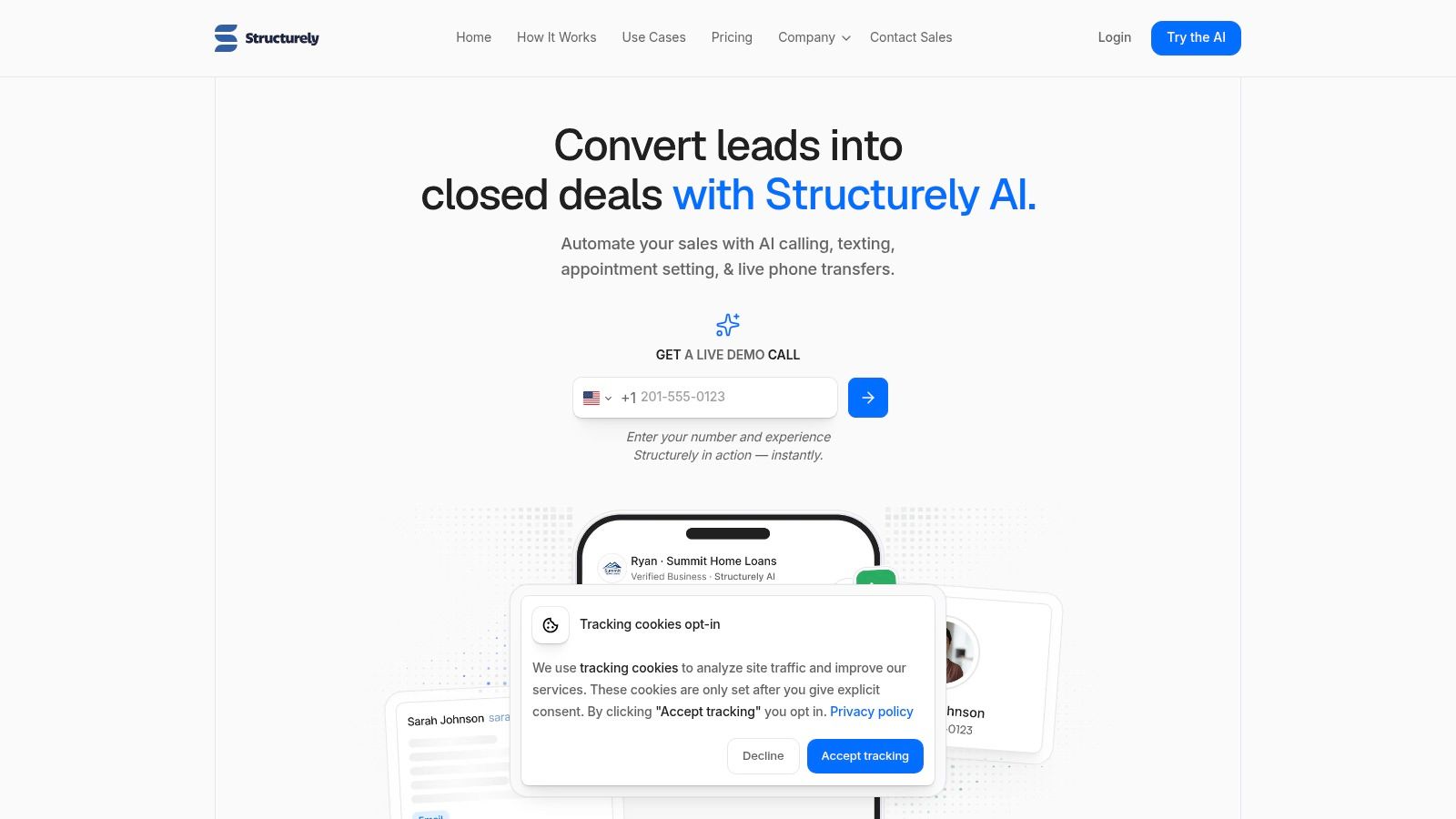
    Structurely fits teams that lose money on slow lead response. It handles SMS, voice, and email conversations, qualifies buyer and seller inquiries, and can live-transfer hot leads to agents. That gives brokerages and team leads a 24/7 response layer without tying up an agent on every inbound message or call.

    Its usage model is built around action credits, which is useful if your lead volume changes from month to month. For a brokerage lead-gen operation or a team that buys traffic, the pay-per-action structure can track real activity instead of forcing you into a flat cap that works against growth (Structurely). The platform also includes routing, analytics, and webhooks or API support, so it can sit inside a larger workflow instead of acting like a dead-end bot.

    The onboarding fee and annual contract still deserve attention. That is not a reason to pass on it, but it does mean you should know your lead volume and response process before you sign. If your team is not disciplined about routing, CRM hygiene, and follow-up ownership, any conversational AI will look weaker than it should.

    A lead assistant only works when the handoff is clean. If routing is sloppy, the technology gets blamed for a process problem.

    For solo agents, Structurely is usually more tool than you need unless you are buying traffic and need help after hours. For teams and brokerages, it can save time and protect speed to lead because first response stays consistent and immediate. That matters because missed first touches still cost deals, and compliance review gets harder when leads sit unclaimed in a shared inbox.

    For agents who want lighter support, marketing tools for solo real estate agents may be a better place to start. Structurely sits further along the stack, where response handling, routing, and handoff matter more than simple campaign support.

    Best fit and caution

    • Best for: teams that want multi-channel nurture and live transfer.
    • Best ROI: instant lead engagement and routed follow-up.
    • Watch out for: onboarding costs and the need for strong CRM discipline.

    If your lead volume is meaningful and your response process is weak, Structurely can pull real weight. If your CRM is messy, fix the data and routing first.

    6. Roof.ai

    Roof.ai suits real estate sites that get steady traffic but lose conversations after office hours or during busy showing windows. It embeds on brokerage and team websites, answers listing questions, captures leads, segments them by type, and can book showings or route inquiries. For teams that want fewer missed conversations without adding more manual chat coverage, that workflow has direct value.

    Its strength is domain-specific handling. The product is trained on real-estate knowledge, so it can respond to pricing, features, and property context in a way that feels more relevant than a general chatbot. It also includes automated follow-up and reporting, so a visitor's question does not vanish once the session ends (Roof.ai).

    A free tier with limited monthly leads makes it practical to test on a live site before committing. That matters because chatbot results depend on traffic quality, page placement, and routing discipline. A strong bot on a weak workflow still produces weak outcomes.

    Start with the path the visitor should follow.

    • Lead segmentation: Check that buyer, seller, and renter inquiries go to the right path.
    • CRM routing: Confirm the contact record lands in the correct pipeline with usable details.
    • Human handoff: Test how fast an agent steps in once the conversation turns serious.

    Roof.ai works best as a middle layer in a connected stack. If the website, CRM, and response process are disconnected, the bot can still collect leads but fail to turn them into appointments. For brokerages and teams with clear routing rules, it can save time, keep response speed consistent, and reduce the number of prospects who leave without being answered.

    7. Ylopo AI

    Ylopo AI is strongest when you already use the broader Ylopo ecosystem. Its AI Text and AI Voice tools are built to engage IDX and site leads around the clock, then push warm opportunities toward live transfer or appointment setting. If you're running traffic and want a tighter feedback loop between ad click, site visit, and follow-up, this is a familiar and serious option.

    The platform's value is its conversational history and the way it ties behavior to messaging. If a lead keeps returning to a property, that signal can shape the outreach. That kind of behavioral awareness is useful because it keeps follow-up closer to the actual search pattern instead of sounding like a canned drip.

    The downside is straightforward, pricing isn't publicly published, and the product is typically sold through demos and quotes (Ylopo). That means the best way to evaluate it is to walk through your lead flow with a real pipeline, not a theoretical one. For teams that already buy traffic and care about conversion discipline, that demo process is usually worth it.

    Don't buy a nurture platform before you know where the lead leaks are. Otherwise you'll automate the same bad handoff faster.

    For brokerages, Ylopo makes the most sense when the goal is to tighten conversion across ads, website, and CRM. For solo agents, it can be a heavy lift unless you're already running enough traffic to justify a bundle. Compared with Structurely, it feels more ecosystem-driven. Compared with Lofty, it's more focused on engagement and nurture than being the whole CRM layer.

    8. Lofty

    A team that wants CRM, IDX, marketing automation, and AI in one place will find Lofty easy to evaluate. The platform brings AI Assistants and Copilots into day-to-day work, so agents can draft property descriptions, emails, and scripts, summarize lead history, and qualify leads through AI Sales Agents. That matters when the priority is keeping follow-up, routing, and reporting inside one system instead of patching together tools that do not always talk to each other.

    The practical benefit is control. One login, one reporting layer, one automation framework. That setup reduces the chance of broken handoffs between web, CRM, and nurture, which is often where real estate tech stacks lose momentum (Lofty).

    Adoption is where the work starts. Quote-based pricing and package differences mean you need to ask about onboarding, support, and what is included before you commit. A platform like Lofty can work well, but only if someone owns implementation, keeps the database clean, and checks that the team uses the system the same way every day.

    Where Lofty fits best

    • Teams that want consolidation: better than stacking too many point tools, especially if your handoffs are already messy.
    • Brokerages with repeatable workflows: useful for centralized brand control, reporting, and compliance oversight.
    • Agents who need structure: a good fit if you want AI inside a system you already use daily and can keep up with.

    For solo agents, Lofty can feel heavier than a simple content tool because the payoff comes from consistency, not quick novelty. For teams, the ROI is clearer, since the platform can support lead routing, follow-up, and reporting in one workflow. For brokerages, it is strongest as an operating system for the sales process, especially when Fair Housing compliance and internal standards need to stay visible.

    I would place Lofty above generic CRM systems for real estate teams that plan to use AI every day. It is not as focused on marketing content as ListingBooster.ai, but it is stronger as an operational hub. If the goal is to move from scattered tools to a controlled stack, Lofty is one of the clearest platform options.

    9. Revaluate

    Revaluate is one of the more strategically interesting tools here because it focuses on people you already know. It analyzes contact databases with AI to score which contacts are likely to move and when, which helps agents and teams prioritize outreach instead of spraying the same message at every contact in the CRM. That makes it especially useful for seller discovery and database reactivation.

    The biggest win is focus. Most agents have more contacts than time, and a good predictive layer helps sort the names that deserve attention first. Revaluate also includes database cleanup, address verification, monitoring, and CRM integrations, which matters because bad data ruins any scoring model before it starts (Revaluate).

    This is one of those tools where the software is only half the story. If your CRM has missing addresses, stale records, and weak tagging, your results will be uneven. If your database is clean and your follow-up habit is consistent, the tool becomes much more valuable.

    Predictive tools don't create opportunities out of thin air. They help you stop ignoring the right contacts.

    Revaluate is good for solo agents, but it becomes more powerful in teams because multiple people can work the same data set with different outreach roles. The pricing isn't public, so expect a demo and a quote. That's normal for this class of product, but it also means you should ask for the workflow, not just the pitch.

    If you're trying to build a seller pipeline from existing relationships, Revaluate belongs on the shortlist. If you're trying to generate listing content or social output, it's the wrong tool. Its strength is prioritization, not promotion.

    10. Offrs

    Offrs is built for prospecting discipline. It uses machine learning across large U.S. property and consumer data sets to forecast which homes are more likely to sell within 12 months, then packages that into territory farming tools and predictive seller leads. For agents who work a geographic farm, that can be a practical way to focus mailers, calls, and follow-up on higher-propensity accounts.

    The appeal is simple. Instead of blanketing a farm and hoping for signal, you target the homes that look more likely to turn. Offrs also includes marketing automation and CRM integrations, so the predictive layer can feed your actual outreach workflow rather than sitting in isolation (Offrs).

    The platform has been around long enough that the concept is well understood, which helps. The trade-offs are also familiar, pricing and territory rules are quote-based, and availability can vary by market. That means a demo isn't just a sales step, it's the point where you confirm whether the territory logic matches the business you're running.

    Use it when your farm is your business model

    If you're farming a neighborhood, subdivision, or metro pocket, Offrs can help you concentrate effort where the odds are better. That doesn't remove the need for consistent touchpoints, local knowledge, and clean CRM management. It just makes the outreach more targeted.

    For brokerages, Offrs can be a good seller-intent engine to pair with a content platform and a follow-up tool. For solo agents, it's useful if you're already committed to farming and can sustain the outreach cadence. If you're not, the predictive score won't rescue an inconsistent prospecting habit.

    Top 10 Real Estate AI Tools Comparison

    Product Core features UX / Quality (★) Value & Pricing (💰) Target audience (👥) Unique selling points (✨)
    ListingBooster.ai 🏆 AI‑optimized MLS copy, 30‑day social calendar, market insights, print assets, status-aware scheduling ★★★★☆, fast setup (5–10 min), approval-first 💰 From ~$34.99–$39/mo; 30‑day free trial; credit model 👥 Solo agents, teams, brokerages ✨ AI-search optimized (ChatGPT/Google AI), Fair Housing checks, 23 psychology frameworks
    ListingAI MLS descriptions, social copy, AI‑animated videos, virtual staging, agent sites ★★★☆☆, quick media output 💰 Transparent tiers; free first‑listing trial; credits for media 👥 Agents needing media & staging ✨ AI videos + virtual staging; clear pricing
    RPR (Realtors Property Resource) National parcel data, comps, demographics, AI ScriptWriter, branded reports ★★★★☆, data‑grounded outputs, mobile app 💰 Free for NAR members 👥 NAR REALTORS (listing presentations) ✨ Parcel‑level data + AI ScriptWriter for market narratives
    Restb.ai Image tagging, condition scoring, auto captions, photo compliance checks ★★★★☆, enterprise computer vision accuracy 💰 Quote‑based enterprise pricing 👥 MLSs, portals, brokerages ✨ Real‑estate CV for SEO/ADA & compliance
    Structurely Multi‑channel AI agents (SMS/voice/email), routing, live transfers, analytics ★★★☆☆, strong qualification, needs onboarding 💰 Usage/credits; onboarding fee; annual contracts common 👥 Teams & brokerages handling many leads ✨ Multi‑channel AI + live transfer optimization
    Roof.ai Website‑embedded AI Q&A, lead capture/segmentation, automated follow‑ups, reporting ★★★☆☆, good on‑site conversion; integration needed 💰 Free tier (limited); paid tiers via sales 👥 Brokerages & teams with websites ✨ Embedded listing Q&A + lead segmentation
    Ylopo AI AI Text & Voice nurture, behavioral alerts, live transfers, IDX/ad integrations ★★★★☆, mature playbooks, strong conversions 💰 Quote‑based; bundled with ads/IDX 👥 Teams & brokers using IDX/ads ✨ 'AI Squared' multi‑signal engagement strategy
    Lofty (formerly Chime) CRM with AI Assistants/Copilots, AI Sales Agent, IDX sites, automation & reporting ★★★★☆, all‑in‑one CRM + AI, onboarding required 💰 Quote‑based packages; implementation fees possible 👥 Teams & brokerages needing CRM scale ✨ Integrated CRM + IDX + AI copilots
    Revaluate AI lead scoring (likely‑to‑move), database cleanup, monitoring, CRM integrations ★★★☆☆, effectiveness tied to data quality 💰 Quote/demo pricing; tiers by contacts 👥 Agents & teams mining CRMs for sellers ✨ Predictive "likely‑to‑move" scoring for seller discovery
    Offrs Predictive seller scoring, territory farming, marketing automation, CRM integrations ★★★☆☆, proven dataset; market‑dependent 💰 Quote‑based; territory/exclusivity rules 👥 Agents & teams focused on seller leads ✨ Longstanding US dataset for seller propensity forecasts

    Building Your Real Estate AI Stack Strategy and Compliance

    AI isn't replacing your judgment, it's removing repetitive work so you can use your judgment where it matters. The right stack starts with the biggest bottleneck in your business, not with the biggest feature list. If your day disappears into listing copy and social posts, start with a content tool. If you're losing leads after hours, start with a conversational assistant. If your database is full of stale contacts, start with predictive scoring and cleanup.

    For solo agents, the fastest win is usually content creation. A tool like ListingBooster.ai makes sense because it can turn one property into compliant listing descriptions, social posts, and a month of scheduled content without requiring a giant workflow overhaul. That's valuable because the NAR says generative AI is already being used for listing descriptions, property searches, and marketing content (NAR), and a practical time-saving benchmark says agents have reported cutting listing-copy time from 45 minutes to under 5 minutes per listing when using large language models for MLS descriptions, captions, and email sequences (NAR).

    For teams, the problem is usually lead leakage and brand consistency. A nurture tool like Structurely paired with a centralized CRM like Lofty can keep response speed high and messaging consistent, which is where a lot of teams lose revenue. A brokerage that wants scale should think in layers, predictive tools like Revaluate or Offrs for seller discovery, then a compliance-first content platform to keep the marketing machine running.

    Compliance has to sit inside the workflow, not after it. One practical guide on real-estate AI readiness says agencies should have complete CRM records going back at least three years, structured property data, performance data such as time on market and price changes, and consistent feedback data before expecting strong AI results; it also says 10 or more affirmative readiness checks suggests ambitious AI implementation is realistic, while fewer than 6 means data infrastructure should come first (AI readiness guide). That's a useful filter for any brokerage that wants to avoid buying tools before the database is usable.

    The governance side matters just as much. Deloitte recommends considering open-source models trained on proprietary datasets to reduce data leaks and improve privacy and security, while V7 Labs warns that AI-generated real-estate content still needs human verification to satisfy regulations (Deloitte on generative AI in real estate). Another verification standard recommends one source per factual claim and document-level source attribution, so your team can trace a statement back to a specific filing, document, or database entry instead of relying on vague “market research” language (verifiable AI outputs guidance).

    That's the part too many tool roundups skip. The highest-ROI stack is the one your team can govern. Choose the smallest set of tools that fixes the biggest bottleneck, put review checkpoints in place, and make sure every output can be defended by source data, brokerage policy, and Fair Housing rules. If you need a place to start, audit your listing workflow first, then add lead nurture, then layer in predictive tools once your database and approvals are stable.


    If your team wants a real-estate-specific way to turn listings into compliant, AI-readable marketing campaigns, ListingBooster.ai is built for that job. It combines listing descriptions, social content, market context, and approval-first publishing so you can move faster without losing control. Start there if you want a cleaner workflow, stronger visibility, and less time spent rewriting the same content by hand.

  • Proptech Meaning: A Practical Guide for Real Estate Agents

    Proptech Meaning: A Practical Guide for Real Estate Agents

    Proptech means property technology, software, data, and automation applied across the property lifecycle, and the category is already a USD 53.24 billion market in 2026, according to Mordor Intelligence. That scale matters because proptech isn't a trendy label for apps, it's the operating layer behind how agents search, market, transact, manage, and keep deals moving.

    For brokers and teams, the useful question isn't whether proptech exists. It's which parts of your workflow it can improve without creating more noise, more compliance risk, or another tool nobody uses.

    What Proptech Means in Real Estate

    Proptech is short for property technology, and the working definition is simple, software, data, and automation that improve how real estate is bought, sold, rented, managed, and operated. The term has been in use since the late 1990s, moving beyond its initial association with startup culture, and the market context backs that up, with Mordor Intelligence estimating USD 53.24 billion in 2026 and USD 120.74 billion by 2031 for the PropTech market, plus a separate projection of USD 185.31 billion by 2034 in another market report. Mordor Intelligence's PropTech market outlook makes the point clearly, this is a large commercial category, not a side project.

    An infographic defining proptech as digital tools for real estate, showing its market growth from 2023 to 2032.

    For brokerage operations, the useful way to judge proptech is by workflow, not by product labels. A tool matters when it removes friction from a repeatable step, such as listing creation, lead routing, rent collection, maintenance triage, or portfolio reporting. Oxford research describes proptech as part of the broader digital transformation of the property industry, and other neutral definitions place it across the full property lifecycle, not just search sites or home apps. That matters because a brokerage stack is more like an assembly line than a storefront, every handoff, delay, and manual re-entry creates drag. using AI assistants in property management is a useful example of how automation can sit inside operations rather than on top of them.

    Proptech at a Glance

    Dimension Detail
    Core meaning Property technology
    What it includes Software, data, automation, digital platforms
    Where it shows up Search, transactions, management, smart buildings, construction
    Who uses it Agents, brokers, teams, property managers, lenders, developers
    Practical value Faster workflows, clearer visibility, less manual coordination

    A practical test helps separate real operational value from surface-level tech. If a tool only makes a task look modern but does not reduce manual handoffs, it is probably decoration, not proptech.

    That is why broad definitions matter. Proptech is not just listing websites, and it is not just AI for agents. It is the infrastructure that sits under the work your team already does, until a workflow becomes fast enough, visible enough, and consistent enough to scale.

    A Brief History of Property Technology

    Proptech's roots go back to the late 1990s, long before AI tools became a common talking point. The category has been evolving for nearly three decades, starting with basic listing and transaction software and then expanding into a broader operating stack for real estate teams. A historical overview from MIT Executive Education's proptech overview helps show why this is a mature category, not a passing trend.

    A timeline infographic illustrating the evolution of property technology from the late 1990s to the 2020s.

    The first wave was about turning paper and phone-based work into digital work. Listings moved online. Transactions became less manual. Then MLS systems, portals, and brokerage software matured, and that changed how agents published inventory, managed contacts, and coordinated follow-up. The focus shifted from whether software could help to which part of the process software should own.

    What changed in practice

    Once cloud-based SaaS tools became normal in brokerage operations, teams began to expect software to handle more than file storage or contact lists. CRM, document handling, lead management, and reporting moved into the same workflow layer. MIT Executive Education's overview of proptech use cases includes smart building management systems, analytics platforms, digital marketplaces, and newer tools like smart contracts and virtual property tours, which shows how the category kept expanding beyond listing tools into operational infrastructure. That broader shift is easier to see if you compare it with real estate AI and agent workflows, because the value shows up when tools are tied to daily tasks.

    The industry did not jump from paper to AI overnight. It added new capability on top of old workflows until the stack became digital end to end.

    For agents, that history matters in a practical way. A lot of what people now call proptech started as basic operational software, then became workflow software, then became intelligence software. That is the same lens you should use when evaluating real estate marketing automation tools, because the question is not whether a tool sounds modern, it is whether it improves speed, visibility, and consistency inside the brokerage process.

    The Six Core Categories of Proptech

    If you want a clean mental model, break proptech into six buckets that show up across credible definitions. The labels matter less than the jobs they perform, because most brokerages touch several categories already, even if nobody on the team uses the word proptech. A useful outside reference is real estate AI and agent workflows, since it reinforces the idea that tech is most useful when it's tied to daily tasks.

    A diagram outlining the six core categories of Proptech industry, including platforms, analytics, and smart building solutions.

    1. Platforms and marketplaces

    These are the search and discovery engines of the industry. Zillow and Redfin are the obvious examples, and the practical question is simple, does this help a buyer or seller find inventory faster, or help my team present inventory better?

    2. SaaS for agents and brokerages

    This is the software layer for contacts, tasks, marketing, and office workflows. A brokerage CRM is the typical example, and the key question is, does this reduce follow-up drag or create another dashboard nobody opens?

    3. Smart buildings and IoT

    These tools live in the physical asset, not just the front office. Smart thermostats and building management systems belong here, and the operational question is, can this platform give me real-time visibility into building conditions or usage?

    4. Data and analytics

    This category includes pricing tools, market dashboards, and portfolio reporting systems. The question agents should ask is, does this improve pricing judgment or help me explain a recommendation with more confidence?

    5. AI and automation

    Classification, drafting, routing, and anomaly detection occur here. The key question is, what repetitive step does this tool take off my plate without making the output generic?

    6. Transaction and construction tooling

    These are the tools that handle signatures, approvals, and project workflows. DocuSign is the familiar example on the transaction side, and the agent question is, does this shorten the distance between accepted offer and completed paperwork?

    The useful shift here is operational, not academic. Once you can name the bucket, you can evaluate the tool. If it doesn't support a real workflow, it probably doesn't belong in your stack.

    Real Examples of Proptech in the Wild

    The easiest way to spot proptech is to look at the job it does. Zillow and Redfin help with search and property discovery, while DocuSign handles digital signatures and contract management. Smart home tools like Nest sit in the building layer, and purpose-built marketing tools fit where listing prep and authority content need to be produced consistently.

    A table showcasing real examples of proptech products and their corresponding jobs-to-be-done for property services.

    A lot of agents confuse “AI tool” with “real estate tool.” That's where the differences matter. A generic writer can draft text, but it doesn't know the difference between a listing description, a social caption, and a compliance-sensitive remarketing post, which is why purpose-built tools tend to fit brokerage work better than general ones.

    Proptech Tools Agents Actually Touch

    Category Representative Tool Workflow It Supports
    Search and discovery Zillow, Redfin Property discovery and lead intake
    Listing marketing ListingBooster.ai Listing prep and authority content
    Transaction management DocuSign Digital signatures and contract handling
    Smart home layer Nest Device-based property control

    For lead generation, it helps to think about forms and capture points, not just ads. Best real estate lead capture templates is a good companion resource if you're mapping where inquiries enter your pipeline and how they get routed.

    Operational test: if two tools produce similar copy, choose the one that understands your real estate workflow, your compliance constraints, and the way your team actually sells.

    That's also where purpose-built real estate AI stands apart from generic AI writers. One is trained around your actual asset type, listing language, and brokerage use case. The other is a general writing engine that still needs heavy human cleanup before it's ready for MLS, social, or client-facing use.

    Benefits and Real Risks for Agents and Teams

    Proptech can make a brokerage feel more organized fast, but only if the tool fits the process. The upside is real, faster listing prep, more consistent brand voice, better lead routing, and less manual follow-up. The downside is just as real, training overhead, vendor lock-in, and the risk of publishing copy that sounds polished but misses compliance nuance.

    What usually improves first

    The first gain is usually time. When listing descriptions, social posts, and basic workflow reminders are automated, agents spend less effort on repetitive writing and more on client conversations, pricing decisions, and showing coordination. Teams also get a more consistent public voice, which matters when multiple agents post under the same brand.

    The second gain is control. Digital systems create a clearer record of who did what and when, which helps with handoffs and reduces the “who was supposed to send that?” problem. For brokerages, that record can also support internal review before content goes live.

    What can go wrong

    The biggest mistake is assuming every AI tool understands real estate compliance. It doesn't. Generic writers can produce content that sounds plausible but slips into language that doesn't belong in MLS copy or social posts, which is why a fair housing guide for listingboosters is worth reading before any team rolls out AI-generated captions.

    Another risk is tool sprawl. If your CRM, marketing tool, and transaction platform don't connect cleanly, your team ends up copying the same information into several places. That slows adoption and creates errors. Training matters too, because a great system that nobody uses is just another subscription.

    Compliance rule: when content will be public, use tools and review steps that avoid protected-class language and keep the focus on property features, location attributes, and process details.

    The right way to evaluate proptech is to ask two questions at the same time. What does it save, and what does it expose? If it saves time but increases compliance risk, it's not a win. If it improves consistency and keeps the workflow clean, it probably earns a place in your stack.

    How Agents Can Start Using Proptech This Week

    Start with the stack you already have. Pull together your CRM, marketing tools, transaction platform, and any AI software your team is using now, then identify where the most manual copying happens. That usually tells you which workflow is the best first candidate for automation.

    1. Audit the current workflow

    Map one listing from appointment to close and write down every handoff. Where does data get retyped, where does copy get rewritten, and where do approvals stall? That list gives you the actual problem, not the one a vendor pitch deck describes.

    2. Pick one workflow to automate first

    Don't start with everything. Start with the step that creates the most friction, often listing prep, follow-up, or lead routing. If your pain point is content production, a category-specific tool like ListingBooster.ai fits there because it generates listing descriptions and social content from property details, which is different from a generic AI writer.

    Screenshot from https://listingbooster.ai

    For adjacent research, AI tools for realtors is a useful way to compare where a specialized tool belongs versus a general-purpose platform.

    3. Pilot with one measurable result

    Choose one KPI that you can observe, like turnaround time for a listing draft, number of follow-up tasks completed, or how quickly a lead gets routed. Keep the pilot small enough that your team can see whether the tool fits the workflow.

    4. Put it inside the pipeline

    A tool works best when it lives where the work already happens. If it's for listing prep, use it before the listing goes live. If it's for CRM follow-up, connect it to the exact stage where the lead enters your system.

    5. Review after 30 days

    Ask the team what saved time, what caused friction, and what still needs manual cleanup. That's the point where you decide whether to keep, replace, or expand the tool.

    A practical 7-day plan is enough to get started. Day one, map the workflow. Day two, choose the tool. Day three, pilot on one listing or one pipeline segment. By the end of the week, you'll know whether the category belongs in your operation.

    Where Proptech Is Headed and What to Do Next

    Proptech is best understood as infrastructure, not hype. The long arc runs from basic listing software in the late 1990s to today's AI, analytics, and smart-building systems, and the agents who benefit most are the ones who treat technology as a workflow decision, not a novelty. That means the smartest move isn't buying more tools, it's choosing fewer tools that do more for the specific part of your business that slows down most.

    For brokerage operations, the decision usually comes down to one of three questions. Where is the manual rework? Where is the compliance exposure? Where does your team lose time on work that doesn't directly move a listing or a client relationship forward? Once you answer those, the category choice gets much clearer.

    If you want to test a purpose-built option for listing prep and content, a simple next step is to audit one workflow and try a focused tool for that single use case. ListingBooster.ai fits best when the problem is MLS-ready descriptions, social content, and repeatable listing marketing, not a full replacement for your CRM or transaction stack. You don't need a full technology overhaul to learn something useful.

    Pick one workflow this week, listing prep is usually the cleanest place to start, and see whether automation helps your team move faster without losing control.


    A CTA for ListingBooster.ai.

  • What Is Fair Housing: Real Estate Agent Compliance 2026

    What Is Fair Housing: Real Estate Agent Compliance 2026

    Friday afternoon, the photos are in, the seller wants the home live before dinner, and you're polishing the listing remarks. You type a phrase that feels harmless. Maybe it points to the kind of buyer you think will love the property. Maybe an AI tool suggests neighborhood copy that sounds polished enough to post as-is. By Monday, your broker gets a complaint.

    That's how fair housing problems often start. Not with obvious exclusion. With routine marketing decisions made quickly, under deadline, inside normal production pressure.

    For agents, brokers, and teams, what is Fair Housing isn't an academic question. It's a daily operating standard that affects listing remarks, showing practices, lead handling, intake forms, social captions, neighborhood copy, and the way your office documents decisions. A weak process can expose you even when no one intended harm. A strong process protects clients, supports equal access, and gives your brokerage something just as important in a dispute: a record showing you treated people consistently.

    Introduction to Fair Housing

    Friday at 4:45 p.m., the seller is asking why the listing is not live, your marketing tool has already drafted the remarks, and one sentence creates the problem. It does not have to be openly exclusionary. A reference to the “right family,” a comment that hints at religion, or neighborhood copy generated by AI that suggests who belongs there is enough to trigger scrutiny.

    Fair Housing sets the operating rules for those moments. For agents and brokers, it governs how homes are marketed, how inquiries are handled, how opportunities are presented, and how decisions are documented. The legal issue matters, but so does the daily business reality. A complaint can force file reviews, platform edits, retraining, broker involvement, and difficult conversations with clients who expected fast, aggressive marketing.

    The risk gets higher when teams use AI to speed up listing production. AI can produce polished copy fast. It can also repeat biased housing language, make unsupported neighborhood characterizations, or infer an ideal occupant from photos, school references, or prior prompts. The agent who publishes that copy still owns the outcome.

    One rule keeps teams out of trouble: market the property, not the person who should live there.

    That sounds simple until state law enters the picture. Federal Fair Housing rules are the floor, not the ceiling. Many states and local jurisdictions protect additional classes, and those differences affect ad copy, intake practices, and review standards. A sentence that looks acceptable to an untrained agent, or to a generic AI writing tool, may still create exposure in a state with broader protections.

    That is why fair housing compliance has to be built into the workflow, not saved for a last-minute edit. Clear approval standards, prompt controls for AI tools, and consistent review practices reduce avoidable mistakes. If your team is refining how to write compliant property descriptions, start with a process that checks both Fair Housing principles and the state-specific rules that apply where you market.

    Understanding Core Concepts of Fair Housing

    Fair Housing starts with a simple principle. Access to housing should turn on lawful qualifications such as price, credit standards, documented criteria, and availability, not on personal background.

    The federal rule is direct. The U.S. Department of Justice Fair Housing Act overview states that the federal Fair Housing Act makes it illegal to discriminate in the sale, rental, financing, and brokerage of housing because of seven protected classes: race, color, religion, sex, familial status, national origin, and disability. For real estate professionals, that reaches well beyond lease signing. It affects advertising, screening-related communications, client service, and referral patterns.

    Here's a useful way to think about it. A lender can ask whether a borrower qualifies under financial standards. A landlord can apply a lawful screening policy. An agent can market features, condition, location facts, and logistics. What none of them can do is tie access or messaging to a protected characteristic.

    A diagram outlining the core concepts of fair housing, including financial qualifications, non-discrimination, and equal opportunity.

    The difference between market criteria and protected traits

    A practical test helps.

    • Allowed focus: Price, number of bedrooms, lot size, flooring, updated systems, parking, transit access, HOA rules, lease terms, application steps.
    • Unsafe focus: The kind of person who should live there, assumptions about who belongs in the area, coded references to religion or ethnicity, or language that signals preference for households with or without children.

    The trouble is that many violations don't sound extreme. “Perfect for families,” “walk to church,” “safe neighborhood,” and “ideal for young professionals” all steer attention toward protected-class implications or demographics instead of the property itself. That's why agents should learn how to write compliant property descriptions before they scale content across MLS, social, and email.

    Disparate treatment and disparate impact in daily practice

    Disparate treatment is intentional difference in treatment. One buyer gets shown certain homes and another doesn't because of a protected trait. One renter gets different terms. One prospect gets discouraged.

    Disparate impact is harder to catch. A policy or tool looks neutral, but the effect falls more heavily on a protected group. That can happen in screening workflows, lead routing, neighborhood copy, and AI-generated content.

    If your process is neutral on paper but exclusionary in effect, regulators and complainants may still care about the outcome.

    That's why compliance isn't only a language exercise. It's also a systems exercise.

    Legal History and Protected Classes

    Fair Housing law matters more when you understand what it was built to change. The legal framework wasn't designed as a marketing style guide. It was designed to dismantle discrimination in housing access and create a market where people compete on legitimate qualifications rather than background.

    On April 11, 1968, President Lyndon B. Johnson signed the Civil Rights Act of 1968, including Title VIII, known as the Fair Housing Act, according to the Department of Justice history of federal fair housing enforcement. At enactment, the law immediately covered approximately 1,000,000 units of government-owned or government-financed housing dating from November 1962, and by December 31, 1968, coverage expanded to roughly 43,000,000 additional housing units. The same DOJ history notes this was the first American law to explicitly ban racial discrimination in housing sales and rentals.

    A timeline graphic showing key milestones in US fair housing law and its seven protected classes.

    How the protected classes expanded

    Fair Housing didn't stop with the original law. The DOJ summary of the Fair Housing Act's development explains that over the decades following its 1968 enactment, the protected classes under fair housing laws expanded from the original four to include seven distinct categories through specific congressional amendments, altering the scope of legal protection for Americans.

    The timeline matters:

    Year Change Why agents should care
    1968 Added protections based on race, color, religion, and national origin Advertising and service practices could no longer lawfully sort people on those grounds
    1974 Added sex Marketing language and treatment could not lawfully reflect sex-based preference
    1988 Added disability and familial status through the Fair Housing Amendments Act Accessibility, family-related restrictions, and disability-related treatment became central compliance issues

    Today, the Act covers discrimination by direct housing providers and also reaches municipalities, banks, and homeowners insurance companies on the seven federal classes listed above, as described in that same DOJ resource.

    Why 1988 changed daily operations

    For most real estate professionals, the 1988 amendments changed the job in two major ways.

    First, familial status rules mean you can't market or manage housing in a way that disadvantages households with children under age 18. That includes special restrictions that isolate families or limit access to services or amenities.

    Second, disability protections reach both treatment and physical access issues. The Fair Housing Act's design and construction requirements apply to covered multifamily dwellings designed for first occupancy after March 13, 1991, and HUD's technical overview of design and construction requirements lays out seven required accessibility features, including an accessible entrance, usable common areas, usable doors, accessible routes within the unit, reachable controls, reinforced bathroom walls for future grab bars, and maneuverable kitchens and bathrooms. Failure to meet those standards is treated as disability discrimination under the Act.

    The compliance lesson for agents is simple. Disability issues don't begin and end with accommodation requests. They can start with the physical product, the listing language, and the way you answer questions about usability.

    State and local law create the real patchwork

    Federal law gives you the floor, not the full map. State and local rules often add categories or create different standards for advertising and rental decisions.

    One of the most practical examples is source of income. Federal law doesn't include it as a protected class. But Michigan fair housing guidance makes clear that Michigan bans discrimination based on source of income in rental housing. That matters when agents use templates, canned responses, or AI prompts built around federal rules alone. A generic “Fair Housing compliant” content generator may miss a state-level issue entirely.

    This also matters in accommodation-related areas where state law and current legal interpretation can be complicated. For Texas practitioners handling questions around assistance animals, Bryan Fagan PLLC on Texas ESA rights is a useful legal resource to review with counsel when a file raises disability accommodation issues.

    The operating takeaway

    Agents don't need to memorize every statute. They do need a habit:

    1. Start with federal protected classes
    2. Check state and local additions
    3. Review office policy before publishing
    4. Escalate edge cases to counsel or your broker

    That's how you keep a national marketing workflow from creating local liability.

    Common Violations and Real-World Examples

    Most Fair Housing complaints in marketing don't begin with openly discriminatory language. They begin with “normal” copy that nudges the reader toward a preferred type of resident.

    A rental ad says the unit is “perfect for a quiet couple” and highlights the building as not suitable for children. That's a familial-status problem. The copy doesn't describe flooring, layout, lease terms, or building rules. It describes who the advertiser wants.

    A listing caption says the home is in a “safe neighborhood” and “ideal for young professionals.” The first phrase sounds routine, but it can imply a coded demographic judgment instead of an objective location feature. The second points directly toward age-related preference and a target occupant profile. Both are avoidable.

    Where AI creates new mistakes

    The newer risk is speed. Teams use AI to draft MLS remarks, Instagram captions, neighborhood guides, and reply templates. The draft reads clean, the agent is busy, and the post goes live without a legal review mindset.

    The problem is documented at a high level. The National League of Cities fair housing overview notes that recent data shows AI-generated content tools can produce unintentional biases that disproportionately exclude protected groups, leading to algorithmic discrimination violations under the Fair Housing Act.

    That risk shows up in subtle ways:

    • Neighborhood summaries that describe who tends to live there
    • School-area captions that imply family-status targeting
    • Lifestyle copy that nudges toward religion, age, or cultural identity
    • Lead-routing or matching language that sounds personalized but effectively steers

    A polished draft isn't the same thing as a compliant draft.

    What actually works in practice

    When agents catch these issues early, the fix is usually straightforward. Strip out the occupant language. Replace it with verifiable property details and neutral location facts.

    Instead of “great for families,” use the actual feature: “three-bedroom layout with a fenced yard and covered patio.”

    Instead of “walk to church,” use “located near neighborhood services, dining, and commuter routes,” assuming those facts are accurate.

    Instead of “safe neighborhood,” describe objective facts such as “gated entry,” “streetlights,” or “proximity to public transit,” if those are verified. Don't make safety judgments.

    The strongest teams train agents to treat every draft, especially AI output, as a first pass that must be edited through a Fair Housing lens before publication.

    Dos and Don'ts for Listing Content

    Most compliant listing writing comes down to one discipline: describe the property, not the person. That sounds basic, but many agents still drift into audience targeting because that's how consumer marketing usually works. Housing is different.

    Illinois guidance, summarized in HousingWire's fair housing compliance article, advises that ads should emphasize amenities and features rather than an “ideal tenant,” and recommends holding all agents to documented review processes for consistent compliance. That's exactly the right operational standard for brokerages.

    An infographic titled Dos and Don'ts for Listing Content detailing fair housing guidelines for property listings.

    Better phrasing side by side

    Don't write Write this instead Why it works
    Perfect for families Three-bedroom home with a separate den and fenced backyard Focuses on layout and features, not familial status
    Ideal for young professionals Convenient access to downtown, transit, and coworking-friendly flex space Describes location and function without targeting a demographic
    Walk to church Near neighborhood amenities and community services Avoids religion-related implication
    Safe neighborhood Well-lit street, controlled-access entry, and sidewalks Uses objective facts instead of subjective safety claims
    Exclusive community Private cul-de-sac location with limited through traffic Removes exclusionary tone and states the physical characteristic

    A quick field checklist

    Before you publish, ask these questions:

    • Does this line identify a preferred resident? If yes, rewrite it around the home's features.
    • Am I making a judgment instead of stating a fact? Words like “safe,” “exclusive,” and “ideal” often create trouble.
    • Would this sentence sound different if a regulator read it instead of a seller? That's the right editing lens.
    • Did I verify each location claim? Transit access, nearby amenities, and building features should be factual.

    If you want more rewrite examples, this Compliant rental listing language from VerticalRent is a practical reference for ad phrasing decisions, and this ListingBooster resource offers a detailed guide to compliant real estate marketing.

    What doesn't work

    Agents get into trouble when they rely on “common sense” instead of a review standard. They also get into trouble when they assume coded language is safer because it's less explicit. Usually it isn't.

    Compliance note: If the phrase tells the reader who belongs there, take it out. If it tells the reader what the property offers, you're on safer ground.

    Consistent review beats clever wording every time.

    Enforcement and Penalties for Noncompliance

    A complaint rarely starts with the penalty chart. It usually starts with a listing, a caption, an AI-generated neighborhood summary, or an inconsistent response to two buyers asking the same question. By the time regulators or attorneys review the file, the issue is no longer just wording. It is whether the brokerage followed a repeatable process and can prove it.

    Financial exposure is real, but dollar amounts are only part of the risk. Enforcement can also bring testing, investigations, conciliation terms, training requirements, policy changes, reputational damage, and time pulled away from production. For teams using AI in marketing, there is an added problem. A fast drafting tool can multiply a bad phrase across MLS remarks, flyer copy, email campaigns, and social posts in one afternoon.

    Civil Penalties for Fair Housing Violations

    As noted earlier in the article, federal civil penalties can increase based on prior violation history. The larger point for working agents and brokers is practical. Repeat problems change how regulators and opposing counsel view your office. A one-off mistake is hard enough to explain. A pattern is much harder.

    State enforcement also matters. Some states and local jurisdictions apply broader protected classes or separate enforcement rules, so a line that looks acceptable under a general federal checklist may still create exposure in your market. That is one reason I advise offices to review AI prompts, listing templates, and ad approval workflows at the state level, not just the national level.

    What creates a defensible position

    A defensible file shows how the decision was made, who reviewed the content, what facts supported the description, and whether the same standard was applied across clients.

    The National Real Estate Services Authority compliance article highlights the basics that matter in an investigation: written intake procedures, use of client criteria only, records of properties or providers presented, and documentation of client interactions. That kind of audit trail matters even more when AI helps draft marketing copy. If a tool suggests language that creates steering or preference concerns, your office still owns the published result.

    Keep records that answer the questions enforcement staff usually ask:

    • What information did the client provide
    • What properties or options were shown
    • How were inquiries handled
    • Who approved the final listing or ad copy
    • What was edited, rejected, or regenerated in AI-assisted content

    That last point gets missed. If your team uses a Fair Housing compliant listing content tool, treat the output and the review history as compliance records, not just marketing drafts.

    A practical enforcement mindset

    Assume every published housing statement is discoverable. Assume text generated by AI will be judged the same way as text written by an agent. Assume inconsistency across leads, showings, or ad variants will look intentional unless your records show otherwise.

    Good compliance work is not about writing timid copy. It is about using objective facts, applying one review standard, and keeping records strong enough to defend the office if a complaint lands.

    Compliance Checklists and ListingBooster ai Integration

    A listing goes live at 9:00 a.m. By lunch, the seller loves the wording, the agent likes the speed, and nobody has noticed that the AI draft described the home as "perfect for young families" and the area as "exclusive." That is how Fair Housing problems enter ordinary marketing workflows. The issue is rarely bad intent. It is weak process.

    A workable compliance system gives agents clear drafting rules, a review path, and records that hold up if a complaint reaches the broker, state regulator, or HUD investigator. As noted earlier, offices need written procedures and consistent documentation. Here, the practical question is how to turn that standard into day-to-day listing production, especially when AI is involved and state rules may be stricter than the federal floor.

    A compliance checklist infographic for real estate listings and auditing AI-generated content for fair housing standards.

    Checklist for drafting compliant listings

    Use one review standard before MLS entry, syndication, paid ads, or social posting.

    • Start with verified property facts
      Confirm bedrooms, bathrooms, square footage, parking, amenities, access features, and location details against the file. Marketing copy should add clarity, not new claims.

    • Describe the property, not the ideal occupant
      Cut phrases that suggest who belongs there. Replace them with factual details about layout, condition, features, and permitted uses.

    • Keep neighborhood references objective
      "Near commuter rail," "close to public parks," and "easy access to I-95" are easier to defend than statements tied to demographics, culture, or assumed lifestyle fit.

    • Screen for protected-class issues and local-law additions
      Federal law is the starting point. State and city law may add classes such as source of income, sexual orientation, gender identity, marital status, age, military status, or lawful occupation. A phrase that passes one review standard in one state may create trouble in another.

    • Apply the same approval process to every listing
      Inconsistent review is where patterns form. Regulators and plaintiffs' counsel look for repeat behavior across agents, offices, and ad variants.

    Checklist for auditing AI-generated content

    AI speeds up drafting. It also introduces a specific risk: the system may generate polished language that sounds marketable but shifts from property facts into preference, exclusion, or coded phrasing.

    1. Read every line as advertising copy, not draft text
      If it is public-facing, review it as if it will appear in a file exhibit later.

    2. Compare the output to source documents
      AI often fills gaps with assumptions. Remove anything the listing file, seller disclosures, or broker instructions do not support.

    3. Flag coded terms
      Words like "exclusive," "safe," "private community," "ideal for families," or "walk to church" can create Fair Housing issues depending on context.

    4. Check for state-specific risk
      A broad AI prompt may produce language that ignores local protected classes or advertising rules. Brokerages operating across state lines should not rely on one generic prompt set.

    5. Save the approved version and the review history
      Keep the final copy, material edits, and reviewer identity. If the office uses AI, retain enough history to show what was changed and why.

    Where software helps and where it stops

    Software can standardize first drafts, flag obvious terms, and create a cleaner approval workflow. It does not replace broker supervision or legal judgment. I have seen teams get into trouble because they treated AI output as pre-cleared copy rather than a draft that still needed Fair Housing review.

    That is where specialized tools have a real advantage over general-purpose chat tools. A Fair Housing compliant listing content tool can help agents produce property-first copy, keep edits visible, and support a repeatable review process built for real estate marketing. The value is not speed alone. The value is a system that helps the office publish consistent language across listings, ad channels, and agents.

    The trade-off is straightforward. Manual review gives experienced agents flexibility, but it breaks down fast in a high-volume office. Standardized AI workflows improve consistency, but only if the brokerage sets the rules, trains agents on state-level differences, and audits what gets published. Use the tool. Keep the human review. Treat both as part of the compliance record.

  • The 10 Best AI Tools for Realtors in 2026

    The 10 Best AI Tools for Realtors in 2026

    You're probably already feeling the split in the market. Clients still expect the human parts of the job. Pricing judgment, negotiation, local context, showing strategy, deal management. But the admin load keeps growing, online attention keeps fragmenting, and buyers are starting discovery in places that didn't matter a few years ago. If your tech stack still depends on manual follow-up, one-off listing posts, and generic AI prompts, you're doing too much low-value work by hand.

    That's why the best AI tools for realtors aren't just “writing tools” or “chatbots.” The useful ones fit a workflow. They help you win the listing, price it better, respond faster, publish consistently, and stay inside compliance lines while you do it. In real estate, that compliance piece matters just as much as speed. Generic AI can draft fast, but if it creates risky language or needs constant cleanup, it's not saving you much.

    The market is moving quickly, but adoption is still early. In real estate, AI is mostly changing jobs rather than replacing them, and direct generative AI skill replacement in 2025 covered only 0.7% of the 2,900 skills analyzed across the sector, according to PwC and ULI's real estate AI analysis. That lines up with what most agents are seeing on the ground. AI is strongest when it handles recurring work so you can spend more time on clients and closings.

    If you want a broader playbook beyond software, this guide to modern real estate marketing tactics pairs well with the stack below.

    1. ListingBooster.ai

    ListingBooster.ai

    A listing goes live at 9 a.m. By noon, you still need MLS remarks, social posts, a flyer, and a version the seller will approve. That production work steals hours from prospecting and follow-up. ListingBooster.ai is useful because it starts with the property and turns it into a full set of marketing assets in one workflow.

    That matters more than another generic writing tool. Agents do not need more draft text. They need faster throughput, fewer revisions, and copy that stays inside Fair Housing lines. ListingBooster.ai is built for real estate tasks, so the output is closer to publishable on the first pass, especially for listing descriptions, social variations, multi-photo posts, and print materials.

    Its strongest fit is the content layer of a realtor AI stack. If your workflow is lead generation, listing launch, nurture, and reporting, this tool sits in the listing launch and content production stage. It helps solo agents cut context switching, and it gives teams a more consistent brand voice across agents and assistants.

    Best use case

    ListingBooster.ai works best for agents and brokerages that publish at volume and want one system to produce approval-ready listing marketing fast.

    • Property-first workflow: Start from a property URL or MLS data, then generate listing copy, channel-specific social posts, visuals, and print assets from the same source.
    • Compliance support: Built-in Fair Housing checks reduce the risk of publishing language that creates avoidable compliance exposure.
    • Editable output: The content usually needs review, but the edits are lighter than what generic AI tools often require.
    • Operational payoff: You spend less time rewriting the same property story for five different channels.

    If you want to evaluate the listing copy side in more detail, their guide to an AI real estate listing description generator shows how that part of the workflow is structured.

    The trade-off is straightforward. Native publishing does not cover every channel, and heavier use can push you into extra credits. Personalization also improves after the system sees enough approvals and edits from your team. That is a normal ramp period, but it means the ROI is better for agents who will use it consistently, not once or twice a month.

    From a compliance standpoint, the value is practical. Speed only helps if the copy is safe to send. A tool that saves 20 minutes but creates risky phrasing is not saving much. ListingBooster.ai earns its place by helping agents produce more content from each listing while keeping review time and Fair Housing risk under better control.

    2. RPR

    RPR is one of the easiest AI wins for REALTORS because it starts with data agents already trust. If you're doing CMAs, pricing conversations, seller presentations, or market update content, RPR gives you parcel-level property data, comps, and standardized reports in one ecosystem.

    Its AI layer is useful because it turns market stats into usable client-facing language. That includes scripts and captions for social, video, and presentations. For agents who know the numbers but don't want to spend extra time packaging them, that's a practical shortcut.

    Best use case

    RPR is strongest when you need pricing support that looks polished and credible without reinventing the wheel. The mobile workflow also helps when you're talking through value in the field and need a faster path to a CMA.

    • Included value: Many agents already have access through NAR membership.
    • Pricing conversations: Good fit for quick, data-backed prep before listing appointments.
    • Client-ready reports: Standardized outputs reduce formatting time.

    The downside is usability. Newer agents sometimes find the interface heavier than it needs to be. But experienced agents usually care more about reliability than elegance, and RPR has that.

    For compliance, the benefit is indirect but important. When you market with actual market stats and property facts instead of demographic-coded language, your messaging gets safer and more defensible. That's where RPR helps. It keeps the focus on property, pricing, and trends.

    Website: RPR

    3. Ylopo

    Ylopo is for agents and teams who already understand one truth about lead gen. Speed matters, but persistence closes more business than speed alone. If you have website traffic, paid leads, IDX traffic, or an aging database, Ylopo's AI text and voice tools help you keep follow-up running when your day gets pulled into showings and contracts.

    What makes it useful is the behavioral trigger layer. Outreach can react to IDX activity instead of sitting on a fixed drip schedule. That gives the conversations more relevance, especially when a lead comes back to browse after going quiet.

    Where Ylopo earns its keep

    Ylopo isn't a lightweight add-on. It's a funnel system. You're paying for lead nurturing, branded IDX experiences, remarketing, and conversation automation together, so it makes the most sense when you already have enough volume to justify a systemized approach.

    Good lead automation doesn't replace agent follow-up. It makes sure the right lead gets to you before interest fades.

    A few trade-offs are worth calling out:

    • Strong fit for team workflows: AI text and voice outreach can reduce missed opportunities from delayed response.
    • Behavior-aware follow-up: IDX signals make conversations feel less random than standard drips.
    • Less transparent pricing: You'll usually need a demo, and package costs can rise with add-ons.
    • Requires process discipline: If your CRM hygiene is weak, no AI layer will fix that.

    For teams evaluating voice AI more broadly, this CMO's guide to conversational AI is a useful strategic companion. And if you're an independent agent trying to decide whether this kind of automation is too much or just enough, ListingBooster.ai's take on an AI marketing assistant for independent realtors helps frame the decision well.

    Website: Ylopo

    4. Structurely

    Structurely (Aisa Holmes)

    Structurely's Aisa Holmes is one of the better-known real estate AI assistants for lead qualification. It handles two-way conversations across SMS, email, and chat, with a clear job: gather intent, timeline, financing details, and hand back the lead when a human should take over.

    That handoff point is what matters. Plenty of tools can answer the first message. Fewer can keep a conversation going long enough to separate casual browsing from actual readiness. Structurely is built for that middle layer.

    What it does well

    This tool is strongest for teams dealing with a lot of inbound leads, portal inquiries, or old database contacts that still need qualification before they reach an agent. It reduces the amount of time agents waste on people who aren't ready, while still catching the ones who become ready at odd hours.

    • Multi-channel coverage: SMS, email, and chat give you more than one path to engagement.
    • Real estate-specific qualification: Timeline and financing questions are central to useful triage.
    • CRM integrations: Better when your ops team wants cleaner handoff and tracking.

    The trade-offs are familiar in this category. Pricing usually isn't transparent, and annual agreements are common. That makes it a stronger choice for teams with lead volume than for solo agents with a smaller, more relationship-driven book.

    As of 2026, AI calling in real estate has advanced to the point where tools such as Structurely can directly call leads, hold human-sounding voice conversations, qualify prospects, answer basic questions, and schedule appointments, as noted in V7 Labs' market overview of real estate AI tools. That's useful, but it also raises the bar for supervision. You still need clear escalation rules, message review, and compliance oversight.

    Website: Structurely

    5. Roof AI

    Roof AI

    Roof AI is a site-level assistant, not a broad business operating system. That narrower focus is its strength. If your brokerage or team site gets traffic but visitors don't convert because they don't want to fill out a form, Roof AI can create a lower-friction path into a conversation.

    It's built to answer property-specific questions like price, features, availability, and open house details. That keeps the interaction useful instead of generic. A consumer asking about a property wants immediate, concrete answers. They don't want a chatbot that sounds like a customer service script.

    Best fit for teams and brokerages

    Roof AI makes the most sense when you manage multiple listings, multiple agents, or enough site traffic that missed chats turn into missed opportunities. Solo agents can use it, but many won't need this level of on-site automation unless they have a strong website traffic engine.

    Website chat only helps if it answers real listing questions and routes people cleanly to the next step.

    The practical upside:

    • Property-aware conversations: Better than generic chatbot logic.
    • Lead capture and routing: Useful for brokerages assigning inquiries across agents.
    • Always-on coverage: Helpful outside business hours when consumers are still browsing.

    The limitation is scope. If your core problem is content creation, database nurture, or pricing analysis, this won't solve it. It's a conversion-layer tool. Used in the right place, that's valuable. Used in the wrong place, it's just another dashboard.

    Website: Roof AI

    6. LocalizeOS

    LocalizeOS (Hunter)

    LocalizeOS, through Hunter, is built for a very specific pain point. Old buyer leads that never got properly worked, or were worked once and then ignored. This is a common issue. They have a large CRM, a lot of names, and no realistic way to follow up consistently without assigning someone to a task nobody enjoys.

    Hunter handles ongoing texting, profiling, and listing matching to bring high-intent prospects back into the pipeline. That's not glamorous, but it's useful. Database reactivation often produces better conversations than cold lead generation because the contact already knows your brand.

    Where it belongs in the stack

    This is mostly a team and brokerage tool. If you're a solo agent with a smaller sphere-based business, it may be too much. If you're sitting on a large buyer database, it can become a steady source of resurfaced opportunities.

    • Good for aged leads: It keeps the conversation going without manual effort every week.
    • CRM-connected outreach: Better when your existing database is already segmented reasonably well.
    • Brand continuity: Outreach can feel more consistent than ad hoc ISA work.

    The caution is that this kind of system only works if your team responds when Hunter identifies a live opportunity. AI can reopen the door. It can't walk through it for you.

    Website: LocalizeOS

    7. HouseCanary

    HouseCanary

    HouseCanary sits in the valuation and analytics bucket, and that's where many of the best AI tools for realtors create immediate credibility. A good pricing conversation is still one of the highest-value moments in the business. If your data support is weak, you're relying too much on confidence alone.

    HouseCanary offers machine-learning AVMs, valuation ranges, confidence scores, market analytics, and an agent-facing path through CanaryAI. According to Re-Leased's overview of vertical AI in real estate, purpose-built vertical AI tools tend to outperform general AI tools because they connect directly to proprietary real estate data sources and can support tasks like audit-ready citations and extraction that generic models can't handle well. HouseCanary is a good example of why that matters.

    What to expect in practice

    For listing agents, this is most useful as a support layer for pricing rationale and market positioning. For investor-facing agents or analytically minded teams, it also helps with broader forecasting and opportunity spotting.

    • Valuation support: Useful when you want a more defensible starting point.
    • Agent access: The CanaryAI layer lowers the barrier compared with enterprise-only tools.
    • Stronger than generic AI: Because the model is tied to real estate data and valuation workflows.

    The main caution is cost creep. Usage-based components and add-ons can change the economics if you use the platform heavily. Also, no valuation tool replaces local judgment. It strengthens your pricing discussion. It doesn't substitute for neighborhood-level expertise, condition nuance, or live feedback from actual buyers.

    Website: HouseCanary

    8. Restb.ai

    Restb.ai

    Restb.ai handles a part of the listing workflow that agents often underestimate. Images. Specifically, tagging rooms and features, checking image-related compliance, and generating photo captions or alt text through MLS and vendor integrations.

    That sounds administrative, because it is. But admin work is exactly where AI has gained traction in real estate. PwC notes that firms are deploying AI heavily in repeatable tasks with consistent deliverables, including extraction and analytics work inside real estate operations, which fits this category well in day-to-day practice.

    Why image intelligence matters

    If your media workflow depends on manually labeling features, checking standards, and writing image support text, this can save real effort. It also improves consistency, especially across higher listing volume.

    • Photo tagging: Reduces repetitive MLS prep work.
    • Compliance support: Helpful when image metadata and standards matter.
    • Accessibility support: Alt text and captions help make marketing more usable.

    For solo agents, access is the main issue. Restb.ai often comes through MLS or vendor relationships rather than direct lightweight subscriptions. So the question usually isn't “Should I buy Restb.ai?” It's “Do I already have access through a platform I use?”

    Website: Restb.ai

    9. CubiCasa

    CubiCasa is one of the easiest tools on this list to explain to a seller. It creates 2D and 3D floor plans from a quick phone walkthrough, without requiring laser hardware. That makes it a practical add-on for listings where layout clarity helps buyers understand the home quickly.

    This tool isn't trying to be a full AI marketing suite, and that's a good thing. It solves one problem well. Buyers often struggle to piece together room flow from photos alone, and floor plans remove that friction.

    Why agents keep using it

    CubiCasa is useful because it's simple, visual, and operationally realistic. You can add floor plans to your listing media stack without introducing a complicated production process.

    • Fast mobile capture: A short walkthrough can generate usable plans.
    • Useful output formats: Works for branded listing media and presentation material.
    • Clear consumer value: Helps buyers understand space without guessing from photos.

    The downside is execution quality. Like most scan-based tools, results depend on the scan itself. Large or complex properties may require extra care, and not every home scans equally cleanly. Still, for many listings, this is one of the easier AI-assisted upgrades to justify.

    Website: CubiCasa

    10. REimagineHome

    REimagineHome

    REimagineHome is built for virtual staging and redesign. That makes it attractive for vacant listings, dated interiors, and properties where buyers need help seeing potential. It can generate photorealistic staged or redesigned images for interiors and exteriors, and it supports batch processing, which matters if you handle listing volume.

    Used carefully, this is a strong presentation tool. Used carelessly, it creates trust issues. That's the central trade-off with all AI image enhancement in real estate. The better the output looks, the more disciplined you need to be about disclosure and MLS rules.

    Compliance matters more here than almost anywhere

    Experienced agents must remain sharp. Image edits can improve marketing, but they can also create problems if they imply features, finishes, or conditions that aren't present. Every market has its own standards, and broker review still matters.

    Generic AI tools also create risk in copy that accompanies staged visuals. CL Skills Hub's note on realtor AI tools points out that ChatGPT Plus is priced at $20 per month and does not include Fair Housing guardrails by default, so agents need to manually audit listing descriptions before publishing. That's exactly why many agents are better off pairing image tools like REimagineHome with a real-estate-specific content tool rather than relying on a generic text generator alone.

    • Best use: Vacant, outdated, or visually flat listings.
    • Main advantage: Faster and lower-cost than physical staging in many situations.
    • Main risk: Disclosure failures and over-edited imagery.

    If your work leans heavily toward listings, this roundup of the best AI tools for listing agents is a useful complement.

    Website: REimagineHome

    Top 10 AI Tools for Realtors, Feature Comparison

    Product Core features ✨ UX & Quality ★ Price & Value 💰 Target audience 👥 Unique selling points ✨
    ListingBooster.ai 🏆 Campaign-first: MLS-optimized copy, platform-native socials, print assets, Authority Builder ✨ Fast setup (5–10 min), editable, Fair Housing checks ★★★★☆ From ~$35–$40/mo, credit-based, 30-day trial 💰 Solo agents, teams, brokerages 👥 AI-optimized for ChatGPT/Google AI discovery, scalable campaigns, compliance-focused 🏆
    RPR (Realtors Property Resource) Nationwide parcel data, AI Market ScriptWriter, CMA tools ✨ Standardized client-ready reports, enterprise UI ★★★★ Included with NAR membership (no extra sub for many) 💰 NAR REALTORS, listing/pricing specialists 👥 Recognized, standardized reports and deep U.S. coverage ✨
    Ylopo (RAIYA AI Text + Voice) AI text + voice outreach, IDX triggers, branded IDX sites ✨ Purpose-built funnel tools, multi-channel nurture ★★★★ Package-based pricing; demos often required 💰 Teams/agencies focused on lead conversion 👥 Full-funnel automation with AI voice/SMS and IDX-driven triggers ✨
    Structurely (Aisa Holmes) Two-way AI conversations via SMS, email, chat; CRM integrations ✨ Strong lead-qualification, reduces unqualified leads ★★★★ Annual contracts common; pricing via sales 💰 Teams, high-volume agents, enterprises 👥 Deep qualification logic and white-label/enterprise options ✨
    Roof AI Property-aware Q&A, lead capture, MLS/property lookups ✨ 24/7 on-site engagement, reduces form friction ★★★★ Custom pricing via sales; scales by volume 💰 Brokerages and teams with heavy web traffic 👥 Pre-trained real-estate intents and seamless lead routing ✨
    LocalizeOS (Hunter) Ongoing AI texting, profiling, listing-matching ✨ Persistent re-engagement that lifts ROI ★★★★ Custom/demo pricing; sold via sales 💰 Teams/brokerages with large databases 👥 Scales long-term follow-up and returns high-intent prospects ✨
    HouseCanary ML AVMs, CMAs, propensity-to-list, APIs ✨ Defensible valuations and analytics for pricing talks ★★★★ Usage/add-on costs; agent tier available (from ~$19/mo promoted) 💰 Agents needing valuation & analytics, developers 👥 Machine-learning AVMs + developer APIs for deep integration ✨
    Restb.ai Computer vision: room/feature tagging, photo compliance, alt-text ✨ Cuts manual tagging, improves image metadata ★★★★ Enterprise/MSL-level pricing; partner access common 💰 MLS vendors, brokerages, listing platforms 👥 Automated photo tagging, compliance checks, SEO/ADA boosts ✨
    CubiCasa Mobile 2D/3D floorplans from phone scans, fast turnaround ✨ Quick 5–10 min scans, per-order UX ★★★★ Per-scan pricing; free/LITE and PLUS options 💰 Agents/photographers needing floorplans 👥 No-hardware mobile scans with branded exports and fast delivery ✨
    REimagineHome Photorealistic virtual staging, bulk processing, design presets ✨ Affordable, fast virtual staging with batch workflow ★★★★ Credit-based plans; extra credits for high volume 💰 Agents, photographers, listing marketers 👥 High-quality virtual staging at scale with batch workflows ✨

    Final Thoughts

    Monday at 8:15 a.m., three leads came in overnight, a seller wants pricing support before noon, and a new listing still needs remarks, visuals, and a floor plan. The right AI stack should reduce that pileup, not add another dashboard to babysit.

    A useful setup usually follows the work itself. Use one tool for listing content and visibility, one for lead response or nurture, one for pricing and market support, and a visual tool only if it solves a real marketing problem in your listing mix.

    Keep the adoption test simple. A tool should save noticeable time each week, connect to the systems you already use, let you fully edit anything client-facing, and support Fair Housing safe workflows, according to Build Inc.’s criteria for viable agent adoption. If it creates extra review work, weakens message control, or leaves compliance questions unanswered, skip it.

    A practical stack by workflow

    • Content and visibility: ListingBooster.ai
    • Pricing and market support: RPR or HouseCanary
    • Lead qualification: Structurely, Ylopo, Roof AI, or LocalizeOS, based on lead volume and team setup
    • Visual enhancement: CubiCasa, Restb.ai, and REimagineHome, if they support your listing process

    Start with the bottleneck that costs you time or deals. If listings drive your business, fix content production and campaign execution first. If internet leads go cold, start with response speed and long-tail nurture. If sellers push back on price, invest in stronger valuation support and reporting.

    Use fewer tools well.

    Compliance still sits over all of it. AI-written copy, image edits, and automated text follow-up still run through your license and your brokerage. Keep language focused on the property, measurable features, condition, layout, lot, and location facts that are safe to describe. Do not describe the type of buyer, tenant, family, or lifestyle the home is "for."

    The broader pattern is clear. Firms use AI well for repeatable tasks, data-heavy analysis, and first-draft production. Agents still need to own judgment, advice, negotiation, and final review. That is the profitable split, and it is also the safer one.

    For many agents in 2026, a purpose-built real estate platform is the cleanest first step. Add specialized tools only when they solve a defined workflow problem and fit your compliance process.

    If you want a straightforward starting point, ListingBooster.ai is a practical first test. It is built for real estate listing and authority content, and it keeps final editing in the agent's hands. For agents, teams, and brokerages trying to publish consistently while keeping compliance in view, it deserves a close look.

  • Your AI-Powered Real Estate Listing Marketing Plan for 2026

    Your AI-Powered Real Estate Listing Marketing Plan for 2026

    You've probably lived this week already. A listing agreement gets signed, photos are getting scheduled, the seller wants to know exactly how you'll promote the property, and your team starts assembling the usual stack: MLS copy, social posts, an email blast, an open house graphic, a flyer, and maybe a video if someone has time.

    That scramble used to be normal. It's still common. But it's no longer efficient, and what's more, it's no longer enough.

    A modern real estate listing marketing plan has to do two jobs at once. It has to persuade human buyers on the channels they already use, and it has to make your listing and your brand understandable to AI-driven search tools that summarize, recommend, and filter options before a buyer ever clicks through. If your workflow still depends on disconnected vendors, manual copywriting, and last-minute posting, you're losing time, consistency, and visibility.

    The agents getting traction now aren't necessarily creating more content by hand. They're building systems that turn one listing into a month of compliant, channel-specific marketing assets that stay on brand and support measurable ROI.

    Why Your Current Listing Marketing Plan Is Becoming Invisible

    Most agents still build a listing campaign for platforms they can see. Instagram. Facebook. The MLS. An email newsletter. Maybe a property website. That checklist feels productive because it's familiar.

    The problem is that buyer discovery has changed faster than most listing workflows. Existing marketing plans often focus on traditional SEO and social posts, but they miss the schema markup, natural-language descriptions, and digital footprint work that help agents appear in AI search results. That gap matters because AI search engines now dominate 40% of buyer searches, according to Marq's discussion of AI search visibility in real estate marketing.

    AI search doesn't behave like old search

    Google used to reward the page that ranked. AI tools reward the source they can interpret with confidence.

    When a buyer asks ChatGPT or Perplexity a question like “Which agents market homes well in North Dallas?” or “Show me a renovated three-bedroom home near downtown with a yard and modern kitchen,” the answer isn't a page of blue links. It's a summary. A recommendation set. A narrative response built from structured signals across the web.

    That changes what a real estate listing marketing plan has to accomplish.

    • Your listing copy must be readable by AI. That means clean property facts, natural descriptions, and consistent wording across channels.
    • Your digital footprint has to match. If your website says one thing, social captions say another, and portal descriptions are thin or generic, AI has less confidence in surfacing you.
    • Your content has to exist beyond launch day. One “just listed” post isn't a marketing plan. It's a moment.

    If you want a useful refresher on channel-level execution, these actionable real estate marketing tactics are worth reviewing. The missing piece is connecting those tactics into a system that also works for AI discovery.

    Practical rule: If your marketing only works when someone scrolls directly onto your post, it's too fragile for the current search environment.

    Old checklists are still busy. They're just less effective

    A lot of listing plans still look polished on paper and underperform in practice. They rely on a burst of activity at launch, then fade into inconsistent follow-up. They generate assets manually, which means quality depends on how busy the agent is that week. They're built for platforms, not for discoverability.

    That's why so many otherwise capable agents feel like their effort isn't compounding. They are working. Their content just isn't being assembled in a way that machines can interpret and buyers can keep finding.

    A real estate listing marketing plan for the current market has to be built as a repeatable content engine, not a launch checklist.

    The Blueprint for an AI-First Marketing Plan

    The old workflow is fragmented. You book a photographer. You draft MLS remarks. You ask someone on the team to make social graphics. You rewrite the same property story three times for different platforms. Then you try to remember what was posted, what still needs an email, and whether the property page is doing any heavy lifting.

    An AI-first workflow starts from a different assumption. The listing is the core asset. Everything else should be generated, adapted, distributed, and tracked from that source.

    A diagram illustrating a five-step AI-first marketing plan compared to a fragmented traditional real estate workflow.

    Start with assets that actually matter

    No AI tool can rescue weak inputs. The foundation is still visual quality, accurate property data, and a dedicated destination page for the listing.

    Listings with high-quality professional images sell 68% faster than listings without them, according to Matterport's real estate marketing plan guidance. That isn't a nice-to-have. It's the baseline.

    A strong listing asset stack usually includes:

    • Professional photography. Not just enough photos, but the right photos, edited consistently and sequenced well.
    • Structured property details. Address, bed and bath count, lot details, major upgrades, room highlights, school or location facts stated carefully and factually, open house times, and showing instructions.
    • A dedicated property page. The page should hold the full story with rich media such as virtual tours, floor plans, and high-resolution visuals, rather than sending traffic to a generic homepage.
    • Image metadata. Clear file names and alt text help search engines and accessibility tools understand what each image represents.

    Build once, adapt many times

    This shift is operational. Instead of writing separate pieces from scratch, you create one source package and let AI produce channel-specific variants.

    That source package should feed:

    Core listing input AI output
    Property facts MLS-ready description
    Photo set Social captions and graphic prompts
    Listing page copy Email teaser and website content
    Open house details Event posts and reminder copy
    Status changes Pending and sold announcements

    Purpose-built real estate tools differ from generic chatbots. A generic tool can produce text. It usually doesn't understand MLS tone, Fair Housing boundaries, listing status transitions, or the need to turn one property into a coordinated campaign. ListingBooster.ai is one example of a real-estate-specific system built around that workflow, generating listing descriptions and social content from property inputs rather than requiring agents to invent every asset manually.
    The operating model matters more than the prompt

    Agents often ask whether they can do this with ChatGPT plus a few templates. Technically, yes. Operationally, it gets messy fast.

    You still need to control brand voice, route approvals, keep required disclosures in place, and make sure each format is suited to the platform. If you're evaluating how AI should publish and manage content safely across channels, Mallary.ai's AI social media guide is a practical read because it focuses on workflow discipline instead of novelty.

    The winning setup isn't “AI writes a caption.” It's “the listing generates a complete campaign without forcing the agent to rebuild the story every time.”

    What an AI-first plan includes

    A workable real estate listing marketing plan now has five connected layers:

    1. Capture the listing cleanly
      Pull in property facts, visual assets, status, dates, and any seller-approved notes.

    2. Generate a master narrative
      Create the central property story in natural language, grounded in features, finishes, layout, and location details.

    3. Transform that narrative into channel variants
      Produce social captions, email copy, listing descriptions, ad copy, open house promos, and follow-up status posts.

    4. Publish to multiple destinations
      Send traffic to the dedicated property page, not a catch-all homepage.

    5. Track response by source
      Attribute inquiries, appointments, and downstream outcomes to the content and channel that produced them.

    Agents who adopt this model don't just save time. They get consistency. Their seller presentations improve because they can show a complete plan. Their team execution gets tighter because everyone works from the same source material. And their listings become easier for both buyers and AI tools to understand.

    How One Listing Becomes a 30-Day Content Campaign

    The easiest way to understand a modern real estate listing marketing plan is to stop thinking in assets and start thinking in campaign arcs. One property should create enough raw material to support launch, engagement, reminders, event promotion, status updates, and post-sale authority content.

    That doesn't mean posting the same photo with a different caption over and over. It means extracting distinct angles from the same listing and assigning each angle to a different moment in the month.

    A diagram illustrating how an automated AI tool transforms a single real estate property listing into a 30-day marketing campaign.

    Start with the property record, not a blank page

    Take a newly signed listing. You upload the address or MLS details, the photo set, the core features, any notable upgrades, showing notes, and the open house schedule if you have it.

    From there, the campaign should branch into six practical content streams.

    1. The listing description

    This is the anchor piece. It has to work for the MLS, for portal syndication, for your property page, and for AI search interpretation.

    Good listing copy does three things well:

    • It describes the property by features. Layout, materials, updates, light, outdoor space, storage, and functional details.
    • It avoids audience assumptions. No language about who should live there.
    • It creates scan-friendly structure. Buyers and AI systems both respond better to clear, factual, natural phrasing.

    A compliant example angle might read like this:

    Renovated kitchen with quartz surfaces, updated lighting, and an open connection to the main living area. The primary suite includes a reworked bath and improved storage. Outdoor features include a covered patio, fenced yard, and recent landscaping.

    Nothing in that copy relies on hype or protected-class implications. It provides useful information.

    Turn launch week into multiple stories

    The first mistake agents make is treating “Just Listed” as a single post. It should be a sequence.

    Short-form video is especially important here. In the pre-listing phase, mobile-first vertical short-form video drives 403% more inquiries and can lead to 6% higher sale prices compared to static listings, according to Reel Estate AI's real estate marketing statistics roundup. That's why launch content should be designed for phones first.

    A practical launch week might look like this:

    • Day 1 just listed post
      A broad introduction with the hero exterior image and a clear CTA to view the full property page.

    • Day 2 room highlight post
      Focus on the kitchen, living area, or primary suite. One feature, one visual story.

    • Day 3 short-form video
      A vertical walk-through teaser with text overlays that surface key facts immediately.

    • Day 4 email teaser
      A tight subject line, a short body, one image, and a direct link to the property page.

    • Day 5 market-angle post
      Position the home within current local inventory, carefully and factually, without making future-value claims.

    • Day 6 open house announcement
      Event details, parking or access notes if relevant, and a simple invitation to tour.

    • Day 7 reminder post
      A last call before the open house with a different image and a different angle.

    What the content actually looks like

    Agents need output, not theory. One listing can produce varied content such as:

    Content type Example angle
    Just listed caption New to market with updated interiors and a flexible floor plan
    Email teaser New listing with refreshed kitchen, outdoor living space, and weekend tour times
    Open house copy Tour the home in person and review updates, layout, and outdoor features
    Pending post Under contract with continued demand in the area
    Sold post Closed successfully with a tailored launch-to-close campaign
    Market insight post What buyer response to this listing says about current demand for updated homes

    Each piece should sound different because each serves a different purpose. Launch content creates awareness. Open house content drives attendance. Pending and sold content build authority and neighborhood visibility. Market insight content helps sellers understand how you think.

    For agents who want a planning template for spacing these posts across the month, this real estate content calendar for agents is a useful companion.

    Post variety matters more than post volume. Buyers tune out repetition quickly, but they respond to new angles on the same property.

    Use strategic omission when the platform calls for it

    Not every platform should get the full information set upfront. Standard advice says more photos create more interest. In practice, some channels reward restraint.

    On Facebook Marketplace, many agents find that teaser-style presentation creates stronger inquiry behavior than fully revealing every decision-making detail in the preview. One useful tactic is to hold back a major image, such as the kitchen or primary bedroom, and let the initial Marketplace preview lead with exterior shots and a clear value hook. The goal isn't to be vague. It's to create enough curiosity to move a buyer into a message, click, or tour request.

    That's the kind of judgment a good campaign needs. Distribution shouldn't be robotic. It should be adaptive.

    The middle of the month is where automation pays off

    Once launch week passes, most listings go quiet. That's a mistake. The middle stretch is where consistent content keeps a property discoverable and keeps your brand in front of future sellers.

    A single listing can generate mid-cycle posts like:

    • Feature spotlight posts that rotate through kitchen, outdoor area, bath updates, floor plan flexibility, and storage
    • Behind-the-scenes posts showing preparation, staging details, or photography day notes
    • Open house countdown posts with different visuals and short, direct copy
    • Agent insight posts about how the listing was positioned and marketed
    • Status-change copy ready to publish the moment the listing moves to pending

    A product-led workflow saves real time. Instead of inventing content after each showing or schedule change, the campaign already exists. You edit, approve, and deploy.

    Don't waste the post-sale moment

    Many agents stop marketing when the contract is signed. That leaves a lot on the table.

    The post-sale stage should include:

    1. Pending announcement copy
      Useful for social proof and seller confidence in nearby homeowners.

    2. Just sold content
      Framed around execution, presentation, and process, not exaggerated claims.

    3. Market insight commentary
      A short post on what buyer engagement revealed about demand for similar homes in that area.

    4. Neighbor-facing follow-up
      Clean, factual communication that invites nearby owners to ask what's moving in the current market.

    Done well, one listing doesn't just sell one home. It fills your pipeline, supports your authority, and gives you a reusable content engine.

    Mastering Compliance and AI Search Optimization

    Most AI marketing mistakes in real estate don't happen because the tool wrote awkward copy. They happen because the tool wrote risky copy.

    Generic AI systems don't understand the pressure points of real estate advertising unless the user catches them. They'll often mirror bad prompts, amplify subjective claims, or produce language that creates Fair Housing exposure. That's not a minor editing issue. It's a workflow flaw.

    A hand holds a magnifying glass over documents titled Fair Housing Act, emphasizing compliance and equal opportunity.

    Feature-based writing keeps you out of trouble

    The fastest way to create compliance risk is to write for a person instead of for the property.

    “Perfect for families.” “Ideal for young professionals.” “Safe area.” “Walk to church.” Those phrases are common. They're also exactly the kind of language agents need to remove from an AI-assisted process.

    A compliant system should generate copy around:

    • Property features such as layout, finishes, lot size, storage, views, and outdoor elements
    • Objective location details such as proximity to transit, parks, dining, or major routes, stated factually
    • Verifiable upgrades such as new roof, updated kitchen, or renovated bath, if documented
    • Event and access information such as open house timing or tour instructions

    California's advertising guidance also requires claims to be accurate and verifiable, and it specifically warns against unsupported statements about value or future market performance. In Texas, advertising rules require the broker's name to appear clearly and at a specific size relationship in ads. State-level requirements vary, which is another reason generic AI needs supervision before anything goes live.

    Disclosure requirements have to be built into the workflow

    For REALTORS®, disclosure isn't optional or platform-specific. Under the NAR Internet Advertising Policy, every page marketing properties or services must disclose the agent's full name, the brokerage name, the office city and state, and the jurisdictions where the agent holds a license, as outlined in NAR's Internet Advertising Policy.

    That matters for websites, landing pages, listing pages, and any AI-generated property marketing that lives on a page of its own.

    A lot of agents remember to add this on their main site and forget it on standalone listing pages or campaign pages. AI-generated content needs those fields wired in automatically, not added manually when someone remembers.

    If your AI can generate a property page but can't reliably place required advertising disclosures on that page, it isn't ready for production use.

    For a practical reference on where AI-generated content can drift into Fair Housing risk, this Fair Housing guide for AI-generated real estate content is worth keeping handy for your team.

    AI search optimization is really structured clarity

    A lot of “AI optimization” talk gets abstract fast. In practice, it's straightforward.

    AI systems surface content they can classify confidently. That means your property marketing should tell the machine, clearly and consistently, what the page is, who it's from, and what facts it contains.

    That usually includes:

    Element Why it matters
    Clear property page title Helps identify the listing and location
    Natural-language description Gives context in readable form
    Consistent agent and brokerage information Reinforces authorship and trust
    Rich media on the listing page Expands the page beyond thin text
    Schema markup Signals that the page represents a property for sale or related real estate content

    Many generic tools fall short; they can draft text, but they don't help you create the full package that supports AI discoverability. A specialized real estate workflow is better suited to handling property context, disclosures, and structured output together.

    Compliance and visibility are linked

    Agents often treat compliance as the brake and marketing as the gas. In reality, clean compliance improves visibility because it forces clearer language, cleaner structure, and more consistent attribution.

    The same discipline that keeps you from writing a risky caption also helps AI systems understand your content better. Feature-based copy is easier to classify. Required disclosures strengthen trust signals. A dedicated property page with rich media gives search systems more context.

    That's why the right setup isn't just “AI plus review.” It's AI trained and structured for real estate from the start.

    Evaluating AI Solutions and Measuring True ROI

    The AI tool market is crowded, and most demos look better than real daily use. The useful question isn't whether a platform can generate text. Nearly all of them can. The question is whether it fits the way a real estate listing marketing plan runs.

    Screenshot from https://listingbooster.ai

    A buyer's checklist for AI marketing tools

    When agents evaluate AI tools, I recommend ignoring the flashy output for a minute and checking the workflow requirements first.

    Ask these questions:

    • Is it built for real estate?
      A general writing assistant may help with rough drafts, but it usually won't understand listing statuses, portal copy, open house promotion, or brokerage-level compliance needs.

    • Does it support compliant content creation?
      Real estate marketing needs guardrails around audience language, subjective claims, and disclosures.

    • Can it create a full campaign from one listing?
      If the system still forces you to rebuild every caption, email, and status update from scratch, the time savings won't hold up in practice.

    • Does it support AI-readable output?
      Your workflow should help create property pages and content structures that machines can interpret, not just people.

    • Can your team use it under pressure?
      The right tool has to work when a listing goes live, price changes, or an open house gets added late.

    A lot of brokers are also asking a broader business question right now, not just a marketing one. This overview on understanding AI's profitability is useful because it frames AI as an operational investment, not just a novelty purchase.

    Stop measuring likes as if they're the goal

    A weak AI setup can still produce posts that look active. That doesn't mean it's producing business.

    The average real estate sector conversion rate is 2.8% to 4.7%, and success should be measured by tying every lead and appointment directly to the marketing spend that generated it, as noted in SearchLab's real estate marketing statistics. That standard changes how you judge a listing campaign.
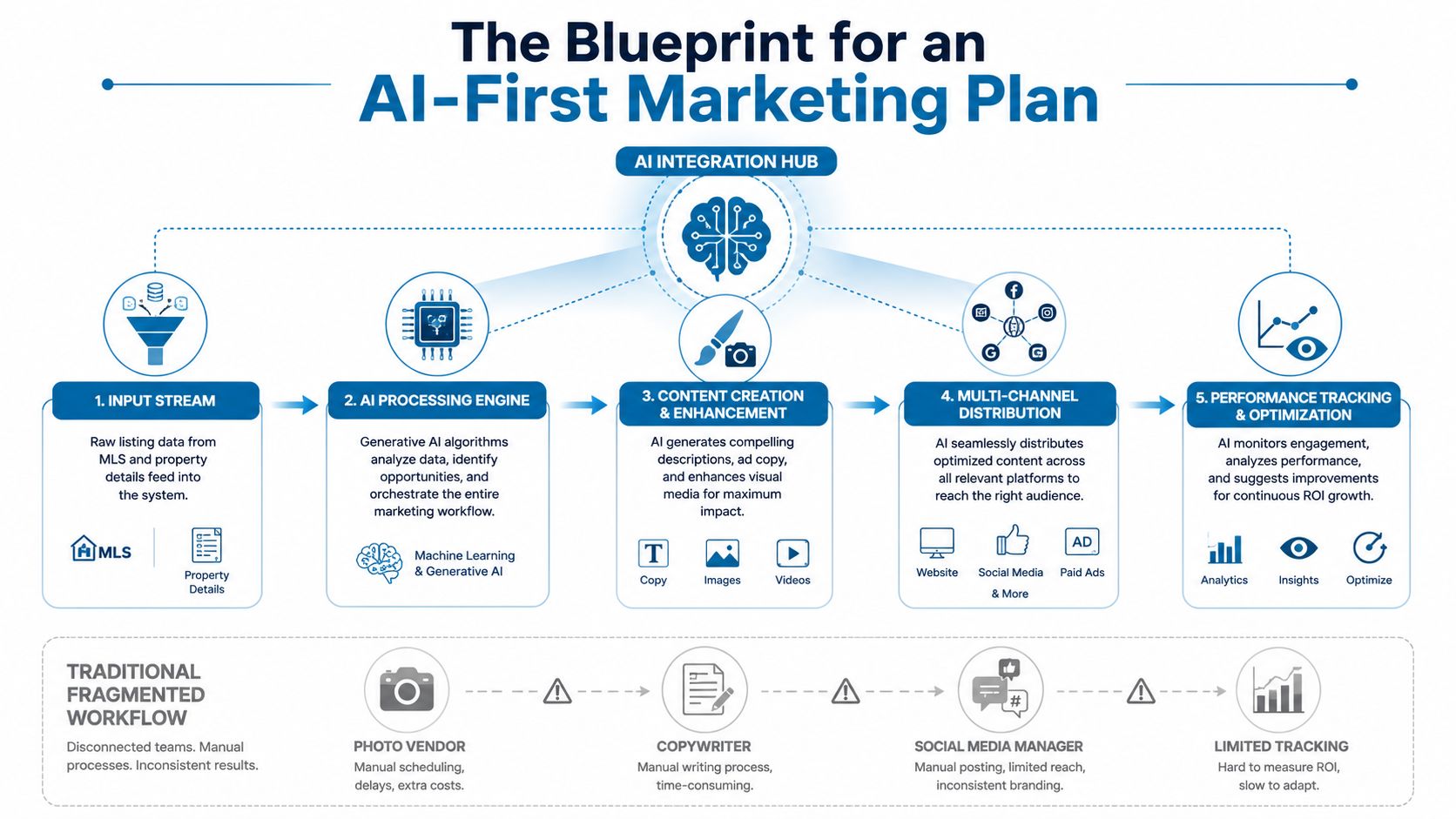
    A useful scorecard looks more like this:

    Measure Why it matters
    Inquiries by source Shows which channels produce real response
    Appointment bookings Tells you whether content is moving people to action
    Showing requests Reflects listing-level intent better than likes
    Lead-to-appointment path Exposes friction in follow-up or landing pages
    Cost tied to each inquiry and appointment Reveals what spend is actually productive
    Closings attributed to campaign source Validates ROI at the business level

    What to track inside the campaign

    Real estate marketing gets blurry when all traffic lands in one place and everything shows up as “direct.” That's why disciplined attribution matters.

    At minimum, your workflow should answer:

    1. Which post or email produced the click?
    2. Which landing page produced the inquiry?
    3. Which inquiry became a conversation, showing, or appointment?
    4. Which appointments closed?

    If you can't answer those four questions, your reporting is too shallow. You're measuring activity, not outcomes.

    For teams refining this process, these real estate marketing ROI tools can help shape a cleaner tracking setup.

    The metric that matters isn't “Did people engage with the content?” It's “Which content produced the next business step?”

    Budget discipline still matters

    AI can lower the time cost of marketing, but it doesn't remove the need for budget decisions. Many agents still use the general rule of thumb to allocate around 10% of annual revenue to marketing, which gives structure to choices around media, campaigns, and support tools. What changes with AI is how much output you can produce from the same input and how consistently you can execute it.

    That's the ROI case. Better throughput. Better consistency. Better attribution. Fewer bottlenecks around launch week.

    Building Your Automated Marketing Machine

    A real estate listing marketing plan used to be a checklist. Schedule photos. Write the description. Post the listing. Send the email. Promote the open house. Update the status. Repeat.

    That manual model still works in the narrowest sense. Homes still get marketed. But it doesn't scale well, it breaks under volume, and it leaves too much to memory and improvisation.

    What the better system looks like

    An automated marketing machine does a few things differently:

    • It centralizes the listing story so your MLS copy, property page, social posts, and email all come from the same source.
    • It keeps compliance close to the workflow so disclosures and feature-based language don't depend on last-minute edits.
    • It turns one listing into sustained visibility rather than a burst of launch-day activity.
    • It makes ROI review possible because your content, pages, and campaigns are built with attribution in mind.

    The bigger shift is strategic. When your system creates a month of content from one listing, your marketing stops being reactive. Sellers feel that difference immediately. Teams feel it in consistency. Brokerages feel it in lower content chaos and fewer compliance surprises.

    Audit the process you're running now

    If you want to improve your current plan, start with simple questions:

    • Where are you rewriting the same property story repeatedly?
    • Which assets get created late because no one owns them?
    • Which pages or posts go live without complete disclosures?
    • What happens after the “just listed” moment passes?
    • Can you connect content output to appointments and closings?

    Those answers usually reveal the bottleneck quickly. It's rarely a lack of effort. It's usually a lack of system design.

    The agents who stand out now aren't just better at posting. They're better at building a repeatable machine that makes every listing more discoverable, more consistent, and easier to market without starting from zero each time.


    If your current workflow still depends on scattered drafts, rushed captions, and manual follow-up, it's worth taking a close look at ListingBooster.ai. It's built specifically for real estate agents, teams, and brokerages that want to turn one property into a full set of compliant listing descriptions, social posts, and campaign assets without rebuilding the marketing plan from scratch every time.

  • Personal Branding for Real Estate Agents: The 2026 Playbook

    Personal Branding for Real Estate Agents: The 2026 Playbook

    Most agents still treat personal branding like a design project. Buyers and sellers don't. According to the National Association of Realtors' 2024 Profile of Home Buyers and Sellers, 76% of buyers contacted only one agent before making a decision (reference). That means your brand does its real work before a call, before a showing, and before a listing presentation.

    That's why personal branding for real estate agents has changed. A polished headshot still matters. Consistent colors still matter. But the bigger issue is discoverability and trust. If a prospect sees your name, your listings, your content, and your point of view in enough places to feel confident, you make the shortlist early. If they don't, you often never enter the conversation.
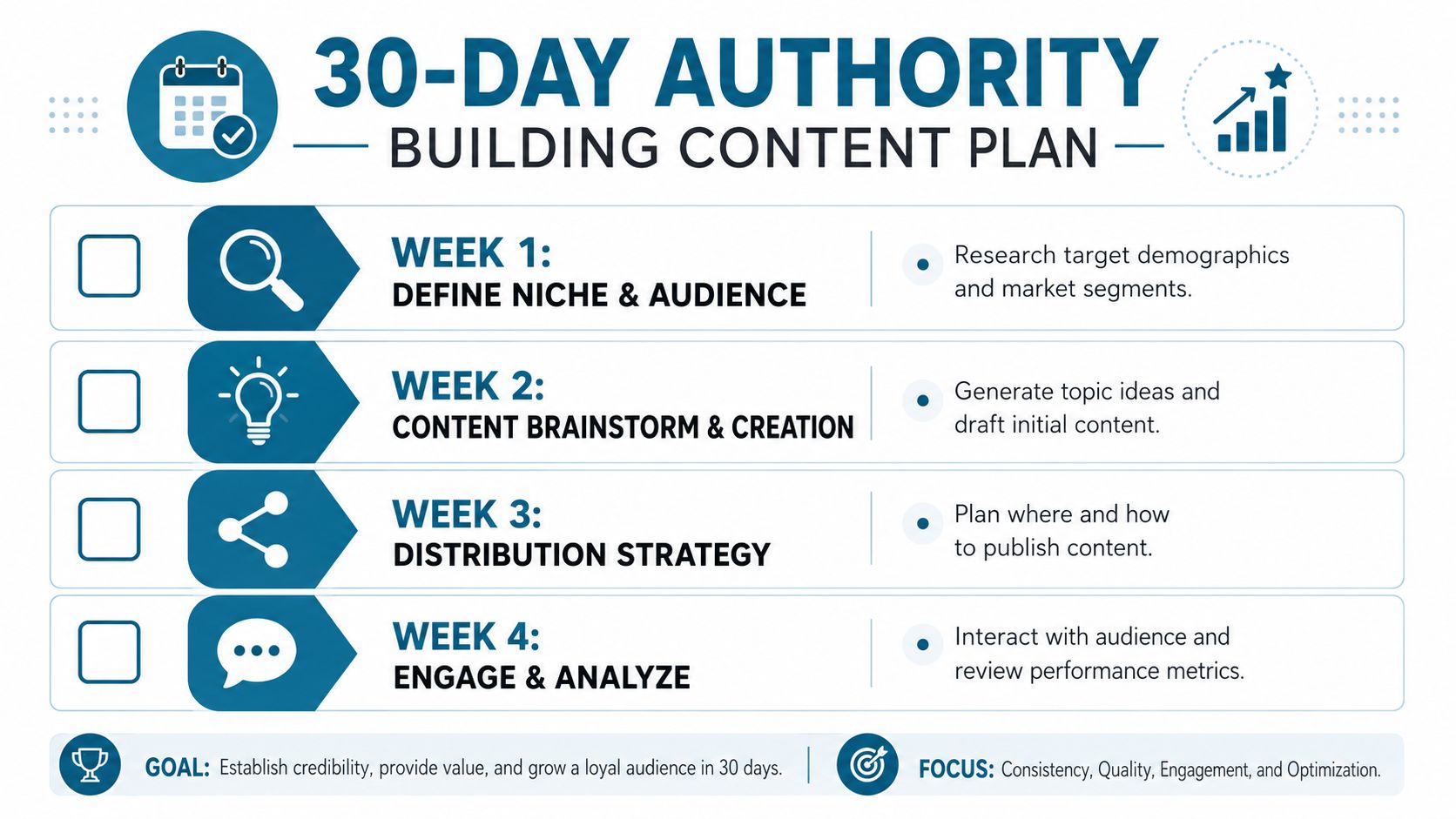
    The other shift is less obvious. More buyers are beginning their research inside AI tools, not just search engines or social feeds. So the agents who win aren't always the loudest on Instagram. They're the ones with a clear promise, structured content, a disciplined distribution plan, and compliance habits that keep them out of trouble.

    Your Brand Is More Than a Logo It Is Your Core Promise

    A real estate brand isn't your logo, your color palette, or the font on your listing flyer. Those are wrappers. Your actual brand is the promise a client believes when they see your name.

    For most agents, the fastest way to clarify that promise is to answer three questions in writing:

    1. Who do you serve best
    2. What problem do you solve
    3. How do you solve it differently

    If you can't answer those clearly, your content usually turns into the same generic mix everyone else posts. New listing. Open house. Market update. Sold. Repeat. That creates visibility, but not distinction.

    Start with a niche that's specific but compliant

    A niche does not mean you exclude people. It means you lead with a property type, transaction type, geographic specialty, or process specialty that helps the right clients recognize you.

    Strong examples:

    • Historic homes specialist in older in-town neighborhoods
    • Waterfront and view-property listing strategy
    • Condo resale process expert
    • Relocation support for clients moving into a specific metro area
    • First-time seller education in a changing market

    Weak examples:

    • I help everyone buy and sell real estate
    • Top agent with great service
    • Neighborhood expert and trusted advisor

    Those aren't false. They're just forgettable.

    The brand statement that works is usually narrower than your actual business.

    A diagram illustrating branding components including core promise, unique value proposition, mission, vision, and client experience.

    Write the statement clients can repeat

    You need one short positioning statement that appears, in adapted form, across your website, social bios, email signature, listing presentation, and portal profiles.

    A weak version:

    • Experienced Realtor helping buyers and sellers achieve their goals

    A stronger version:

    • I help condo sellers in central Austin position, market, and present their homes so buyers understand value immediately and act with confidence.

    Another strong version:

    • I help owners of older homes prepare for market with a clear pre-listing plan, feature-led marketing, and pricing guidance grounded in local buyer behavior.

    Notice the difference. The stronger statements define the client, the problem, and the process. They also avoid language that references protected classes.

    Trust is the real outcome

    A clear brand reduces hesitation. The critical success metric in personal branding is that 73% of homeowners list with the first agent who builds trust (reference). That's why the smartest brand work isn't about sounding clever. It's about accelerating confidence.

    Three practical decisions shape that trust:

    • Your voice: Are you analytical, calm, direct, educational, design-focused, negotiation-focused?
    • Your proof: Do you consistently show listing strategy, process clarity, testimonials, and local expertise?
    • Your experience promise: What does it feel like to work with you from consultation to close?

    If you want a useful outside framework for tightening your professional presence beyond real estate channels, these actionable LinkedIn personal branding steps are worth adapting to your referral and relocation strategy.

    For agents who manage multiple profiles and content formats, it also helps to document simple social media brand guidelines for real estate so your visuals, tone, and message stay consistent across channels.

    A simple brand worksheet

    Use this fill-in format:

    • I work with: property type, transaction type, location, or client situation
    • They usually need help with: confusion, timing, prep, pricing, marketing, negotiation, relocation, downsizing
    • My process stands out because: staging prep, pricing discipline, communication cadence, off-market sourcing, digital marketing, local content, contractor network

    Then turn it into one sentence.

    Practical rule: If another agent in your office could copy your brand statement word for word, it's still too generic.

    Create AI-Readable Content That Builds Authority

    The next branding gap isn't visual. It's structural. Over 40% of homebuyers now start searches in AI chatbots like ChatGPT and Perplexity, where agents without AI-readable content are invisible. Data shows agents using schema markup are 3x more likely to surface in AI search results (reference).

    That changes how agents should write online.

    A lot of real estate content is emotionally written, visually attractive, and useless to machines. AI systems can't recommend you confidently if your website, listing pages, bios, and market posts don't clearly state who you are, what you specialize in, where you work, and what evidence supports your expertise.

    Screenshot from https://listingbooster.ai

    What AI-readable content actually looks like

    AI-readable content is structured, specific, and feature-led. It doesn't rely on vague adjectives or lifestyle implications. It makes the property and the agent easy to understand.

    A weak listing excerpt:

    Stunning home in an amazing neighborhood with tons of charm and the perfect layout for modern living.

    A stronger, AI-readable version:

    Three-bedroom home with updated kitchen, quartz counters, wide-plank flooring, dedicated home office, fenced backyard, and covered patio. Located near downtown, major commuter routes, and local dining. Recent improvements include roof replacement and HVAC update.

    The second version is better for three reasons:

    • It names actual features
    • It avoids vague filler
    • It gives search systems and buyers concrete signals

    The same principle applies to your agent bio, neighborhood pages, and social captions. Replace “I love helping clients” with specifics about process, inventory type, prep strategy, or local expertise.

    Schema markup is not optional anymore

    Most agents don't need to hand-code anything, but they do need content systems that publish structured information in a way machines can interpret. That includes listing details, location context, agent identity, reviews, and service descriptions.

    If you're testing broad audience-building tactics, this Narrareach experiment is a useful reminder that repeated, coherent ideas outperform random bursts of content.

    In real estate, it helps to review how AI tools for real estate agent branding and visibility approach discoverability differently from general-purpose writing tools.

    Generic AI versus real estate-specific systems

    Many agents find themselves wasting time. Generic AI tools can draft words. They usually don't understand MLS conventions, listing nuance, local feature emphasis, or Fair Housing risk with enough precision for direct publishing.

    That's why purpose-built platforms matter. ListingBooster.ai is one example built specifically for real estate listing descriptions and social content. The practical difference is not magic copy. It's that the workflow starts with property facts, agent positioning, and channel-specific output instead of a blank prompt box.

    That matters in day-to-day use because agents don't need another writing toy. They need content that is:

    • Editable
    • Structured for search visibility
    • Usable across listing pages and social
    • Less likely to drift into risky language

    Build authority with repeatable content formats

    The agents who show up in AI-assisted discovery tend to publish a clear pattern of expertise. Not random opinions. Not only listing promos.

    Use formats like:

    • Feature breakdowns: what drives value in a property type
    • Neighborhood explainers: inventory style, commute access, architecture, amenities, development pattern
    • Seller prep checklists: repairs, presentation, pricing, timing
    • Market interpretation: not raw stats, but what changing conditions mean for buyers and sellers
    • Process content: what happens before photos, after inspections, during appraisal, or at contract milestones

    This kind of content does double duty. Humans read it and trust you. Machines parse it and understand your relevance.

    Execute a Focused Multi-Platform Distribution Strategy

    Trying to show up on every platform usually creates a weaker brand, not a bigger one.

    For agents, distribution is not a vanity exercise. It is how prospects confirm you are real, how referral partners assess your professionalism, and how AI systems piece together whether you are a credible local expert worth surfacing. If your website says one thing, your portal profiles say another, and your social accounts look abandoned, both people and machines read that inconsistency as low confidence.

    Depth beats platform sprawl

    I see the same mistake every quarter. An agent opens Instagram, Facebook, LinkedIn, TikTok, YouTube, Zillow, Realtor.com, and a personal site, then updates each one only when there is a new listing or a closing photo. The result is thin bios, mixed positioning, old headshots, and scattered signals.

    A tighter setup works better.

    An agent with a maintained website, current portal profiles, a disciplined Instagram presence, a polished Google Business Profile, and a referral-focused LinkedIn page usually wins the credibility check. The message matches. The specialties match. The contact path is obvious.

    That matters because prospects rarely evaluate you in one place. They search your name, scan reviews, compare profiles, and look for gaps. AI search tools do a version of the same process. They pull from the public web and reward consistency, specificity, and repeated evidence of expertise.

    Assign each platform a job

    Do not pick channels based on what another agent is bragging about. Pick them based on what role they play in lead generation, referral trust, and AI-search visibility.

    A practical setup looks like this:

    • Your website
      This is the source you control. Publish your bio, neighborhood pages, service pages, testimonials, market explainers, and transaction process content here. If you want AI tools to understand your niche and geography, your site needs clear language around both.

    • MLS and syndication portals
      These are high-intent surfaces. Buyers and sellers use them when they are already active, and AI models often treat these profiles as credibility signals because they contain structured professional data. Keep your profile complete, accurate, and aligned with your site.

    • Google Business Profile
      This supports branded search, reviews, map visibility, and basic trust checks. It also gives AI systems another clean source that confirms your market, business category, and reputation.

    • Instagram
      Use it for visual proof and repeated local relevance. Property features, neighborhood clips, before-and-after prep, and short educational posts work better than random personal updates.

    • LinkedIn
      This channel helps with referrals, relocation business, vendor relationships, and local professional credibility. It is also one of the easier places to publish market commentary without fighting the entertainment bias of consumer social platforms.

    Audit before you expand

    Before opening another account, clean up the ones already ranking for your name.

    Check five things:

    • Headshot consistency: one current photo across major profiles
    • Bio alignment: same core promise, adapted for each platform
    • Geographic clarity: city, neighborhoods served, and client type stated plainly
    • Contact path: one obvious next step, with working links and current info
    • Proof of activity: reviews, recent transactions, educational posts, or market commentary

    If your LinkedIn profile calls you an advisor, your Instagram bio calls you a lifestyle brand, and your portal profile says luxury specialist, the market has to guess what you do.

    AI search has the same problem. Conflicting labels reduce confidence.

    Repurpose one idea across channels

    A focused strategy does not mean publishing identical posts everywhere. It means building one strong idea, then formatting it for the platforms that matter.

    A single listing or client question can turn into:

    • A website article about pricing strategy for that property type
    • An MLS description built around the features buyers search for
    • An Instagram carousel showing presentation choices and market positioning
    • A LinkedIn post explaining the negotiation or prep strategy behind the result
    • A Google Business Profile update tied to a local market insight

    That approach saves time and creates repetition with purpose. It also helps AI systems connect the dots between your site, your profiles, and your expertise. If you need a repeatable system for planning that cadence, use a real estate content calendar for agents instead of choosing topics on the fly.

    The goal is not maximum output. The goal is clear, repeated, machine-readable authority in the places that influence decisions.

    Implement Your 30-Day Authority Building Content Plan

    Most agents know they should post consistently. The reason many don't is simpler than people admit. They're busy, they run out of angles, and they don't have a repeatable framework.

    A useful content plan has to respect the actual workweek. It should create authority without turning you into a full-time creator. The cleanest way to do that is to rotate four pillars:

    • Market authority
    • Transaction showcase
    • Client education
    • Agent positioning

    A 30-day authority building content plan infographic outlining four weeks of strategic steps for content creation.

    What each pillar does

    Market authority proves you understand your area beyond headlines. This includes neighborhood overviews, listing inventory observations, pricing commentary, and feature trends buyers ask about.

    Transaction showcase gives social proof without turning your feed into one long victory lap. New listings, price adjustments, under-contract updates, and just sold posts all work better when they explain the strategy behind the outcome.

    Client education reduces friction. Answer the questions people already ask during consults. Explain appraisal gaps, inspection negotiations, offer timelines, prep decisions, and what buyers or sellers often misunderstand.

    Agent positioning reminds people there is a real professional behind the signs and posts. Show your process, prep standards, vendor coordination, staging walkthroughs, open house setup, or what you're noticing on the ground.

    Sample One-Week Content Calendar Framework

    Day Content Pillar Example Post
    Monday Market Authority Short local market take with one practical implication for buyers or sellers
    Tuesday Client Education Caption starter: “One thing sellers often ask before photos is…”
    Wednesday Transaction Showcase New listing or under contract post focused on positioning, prep, and features
    Thursday Agent Positioning Behind-the-scenes post showing consultation prep, previewing homes, or staging review
    Friday Market Authority Neighborhood feature post centered on housing stock, access, amenities, and style
    Saturday Transaction Showcase Open house or just sold post with a lesson learned from the process
    Sunday Client Education Myth-busting post answering one common question from the week

    A realistic weekly rhythm

    You don't need to create seven original masterpieces every week. Batch one hour of writing and one short photo or video session, then spread the output.

    A practical rhythm:

    1. Monday: publish one market or neighborhood insight
    2. Midweek: post one transaction-related update
    3. Thursday or Friday: publish one educational post
    4. Weekend: add one behind-the-scenes or community-facing post

    That mix keeps your brand from becoming too promotional or too abstract.

    Field note: The content that earns trust fastest is usually the content that explains your thinking, not the content that announces your activity.

    If you want a more detailed planning structure, this real estate content calendar for agents gives a useful planning model you can adapt to your market and schedule.

    Caption starters that don't sound canned

    Try prompts like:

    • Before we launched this listing, we focused on three details buyers would notice first
    • A pricing conversation got easier this week once we walked through what buyers compare side by side
    • One feature that keeps showing up in buyer feedback right now is
    • If you're preparing to sell, start with the updates that improve clarity, condition, and first impression

    These work because they sound like a practitioner talking, not a template shouting.

    Maintain Compliance and Measure What Matters

    A personal brand can help you stand out. It can also create avoidable risk if your marketing gets sloppy.

    The federal Fair Housing Act prohibits real estate advertising that indicates any preference based on seven protected classes, including race, color, religion, national origin, sex, disability, and familial status (reference). That applies to web pages, social posts, ads, listing descriptions, and MLS remarks.

    A comparison chart showing the pros and cons of brand governance, including compliance risks and performance metrics.

    A fast compliance check before publishing

    Read every post and listing with one question in mind. Are you describing the property, or implying who should live there?

    Avoid phrases like:

    • Perfect for families
    • Safe neighborhood
    • Walk to church
    • Exclusive
    • Ideal for young professionals

    Use feature-based alternatives instead:

    • Three-bedroom layout with flexible bonus room
    • Near parks, trails, retail, transit, or dining
    • Private yard, corner lot, gated entry, or controlled access
    • Short distance to local amenities
    • Home office, first-floor bedroom, elevator access, wide hallways, or step-free entry when those are factual property features

    There's another rule many agents miss. All real estate advertising for the sale, rental, or financing of residential housing must prominently display the Equal Housing Opportunity logo or slogan, with the logo placed in a visible location comparable in size to other ad symbols. If an EHO statement is used instead of the logo, the text must be in a type size comparable to the rest of the ad or occupy 3 to 5 percent of the ad's total space (reference).

    Don't measure vanity metrics alone

    Likes are pleasant. They're not enough.

    The numbers worth reviewing are the ones tied to business movement:

    • Inbound inquiries that mention a post, video, or market update
    • Lead source attribution from your CRM
    • Clicks on listing links and contact buttons
    • Consultation requests
    • Listing presentation conversations that started with digital content
    • Repeat profile visits across your key channels

    This gives you a working feedback loop. If neighborhood explainers start more conversations than polished listing reels, do more of those. If educational posts bring better seller consultations than generic motivation quotes, the answer is clear.

    Brand governance is operational discipline

    The agents with the strongest brands usually aren't the flashiest. They review copy, keep profiles updated, document tone and visuals, and check every post for compliance before it goes live.

    That discipline matters more than creativity.

    Conclusion Building Your Brand Is Building Your Business

    Branding decides whether an agent gets skimmed, trusted, or recommended.

    In the AI search era, that decision often happens before a prospect ever fills out a form. A buyer asks ChatGPT for agents who know historic homes in a specific neighborhood. A seller asks Perplexity who explains pricing clearly and has visible local proof. If your online presence is vague, inconsistent, or thin, you disappear from that consideration set even if you are excellent in the field.

    That is a significant shift. Brand building is no longer just reputation management. It is discoverability infrastructure for your business.

    Agents who win in this environment make their expertise easy to parse. Their positioning is specific. Their content answers real client questions. Their bios, listings, reviews, and market commentary support the same promise across every platform where prospects and AI tools can find them.

    This work compounds. A clear brand helps people remember you. A structured digital footprint helps AI systems surface you. Together, those two forces create more of the conversations that matter: consultations, referrals, listing opportunities, and repeat visibility in your market.

    If your presence still feels pieced together, fix the foundation first. Tighten the promise. Clean up the profiles. Publish useful local content. Make your expertise easier to verify. Then keep showing up with enough consistency that both people and machines know what to associate with your name.

    Putting this playbook into action takes discipline and the right tools. For agents who want help turning listing details and day-to-day expertise into structured, compliant marketing content, ListingBooster.ai supports that workflow. It gives agents and teams a practical way to create listing descriptions, social posts, and authority content built for real estate use cases without relying on generic AI prompts.

  • Twitter for Real Estate Agents: 8 Pillars for Success

    Twitter for Real Estate Agents: 8 Pillars for Success

    Beyond "Just Listed" is where most agents get stuck. Twitter for real estate agents often turns into a last-minute scramble: post a listing, share an open house, disappear for three days, then repeat. That pattern doesn't build authority, and it doesn't give buyers or sellers a reason to remember you.

    A better approach is a weekly system. Use Twitter as a disciplined publishing channel for market interpretation, property promotion, local expertise, and transaction education. Done right, it becomes part of your digital footprint, not another task fighting for space on your calendar. If you want a stronger top-of-funnel strategy, this lead generation playbook for X is a useful companion.

    Nearly 47% of real estate businesses say Twitter generates the best quality leads compared to other social platforms, according to the National Association of Realtors as cited in Realtyna's breakdown of Twitter for agents. That matters because lead quality beats lead volume every time in this business. The rest of this framework gives you eight repeatable pillars you can schedule every week without slipping into fluff or Fair Housing risk.

    1. Market Commentary and Rate Reactions

    The fastest way to look credible on Twitter is to sound like someone who watches the market in real time. Not with generic headlines. With short, local interpretation that tells people what changed and what it means today.

    Post a rate reaction when financing news hits. Post a market snapshot when your MLS data updates. Keep it tight. Twitter rewards concise commentary, and the National Association of Realtors' Young Professionals Network recommends aiming for about 120 characters when possible because it leaves room for reposts and commentary in the retweet flow, as noted in these Twitter rules for real estate agents.

    A hand-drawn illustration depicting a real estate market snapshot with a rising graph, buildings, and icons.

    What to post when the market moves

    Use a simple sequence.

    • Lead with the change: "Rates moved this morning. Re-run your numbers before ruling out a purchase."
    • Add local context: "I'm seeing more activity in attached homes and smaller detached inventory this week."
    • Give the next step: "If you're comparing neighborhoods, I can map what this payment range looks like today."

    If you already send a weekly market email, strip the best line out of it and turn it into a tweet. The same applies to a broker market report, an MLS hot sheet, or your office dashboard. If you need a clean structure, this real estate market update template is the kind of format worth standardizing.

    Practical rule: Don't tweet national housing takes if you can't connect them to your ZIP codes by the next sentence.

    Twitter language data can also sharpen how you read sentiment. A Stony Brook University paper found that adding Twitter language signals improved foreclosure prediction correlation from Pearson r = 0.37 to r = 0.42 and price change prediction from r = 0.50 to r = 0.59 in this real estate market prediction study. You don't need to build a research model to use that insight. You just need to respect the platform as an early signal source, then validate with local data before you post.

    2. Listing One-Liners and Just-Listed Announcements

    Most listing tweets fail because they read like MLS leftovers. Bed count. Bath count. Price. "DM for details." That isn't a hook. It's inventory wallpaper.

    A strong one-liner isolates the one feature that makes the property memorable. Original hardwoods. A deep lot. A detached studio. A corner exposure. A dual primary suite. Stick to physical features and verifiable updates. Don't drift into lifestyle targeting or language that implies who belongs there.

    A pencil sketch of a luxury waterfront home with a private pier and a moored motorboat.

    A better one-liner formula

    Write it like this:

    • Start with the rare detail: "Private dock, wide lot, and a lower-level guest suite."
    • Add one neutral value cue: "Recently updated kitchen and strong natural light."
    • Close with the action: "Now live in [area]. Full details in the listing link."

    This is where purpose-built tools matter. Generic AI tools tend to write bland property copy because they aren't tuned for listing nuance or Fair Housing risk. A real-estate-specific system like ListingBooster.ai is better suited to turning listing details into short-form social copy that sounds market-aware instead of generic. If you're trying to build a repeatable launch process, start with these automated just listed and just sold post workflows for agents.

    Tweets with hashtags generate 2 times more engagement than tweets without them, according to Styldod's Twitter marketing guidance for real estate agents. That doesn't mean stuffing every tweet with tags. It means using a few clean, relevant ones such as your city, neighborhood, and broad real estate category.

    A listing tweet should make someone curious enough to click, not tired enough to scroll.

    3. Local Insight and Relocation Content

    This pillar pulls in people who aren't asking for a showing yet. They're asking better early-stage questions. Commute routes. Park access. District boundaries. Grocery options. Parking patterns. Road noise. Weekend foot traffic. Those are the tweets that start conversations before someone ever fills out a lead form.

    The gap in most Twitter advice is what happens next. A lot of agents know how to post a listing. Fewer know how to convert a "moving to [city]" conversation into an actual appointment. That gap is called out directly in this analysis of the zero-list lead conversion problem, and it's one of the biggest missed opportunities on the platform.

    A hand-drawn illustration showing a neighborhood map with icons for a school, park, grocery store, and transit.

    What compliant local insight looks like

    Keep it factual and feature-based.

    • Commute framing: "Google Maps says one thing. Rush-hour routing says another. I track both."
    • Area orientation: "This section has direct trail access, newer retail, and easier freeway entry."
    • Service details: "The district website shows current campus assignments and enrollment options."

    Avoid ranking neighborhoods as "best," "safe," or "ideal for" any group. That's where agents create unnecessary Fair Housing exposure.

    If you want to turn this into a weekly series, build rotating neighborhood briefs. ListingBooster.ai is useful here because it can help draft consistent, location-specific content from the facts you already verify. For a systemized approach, review this automated neighborhood guide creator for agents.

    Almost 77% of Realtors use social media overall to connect with millennials, according to Follow Up Boss on Twitter real estate leads. That audience overlap matters because relocation clients often start with social content long before they call an agent.

    4. Open House Announcements and Time-Sensitive Promotions

    Twitter is strongest when timing matters. Open houses, price improvements, same-day availability, and schedule changes all belong here because people check the platform for what is happening now, not what happened last week.

    The mistake is posting once and assuming people saw it. They didn't. Time-sensitive inventory needs a sequence. Friday reminder. Morning-of reminder. Final-hours reminder. Keep the wording clean and useful. Include the address, day, time, and the one feature that earns attention.

    A simple event cadence

    Use three angles for the same property.

    • Access tweet: "Open Sunday, 1 to 3. Updated kitchen, covered patio, and attached garage."
    • Urgency tweet: "Last public showing window this weekend."
    • Decision tweet: "If you want the disclosures before the open house, message me."

    The recommended posting cadence for real estate agents on Twitter is 1 to 5 tweets per day, according to this guidance on real estate Twitter posting frequency. Open house promotion fits neatly inside that range if you batch the copy in advance and schedule it.

    Twitter isn't your whole marketing stack, and it shouldn't be. Market adoption data cited by Mortgage Professional America's social media guide for agents shows only 33% of respondents picked Twitter as their top online marketing platform, while 97% prioritized Facebook for lead generation. That is the trade-off. Twitter is excellent for timeliness, commentary, networking, and discoverability. It isn't the only place you should promote an event.

    For the scheduling side, this guide to X scheduling for creators is a practical resource if you're trying to queue posts instead of handling them live all weekend.

    5. Client Testimonials and Social Proof Content

    This category works, but it goes wrong fast when agents overshare or write testimonials that sound manufactured. Keep it permission-based, specific, and restrained.

    The strongest testimonial post isn't "My client loved working with me." It's a short account of what problem you helped solve. Tight timeline. Contract complexity. Inspection negotiation. Appraisal issue. Clear communication. Those are believable because buyers and sellers recognize the friction.

    What to share and what to leave out

    Focus on the process and the client experience. Leave out personal details that don't improve the post.

    • Good: "We kept the repair request focused, negotiated clearly, and closed on schedule."
    • Good: "This seller needed a clean prep plan, not a full renovation list."
    • Avoid: Anything that reveals protected-class information or implies a neighborhood was chosen for demographic reasons.

    If a client posts their own closing photo, resharing it with permission usually performs better than forcing a branded testimonial graphic. It feels real because it is real.

    Ask for permission before posting names, faces, or transaction details. Then keep the copy simple enough that the client would recognize their own experience in it.

    This pillar doesn't need inflated numbers to work. It needs credibility. One honest sentence about how you handled a tense inspection response beats a polished quote that sounds like ad copy.

    6. Competitive Market Analysis and Comparative Insights

    Most agents say they know the market. Few show it in a way clients can use. Comparative analysis on Twitter should be short, sourced, and tied to a decision.

    Take two nearby neighborhoods, two property types, or two price bands. Show the difference in inventory pressure, showing activity, or pricing behavior using your MLS or broker reports. Then tell people what that difference means for pricing, offer strategy, or timing.

    A practical format for comparison posts

    Try a side-by-side structure in plain text:

    • Area A: Lower available inventory, stronger competition, tighter negotiation room.
    • Area B: More options, more stale inventory, better room for concessions.
    • Action: "If you're choosing between these two areas, your financing and repair strategy may need to change."

    This kind of post does two jobs. It proves you aren't relying on national headlines, and it gives sellers a reason to ask for a pricing opinion based on micro-market conditions.

    Keep your sourcing internal and current. Pull from MLS reports, broker dashboards, or transaction records you can support if challenged. If your office data updates monthly, make monthly comparison threads part of your schedule.

    The point isn't to look analytical. The point is to help a buyer or seller understand why one block, one school boundary, or one housing type behaves differently from another without drifting into prohibited language or speculative claims.

    7. Behind-the-Scenes and Transaction Process Content

    This is the trust-builder most agents underuse. Buyers and sellers don't just hire market knowledge. They hire process control.

    Use Twitter to explain what happens after the accepted offer. Inspection scheduling. repair requests. appraisal ordering. lender conditions. title review. final walkthrough. If you can turn a confusing step into plain English, you remove friction before a client ever contacts you.

    The posting process that improves over time

    When agents first add Twitter to their mix, the smartest workflow is simple. Start with concise market commentary, rate reactions, listing one-liners, and relocation or local insight. Then refine based on replies, DMs, and the questions clients ask most often.

    A practical weekly rhythm looks like this:

    • Morning market note: Short observation from your MLS or local financing chatter.
    • Midday property post: One listing one-liner or status update.
    • Afternoon education post: One transaction step explained in plain language.
    • Local insight slot: A neighborhood fact, route tip, or area update.

    Behind-the-scenes content also helps newer agents compete with louder brands. You don't need celebrity reach to explain an inspection objection clearly or show how you prep a seller for photography. You need consistency and a voice that sounds like a competent professional, not a script.

    This is another place where generic AI tends to flatten your expertise. A purpose-built platform like ListingBooster.ai is more useful when you need editable, compliant drafts tied to actual real estate workflows instead of broad marketing copy that could fit any industry.

    8. Awards, Certifications, and Third-Party Recognition

    Recognition posts can either reinforce your credibility or make your feed look self-congratulatory. The difference is whether you explain why the recognition matters to a client.

    If you earned a designation, say what skill it sharpened. If your brokerage recognized your production, connect that to process, responsiveness, or market knowledge. If a local publication quoted you, summarize the takeaway instead of just dropping a link and a trophy emoji.

    Keep recognition useful

    Use a three-part structure.

    • State the recognition: "Honored to receive this designation."
    • Translate the value: "The training focused on contract strategy, negotiation, and market analysis."
    • Bring it back to service: "That helps clients make cleaner decisions in competitive situations."

    This pillar also helps with reputation across AI-driven discovery. The more verified, specific, public content tied to your name and market, the easier it is for your professional footprint to look coherent online. That's one reason agents should post recognition selectively instead of ignoring it.

    Recognition isn't a substitute for expertise. It's supporting evidence. Use it that way.

    8-Point Twitter Content Comparison for Real Estate Agents

    Content Type 🔄 Implementation Complexity ⚡ Resource Requirements 📊 Expected Outcomes 💡 Ideal Use Cases ⭐ Key Advantages
    Market Commentary and Rate Reactions Moderate–High: real-time monitoring and fast drafts Low–Medium: news feeds, MLS snippets, calendar reminders High short-term engagement and authority spikes around announcements 📊 ⭐⭐⭐⭐ Fed days, rate shifts, weekly market snapshots Positions you as market expert; re-engages followers
    Listing One-Liners and Just-Listed Announcements Low: single-sentence copy + image Low–Medium: quality photo, MLS feature pull Immediate clicks and traffic to listings; high CTR potential 📊 ⭐⭐⭐ New listings, price drops, repeated short posts Scannable, algorithm-friendly, repeatable
    Local Insight and Relocation Content Medium: requires research and verification Medium: local data, maps, citations Long-term lead generation; builds neighborhood authority 📊 ⭐⭐⭐ Attracting relocating buyers; evergreen guides Differentiates agents; attracts future buyers
    Open House Announcements and Time-Sensitive Promotions Medium: scheduling cadence and coordination Medium: images, scheduling tools, map links High conversion for active shoppers; measurable foot traffic 📊 ⭐⭐⭐⭐ Open houses, last-minute showings, price-drop pushes Drives immediate action; high conversion rate
    Client Testimonials and Social Proof Content Low–Medium: collect consent and edit quotes Low: client photos, transaction metrics, permissions Strong trust-building; increases inquiries over time 📊 ⭐⭐⭐⭐ Post-closings, testimonial campaigns, retweets Highly credible; third-party validation
    Competitive Market Analysis and Comparative Insights High: data access, analysis, visualization High: MLS/broker data, design tools, analyst time Strong authority among serious buyers/sellers; sharable insights 📊 ⭐⭐⭐⭐ Monthly/quarterly reports, investor outreach Differentiates via data-driven insights
    Behind-the-Scenes and Transaction Process Content Medium: confidentiality + clear storytelling Low–Medium: photos, examples, thread drafting time Builds trust and educates first-time clients; evergreen value 📊 ⭐⭐⭐ Educational threads, onboarding content Humanizes agent; demystifies process
    Awards, Certifications, and Third-Party Recognition Low: announcement plus brief context Low: verification links, imagery Signals credibility; cumulative authority over time 📊 ⭐⭐⭐ Award wins, media features, credential updates Third-party validation; trust signal

    From Content Pillars to a Predictable Pipeline

    These eight pillars give Twitter for real estate agents a real operating system. Instead of posting whatever comes to mind, you rotate through market commentary, listing one-liners, local insight, event promotion, social proof, comparative analysis, process education, and selective recognition. That creates consistency without making your feed repetitive.

    The bigger shift is operational. You're no longer asking, "What should I post today?" You're asking, "Which pillar is on today's schedule, and what current fact, property, or client question fits it?" That's how experienced agents keep social media from eating the day.

    Compliance has to stay built into the process. Describe homes and neighborhoods by features, logistics, and verified details. Avoid coded language, avoid demographic targeting, and avoid writing copy that sounds good but creates risk. Tight, objective, useful posts win on Twitter anyway.

    If you want to automate parts of this workflow, use tools that understand real estate. Generic AI platforms can help with drafting, but they usually need heavier editing for listing nuance, local tone, and Fair Housing guardrails. ListingBooster.ai is better positioned for this specific job because it's built around real estate use cases such as listing descriptions, neighborhood content, and authority posts rather than general-purpose prompts. For broader context on where this fits in your marketing stack, review these AI-first real estate marketing tactics.

    Audit your current posting process. Look at the last month of tweets and sort them by pillar. You'll probably find gaps immediately. Fix the gaps, build a weekly schedule, and let your Twitter presence start acting like an asset instead of an afterthought.


    If you want a cleaner way to run this system, take a look at ListingBooster.ai. It helps agents, teams, and brokerages generate real-estate-specific listing copy and authority content that stays editable, practical, and easier to keep compliant, so you can spend less time staring at a blank caption box and more time working actual opportunities.