More posting doesn't automatically create more real estate leads. It creates more activity. A lead engine connects discoverability, trust, capture, nurture, and follow-up so each channel supports the next step instead of operating as a disconnected list of tactics.
The economics make that distinction important. Digital channels accounted for 65% of U.S. real estate leads in one 2026 industry summary, while the average lead-to-close rate across sources was only 2–5%. The same summary reported a blended cost per lead of $503, a 12.3% year-over-year increase, median annual agent spending of $8,010, and typical monthly digital spending of $2,850. These real estate lead generation statistics point to a practical conclusion, visibility matters, but conversion discipline determines whether visibility pays.
This roundup organizes 10 real estate lead generation strategies into an operating system. You'll see how searchable listing assets, authority content, relationship nurture, video, events, paid amplification, partnerships, direct mail, and measurement fit together for solo agents, teams, and brokerages. Fair Housing compliance is part of every channel, not a final editing task. Describe verifiable property and location features, never who should live there.
ListingBooster.ai can reduce the production burden by creating real-estate-specific listing and social content. The agent remains responsible for reviewing accuracy, confirming local rules, and approving every published asset. For planning acquisition economics, use a cost per lead tracking tool alongside your CRM and transaction records.
1. AI-Optimized Listing Descriptions for Search Visibility
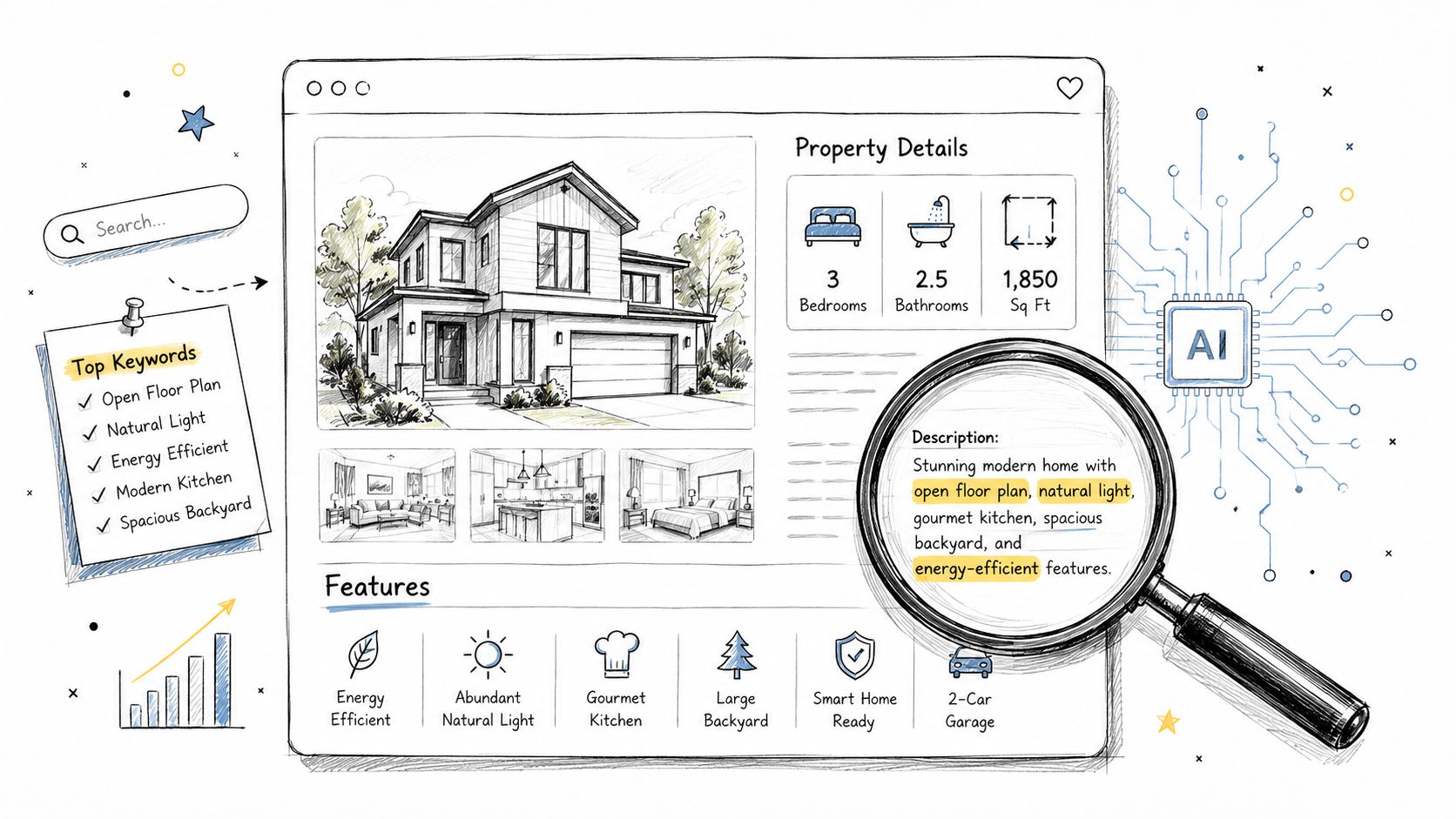
A listing description should help a buyer, search engine, portal, and AI system understand the property without interpretation. “Charming vintage home with character” may sound pleasant, but it gives a search interface little usable information. A stronger version names the 1960s ranch, updated kitchen with quartz countertops, original hardwood floors in living areas, detached garage, and 0.35-acre lot, assuming each detail is accurate.
AI search is moving the buyer journey upstream. One 2026 study reported that 61.3% of buyer-side real estate queries begin in an AI interface, and 67% of surveyed buyers used an AI tool as their primary research method before contacting an agent. The State of AI SEO in real estate frames the opportunity clearly, agents need content that systems can parse, summarize, and connect to specific buyer questions.
Write for attributes, not adjectives
Use a consistent structure that makes verification easy:
- Property details: State beds, baths, approximate size when verified, property type, year built, and relevant architectural features.
- Updates and systems: Identify renovations, appliances, roofing, HVAC, windows, or other improvements only when documented.
- Lot and exterior: Describe lot size, garage type, parking, outdoor areas, views, and access features factually.
- Location features: Name parks, retail, transit, roads, and other amenities by type and proximity only when accurate.
- Comparable context: Add market context from reliable local data, with clear dates and definitions.
Neighborhood language needs the same discipline. Say “near public transportation, retail, and parks,” not language that implies a preferred resident profile. HUD's guidance on advertising through digital platforms warns that housing advertisements can't express or imply preferences or limitations based on protected characteristics.
ListingBooster.ai can turn verified property details into editable MLS and social drafts designed for real estate use. Use this listing description AI optimization guide to refine the workflow, then test the finished copy in ChatGPT or another AI interface by asking whether it accurately identifies the home's key features. If the answer misses an important attribute, improve the source information and structure before publishing.
2. Strategic Social Media Content Calendars With Psychology Frameworks
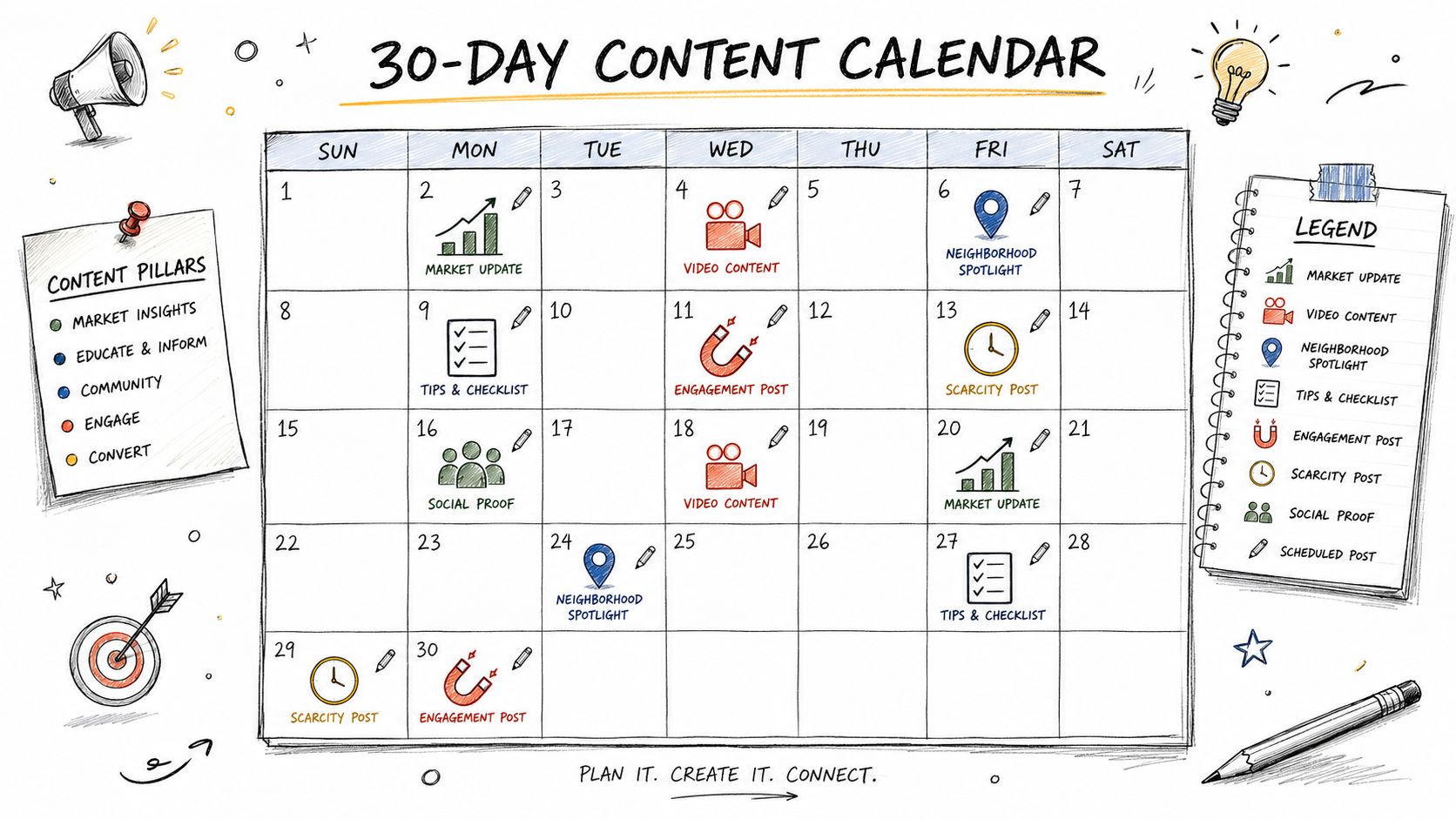
A feed filled with listings alone teaches prospects to scroll past you until they need a property immediately. Build a calendar that supports the wider lead-generation system: market authority, education, proof, local knowledge, and timely promotion. Every post should answer a question, invite a response, or direct the reader to a useful next step.
Organize posts around decisions people make during a transaction. One week could cover a neighborhood market snapshot, inspection timing, a new listing, and how you prepare or communicate with clients. That mix gives buyers and sellers several entry points without forcing a sales pitch into every caption. Solo agents can manage a focused weekly rhythm, teams can assign categories by role, and brokerages can provide approved themes while leaving room for local judgment.
Use psychology to clarify the next action
Psychology frameworks work when they explain a real benefit or constraint. An open-house date can create legitimate urgency because attendance is time-bound. A transaction result can provide social proof only with permission, supporting documentation, accurate wording, and compliance with brokerage and local rules.
- Authority: Explain a market change and its practical effect on a buyer or seller.
- Education: Clarify inspection timing, appraisal preparation, or showing preparation.
- Social proof: Share a verified client result with context and permission.
- Promotion: State the property, date, time, price, and next action.
- Positioning: Show how you analyze, communicate, prepare, or manage listings.
Adapt the message to each platform. LinkedIn generally suits deeper professional explanation, Instagram supports visual property and local storytelling, and TikTok favors concise tips and behind-the-scenes material. Rewrite the opening, format, and call to action instead of copying one caption everywhere.
An AI-friendly content calendar for agents can turn verified property details and market information into editable ideas. ListingBooster.ai reduces production friction for solo agents, teams, and brokerages, but it does not replace review. Add your voice, verify market references, remove unsupported superlatives, and connect each post to a response owner, follow-up timeline, and measurable action. Schedule through native platform tools or Meta Business Suite.
3. Video Content for Listings and Market Authority
A listing video should answer a buyer's first practical question: how does this home feel to move through? Show the route from entry to kitchen, living areas, and primary suite, then connect the footage to an accurate description, a specific next step, and an assigned response owner. Without that follow-up system, video creates attention without creating conversations.
Build two operating tracks. Property videos explain the home's layout, condition, and verified features. Authority videos demonstrate how you interpret current market information and guide a transaction. A recurring market explanation can address inventory, days on market, pricing movement, or preparation decisions, provided the underlying information is current and properly sourced.
Plan the production around reuse
Start with simple standards: stable movement, natural light, clear audio, and captions. Put key property information in the thumbnail or opening frame. Ask for one measurable action, such as requesting disclosures, booking a showing, or receiving similar listings.
Record once, then assign each version a job:
- Full walkthrough: Give viewers enough context to assess the layout.
- Feature clip: Highlight one verified upgrade or design element.
- Market clip: Extract one concise explanation from an authority recording.
- Follow-up clip: Answer a common question raised by viewers or showing attendees.
A solo agent can record and edit a small weekly batch. Teams can divide filming, review, publishing, and lead response. Brokerages can supply approved templates and compliance checks across offices. Agents who prefer not to appear on camera can use faceless real estate editing with property footage, captions, maps, and narration.
Measure qualified inquiries, showing requests, email sign-ups, and scheduled conversations. Views help diagnose distribution, but they do not prove lead quality. ListingBooster.ai's video playbook can reduce script and caption production time from verified listing information. Review every frame, claim, and call to action before publishing. HUD's Fair Housing digital-platform guidance covers online advertising, including targeted digital campaigns, so audience assumptions and creative choices need the same care as written copy.
4. Email Nurture Sequences for Past Clients and Sphere of Influence
Email nurture works when each message reflects the recipient's relationship with you and likely next step. Separate past buyers, active sellers, future move-up prospects, and professional contacts by role, timeline, property interest, and engagement. Then define the action each sequence should support, such as replying, booking a consultation, sharing a referral, or remaining informed.
A weekly local update can combine one market observation, one relevant property, and one practical buyer or seller tip. Past-client emails can cover maintenance reminders, neighborhood information, home-value context, and referral-friendly resources. The goal is useful contact that earns attention before a transaction is imminent.
Build the workflow around human review. ListingBooster.ai can reduce the time required to turn approved market and property information into draft email content, but an agent still needs to check facts, availability, tone, and compliance before sending.
Use different calls to action by segment:
- Active prospects: Send timely property alerts and offer a direct scheduling option.
- Future clients: Explain preparation steps, financing considerations, or the selling process.
- Past clients: Share local information and send occasional personal check-ins.
- Sphere contacts: Provide concise market context they can understand and forward.
Automation data cited a 451% increase in qualified leads when automation software is used. The same compilation reports that AI-adopting brokerages most commonly automated lead nurturing sequences at 78%, client follow-up campaigns at 72%, and automated property listing creation at 65%. This real estate social media statistics compilation supports a practical division of labor. Automate scheduled delivery and routine follow-up, then reserve agent time for replies and high-intent conversations.
Consent and deliverability determine whether the system remains useful. Include an unsubscribe mechanism, identify the sender, maintain accurate records, and follow CAN-SPAM requirements. Remove invalid or persistently unengaged contacts according to your CRM policy. Test every property link, and route replies to someone who can respond promptly. Measure replies, appointments, referrals, and unsubscribe rates, not just opens.
5. Local SEO and Google Business Profile Optimization
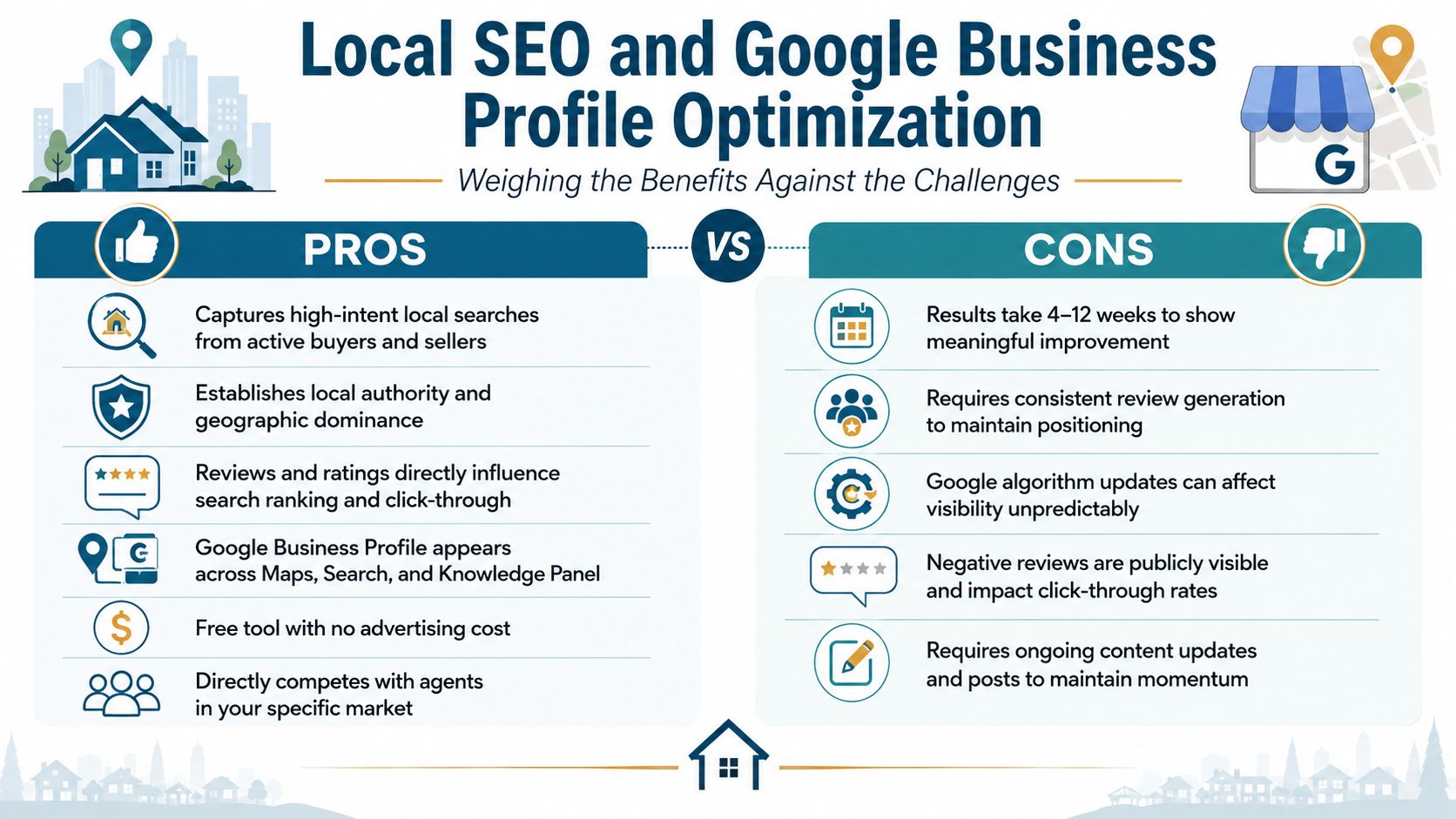
Local search captures prospects who have already named a place and a need. Your Google Business Profile, website, neighborhood pages, reviews, and listings should reinforce the same professional identity and geographic expertise. A profile with an incorrect phone number or outdated service area creates friction before a prospect ever reaches your CRM.
Start with the fundamentals. Confirm the business name, address, phone number, website, hours, and service areas. Use consistent NAP information across web properties, add authentic listing and team imagery, publish useful updates, and respond professionally to every review. Don't manufacture praise or coach clients to use particular language.
Build pages that answer local questions
A neighborhood page should offer more than a keyword and a contact form. Describe property types, transportation options, parks, retail, public services, market conditions, and transaction considerations using verifiable information. Create separate buyer and seller resources when the advice differs, but don't frame the page around the kind of person who supposedly belongs in the area.
Review requests work best as part of the closing workflow. Ask for feedback after the transaction, make the process easy, and respond to criticism without revealing private client information. Reviews are trust assets, but they won't compensate for poor response handling or inaccurate listing information.
Practical rule: Local authority comes from repeated, specific usefulness. A thin neighborhood page won't replace accurate listings, timely answers, and consistent follow-up.
Use this local SEO audit to find Map Pack visibility gaps and turn the findings into assigned tasks. A solo agent can manage one market area thoroughly. A team can assign pages and review responses by territory. A brokerage should establish shared standards for branding, compliance review, and profile ownership before adding more locations.
6. Strategic Paid Advertising on Facebook, Instagram, and Google
Paid advertising can expand reach quickly, but it can also amplify weak messaging and poor follow-up. Start with content that already earns meaningful engagement organically, then adapt it to a clear campaign objective. Separate buyer, seller, listing, remarketing, and brand campaigns so the audience, landing page, and conversion event match the promise.
Google Search Ads can capture active intent around property and agent searches. Facebook and Instagram can introduce a listing, promote an event, or bring previous site visitors back to a useful resource. The channel matters less than the connection between the ad, the landing page, the form, and the first human response.
Measure the conversion path
Track more than clicks. At minimum, connect the campaign to:
- Lead source: Record the platform, campaign, audience, and creative.
- Lead quality: Note whether the person requested information, a showing, a valuation, or a conversation.
- Response time: Log when the inquiry arrived and when the team first contacted it.
- Appointment outcome: Track consultations, showings, listing appointments, and later transaction stages.
- Cost per outcome: Compare spend with qualified conversations and appointments, not just contact records.
Use ListingBooster.ai to create several editable ad-copy variations from verified listing details, then test different openings and calls to action. Don't allow generated copy to introduce lifestyle assumptions or protected-class implications. HUD states that online targeted advertising is covered by Fair Housing rules, so audience settings, creative, and delivery behavior deserve compliance review.
Paid campaigns need an immediate routing system. A lead form that sends an email to an unattended inbox isn't a follow-up system. Use mobile alerts, CRM assignment, and a defined first-contact script, then let automated nurture continue when the prospect isn't ready to respond.
7. Authority Content Positioning Through Market Data and Insights
Market authority comes from helping people make decisions with evidence. A useful update identifies the period, geography, and data source, then translates the findings into actions for buyers or sellers who may not be ready to transact.
Build each report from your local MLS and other authoritative sources available to you. Cite the source and publication date. For broader economic context, verify information through the Federal Reserve, Census Bureau, or established research publishers. Label estimates clearly, and avoid turning a short-term observation into a prediction about future performance.
One neighborhood analysis can support several parts of the lead-generation system. Publish the full report as a searchable article, adapt its findings into a social carousel and short video, then send the same analysis to your email audience. Keep figures consistent, update the original page when the data changes, and route engaged readers toward a consultation, valuation request, or relevant listing conversation.
Choose topics that answer practical questions:
- Seller preparation: Cover property information, repairs, documents, and timing decisions.
- Buyer decision-making: Connect inventory, pricing, financing conditions, and inspection considerations to specific choices.
- Neighborhood research: Describe amenities and infrastructure by type, using neutral language and reliable sources.
- Transaction education: Explain contingencies, appraisal issues, negotiations, and closing preparation without promising an outcome.
A solo agent can publish one focused report and reuse it across channels. A team can assign research, editing, video, and follow-up to separate roles. A brokerage can create a reviewed template for recurring neighborhood updates, while agents add local interpretation.
ListingBooster.ai can turn data you provide into market-update drafts and social variations, reducing production time. It cannot validate an MLS export, replace broker review, or determine whether a conclusion is supported. Check every figure and claim before publishing. Then connect responses to a CRM task, email nurture sequence, or appointment workflow so authority content produces measurable conversations rather than passive reach.
8. Referral Partner Programs and Strategic Alliances
Referrals remain a practical acquisition channel because property decisions involve several professionals and repeated transfers of trust. A nationwide roundup reported that 66% of sellers found their agent through a referral or past relationship. That makes partner development worth building into the operating system, alongside searchable listing assets, content, events, and paid campaigns.
Start with professionals who serve the same clients without competing for the same role. Mortgage professionals, inspectors, contractors, designers, movers, insurance agents, and property managers may meet buyers or sellers before an agent does. Choose partners based on service quality and shared audience, then agree on what a useful referral looks like.
A referral relationship needs a defined workflow:
- Referral definition: Agree on what qualifies and what information may be shared.
- Handoff method: Use a consent-based form, email format, or CRM task.
- Response confirmation: Tell the partner when contact was attempted, without disclosing unnecessary personal details.
- Outcome tracking: Record the source, contact status, appointment, and transaction stage.
- Review cadence: Revisit service quality and expectations during scheduled check-ins.
The follow-up standard matters as much as the introduction. If a partner sends a homeowner with a valuation question, assign the contact promptly, send the promised resource, and schedule the next action in the CRM. Share appropriate status updates so the partner knows the referral received attention. A missed handoff damages trust on both sides.
Compensation requires care. Referrals involving settlement-service providers may raise RESPA concerns, so obtain broker, counsel, or compliance guidance before offering anything of value. Co-marketing should identify each participant, use approved materials, and avoid unauthorized endorsements.
Solo agents can maintain a short partner list and handle follow-up personally. Teams can assign intake and reporting to an operations role. Brokerages can provide approved templates and review procedures. ListingBooster.ai can reduce drafting work for co-branded events, market emails, and buyer or seller resources, but each partner must approve their claims, branding, and compliance language before distribution.
9. Open House Events as Lead Generation Theater
An open house earns its place in a lead-generation system only when it creates useful conversations before, during, and after the event. Promotion should reach likely buyers, while the property itself gives nearby owners a practical reason to ask how it was prepared, priced, and marketed.
Start with the listing page, email, social channels, signage, and approved paid campaigns. Present the date, time, property details, and amenities consistently. Advertising must describe the home and its features, not imply a preferred attendee or resident. Fair Housing advertising guidance recommends property-focused advertising with clear, consistent information.
At the door, capture context rather than collecting names without a purpose. Explain what information the sign-in process gathers and how it will be used. Offer property details, appropriate disclosures, or similar-listing alerts in return. A tablet can speed registration, but a trained host can learn more by asking permission, listening, and recording the visitor's actual question.
Use the conversation to choose the next action:
- Active buyer: Send the requested property information and answer the specific question raised.
- Future buyer: Add the contact only with appropriate consent, then place them in relevant educational nurture.
- Neighbor prospect: Offer a market conversation or property-specific update without assuming a selling plan.
- Professional contact: Route the relationship to the appropriate referral workflow.
Follow up while the home remains familiar. Record attendance, questions, objections, consent, and promised actions in the CRM, then assign an owner and due date. Repurpose approved event footage for social content, but obtain permission before publishing visitor images. Solo agents can host and follow up personally. Teams can assign registration and routing to an operations role. Brokerages can standardize forms, training, and reporting. ListingBooster.ai can reduce drafting friction for event reminders, follow-up resources, and social posts, while the team remains responsible for approval and compliance.
The event's return comes from completed follow-up conversations, not refreshments or foot traffic alone.
10. Print Marketing and Direct Mail Targeting Your Sphere
Print works as a recognition and follow-up channel for past clients, sphere contacts, referral partners, and owners near a recent sale. It earns attention when the recipient already has a reason to remember you. A broad, generic mailer creates printing and postage costs without showing which audience or message produced a response.
Start with one useful purpose. A quarterly postcard can summarize verified local data, identify the period covered, and invite a market conversation. A just-sold piece can explain the marketing process and property facts without suggesting another owner will receive the same result. Use readable type, ample white space, and one obvious response path.
Build the tracking before sending anything. Give the campaign a dedicated phone number, URL, or QR code leading to a mobile-friendly page that continues the postcard's message. Record every call, form submission, and scan in the CRM. Assign an owner and due date immediately, because delayed follow-up turns a warm response into an unmeasured expense.
Before production, check:
- Database hygiene: Verify names, addresses, consent records, and relationship notes.
- Audience selection: Separate past clients, nearby owners, referral partners, and prospecting lists.
- Message timing: Match market updates, listing announcements, and closing-related mail to the event referenced.
- Response handling: Route calls, forms, and QR scans to a named person or team queue.
- Economic review: Compare design, printing, postage, inquiries, appointments, and later outcomes.
Solo agents can manage a small, carefully selected list and handle replies themselves. Teams can assign production, routing, and follow-up to separate roles. Brokerages can standardize templates, approval checks, tracking fields, and reporting. ListingBooster.ai can reduce drafting time for postcard copy, landing-page text, and follow-up resources, while the agent or brokerage reviews factual accuracy, disclosures, and compliance.
Direct mail becomes a disciplined relationship tactic when the list, offer, response path, and follow-up owner are defined before the piece enters production.
10-Point Comparison: Real Estate Lead Generation Strategies
| Strategy | 🔄 Implementation Complexity | ⚡ Resource Requirements | 📊 Expected Outcomes | ⭐ Ideal Use Cases | 💡 Key Advantages / Tips |
|---|---|---|---|---|---|
| AI-Optimized Listing Descriptions for Search Visibility | High, schema, NLP, compliance | Medium, copy + technical markup, testing | Improved AI discoverability and consistent leads; slower traditional SEO signals. ⭐⭐⭐⭐ | Agents targeting AI-driven search and multi-platform syndication | Focus on verifiable features, use schema, test in ChatGPT; scan for Fair Housing. 💡 |
| Strategic Social Media Content Calendars with Psychology Frameworks | Medium, planning & framework mapping | Low–Medium, content creation + scheduling tools | Higher engagement and compounded visibility; time saved on daily decisions. ⭐⭐⭐⭐ | Agents needing consistent presence and authority-building | Pre-plan 30-day sequences, adapt per platform, leverage psychology frameworks. 💡 |
| Video Content for Listings and Market Authority | High, production, editing, platform optimization | High, equipment, editing time or production budget | Dramatically higher engagement, trust, and organic reach. ⭐⭐⭐⭐⭐ | Visual properties, market updates, brand growth and trust-building | Keep 30–90s, use captions, native uploads, repurpose clips per platform. 💡 |
| Email Nurture Sequences for Past Clients and Sphere | Medium, segmentation, automation, compliance | Low–Medium, CRM, template/content creation | Very high ROI and measurable repeat business/referrals. ⭐⭐⭐⭐⭐ | Past clients, sphere nurturing, lead qualification and retention | Segment lists, maintain cadence, personalize subject lines, clean list quarterly. 💡 |
| Local SEO & Google Business Profile Optimization | Medium, ongoing optimization & review management | Low–Medium, time, photos, review generation | Steady high-intent local leads; visible gains in 4–12 weeks. ⭐⭐⭐⭐ | Agents seeking Map Pack and local search dominance | Keep NAP consistent, post weekly, solicit/respond to reviews promptly. 💡 |
| Strategic Paid Advertising (Facebook/Instagram/Google) | High, targeting, creative tests, analytics | High, ad spend + creative production | Scalable, fast lead volume with measurable CPA; ROI depends on optimization. ⭐⭐⭐⭐ | Rapid lead generation, geo-targeted buyer/seller campaigns | Start small, test creatives, segment buyer vs seller funnels, monitor CPL. 💡 |
| Authority Content Positioning (Market Data & Insights) | High, data sourcing, analysis, narrative building | Medium, data access, design, distribution | Long-term credibility and inbound leads; slower conversion ramp. ⭐⭐⭐⭐ | Agents aiming to be market analysts and attract media/clients seeking expertise | Cite authoritative sources, visualize trends, repurpose across formats. 💡 |
| Referral Partner Program & Strategic Alliances | Medium, relationship formalization & tracking | Low–Medium, time, events, simple tracking systems | High-quality referrals with better conversion; builds over time. ⭐⭐⭐⭐ | Local network growth, teams leveraging complementary professionals | Formal agreements, regular touchpoints, track referral outcomes. 💡 |
| Open House Events as Lead Generation Theater | Medium, event planning, promotion, lead capture | Medium, on-site time, promo spend, materials | Qualified local leads and neighborhood visibility; variable conversion. ⭐⭐⭐ | Neighborhood listings, suburban homes, local seller outreach | Promote early, capture contacts (digital/physical), follow up within 24 hours. 💡 |
| Print Marketing & Direct Mail Targeting SOI | Low–Medium, design, list management, mailing logistics | Medium–High, production, postage, design costs | Higher engagement with older demographics; measurable via tracking codes. ⭐⭐⭐ | Past clients, older demographics, hyper-local neighborhood campaigns | Use trackable CTAs/QRs, invest in quality design, maintain updated mailing lists. 💡 |
Turn the Best Strategy Into a Repeatable System
The best real estate lead generation strategies don't compete for attention inside your business. They pass prospects from one stage to the next. A searchable listing or neighborhood page creates discovery. A market explanation, video, review, referral, or useful email builds trust. A form, phone call, open-house conversation, or event registration captures intent. A CRM workflow then determines whether the prospect receives an immediate personal response, a scheduled nurture sequence, or a referral handoff.
Don't launch all 10 strategies at once. Choose one discovery tactic, one trust-building tactic, and one follow-up mechanism. For example, improve listing and neighborhood assets, publish a recurring market explanation, and route every inquiry into a response and nurture workflow. A solo agent can own the full process. A team can assign content, intake, and follow-up roles. A brokerage can define templates, permissions, compliance review, and reporting standards while allowing local agents to add market expertise.
Set a baseline before changing the system. Track inquiries, open-house sign-ins, source, cost per lead, qualified conversations, conversion rate, response time, appointments booked, and eventual transaction outcomes. These metrics answer different questions. Inquiry volume shows reach. Qualified conversations show relevance. Response time shows operational readiness. Appointments show whether the offer and follow-up create commitment. Cost per lead matters, but cost per appointment and cost per closed opportunity are usually more useful for allocation decisions.
Speed deserves its own operating procedure. Widely cited industry research summarized in these 2026 real estate lead response findings reports that response probability falls sharply after the first 5 minutes and continues declining after 30 minutes. The same summary reports a median response time of 917 minutes, more than 15 hours, for a new web inquiry. You don't need a complicated stack to close that gap. Use immediate routing, mobile alerts, an approved first-contact message, qualification questions, and a clear escalation path when an agent doesn't respond.
Review performance on a defined cadence. Weekly reviews should catch delivery failures, unanswered inquiries, broken forms, inactive listings, and campaign waste. Monthly reviews should compare channels and appointment quality. Quarterly reviews should examine database health, referral relationships, content accuracy, Fair Housing controls, and whether your budget still reflects actual outcomes.
Compliance must remain part of production. Review listing copy, social captions, video scripts, ad creative, targeting, landing pages, and generated content for Fair Housing concerns. Describe property features, amenities, services, eligibility criteria, application procedures, and selection methods clearly and consistently. Avoid steering language, audience assumptions, and visual cues that imply preference or exclusion. Maintain consent records, honor unsubscribe requests, follow CAN-SPAM requirements, and seek appropriate guidance on RESPA when referrals or settlement-service relationships are involved.
Source accuracy matters just as much. Date every market figure, retain the underlying report, verify property facts against approved records, and require broker review where policy demands it. AI can accelerate drafting, variation, and scheduling, but it shouldn't approve an MLS claim, invent a feature, interpret a regulation, or replace your professional judgment.
ListingBooster.ai fits into this system as a production layer for editable, real-estate-specific listing descriptions, social content, market updates, and related marketing assets. It can help solo agents maintain consistency, help teams coordinate voice, and help brokerages standardize workflows, while agents and brokers remain accountable for accuracy and compliance.
If you're ready to turn one listing or market topic into a coordinated set of editable, real-estate-specific assets, visit ListingBooster.ai. Use it to reduce content-production friction, then connect each asset to your CRM, response workflow, compliance review, and measurement plan.