Tag: agent marketing tools

  • A Guide to Real Estate Marketing ROI Tools for Agents

    A Guide to Real Estate Marketing ROI Tools for Agents

    Real estate marketing ROI tools aren't just another piece of software. They're the tools that finally connect your marketing spend to your bank account, showing you what’s actually working to bring in deals. Think of them as the bridge between "likes" and listings.

    Moving Beyond Guesswork in Your Marketing

    A man analyzes financial reports and charts on paper next to a laptop displaying data, with an overlay text 'MEASURE REAL ROI'.

    We've all been there: you throw money at a campaign and cross your fingers, relying on gut feelings and vanity metrics. But hope isn't a strategy. It's time to stop guessing and start measuring.

    This means asking smarter questions. Forget wondering, "Did my Facebook post get enough likes?" Instead, you should be asking, "How many qualified seller leads did that $100 ad spend actually generate?" Answering that question is how you make every dollar in your marketing budget work harder for you.

    What Should You Really Be Measuring?

    To get a true picture of your return on investment, you need to track the numbers that directly impact your bottom line. Forget the fluff; these are the metrics that matter most.

    Here’s a quick-reference table of the key metrics every agent needs to have a handle on to truly understand their marketing performance.

    Metric What It Measures Why It Matters for Agents
    Cost Per Lead (CPL) Your total campaign cost divided by the number of leads generated. This tells you exactly how much you're paying to make your phone ring or get an email inquiry.
    Client Acquisition Cost (CAC) The total marketing and sales cost to turn a lead into a closed deal. This is your true cost of getting a new client. It's the most important number for profitability.
    Lifetime Value (LTV) The total net profit a single client will likely generate over time, including repeat business and referrals. Knowing this helps you decide how much you can afford to spend to acquire a client in the first place.

    The magic happens when you understand the relationship between your CAC and LTV. A low acquisition cost and a high lifetime value is the formula for a thriving, sustainable real estate business. You can see how new strategies are impacting these numbers in our guide on AI marketing for real estate agents.

    Following the Breadcrumbs: Attribution and Channel Performance

    Attribution is just a fancy word for figuring out what's working. It’s about connecting the dots to see which marketing touchpoint deserves the credit for a new lead or client. Did they find you from a Google search, a postcard you sent, or a social media ad they clicked?

    Knowing the answer is everything. It shows you where to double down and where to pull back.

    When you look at the hard data, one channel consistently delivers for real estate: SEO. Studies show it can generate a staggering 721% return for B2C campaigns. That blows other channels out of the water, with email marketing coming in at 298% and PPC at a mere 24%.

    This data is your secret weapon. As search engines and AI assistants get better at recommending local experts, a strong organic search presence becomes your most valuable marketing asset. Proving which channels deliver the best results not only helps you refine your strategy but also gives you the confidence to invest your marketing dollars wisely.

    Building Your Real Estate ROI Tech Stack

    The idea of a "tech stack" sounds more intimidating than it is. It's not about buying some monstrous, all-in-one system that costs a fortune and takes a year to learn. Honestly, the best approach is to handpick a few core tools that work together to give you the specific answers you need.

    Your goal here is clarity, not complexity. For a solo agent just starting out, this might be as simple as a well-organized spreadsheet and a free analytics account. For a growing team, a more robust CRM is probably in the cards. The key is that each piece of your stack should solve a problem, not create one.

    The Core Tool Categories

    From what I’ve seen work for countless agents, a solid ROI tracking system usually boils down to a combination of a few key tools. Each one has a specific job in connecting your marketing spend to an actual commission check.

    • Analytics Platforms: Think of these as your website's scoreboard. Something like Google Analytics 4 (GA4) is non-negotiable. It shows you who's visiting your site, how they found you in the first place, and what pages or listings they’re spending time on.

    • CRM with Attribution: Your CRM is the heart of your business—it’s your digital rolodex. But modern CRMs do so much more. The real magic is in the attribution features, which can tag a new lead with the exact marketing campaign that brought them to you. This is how you prove that a specific Facebook ad you ran in January led to a closing in April.

    • UTM Builders: This sounds technical, but it’s surprisingly simple. Urchin Tracking Modules (UTMs) are just little snippets of text you add to the end of a link. They act like digital breadcrumbs, telling your analytics platform exactly where a website visitor came from.

    For instance, a UTM can tell you if a click came from the link in your email newsletter or the one in your Instagram bio, even if both point to the same property page. That level of detail is the secret to figuring out what’s really working.

    Putting the Tools into Practice

    Let's walk through a real-world example. Say you're launching a marketing blitz for a new listing. You've got a beautiful single-property website and you want to push traffic to it from every direction.

    Using a UTM builder, you'd create a few unique links:

    • One for the email blast you're sending to your sphere of influence.
    • Another for the paid Facebook ad campaign you're running.
    • A third for the QR code you put on the property flyers.

    When someone scans that flyer's QR code and fills out the contact form on your site, your CRM automatically captures that UTM data. Instantly, you know that lead came directly from your "print flyer" efforts. That's hard proof that your offline marketing is pulling its weight.

    This simple process closes the loop between your marketing actions and your business results.

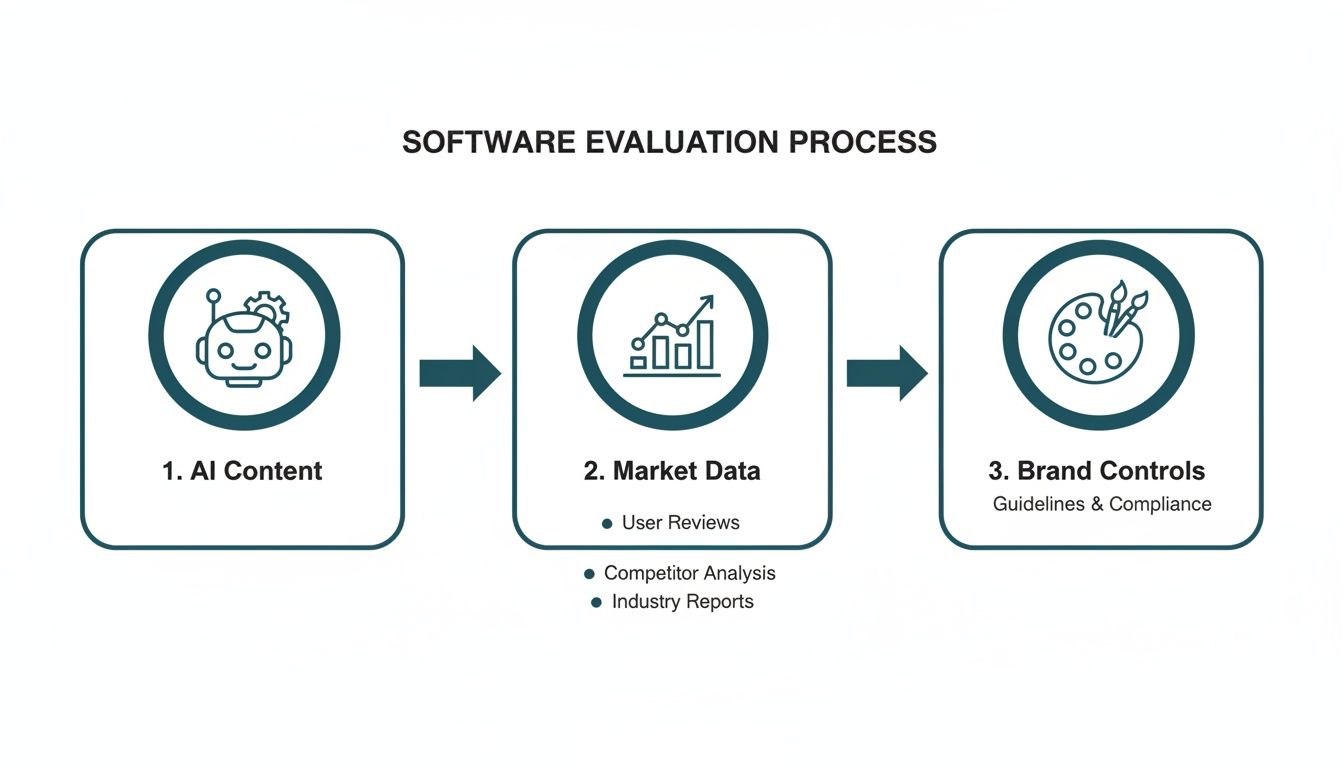
    If you start seeing a pattern—like your email campaigns bringing in a steady stream of high-quality leads—you know to double down on that strategy. On the flip side, if a particular ad campaign gets a ton of clicks but zero actual leads, it’s a clear signal to either tweak the ad or cut your losses. If you're looking to see how various platforms handle these features, our real estate marketing software comparison offers a great breakdown.

    Setting Up a Rock-Solid Tracking System

    Look, all the fancy ROI tools in the world won't help you if the data you're feeding them is garbage. Without a solid tracking setup, you're just making educated guesses. Building one from the ground up is how you get a crystal-clear picture of what’s actually driving your business forward.

    Think of it as leaving a trail of digital breadcrumbs. You want to follow a prospect’s journey from the first time they see your ad to the moment they become a client. It's not about being a tech genius; it's about being consistent across every single thing you do.

    Get Obsessed with UTM Codes

    The absolute foundation of great tracking is the UTM code (Urchin Tracking Module). It sounds technical, but it’s just a simple bit of text you add to the end of a URL to tell your analytics tools where a visitor came from. They’re like custom name tags for every link you share online.

    Let's say you're posting a new listing on your Facebook page. Instead of just dropping the raw link, you'd use a tagged one.

    • Original Link: yourwebsite.com/123-main-street
    • Tracked Link: yourwebsite.com/123-main-street?utm_source=facebook&utm_medium=social&utm_campaign=new-listing-promo

    This simple addition tells your analytics that this specific visitor came from Facebook (source), it was a regular social media post (medium), and it was for your new listing promo (campaign). You can build these for free in seconds using Google's Campaign URL Builder.

    I can't stress this enough: get in the habit of using them for everything. Email signatures, social media profiles, QR codes on your print flyers—if it's a link you control, it needs a UTM.

    Put Your Tracking Pixels to Work

    While UTMs tell you where people come from, tracking pixels tell you what they do when they get to your site. These little snippets of code, like the Meta Pixel (for Facebook and Instagram) or the Google Tag (for Google Analytics and Ads), are your eyes and ears. They’re essential for tracking conversions.

    And a conversion isn't just a closed deal. In real estate, a valuable conversion could be anything:

    • Someone fills out your "Contact Me" form.
    • A prospect schedules a showing on your website.
    • A user downloads your free home valuation guide.

    When your pixels are installed correctly, they "fire" when one of these actions happens. If someone clicks your Facebook ad for a new listing and then fills out a contact form, the pixel tells Meta that your ad just generated a high-quality lead. This is the exact data you need to measure ROI and let the ad platform find more people just like that one.

    So many agents make the mistake of only putting a pixel on their homepage. For this to work, the code needs to be on every single page of your site—especially the "thank you" or confirmation pages that pop up after someone submits a form. That's how you confirm a conversion.

    Bring All Your Data Together

    The final piece of the puzzle is to connect all your different data streams. Your leads don't just come from your website; they come from everywhere.

    Most modern CRMs are built to automatically pull in leads from the major portals like Zillow and Realtor.com, tagging them by source right away. This is huge because it lets you directly compare the Cost Per Lead (CPL) from your portal budget against the leads you're generating from your own marketing efforts. You can dig deeper into how these different strategies can complement each other by reading up on AI-powered real estate marketing.

    When you start using a platform like ListingBooster.ai to create your marketing materials, this tracking mindset becomes second nature. Slap a UTM on the links in the AI-generated social posts. That way, you can trace a lead from a specific Instagram post about 123 Main Street all the way to your CRM, proving its value down to the penny.

    Creating Your First Marketing ROI Dashboard

    All that data you're collecting is just noise until you organize it. A marketing ROI dashboard is what turns those raw numbers into clear, simple answers about what’s working and what’s not. Forget needing a data science degree; the goal here is to build a visual command center for your marketing.

    The good news is you don’t have to spend a fortune. Powerful tools like Google Looker Studio are completely free and surprisingly easy to get started with. Many real estate CRMs also have fantastic built-in reporting that can get the job done. The first move is to simply connect your data sources—think Google Analytics, your social media business accounts, and your CRM—to whichever dashboard tool you choose.

    This is all fed by the tracking systems we talked about earlier. It’s a simple, three-part process.

    Infographic illustrating a three-step bulletproof tracking process: create UTM, install pixel, and pull data.

    As you can see, it all starts with properly tagging your links (UTMs), tracking user actions on your site (pixels), and then pulling all that clean data into one central spot.

    Visualizing Your Key Performance Indicators

    Once your data is flowing in, resist the urge to track every metric under the sun. That’s a fast track to analysis paralysis. Your first dashboard should be clean, focused, and designed to answer your most important business questions at a glance.

    Start with these essential KPIs:

    • Leads by Source: A simple pie or bar chart is perfect for this. It instantly shows you where leads are coming from—Facebook Ads, organic Google searches, Zillow, your email list, etc. This is your 30,000-foot view of what's driving traffic.
    • Cost Per Lead (CPL) by Channel: This widget calculates exactly what you pay for a single lead from each channel. Just divide your ad spend for a channel by the number of leads it brought in. It’s the ultimate reality check for your budget.
    • Lead-to-Client Conversion Rate: This is the big one. It shows you the percentage of leads that actually become clients, revealing the quality of the leads from each source.

    A great dashboard tells a story. For example, you might see that your Facebook ads generate 100 leads at a low $15 CPL, but your email newsletter only brings in 10 leads. The story unfolds when you see the newsletter leads convert at 20% while the Facebook leads only convert at 1%. That’s an insight worth its weight in gold.

    Understanding Attribution Models

    As you set up these visualizations, you'll run into something called attribution models. It sounds complicated, but it's just the rule you use to decide which marketing touchpoint gets credit for a new lead or client.

    Think of it like a soccer game. Who gets credit for the goal? The player who scored, or the one who made the amazing pass that set it all up? The two most common models are:

    • First-Touch Attribution: This gives 100% of the credit to the very first thing a person interacted with. It’s fantastic for knowing which channels are best at introducing people to your brand. It credits the player who made that initial, game-changing pass.
    • Last-Touch Attribution: This gives 100% of the credit to the final touchpoint before someone converted. This highlights what's most effective at getting people to sign on the dotted line. It credits the player who actually kicked the ball into the net.

    Given the long sales cycle in real estate, I find a first-touch model is often the most insightful. Knowing what first brought someone into your world—whether it was a blog post they read six months ago or a Zillow inquiry last week—is crucial for optimizing your marketing and keeping your pipeline full for the long haul.

    Using AI and Data to Optimize Campaigns

    A man in a denim shirt and glasses looks at a tablet with 'Optimize with AI' text.

    Alright, your ROI dashboard is live, the data is flowing cleanly, and the tracking is humming along. This is the moment where measurement turns into money. It’s time to shift from just collecting data to making genuinely smarter, more profitable decisions with it.

    Instead of running on gut feelings, you can now operate with surgical precision. Start by making a regular review of your dashboard a non-negotiable part of your week. Spotting your highest-performing channels and content is no longer a mystery; it’s right there in the charts.

    If your dashboard shows that blog posts about local market updates are driving the most organic leads, that’s a flashing green light to write more of them. On the flip side, if your paid ads on a certain platform have a sky-high cost-per-lead but zero conversions, it's time to either reallocate that budget or kill the campaign entirely.

    Running Simple Marketing Experiments

    The real power of your new setup comes from running simple experiments. A/B testing, where you compare two versions of something to see which one performs better, is one of the most effective ways to boost your returns. You don't need a lab coat for this—just a clear question you want to answer.

    For example, let's say you're about to send out a "Just Listed" email. You could test two different headlines:

    • Version A: "Just Listed: 4-Bedroom Home in Northwood"
    • Version B: "This Northwood Home Has the Backyard You've Been Dreaming Of"

    Send each version to half of your email list and watch the numbers. Which one gets more opens? More clicks? The winner becomes your new go-to headline style. You can apply this exact same method to your ad copy, listing photos, and even the call-to-action buttons on your website.

    Where AI-Powered Tools Shine

    This experimental mindset is where AI-powered real estate marketing ROI tools really change the game. They can massively speed up your testing and content creation, giving you more material to test in a fraction of the time.

    With a platform like ListingBooster.ai, you could generate two completely distinct property descriptions for a new listing in seconds.

    A man in a denim shirt and glasses looks at a tablet with 'Optimize with AI' text.

    From here, you can see how quickly different marketing assets can be created. This allows you to run A/B tests on social media posts, MLS remarks, and email blasts, all managed from one central hub.

    Run one AI-generated description on Zillow and the other on Realtor.com, then track which one generates more inquiries. This isn't just a gimmick; it’s a data-driven approach to finding the exact language that resonates with buyers and gets them to take action.

    This process transforms content creation from a time-sucking chore into a powerful strategic advantage. It’s all about using AI to quickly produce variations that you can test in the real world to find out what truly works.

    Building Your Long-Term SEO Authority

    Beyond tweaking your current campaigns, AI helps you play the long game. We all know that organic search often delivers the highest marketing ROI, which means building your search engine presence is critical.

    Tools like the Authority Builder module in ListingBooster.ai can automate the creation of consistent, high-quality content like hyper-local market updates and neighborhood guides.

    This content isn't just for show. It’s specifically designed to be easily understood by modern AI search engines like Perplexity or Google’s AI Overviews. This positions you as the go-to expert when someone asks, "Who is the best real estate agent in [your city]?"

    By consistently publishing valuable information, you build a powerful digital footprint that attracts a steady stream of high-intent, low-cost leads for years to come.

    Common Questions About Real Estate Marketing ROI

    As you start digging into your marketing numbers, a few questions always seem to come up. It's completely normal. Moving from just doing marketing to actually measuring it is a big shift, and it’s where a lot of agents get stuck.

    Instead of getting lost in the weeds, let's clear up some of the most common questions I hear from agents. These are the practical answers you need to turn data into deals.

    What Is a Good Marketing ROI for Real Estate Agents?

    This is probably the number one question I get. While there’s no universal answer, a solid benchmark to shoot for is a 5:1 return. That means for every $1 you put into marketing, you get $5 back in gross commission income.

    But don't get hung up on that number. Some channels, like a well-oiled SEO strategy, might deliver a much higher return over the long haul. The most important thing is to figure out your own baseline first. Once you know your starting point, the real goal is simple: beat it next month.

    How Can I Track ROI from Offline Marketing Like Flyers?

    You can't put a tracking pixel on a postcard, but you can absolutely measure its impact. The trick is to build a "digital bridge" that guides people from your physical mailer to a trackable online location.

    Here are a few ways to do it:

    • Unique QR Codes: Don't use the same QR code everywhere. Create a specific one for your open house flyers and a different one for your "Just Sold" postcards. Link each one to a landing page with a unique UTM tag.
    • Memorable Vanity URLs: Nobody is going to type a long, complicated URL from a yard sign. Use a short, catchy domain like "Tour123MainSt.com" that redirects to your full, tracked property page link.
    • Digital Sign-In Sheets: At your next open house, ditch the clipboard. Use a tablet with a simple form that asks, "How did you hear about us?" Make it a required dropdown with options like "Flyer," "Yard Sign," or "Postcard."

    The real magic happens when you get this information into your CRM immediately. Tagging every new lead with its source lets you trace a closed deal all the way back to a specific mailer, proving its worth.

    I Am a Solo Agent on a Tight Budget. What Tools Should I Start With?

    You absolutely do not need to spend a fortune to get started. In fact, you can build an incredibly powerful tracking system for free. It just takes a little manual effort.

    Your initial, no-cost stack should include:

    1. A Simple Spreadsheet: Fire up Google Sheets or Excel. This is where you'll manually log your marketing expenses and the leads that come from each source. It’s your financial home base.
    2. Google Analytics 4: This is non-negotiable for understanding what happens on your website. It’s the best free tool for seeing where your traffic comes from and what people do once they arrive.
    3. Google's Campaign URL Builder: This tool lets you create special links (UTMs) for every single ad, email, or social media post. It’s how Google Analytics knows to credit a new lead to your Facebook ad versus your email newsletter.

    This simple setup gives you everything you need to see which channels are actually working. Once you can prove to yourself that a channel is profitable, you'll have the confidence to invest in more advanced real estate marketing ROI tools that can automate the process.


    Ready to move beyond spreadsheets and build a marketing engine that practically runs itself? ListingBooster.ai is the AI-powered command center that generates, launches, and tracks all your marketing. It’s designed to prove its own ROI from day one.

    See how you can build a high-return marketing machine by visiting https://listingbooster.ai and starting your free trial.
  • Affordable Real Estate Marketing Tools to Grow Your Agency

    Affordable Real Estate Marketing Tools to Grow Your Agency

    Let's get one thing straight: you don't need a six-figure marketing budget to build a successful real estate business. That's an old-school myth. The game has completely changed, and the advantage now goes to agents who are smart with their tech, not just the ones with the deepest pockets.

    The Modern Blueprint for Budget-Friendly Real Estate Marketing

    A man typing on a laptop with "BUDGET MARKETING" and a house cloud icon in the background.

    Honestly, your ability to compete today isn't about how much you spend; it’s about how intelligently you work. The rise of affordable, cloud-based software has leveled the playing field, giving solo agents and small teams the power to build an online presence that punches well above its weight. This is your single biggest opportunity to build authority and attract clients without breaking the bank.

    The secret isn't just finding one cheap tool. It's about building an interconnected system—a "marketing stack"—where each piece of software makes the others more effective. Think of it as a small, efficient crew working for you 24/7.

    To get started, you need a solid foundation. Let's look at the essential tools that make up a modern, affordable marketing stack.

    Core Components of a Modern, Affordable Marketing Stack

    Every agent needs a handful of core tools to automate their growth and get back their most valuable asset: time. These aren't just nice-to-haves; they're the absolute essentials for running a lean, effective marketing machine.

    Tool Category Primary Function Average Monthly Cost (Solo Agent)
    CRM Your command center for all client interactions, lead tracking, and automated follow-ups. $25 – $99
    Social Media Automation Schedules posts in advance to maintain a consistent, professional presence without the daily grind. $15 – $50
    AI Content Creation Generates listing descriptions, social posts, blogs, and emails in minutes, solving the "what to post" problem. $29 – $79

    Having these three pieces in place forms a powerful trio. Your CRM manages the relationships, your scheduler keeps you visible, and your AI writer provides the fuel for it all.

    The most significant advantage for today's agent is accessibility. The barrier to entry for professional-grade marketing has been drastically lowered, making it possible to build a powerful brand from day one with minimal investment.

    This isn't just a hunch; the market data backs it up. The real estate marketing automation software market has exploded, growing from USD 1.12 billion in 2026 with a forecast to hit USD 4.26 billion by 2034.

    Why the huge jump? Because cloud-based tools now hold a commanding 68.4% market share. This shift, detailed in a recent market shift analysis, means you get access to top-tier features that were once locked away in expensive enterprise systems. You can finally have the same capabilities as the big brokerages, but for a fraction of the cost.

    Define Your Goals to Prioritize Your Toolkit

    It’s so easy to get distracted by every new app and software that promises to be a "game-changer" for your business. But the fastest way to burn through your marketing budget is to chase those shiny objects. A smart tech stack isn't built by reading software reviews first; it's built by looking inward at your own business goals.

    Before you even think about a free trial or a credit card, take a moment for a quick, honest assessment. Where is your business right now? And where do you realistically want it to be in six months? The answer to that question changes everything.

    If you’re a newer agent, your entire focus is probably on lead generation. But if you’re a seasoned pro, you might be desperate to get some time back from all the administrative quicksand. Your toolkit should reflect that reality. A new agent’s budget should go almost entirely toward tools that find and capture leads. An established agent, on the other hand, might get a much better return from a tool that automates follow-up with their massive database.

    Turn Your Headaches into a Shopping List

    Let’s get practical for a second. What are the top three things causing you the most friction in your business right now? I bet a few of these sound painfully familiar:

    • "I've got a pile of old leads, but no consistent way to follow up with them."
    • "My social media feels random and I'm never sure what to post."
    • "I spend way too much time writing listing descriptions when I should be talking to clients."
    • "My team’s marketing materials all look different, and it's driving me crazy."

    Each one of these frustrations points directly to a category of affordable real estate marketing tools. That inconsistent follow-up is screaming for a CRM with automated campaigns. A weak social media game tells you it's time for a content scheduler and a solid idea generator. Wasting hours on descriptions? That's a clear sign you need an AI writer built for real estate.

    My best advice: Don't buy a tool for all the cool things it can do. Buy it for the specific problem it will solve for you right now. The goal is to make smart investments that fix a real issue and directly help your business grow.

    This simple exercise is your best defense against impulse buys. It forces you to spend with purpose, shifting your thinking from "What's the best tool out there?" to "What's the right tool for me?"

    What to Buy Based on Your Business Stage

    To make this crystal clear, let's walk through a few common situations. Your current position in the business is the single best predictor of which tools will give you the most bang for your buck, right away.

    If You're Just Starting Out and Need Leads

    As a new agent, your mission is simple: fill the pipeline. Every activity should be geared toward generating new contacts and getting your name out there.

    • Your Must-Haves: A simple, effective CRM is non-negotiable for capturing and organizing every single lead. Pair that with an AI content generator like ListingBooster.ai, which can pump out a high volume of social media posts, listing descriptions, and blogs to build your authority from scratch. This combo lets you look professional from day one and ensures no lead ever falls through the cracks.

    If You're Established but Drowning in Busywork

    You've got a steady flow of clients, which is great. The problem? You’re buried in administrative tasks and feel like you're always playing catch-up. Your goal isn't more leads—it's more time.

    • Your Must-Haves: This is the time to invest in a more advanced CRM with powerful automation features. You'll also get huge value from a social media scheduler that lets you batch-create your content for the week in a single sitting. Reclaiming just 5-10 hours a week on admin work is like hiring a part-time assistant for a tiny fraction of the price.

    If You're a Team Leader Needing Consistency

    You're running a team, and your biggest challenge is making sure every agent's marketing looks and sounds professional and unified. Quality control and compliance are your top priorities.

    • Your Must-Haves: You'll want a team-based CRM, a platform for collaborative content approval, and an AI tool that includes brand voice templating. This stack ensures that whether an agent is posting about a new listing or sharing a market update, the message, tone, and branding are always on-point and compliant, which is crucial for protecting the brokerage's reputation.

    Assembling Your Essential Marketing Tech Stack

    Desk flat lay with a tablet, smartphone, notebook, pen, and plant. Text 'Marketing Tech Stack' overlaid.

    Alright, you’ve figured out what you need. Now for the fun part: building your marketing engine. The key isn't to just collect a bunch of random apps. It’s about getting a few core tools that work together, making your life easier and your marketing more effective.

    We're going to focus on three core pieces that form the backbone of a smart, affordable marketing strategy for any agent. When your CRM, social media tool, and content generator are all in sync, you create a workflow that practically runs itself. This lets you punch well above your weight class.

    Your CRM: The Brains of the Operation

    Your Customer Relationship Management (CRM) system is the absolute heart of your business. It’s so much more than a fancy contact list; it’s where you build and track every single relationship, ensuring no lead ever falls through the cracks.

    For an agent on a budget, the best CRM is one that automates follow-up without a bunch of confusing features you’ll never touch. Don’t get distracted by shiny objects. Just focus on the essentials.

    Here’s your must-have checklist:

    • Automated Lead Nurturing: Can it run simple "drip campaigns"? You need to be able to automatically send a sequence of texts or emails to new leads. This is non-negotiable for staying top-of-mind.
    • Lead Source Tracking: The CRM absolutely must show you where your leads came from—Zillow, a Facebook ad, your website, etc. How else will you know where your marketing dollars are actually working?
    • Task Management: Look for a system that lets you create reminders for calls, follow-ups, and even client anniversaries. It keeps you from dropping the ball.
    • Simple Segmentation: You need the ability to "tag" contacts (like "First-Time Buyer" or "Luxury Seller"). This is crucial for sending relevant messages instead of blasting everyone with the same thing.

    A CRM that does these four things well is the foundation for a scalable business. It handles the busywork, freeing you up for those dollar-productive conversations.

    Your Social Media Scheduler: Buying Back Your Time

    Your social media profile is your 24/7 open house. And in this game, consistency is king. According to the National Association of Realtors, 51% of millennial buyers are more likely to work with an agent who has a real social media presence. But who has time to post every single day?

    This is where a social media scheduler becomes your best friend. Instead of panicking about what to post each morning, you can block off an hour or two once a week and schedule everything in advance. It's a game-changing shift in how you work.

    A social media scheduler doesn't just save time; it buys you mental clarity. By batching your content creation, you free up daily headspace to focus on client needs and income-producing activities.

    When picking a tool, just look for a clean layout, the ability to schedule in bulk, and simple analytics. You need to see what's working so you can do more of it.

    Your AI Content Machine: The Fuel for Your Engine

    So, you have a system to manage leads and a tool to schedule posts. But what are you actually going to post? This is where most agents get stuck. Writing great listing descriptions, social media updates, and neighborhood blog posts is a massive time sink.

    An AI content generator built for real estate, like ListingBooster.ai, solves this "blank page" problem for good. It becomes a critical part of your affordable tech stack. Just imagine plugging in a property address and getting all this back in seconds:

    1. Several MLS-compliant listing descriptions, each written for a different type of buyer.
    2. A 30-day social media plan covering "Just Listed," "Open House," and "Just Sold" announcements, plus general market insights.
    3. A list of blog post ideas and outlines to position yourself as the go-to local expert.

    The best part is that modern AI adapts to your personal brand. You’re not getting robotic, generic text. You’re getting a draft that’s 90% of the way there, just waiting for your final personal tweaks.

    This is how it all connects: Your CRM catches the lead, your AI creates the content to keep them engaged, and your scheduler pushes it out automatically. That’s the magic of a smart, affordable tech stack. To see how various platforms compare, check out our detailed guide on real estate marketing software comparisons.

    Making Content Your Easiest Task, Not Your Biggest Chore

    Let's be honest. You can have the best CRM on the market and a perfectly organized social media scheduler, but if you don't have anything to say, you're just spinning your wheels. For most agents, the constant demand for fresh, engaging content is the single biggest roadblock to consistent marketing. This is where your tech stack truly comes to life.

    While other tools manage your contacts and your calendar, an AI content platform is what actually creates the words and ideas that get people to pay attention. We're seeing a massive shift in the industry because of it. In fact, 85% of real estate agents are already using AI in their business, and 89% of brokerage leaders believe it's critical for staying competitive.

    What’s really game-changing is the price. Thanks to how modern AI is built, powerful tools that used to be out of reach are now available for USD 34.99 to USD 49 a month. For more context on this and other industry trends, the team at PhotoUp has some great data. For less than what you’d spend on a new set of open house signs, you can solve the "what do I post today?" problem for good.

    Your New Marketing Command Center

    Think of a tool like ListingBooster.ai as your marketing command center. It’s not just another generic AI writer; it's built from the ground up for real estate agents. It basically has two engines working for you at all times.

    • Listing Commander: This is your property-focused powerhouse. Feed it a little bit of information about a listing, and it generates a whole suite of marketing materials for that specific home.
    • Authority Builder: This engine is all about you. It helps you create content that builds your personal brand, showcases your expertise, and establishes you as the go-to agent in your area.

    This two-pronged approach is what makes it one of the most practical and affordable real estate marketing tools out there. It handles your immediate need to market a property while also playing the long game of building your reputation.

    An AI content tool isn't here to replace you. It’s here to do the heavy lifting—the 90% of content creation that’s repetitive and frankly, a time sink. That frees you up to add the final 10% of personal insight and local flavor that no machine can replicate.

    See It In Action: A Real-World Workflow

    Enough with the theory. Let's walk through what this actually looks like. An agent—we'll call her Sarah—just landed a great new listing: a 3-bedroom craftsman in a hot neighborhood. In the past, this meant blocking off her entire afternoon for writing.

    Today, her process is totally different. She just logs into ListingBooster.ai and plugs in the property address.

    That one simple action kicks off the whole process. In less than five minutes, the Listing Commander engine gets to work, handing her a complete campaign on a silver platter.

    One Listing Becomes a Month of Marketing

    Here’s a quick rundown of what Sarah gets from that single address entry:

    1. Polished MLS Descriptions: The platform delivers four different property descriptions. She gets a comprehensive, MLS-compliant version, a more evocative luxury narrative for high-end websites, a short and punchy version for mobile apps like Zillow, and a creative, story-driven description for her own blog. If you want to dive deeper into this, our guide on using AI for real estate listing copywriting is a great resource.

    2. A 30-Day Social Media Calendar: Sarah receives a full month of ready-to-go social media posts. The content is already planned around key dates, from "Just Listed" fan-fare and open house reminders to "Under Contract" updates and "Just Sold" announcements.

    3. Ready-to-Print Materials: The copy for a professional property flyer and a neighborhood mailer are done. The text highlights the home’s best features and even pulls in data about recent sales nearby.

    4. Ideas for Blogs and Videos: The Authority Builder engine chimes in with five blog post ideas tied to her listing, like "3 Things Buyers Love About the Northwood Neighborhood." It even gives her a working outline for a short video tour script.

    Just like that, Sarah doesn't just have a listing description. She has a month's worth of on-brand, compliant, and genuinely useful content ready to go. Now she can spend her time doing what she does best—talking to clients and closing deals—knowing her marketing is running smoothly in the background. That's the real power of adding an AI content engine to your stack.

    Putting Your Tools to Work: Smart Workflows and Content Calendars

    Having a great set of tools is one thing; knowing how to weave them into your daily routine is where the magic happens. A killer tech stack is useless if it just sits there. The real payoff from these affordable marketing tools comes when you build a consistent, repeatable plan that turns your big-picture strategy into daily action.

    This isn't about working harder—it's about creating a simple system that saves you time and keeps your brand front and center without causing burnout. Let's move past the guesswork and build a marketing machine that runs like clockwork.

    For example, a tool like ListingBooster.ai boils the entire content creation process down to its absolute essentials. You start with the basics of your listing, let the AI work its magic, and then you're ready to push that content out everywhere.

    AI content creation process flowchart showing input listing, generate content, and distribute steps.

    As you can see, it's a straightforward path from listing details to a full-blown marketing campaign. That efficiency is the cornerstone of a smart, budget-conscious strategy.

    What a 30-Day AI-Powered Content Plan Looks Like

    So, what does this look like in the real world? Let's say you feed a new listing into an AI tool. Instead of a blank slate, you get a strategic 30-day content calendar designed to hit different marketing goals each week. It’s not just random posts; it’s a narrative.

    Here's a breakdown of what that month could look like:

    • Week 1 (The Launch): It's all about creating buzz. Your calendar would be loaded with "Coming Soon" teasers, a "Just Listed" announcement, a script for a quick video tour, and maybe a carousel post highlighting the home's top 3 features.
    • Week 2 (Driving Engagement): The focus shifts to getting your audience to interact. Think polls asking, "Which is your favorite room?" or posts showcasing neighborhood gems like the best local coffee shop or a beloved park, connecting the property to the lifestyle.
    • Week 3 (Building Authority): Now you zoom out a bit to establish your expertise. The AI might generate a local market update for that specific neighborhood, a blog post idea like "3 Tips for First-Time Buyers," or a "Did You Know?" graphic about local property value trends.
    • Week 4 (Creating Urgency): As the month winds down, the content nudges people to act while also reinforcing your personal brand. You’ll see posts like "Last Chance to Tour!" before an open house, a client testimonial, and maybe a behind-the-scenes look at a day in your life as an agent.

    This is how you move from just selling a house to building a brand. You become the go-to expert who provides real value, not just another agent with a sign in the yard.

    Your Simple Weekly Workflow

    With a content plan ready to go, your week suddenly becomes much more manageable. Forget scrambling for something to post every morning. It’s all about batching your tasks and letting your tools do the heavy lifting.

    This sample workflow shows how you can use a few hours a week to run a powerful marketing system.

    Sample One-Week Content Workflow Using an Affordable Stack

    Here’s a realistic look at how you can structure your week. This schedule is designed for maximum efficiency, letting you get your marketing done so you can focus on clients.

    Day Primary Task Tool Used Time Commitment
    Monday Content Generation AI Content Tool (e.g., ListingBooster.ai) 30-45 Minutes
    Tuesday Scheduling Social Media Scheduler 60 Minutes
    Wednesday Lead & Automation Review CRM 20 Minutes
    Thursday Audience Engagement Social Media Platforms 20-30 Minutes
    Friday Performance Check CRM & Scheduler Analytics 15 Minutes

    Think about that for a second. In under an hour on Monday, you’ve created your core content for the entire week. On Tuesday, you load it all into your scheduler, and your social media is handled. The rest of the week is just quick check-ins and genuine interaction.

    This kind of system is built to last. By batching your work, you stop the daily content panic and reclaim hours. It’s a core principle behind the most successful real estate marketing automation for agents who want to grow their business without hiring a huge team.

    Knowing Your Numbers and Staying Out of Trouble

    You’ve found some great, affordable marketing tools. That's a huge win. But how do you actually know if that small investment is pulling its weight? Tracking your return on investment (ROI) is everything, but it doesn't have to be a nightmare of complex spreadsheets. You just need to focus on a few key numbers that tell the real story.

    I see a lot of agents get bogged down by "vanity metrics" like page likes or follower counts. Those are nice, but they don't pay the bills. What you really need to know is which channels are bringing you actual leads and how much it's costing you to get them.

    The Metrics That Truly Matter

    To get a real handle on your ROI, you need to zero in on a few essential data points. The good news is that most CRMs and social media schedulers have dashboards that make this pretty straightforward.

    Here’s what you should be watching like a hawk:

    • Lead Source Attribution: This is your number one priority. You absolutely have to know whether a new lead found you through a Facebook ad, your blog, or a Google search. This data is gold—it tells you exactly where to spend more time and money.
    • Cost Per Lead (CPL): This is a simple but powerful calculation. Just divide your total monthly tool and ad spend by the number of leads you generated. A CPL of $10 feels a lot better than a CPL of $100, and this single number will guide your spending decisions better than anything else.
    • Real Engagement: Forget simple likes. Look at the comments, shares, and direct messages. This is where you see if you're building a real community or just shouting into the void. High engagement almost always translates to warmer, more qualified leads down the line.

    Speaking of massive ROI, let's talk about video. It's become one of the most effective and surprisingly budget-friendly ways for agents to market themselves. Consider this: listings with video get a mind-boggling 403% more inquiries than listings without. On top of that, a recent look at digital marketing trends revealed that marketers who use video grow their revenue 49% faster than those who don't. That’s proof that even a small investment in video can pay off in a big way.

    Compliance: The Ultimate Budget Protector

    True affordability isn’t just about the monthly price tag on your software. It’s about protecting your business from the catastrophic financial and reputational hit of a compliance violation. Real estate marketing is a heavily regulated field, and one wrong move can be incredibly expensive.

    Affordability means peace of mind. A tool that costs you thousands in fines was never truly affordable. Prioritizing compliance is the ultimate form of budget protection.

    This is where smart, modern AI platforms offer incredible value. They aren't just writing clever social media posts; they're acting as your first line of defense against costly mistakes. A tool like ListingBooster.ai, for example, was built from the ground up with these rules in mind.

    • Fair Housing Guardrails: As the AI generates content, it’s constantly scanning for words or phrases that could potentially violate Fair Housing laws. It’s designed to help you avoid discriminatory language tied to race, religion, familial status, or other protected classes.
    • MLS Rule Adherence: The platform also understands the specific rules for MLS descriptions, helping you steer clear of prohibited words or phrases that could get your listing flagged or removed.

    By building these safeguards directly into your content workflow, you drastically reduce your risk. It allows you to market your properties with confidence, knowing your affordable tools are also working hard to keep your business safe and your license secure.

    Common Questions & Quick Answers

    One of the biggest hesitations I hear from agents about new technology is the fear of a massive learning curve. It's a valid concern. You're busy, and the last thing you need is another complicated system to master.

    The good news is, most of today's affordable real estate marketing tools are built to be incredibly user-friendly. Platforms like ListingBooster.ai are a perfect example—they're designed to be set up in minutes. You can literally plug in a property address and have a complete marketing campaign ready to go. The goal is to save you time, not give you a tech-induced headache.

    So, What's the Real Cost?

    This is usually the next question, and the answer is surprisingly reasonable. You can build a genuinely powerful marketing stack for less than $150 per month.

    That budget comfortably covers the essentials: a solid CRM, a social media scheduler, and a specialized AI content tool. When you put that $150 next to the price of a single newspaper ad or the salary for a part-time assistant, the value of these digital tools is crystal clear.


    Ready to see how an AI-powered content strategy can fill your pipeline and build your brand? ListingBooster.ai creates a full, compliant, and on-brand content calendar in just a few clicks. Give the free trial a spin and see for yourself.

  • The Ultimate Guide to Professional Real Estate Marketing Tools in 2026

    The Ultimate Guide to Professional Real Estate Marketing Tools in 2026

    When we talk about professional real estate marketing tools, we're not just talking about software. We're talking about a complete system designed to automate, optimize, and scale how you find clients and close deals. These aren't just bells and whistles; they are data-driven engines that replace outdated, manual methods with something far more efficient.

    Why Your Old Marketing No Longer Works in 2026

    The real estate game has changed, and it’s not going back. If you feel like you're running twice as fast just to stay in the same place, you're not wrong. We're in the middle of a massive shift where the marketing tactics that built careers—flyers, bench ads, even basic social media posts—are losing their punch.

    Think of it this way: you might be the most skilled artisan in town, but you’re trying to compete in a high-tech factory with just a hammer and chisel. Your expertise is undeniable, but your toolkit is holding you back. This creates a dangerous "invisibility crisis" where the clients you’re perfect for simply can't find you.

    The Rise of the AI Home Search

    Here’s the core of the problem: the home-buying journey no longer starts with a phone call or a drive through a new neighborhood. It starts with a question typed into an AI.

    Your future clients are turning to platforms like ChatGPT and Google's AI to ask things like:

    • "Who are the top real estate agents in my area?"
    • "Show me a market analysis for my zip code."
    • "What are the best family-friendly neighborhoods with good schools?"

    If your online presence and marketing materials aren't built to be found and understood by these AI systems, you are effectively invisible to a huge, and growing, part of the market. This isn't just a trend; it's the new foundation of how real estate works.

    The numbers back this up. The global real estate advertising market is already massive, valued at USD 37.39 billion in 2025 and projected to swell to USD 39.54 billion in 2026. This explosive growth is almost entirely powered by digital platforms, especially AI tools that automate advertising and lead generation. You can explore the full report on this massive market growth to see just how big this wave is.

    The new reality is stark: You can be the best agent in your city, but if AI doesn't know you exist, neither will a huge portion of your future clients.

    This is why upgrading your marketing toolkit isn’t about getting a slight competitive edge anymore. It’s a matter of survival. The agents who embrace modern professional real estate marketing tools won't just keep up; they will dominate their local markets.

    In the next sections, we'll dive into the specific tools that make up the essential marketing kit for every modern agent.

    The Modern Agent's Marketing Toolkit At a Glance

    To succeed, you need a stack of tools that work together seamlessly. This table gives you a quick overview of the essential categories that form the foundation of a winning marketing strategy.

    Tool Category Primary Goal Key Function
    Lead Generation Attract potential buyers & sellers Running targeted ads, creating landing pages
    CRM Nurture relationships & manage contacts Organizing leads, tracking communication
    Visual Marketing Showcase properties beautifully Virtual tours, high-res photos, drone video
    Content Creation Build authority & engage audiences Writing blog posts, social media updates
    Analytics Measure performance & optimize ROI Tracking website traffic, ad conversions

    Each of these categories is crucial, but the real magic happens when they are integrated, feeding data into one another to create a powerful, automated system that works for you 24/7. This is where a comprehensive platform can make all the difference.

    Building Your Foundational Marketing Toolkit

    To get ahead in today's market, you can't just rely on a random collection of apps. You need a complete, interconnected set of professional real estate marketing tools that all work together. Think of it like building a house. You wouldn't just throw up walls without a solid foundation, electrical wiring, and plumbing. Each system has a job, and they all have to connect perfectly.

    Let's walk through the four essential pillars of a modern agent's marketing toolkit. We'll go beyond the basic descriptions and dig into the real strategy behind each category, showing you how they combine to create a powerful marketing engine that will leave your competition in the dust.

    The Digital Brain: Your CRM

    It all starts with your Customer Relationship Management (CRM) platform. This is the central nervous system of your entire business, and it's so much more than a glorified address book. A modern real estate CRM is your digital brain—it remembers every conversation, tracks every touchpoint, and prompts you on the next best step for every single person in your world.

    Ever try to keep track of the unique needs of 50 different clients? Remembering their kids' names, their non-negotiable home features, and the last time you even spoke is next to impossible. A top-tier CRM like Follow Up Boss handles this for you. It organizes your contacts, automates follow-up reminders, and makes sure no lead ever slips through the cracks. It turns a chaotic pile of sticky notes into a relationship-building powerhouse that works from the first point of contact all the way to the closing table and beyond.

    The diagram below shows just how much the game has changed. We've moved from old-school tactics to a new world where AI search is king, creating an "invisibility crisis" for agents who don't adapt.

    Diagram showing the real estate marketing shift from traditional methods to AI search optimization due to an invisibility crisis.

    This image really drives home the point: if your marketing tools aren't built for the way people find information now, you're essentially invisible to a huge chunk of potential clients.

    The Community Megaphone: Social Media

    Social media is your community megaphone. It's no longer a place to just shout "just listed!" into the void. Platforms like Instagram, Facebook, and even TikTok are where you build a real brand, establish yourself as the hyperlocal expert, and genuinely connect with people in your area.

    By consistently sharing things people actually find useful—like local market stats, guides to the best neighborhoods, or quick tips for first-time homebuyers—you become the name they trust. This isn't about vanity metrics like likes; it's about building trust at scale. When someone asks an AI assistant, "Who's the top real estate agent in my neighborhood?" a strong and active social media presence helps make sure your name is the answer. If you want to dig deeper into your options, our guide on comparing different real estate marketing software can help you refine your strategy.

    The Digital Curb Appeal: Visual Content Tools

    We all know that in real estate, first impressions are made online. That's where visual content tools come in—they create your digital curb appeal. We're talking about the stunning photos, immersive video walkthroughs, and 3D tours that make a buyer stop scrolling and pay attention. In today's visual world, professional-quality media isn't a luxury; it's a necessity.

    A listing with professional photography and video doesn't just get more clicks; it communicates quality, commands a higher perceived value, and builds instant credibility for you as an agent.

    This doesn't always mean hiring an expensive crew. Your toolkit can range from professional drone services for that "wow" factor to incredibly user-friendly design apps like Canva. With Canva, you can create beautiful, polished graphics for your social media posts in just a few minutes. These tools ensure every property you represent looks its absolute best online, helping buyers fall in love with a home before they even set foot inside.

    The Digital Prospector: Lead Generation Platforms

    Finally, lead generation platforms are your digital prospector, working around the clock to find your next client. These tools aren't just about buying a list of names. They empower you to run highly targeted ad campaigns on Google and Facebook that reach specific groups of people with incredible accuracy.

    Think of it as fishing with a sonar-equipped rod instead of just a hook and line. You can serve ads directly to:

    • Renters in high-income zip codes whose leases are about to expire.
    • Growing families searching for homes in specific school districts.
    • Homeowners who've been in their property for 10+ years and are likely to be thinking about selling.

    These professional real estate marketing tools don't just find you more leads; they find you the right leads. They fill your CRM with high-intent prospects, giving your business a predictable and steady stream of new opportunities to pursue.

    Winning with Modern Visual Marketing

    If your CRM is the brain of your business, then your visual content is its curb appeal. It’s that critical first impression that makes a buyer stop scrolling and lean in. In today’s market, high-quality visuals aren’t just a nice-to-have; they are the bedrock of trust and the fastest way to signal your authority as a top agent.

    Think about it this way: a listing description tells a buyer about the home, but professional photos and videos show them. That leap from telling to showing is everything. It’s how you forge an instant emotional connection, allowing a buyer to picture themselves walking from the kitchen to the living room or arranging their furniture in the primary suite.

    Professional real estate videographer using a drone and camera to capture a modern house for visual marketing.

    This is why listings with stunning visuals don't just get more clicks. They attract serious, qualified buyers who are already sold on the home before they even set foot inside.

    The Essential Visual Toolkit

    Creating that magnetic digital curb appeal requires the right set of tools. The days of getting by with blurry smartphone pictures are long gone. To stand out, you have to deliver a premium, immersive viewing experience that feels professional from the first glance.

    Your visual marketing arsenal should include a mix of these key players:

    • Professional Photography and Videography: This is non-negotiable. High-resolution photos capture a property’s character, while a polished video walkthrough tells its story.
    • Drone Photography and Video: For properties with acreage, amazing views, or unique exteriors, a drone gives you a jaw-dropping perspective that ground-level shots can't touch. It puts the home in context and shows off the entire setting.
    • 360° Virtual Tour Software: Tools like Matterport or Zillow 3D Home let buyers take control and "walk" through a property on their own terms. This builds a powerful sense of familiarity and even ownership.
    • Mobile Video Editing Apps: Not every video needs a Hollywood budget. Apps like CapCut or InShot are perfect for creating quick, authentic clips for social media—think neighborhood tours or agent intros—right from your phone.

    The impact of video in real estate is undeniable, and the numbers speak for themselves. Listings with videos get 403% more inquiries, and properties marketed with professional photos and dynamic tours tend to sell around 30% faster. For a deeper dive, check out more real estate marketing trends that highlight its full power.

    Getting Your Visuals Seen

    Creating beautiful content is only half the job. The other half—the one that really moves the needle—is getting it in front of the right people on the right platforms. A one-size-fits-all approach just doesn't cut it anymore.

    Here’s a simple but effective strategy for distributing your visual content:

    1. YouTube for In-Depth Tours: This is home base for your full-length, high-production property videos. Buyers on YouTube are in research mode and want all the details. Give them a comprehensive tour that makes them feel like they're really there.
    2. Instagram Reels for Quick Highlights: Use Reels for punchy, 30-60 second clips that grab attention fast. Showcase a home's best features—a chef's kitchen, a gorgeous backyard view, a unique design element—to hook viewers and drive them to the full listing.
    3. TikTok for Authentic Glimpses: This platform is all about authenticity. Think behind-the-scenes content, quick "before and after" reveals of a newly staged room, or a rapid-fire tour of a neighborhood's hidden gems. Keep it real and relatable.

    Investing in a powerful visual strategy is really an investment in your own credibility. It shows sellers you’re a modern agent who knows exactly how to position their home to get the best result. To learn how to weave this into your pitch, see our guide on building a listing presentation that wins clients. In 2026, there’s no question: professional visuals are the foundation of every successful marketing plan.

    The AI Revolution in Real Estate Marketing

    The tools we've talked about so far—CRMs, visual content platforms, and lead generation services—are the nuts and bolts of any solid marketing strategy. But there’s a new, game-changing layer being built on top of it all: Artificial Intelligence. This isn't just some new app for your phone; it’s a completely different way of thinking about and executing your marketing.

    Think about a solo agent juggling listing descriptions, a 30-day social media calendar, email campaigns, and ad copy. It's a constant grind. Now, imagine that same agent having an AI Command Center. Suddenly, that one person has the output of a small marketing agency. It's not just another tool; it's a massive upgrade to what you can accomplish on your own.

    This isn't some far-off future. It's happening right now. The numbers don't lie: 85% of agents are already using AI in their business. A huge 89% of industry leaders believe it's critical to stay competitive, and it’s projected that 95% of brokerages will be using AI by 2030. The shift is well underway, and you can discover more about real estate marketing statistics that paint a very clear picture of where things are headed.

    Putting Your Tedious Marketing on Autopilot

    Let’s be honest, a lot of marketing is just plain tedious. AI's first and most immediate job is to take those time-sucking tasks right off your plate. Remember all those hours you’ve spent staring at a blank screen, trying to write the perfect MLS description or come up with a month’s worth of social media ideas? AI-powered tools can do that work in minutes.

    For instance, you feed it the basic property info—address, beds, baths, and a few unique features. Almost instantly, the AI can generate:

    • Compelling Listing Descriptions: Crafted to capture attention and sell the lifestyle, not just the specs.
    • Social Media Content: A full content calendar for Instagram, Facebook, and LinkedIn, complete with eye-catching captions and relevant hashtags.
    • Email Marketing Copy: From property announcements to lead nurture sequences that keep you top-of-mind.

    This isn’t about replacing your unique voice. It’s about amplifying it. AI gives you a fantastic, professional first draft, freeing you to sprinkle in your own market knowledge and personality. It’s the perfect blend of high-tech efficiency and your high-touch expertise.

    By automating this foundational work, you can easily get dozens of hours back every single month. That’s more time you can pour into what really moves the needle: connecting with clients, showing homes, and closing deals.

    Winning the New Search Game

    While automation is a huge win, AI's most important role is preparing you for the future of how people find homes. Today, a fast-growing number of buyers—already around 40%—are skipping Google and starting their search on AI assistants like ChatGPT.

    They're asking conversational questions like, "Show me homes in my price range with a modern kitchen," or even, "Who is the best agent for selling historic homes in my city?"

    For your listings and your personal brand to show up in those answers, your online content needs to be structured in a way that AI can easily read and understand. This is where a couple of behind-the-scenes concepts, schema markup and AI-readable content, become incredibly important.

    • Schema Markup: Think of this as a special "translator" for search engines. It’s a bit of code on your website that tells an AI exactly what it's looking at (e.g., "This is a house for sale," "This is the price," "This is the agent's name").
    • AI-Readable Content: This just means creating property descriptions and blog posts that are so clear, detailed, and well-organized that an AI can confidently present them as the best answer to someone's question.

    The good news is that modern professional real estate marketing tools handle all this technical optimization for you. They automatically format your listings and content to be found and favored by this next wave of search. This isn't a "nice-to-have" anymore; it's becoming a fundamental requirement for staying visible. To really see how this plays out, take a look at our practical guide on AI marketing for real estate agents.

    Your AI Marketing Command Center

    So far, we've looked at all the individual tools a modern agent needs: the CRM, social media schedulers, content creators, and lead gen tools. The problem is, juggling a dozen different subscriptions is pure chaos. It’s where so many talented agents lose time, momentum, and brand consistency. Having the right tools isn't enough; you need them to work together as one cohesive system.

    This is exactly where an integrated platform like ListingBooster.ai comes in. It’s not just another app to add to the pile. Think of it as an AI-powered command center that pulls all your marketing tasks under one roof, replacing multiple professional real estate marketing tools with a single, smarter engine.

    A person uses a laptop at a desk with an 'Ai Command Center' display showing a building and data.

    It’s like having a dedicated copywriter, a social media manager, and a digital strategy expert on your team, all accessible through one simple dashboard that you can run in just a few minutes a day.

    From a Single Address to a Complete Marketing Campaign

    Here’s how it works in the real world. An agent logs into ListingBooster.ai and does one thing: they enter a property address. That’s it. From there, the platform's two core engines—the Listing Commander and the Authority Builder—spring into action.

    The Listing Commander is all about marketing the property itself. It instantly builds out a full campaign for that listing, including:

    • Powerful MLS Descriptions: You get multiple versions written specifically for different sites like Zillow, Realtor.com, and your local MLS.
    • A 30-Day Social Media Plan: Complete with ready-to-go posts for every phase of your listing, from "Coming Soon" and "Just Listed" to "Open House" and "Just Sold."
    • Professional Print Materials: Instantly generate beautiful flyers and brochures that are ready to print for your next open house.

    At the same time, the Authority Builder gets to work promoting you. It creates content that solidifies your reputation as the local expert—think hyper-local market updates, neighborhood profiles, and valuable home-selling advice. This helps build the consistent online presence you need to be seen as a trusted authority by new AI search engines.

    This isn't just about spitting out generic text. The platform strategically uses 23 different psychological frameworks—like scarcity, social proof, and aspiration—to write copy that actually stops people from scrolling and gets them to take action.

    It's the difference between stating "the kitchen is updated" and painting a picture of them proudly hosting their first holiday dinner there. One informs, the other persuades.

    Smart Features That Solve Real-World Problems

    An integrated AI platform does more than just create content; it solves some of the biggest headaches that agents, teams, and brokers deal with every single day. This is where it becomes a truly essential business tool.

    Two features, in particular, make a massive difference:

    1. Automated Compliance Checks: Before you post anything, every caption and description is automatically scanned for potential Fair Housing violations. This gives you—and your brokerage—an invaluable layer of protection and peace of mind.
    2. AI Search Optimization: The content is written for people first, but it's also structured for search engines. It includes the right keywords and formatting so AI assistants like ChatGPT can easily find and recommend your listings and your agent profile.

    This approach tackles the biggest challenges at every level. A solo agent gets back dozens of hours each month. A team leader can finally ensure every agent’s marketing looks polished and consistent. And a brokerage can give hundreds of agents top-tier marketing and compliance support without the staggering cost. This is how you get ahead in today's market.

    Building Your Modern Real Estate Workflow

    Knowing which professional real estate marketing tools are out there is one thing, but actually weaving them into your daily grind is where the magic happens. This isn’t about throwing money at a dozen different apps and hoping one sticks. It's about building a smarter, more deliberate workflow that frees you from the busywork and lets you focus on what you do best—building relationships and closing deals.

    Don't think of this as a massive, overnight project. It’s a series of small, strategic adjustments that build on each other. The goal is simple: to shift from constantly reacting to everything to operating with a calm, proactive plan that gives you a real advantage in your market.

    Start with a Simple Audit

    First things first, you need to find the leaks in your schedule. Take a hard, honest look at your last work week. When you weren't face-to-face with a client, where did all those hours actually go?

    • Content Creation: How much time did you spend staring at a blank screen, trying to find the right words for an MLS description or a few engaging social media posts?
    • Repetitive Tasks: Think about the grunt work. How often were you manually creating flyers, posting the same update across multiple platforms, or chasing down cold leads with another follow-up email?
    • Marketing Inconsistency: Did your marketing feel a bit random? A post here, a flyer there, squeezed in whenever you found a spare moment?

    When you identify exactly where your time is being drained, you can pinpoint where a new tool will make the most immediate difference. For many agents, the biggest bottleneck is creating and distributing marketing content.

    Build Your New Workflow One Step at a Time

    You don't need to tear down your entire process to see results. Think of it like getting a new high-end appliance for your kitchen; you start by using it for one thing until it feels natural, and only then do you start exploring everything else it can do.

    1. Identify Your Biggest Leverage Point: Looking at your audit, what’s the one task that, if automated, would save you the most time? For 70% of agents, this comes down to content marketing.
    2. Start with One High-Impact Tool: Instead of trying to master five different apps at once, begin with a single, powerful platform, like an AI content generator that can also handle social media scheduling.
    3. Integrate It into Your Routine: Make a commitment. For the next two weeks, use this tool for every single new listing. The objective is to make it a natural part of your workflow, not just another item on your to-do list.
    4. Measure the Results: Look at the real-world impact. How many hours did you get back per listing? Did you see more likes, comments, and shares on your posts? Did you get more inquiries?
    5. Expand and Scale: Once that new habit is locked in, you can start leveraging the tool's other features. Maybe you start generating market reports or designing print materials, expanding its role in your day-to-day operations.

    The ultimate goal is to become an AI-Powered Agent. While your competitors are stuck scrambling and reacting, you’ll be operating with calm, proactive precision. You’ll walk into listing appointments already armed with a complete marketing plan. This is the new standard of professionalism.

    The right set of professional real estate marketing tools isn't just another business expense. It's the single best investment you can make in your future growth and, frankly, your own sanity.

    Got Questions? Let's Get Them Answered.

    Diving into new marketing tech can feel like a lot, I get it. But you don't need to be a coding genius to make it work for you. Below are some of the most common questions I hear from agents about professional real estate marketing tools. My goal is to give you straight answers so you can feel confident moving forward.

    Are These Professional Marketing Tools Hard to Learn?

    That’s a fair question, and one I hear all the time. The short answer is no—the good ones aren't. Modern platforms, especially AI-driven systems, are built for busy agents, not tech gurus. You can often get everything up and running in less than 10 minutes.

    Honestly, their entire purpose is to get the technology out of your way so you can focus on what you do best: working with clients. The process is usually incredibly simple. You feed it some basic property info, and the AI does all the heavy lifting on the marketing side.

    How Can I Justify Paying for Another Subscription?

    Look, the last thing any agent wants is another monthly bill. But this isn't just an expense; it’s a direct investment in your own efficiency and lead generation.

    First, let's talk about your time. What’s an hour of your time worth? Now, how many hours do you sink into writing listing descriptions, creating social media posts, or designing flyers every week? A platform that automates all of that gives you an immediate return by buying back your time.

    Even more critically, these tools are your ticket to getting seen on new AI search platforms. This puts you directly in front of a new wave of homebuyers and sellers you wouldn't have reached otherwise. That direct line to new business delivers a return that completely overshadows the monthly fee.

    Will Using AI Make My Marketing Sound Like a Robot Wrote It?

    Not if you're using the right platform. Think of the best AI tools as a brilliant assistant who prepares a fantastic first draft for you. It gives you a professionally written, compliant, and engaging foundation to start with.

    From there, you just spend a few seconds adding your personal touch and local market knowledge. This blend of AI speed and your human expertise makes your marketing more consistent and powerful, while still sounding 100% like you.

    With So Many Options, What Tool Should I Start With for the Biggest Impact?

    For the fastest and most meaningful results, go with an integrated AI marketing platform. Standalone tools like a CRM or a social media scheduler are helpful, but an all-in-one system tackles the single most time-consuming part of your job: content creation.

    It automatically generates all the content you need for every channel—your MLS descriptions, social media campaigns, and even print materials. You instantly free up dozens of hours a month while dramatically improving the quality and consistency of your brand everywhere.


    Ready to stop burning hours on manual marketing tasks and start owning your market? ListingBooster.ai is your AI command center, turning one property address into a full-scale marketing campaign in minutes. Take back your time, guarantee compliance, and get in front of the next generation of clients.

    Start your free trial and see the difference at ListingBooster.ai.

  • 8 Unbeatable Real Estate Listing Presentation Ideas to Dominate 2026

    8 Unbeatable Real Estate Listing Presentation Ideas to Dominate 2026

    The modern real estate landscape demands more than a standard CMA and a firm handshake. Home sellers aren't just looking for an agent; they're seeking a strategic marketing partner who can navigate the complexities of AI-driven search and digital-first buyer expectations. A generic, one-size-fits-all approach is a relic of the past. To win in today's market, your real estate listing presentation must be a compelling demonstration of expertise, technological prowess, and a deep understanding of what truly motivates buyers.

    This guide moves beyond obvious advice, offering a comprehensive blueprint packed with actionable real estate listing presentation ideas designed to differentiate you from the competition. We'll explore how to leverage AI tools to automate your marketing, use data visualization to build undeniable trust, and create immersive digital experiences that secure the listing before you even leave the table. These strategies are engineered to prove your value, justify your commission, and position you as the definitive market leader.

    You'll discover how to transform a standard presentation into a dynamic, persuasive experience that addresses a seller's most pressing questions: How will you market my home effectively? How will you attract the right buyers? And how will you secure the best possible price? From interactive property tours to data-rich market analysis and compelling buyer-focused narratives, each idea provides a clear path to execution. Prepare to replace your outdated binder with a powerful toolkit that not only showcases properties but also solidifies your authority and wins more business.

    1. Virtual Property Tours & 3D Walkthroughs

    Showcasing a property with an immersive virtual tour is one of the most powerful real estate listing presentation ideas an agent can employ. This strategy moves beyond static photos, offering a dynamic, 24/7 open house that allows potential buyers to digitally walk through a home from anywhere in the world. Using technology like Matterport, these tours create a realistic 3D model of the property, giving buyers a true sense of the space, layout, and flow.

    A brightly lit and well-decorated living room featuring a blue sofa, area rug, hardwood floors, and a mirror.

    When presented to a seller, a virtual tour demonstrates your commitment to leveraging cutting-edge marketing to attract the most qualified buyers. It immediately positions you as a tech-savvy agent dedicated to maximizing the property's exposure. This approach is invaluable for reaching out-of-town buyers and significantly reduces the number of casual, unqualified physical showings.

    How to Implement This Strategy

    To effectively integrate this into your listing presentation, come prepared with a sample tour on a tablet or laptop. Show the seller how a potential buyer can navigate from room to room, view floor plans, and even measure spaces. Explain that platforms like Zillow and Realtor.com often prioritize listings with 3D tours, leading to more views and higher-quality leads.

    Actionable Tips for Maximum Impact:

    • Create Highlight Reels: Edit your full virtual tour into a 30 to 60-second video clip. This bite-sized content is perfect for sharing on Instagram Reels, TikTok, and Facebook to capture attention and drive traffic to the full interactive experience.
    • Optimize for Search: Pair your virtual tour with an AI-generated property description. Tools like ListingBooster can create keyword-rich narratives that enhance MLS and search engine discoverability, ensuring buyers find your immersive tour first.
    • Integrate Drone Footage: For properties with significant land or unique exterior features, begin your virtual tour with a dramatic aerial shot captured by a drone. This provides context and creates an impressive opening that hooks viewers instantly.
    • Showcase Your Tech Stack: In your presentation, don’t just offer the tour; explain why it works. Mention that it filters out less serious inquiries and attracts motivated buyers, saving the seller time and inconvenience. This frames the technology as a direct benefit to them.

    2. Comparative Market Analysis (CMA) Presentations with Data Visualization

    Presenting a data-driven Comparative Market Analysis (CMA) is a cornerstone real estate listing presentation idea that establishes you as a market expert. Instead of just listing comparable properties, this approach uses powerful data visualization tools like interactive charts, heat maps, and trend graphs to tell a compelling story about the market. This transforms a standard report into a strategic consultation, showing sellers precisely how their property fits into the current landscape of active, pending, and sold listings.

    A vibrant community street lined with lush trees, charming storefronts, outdoor seating, and a 'Community Guide' banner.

    When you walk into a listing appointment armed with a visually engaging CMA, you immediately differentiate yourself from competitors who rely on simple printouts. This method demonstrates meticulous preparation and a deep understanding of market dynamics, building trust and justifying your recommended pricing strategy. By framing the conversation around clear, digestible data, you position yourself as a data-backed advisor, not just a salesperson.

    How to Implement This Strategy

    To effectively use this strategy, leverage modern real estate analytics platforms to build a professional, branded CMA. During your presentation, use a tablet or laptop to walk the seller through interactive elements, such as a map showing the proximity of comps or a chart illustrating average days on market over time. Explain what each piece of data means for their sale, turning complex market information into a clear roadmap for success.

    Actionable Tips for Maximum Impact:

    • Create Reusable Templates: Use tools to build branded CMA templates. This allows you to generate a comprehensive, visually appealing market analysis in minutes, ensuring consistency and professionalism for every listing appointment.
    • Visualize Key Insights: Don’t just state facts; show them. Use a bar chart to compare the seller's home features against recent sales or a line graph to show pricing trends in their specific neighborhood. Visuals make complex data easy to understand and remember.
    • Leverage Predictive Analytics: Incorporate data from services like Altos Research that provide predictive market analytics. Showing sellers where the market is headed, not just where it has been, demonstrates a forward-thinking approach that helps them make more informed decisions.
    • Repurpose CMA Content: Transform key data points and charts from your CMA into social media graphics or a short video. Share these as "Local Market Updates" on platforms like LinkedIn and Instagram to build your authority and attract future seller leads.

    3. Before-and-After Renovation/Staging Narratives with Progress Documentation

    Transforming a property’s story from "as-is" to "aspirational" is a powerful real estate listing presentation idea that demonstrates tangible value. This strategy involves documenting a home's renovation or staging process and presenting it as a compelling before-and-after narrative. It’s visual storytelling that shows sellers exactly how you can maximize their property's potential and justify a higher asking price, moving beyond promises to provable results.

    An augmented reality tablet displays a virtually furnished room contrasting with the empty living space.

    Presenting this concept to a seller positions you not just as an agent, but as a project manager and marketing visionary. By showcasing past "project" portfolios, you prove your ability to oversee transformations that yield a high return on investment. This approach is especially effective for fixer-uppers, outdated homes, or properties that need significant decluttering and staging to appeal to modern buyers.

    How to Implement This Strategy

    During your listing presentation, bring a digital or physical portfolio showcasing a past transformation. Walk the seller through the journey: start with the initial "before" photos, show mid-renovation progress shots, and culminate with the stunning "after" images. Explain the design choices, the budget, and most importantly, the final sale price compared to the initial valuation. This creates a clear, undeniable case for your expertise.

    Actionable Tips for Maximum Impact:

    • Create Transformation Reels: Edit the progress photos and videos into a quick, 15- to 30-second reveal video for Instagram Reels or TikTok. HGTV-style transformation content is highly shareable and can dramatically increase your online visibility and authority.
    • Narrate the 'Why': When posting, write compelling captions that explain the design philosophy. Frame choices around buyer psychology, such as using a neutral color palette to create a "blank canvas" or opening a wall to enhance "flow and family connection."
    • Show the ROI: In your social media posts and listing presentation materials, always include the numbers. Detail the renovation investment and the resulting increase in sale price. This data-driven approach builds immense credibility with sellers and investor clients.
    • Document Everything: Start taking photos and videos from day one, even before any work begins. Capture the messy, in-progress stages. This authentic documentation makes the final reveal more dramatic and relatable, building an engaged audience that follows the journey.

    4. Lifestyle & Community Integration Presentations

    Selling a home is about selling a lifestyle, not just bricks and mortar. This is where lifestyle and community integration becomes one of the most compelling real estate listing presentation ideas. This strategy elevates your marketing by showcasing the property within its broader community context, highlighting local amenities, schools, parks, dining, and the overall neighborhood vibe. It answers the buyer’s unasked question: "What would my life be like if I lived here?"

    Presenting this to a seller demonstrates that you understand the emotional drivers behind a purchase. You’re not just marketing their house; you’re marketing the entire experience of living in their community. This is especially powerful for attracting relocating buyers who are unfamiliar with the area and builds your authority as a true local market expert.

    How to Implement This Strategy

    In your listing presentation, present a pre-made "Neighborhood Guide" for the seller's area. This can be a digital slideshow or a high-quality printout. Feature a map highlighting key spots like the best local coffee shop, the closest park, and top-rated schools. Explain how this content will be used across social media, in blog posts, and within the property listing itself to attract buyers looking for that specific lifestyle.

    Actionable Tips for Maximum Impact:

    • Create Cornerstone Content: Develop comprehensive neighborhood guides on your website that become a go-to resource. A blog post titled "The Ultimate Guide to Living in [Neighborhood]" can attract organic search traffic and establish you as the area expert.
    • Show, Don't Just Tell: Film short video tours of neighborhood hotspots. A quick walkthrough of the local farmers market or a tour of a popular park provides authentic, engaging content that photos alone cannot capture.
    • Leverage Local Voices: Interview local business owners or long-time residents for your blog or social media. Their authentic testimonials add a layer of credibility and community connection that resonates deeply with potential buyers.
    • Use AI for Hyper-Local Content: Utilize a tool like ListingBooster to generate neighborhood-specific descriptions and social media captions. This ensures your content is rich with local keywords, enhancing discoverability and framing the property within its desirable community. This is a key part of your real estate listing presentation ideas that shows sellers you are efficient and effective.

    5. Buyer-Focused Educational Series & ROI Breakdown Presentations

    Shifting the focus from a simple property showcase to a detailed financial analysis is a sophisticated real estate listing presentation idea that positions you as a true market advisor. This strategy involves presenting the property not just as a home, but as a sound financial asset. By creating educational content that breaks down the return on investment (ROI), potential appreciation, and cost of ownership, you demonstrate a level of financial acumen that builds immense trust and justifies your value far beyond transactional coordination.

    When you present this to a seller, you're not just showing them a marketing plan; you're showing them how you will attract serious, financially savvy buyers. By arming potential buyers with compelling data on investment potential and tax benefits, you pre-emptively answer their biggest questions and build confidence in their decision to make a strong offer. This approach is particularly effective for investment properties, luxury homes, and any listing where financial upside is a key selling point.

    How to Implement This Strategy

    In your listing presentation, present a sample "Buyer Financial Guide" for the seller’s property. This can be a one-page PDF or a slide that includes projected appreciation based on historical data, a cost-of-ownership calculator (including taxes, insurance, and HOA), and potential rental income analysis. Explain to the seller that this content will be used in marketing materials to attract qualified buyers who are thinking long-term, effectively filtering for quality leads.

    Actionable Tips for Maximum Impact:

    • Collaborate with Experts: Partner with a trusted local mortgage lender and a CPA to co-create and verify your financial breakdowns. This adds a layer of credibility and ensures all information is accurate and compliant, while also providing cross-promotional opportunities.
    • Create Interactive Calculators: Develop a simple, visual calculator using Google Sheets or an embedded website widget that allows buyers to input their own financial details to see their estimated monthly costs and potential equity growth. This interactive element is highly engaging.
    • Publish Market Updates: Create a monthly or quarterly "Market Update + Financial Impact" report. This content can be shared via email newsletters and social media, consistently reinforcing your expertise and keeping your audience informed on rate changes and appreciation trends.
    • Showcase Testimonials as Proof: Instead of just claiming a property is a good investment, use real data. Share anonymized testimonials or case studies like, "My clients who purchased in this neighborhood saw an average appreciation of X% over the last five years." Always ensure you have permission and use proper attribution.

    6. Social Proof & Testimonial Presentation Strategy with Video Case Studies

    Leveraging social proof is one of the most persuasive real estate listing presentation ideas, as it shifts the focus from what you say you can do to what you have proven you can do for others. This strategy involves compiling past client testimonials, success stories, and compelling video case studies to build immediate credibility and trust. Instead of relying on generic text reviews, this method uses authentic video interviews and quantified results to show a seller that you deliver on your promises.

    Presenting a video compilation of satisfied clients immediately addresses a seller's primary concern: "Can this agent get the job done for me?" It demonstrates your effectiveness through peer validation, positioning you as a trusted advisor with a track record of success. This approach is particularly powerful for overcoming objections and differentiating your services in a competitive market.

    How to Implement This Strategy

    Integrate this directly into your presentation by opening with a 60-second highlight reel of your best video testimonials. Play this on a tablet or laptop to set a powerful, trust-building tone from the very beginning. Follow up by showing them your Instagram grid featuring weekly client success stories or a LinkedIn article with an embedded video from a client who had a similar property. This tangible proof builds confidence and makes your promises feel more concrete.

    Actionable Tips for Maximum Impact:

    • Ask Targeted Questions: When recording testimonials, ask specific questions like, "What was your biggest worry before listing your home?" and "How did our strategy help you achieve your goals?" This elicits detailed, authentic responses rather than generic praise.
    • Quantify the Success: Encourage clients to mention specific results. A testimonial that says, "She sold our home for 8% over asking in just 15 days," is far more impactful than one that just says, "She did a great job."
    • Create a Testimonial Library: Organize your video case studies by client type, such as first-time sellers, luxury property owners, or investors. This allows you to present the most relevant success story to each potential client, making the proof highly personal and effective.
    • Amplify with AI-Generated Content: Use tools to create compelling social media captions to pair with your testimonial videos. This can help you frame the success story with relevant market insights, extending its reach and impact. You can find more strategies for blending AI and marketing on the ListingBooster blog.

    7. Market Positioning & Authority Content Calendar Strategy

    One of the most powerful real estate listing presentation ideas is to win the seller's trust before you even walk through their door. A proactive authority content calendar strategy does exactly that. Instead of only posting about active listings, this approach involves consistently publishing valuable, non-promotional content that positions you as the go-to local market expert. Think market updates, neighborhood guides, home maintenance tips, and buyer education shared across your platforms for 30-90 days.

    When you arrive at the listing presentation, you're not just an agent; you're the trusted authority the seller has been following online. This strategy transforms the conversation from "Why should I hire you?" to "How do we get started?". It demonstrates your market knowledge, marketing prowess, and dedication long before the formal pitch, making the decision to sign with you feel natural and obvious.

    How to Implement This Strategy

    In your listing presentation, showcase your content calendar on a tablet or in your handout. Display a 30-day grid filled with topics like "Market Monday," "Buyer Tips Wednesday," and "Local Spotlight Friday." Explain that this consistent, high-value content not only builds your expert reputation but also creates a warm audience of potential buyers for their property. Show them how your online presence is designed to educate, engage, and ultimately attract the right people.

    Actionable Tips for Maximum Impact:

    • Automate Your Calendar: Use an AI tool to instantly generate a 30-day, hyper-local content calendar. This saves hours of brainstorming and ensures a steady stream of relevant, authoritative posts that build your brand while you focus on clients. Platforms like ListingBooster for Agents are designed for this purpose.
    • Theme Your Content Days: Structure your week with clear themes. For example, Monday for market data, Tuesday for home improvement tips, Wednesday for mortgage info, Thursday for neighborhood deep dives, and Friday for a community event spotlight. This creates a predictable and engaging rhythm for your audience.
    • Leverage Psychological Triggers: Weave proven psychological frameworks into your content. Discuss inventory trends to create a sense of scarcity, highlight recent sales to show social proof, and feature local lifestyle content to tap into aspirational desires.
    • Batch and Schedule: Dedicate a few hours every two weeks to create and schedule all your content at once. Use scheduling tools like Buffer or Later to automate posting across all platforms, ensuring you remain consistent even during your busiest periods. This makes the strategy manageable and sustainable.

    8. Interactive Property Features & Buyer Visualization Tools

    Going beyond static photos, interactive visualization tools are some of the most innovative real estate listing presentation ideas available. This approach empowers potential buyers to emotionally connect with a space by helping them overcome visualization barriers. Using technologies like augmented reality (AR) for virtual furniture placement or interactive room dimension tools, you can transform an empty room into a buyer's potential future home, right before their eyes.

    When you present these tools to a seller, you demonstrate a sophisticated, buyer-centric marketing strategy. This shows you're not just listing their property; you're providing a solution that helps buyers make confident, decisive choices. By reducing uncertainty, you attract more serious offers and position yourself as a tech-forward agent who understands modern consumer behavior.

    How to Implement This Strategy

    During your listing appointment, use a tablet to showcase an AR application. Let the seller virtually place a sofa or a dining table in an empty room, demonstrating how a buyer can do the same. Explain that this technology is particularly powerful for vacant properties, as it helps buyers envision a lived-in space without the cost of physical staging. Frame these tools as "confidence builders" that reduce surprises and accelerate the buyer's decision-making process.

    Actionable Tips for Maximum Impact:

    • Create AR Demo Reels: Record a short, 30-second video of yourself using an AR tool to furnish a room. Share it on Instagram Reels and TikTok with a caption like, "What would YOU do with this space?" This showcases your tech and engages a wider audience.
    • Pair Visualization with Rich Descriptions: Interactive tools work best when supported by detailed context. Use a tool like ListingBooster to generate AI property descriptions that are rich with specifics about dimensions, finishes, and potential uses, giving buyers the information they need to visualize effectively.
    • Showcase Before-and-After Content: Combine AR or virtual staging with photos of the empty space. This powerful before-and-after contrast creates a compelling visual narrative that highlights the property's full potential and is perfect for social media and property websites.
    • Train Your Team Thoroughly: Before promoting these tools, ensure you and your team are experts in using them. A clunky or unprofessional demonstration can undermine your credibility. A smooth, confident presentation reinforces your image as a knowledgeable professional.

    8-Point Comparison of Real Estate Listing Presentation Ideas

    Presentation Type Implementation Complexity 🔄 Resource Requirements 💡 Expected Outcomes 📊 Ideal Use Cases ⚡ Key Advantages ⭐
    Virtual Property Tours & 3D Walkthroughs 🔄 Medium–High — professional 360° scans, platform setup 💡 Matterport/photographer, drone, hosting, good internet 📊 Higher qualified leads; 24/7 showings; reduced in-person tours ⚡ Out‑of‑town buyers, luxury listings, high-volume markets ⭐ Immersive engagement; differentiates agent; better conversion
    Comparative Market Analysis (CMA) Presentations 🔄 Medium — data aggregation and modeling, regular updates 💡 MLS/analytics access (Redfin/CoreLogic), visualization tools 📊 Justified pricing; increased seller confidence; fewer disputes ⚡ Pricing strategy, listing appointments, competitive markets ⭐ Data-backed credibility; supports pricing decisions
    Before-and-After Renovation/Staging Narratives 🔄 Medium — coordinated documentation and timeline management 💡 Photographer/stager, renovation tracking, editing time 📊 High social engagement; increased perceived value; stronger offers ⚡ Fixer‑uppers, renovation projects, investor listings ⭐ Demonstrates tangible value-add; viral social content potential
    Lifestyle & Community Integration Presentations 🔄 Medium — research, compliance (Fair Housing), curation 💡 Local research, maps, interviews, multimedia assets 📊 Evergreen authority content; attracts relocators; emotional appeal ⚡ Relocation buyers, neighborhood‑centric listings ⭐ Positions agent as community expert; builds trust
    Buyer-Focused Educational Series & ROI Breakdown 🔄 Medium–High — financial modeling and compliance review 💡 Lender/CPA partners, calculators, up‑to‑date market data 📊 Increased buyer confidence; positions agent as advisor ⚡ First‑time buyers, investors, high‑financial‑focus clients ⭐ Financial credibility; supports premium commission
    Social Proof & Testimonial Video Case Studies 🔄 Medium — client outreach & production coordination 💡 Video production, client releases, editing resources 📊 Strong trust lift and higher conversion rates ⚡ Listing presentations, trust‑building, recruiting ⭐ Authentic third‑party validation; persuasive social proof
    Market Positioning & Authority Content Calendar Strategy 🔄 Low–Medium — planning discipline and regular updates 💡 Content tools (ListingBooster), scheduling, analytics 📊 Consistent inbound leads; cumulative authority growth ⚡ Long‑term branding, lead generation, team consistency ⭐ Scalable expertise; reduces ad‑hoc content work
    Interactive Property Features & Buyer Visualization Tools 🔄 High — AR/VR integration and user training required 💡 AR platforms, virtual staging services, device compatibility 📊 Faster decisions; higher buyer confidence; qualified showings ⚡ Empty homes, tech‑savvy buyers, luxury/modern listings ⭐ Reduces visualization barriers; strong innovation differentiator

    From Presentation to Partnership: Building Your Unbeatable Strategy

    The days of a one-size-fits-all listing presentation are over. As we've explored, winning in today's competitive market requires a multi-faceted approach that blends cutting-edge technology, deep market analysis, and authentic human connection. The real estate listing presentation ideas shared in this guide are not just individual tactics; they are building blocks for a comprehensive, client-centric strategy designed to showcase your undeniable value.

    Moving forward, your goal is to transition from simply presenting data to telling a compelling story. A powerful narrative is what transforms a standard Comparative Market Analysis into a clear vision of market potential. It’s what elevates a simple property tour into an immersive lifestyle experience and turns client testimonials into undeniable social proof of your expertise. Each idea, from interactive buyer visualization tools to data-rich CMA presentations, serves a singular purpose: to answer the seller's unspoken questions and eliminate any doubt that you are the best agent for the job.

    Synthesizing Your Strategy for Maximum Impact

    The true power of these concepts is realized when they are integrated. Imagine a presentation that begins with a hyper-personalized video message, transitions into an interactive 3D walkthrough, and is supported by a visually stunning CMA that uses heat maps to illustrate buyer demand. You can then pivot to a documented before-and-after staging success story, reinforcing your value proposition with hard evidence of ROI.

    This integrated approach demonstrates a level of preparation and strategic thinking that immediately sets you apart. It shows sellers you are not just there to list their home; you have a concrete, sophisticated plan to market it effectively and attract the right buyers.

    Key Takeaway: Your presentation should be a seamless journey. It should guide the seller from understanding the market data (the 'what') to appreciating your unique marketing strategy (the 'how') and, finally, to trusting your ability to deliver results (the 'why').

    Actionable Next Steps to Win More Listings

    To avoid feeling overwhelmed, start by selecting two or three ideas that resonate most with your personal brand and target clientele.

    • For the tech-savvy agent: Begin by mastering Virtual Property Tours and integrating Interactive Property Features into your digital assets. This positions you as a forward-thinking expert who leverages technology for a competitive edge.
    • For the data-driven analyst: Double down on creating visually compelling CMA Presentations. Use data visualization to tell a story about market trends, absorption rates, and optimal pricing strategies.
    • For the master storyteller: Focus on building a library of Before-and-After Renovation Narratives and powerful Video Case Studies. Use these assets to emotionally connect with sellers and prove your ability to maximize a property's value.

    By mastering a few of these real estate listing presentation ideas first, you can build a solid foundation. Once you are comfortable, you can begin layering in other elements to create a truly unbeatable presentation. The ultimate objective is to make the seller’s choice feel less like a decision and more like an obvious conclusion. You aren't just another agent competing for their business; you are the indispensable partner they need to navigate the market and achieve their financial goals. This is how you transform a single presentation into a lifelong client relationship.


    Ready to create stunning, data-driven marketing content for your presentations in minutes, not hours? ListingBooster.ai uses AI to generate everything from compelling listing descriptions to market-focused social media campaigns, ensuring you walk into every appointment armed with professionally crafted materials. Elevate your next listing presentation by visiting ListingBooster.ai and discover how to automate your marketing and win more clients.

  • Listing Presentation Software for Agents: Win More Listings

    Listing Presentation Software for Agents: Win More Listings

    If you're still walking into listing appointments with a clunky folder stuffed with printed comps, it's time for a serious upgrade. Listing presentation software is no longer a "nice-to-have"—it's the new standard for agents who want to win in a crowded market. It swaps out those static, boring documents for a dynamic, data-rich experience that actually impresses today's sellers.

    Why a Polished Presentation Wins More Listings

    A smiling woman presents a tablet with a house image and a sign saying 'Digital FIRST PITCH' in a modern living room.

    Let's be honest, today’s homeowners expect a lot more than a simple Comparative Market Analysis (CMA). They want to see a clear, professional marketing plan that proves you know how to sell their home in a world dominated by Zillow, social media, and digital ads. A stack of paper doesn't just look unprepared; it feels completely out of touch.

    Your presentation is your first real chance to demonstrate your value. This isn't just about looking tech-savvy for the sake of it. It's about showing a potential client, right from the get-go, that you have a repeatable, strategic process to give their property the spotlight it deserves.

    The Pitfalls of "Old School" Presentations

    Relying on outdated methods can create friction and plant seeds of doubt before you even start talking. A hastily printed report can scream "last minute," while a generic, one-size-fits-all deck feels impersonal and lazy. The moment a seller asks a question you can't answer because your data is locked on paper, you start losing credibility.

    Here’s where traditional methods fall short:

    • Stale Data: The information is old the second the printer ink dries. You can't adapt to a new comp that hit the market an hour before your meeting.
    • Zero Engagement: Monologuing over a stack of papers is a surefire way to make a client's eyes glaze over. It's a lecture, not a conversation.
    • Massive Time Sink: Manually pulling comps, designing pages, and printing everything takes hours you could be spending on lead generation or client follow-up.

    The Digital Advantage

    This is where sophisticated listing presentation software for agents completely changes the game. Instead of just telling a seller what you're going to do, you can show them. You walk in with a polished, beautifully branded presentation on a tablet or laptop that’s interactive and loaded with live data.

    This is more than a simple upgrade—it's a fundamental shift in how you prove your expertise. You’re no longer just a reporter of static facts. You become a strategist, building a winning plan right alongside your client, which builds instant trust.

    To see just how big this shift is, let’s compare the old way with the new.

    Traditional vs. Modern Listing Presentations

    This table breaks down the difference between showing up with a folder and showing up with a modern, digital toolkit.

    Feature Traditional Method (Static PDF/Print) Modern Software (Dynamic & AI-Powered)
    First Impression Can appear dated, disorganized, or generic. Professional, tech-forward, and branded.
    Data & Comps Fixed data, can't be updated on the fly. Real-time MLS data, interactive maps, and charts.
    Interactivity None. A one-way presentation. Fully interactive; clients can engage with the data.
    Personalization Difficult and time-consuming to customize. Easily personalized for each client in minutes.
    Follow-Up A physical leave-behind that gets lost. Digital link for clients to review and share.
    Agent's Role Reporter of information. Trusted advisor and marketing strategist.

    The difference is night and day. Modern tools allow you to lead a collaborative, value-driven conversation that positions you as the obvious expert in the room.

    The industry is already moving in this direction at lightning speed. The market for the MLS listing software that powers these tools was valued at $5 billion in 2025 and is expected to skyrocket to around $14 billion by 2033. This explosion in growth shows that top agents are leaning heavily on better software to craft compelling, data-rich pitches that win over sellers. You can dig deeper into these real estate technology market trends to see where the industry is headed.

    Ultimately, a modern presentation proves you’re the right choice. It sets a professional tone for the entire relationship and shows sellers you have the strategy—and the tools—to deliver on your promises.

    Evaluating The Features That Actually Matter

    When you start shopping for listing presentation software, it's easy to get lost in a sea of sameness. Every platform flashes shiny templates and promises easy CMAs. But honestly, the features that will actually make a difference in your business are rarely the ones they lead with.

    To pick the right tool, you have to look past the slick marketing and zero in on the capabilities that save you time, amplify your marketing, and ultimately, put more money in your pocket. Think of it less like buying software and more like hiring a top-notch digital assistant—you want one that's smart, proactive, and genuinely makes your job easier.

    Beyond Basic Templates

    Sure, every platform has standard templates. That’s table stakes. The best software, however, goes way beyond that. You should be looking for platforms with AI-powered content generation. This is a game-changer. Imagine typing in a property address and getting back well-written MLS remarks, social media captions, and detailed property descriptions—all optimized for Zillow and Redfin. For a busy agent, that feature alone can easily save 10+ hours a week.

    Another must-have is truly integrated market analytics. The software should pull real-time data directly from the MLS, not just static, month-old reports. This lets you show sellers live, interactive charts and the absolute latest comps, turning your presentation from a boring report into a dynamic, hands-on strategy session.

    Automation and Intelligence Features

    The real magic happens with automation that cements your status as the go-to expert. Here are a few non-negotiable features you should look for:

    • Schema Markup Integration: This sounds technical, but it's a huge deal. Schema is code that helps search engines like Google understand your listing's content. Software that automatically generates this for you is essentially giving your listings a "VIP pass" to better placement in search results.
    • Brand Consistency Controls: This is critical, especially for teams and brokerages. The right tool lets you lock down brand colors, logos, and fonts. That way, every single agent's presentation looks polished and professional, reinforcing the brokerage's brand with every single pitch.
    • Fair Housing Compliance Scanners: Protecting your license is everything. Good platforms now include automated scanners that review your AI-generated copy for any words or phrases that could be flagged as discriminatory. It's a simple backstop that can save you from a massive headache.

    The goal isn't just to make a pretty presentation. It's to build a complete marketing machine for every listing. The right software handles the grunt work so you can focus on what you do best: connecting with clients and closing deals.

    There's a reason the real estate brokerage software market is projected to hit $14.15 billion by 2035—it’s all about these intelligent tools. According to recent market analysis, modern cloud-based systems can boost client engagement by up to 40% by using interactive, AI-driven visuals. For agents, that means more powerful, persuasive presentations. You can read more about the growth of real estate software tools and how it’s changing the game.

    When you're evaluating listing presentation software for agents, always focus on the outcome. Does it save you time? Does it make your marketing better? Does it protect your business? The answers will point you to the platform that will become a core part of your success. If you want to see these kinds of advanced features in action, check out our guide on AI-powered tools for real estate agents.

    Build a Winning Presentation in 5–10 Minutes

    The best listing presentation software gives you incredible power without a steep learning curve. We’ve all been there: you get a call for a last-minute listing appointment, and you need to look like you've been preparing for a week, not scrambling for an hour.

    With the right platform, you can actually go from a simple property address to a polished, data-rich presentation in less than ten minutes. I know that sounds like an exaggeration, but it's quickly becoming the new standard for top agents. The whole process is designed to get you out the door fast with a pitch that feels custom and compelling.

    It all starts with the property address. You plug that in, and the software’s AI engine gets to work, instantly drafting sharp MLS remarks, a social media rollout plan, and even copy for print flyers. This completely removes the creative guesswork and tedious writing that used to eat up hours of your time.

    This diagram shows how the three core elements work together to make this speed possible: smart AI content, real-time market data, and your own brand controls.

    Diagram illustrating a software evaluation process with steps: AI content, market data, and brand controls.

    Think of it as a smart system that layers AI-generated marketing copy on top of live data, then wraps it all up in your professional brand identity.

    Dial in Your Template and Branding

    After the heavy lifting of content generation is done, you get to the fun part: picking a template. Good platforms offer a range of designs, from clean and minimalist to high-end luxury.

    But here’s the magic—the moment you choose a template, your branding is automatically applied to every single page. Your logo, headshot, and brand colors are instantly populated, ensuring consistency from start to finish.

    This is what elevates your presentation from a generic data dump to a high-impact pitch. It establishes you as a serious professional before you even say a word. The seller sees a cohesive, polished package that screams attention to detail.

    The real goal here is to show you just how fast you can create something that genuinely wins business. It's about using the right tools to prove your value from the very first handshake, turning a rushed meeting into a confident, strategic conversation.

    A modern dashboard, for example, boils this entire workflow down to a few clicks.

    From Data to Done

    With your presentation built, you're ready to walk into that appointment. The final output isn't just a static PDF; it's a dynamic, digital-first asset you can present on a tablet, laptop, or even send as a link.

    Here's a quick recap of what you can knock out in just a few minutes:

    • Input Property Details: Just the address and a few basics.
    • Generate AI Content: Get instant MLS remarks, social media posts, and marketing copy.
    • Select a Template: Choose a professional design that matches the property and the client.
    • Apply Your Brand: Automatically add your logo, colors, and contact info everywhere.

    What used to be a frantic, multi-hour scramble is now a simple, almost effortless workflow. You arrive at your appointment not just prepared, but armed with a toolkit that immediately shows why you're the right agent for the job.

    Crafting a Narrative That Connects With Sellers

    Having powerful listing presentation software for agents gives you a serious edge, but let's be clear: the technology doesn't win the listing—you do. The best agents I know use their software as a storytelling tool, not just a data-dumping machine. It’s your narrative that turns cold, hard facts into a vision a seller can get excited about.

    Forget clicking through charts and graphs on autopilot. You need to build a story that taps into their hopes and fears. Remember, they aren't just selling a house; they're closing one chapter and starting another. Your presentation has to show you get that on a deep level.

    This means every feature, every statistic, and every marketing plan you show them has to be translated into a direct benefit. You’re the expert guide, confidently explaining how your modern, tech-forward approach gets them exactly what they want: a faster sale for the best possible price.

    From Tech Jargon to Tangible Benefits

    I see a lot of agents get bogged down explaining the nitty-gritty of their marketing tools. Here's a secret: sellers don't care about the technical details. They just want to know what's in it for them. Your job is to connect the dots.

    The easiest way to do this is with simple, powerful analogies. They make sophisticated concepts feel instantly understandable and valuable. This builds trust and positions you as a savvy guide, not some pushy tech salesperson.

    Here’s how you can reframe those complex features:

    • Instead of: "Our software generates schema markup for SEO."

    • Try this: "Think of this as a 'VIP guide for Google.' It tells search engines exactly what your home offers, making sure serious buyers find it the moment they start searching online."

    • Instead of: "We use AI to generate marketing descriptions."

    • Try this: "I use a special tool that helps me craft property descriptions proven to get more clicks on sites like Zillow. It means more qualified eyes on your listing from the second it goes live."

    That subtle shift in language makes a world of difference. It moves the entire conversation from "here's what my software does" to "here's what I do for you."

    The best presentations don't just show data; they interpret it. Your narrative should connect every chart, graph, and marketing plan directly back to the seller's ultimate goal—selling their home successfully and with as little stress as possible.

    Scripts That Build Confidence and Trust

    Think of your talking points as conversation starters, not a rigid script you have to memorize. They need to sound natural and give you the flexibility to adapt to each client's personality and questions. The goal is to steer the conversation, answer objections before they even come up, and consistently reinforce your value.

    Here are a few practical talking points you can weave into your next appointment:

    • When presenting the CMA: "The data here gives us a snapshot of where the market is right now. But my strategy isn't just to compete—it's to position your home so it stands out as the clear winner in this price range."
    • When showing marketing assets: "As you can see, we don't just list your home; we launch it. I've already drafted this 30-day marketing plan to ensure we build massive momentum from day one."
    • When discussing online visibility: "We know over 90% of buyers start their hunt online. That’s why my entire strategy is built from the ground up to make your home look incredible on every single screen, from a tiny phone to a huge desktop."

    Each of these points is confident, client-focused, and highlights a clear benefit. You're not just reading off facts; you’re laying out a proven roadmap to success. For even more ideas on this, check out our guide on crafting compelling real estate content that truly resonates with sellers.

    Using Demo Assets To Create A Wow Factor

    Real estate presentation tools including a calendar, tablet displaying a house, and a brochure.

    Talking a big game is one thing. Walking into a listing appointment with marketing assets already created for the seller's property? That’s a completely different level of professional. It’s how you instantly stop being just another salesperson and become a proactive marketing partner in their eyes.

    The right listing presentation software for agents makes this not only possible but surprisingly easy.

    Imagine their reaction when you slide a sample 30-day social media calendar across the table, already filled with eye-catching posts designed to feature their home. You aren't just promising to market their property; you're handing them tangible proof before they’ve even signed on the dotted line.

    Demonstrate Your Marketing Prowess

    Your goal here is to give them undeniable proof of the value you bring. Let's be honest, most sellers have heard the same old "comprehensive marketing plan" pitch before. You can shatter that skepticism by showing them your specific strategy for their house, right then and there.

    Before you head to the appointment, use your software to whip up a few key assets:

    • AI-Optimized Property Descriptions: Create a side-by-side comparison. Show them a typical, bland description, and then show them the version your AI tool wrote—one crafted to stop a buyer scrolling on Zillow.
    • Sample Social Media Posts: Mock up a few sharp-looking posts for Instagram or Facebook. This immediately proves you know how to reach buyers where they spend their time.
    • A Professionally Designed Flyer: Generating a beautiful, custom flyer in just a few clicks shows you’re efficient and have a great eye for detail.

    Putting these physical or digital examples in their hands creates a genuine "wow" moment. You’re showing them you've already started working, building a massive amount of trust and setting yourself miles apart from the competition.

    This simple prep work completely changes the dynamic of the meeting. You're no longer asking them to imagine what you can do. You're showing them what you've already done. It’s the ultimate confidence-builder for both of you.

    Leveraging Technology To Impress

    There's a reason the real estate software market hit USD 12.2 billion in 2024 and is on track to hit USD 28.2 billion by 2033. Agents are demanding tools that can pull off this kind of sophisticated marketing. For a deeper dive, you can explore the data on the real estate software market evolution.

    For instance, today's cloud-based software, which is now the go-to for 60% of agents, can generate that 30-day content calendar complete with psychology-driven hooks, all while keeping everything Fair Housing compliant.

    Presenting these demo assets doesn't just impress a potential client; it educates them on the quality and depth of your process. When you can actually show them a flyer or a content calendar, your marketing strategy suddenly feels real and immediate. This preemptive effort shows a level of commitment that very few agents are willing to demonstrate, and it makes their decision to hire you a whole lot easier.

    Tracking Your Success and Refining Your Pitch

    So you’ve invested in some solid listing presentation software for agents. That’s a huge first step, but how do you actually know it’s working? The real magic happens when you start looking at the data and continuously tweaking your approach.

    Sure, winning more listings is the ultimate goal. But to really understand what's making an impact, you need to track the smaller wins along the way. These are the metrics that tell you if you're on the right track long before you get a signed agreement.

    Forget just looking at your overall win/loss record for the year. The most immediate and powerful metric to watch is your appointment-to-listing conversion rate. Think about it: if you were consistently converting 3 out of 10 appointments before and now you're landing 5 out of 10, that’s a crystal-clear sign your new presentation is hitting the mark. It's a direct measure of how well your pitch is connecting with sellers.

    Key Performance Indicators to Monitor

    To get the full story, you need to look at a few different numbers. Don't just obsess over the final signature; measure the steps that get you there. This is how you spot weak points in your process and fix them.

    Here are a few essential metrics I always recommend keeping an eye on:

    • Time Spent Per Presentation: How long does it actually take you to create a top-notch presentation from scratch? If your new software cuts that time in half, that’s a massive ROI. That's time you can now spend prospecting or following up with leads.
    • Client Engagement Analytics: This is a goldmine. Most modern platforms will show you when a seller opens the digital presentation you sent and, even better, which slides they spent the most time looking at. If you see every seller lingering on your marketing plan slide, you know that's a key selling point to double down on.
    • Direct Seller Feedback: You can’t beat old-fashioned feedback. Just ask. After a decision has been made (win or lose), a simple follow-up like, "Was there a particular part of my presentation that you found most helpful?" can give you incredible insights you'll never find in a data report.

    When you start tracking these things, your listing presentation stops being a static document and becomes a dynamic tool for growing your business. You stop guessing what sellers care about and start knowing.

    A Simple Framework for A/B Testing Your Pitch

    Once you have a baseline for your metrics, it's time to start experimenting. Think of yourself as a scientist testing a theory. For your next ten appointments, try making one small, specific change to your presentation and see what happens to your conversion rate.

    For example, let's say you want to test two different ways of explaining your marketing plan.

    1. Group A: Stick with your current detailed, text-heavy slide that outlines every single step.
    2. Group B: Create a new, highly visual timeline or infographic that shows the seller's marketing journey at a glance.

    Show the Group A version to five sellers and the Group B version to another five. Then, compare the conversion rates. You might discover that the visual approach (Group B) results in a 15% higher conversion rate simply because it’s easier for sellers to digest and remember. Boom. That's a data-backed improvement you can now roll out to all your future presentations.

    By consistently measuring, testing, and refining, your software becomes more than just a tool—it becomes a strategic asset. It sharpens your skills, boosts your confidence, and drives real, measurable growth for your business.

    Frequently Asked Questions

    When you're looking into listing presentation software for agents, a few questions always seem to pop up. Let's tackle them head-on, drawing from what I've seen work for agents just like you.

    How Much Should I Expect to Pay?

    The price tag on these tools can really swing, depending on what you’re getting. You'll find everything from basic template builders to comprehensive AI marketing suites.

    The good news is that most of the best cloud-based platforms are well within reach. You're typically looking at a monthly subscription model, often starting around $35 to $50 per agent. This approach avoids a big, scary upfront cost and makes some seriously powerful tech accessible.

    The real question isn't just about the cost, but the return. A modest monthly fee that saves you hours of tedious work and helps you land even one extra listing a year? That’s an investment that pays for itself many times over.

    Don't forget to look for free trials—they are your best friend for test-driving software before you pull out your credit card. You can explore different real estate software pricing models to get a feel for what aligns with your budget and business needs.

    Will This Software Actually Connect to My MLS?

    Seamless MLS integration isn't just a "nice-to-have"; it's a must. The top-tier platforms are built to do this effortlessly. They can pull property data directly from an MLS feed or even a simple property URL, instantly populating your presentations, marketing flyers, and analytics.

    Think about what that means for your workflow. No more hours spent manually punching in data or double-checking details. This single feature frees you up to focus on what really matters: your client strategy, not your spreadsheets. It ensures every piece of information you present is spot-on accurate.

    Can I Make the Presentations Look Like My Brand?

    Yes, and you should absolutely demand it. Any platform worth its salt will put branding front and center. Look for the ability to easily upload your logo, plug in your brand's color palette, and add your headshot and contact details to every single thing you create.

    This is non-negotiable. Consistent branding across your presentations and marketing materials builds recognition and reinforces your authority. It’s how you go from being just another agent to the agent in your market.


    Ready to transform your listing presentations from static reports into deal-winning experiences? See how ListingBooster.ai can help you build a complete marketing suite for your next property in minutes. https://listingbooster.ai