Tag: ai marketing

  • Real Estate AI vs ChatGPT Choosing Your Winning Tool in 2026

    Real Estate AI vs ChatGPT Choosing Your Winning Tool in 2026

    The real difference between a specialized real estate AI and a tool like ChatGPT boils down to one thing: specialization versus generalization.

    Think of it this way: ChatGPT is a brilliant, all-purpose assistant. It's fantastic for brainstorming blog post ideas or drafting a quick email. But a specialized real estate AI is a complete business system, engineered from the ground up to generate leads and secure listings. It works with industry-specific data, runs compliance checks, and automates marketing workflows that a general tool simply can't handle.

    The AI Decision Every Agent Must Make

    Choosing the right AI isn't some far-off consideration anymore—it's a critical business decision that affects your bottom line right now. The entire discovery process is being turned on its head. For years, Google was the undisputed starting point for clients. Today, AI-powered search is quickly becoming the new front door.

    This shift means your online brand needs to be built for AI recommendation engines, not just old-school search engines.

    Here’s a number that should get your attention: a staggering 40% of homebuyers now start their property searches using AI chat interfaces like ChatGPT, Perplexity, and Google AI. They're bypassing traditional search altogether. You can read more about this major shift in homebuyer habits and what it means for your business, but the takeaway is clear. The distinction between a general tool and a specialized one has never been more important.

    A person choosing between ChatGPT and Listingbooster.Ai on laptops, displaying different real estate houses.

    To make the right call for your business, you have to understand what these tools were fundamentally built to do. One is a creative partner for your day-to-day tasks; the other is a strategic asset designed for growth.

    Here’s a quick look at how they stack up.

    Real Estate AI vs ChatGPT At a Glance

    Criterion ChatGPT (General-Purpose AI) Specialized Real Estate AI (e.g., ListingBooster.ai)
    Primary Function General content creation and brainstorming. Automated, industry-specific marketing and lead generation.
    Data Source Broad internet data (often outdated). Real-time MLS data, local market trends, and property details.
    Compliance No built-in Fair Housing or industry compliance checks. Integrated compliance scanners for Fair Housing regulations.
    Workflow Requires manual prompting, editing, and fact-checking. End-to-end automated workflows from a single input (e.g., address).
    Business ROI Time savings on individual writing tasks. Measurable ROI through lead generation, time savings, and risk reduction.

    This table gives you the high-level view, but the core difference is in the results. A general AI saves you time on isolated tasks, while a specialized AI generates tangible business outcomes—more leads, faster sales, and a stronger market presence.

    Understanding Your Two AI Options

    Before you can decide between a general AI and a real estate-specific one, you need to understand what you're actually looking at. These aren't just two flavors of the same thing. They're entirely different tools, built for completely different jobs. One is a jack-of-all-trades, while the other is a precision instrument for your business.

    Think of ChatGPT as a brilliant, highly capable intern. It's a Large Language Model (LLM) that has learned from a staggering amount of text from across the internet. That training makes it fantastic for brainstorming, whipping up a quick email, or answering just about any general question you can throw at it.

    What is a General LLM Like ChatGPT?

    ChatGPT is essentially a creative partner. You give it a prompt, and it generates text that sounds remarkably human by recognizing and replicating patterns from its training data. For a real estate agent, this can be genuinely helpful for things like:

    • Drafting a quick social media post about what's happening in the local market.
    • Brainstorming a few topics for your next community newsletter.
    • Creating a basic outline for a blog post on home-staging tips.

    The key thing to remember is that its knowledge is a mile wide and an inch deep. ChatGPT has no connection to real-time MLS data, doesn't grasp the subtle nuances of your specific neighborhood, and certainly doesn't have any built-in safeguards for real estate compliance. It’s a powerful starting point, but every single thing it produces needs to be carefully fact-checked, edited, and guided by you to be safe and effective in a professional setting.

    At its core, ChatGPT is a text generator. A specialized real estate AI, on the other hand, is an outcome generator. It’s built not just to write words, but to produce tangible business results like qualified leads and compliant marketing campaigns.

    What is Specialized Real Estate AI?

    Purpose-built platforms like ListingBooster.ai are complete business systems. They aren't just a general-purpose language model with a real estate theme; they are engineered from the ground up with deep industry data, automated marketing workflows, and the compliance guardrails that agents absolutely need. They are designed to solve very specific real estate problems.

    Instead of just waiting for a prompt, these tools are built to run entire workflows. For instance, you give it a property address, and the system automatically gets to work. It:

    • Pulls the latest, most accurate data directly from the MLS.
    • Generates multiple listing descriptions, each optimized with marketing psychology in mind.
    • Builds out a complete social media campaign, complete with visuals.
    • Scans every piece of content for Fair Housing compliance before it ever goes live.

    This isn’t just about creating content; it’s a secure, automated marketing machine. This difference is critical for agents who need tools that directly build their business, not just tools that help with individual writing tasks. To see how this plays out for your online brand, check out our guide on improving ChatGPT real estate search visibility.

    Ultimately, it's the difference between having an assistant and having an entire marketing department on demand.

    How Do They Really Stack Up for Real Estate Agents?

    When you’re weighing a general tool against a specialized one, a simple feature list just doesn't cut it. The real difference in the real estate AI vs ChatGPT debate shows up when we look at them through the lens of an agent's daily grind and legal duties. To make a smart choice, we have to evaluate them on what actually impacts your business—from the data they use to the psychology behind the words they write.

    This approach helps us move past "what does it do?" and get to "what does it do for me?" It makes it crystal clear where a flexible tool like ChatGPT can lend a hand and where a purpose-built system like ListingBooster.ai is non-negotiable for growing your business safely.

    Data Relevance and Accuracy

    For any AI in real estate, the first and most critical point of failure is its data source. Great marketing lives and dies on timely, accurate, and hyper-local information.

    ChatGPT’s knowledge comes from a massive but frozen snapshot of the internet, often months or even years out of date. It has no live feed from your MLS, so it can’t see real-time pricing, property statuses, or specific neighborhood trends. Any market data it gives you is a rough guess at best and demands that you double-check everything.

    Specialized real estate AI, on the other hand, is built on a foundation of live data. Platforms like ListingBooster.ai plug directly into MLS feeds. This means every single piece of content, whether it's a listing description or a market update, is created using the most current and accurate property details available.

    The Takeaway: ChatGPT guesses based on old internet data; specialized AI knows based on live MLS data. For any task where accuracy is an absolute must, that direct data connection is everything.

    Compliance and Risk Mitigation

    In real estate, compliance isn’t just a good idea—it’s the law. The risk of accidentally violating Fair Housing laws with biased language is huge, and you can bet regulators are watching AI-generated content like a hawk.

    ChatGPT has zero built-in knowledge of the Fair Housing Act. If you ask it to write a listing description, it might spit out phrases that seem innocent but are potential violations, like "perfect for a growing family" or "walking distance to churches." You, the agent, are 100% responsible for catching and fixing these mistakes, which adds a ton of manual work and legal risk to your plate.

    In stark contrast, platforms like ListingBooster.ai are designed with compliance baked right in. They use automated scanners that actively check for and flag language that could get you in trouble with Fair Housing rules. This feature acts as a crucial safety net, turning AI from a potential liability into a compliance shield.

    Workflow Automation and Efficiency

    The whole point of AI is to save you time, but how it saves time is what really matters. The conversation around real estate AI vs ChatGPT often boils down to the difference between simple task help and true workflow automation.

    Using ChatGPT is a constant, manual, multi-step dance:

    1. Think up a detailed prompt.
    2. Generate the first draft.
    3. Fact-check every single data point and market claim.
    4. Edit it to match your tone, style, and brand.
    5. Review it with a fine-toothed comb for compliance.

    Specialized AI takes that entire process and shrinks it down to a single click. You type in a property address, and the system does the rest—pulling data, writing a complete set of marketing assets, and checking it all for compliance. It’s not just faster; it's a fundamentally smarter way to work, freeing you up to spend time with clients instead of a keyboard.

    Marketing Psychology and Persuasion

    At the end of the day, effective marketing isn't just about describing a house; it's about persuading someone to take the next step. This requires tapping into proven psychological triggers.

    ChatGPT can write a perfectly fine description. But it has no idea how to weave in principles like scarcity ("This one-of-a-kind view won't last long"), social proof ("Join the many new homeowners discovering this vibrant neighborhood"), or aspiration ("Imagine hosting summer gatherings on your private rooftop deck"). Its writing is often generic because it lacks a strategic marketing brain.

    Specialized tools come pre-loaded with these persuasive strategies. ListingBooster.ai, for instance, uses 23 different psychological frameworks to craft content that’s designed to stop the scroll and get people to engage. It turns a simple property announcement into a compelling call to action.

    It's no surprise that real estate AI adoption has exploded, and this strategic capability is a major reason why. A recent Delta Media survey revealed a massive shift, with 97% of brokerage leaders reporting their agents now use AI daily. You can read the full report in this top AI survey of real estate leaders. This really underscores the move away from just individual agent use toward building safe, powerful AI infrastructure for the whole brokerage.

    Choosing The Right Tool For The Right Task

    The real conversation around real estate AI versus ChatGPT isn't about which one is "better." It's about which tool is built for the specific job you need to do right now. When you start thinking in terms of "jobs-to-be-done," the choice becomes instantly clear. After all, you wouldn't use a screwdriver to hammer a nail, and the same practical logic applies to your AI toolkit.

    For certain tasks, a general-purpose tool like ChatGPT is a fantastic fit. It shines when it comes to broad, creative, and administrative functions where you don't need hyper-specific industry data or strict compliance.

    When To Use ChatGPT

    Think of ChatGPT as your creative brainstorming partner or a quick-start writing assistant. It's the perfect choice for open-ended, low-risk tasks that help you explore ideas or handle general communications.

    • Brainstorming Community Events: Need some fresh ideas for your next client appreciation party or a neighborhood sponsorship? ChatGPT can spit out dozens of creative concepts in seconds.
    • Drafting Internal Memos: It can quickly generate a first draft for a team update or an internal announcement about new office policies.
    • Writing a General LinkedIn Post: You can ask it to write a post about broad market trends, like the benefits of homeownership, that doesn't rely on hyper-local, real-time data.

    These are the kinds of tasks where speed and idea generation trump deep data accuracy or legal oversight. It gives you a solid starting point that you can then polish with your own expertise.

    The core principle is simple: use ChatGPT for tasks that require creative input but have low business risk. For core business operations that directly impact your income and liability, you need a specialized tool.

    When To Use Specialized Real Estate AI

    Your core business operations demand precision, compliance, and deep market knowledge. This is where a specialized system like ListingBooster.ai becomes not just a preference, but a necessity. These are high-stakes activities that directly generate revenue and carry significant legal responsibilities.

    For example, when your job is to "Generate a comprehensive marketing campaign for a new property," a specialized AI is the only logical choice. With just a property address, a platform like ListingBooster.ai can produce an entire suite of assets:

    • MLS-compliant and psychologically optimized listing descriptions.
    • A month's worth of hyper-local social media content, scheduled and ready to go.
    • Print-ready materials for your open house.
    • All content is automatically scanned for Fair Housing compliance.

    This flowchart breaks down the decision-making process, highlighting how critical compliance is in steering you toward the right tool.

    Flowchart for AI tool selection, considering data compliance, privacy, customization, and deployment options.

    The visual makes it obvious: if your task requires legally compliant and data-driven output, the path leads directly to a specialized solution. For any professional agent, this is a non-negotiable dividing line.

    To make this even more practical, let's look at some common daily tasks you might face and which AI tool makes the most sense.

    Choosing Your AI Tool: A Scenario-Based Guide

    Agent Task Recommended AI Tool Why It's the Right Choice
    Drafting a new property listing description. Specialized Real Estate AI Ensures Fair Housing compliance, uses market-specific keywords, and connects to MLS data for accuracy. High-risk task.
    Brainstorming blog post ideas. ChatGPT Great for generating creative topics and outlines quickly. No compliance risk.
    Creating a month of social media posts for a listing. Specialized Real Estate AI Pulls real property data, ensures compliant language, and creates hyper-local content tied to the listing's features.
    Writing an email to your team about a new CRM. ChatGPT Perfect for general internal communications where speed and clarity are the main goals.
    Generating a market update report for a client. Specialized Real Estate AI Pulls real-time, localized data and presents it accurately, building client trust. Using general data would be a mistake.
    Coming up with a clever tagline for your newsletter. ChatGPT Excellent for creative and marketing-focused idea generation.

    By matching the tool to the task, you build a workflow that's both efficient and safe. You can learn more about the different kinds of specialized platforms available in our complete guide to AI tools for real estate agents. This approach lets you tap into the creative power of general AI for low-stakes tasks while relying on the precision and safety of a purpose-built system for what matters most—growing your business.

    Unpacking the Real Cost and Return

    When you stack up real estate AI against a general tool like ChatGPT, looking at the monthly price tag is like judging a house by its curb appeal alone—it doesn't tell you what's going on inside. The real cost of any tool is a mix of the subscription fee, the time you sink into it, and the risks you take on. And the true return? That's measured in how much more efficient you become, how many more leads you generate, and whether it actually helps you grow your business.

    A "free" or cheap tool like ChatGPT often comes with a hefty price in hidden costs. The biggest one is your time. Every minute you spend trying to craft the perfect prompt, then editing, fact-checking, and scrubbing the output for compliance is a minute you're not on the phone or meeting with clients. This "time tax" piles up fast, turning that low-cost subscription into a major drag on your productivity.

    The Sneaky Costs of General-Purpose AI

    The drain on your resources goes beyond just lost hours. Getting your data ready is a huge roadblock. For most real estate pros using general AI, data bottlenecks and a lack of trust are constant problems, while specialized tools are already proving how efficient they can be. A staggering number of firms—over three-quarters—are struggling with data readiness, as fragmented systems cripple AI models that need clean, reliable information. In fact, only 8% report being fully ready. You can see the industry's full report on scaling AI to understand how deep these gaps run.

    These aren't just abstract problems. The hidden costs look like this:

    • You're the Compliance Officer: You have to manually scan every single sentence to make sure you're not accidentally violating Fair Housing laws.
    • Endless Fact-Checking: Every market stat, neighborhood detail, or property feature has to be double-checked against the live MLS.
    • Brand Voice Chaos: On a team, every agent ends up with their own way of prompting the AI, which completely erodes any sense of a consistent brand voice.

    The biggest expense of using a general AI is the opportunity cost. All that time spent wrestling with prompts and policing content is time that a specialized system could have turned into actual, client-facing work.

    The Value You Get from a Specialized Platform

    On the flip side, a platform built specifically for real estate, like ListingBooster.ai, is engineered from the ground up to give you a clear, measurable return on your investment. Its value isn't just about the tasks it checks off a list; it's about the tangible business results it creates. You're making an upfront investment in a system that pays you back over and over through massive time savings, automated lead gen, and—critically—risk reduction.

    This ROI gets even clearer as your business grows. For a solo agent, a tool like this acts as an always-on marketing assistant, handing you back hours every single week. For a team, it's the engine that keeps your brand consistent, making sure every agent's marketing hits the same high standard of quality and compliance.

    And for a brokerage? It provides a secure, scalable system that gives agents the tools they need to succeed while shielding the business from serious legal and reputational blowback. The cost shifts from being an expense to an investment in a predictable, efficient, and compliant way to grow.

    Why Specialized AI Is Your Competitive Edge

    Deciding between a general-purpose AI and a specialized platform isn't just a tech decision—it’s a major strategic choice for your real estate business. The whole "real estate AI vs. ChatGPT" debate really comes down to a single question: Do you need a simple writing assistant, or do you need a complete business-building system?

    ChatGPT is fantastic for quick, isolated tasks. But it just can't compete with the strategic depth a dedicated real estate platform brings to the table.

    Two professionals reviewing real estate documents with images, the man pointing at content while the woman listens.

    A specialized AI gives you a real, measurable advantage. Picture this: you walk into a listing presentation armed not just with comps, but with a complete, AI-generated marketing plan already built for that specific property. We're talking compliant listing descriptions, a full social media calendar, and even professional print materials, all ready to go.

    While your competition is stuck wrestling with ChatGPT prompts, you're showing sellers exactly how your marketing system will get their property seen in AI-powered search—where 40% of buyers now begin their home search.

    That’s the fundamental difference. Specialized systems like ListingBooster.ai are designed from the ground up with engines built for property marketing and agent branding. They pull in real-time MLS data and have compliance checks baked right in, delivering work that’s faster, safer, and far more effective. You can dig deeper into what a dedicated real estate AI platform includes and see how it directly impacts your bottom line.

    This proactive, data-fueled approach doesn't just save you time; it positions you as a modern market leader, giving you an undeniable edge before the listing agreement is even on the table.

    Common Questions Answered

    When deciding between a general AI like ChatGPT and a tool built just for real estate, a few key questions always come up. Here are the straight-up answers you need to make the right call for your business.

    Can I Just Use ChatGPT for All My Real Estate Marketing?

    You could, but you'd be taking on a lot of risk and extra work. Think of ChatGPT as a brilliant intern—great for brainstorming and getting a first draft, but it doesn't know the first thing about our industry's specific rules. It can't access live MLS data, has no concept of Fair Housing laws, and certainly doesn't know the subtle persuasive language that actually gets buyers off the fence.

    The bottom line is that ChatGPT is a generalist. It wasn’t built with the legal nuances, data requirements, and sales psychology of a real estate agent in mind. That puts all the responsibility for accuracy and compliance squarely on your shoulders.

    Are These Specialized Real Estate AI Tools Hard to Learn?

    Not at all. In fact, they're usually much easier. Platforms like ListingBooster.ai are designed for busy agents, not coders. The whole point is to save you time.

    Most of the time, all you have to do is drop in a property address. The system takes it from there, creating an entire marketing package for you. It's way faster than trying to write and refine the perfect series of prompts in a general tool like ChatGPT.

    How Does a Specialized AI Keep My Marketing Compliant?

    This is one of the biggest differentiators. A dedicated real estate AI has compliance baked right into its DNA. For example, ListingBooster.ai has built-in scanners that automatically check for words or phrases that could get you into trouble with Fair Housing regulations. It's an automated safety net that a general-purpose AI simply doesn't have.


    Ready to see what an AI built specifically for real estate can do for you? With ListingBooster.ai, you can turn a property address into a complete, compliant marketing campaign in just a few minutes. Start your free 30-day trial and feel the difference.
  • AI Tools for Real Estate Agents: What They Do and When to Use Them

    AI Tools for Real Estate Agents: What They Do and When to Use Them

    Artificial intelligence has become a practical asset for today's real estate market. For busy agents, the right ai tools for real estate agents can automate tedious tasks, generate compelling marketing content, and provide data-driven insights that win over clients. But with a crowded market of apps and platforms, knowing where to start can be overwhelming. This guide is designed to cut through the noise, helping you identify which tools are best suited for your specific business needs.

    This resource breaks down what AI tools do and how they fit into a modern agent's workflow. We will explore how AI helps with everything from writing listing descriptions and optimizing search visibility on major portals to creating engaging social media content and preparing for high-stakes listing presentations. The goal isn't just to save time; it's about leveraging technology to work smarter, deliver superior service, and maintain a competitive edge.

    What AI Tools Do for Real Estate Agents

    Artificial intelligence assists agents by handling repetitive, data-intensive, or creative tasks, freeing up time for client-facing activities. The primary applications fall into several key areas:

    • Generating Listing Descriptions: AI can take basic property details (bedrooms, baths, key features) and instantly draft compelling, well-structured descriptions for the MLS, Zillow, and other portals, often with an awareness of Fair Housing language.
    • Improving Search Visibility: Advanced tools can analyze listing content and suggest optimizations to improve how a property appears in portal searches and emerging AI-driven search engines.
    • Creating Social Content: AI can quickly generate ideas, captions, and even scripts for social media posts, videos, and blog content, helping agents maintain a consistent online presence.
    • Streamlining Presentation Prep: From generating market analysis talking points to creating presentation slides, AI helps agents prepare for listing appointments and client meetings more efficiently.
    • Saving Time on Administrative Tasks: Many AI-powered CRMs and platforms automate lead follow-up, email drafting, and other administrative duties that consume a significant portion of an agent's day.

    By offloading these tasks to specialized software, agents can focus on building relationships, negotiating deals, and providing strategic advice to their clients.

    Categories of AI Tools Real Estate Agents Use

    AI tools for real estate agents generally fall into distinct categories based on the problems they solve. Understanding these categories helps in choosing the right tool for a specific business need.

    • AI Writing & Content Tools: These are often general-purpose platforms (like ChatGPT) or specialized writers that help draft property descriptions, blog posts, emails, and social media captions.
    • Listing Optimization & Presentation Tools: These tools focus on preparing listing materials, platform-specific descriptions, and presentation assets agents use during listing appointments.
    • CRM & Lead Nurturing Platforms: Integrated systems that use AI to automate lead follow-up, predict client behavior, and manage marketing campaigns.
    • Visual & Media Enhancement Tools: This category includes software for virtual staging, photo editing, floor plan creation, and 3D tours, often using AI to automate the process.
    • Data & Market Analysis Tools: Platforms that leverage AI to analyze market data, generate comparative market analyses (CMAs), and provide property-specific insights.

    Agents often use a combination of these tools to create a comprehensive tech stack that supports their entire business workflow.

    AI Tools Real Estate Agents Commonly Use (By Category)

    Here is a list of commonly used tools, organized by their primary function.

    AI Writing & Content Tools

    • Canva: A design platform with AI "Magic" tools for generating text and images, ideal for creating social media posts, flyers, and marketing materials from templates.
    • OpenAI ChatGPT: A versatile, general-purpose AI assistant used for drafting listing descriptions, brainstorming marketing ideas, scripting videos, and composing client emails.
    • RPR (Realtors Property Resource): An NAR member benefit that includes an AI ScriptWriter to generate social media content and scripts directly from verified MLS and market data.

    Listing Optimization & Presentation Tools

    These tools focus on preparing listing materials, platform-specific descriptions, and presentation assets agents use during listing appointments.

    • ListingBooster.ai: A real estate–specific AI platform focused on generating MLS-compliant listing descriptions, platform-specific content, and presentation materials that agents use when preparing for listing appointments.

    CRM & Lead Nurturing Platforms

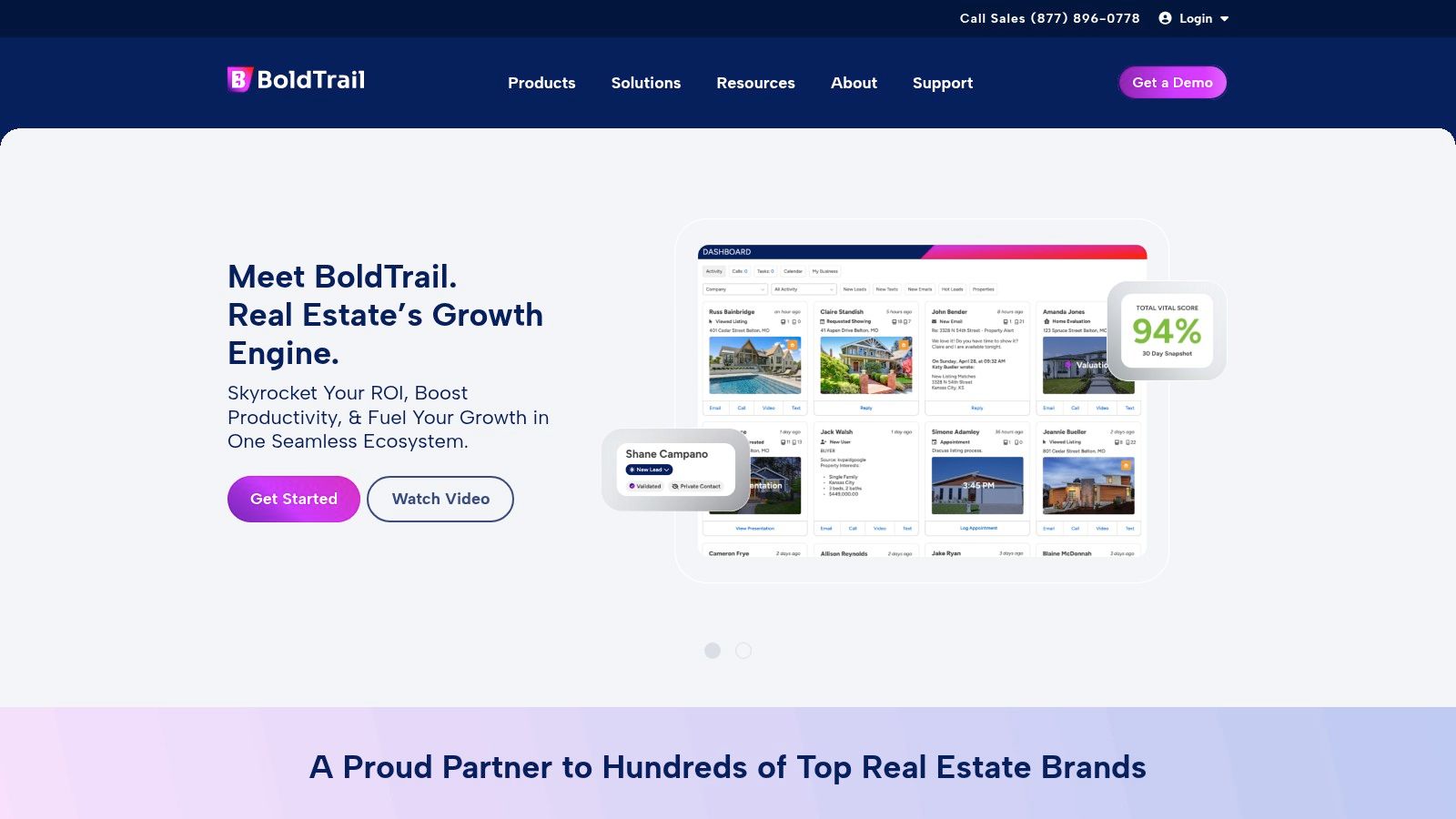
    • BoldTrail (formerly kvCORE): An enterprise-grade platform with an AI-powered Smart CRM that automates lead nurturing and triggers intelligent marketing campaigns based on user behavior.
    • Lofty (formerly Chime): An end-to-end real estate solution with a built-in AI Marketing Assistant for creating social media content, blog posts, and ad copy directly within the CRM.

    Visual & Media Enhancement Tools

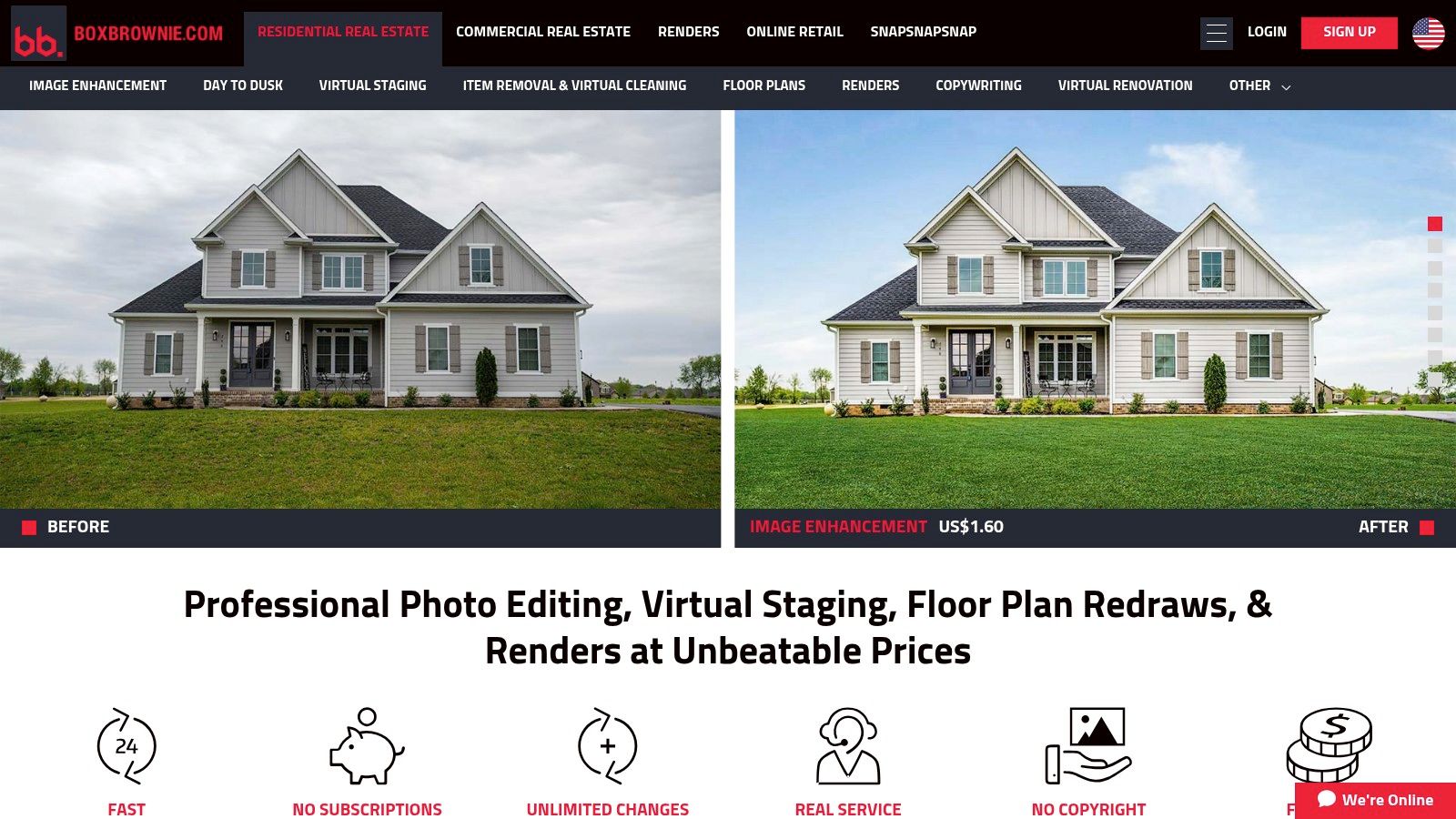
    • BoxBrownie: A service for professional photo enhancements, including virtual staging, item removal, and day-to-dusk conversions, blending AI assistance with human editors.
    • CubiCasa: An AI-powered app that creates 2D and 3D floor plans from a simple smartphone video scan of a property.
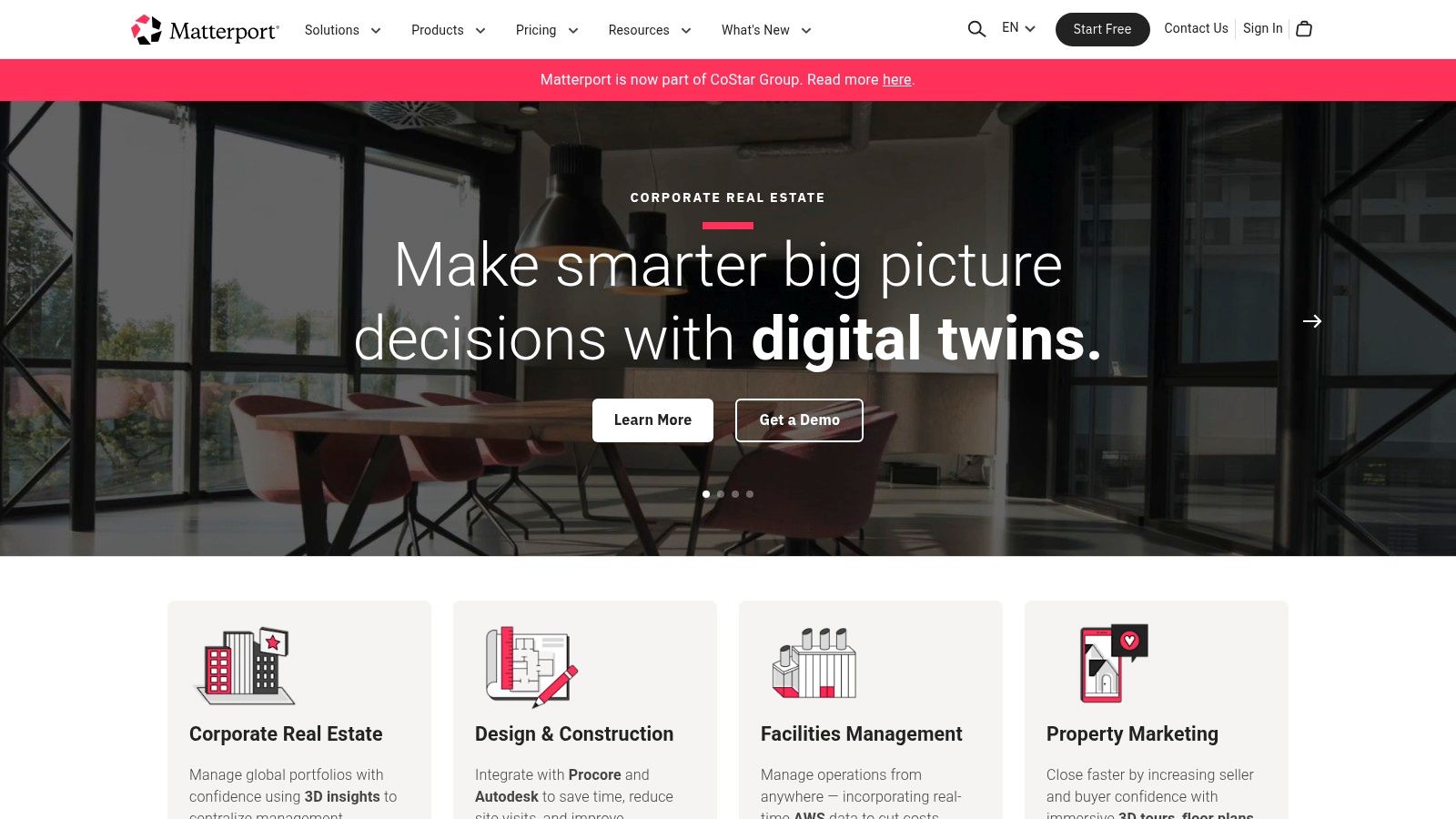
    • Matterport: A platform for creating immersive 3D virtual tours ("digital twins") with AI features that automatically label rooms and provide measurements.
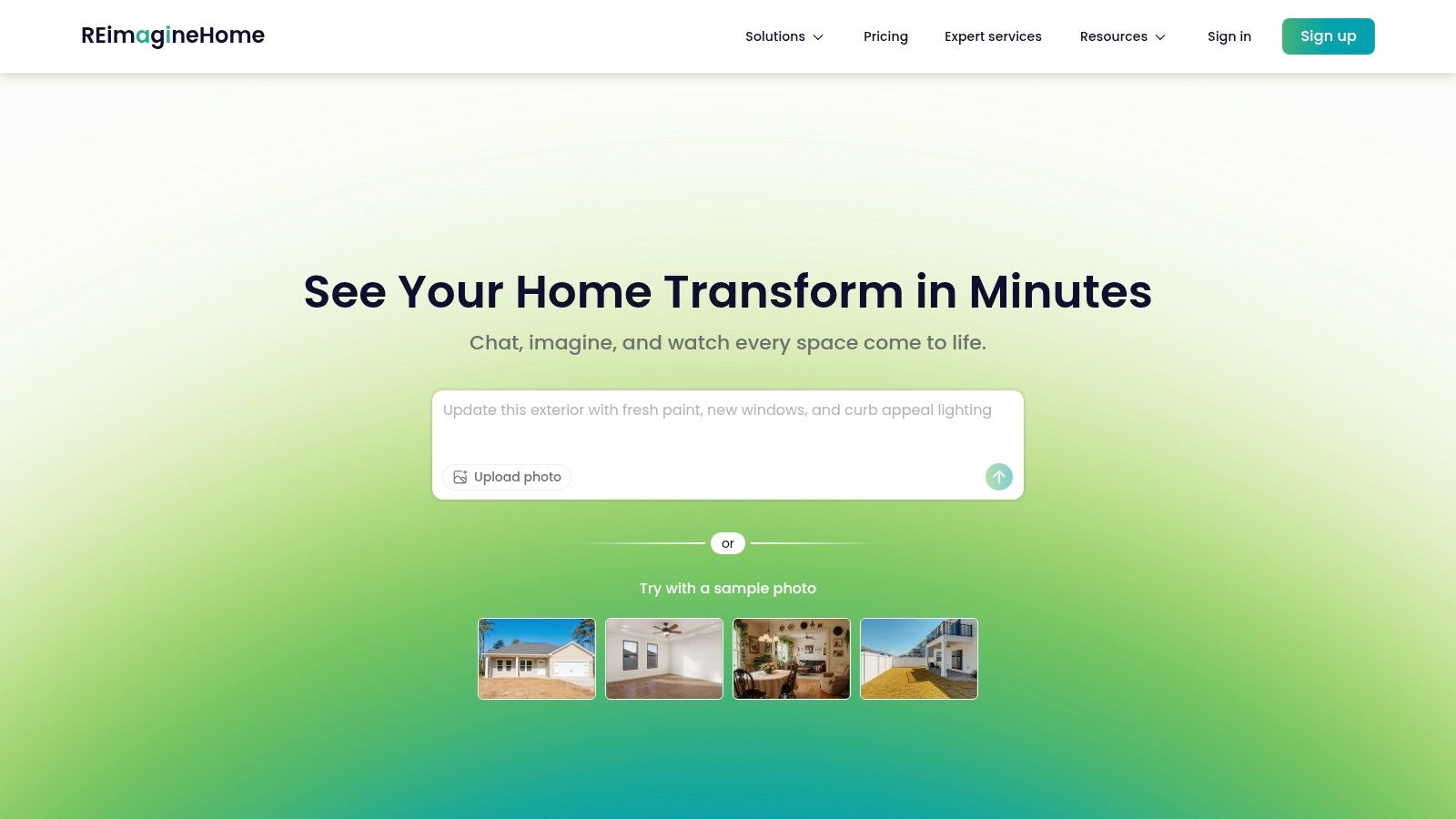
    • ReimagineHome: An AI design tool for virtual staging, decluttering, and visualizing renovations like new flooring or kitchen updates.
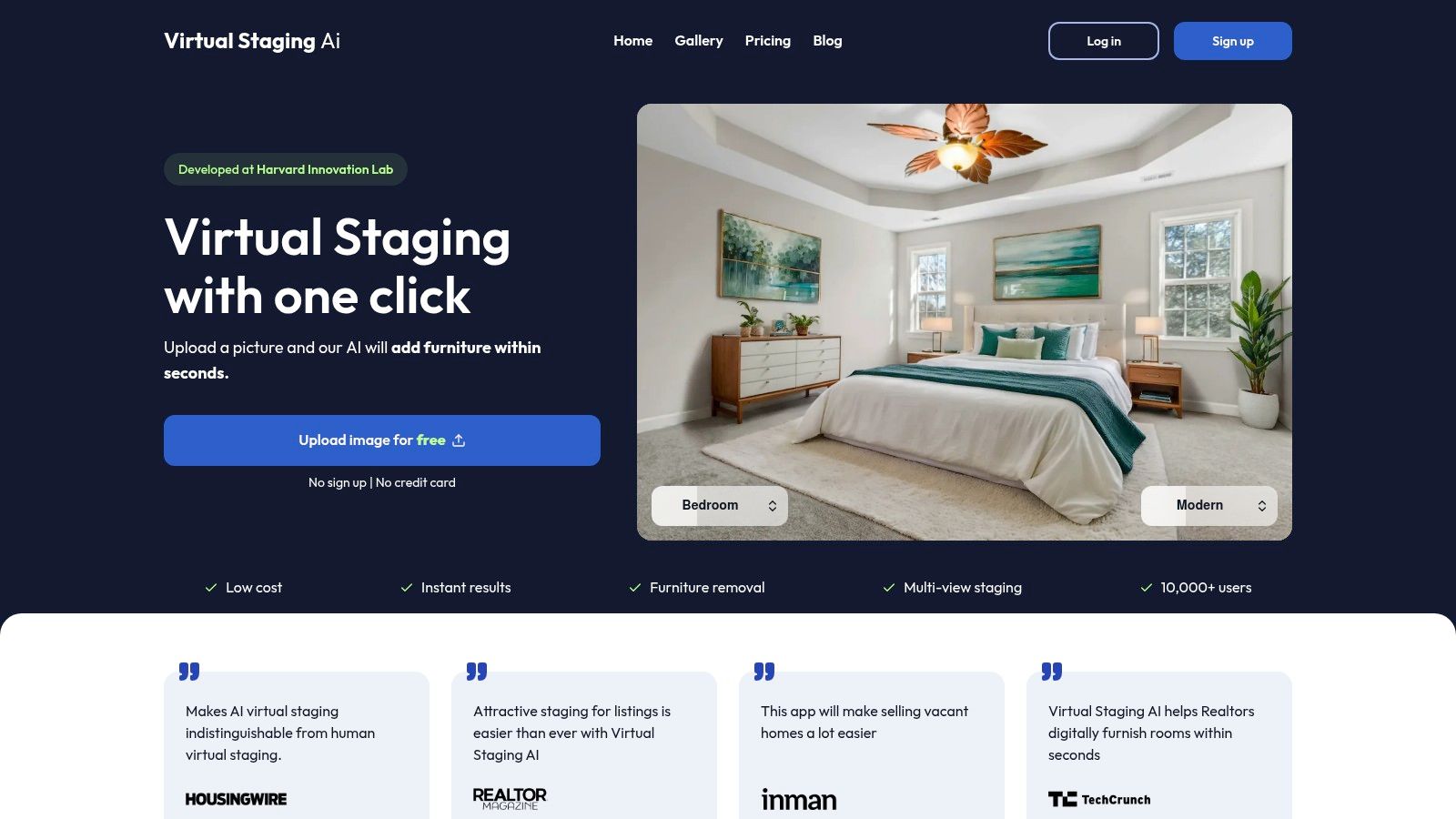
    • Virtual Staging AI: A self-serve platform that uses AI to instantly furnish photos of empty rooms, offering a subscription-based model.

    Data & Market Analysis Tools

    • Restb.ai: A computer-vision AI platform used by MLSs and large brokerages to automatically analyze and tag property photos for features, compliance, and enhanced search.

    Below are more detailed descriptions of some of the tools mentioned above.

    BoldTrail (formerly kvCORE)

    BoldTrail, the platform formerly known as kvCORE, is an enterprise-grade ecosystem from Inside Real Estate designed for brokerages and large teams. It centralizes an agent's entire workflow, integrating an IDX website, a powerful Smart CRM, and comprehensive marketing automation into a single front-office solution. This platform stands out by embedding AI not just as a feature, but as the connective tissue across its entire suite of tools, from lead follow-up to back-office management.

    BoldTrail (formerly kvCORE)

    Unlike standalone AI tools for real estate agents that solve a single problem, BoldTrail aims to be the all-in-one operating system. Its AI-powered Smart CRM automatically analyzes lead behavior, suggests optimal times for contact, and triggers intelligent marketing campaigns, saving agents significant manual effort. For brokerages, the integrated BackOffice and recruiting modules use data-driven insights to streamline operations and talent acquisition. The platform's extensive adoption, including a notable rollout with RE/MAX, speaks to its scalability and industry trust.

    Website: https://boldtrail.com/

    Lofty (formerly Chime)

    Lofty, the platform previously known as Chime, is an end-to-end real estate solution designed with a mobile-first workflow and a deeply integrated AI marketing assistant. It combines lead generation via IDX websites, a comprehensive CRM, and powerful marketing automation tools into a single ecosystem. Lofty distinguishes itself by embedding practical AI tools for real estate agents directly into their daily marketing and client management tasks, making advanced technology accessible on the go.

    Lofty (formerly Chime)

    Unlike platforms that bolt on AI as an afterthought, Lofty's AI Marketing Assistant is a core component used for creating social media content, blog posts, and ad copy. This allows agents to execute sophisticated digital marketing campaigns directly from their CRM. The system focuses on the entire lead lifecycle, from initial capture on a Lofty-powered website to long-term nurturing via automated, AI-driven communication, all manageable from its mature mobile app.

    Website: https://lofty.com/

    RPR (Realtors Property Resource)

    Realtors Property Resource (RPR) is a comprehensive data and reporting platform provided as an exclusive benefit to members of the National Association of REALTORS®. While known for its property data, RPR has integrated AI to streamline content creation for its members. The standout feature, an AI ScriptWriter, leverages RPR's vast repository of verified MLS and market data to instantly generate marketing assets, positioning it as a unique tool for data-driven agent promotion.

    Unlike general-purpose AI writing tools, RPR's AI works directly from hyper-local, trade-area-specific data that REALTORS® trust. This direct integration means agents can convert complex market trends and property details into ready-to-share social media videos, client presentations, and marketing cards in seconds. By grounding its AI outputs in proprietary, member-only data, RPR offers a level of market-specific accuracy and authority that third-party tools cannot replicate, making it an invaluable resource for NAR members.

    Website: https://www.narrpr.com/

    Restb.ai

    Restb.ai is a computer-vision platform designed specifically for the real estate industry, serving MLSs, portals, and large brokerages. Its core function is to analyze property photos, automatically identifying and tagging rooms, features, and overall property condition. This technology automates critical aspects of listing intake, compliance monitoring, and visual search capabilities, making it an essential back-end tool for data-heavy real estate operations.

    Restb.ai

    Unlike agent-facing AI tools for real estate agents, Restb.ai operates at an enterprise scale to enhance data quality and user experience across entire platforms. By auto-tagging images with details like "hardwood floors" or "natural light," it powers more granular, visual-based property searches. The platform also flags potential MLS and Fair Housing violations in photos, such as brand logos or people, which helps brokerages and MLSs maintain compliance automatically and reduce operational risk.

    Website: https://restb.ai/

    Matterport

    Matterport is the market-leading platform for creating and sharing immersive 3D virtual tours, often referred to as "digital twins." It allows agents to capture a property's complete layout and feel, offering prospective buyers an interactive walkthrough experience from anywhere in the world. The platform has evolved beyond simple tours by incorporating AI-enhanced "Property Intelligence" to automatically identify and label rooms, measure spaces, and generate photo galleries from the 3D scan.

    Matterport

    Unlike basic video tours, Matterport provides a true-to-life spatial model that buyers can navigate at their own pace. Its AI capabilities streamline the post-capture process, saving time on manual labeling and photo selection. With broad support across multiple capture devices, from professional cameras to smartphones, and wide adoption by major MLSs and real estate portals, Matterport has become a standard for modern listing presentations. The platform's tiered subscription model offers solutions for individual agents and large-scale enterprises.

    Website: https://matterport.com/

    CubiCasa

    CubiCasa transforms a standard smartphone into a powerful floor plan generator, leveraging AI to produce professional 2D and 3D layouts from a simple 5-minute video scan of a property. This tool automates what was once a time-consuming and expensive process, making floor plans an accessible and standard part of any listing package. Its primary value lies in its speed, simplicity, and direct integration with many MLS platforms across the U.S.

    What sets CubiCasa apart from other AI tools for real estate agents is its singular focus on a high-demand listing asset. Instead of tackling broad marketing or CRM functions, it solves one problem exceptionally well. Many agents gain access to its free "Lite" version directly through their MLS membership, removing any friction to adoption. For a small fee, agents can upgrade to receive detailed GLA (Gross Living Area) reports, furnished 3D plans, and other assets that elevate a listing's appeal to prospective buyers.

    Website: https://www.cubicasa.com/

    BoxBrownie

    BoxBrownie is a specialized media editing service that enhances listing photography using a blend of AI-assisted and human-touch-up processes. It offers a suite of a-la-carte services like virtual staging, day-to-dusk conversions, item removal, and virtual renovations, all designed to make property photos more appealing. The platform stands out by offering professional-grade edits with a simple, per-image pricing model and fast turnarounds, often within 24 hours.

    BoxBrownie

    Unlike fully automated AI photo editors that may produce inconsistent results, BoxBrownie provides a service-based solution where agents submit their images for specific enhancements. This model is ideal for agents who need high-quality, reliable results for critical marketing assets without committing to a monthly software subscription. Agents use it to digitally furnish empty rooms, clean up cluttered spaces by removing unwanted items, or showcase a property’s potential with a virtual renovation, directly addressing buyer visualization challenges.

    Website: https://www.boxbrownie.com/

    Virtual Staging AI

    Virtual Staging AI is a self-serve platform that uses artificial intelligence to digitally furnish photos of empty properties, transforming them into appealing, staged images. It offers a low-cost, predictable alternative to traditional staging or per-image virtual staging services. The platform is designed for rapid turnarounds, allowing agents to upload vacant room photos and receive staged versions in seconds, ready for MLS listings, social media, and marketing materials.

    Virtual Staging AI

    Unlike manual services that can take days, Virtual Staging AI delivers instant results through a subscription model, which is a key differentiator. Agents can choose from tiered monthly plans based on their typical listing volume, providing budget predictability. This makes it one of the more accessible AI tools for real estate agents who need to consistently market properties without incurring high, variable costs for each new listing.

    Website: https://www.virtualstagingai.app/

    ReimagineHome

    ReimagineHome is an AI-powered design studio built to enhance real estate listing media. It moves beyond simple virtual staging, offering a comprehensive suite of tools for agents to visually transform properties. This platform allows users to declutter rooms, redesign kitchens, swap out flooring, improve curb appeal with landscaping edits, and even add features like pools, all from a single interface. It’s designed for agents who want to help potential buyers visualize a home's full potential, not just its current state.

    ReimagineHome

    Unlike traditional staging services, ReimagineHome uses generative AI to create multiple design variations quickly. Agents can use its conversational AI to describe desired changes, making the creative process more intuitive. This makes it one of the more versatile ai tools for real estate agents looking to create compelling before-and-after marketing assets, show renovation possibilities, or simply present a vacant home in its best light. The platform provides a powerful way to address buyer objections about a home's cosmetic flaws directly within the listing photos.

    Website: https://www.reimaginehome.ai/

    Canva

    Canva has become the go-to design platform for agents who need professional-grade marketing materials without the steep learning curve of traditional graphic design software. While not a real estate-specific tool, its massive library of templates for flyers, postcards, social posts, and presentations makes it indispensable. The platform's "Magic" suite introduces AI tools for real estate agents, including text and image generators, to speed up content creation.

    Canva

    Unlike dedicated real estate marketing platforms, Canva's strength lies in its versatility and affordability. An agent can quickly create an entire suite of branded collateral for a new listing, from social media announcements to printed "just listed" mailers, all within a single interface. Features like Brand Kits ensure consistency across all assets, while Magic Resize instantly adapts a design for different platforms, saving hours of manual work. The optional print and fulfillment service further streamlines an agent's marketing workflow.

    Website: https://www.canva.com/

    OpenAI ChatGPT

    OpenAI's ChatGPT is a general-purpose AI assistant that has become one of the most widely adopted AI tools for real estate agents due to its versatility and accessibility. Unlike industry-specific platforms, ChatGPT acts as a flexible creative partner, capable of drafting compelling listing descriptions, scripting social media video content, brainstorming ad copy, and composing professional client emails. Its conversational interface allows agents to refine outputs with simple follow-up commands, making it an excellent tool for on-the-fly content creation and problem-solving.

    OpenAI ChatGPT

    The platform's power lies in its adaptability. An agent can start by generating a property description, then ask the AI to repurpose it into a short blog post, a series of tweets, and talking points for a client presentation, all within a single conversation. With paid plans like ChatGPT Plus, agents gain access to more advanced models (like GPT-4), web browsing for current market data, and the ability to upload files or images for analysis. This makes it a powerful, multi-functional asset for agents who are comfortable with prompt engineering.

    Website: https://openai.com/chatgpt

    Choosing the Right AI Tools for Your Real Estate Business

    The landscape of real estate is rapidly evolving, and the integration of artificial intelligence is no longer a futuristic concept but a present-day reality. Throughout this guide, we've explored a wide spectrum of AI tools for real estate agents, from comprehensive CRMs to specialized solutions for visual marketing. The common thread is clear: AI is not here to replace agents but to empower them, automating tedious tasks and unlocking new levels of efficiency and marketing sophistication.

    The key takeaway is that the right technology acts as a force multiplier, giving you back your most valuable asset: time. This reclaimed time can be reinvested into high-touch, relationship-building activities that AI cannot replicate, such as client consultations, negotiations, and community engagement.

    A Strategic Framework for AI Adoption

    Integrating AI into your business is fundamentally a strategic decision. The sheer number of options can feel overwhelming, but a methodical approach will ensure you invest in solutions that deliver a tangible return. Start by performing a simple audit of your daily and weekly workflow.

    Identify the biggest bottlenecks and points of friction.

    • Time-Consuming Tasks: Are you spending hours writing and rewriting property descriptions for different platforms?
    • Marketing Inconsistencies: Do you struggle to maintain a consistent, high-quality social media presence for your listings?
    • Preparation Overload: Is the process of preparing for a listing appointment a major time sink?
    • Lead Nurturing Gaps: Are potential leads falling through the cracks because you lack an automated follow-up system?

    Your answers to these questions will point you toward the right category of tools.

    Implementation and Evaluation: Start Small, Scale Smart

    The most effective approach to adopting new technology is incremental. Resist the temptation to overhaul your entire tech stack at once. Instead, select one or two AI tools that solve your most pressing, recurring problems.

    Consider these factors during your evaluation:

    • Ease of Use: How intuitive is the platform? A tool with a steep learning curve can create more friction than it resolves.
    • Integration Capabilities: How well does the tool play with your existing systems, such as your CRM, MLS, or social media scheduling tools?
    • Specific Use Case: Does the tool solve a niche problem exceptionally well, or is it a generalist platform? Agents evaluating AI tools for real estate often use a mix of general-purpose writing tools and industry-specific platforms. General AI tools can help with drafting, but real estate–specific platforms tend to focus on MLS formatting, platform-specific descriptions, and presentation materials. Tools in this category include options like ListingBooster.ai, which focuses on structured listing content and presentation prep, as well as broader marketing automation platforms agents use for social and content workflows.
    • Return on Investment (ROI): Your ROI isn't just financial. Measure it in hours saved, quality of marketing materials produced, and consistency achieved.

    The ultimate goal is to build a tech stack that supports your unique business objectives, enhances your professional brand, and allows you to focus on what you do best: building meaningful relationships and closing deals.

    Note: This article lists commonly used AI tools for real estate agents for informational purposes. Inclusion does not imply endorsement, and agents should evaluate tools based on their own workflow and market needs.

    Article created using Outrank