Tag: instagram for agents

  • 7 Pro Instagram Captions for Real Estate Agents

    7 Pro Instagram Captions for Real Estate Agents

    Are your Instagram posts generating anything beyond likes from other agents? Most real estate feeds still lean on generic listing copy, broad lifestyle claims, and captions that read like cut-down brochures. That approach fills space, but it rarely builds authority, creates urgency, or gives a serious buyer a reason to act.

    Good Instagram captions for real estate agents do more than describe a property. They help a buyer understand what matters, they help a seller see how you market, and they give your audience a reason to reply, click, save, or book a showing. They also need to stay inside Fair Housing rules, which means every word has to be intentional.

    In a crowded feed, specificity wins. One source on real estate caption writing notes that Instagram truncates text around 125 characters on mobile devices, so the hook needs to carry the post before the cutoff. The same guide also recommends keeping the overall caption under 220 characters when you want a tight, mobile-first post, and using a 3-3-3 structure to stay concise and readable in-feed through real estate caption best practices for mobile visibility. That matters because buyers skim first.

    If you're also producing video, tighten the caption even more. Pairing short copy with a quick property reel often works better than a long, brochure-style paragraph under a static image. If your team is also adding captions for social media, keep the on-screen text and the written caption aligned so the message feels consistent.

    Here are the seven caption types every listing pipeline needs.

    1. Just Listed

    A modern single-story house with white stucco, dark trim, and a manicured lawn at sunset.

    A strong just-listed caption introduces the property with facts a buyer can verify. Beds, baths, square footage, lot size, year built, and dated updates give people something concrete to react to. Vague praise doesn't.

    A weak version says the home is “stunning” or “perfect for families.” That second phrase is especially risky. Fair Housing rules require you to describe the property, not the type of person who should live there. If you're writing Instagram captions for real estate agents, this is one of the first habits to fix.

    What to lead with

    Try this format:

    Practical rule: New listing captions work best when the first line contains the most decision-driving facts, not your excitement.

    “Just Listed. 4 bed | 2.5 bath | 2,340 sq ft | 0.33-acre lot. Built 2008. Roof replaced 2019. Hardwood on main level. Private showings available.”

    That works because it lets the buyer sort quickly. It also helps the seller see that your marketing is precise.

    • Use dated updates: “Kitchen renovated 2022” lands better than “updated kitchen.”
    • Keep features scannable: Line breaks make specs easy to skim on mobile.
    • End with one action: “Schedule a showing” is better than stacking multiple asks.

    Here's a simple example:
    “New to market. Corner lot. 3 bed, 2 bath, 1,850 sq ft. Electrical panel updated in 2021. Kitchen renovation completed in 2022. Showing appointments available this weekend.”

    What to avoid

    Don't write copy that sounds like a flyer from fifteen years ago. “Dream home,” “won't last,” and “must see” can still appear occasionally, but they can't carry the whole post.

    Also avoid resident-language shortcuts. Under Fair Housing guidance, agents should focus on objective property features such as #openfloorplan, #updatedkitchen, or #walkinglocation and avoid hashtags that imply protected classes or preferences, according to Fair Housing hashtag guidance for real estate professionals.

    If you want help systematizing this, a purpose-built social media tool for realtors can help you turn listing facts into channel-ready captions without sounding generic.

    2. Open House

    A welcoming front porch featuring a dark wood door, a potted plant, and a brown doormat.

    What makes someone show up to an open house instead of saving the post and forgetting about it?

    Usually, it is clarity. Open house captions perform best when they remove small points of hesitation before the prospect has to ask. Time, date, address, parking instructions, entry details, and one reason to visit in person should all be in the caption. This stage of the listing lifecycle is less about broad awareness and more about attendance conversion.

    A practical version looks like this:

    “Open House Sunday, 2 to 4 PM at 1247 Oakridge Drive. Street guest parking only. Please enter through the front door. Renovated kitchen, large primary suite, and deck access off the main living area. DM for a private showing if you want a quieter tour.”

    That format works because it answers operational questions and gives buyers a low-friction next step. It also sets expectations for the seller. The post is doing real appointment-setting work, not just filling the feed.

    Write for attendance, not admiration

    Open house captions need a different balance than just listed posts. The goal is not to restate every spec. The goal is to get the right people through the door with fewer back-and-forth messages.

    Include the details that affect turnout:

    • Time and date first: Put the event window near the front so it is visible before the caption truncates.
    • Access instructions: Parking, gate codes, side-entry directions, or elevator notes save time for everyone.
    • One or two in-person draws: Use features buyers will want to experience live, such as natural light, yard layout, ceiling height, or a new kitchen.
    • One CTA only: “Stop by Sunday” or “DM for a private showing” is enough.

    If the logistics are inconvenient, say so plainly. Limited parking, a steep driveway, condo check-in requirements, or shoe covers at entry can all affect turnout. Clear captions filter out casual visitors and reduce no-show follow-up.

    Compliance and tone matter here

    Open house posts can drift into pressure language fast. Avoid captions that suggest urgency without substance or imply who should live there. Keep the copy focused on property facts, event details, and access.

    A stronger open house CTA sounds like this:

    • Attend the event: “Join us Sunday from 2 to 4 PM.”
    • Request an alternative: “DM to schedule a private tour before or after the open house.”
    • Ask for prep material: “Message for the disclosures and feature sheet before you visit.”

    Short, conversational sentences usually fit this format best because buyers are scanning on mobile while deciding whether the trip is worth it. If you use AI to draft these posts, build the prompt around five fields: event time, address, access notes, top features, and CTA. That workflow produces faster approvals and fewer edits than asking for a generic “exciting open house caption.”

    3. Price Improvement
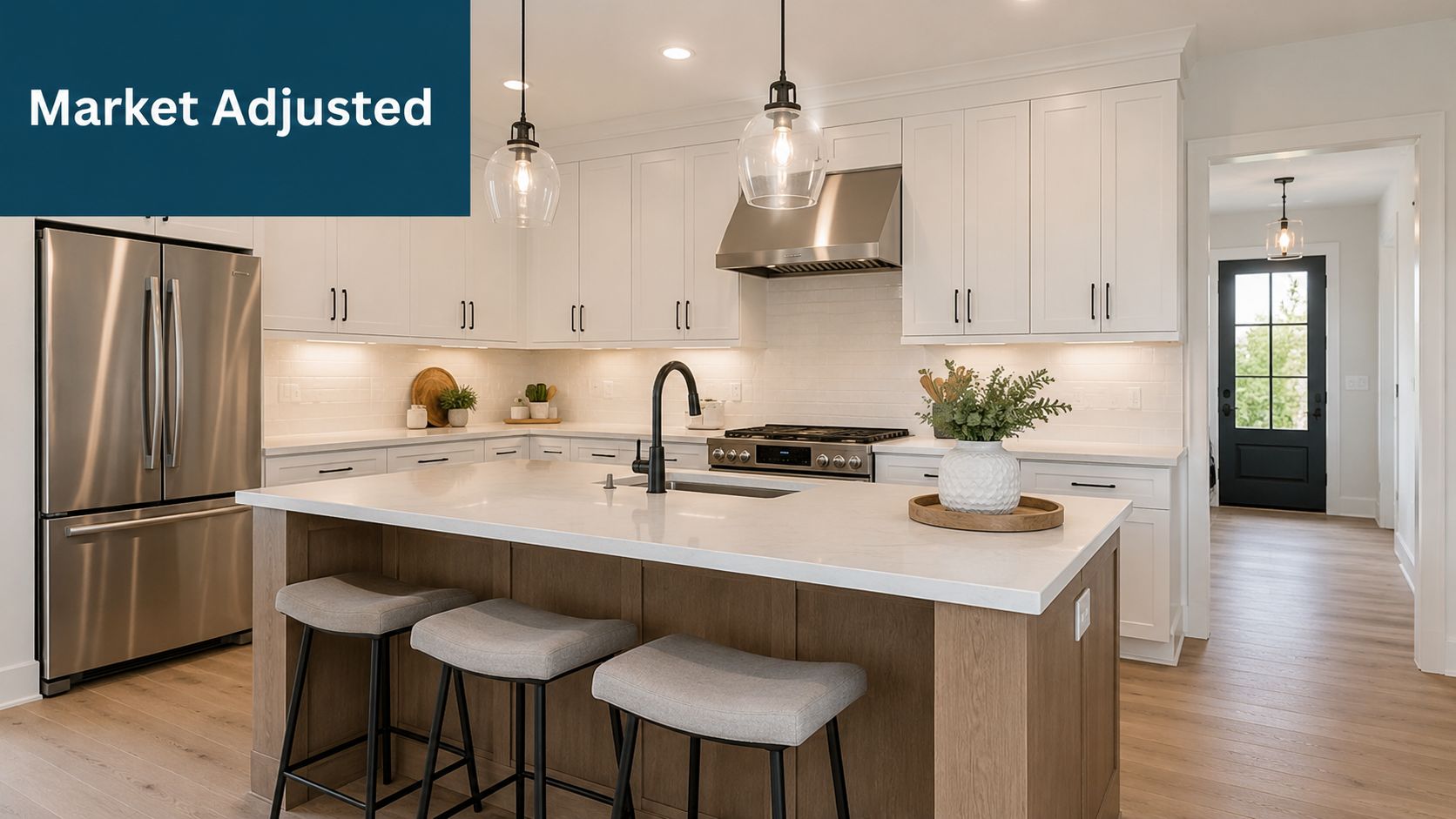
    A modern kitchen with white cabinetry, a wooden island with bar stools, and stainless steel appliances.

    A price improvement post shouldn't read like an apology. It should read like a market-based repositioning. Buyers can feel the difference immediately.

    The wrong approach is defensive. “Huge reduction!!! Seller motivated!!!” signals weakness and can drag down perceived value. A better caption frames the change as a strategic move tied to current conditions or feedback.

    Reposition the listing without sounding desperate

    A cleaner version looks like this:

    “Price Improvement. 456 Maple Court is now offered at $389K. After reviewing recent comparable activity and buyer feedback, the home has been repositioned for the current market. Updated kitchen, refreshed systems, and weekend showing times available.”

    That keeps the tone steady. It doesn't pretend nothing changed, but it also doesn't create unnecessary concern.

    Use words like “market-aligned,” “repositioned,” or “adjusted.” Skip “cheap,” “affordable now,” or anything that sounds like a clearance sale.

    • Lead with reason: Mention comparable sales, buyer response, or market alignment.
    • Then restate value: Bring the focus back to features and access.
    • Finish with one next step: Usually a showing CTA works best.

    Status-specific CTA rules

    Price improvement captions should push toward renewed consideration. They work best when the CTA invites a fresh look.

    Examples:

    • For watchers: “If you've been tracking this one, now's the time to take another look.”
    • For active buyers: “Schedule a private showing this week.”
    • For agents: “Reach out for current details and availability.”

    Buyers don't need drama in a repricing post. They need a reason to revisit the listing.

    This is also where a real-estate-specific writing workflow helps. Generic AI tools often default to hype language. A focused tool can make repricing copy sound measured, confident, and usable without endless rewriting.

    4. Pending

    Pending captions are social proof posts disguised as status updates. They tell future sellers that your listings move, but they also require restraint. Oversharing terms, timelines, or negotiation details can create problems.

    A pending post should celebrate the milestone while protecting the transaction. That means no appraisal details, no financing commentary, and no play-by-play on contingencies unless the deal is fully closed and disclosure is appropriate.

    Build trust without exposing the deal

    A clean pending caption might say:

    “Pending. 1247 Oakridge Drive is now under contract. Grateful to the sellers for the trust and excited for what's next. If you're thinking about listing this season, reach out for a pricing and prep conversation.”

    That works because the message is clear, positive, and controlled. It doesn't turn a private transaction into content bait.

    The strongest psychological trigger here is credibility. People scrolling your profile aren't just reacting to the house. They're assessing whether you know how to manage momentum.

    The CTA should pivot toward sellers

    Pending posts aren't usually the place for aggressive buyer calls to action. The better move is a soft seller-facing prompt.

    Use CTA language like:

    • Seller conversation: “Thinking about listing? Let's talk timing and pricing.”
    • Pipeline builder: “Curious what your property could look like on the market right now?”
    • Light inquiry: “Send a message if a move is on your radar.”

    Under Section 804(c) of the Fair Housing Act, it is illegal to make, print, publish, or cause to be published any housing notice that indicates a preference, limitation, or discrimination based on protected classes, as outlined in the National Fair Housing Alliance advertising guidance. That applies to status posts too.

    So if you're tempted to add language about who this home was “perfect” for, cut it. Pending captions are strongest when they stay factual and restrained.

    5. Sold

    A sold caption is where you can lean into proof. The deal is closed. The result is real. Your Instagram feed begins functioning like a public track record.

    Still, there's a difference between useful proof and noisy self-congratulation. Good sold captions mix outcome, gratitude, and one practical takeaway. Weak ones sound like generic victory laps.

    Lead with the strongest result

    If the strongest part of the story is speed, lead with speed. If it's price positioning, lead with that. If it's repeat activity in the same area, that can work too.

    Example:
    “Sold. 1247 Oakridge Drive closed at $505K after 18 days on market. Thankful for the trust from the sellers and glad to help bring this one to the finish line. If you want a realistic pricing strategy for your home, send a message.”

    That caption gives a concrete result and a relevant next step. It also stays focused on service, not ego.

    Closed deals are your most believable marketing asset. Use them to demonstrate judgment, not just volume.

    Make the post do more than celebrate

    Sold posts can also educate. If you handled staging, prep, pricing strategy, or negotiation structure well, you can mention that in plain terms without overexplaining.

    A few useful angles:

    • Process angle: “Strong prep and clean launch materials helped this home present well.”
    • Market angle: “Pricing discipline mattered more than overreaching at launch.”
    • Client angle: “Clear communication kept the transaction moving.”

    This is also a practical place to tighten your workflow. If you're posting multiple listing statuses every week, listing to social media campaign automation can help keep sold posts consistent with the rest of your pipeline.

    One caution. Don't overload your feed with sold graphics and identical captions. A steady rhythm works better than repetition, especially if each post adds a slightly different lesson or proof point.

    6. Coming Soon

    Coming soon is a teaser format, not a full reveal. The goal is to create anticipation without giving away every important detail before launch.

    A lot of agents either say too little or too much. Too little and nobody cares. Too much and you've already spent the listing's best attention before it goes live. The sweet spot is a few high-interest details plus a clear release point.

    Tease the right details

    A useful coming soon caption sounds like this:

    “Coming Soon. Launching Friday at 9 AM. 4 bed, 2.5 bath on a corner lot with original hardwoods and a renovated kitchen. Want the full details as soon as it goes live? Message for first-look access.”

    That creates a clock. It also gives enough substance to attract the right buyer without turning the post into a full listing sheet.

    What works well in this format:

    • Three details max: For example, lot position, one major update, and one design feature.
    • A real date or launch window: “Soon” by itself is too vague.
    • An access CTA: Invite people to request the listing once it's active.

    CTA rules for pre-launch posts

    The CTA on a coming soon post should center on interest capture, not full transaction steps. Ask for a DM, a waitlist reply, or a request for launch-day details.

    Good examples:

    • First-look CTA: “Reply for launch-day details.”
    • Showing CTA: “Ask about early access if available.”
    • Save CTA: “Save this post and check back Friday morning.”

    This is one place where your listing content and your social content should work together. If your property description is already strong, the caption becomes easier to write. If it isn't, your teaser post often turns into fluff. Reviewing a few listing description examples that sell can help you identify which details are worth teasing before launch.

    Also make sure the launch date is real. Nothing erodes trust faster than a coming soon post that drifts.

    7. Market Update

    A clean office workspace with a laptop, documents, charts, and coffee on a wooden desk.

    What makes a market update caption worth reading instead of scrolling past?

    A strong one gives people context they can use now. For agents, this caption type sits in the trust-building stage of the listing lifecycle. It keeps your name in front of past clients, future sellers, and buyers who are still watching from the sidelines. The post should do three jobs at once: summarize one or two local shifts, explain what changed, and translate that into a practical next step.

    The mistake I see often is simple. Agents post a chart, add "market update," and stop there. That rarely drives saves, replies, or listing conversations because the audience has to do the analysis themselves.

    Use a structure that moves from fact to implication to action.

    A practical example:
    “Market update for [Your Area]: inventory is up from this time last year, and homes are taking longer to go under contract. Sellers need sharper pricing and stronger presentation to stand out. Buyers have more room to compare options before writing. Want a custom read on your street, condo building, or price range? Send a message.”

    That format works because it answers the question behind the metric. A buyer does not care about inventory in the abstract. A seller does not care about days on market unless you explain how it affects pricing, prep, or negotiation strategy.

    For market captions, a simple framework helps:

    • Fact: Share one current local stat or trend
    • Meaning: Explain what changed in plain language
    • Action: Give buyers or sellers one clear next step

    That is also where AI can save time without making the post sound generic. Feed your monthly local numbers into your workflow, ask for three audience versions, one for buyers, one for sellers, and one for homeowners considering a move, then edit for accuracy and tone. The draft gets faster. The judgment still needs to be yours.

    Keep it compliant and useful

    Market updates usually carry less risk than listing promotion, but they still need Fair Housing discipline. Avoid language that suggests who belongs in an area or what kind of resident a property or neighborhood is for.

    According to Fair Housing compliant copywriting guidance for real estate marketing, agents should describe physical features and amenities such as ground-floor units, elevator access, or ADA-compliant features rather than implying who the ideal resident is.

    Apply that same standard to market commentary. Focus on inventory levels, price movement, housing stock, commute access, development activity, and built amenities. Leave out claims like “great for families,” “safe neighborhood,” or references to religious institutions and demographic assumptions.

    Done well, market updates are not filler content. They are one of the few caption types that can build authority between listing announcements and keep your pipeline warm without sounding promotional.

    7-Scenario Instagram Caption Comparison

    Post Type Implementation Complexity 🔄 Resources & Timing ⚡ Expected Outcomes 📊 Ideal Use Cases 💡 Key Advantages ⭐
    Just Listed: Feature-Forward Property Introduction Low–Medium, template-driven; requires factual verification Fast to produce; post within 24 hours; needs photos + MLS link High immediate reach, saves, and shares; algorithm-friendly New listings, bulk-posting, broad buyer/investor audiences Urgency + compliance-focused facts; scalable with templates
    Open House: Time-Sensitive Invitation with Logistics Medium, logistics and live monitoring required Time-sensitive (post 3–4 days prior + day-of); needs signage and staff Highest engagement; drives foot traffic and on-site leads Event-driven listings, local buyer markets, high-visibility homes Converts online interest into in-person visits and referrals
    Price Improvement: Repositioning Without Appearing Desperate Low, tone-sensitive messaging and market rationale Quick after MLS price change; may require CMA or chart Re-engages previously interested buyers; revives listing activity Underperforming listings or to target saved-search buyers Data-led framing that maintains credibility and trust
    Pending: Building Social Proof While Protecting Deal Integrity Low, brief status update with cautious tone Post promptly after status change; minimal assets required Builds social proof with moderate engagement; lower risk content High-transaction agents needing frequent proof of activity Credibility builder without revealing sensitive deal terms
    Sold: Leveraging Closed Transaction for Maximum Credibility Medium, requires closed escrow and permission to publish Post within 24 hours of close; needs final metrics/photos Highest trust and lead-generation; strong social proof results Demonstrating track record to attract future sellers Definitive proof of results; converts referrals and listings
    Coming Soon: Creating Anticipation Without Premature Launch Medium, coordination with seller/MLS and controlled disclosure Timing-sensitive (3–7 day window); use landing page to capture leads Generates pre-launch interest and VIP lead lists High-value, unique, or low-inventory listings where buzz matters Builds anticipation and early buyer lists before MLS launch
    Market Update: Positioning Authority Through Data-Driven Insights Medium, requires accurate data sourcing and regular cadence Recurring effort (weekly/monthly); infographic preparation helpful Builds long-term authority and shareable engagement Thought leadership, nurturing passive audience, cross-platform use Positions agent as expert; content repurposable for email/LinkedIn

    Your AI-Powered Content Command Center

    These seven caption types cover the full listing lifecycle. If you can write each one clearly, your Instagram feed starts doing real work. It introduces inventory, drives event attendance, reframes price changes, builds social proof, and reinforces your market authority.

    The challenge isn't understanding the categories. It's executing them consistently while you're handling listings, clients, contracts, and showings. That's where most agents fall back into generic copy. They don't need more ideas. They need a faster system for turning listing facts into usable content.

    There's also a real trade-off between speed and compliance. Generic AI tools can produce a decent-sounding caption quickly, but they often miss the details that matter in real estate. They may default to broad lifestyle wording, overstate urgency, or use phrasing that creates Fair Housing risk. A purpose-built workflow is more useful because it starts with the structure of the listing itself and the actual status of the property.

    That's where a platform like ListingBooster.ai fits naturally. It's built around real estate use cases such as just listed, price changes, open houses, pending updates, sold posts, and market content, rather than trying to force a general writing tool into a specialized compliance-heavy workflow. For agents and teams, that means less time rewriting and less guesswork about what to post next.

    There's a bigger efficiency gain too. Once you know what each caption type should accomplish, you can batch decisions. Which feature leads. Which CTA belongs to that listing status. Which details are safe and useful. Which posts are better short because mobile users skim before they click “more.” If your team is also integrating AI into your social media workflow, the win isn't just speed. It's consistency.

    Start small. Pick one live or upcoming listing and write the full lifecycle: coming soon, just listed, open house, price improvement if needed, pending, sold, plus one market update tied to the same area. Review each caption for clarity, compliance, and next-step logic. You'll see quickly which posts move conversations forward.


    If you want a simpler way to turn listing details into compliant social posts, explore ListingBooster.ai. It's designed for real estate agents, teams, and brokerages that want listing descriptions and social content built around actual property status, real workflow needs, and Fair Housing-aware messaging.

  • Automated Instagram Posts for Real Estate Listings Guide

    Automated Instagram Posts for Real Estate Listings Guide

    Juggling listings, clients, and the mountain of paperwork is the reality for every agent. The last thing you have time for is figuring out what to post on Instagram every single day. This is where automation tools like ListingBooster.ai come in, transforming your social media from a daily chore into a lead-generating machine that works for you around the clock.

    It's about making a fundamental shift that frees you up to do what you do best—sell houses.

    The Advantage of Automating Your Real Estate Instagram

    Let's be honest, the pressure to be constantly "on" for social media is a huge time-suck. We've all been there. It’s not really a choice between posting or not posting; it's a choice between two completely different ways of operating your business.

    I see this all the time. On one hand, you have the agent who does everything by hand. They spend hours every week trying to come up with post ideas, write clever captions, and fiddle with graphics. They’re constantly scrambling, their posting is inconsistent, and their feed ends up looking like a random mix of rushed listing photos and generic holiday wishes.

    Then you have the agent who’s embraced automation. They might spend 30 minutes on a Monday morning setting up their entire content calendar. The system handles the rest, generating everything from "Just Listed" carousels to neighborhood deep dives and market updates. While the first agent is stressing, this agent is out showing properties, confident their online presence is firing on all cylinders.

    From Time-Saver to Core Business Strategy

    This is so much more than just getting a few hours back in your week. Viewing Instagram automation as a core part of your business strategy is what separates the top producers from everyone else. They know that consistency is what builds authority and keeps them top-of-mind. Automation is simply the most efficient way to achieve that consistency without giving up your income-producing activities.

    The impact is real and measurable.

    • Skyrocket Your Visibility: A consistent stream of high-quality content tells the Instagram algorithm your account is valuable, pushing your posts out to a wider audience.
    • Create a Lead Pipeline: When you're constantly showcasing new listings and market expertise, you build a reliable source of inbound inquiries.
    • Look Like the Pro You Are: An automated workflow keeps your branding, messaging, and post quality consistently high, cementing your reputation as a go-to expert.

    The real cost of ignoring this is measured in lost leads and missed opportunities. In a market this competitive, the agent who shows up consistently online is the one who gets the call. Automation makes that possible.

    The numbers don't lie. Agents who lean into automation are seeing a massive 300% increase in their Instagram engagement. This is critical, especially when you consider that 52% of buyers now find their homes on social media first.

    Without a system, solo agents are falling behind—only 22% manage to post daily, which leads to 40% fewer leads. Meanwhile, brokerages that adopt these tools are reporting sales cycles that are 25% faster. The proof is in the results. You can discover more insights about how real estate social media automation is changing the game.

    Building Your AI-Powered Content Engine

    Imagine turning a single property URL into a full week of diverse, high-impact Instagram content in just a few minutes. That's the real power of automation—it's not just a time-saver, it’s a full-blown content creation machine. This is what separates agents scrambling for one post from those who have an entire campaign ready to launch.

    I've seen this firsthand with tools like ListingBooster.ai's Listing Commander. All you have to do is feed it a single piece of info, like the Zillow or MLS link for your new listing, and the AI takes over. It doesn't just scrape data; it genuinely understands the property and spins that information into a complete suite of marketing assets, each designed with a specific goal.

    From Listing Details to Persuasive Stories

    The AI’s first job is to move beyond the boring "3 beds, 2 baths" script. It analyzes the listing’s photos, features, and location to write captions that actually connect with buyers. It starts to tell a story.

    Instead of just stats, a caption might paint a picture of the "morning sun that floods the east-facing kitchen, perfect for your first cup of coffee." Or it might mention the home’s proximity to a "top-rated school district and the city's newest dog park." This is the kind of narrative that creates an emotional hook, something raw data can never do. If you want to dive deeper into this, we have a whole guide on the perfect AI caption generator for property listings.

    This flow diagram really illustrates the difference between the old manual grind and a modern, automated approach.

    Process flow diagram showing manual vs. automated steps, highlighting benefits of automation.

    As you can see, this isn't just about saving a few hours. It’s about turning a stressful, disjointed task into a smooth, strategic workflow so you can get back to what matters: your clients.

    Creating a Full Suite of Branded Visuals

    A strong Instagram launch for a new listing needs more than just a single post. A smart AI engine will generate a whole variety of branded visuals for you, automatically.

    This means you get content for every key moment in the listing’s journey:

    • Just Listed Announcements: Bold, eye-catching graphics that make a powerful first impression.
    • Open House Reminders: Posts and Stories designed to get people through the door.
    • Feature Spotlights: Carousel posts or Reels that zoom in on unique selling points, like a renovated kitchen or a stunning backyard.
    • Just Sold Updates: These are fantastic for social proof, showing off your success and attracting new seller leads.

    The best part? Every single asset is created with your branding—your logo, colors, and fonts—baked right in. This is how you build a professional, cohesive feed that makes your brand instantly recognizable.

    A huge benefit that often gets overlooked is peace of mind. The more advanced automation tools have built-in compliance checks that scan captions for language that could violate Fair Housing guidelines. This is a massive safety net, protecting you from potentially costly legal headaches.

    Turning Data Into Authority-Building Content

    The opportunity here goes way beyond individual listings. Real estate is driven by data, and automation is your shortcut to becoming the go-to source for local market insights. NAR stats show that a whopping 96 million US social media users look at real estate content every month. Yet, a surprisingly low 35% of agents use automation, missing out on what could be 2.5x lead growth.

    For instance, ListingBooster.ai's Authority Builder can take market data and spin it into engaging content. Think Reels showing that "Q1 2026 median prices rose 7.2% in Miami" or using psychological triggers like scarcity ("Only 3 homes under $1M left!") to achieve 45% higher save rates. For teams, this is a game-changer. One brokerage survey found that teams using these kinds of tools cut their content creation time by 85%—dropping from 10 hours a week to just 1.5.

    To give you a clearer picture, here’s a breakdown of how one property URL gets transformed into a complete, multi-post Instagram campaign.

    From Listing URL to Full Instagram Campaign

    This table breaks down how a single property listing is transformed into a multi-post Instagram campaign using AI automation, showing the asset type, its purpose, and a sample AI-generated caption concept.

    Instagram Post Type Purpose AI-Generated Content Example
    Just Listed Carousel Announce the new property and showcase its best features with multiple photos. "Welcome to 123 Maple St! ✨ Swipe to tour this stunning 4-bed home with a chef's kitchen and private backyard oasis."
    Open House Reel Drive attendance by creating urgency and excitement with a quick video tour. "This Saturday, 1-3 PM! Don't miss your chance to see this incredible property in person. Tag a friend who's house hunting!"
    Neighborhood Spotlight Sell the lifestyle by highlighting local parks, cafes, and amenities. "Living at 123 Maple means you're just a 5-minute walk from the best coffee at The Daily Grind and beautiful trails at Oak Park."
    "Just Sold" Graphic Build social proof and attract seller leads by celebrating a successful closing. "Another happy client! So thrilled to have helped my sellers get over the asking price for their beautiful home. Who's next?"

    By building this AI-powered content engine, you’re doing more than just putting automated Instagram posts for real estate listings on your feed. You’re creating a scalable system that consistently produces high-quality, compliant, and strategic content that builds your brand and keeps your pipeline full.

    Mastering Your Instagram Publishing Workflow

    A desk with a smartphone showing an Instagram scheduler, laptop, and 'SET & FORGET' sign.

    So, you've got a folder full of great, AI-generated content. That's a huge win, but it's only half the battle. The real magic happens when you connect those assets to a "set it and forget it" publishing system. This is where your automated Instagram posts for real estate listings go from being just files on a drive to a marketing machine that works for you around the clock.

    The goal here is more than just posting. It’s about posting consistently and with a clear strategy, all while freeing yourself from the constant pressure of logging into Instagram. A smooth publishing workflow keeps your feed active and engaging, which the algorithm loves, giving you better organic reach—without you having to scramble to post while you're in the middle of a showing.

    Choosing Your Scheduling Method

    Once your content is good to go, you have a few solid choices for getting it out there. Each one has its quirks, so the best option really depends on your needs, your team's size, and how comfortable you are with technology.

    • Meta Business Suite: This is Meta's own free tool. For a solo agent just getting started, it's fantastic. You can schedule posts, Stories, and Reels to both Instagram and Facebook without spending a dime. It's basic, but you can't argue with the price.

    • Dedicated Scheduling Tools: This is where things get more interesting. Platforms like Later, Buffer, or Sprout Social offer a lot more power. Think visual calendar planning, smart hashtag suggestions, and analytics that dig much deeper than Meta’s. They're ideal for agents who want to fine-tune their strategy and see exactly what's working.

    • Custom Workflows with Zapier: If you're a bit of a tech nerd (like me), you can build some incredible automations with a tool like Zapier. It connects your apps so they can talk to each other. For instance, you could create a "Zap" that automatically drafts a post in your scheduler the moment you add a new listing to a spreadsheet. It's powerful stuff.

    For most agents I talk to, a dedicated scheduler hits that sweet spot between powerful features and ease of use. If you're running a team, looking into a purpose-built social media post scheduler for real estate teams is a smart move for managing approvals and collaboration.

    Building a 30-Day Content Cadence

    Staring at a blank content calendar can be paralyzing. The secret to making automation work is to build a rhythm, or a cadence, that mixes up your content. You can't just spam listings all day—you'll burn out your audience. You need to sprinkle in posts that provide genuine value and cement your status as the local expert.

    A varied feed shows your followers that you're more than a salesperson; you're a resource and a part of the community. It also signals to the Instagram algorithm that you’re creating diverse content, which can give your overall reach a nice little boost.

    Here’s a simple weekly framework you can use as a starting point and repeat over a 30-day period:

    Day Content Theme Example Post
    Monday Market Update "This week's inventory numbers are in for [Your City]! Here's what that actually means for buyers."
    Tuesday New Listing Spotlight "Just Listed! A gorgeous 3-bed bungalow in the heart of [Neighborhood]. Swipe to take a look inside!"
    Wednesday Buyer/Seller Tip "Myth-Busting Wednesday: Do you really need a 20% down payment? Let's break it down."
    Thursday Neighborhood Feature "Can we talk about the best coffee in town? Big shoutout to [Local Cafe Name] in [Neighborhood]!"
    Friday Open House/Weekend Plans "Join me this Saturday from 1-3 PM at 123 Main Street! I'd love to show you around."
    Saturday Client Testimonial "So thrilled for my clients who just closed on their dream home! Here's what they had to say."
    Sunday Personal/Behind-the-Scenes "A peek at how I prep for a busy week. It always starts with strong coffee and a clear plan!"

    This structure ensures you're hitting all the right notes: promotional, educational, and personal.

    Think of your content calendar like a balanced investment portfolio. Listings are your high-growth stocks, but market updates and community spotlights are the stable bonds that build long-term trust and brand equity.

    By doing the heavy lifting upfront—creating the content and then plugging it into a strategic calendar—you get your time back. This system guarantees your online presence is always on, building your brand and pulling in leads while you focus on what really moves the needle: negotiating for your clients and closing deals.

    Getting Your Listings Seen by AI and People

    Close-up of a smartphone displaying an app for "AI-Ready Listings" with a map and star ratings.

    The game has changed. Homebuyers aren't just scrolling through portals anymore; they're literally asking their AI assistants for advice. Think about it. They're using conversational AI like ChatGPT and Google's AI Overviews to find properties.

    This isn't some far-off future—it's happening right now. To stay ahead, your listings need to be more than just pretty. They have to be "AI-readable."

    When a potential buyer asks their phone, "What's the best family home under $800k in North Austin with a big yard?" you need your listing to be the top result. That’s what AI readability is all about.

    Teaching the AI About Your Property

    So, how do you make a listing "readable" to an algorithm? The key is something called schema markup.

    Don't let the technical term scare you. Think of it as a secret language for search engines. While a person reads "4 Bed, 3 Bath," schema tells the AI, "This is a SingleFamilyResidence with numberOfRooms: 7 and numberOfBedrooms: 4." It's incredibly specific, and it's what allows an AI to understand the context and true features of your property.

    Thankfully, you don't need to learn to code. Smart automation tools like ListingBooster.ai are built to handle this for you. They automatically embed this crucial data into your automated Instagram posts for real estate listings, making them visible to the next generation of search.

    By making your listings machine-readable, you're not just optimizing for an algorithm; you're speaking the native language of tomorrow's search engines. This is how you get a serious edge.

    Having that technical foundation is a huge step, but it’s only half the battle. Now, let’s talk about getting found on Instagram itself.

    Winning the Local Search Game on Instagram

    A lot of agents forget that Instagram is a powerful local search engine. You need to treat it that way. If you optimize correctly, your posts will show up when clients are searching for homes or agents in a specific area.

    Here’s a quick checklist of things you absolutely must get right:

    • Pinpoint Location Tagging: Don't just tag "Austin, TX." Get granular. Tag the specific neighborhood, like "The Domain" or "South Congress." This targets people who are actively looking in that exact spot.
    • Meaningful Alt Text: Alt text is your secret weapon. It’s meant for accessibility, but search engines read it, too. Instead of the default "may be an image of a kitchen," write something descriptive. Try: "Modern chef's kitchen with quartz countertops and a center island in a luxury condo in downtown Miami." See the difference?
    • A Smart Hashtag Mix: Just slapping 30 random tags on a post is a rookie mistake. A well-crafted hashtag strategy is what separates the pros from the amateurs.

    The Perfect Hashtag Recipe

    A balanced hashtag strategy is all about reaching different audiences at the same time. You want to cast a wide net but also connect with highly motivated local buyers. I like to think of it as a tiered approach.

    If you really want to go deep on this, we've got a complete guide on how real estate agents can master AI search optimization.

    Here’s the formula that works for my clients:

    • Broad Appeal: A few high-competition tags like #realestate or #newhome. These get you in the general conversation.
    • Niche Focus: Get more specific with tags like #luxuryrealestate or #firsttimehomebuyer. These attract a more qualified audience.
    • Hyperlocal Gold: This is where you make your money. Tags like #dallasrealestate or #austinhomesforsale connect you directly with buyers in your market. These are non-negotiable.
    • Branded Tags: Always include your own unique tag, like #AgentJaneSellsAustin. This builds your brand and groups all your listings together.

    When you combine AI-friendly data with smart, on-platform optimization, your automated posts transform. They stop being simple updates and become powerful, strategic assets that grab attention from both human scrollers and the AI assistants guiding their home search.

    Measuring Success and Troubleshooting Common Issues

    Setting up your automation is a huge step, but it’s the beginning, not the finish line. If you truly want your automated Instagram to churn out leads, you have to know what’s working and what’s falling flat. This is where we move from simply posting content to running a smart, responsive marketing machine.

    Think of it this way: your automations are your marketing assistants. You still need to manage them. By keeping a close eye on performance and knowing how to troubleshoot, you can fine-tune your system and connect your Instagram activity directly to what really counts—more leads and closed deals.

    Identifying the Metrics That Actually Matter

    When you open your Instagram Insights, you’re hit with a wall of data. It’s easy to get sidetracked by vanity metrics like likes, but they don't pay the bills. We need to focus on the numbers that signal genuine interest from a potential home buyer or seller.

    These are the metrics I tell every agent to obsess over:

    • Reach: How many unique people saw your post? This is your true audience size for a piece of content, far more telling than impressions (which count multiple views from the same person).
    • Saves: This is gold for real estate. When someone saves your listing, they’re essentially bookmarking it for later. It’s a massive buying signal, telling you the property or the information is highly valuable to them.
    • Website Clicks: This metric is your direct bridge from social media to your business. Are people clicking the link in your bio to see the full listing, or are they just scrolling by? This tells you if your call to action is working.
    • Shares: A share is a personal endorsement. When someone sends your post to a friend or adds it to their Story, they're vouching for you. It's the digital version of word-of-mouth.

    A post with 10 likes but 20 saves and 5 website clicks is a massive win. It’s infinitely more valuable than a post with 200 likes and zero other engagement. One shows casual appreciation; the other shows serious intent. Focus on intent.

    A Practical Guide to Troubleshooting Your Automation

    Even the most well-oiled machine can hit a bump in the road. What do you do when engagement suddenly tanks or a beautiful new listing gets nothing but crickets? Don't panic. This is where your data becomes your diagnostic tool.

    Here are a few common scenarios I see all the time and how to fix them.

    Problem: Your engagement has suddenly dropped off a cliff.

    The Fix: Your audience’s habits have likely shifted. Dive into your Instagram Insights and look at your "Active Times." Are you still posting at 9 AM when your audience has started showing up at 7 PM? A simple tweak to your scheduler's timing can bring your posts right back to the top of their feeds when they're actually online.

    Problem: A specific listing post isn’t getting any traction.

    The Fix: Time for a quick A/B test. The beauty of automation is you can test ideas fast. For the next listing, create two different captions. One can be feature-driven ("4 beds, 3 baths, chef's kitchen"), while the other is more aspirational ("Imagine hosting summer BBQs in this incredible backyard!"). See which version gets more saves and clicks. The results will tell you exactly what your audience wants to hear.

    Problem: Your follower growth has completely stalled.

    The Fix: Take a hard look at your content mix. If your feed is just an endless wall of listings, you're not giving people a reason to follow you unless they're actively buying right now. You’re a salesperson, not a resource. Revisit your content calendar. Make sure you’re balancing those listings with high-value posts—think local market updates, tips for first-time buyers, or a spotlight on the best coffee shop in a neighborhood. This builds trust and positions you as the go-to expert in your area.

    Your Top Questions About Real Estate Automation, Answered

    Whenever I talk to agents about automating their marketing, I see the same mix of excitement and hesitation. It’s a powerful idea, but it’s natural to have questions. You’ve built a business on personal relationships, so the idea of handing anything over to a machine can feel risky.

    Let’s clear the air. I’ve heard every concern in the book, and I’ve helped countless agents work through them. Below are the most common questions I get, along with the straightforward answers you need to feel confident diving in.

    Will My Posts Sound Like a Robot?

    This is, without a doubt, the number one fear agents have. And it’s a good question. After all, your voice is your brand.

    The truth is, modern AI is designed to learn from you, not replace you. You can train it to match your specific style—whether that’s high-end and luxurious, friendly and approachable, or witty and direct.

    Think of the AI's output as a really good first draft, not the final product. It does the heavy lifting, but you always have the final say. A quick tweak to add a personal story or a nod to a local coffee shop is often all it takes to make a post 100% you. You save hours on the grunt work, but the final, authentic touch is always yours.

    Is This Too Complicated for Me to Set Up?

    I get it. The last thing you need is another piece of complicated software to learn. But these tools are designed for busy agents on the go, not IT experts. Most platforms, including tools like ListingBooster.ai, have made the setup process incredibly simple.

    Typically, it’s just a few clicks:

    • Connect your Instagram account (it's a secure, one-time link).
    • Set up your brand basics, like your logo and brand colors.
    • Drop in a link to your listing from the MLS, Zillow, or your website.

    That’s it. The platform takes it from there. You don’t need to know a single line of code. If you can use Instagram, you’ve got all the skills you need. Most agents are up and running in under 10 minutes.

    How Much Does Real Estate Automation Cost?

    The price tag on automation is a lot more approachable than most people think. For a solo agent, many plans are priced around what you’d spend on a few lattes each month.

    But the real question isn't what it costs, it's what it's worth. If a tool saves you just five hours a month and helps you land one extra lead, it has paid for itself many times over. The real cost is the time you're losing and the opportunities you're missing by not automating.

    When you compare it to the thousands you might spend on a social media manager, these tools offer a massive return on investment.

    Can I Still Be Spontaneous with Automated Posts?

    Yes! And you'll probably find you're more spontaneous than before.

    Think about it: when you know your essential posts—your new listings, market updates, and client testimonials—are already scheduled and ready to go, it frees up your mental energy.

    That's when you can jump on Instagram Stories to share a behind-the-scenes look at a home inspection, or film a quick Reel celebrating a client’s closing day. Automation handles the consistency, which gives you the freedom to create the authentic, in-the-moment content that builds real connections. It's the perfect mix of strategy and spontaneity.


    Ready to stop scrambling and start strategizing? ListingBooster.ai is the AI-powered marketing command center that builds your digital presence automatically. Generate a full 30-day content calendar, create AI-optimized listing descriptions, and ensure your brand shows up when buyers and sellers search. Start your free trial today and see the difference. Learn more at ListingBooster.ai.