Tag: ListingBooster.ai

  • Automated Real Estate Email Marketing with AI: A 2026 Guide

    Automated Real Estate Email Marketing with AI: A 2026 Guide

    You already know the feeling. New leads come in from a portal, your website, an open house, a sign call, maybe a relocation partner. You mean to follow up well, but the day gets eaten by showings, offers, inspections, and the constant back-and-forth that keeps transactions moving.

    So the database turns into a graveyard of half-worked leads. Some people get a quick manual reply. Others get dropped into a generic drip. Past clients hear from you only when you remember. And the emails you do send often sound like marketing, not guidance.

    That is the gap automated real estate email marketing with AI can close, if it is built correctly. Not as a blast machine. Not as a shortcut for lazy copy. As a system that turns contact data, listing activity, and behavior signals into relevant follow-up that helps agents book conversations and stay visible without creating legal risk.

    The part many agents miss is that automation in real estate has to do two jobs at once. It has to scale communication, and it has to stay compliant. If your AI system writes fast but pulls your business into Fair Housing trouble, it is not efficient. It is expensive.

    Why AI is Rewriting Real Estate Email Marketing

    The old model was simple. Build a list, load a drip, swap a few names into a template, and hope repetition creates response. That model still exists, but buyers and sellers no longer move through the market in a straight line.

    A lead may browse listings for weeks, disappear, come back after a rate change, save a property late at night, ask a question in an AI tool, then reopen an old email because your subject line matched what they were thinking that day. Static campaigns do not handle that well.

    The bigger shift is visibility. More than 40% of homebuyers now start searches in AI tools like ChatGPT, according to the verified publisher background provided for ListingBooster.ai. That changes how agents stay discoverable. Email is no longer just a follow-up channel. It is part of the content footprint buyers encounter before they ever call.

    There is still a strong business case for email itself. AI-driven email marketing delivers a 13% boost in click-through rates, with AI personalization reaching up to 13.44% CTR improvement, and email in real estate remains valuable because it delivers $38 ROI per dollar spent according to Artsmart.ai’s AI in email marketing statistics. The point is not the CTR number by itself. The point is that better relevance compounds in a channel that already matters.

    What changed in practice

    Agents used to choose between two bad options.

    One option was manual follow-up that felt personal but collapsed under volume. The other was automation that scaled but sounded generic. AI sits in the middle and fixes that trade-off when it has the right inputs.

    That means an email platform can respond to behavior, not just time delays. It can send different market updates to a long-term browser than to a seller preparing for a listing appointment. It can adapt messaging to viewed property types, financing signals, neighborhood interest, and stage in the transaction.

    Key takeaway: Better automated real estate email marketing with AI is not about sending more emails. It is about sending fewer irrelevant ones.

    What still does not work

    Some teams install AI and expect magic. They upload a messy CSV, connect a generic prompt tool, and let it produce content with no segmentation and no review process. That usually creates three problems:

    • Weak relevance: The messages sound polished but disconnected from the lead’s actual intent.
    • Workflow clutter: Agents get duplicate tasks, conflicting tags, or emails triggered from the wrong event.
    • Compliance exposure: AI fills in details you did not explicitly approve, including language that can create Fair Housing issues.

    Strong execution starts with the database. If the contacts are vague, stale, or poorly tagged, the AI just produces cleaner-looking noise.

    For a practical look at how AI is reshaping agent visibility more broadly, this guide on AI marketing for real estate agents is a useful companion to email strategy.

    Building Your Smart Contact Database

    Most email problems start before a single message is written. They start in the CRM.

    If your records only contain a name, an email address, and a lead source, your automation cannot do much besides schedule generic follow-up. A smart database works differently. It treats every contact as an active record shaped by behavior, stage, and context.

    A conceptual diagram showing interconnected data spheres labeled with business analytics terms like Real-time Analytics and Database.

    The market is already moving this direction. 46% of REALTORS® use AI-generated content, and 73% of top producers rely on AI weekly or daily, according to the NAR 2025 Technology Survey coverage. That matters because AI output gets better when the underlying contact data is structured well.

    Start with fields that matter to deals

    Many agents over-collect and under-structure. They ask for everything on a form, then store it in notes no automation can read.

    Use fields your CRM and email platform can act on. In practice, the most useful ones are:

    • Lead type: Buyer, seller, investor, renter, past client, sphere, vendor.
    • Source: Portal, website, open house, sign call, referral, social inquiry, direct email.
    • Geographic interest: City, neighborhood, ZIP, school area, relocation target.
    • Property intent: Condo, single-family, luxury, investment, downsizing, first-time purchase.
    • Timeline: Immediate, short-term, long-term, unknown.
    • Finance status: Cash, preapproved, financing needed, not discussed.
    • Lifecycle stage: New lead, engaged, appointment set, active client, under contract, closed, nurture.
    • Compliance flags: Consent status, do-not-email, attorney involved, special handling notes.

    You do not need every possible field. You need a clean set that supports actions.

    Replace static lists with dynamic segments

    A static list says “buyers.” A dynamic segment says “buyers who viewed multiple properties recently and clicked mortgage content.” That difference drives actual follow-up.

    Three dynamic groups usually create immediate gains:

    Hot buyers

    These are contacts showing recent intent through listing views, return visits, inquiry activity, or repeated engagement with property emails.

    Send property alerts, price-change notices, tight market commentary, and direct scheduling prompts. Keep the copy short. A hot buyer does not need a long newsletter. They need clarity and momentum.

    Long-term nurture

    These leads are interested but not moving yet. They may be renting, waiting on rates, planning a move after a lease ends, or researching neighborhoods.

    This group needs authority content. Think buyer prep guidance, neighborhood education, financing basics, or seller timing considerations. The goal is to stay credible without acting like every email requires an immediate reply.

    Past clients and sphere

    Most databases bury the highest-trust contacts under new lead activity. That is backwards.

    Past clients should sit in their own segment with home anniversary campaigns, seasonal maintenance reminders, local market updates, referral prompts, and occasional personal check-ins triggered for the agent. This group responds best to consistency and familiarity, not heavy automation language.

    Tip: If an agent cannot explain why a contact belongs in a segment, the segment is too vague to automate well.

    Use tags carefully

    Tags help when they describe something stable or action-oriented. They create chaos when agents use them like sticky notes.

    Good tag examples include:

    • Open house attendee
    • Luxury buyer
    • Investor lead
    • Needs lender intro
    • Listing presentation completed

    Bad tags usually reflect emotion or ambiguity, such as “good lead,” “check later,” or “maybe seller.” Those force human interpretation every time.

    Put the CRM at the center

    The CRM should hold the master contact record. Your email platform should receive updates from it, not become the place where records are fixed manually.

    That matters because brokerages often end up with conflicting data across the CRM, website forms, IDX tools, and agent inboxes. Then one platform thinks the lead is a buyer, another labels them as a seller, and the automation sends both campaigns. Contacts notice.

    A practical system uses the CRM as the source of truth, with email, website forms, calendar tasks, and lead routing feeding into it. If you are evaluating systems, this breakdown of the best real estate CRM software is a good place to compare what supports that model.

    A simple segmentation model

    Segment What defines it What to send
    New inquiry Fresh lead with limited behavior history Fast welcome, agent intro, next-step prompt
    Active buyer Repeated listing engagement and reply activity Matching properties, market movement, tour CTA
    Seller prospect Home valuation interest or listing intent Pricing education, prep guidance, consultation CTA
    Long-term nurture Interest present, transaction not immediate Educational content and periodic check-ins
    Past client Closed transaction and ongoing relationship Anniversary, referral, homeowner content

    A smart database does not have to be complicated. It has to be usable. If your agents cannot maintain the fields, trust the tags, and understand the segments, the automation breaks no matter how strong the AI looks in a demo.

    Generating Personalized Content at Scale with AI

    Once the database is structured, the creative side gets much easier. Many agents observe the first visible improvement here.

    The shift is not from “writing emails” to “letting AI write whatever it wants.” The shift is from building every message from scratch to using AI to assemble relevant content from live signals. That is a very different job.

    A digital graphic showcasing AI personalization for real estate email marketing with subject lines and home listings.

    The best systems pull from search behavior, saved listings, CRM notes, prior email engagement, and stage in the pipeline. Then they build content that feels specific without forcing the agent to hand-write every line.

    The difference between generic and useful

    A generic buyer email sounds like this:

    “Hi Sarah, I wanted to check in and see if you are still interested in buying a home. Let me know if you would like to schedule a time to talk.”

    Nothing is technically wrong with it. It is just empty.

    A better AI-assisted email might reference the property style the lead keeps viewing, mention that inventory appears to be changing in the neighborhoods they watch, and offer the next logical action such as comparing similar homes or setting a tour. It feels timely because the system uses real inputs.

    That is where performance changes. Using liquid variables and natural language generation, AI inserts recipient-specific details that yield 29% higher open rates and 41% higher click-through rates compared with generic emails, based on iHomefinder’s explanation of AI lead scoring and personalization.

    What AI should personalize

    Good personalization goes beyond first name tokens. In real estate, useful variables include:

    • Property patterns: Price band, bedroom count, style, and listing type viewed most often.
    • Geography: Neighborhoods, commute zones, school-area interest, relocation targets.
    • Timing signals: Recently active, cooling off, reactivated, under deadline, planning ahead.
    • Role in the transaction: Buyer, seller, investor, past client.
    • Conversation history: Whether the lead asked about financing, timing, renovation, or pricing.

    The key is restraint. Personalization should feel informed, not invasive. If a lead senses you know too much or infer too much, trust drops.

    A practical before-and-after example

    An agent working buyer leads from an IDX site often sends the same weekly template to everyone. It includes a few listings, a generic market note, and a broad “reach out anytime” line.

    With AI, that same weekly send can branch into several versions.

    One version goes to condo buyers focused on walkable neighborhoods. Another goes to suburban move-up buyers looking for more space. A third goes to people who have slowed down and need a softer re-engagement angle instead of an aggressive property pitch.

    The agent does not write three separate campaigns manually. The system builds variants from the segment and available data.

    Where AI helps the listing side too

    Seller nurture is often weaker than buyer nurture because agents default to one of two messages. They either send home valuation prompts too often or they disappear for months.

    AI can support seller campaigns with content built around:

    • Listing prep education
    • Pricing expectations
    • Local market summaries
    • Timing considerations
    • Objection handling around “wait or list now”
    • Post-appointment follow-up suitable for the homeowner’s situation. Content tools also become useful outside the email platform itself. If you already create listing descriptions, neighborhood copy, and market commentary in separate places, AI can turn those assets into email-ready components much faster than a manual process.

    Practical rule: Write the strategy once. Let AI adapt the wording by audience, stage, and property context.

    What to approve manually every time

    AI can draft quickly. It should not publish unchecked. In real estate, I always want a human review of:

    1. Property claims that could be inaccurate or outdated.
    2. Neighborhood language that could create compliance issues.
    3. Tone around urgency so the email does not feel manipulative.
    4. Calls to action that may be too aggressive for the segment.
    5. Merge fields and dynamic inserts that can break and embarrass the sender.

    That review does not have to take long. It just has to exist.

    Content formats that work well in automation

    Email type Best use Why it works
    Property match email Active buyers Ties directly to current browsing behavior
    Market update Sellers, past clients, nurture leads Keeps authority high without forcing urgency
    Re-engagement note Dormant leads Gives an easy reason to restart the conversation
    Educational sequence Early-stage leads Builds trust before the transaction is active
    Milestone email Past clients and active deals Feels personal with minimal manual effort

    The strongest AI content systems still sound like an agent, not a software tool. If every email feels polished but interchangeable, the automation is doing too much of the talking and not enough of the listening.

    Designing Automated Workflows That Nurture and Convert

    Most real estate automations fail because the workflow logic is too simple. A lead enters the database, gets the same sequence as everyone else, and then nothing adapts unless a human intervenes.

    A good workflow behaves more like a responsive playbook. It uses time, behavior, and stage changes to decide what happens next.

    Infographic

    New lead workflow

    This is the one most agents care about first, and for good reason. The first few touches shape whether the lead sees you as helpful or forgettable.

    The trigger is usually a fresh inquiry from your website, portal sync, open house form, landing page, or referral handoff.

    The early sequence should do a few things quickly:

    • Confirm receipt and establish a human identity.
    • Acknowledge what the lead likely wants.
    • Offer one simple next step.
    • Route the right task to the agent if intent looks strong.

    Do not overbuild the first sequence. New leads do not need a full autobiography, your entire team history, and five links. They need one useful message and a clear reply path.

    What belongs in it

    A practical new lead workflow often includes:

    • Immediate welcome email: Short introduction and direct reply invitation.
    • Follow-up based on source: Buyer inquiry gets different messaging than a seller valuation lead.
    • Behavior branch: If the lead clicks listings, send matching inventory or schedule options. If not, shift to educational follow-up.
    • Agent task trigger: Notify the assigned agent when behavior crosses your internal threshold for active engagement.

    Long-term nurture workflow

    Pipeline value often hides here. Many contacts in a database are not ready now. They are still worth nurturing.

    Long-term nurture should feel calm, informed, and consistent. Too many teams turn it into a monthly sales push and train people to ignore everything.

    Use this workflow for:

    • Early-stage buyers
    • Future sellers
    • Relocation leads with uncertain timing
    • Past internet leads who are still subscribed
    • Sphere contacts who are not active clients

    The best cadence is the one your team can maintain with quality. Consistency beats volume.

    Good long-term nurture content

    Long-term emails work when they teach, orient, or reassure. Examples include neighborhood guidance, buying prep, homeowner tips, market interpretation, and answers to common timing questions.

    The content should make a lead think, “This agent understands the process,” not “This agent wants me to convert today.”

    Tip: Every nurture workflow needs exit rules. If someone becomes active, stop the long-term campaign and move them into a stage-appropriate sequence.

    Cold lead re-engagement workflow

    Dormant leads are usually mishandled in one of two ways. Agents either keep sending the same content forever, or they stop entirely.

    A re-engagement workflow needs a different tone. It should acknowledge distance without sounding desperate.

    Try prompts built around changed needs, renewed search activity, timing shifts, or a practical offer to update preferences. Keep the pressure low. A cold lead rarely responds to “Are you still looking?” for the fifth time.

    Sometimes the best outcome is not a reply. It is a preference update, a renewed click, or a quiet move into a more relevant segment.

    Workflow comparison

    | Workflow Type | Primary Goal | Typical Duration | Target Audience |
    |—|—|—|
    | New Lead Drip | Start conversation and qualify intent | Short-term | Fresh inquiries and newly captured leads |
    | Long-Term Nurture | Build trust and maintain relevance | Ongoing | Future buyers, future sellers, sphere |
    | Cold Lead Re-engagement | Restart interaction or clean the list | Short burst | Dormant contacts with prior interest |

    Keep workflow logic simple enough to trust

    Complicated automations impress people in demos and confuse them in production. If your team cannot answer “why did this person get that email,” the workflow is too opaque.

    A reliable setup usually includes:

    Clear triggers

    Use events your systems can capture accurately. New lead created, form submitted, listing clicked, reply received, stage changed, or inactivity period reached are all workable triggers.

    Suppression rules

    Stop overlapping emails. If a contact is under contract, in an an active appointment cycle, or assigned to a one-to-one manual follow-up process, the broad nurture sequence should pause.

    Agent handoff points

    Automation should not try to close the whole deal itself. It should surface the right moment for a person to step in. That might happen after a reply, repeated listing engagement, or a direct scheduling action.

    What converts better than extra volume

    The difference between average and effective automated real estate email marketing with AI usually comes down to orchestration, not volume. One well-timed property email after a burst of search activity can do more than a month of generic nurture.

    You do not need dozens of campaigns on day one. You need three workflows that your team understands, trusts, and maintains.

    Integrating Your Tech Stack for Seamless Automation

    Email automation breaks when the systems around it are disconnected.

    This disconnection often frustrates agents. The CRM has one version of the contact. The website captures another. The IDX tracks behavior in a separate environment. The email platform knows engagement but not full client history. Then an AI writing tool sits off to the side producing content no one can route cleanly into the rest of the process.

    That is not a strategy. It is a stack of partial truths.

    A desk with a computer, laptop, tablet, phone, and VR headset showing interconnected digital devices and seamless integration.

    Use a hub-and-spoke model

    The simplest mental model is this:

    • Your CRM is the brain.
    • Your email platform is the delivery layer.
    • Your IDX or MLS-connected tools provide behavior and property context.
    • Your AI content system generates and adapts messaging assets.
    • Your calendar, task, and transaction tools support handoff and follow-through.

    The CRM should sit in the middle. Everything else should feed it, pull from it, or both.

    If agents manually update records in five places, data drift starts immediately. A lead unsubscribes in one system and still gets messages from another. A seller inquiry gets tagged as a buyer because the website form mapped incorrectly. A high-intent lead never gets escalated because the activity event failed to sync.

    Where integrations usually go wrong

    The biggest issues are rarely technical in the deep sense. They are operational.

    Field mismatch

    One system says “Lead Type.” Another says “Contact Category.” A third uses a hidden dropdown. If they do not map cleanly, segmentation becomes unreliable.

    Duplicate records

    Portals, website forms, and manual entry often create multiple versions of the same person. That produces duplicate sends and weak reporting.

    Event gaps

    A lot of teams assume listing views, saved searches, reply status, and stage changes are all flowing through the stack. They are not always connected by default. Confirm that property actions and email engagement can influence segmentation.

    Content bottlenecks

    If AI-generated copy lives in a document tool, but the email platform requires manual pasting and formatting every time, the team stops using it consistently.

    A practical integration checklist

    Before adding more tools, test these basics:

    • One owner for contact truth: Decide which platform owns the master record.
    • Standardized fields: Keep naming consistent across forms, CRM, and email software.
    • Lead source hygiene: Every contact should enter with a usable source label.
    • Behavior visibility: Confirm that property actions and email engagement can influence segmentation.
    • Agent notification logic: Make sure human follow-up tasks fire when they should.
    • Compliance review point: Add a check before AI-generated messaging goes live.

    Key takeaway: Most automation failures are not caused by weak AI. They are caused by disconnected systems and unclear ownership.

    Choose tools that reduce manual glue work

    A stack does not need to be enormous. It needs to pass information cleanly.

    When evaluating vendors, ask practical questions. Does this tool sync to your CRM without custom workarounds? Can it read useful property and contact context? Does it support editable templates rather than locking the team into fixed outputs? Can brokerages control permissions, branding, and review?

    If the answer to those questions is vague, implementation usually gets messy fast.

    Navigating Compliance and Tracking Your ROI

    This is the part agents tend to postpone until something goes wrong.

    Compliance gets treated like legal cleanup. ROI gets treated like an end-of-quarter report. Both should be built into the system from the beginning.

    Real estate is different from general ecommerce or SaaS email marketing. Your AI is not just writing product copy. It is touching property descriptions, neighborhood references, household assumptions, and timing language that can create real exposure if no one is reviewing it.

    A serious warning already exists. A 2023 HUD investigation into AI chatbots steering buyers by race and family status resulted in settlements exceeding $100K, and 2025 FTC guidelines mandate “human oversight” for AI marketing, as summarized in Realtor.com’s discussion of AI in real estate email marketing.

    Where email compliance risk shows up

    It often appears in language that sounds harmless to the writer.

    Phrases about who a home is “perfect for,” assumptions about family structure, coded neighborhood descriptions, or AI-generated summaries that infer protected-class preferences can all create problems. The risk grows when teams automate at scale and stop reading what the system is sending.

    Brokerages should be especially strict here. If multiple agents share templates, one flawed prompt or reusable block can spread risky language across a large volume of campaigns very quickly.

    Human oversight is not optional

    A compliant workflow needs more than a disclaimer. It needs actual review points.

    That usually includes:

    • Template approval: Review the core campaign language before launch.
    • AI output review: Check dynamic content before broad deployment.
    • Spot audits: Periodically inspect what the system sent, not just what it was supposed to send.
    • Permission controls: Limit who can edit high-risk templates.
    • Escalation process: Give agents a clear path when they are unsure about wording.

    This is one reason many teams prefer tools with built-in compliance scanning and controlled content generation. It reduces the chance that a rushed agent sends something they never should have approved.

    Practical rule: If no one on the team is accountable for reviewing AI output, the business is not using AI responsibly.

    Track business outcomes, not vanity metrics

    Open rates and clicks are useful signals, but they are not the scoreboard.

    An email campaign can get decent engagement and still fail to create appointments, consultations, signed clients, or closings. I would rather see a quieter campaign that consistently moves the right people forward than a flashy one that inflates dashboard numbers.

    Focus reporting on questions like these:

    • Are email leads booking conversations?
    • Which workflow creates the most qualified replies?
    • Which segments progress to appointments?
    • Does email help revive dormant opportunities?
    • Are agents following up when the system flags intent?

    For a useful framework on measuring channel performance beyond surface metrics, these real estate marketing ROI tools can help structure the analysis.

    The core trade-off

    Automation saves time, but only if it is trusted. Trust comes from two things. The messages must stay compliant, and the reports must prove the system contributes to pipeline movement.

    If either side is missing, adoption falls apart. Agents stop relying on the automation, or leadership stops believing in it.

    Your AI Email Marketing Questions Answered

    Is this too expensive for a solo agent

    Not if you build in layers.

    Start with one CRM, one email platform, and one clear workflow for new leads. Add AI-assisted content after the data structure is clean. Most agents get in trouble by buying too many tools before they have a process worth automating.

    Is AI email marketing just a fancier drip campaign

    No. A traditional drip sends a fixed sequence on a timer. Automated real estate email marketing with AI changes messaging based on behavior, segment, and stage.

    That is the difference between “day three email” and “email triggered because this lead returned to the same neighborhood search and clicked two listings.”

    How long before it helps the business

    Engagement improvements can show up early. Deal impact usually takes longer because real estate timing is uneven.

    New lead workflows can influence conversations quickly. Long-term nurture and past-client systems pay off over time because they support trust and memory, not just immediate action.

    Do agents still need to write anything themselves

    Yes.

    Agents still need to review sensitive copy, send one-to-one responses, and add personal judgment where context matters. AI should reduce blank-page work and repetitive assembly. It should not replace professional responsibility.

    What should be built first

    Start with these:

    1. A clean contact model in the CRM.
    2. One new lead workflow.
    3. One long-term nurture sequence.
    4. A review process for AI-generated copy.
    5. Reporting tied to appointments and pipeline progression.

    That foundation beats a complex setup no one maintains.


    If your team wants AI-powered marketing that supports visibility, scalable content creation, and Fair Housing-aware workflows, ListingBooster.ai is built for that job. It helps agents, teams, and brokerages generate compliant marketing assets, maintain brand consistency, and stay discoverable in an AI-first search environment without turning content production into a second full-time role.
  • The Essential Social Media Post Scheduler for Real Estate Teams

    The Essential Social Media Post Scheduler for Real Estate Teams

    At its core, a social media post scheduler for real estate teams is your marketing command center. It’s a single platform where you can coordinate your entire team's social media efforts—planning, creating, and publishing content across every agent's accounts without the usual chaos.

    Why a Social Media Scheduler is Non-Negotiable for Top Teams

    Think of your team's social media presence like an orchestra. When every agent posts on their own schedule, with their own style, it’s a mess. You get a blurry "Just Listed" photo from one agent, a questionable meme from another, and radio silence from a third. It's just noise, and it does nothing to build your brand.

    Three professionals, a man and two women, discussing content on laptops in a modern office.

    A scheduler is the conductor that brings harmony to that chaos. It turns disjointed, individual efforts into a powerful marketing symphony that actually generates leads.

    From Daily Chaos to Strategic Calm

    For any team lead or broker, the biggest headache is trying to wrangle social media manually. Nagging agents to post, double-checking their work for compliance, and just trying to keep the message straight can feel like a full-time job. In fact, many agents report saving over 20 hours per week just by switching from manual posting to an automated system.

    A scheduler moves your team from a reactive, scramble-for-content-daily mindset to a proactive, strategic one. It's the difference between shouting into the void and executing a unified campaign that builds real momentum.

    That time saved isn't just a number on a spreadsheet. It's your agents’ most valuable resource, freed up to focus on what they do best: nurturing leads, showing homes, and closing deals.

    To really grasp the operational shift, let's compare the old way of doing things with a smarter, automated approach.

    Manual Posting vs Scheduled Automation for Real Estate Teams

    Operational Aspect Manual Posting (The Old Way) Scheduled Posting (The Smart Way)
    Time Investment Agents spend hours each week creating and posting content in real-time. Content is batched and scheduled in minutes, freeing up dozens of hours.
    Brand Consistency Inconsistent branding, logos, and messaging across agent accounts. Centralized templates and assets ensure a professional, unified brand image.
    Compliance Risk High risk of Fair Housing violations or other errors due to lack of oversight. Approval workflows and pre-vetted content drastically reduce compliance risks.
    Content Quality Varies wildly from agent to agent; often rushed and low-quality. A shared library of high-quality, professionally designed assets elevates all content.
    Lead Generation Sporadic and unpredictable, relies on individual agent effort. Consistent, automated posting creates a reliable, always-on lead-generation engine.
    Team Workflow Chaotic. Involves constant reminders, DMs, and manual checks. Streamlined. Everyone knows their role, and the system handles the execution.

    The contrast is clear. Automation isn't just about convenience; it's a fundamental upgrade to your team's entire marketing operation.

    Lock Down Your Brand and Stay Compliant

    Your brand is your reputation, and it’s fragile. When agents post on their own, that reputation gets diluted with every off-brand color, clunky caption, or inconsistent logo. Worse, it exposes your brokerage to serious Fair Housing compliance risks.

    A dedicated scheduler solves this by giving you guardrails. It allows brokers and team leads to:

    • Build a Shared Asset Library: Put the right logos, headshots, and branded templates at every agent’s fingertips.
    • Create Approval Workflows: Review posts from new or junior agents before they go live to maintain quality and catch mistakes.
    • Deploy Brand-Wide Templates: Push ready-to-use posts for holidays, market reports, or new listings directly into every agent’s content calendar.

    This level of control ensures every post, no matter who it comes from, strengthens your brand and protects your brokerage.

    Win Leads in a Crowded Feed

    Let's be honest: if you're not consistently in your clients' social media feeds, you're invisible. With studies showing that social media delivers the highest quality leads for 39% of real estate professionals, a random approach just won't cut it anymore.

    A scheduler guarantees you show up where buyers and sellers are scrolling, day in and day out. By scheduling a mix of listings, local insights, and helpful tips weeks in advance, your team builds authority around the clock—not just when someone remembers to post. This is how you turn social media from a time-consuming chore into a dependable, automated machine for generating new business.

    Essential Features For A Real Estate Team Scheduler

    Picking a social media scheduler for your real estate team isn't like grabbing a generic marketing tool off the shelf. It’s more like choosing the foundation for a house—get it wrong, and the whole structure feels shaky and inefficient. To turn your team's social media chaos into a predictable, lead-generating machine, you need features designed specifically for the way a real estate team actually works.

    A miniature house model, a tablet displaying real estate software, and binders on a wooden desk.

    These features aren't just "nice-to-haves." They're the non-negotiables that allow a brokerage or team to grow its marketing efforts, protect its hard-won brand reputation, and give every single agent the tools they need to succeed. Let’s walk through the essential building blocks of a scheduler built for the real estate world.

    Multi-Account Management For Brokerage And Agent Branding

    A top-producing team has to walk a fine line, promoting both the main brokerage brand and each agent's unique personal brand. Your social media tool absolutely must support both at the same time. This means a broker or marketing manager can plug into and oversee all the team’s social accounts from one central dashboard.

    This unified control is key. It lets you push out brand-wide announcements, like a major new company listing, while also giving individual agents the room to post their own local content. The best platforms even let you post the same core message to every agent's account but with small tweaks to match each person's voice.

    Tiered Permissions And Approval Workflows

    Let's be honest—not everyone on the team is a marketing pro. A rookie agent’s well-intentioned but unvetted post could accidentally include a Fair Housing violation or just look completely off-brand, reflecting poorly on everyone. This is where permission levels and approval workflows become a broker's best friend.

    A solid social media post scheduler for real estate teams lets you assign different roles to keep things running smoothly:

    • Admins (Team Leads/Brokers): Have the keys to the kingdom. They can connect accounts, establish brand rules, and approve posts from other team members.
    • Contributors (Agents): Can write and draft posts for their own social profiles, but those posts have to be approved by an Admin before they can go live.
    • Editors (Marketing Staff): Can create, edit, and schedule content for multiple accounts without needing a final sign-off on every single post.

    This system creates a critical safety net. It gives newer agents the confidence to get involved in marketing, knowing a seasoned pro will give every post a final look for quality, compliance, and strategy.

    Think of it like marketing training wheels. A new agent drafts a "Just Listed" post, and the team lead gets a quick notification to review and approve it. This simple step prevents costly mistakes and ensures every post that goes out meets the high standards your brand is known for.

    Shared Content Libraries And Brand Kits

    Consistency is the absolute bedrock of a strong brand. When one agent is using an old logo, another is using clashing colors, and a third is posting blurry photos, the team’s identity looks fragmented and amateurish. A shared content library solves this by creating a single, reliable source for all brand materials.

    Imagine a central hub where your agents can instantly find:

    • Official Logos and Headshots: The right, high-resolution files are always just a click away.
    • Branded Templates: Professionally designed templates for 'Just Sold,' 'Open House,' and market update posts that are ready for quick customization.
    • Pre-Approved Content: A bank of evergreen blog posts, client testimonials, and community highlights that any agent can grab to fill a hole in their content calendar.

    This single feature ensures that even the least tech-savvy agent on your team can create polished, on-brand content in minutes. It completely removes the "I couldn't find the logo" excuse and makes sure every post reinforces your team's professional image. This is how you truly scale a consistent brand experience across dozens, or even hundreds, of agents.

    Advanced Features That Give You a Real Competitive Edge

    If the basic features of a scheduler are the engine of your marketing car, these advanced features are the finely-tuned upgrades that win the race. A simple scheduler saves you time, which is great. But a truly sophisticated social media post scheduler for real estate teams does something much more valuable: it helps you generate better leads, protects your brokerage from risk, and puts high-level strategy on autopilot.

    These aren't just "set it and forget it" tools anymore. They've evolved into intelligent partners for your marketing, ensuring your content not only shows up on time but actually performs when it gets there.

    AI That Writes Content to Connect and Convert

    Let's be honest, the hardest part of social media is constantly coming up with fresh, compelling things to say. This is where modern AI changes the game, going way beyond generic, fill-in-the-blank captions. Tools like ListingBooster.ai are now built with an understanding of human psychology, using proven frameworks like scarcity, social proof, and aspiration to craft posts that genuinely connect with buyers and sellers.

    For instance, instead of a boring "Just Listed" post, the AI can spin up multiple angles for the same property:

    • For the buyer who fears missing out (Scarcity): "Homes in this neighborhood have been flying off the market. You'll want to see this one before it’s gone."
    • For the dreamer (Aspiration): "Can't you just picture your summer barbecues in this stunning backyard? This isn't just a house; it's the lifestyle you've been working for."

    This is the difference between simply announcing a listing and actually marketing it. You're telling a story that sparks an emotional response, which dramatically boosts engagement and brings in more inquiries from people who are truly interested.

    Automated Fair Housing Compliance Checks

    For any team lead or broker, a single compliance slip-up can be a complete nightmare. When you have multiple agents posting across different social media accounts, the risk of an accidental Fair Housing violation is very real. And let's face it, you can't possibly review every single post by hand—it’s just not practical.

    This is where an automated compliance scanner becomes an absolute must-have.

    Think of it as a digital safety net, with a legal expert reviewing every post before it goes live. This feature automatically scans your captions for words and phrases that could be flagged for discrimination based on race, religion, familial status, or other protected classes.

    This gives your brokerage a critical layer of protection. It allows your agents the freedom to create and post, while giving you the peace of mind that your team is upholding professional standards and avoiding massive legal risk.

    Hyper-Local Content That Makes You the Neighborhood Expert

    Generic, one-size-fits-all social media is dead. Today’s buyers and sellers want to know you’re the go-to expert for their specific neighborhood, not just the entire city. Advanced schedulers with localization features let your team get incredibly specific with their content.

    This could mean automatically pulling in the latest market stats for a particular zip code, highlighting new cafes or parks nearby, or creating posts about local community events. For a team that covers a wide metro area, this is a game-changer. It gives you the power to speak directly to the unique character and concerns of each suburb, proving you understand the nuances of every micro-market you serve.

    Analytics That Actually Guide Your Strategy

    "Likes" and "shares" are nice to see, but they don't tell you the whole story. The best scheduling tools offer analytics that tie your social media efforts directly to real business outcomes. Instead of just showing you which post got a few extra thumbs-ups, they deliver insights you can actually use.

    This focus on ROI is what turns a scheduler from a simple expense into a powerful investment. The proof is in the numbers. Real estate teams that consistently use a social media post scheduler see a significant increase in lead generation. After all, 71% of homebuyers say they are more inclined to work with an agent who has a strong, professional online presence.

    This is especially true on crowded platforms like Facebook and Instagram, where 90% of agents are already posting listings and testimonials. As you can see from recent industry reports, without a consistent and strategic presence, you risk getting lost in the noise.

    Ultimately, these advanced features take a scheduler from being a simple time-saver to a strategic part of your business, generating a clear return by bringing in more qualified leads and freeing up your agents to do what they do best: build relationships and close deals.

    Your Team's Playbook for Rolling Out a Social Media Scheduler

    Bringing a new tool into your team’s daily routine can feel like a major project, but getting a social media post scheduler for real estate teams up and running is actually quite simple if you follow a clear game plan. The secret is to start small and build momentum, not to dump a complicated new system on your agents all at once.

    We always recommend a "crawl, walk, run" approach. It's a proven strategy that lets your team get comfortable with the basics first, see the benefits right away, and then gradually master the more powerful features. This way, the tool feels like a genuine asset that saves them time, not just another box to check.

    Crawl Phase: First Steps and Core Content

    The "crawl" phase is all about one thing: getting everyone logged in and scheduling your most important content—your listings. Keep it simple and focused.

    Your onboarding checklist for this first phase should look something like this:

    • Get Everyone Set Up: The team lead or broker takes the Admin role and sends out invites to all the agents.
    • Connect Social Accounts: Walk each agent through the simple process of connecting their business Facebook and Instagram profiles.
    • Run a Quick Training: Hold one brief session with a single goal: show them how to schedule a "Just Listed" or "Open House" post using a template you've already created.

    Before that training, the team lead or marketing manager should build and load a few essential brand templates into the scheduler. This gives agents polished, ready-to-go assets from the minute they log in, which removes the creative guesswork and keeps every post on-brand and compliant.

    A three-step flowchart illustrates advanced scheduler features: AI Content, Compliance, and Analytics.

    As this shows, a modern scheduler does more than just post content; it integrates AI-driven ideas, compliance checks, and performance analytics into a single, cohesive workflow.

    Walk Phase: Adding Variety and Defining Roles

    Once your agents are confidently scheduling their listings without a second thought, it's time to start "walking." This is where you introduce a wider range of content and start using the tool's collaborative features to your advantage.

    Here's what you'll do in the "walk" phase:

    • Introduce New Post Types: Add templates for weekly market stats, client testimonials, and "Just Sold" announcements to the shared content library. Show agents how easy it is to grab and customize them.
    • Set Up an Approval Workflow: For newer agents, turn on the post approval feature. They can draft their own content, but an Admin gets the final look before it goes live. It’s a simple but effective safety net.
    • Teach Content Batching: Show agents the magic of scheduling a whole week’s worth of social media in one sitting. They can mix listings with market insights for a much more interesting and effective feed.

    This is where the lightbulb really goes on. Agents suddenly see that they can map out their entire social media presence for the week in less than an hour, freeing them up for what really matters: working with clients.

    For brokerages looking to build a more comprehensive digital footprint, this is also a great time to explore how schedulers fit into a bigger picture. You can learn more about the wider benefits of real estate social media automation and how it works hand-in-hand with a smart scheduling strategy.

    Run Phase: Full-Funnel Strategy and Fine-Tuning

    Now, it's time to "run." Your team is comfortable with the platform and is ready to move beyond just posting. This phase is all about executing a complete content strategy designed to build authority, nurture leads, and use real data to get better results. Agents are now empowered to manage their own calendars with minimal oversight, all while sticking to the brand guidelines you established from day one.

    This is the point where your scheduler stops being just a tool and becomes a true lead-generation machine for the entire team.

    Content Strategies That Attract Buyers And Sellers

    A great social media scheduler is a game-changer for efficiency, but let's be honest—it’s just a tool. The real magic happens when you load it with content that actually resonates with buyers and sellers. It's time to move beyond simply scheduling posts and start thinking about what you're posting. This is how you turn your social feed from a digital billboard into a genuine client magnet.

    The most successful teams live by the 80/20 rule. A full 80% of your content should offer real, tangible value—think tips, local insights, and helpful advice. Only 20% should be a direct pitch for your services. This approach builds a foundation of trust and establishes your team as the local authority, making you the obvious choice long before someone is even ready to call an agent.

    Content That Captivates Homebuyers

    When you're talking to buyers, you’re selling a vision, not just a house. Your social media content needs to help them picture their future life. This is where a social media post scheduler for real estate teams becomes your secret weapon, letting you consistently drip these aspirational posts into their daily scroll.

    Focus on content that brings the experience of a home and its community to life:

    • Immersive Video Snippets: Don't just post a virtual tour link. Schedule short clips throughout the week showing off a home’s best assets—the sun hitting the kitchen island in the morning, the perfect patio for a summer cookout, or a cozy reading nook by the fireplace.
    • Hyper-Local Guides: Show you know the area inside and out. Create posts highlighting the best coffee shops for remote work, the most family-friendly parks, or the hidden gem restaurants only locals know about. You're not just selling a property; you're selling a lifestyle.
    • First-Time Buyer Myth-Busting: Schedule a Q&A series that breaks down the scariest parts of buying a home. Answering common questions openly builds incredible trust and makes your team feel approachable and supportive.

    When buyers repeatedly see you sharing useful, interesting content about their target area, they stop seeing you as a salesperson and start seeing you as the indispensable local expert.

    Content That Converts Home Sellers

    Sellers are a different audience with a different mindset. They're looking for proof, expertise, and a track record of success. They need to believe that your team is the one that can sell their home quickly and for the best price.

    An effective seller-facing content strategy is all about showcasing your competence and market knowledge. It answers their single most important question: "Why should I trust your team with my biggest asset?"

    Weave these types of posts into your scheduling queue:

    • "Just Sold" Success Stories: A "Sold!" graphic is fine, but a story is better. Schedule posts that tell the tale: "Sold in just 48 hours for $20K over asking!" This provides undeniable social proof that your team delivers results.
    • Neighborhood-Specific Market Updates: Use your scheduler to automatically post weekly or monthly stats for key zip codes. Showing off rising home values or low days-on-market proves your finger is on the pulse of their neighborhood.
    • Staging "Before & After" Reveals: These are social media gold. The visual transformation from a "before" to an "after" photo powerfully demonstrates the value your team adds, showing sellers exactly how you maximize a home's appeal.

    The foundation for all of this is a well-planned content calendar. For a complete blueprint, take a look at our guide on building a real estate content calendar that keeps your team organized and your messaging sharp.

    Consistency is what separates the top teams from the rest, and a scheduler makes it almost effortless. In fact, agents who use tools to recycle evergreen content—like those neighborhood guides and buyer tips—report seeing up to 40% higher engagement. And with AI search becoming more prevalent—an expected 40% of homebuyers will soon use platforms like ChatGPT for initial queries—a consistent stream of scheduled, high-quality content is non-negotiable. If you're not there, you're invisible. You can find more insights on this from the experts at PostPlanner and their take on real estate social media.

    At the end of the day, a smart content strategy, executed flawlessly with a post scheduler, ensures your team is always building relationships and proving its worth to every potential buyer and seller in your market.

    How ListingBooster.ai Unifies Team Marketing

    Most social media schedulers solve the easy part of the equation: getting a post online at a specific time. But they leave your team stuck with the single biggest challenge—what do you actually post?

    This is where ListingBooster.ai completely changes the game. It’s less of a simple scheduling tool and more like a complete marketing command center for your entire team. It's the only social media post scheduler for real estate teams that was built from the ground up to solve the content creation problem first.

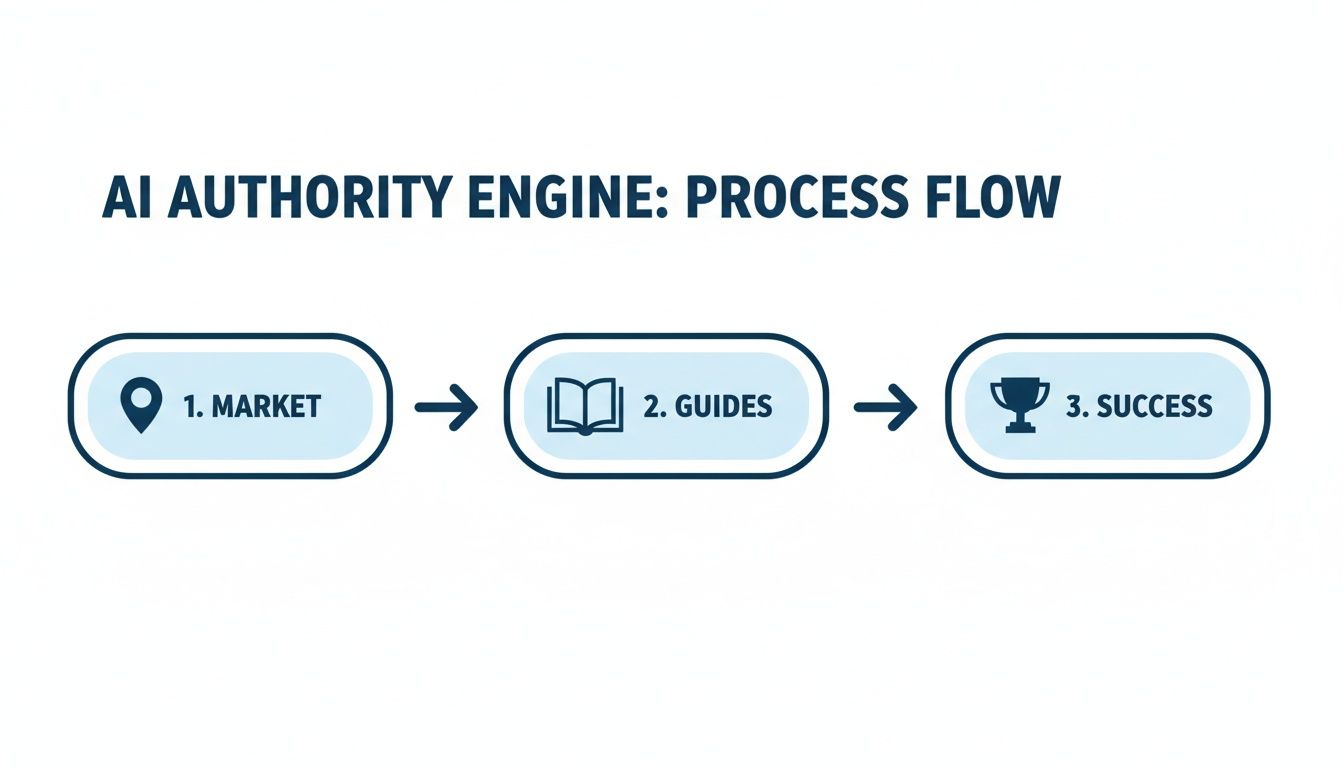
    It does this with two distinct, powerful systems working together: 'Listing Commander' and 'Authority Builder.' These aren't just clever names; they’re designed to tackle the two biggest marketing headaches every real estate team faces.

    From A Single Listing To A Full Campaign

    Think of the 'Listing Commander' engine as your secret weapon for marketing a specific property. All you have to do is provide the property URL. From that one link, the AI generates an entire marketing suite for the listing.

    • AI-Generated Descriptions: It writes compelling property descriptions for your MLS, Zillow, and social media, all tailored to what gets buyers excited.
    • A Complete Social Calendar: It produces a month’s worth of posts for that one home—covering everything from 'Coming Soon' and 'Just Listed' to 'Open House' and 'Just Sold'.

    What this means is you can go from signing a new listing agreement to launching a full-blown social media campaign in less than five minutes. No more scrambling for photos or struggling to write a great caption right before an open house.

    This screenshot shows how ListingBooster.ai can generate a wide array of marketing assets, including social media posts and property descriptions, directly from a single property's details. It highlights the platform's ability to automate the entire creative process, turning basic listing information into a multi-channel campaign.

    Building Your Team's Authority On Autopilot

    While Listing Commander handles the individual properties, the 'Authority Builder' engine is busy pre-selling your team's expertise 24/7. It automatically creates the kind of value-driven content that builds trust and establishes you as the go-to expert in your market.

    This engine creates things like:

    • Local market updates
    • Smart tips for buyers and sellers
    • Neighborhood spotlights
    • Posts that position your agents as leaders

    This is the content that proves your value long before a potential client even thinks about making a call. The AI even uses 23 proven psychology frameworks—like scarcity, social proof, and aspiration—to write posts that genuinely stop the scroll and build a real connection.

    ListingBooster.ai doesn't just help you schedule posts; it creates the high-quality, psychologically-informed content your team needs to dominate its market. It’s your copywriter, graphic designer, and marketing strategist all in one.

    And here’s something critical for team leads and brokers: every single piece of content generated by the platform is automatically run through a built-in Fair Housing compliance scanner. This provides a vital safety net, giving you peace of mind that your brand is protected from costly compliance mistakes, no matter which agent hits "post."

    This is how ListingBooster.ai truly unifies your team's marketing, turning a chaotic, time-consuming chore into a streamlined, lead-generating machine.

    Frequently Asked Questions

    When you're thinking about bringing a new tool into your brokerage, a few key questions always pop up. Let's walk through the most common ones we hear from team leads and brokers so you can see exactly how a scheduler fits into your daily operations.

    How Often Should a Real Estate Team Post on Social Media?

    This is the million-dollar question, isn't it? The magic formula isn't about posting constantly; it’s about being consistent. For most teams, aiming for 3-5 solid, high-quality posts per week is the sweet spot. That’s enough to stay on your clients' radar without burying them in content.

    A social media post scheduler for real estate teams is what makes this goal realistic. Instead of scrambling for a post each day, you can block out an hour and schedule a month's worth of content at once. Think new listings, agent introductions, local market stats, and community events—all lined up and ready to go, giving you a professional presence even when you're slammed with closings.

    Can a Scheduler Post to All Real Estate Platforms?

    Yes, the best tools are built to connect with the platforms that matter most in real estate: Facebook, Instagram, and LinkedIn. But a truly great scheduler, one designed specifically for our industry, knows that a one-size-fits-all post just doesn't work.

    For instance, you can take a single new listing and schedule it everywhere, but with a unique spin for each platform. The caption for LinkedIn might highlight the investment potential, while the Instagram post focuses on stunning photos and a question to drive engagement. For Facebook, you might focus on the neighborhood and family-friendly features.

    This approach makes your content feel right for each platform, which is key to grabbing attention and getting better results.

    How Does a Scheduler Help With Fair Housing Compliance?

    Manually policing every post from every agent is a broker's nightmare. One agent's innocent mistake in a caption—using a phrase that could be seen as steering—can create a massive Fair Housing violation for the entire brokerage.

    This is where a modern scheduler is a game-changer. A tool like ListingBooster.ai has an automated Fair Housing compliance scanner built right in. It acts like a digital safety net, automatically flagging risky words or phrases before a post is published. It gives agents the freedom to market properties while giving brokers the peace of mind that their business is protected.


    Ready to unify your team's marketing and reclaim hours of your week? ListingBooster.ai is the AI-powered command center that creates and schedules a month of compliant, psychology-backed social content in minutes. Start your free trial today and see the difference.

  • Unlock Growth: Social Media Brand Guidelines for Real Estate

    Unlock Growth: Social Media Brand Guidelines for Real Estate

    At its core, a social media brand guideline is simply your playbook. It’s the rulebook that defines how your brand looks, sounds, and acts online. For a real estate agent, this isn't just corporate fluff—it’s what ensures every post, from a new listing on Instagram to a market update on Facebook, is instantly recognizable as yours. It’s how you turn a chaotic social feed into a consistent, trust-building machine that attracts clients.

    Why Brand Guidelines Are a Real Estate Agent’s Secret Weapon

    With over 95% of homebuyers using the internet in their property search, your social media presence is no longer just a marketing add-on. It’s your digital storefront, your first impression, and your ongoing conversation with potential clients. Without a clear plan, your posts can look messy, random, and unprofessional, which is a surefire way to confuse buyers and sellers. This is exactly where brand guidelines come in to save the day.

    A person planning a brand blueprint, working on a laptop with design blueprints and a model house.

    Think of your guidelines as the blueprint for building a home. A builder would never just start throwing up walls without a detailed plan, and you shouldn't try to build your brand without one either. These rules make sure every single element—from the fonts on a "Just Sold" graphic to the friendly tone of a video tour—works together to build a strong, appealing, and valuable brand.

    Building Trust Through Consistency

    Consistency is the bedrock of trust. It’s that simple. When potential clients see the same polished look and professional voice across your Instagram, Facebook, and LinkedIn, they start to see you as reliable and organized. It’s not just a feeling; studies show that maintaining a consistent brand can boost revenue by over 30% because it makes you memorable and credible.

    Your guidelines are what make this consistency possible. They spell out the key details, so whether it's you, your assistant, or even an automated tool posting, the message always feels like it came directly from you.

    A strong brand guideline is your promise to your audience. It says, "This is who I am, this is the quality you can expect, and I will deliver it every single time." This predictability is what transforms casual followers into loyal clients.

    From Solo Agent to Unified Team

    If you’re a solo agent, brand guidelines are your best tool for establishing authority. They help you carve out your specific niche and become the go-to expert everyone in your area thinks of first. But for a real estate team or brokerage, they are absolutely non-negotiable. They’re what makes you look like a unified force instead of a loose collection of individuals.

    Guidelines solve the most common branding headaches that teams face:

    • Mixed Messaging: They stop one agent from posting ultra-luxe content while another shares casual, behind-the-scenes videos. That kind of disconnect can seriously dilute the team's brand.
    • Visual Chaos: They ensure everyone uses the same approved logos, color schemes, and photo styles. The result? The entire team’s content looks polished, cohesive, and instantly recognizable.
    • Compliance Nightmares: They provide clear, simple rules on required disclosures, like including your brokerage info and license number on every post. This protects the whole team from costly legal and ethical missteps.

    In the end, a solid set of social media guidelines shifts your online efforts from a series of random acts into a predictable lead-generation system. They guarantee every piece of content you create is working toward a single, powerful goal: building a brand that clients recognize, trust, and ultimately choose to work with.

    The Building Blocks of a Memorable Real Estate Brand

    To build a social media presence that clients actually remember, you need a blueprint. Your social media brand guidelines are that blueprint—a detailed instruction manual that dictates every single thing you post online. This goes way beyond just picking a logo; it's about creating a consistent and professional experience for your audience.

    Think of it like designing a custom home. You wouldn't just pick a door color and call it a day, right? You'd obsess over the architectural style, the flow of the rooms, the interior finishes, and the overall feeling you want the home to evoke. Your brand requires that same meticulous planning to feel cohesive and instantly recognizable.

    What Goes Into Your Brand Guideline Document?

    Every agent's brand is unique, but the strongest ones are built on a solid, well-documented foundation. Think of this document as your North Star for every post, story, and video you create. It's the rulebook that keeps you, your assistant, or any marketing help you hire perfectly on-brand, every single time.

    Here are the non-negotiable elements you need to include.

    Table: Key Components for Your Brand Guideline Document

    Component Description Example for a Real Estate Agent
    Brand Voice The personality of your brand. It's who you are consistently. "The friendly, no-nonsense neighborhood guide who simplifies the buying process."
    Brand Tone The emotional flavor you add to your voice for specific situations. Celebratory: "We did it! Huge congrats to the Smiths on closing today!"
    Empathetic: "Feeling priced out? I get it. Here’s what the numbers really mean."
    Visual Identity The complete look and feel of your brand, from colors to fonts. Colors: Primary Blue (#003366), Accent Gold (#D4AF37).
    Fonts: Montserrat for headings, Lato for body text.
    Logo Usage Clear rules for how your logo should (and should not) be used. "Always include a 20px clear space around the logo. Use the all-white version on dark photos."
    Content Pillars The 3-5 core topics you will consistently post about. Market analysis, client success stories, local community spotlights, and home maintenance tips.
    Platform-Specific Rules Nuanced guidelines for how your brand shows up on different platforms. Instagram: Use high-res, bright photos. All video Reels must have captions.
    LinkedIn: Professional tone, focus on market data and career milestones.
    Compliance & Legal Mandatory disclaimers, hashtags, and logos you must include. "Must include Equal Housing Opportunity logo on all property posts. Add broker-required hashtags like #[BrokerageName] #[LicenseNumber]."

    Having this document ready means you never have to guess what to post or how it should look. It's your single source of truth for building a powerful and consistent brand online.

    1. Nail Down Your Brand Voice and Tone

    Let's start with what your brand sounds like. This is your brand voice—your brand's distinct personality. Are you the sharp, data-driven analyst who geeks out on market trends? Or are you the warm, approachable neighborhood expert who knows the best coffee shops and dog parks? There’s no wrong answer, but you have to pick a lane and stay in it.

    Your voice shapes how you write every caption, script every video, and even reply to comments. A consistent voice builds familiarity and trust, which is everything in this business. We cover this foundational step in more detail in our guide to building a powerful personal brand in real estate.

    Your tone, on the other hand, is the emotional inflection you apply to that voice. It adapts to the context of the post.

    • Your Voice is who you are. (e.g., "The Savvy Investor's Advisor")
    • Your Tone is how you feel in a specific moment. (e.g., using a celebratory tone for a "Just Sold" post or an empathetic tone when discussing buyer frustrations)

    2. Lock In Your Visual Identity

    Next up is your visual identity—what your brand looks like. In a crowded social media feed, your visuals are what stop the scroll. Consistency here is absolutely critical. Research shows that using a signature color palette can boost brand recognition by a staggering 80%, making your posts instantly familiar to your followers.

    Your visual guidelines need to be crystal clear. Define these elements:

    • Color Palette: Don't just say "blue and gray." Specify the exact hex codes for your primary and secondary colors, like a primary navy (#0A2240) and a secondary beige (#F5F5DC). This ensures perfect color matching every time.
    • Typography: Choose one or two fonts and stick to them. A clear heading font and a readable body font are all you need. Define their sizes, weights (bold, regular), and when to use them.
    • Logo Usage: Outline clear do's and don'ts for your logo. Show how it should look on light and dark backgrounds and specify how much empty space to leave around it.
    • Photo and Video Style: Is your aesthetic bright and airy? Moody and luxurious? Do you always apply a specific filter to your Instagram Stories? Write it down.

    A defined visual identity ensures that whether someone sees a listing photo, a market update graphic, or a video tour, they immediately connect it with your high-quality, professional brand.

    3. Establish Your Content Pillars

    Finally, your guidelines must map out your content pillars. These are the 3-5 core topics you will talk about over and over again to establish your expertise. If you try to post about everything, you’ll quickly become known for nothing.

    Content pillars give your social media strategy a clear purpose and make it so much easier to plan what you're going to post.

    Here are a few pillar ideas perfect for agents:

    • Market Updates: Share data-driven insights on your local market. Think "month-over-month" price changes or inventory levels.
    • Buyer & Seller Education: Provide genuinely helpful advice that guides clients through the process. A quick video on "3 Common Mistakes First-Time Buyers Make" is a great example.
    • Community Spotlight: Show you're a true local expert by highlighting area businesses, events, and the lifestyle your clients are buying into.
    • Listing Showcase: Go beyond the standard MLS photos. Post "behind-the-scenes" tours, highlight a unique feature, or create a video about the neighborhood.

    By defining these three core components—voice, visuals, and content pillars—you create a powerful and repeatable framework for success. This structure is what truly drives engagement. In fact, brands with strict guidelines see a massive boost in audience participation, with 64% of users actively tagging those brands or using their hashtags. That's how you build a loyal community, one post at a time.

    Adapting Your Brand for Each Social Media Platform

    Creating a solid set of brand guidelines is step one. But the real magic happens when you learn how to tweak those rules for the unique personality of each social media platform. Simply blasting the same post across Instagram, Facebook, TikTok, and LinkedIn is a surefire way to get ignored. It's like wearing a tuxedo to a backyard barbecue—sure, you showed up, but you're completely out of sync with the vibe.

    Great branding isn't about being rigidly uniform; it's about contextual consistency. Your core identity—your voice, values, and look—should always be recognizable. But how you express that brand needs to bend to the expectations of the audience you're talking to. Think of it as being fluent in several languages; you’re still the same person, but you're communicating in a way the locals actually understand and appreciate.

    This infographic shows how your fundamental Brand DNA informs your Voice, Visuals, and Content—the pillars of your social media presence.

    Infographic explaining Real Estate Branding through Brand DNA, Voice, Visuals, and Content.

    The main takeaway here is that these pieces must all work in harmony. However, their execution will look very different depending on where you are. Let's break down how to translate your brand for the platforms that matter most to real estate pros.

    Instagram: The Visual Showcase

    Instagram is a dream board. It's where potential clients go to get inspired and imagine their future life in a new home. Your brand here needs to be visually stunning, period.

    • Visuals: Your photos and videos have to be top-notch—crisp, bright, and professionally polished. Follow your color palette and photo style religiously. Using pre-made templates for your Reels and Stories is a game-changer for staying consistent.
    • Voice & Tone: Write captions that are conversational and pull people in. It's good to mix short, punchy lines with longer, story-driven captions for property deep dives or client testimonials. Emojis are your friend here; they add a human touch.
    • Content: Your best bets are gorgeous listing photos, aspirational Reels that show off a home’s best features, quick video tours, and client success stories paired with high-quality images.

    Facebook: The Community Hub

    Think of Facebook as your digital neighborhood. This is where you build genuine relationships and become a local resource. While good visuals still count, the platform is really built for interaction, conversation, and sharing helpful information. It’s less of a glossy magazine and more of a friendly community newsletter.

    Your content should be a conversation starter. Ask questions, run polls about local preferences, and share community news that gets people talking. This is your chance to put a face to the name and prove you're an active, invested member of the community you serve.

    On Facebook, your brand voice should sound like the helpful neighbor everyone trusts for good advice. It's less "look at this beautiful home" and more "here's what you need to know about our local market."

    TikTok: The Trendsetter

    TikTok is fast, fun, and all about what's trending right now. A formal, stuffy corporate video will stick out like a sore thumb. To win on TikTok, you have to be authentic, agile, and not afraid to show a more casual, entertaining side of your brand.

    • Visuals: Vertical video is the only way to go. Don't feel the need to overproduce it; a clean video shot on your phone often performs better than a slick, cinematic ad. Jump on trending audio and effects to get more eyes on your content.
    • Voice & Tone: Get to the point. Be quick, direct, and entertaining. You can translate your expert brand voice into a snappy 15-second "Myth vs. Fact" video about mortgages or a quick Q&A answering a common buyer question.
    • Content: Stick to educational snippets ("3 things to look for during an inspection"), behind-the-scenes glimpses (setting up for an open house), and funny, relatable videos about the highs and lows of buying or selling a home.

    LinkedIn: The Professional Network

    LinkedIn is your digital business card and professional portfolio, all in one. This is the arena for establishing your credibility and networking with other agents, brokers, and high-net-worth clients. Everything you post should reflect your business savvy and expertise.

    This is the perfect platform for sharing in-depth market analysis, celebrating career milestones like closing a major commercial deal, or posting articles about real estate investment strategies. The friendly guide from Facebook becomes a sharp, data-driven market expert here. On LinkedIn, polish and professionalism are everything—they are what build trust and establish you as an authority.

    Staying on the Right Side of the Law on Social Media

    In real estate, it can take years to build a stellar reputation and just one careless social media post to tear it all down. This is where your social media brand guidelines become more than just a marketing tool—they’re your legal guardrails, protecting you from hefty fines and keeping the trust you’ve worked so hard to build. Let's be clear: this is the most critical part of your entire playbook.

    The same rules that apply to your print ads and mailers follow you onto your Instagram Stories, Facebook posts, and TikTok videos. There’s no legal distinction. Ignoring these regulations isn’t just a bad idea; it can lead to serious penalties, including the suspension of your license.

    The Fair Housing Act: Your Social Media Filter

    At its core, the Fair Housing Act is a federal law that exists to prevent housing discrimination. When you're posting online, this means your language can't even hint at a preference for or against people based on protected classes like race, religion, sex, familial status, or disability.

    It’s surprisingly easy to get this wrong, even with the best intentions. An agent might post about a "perfect bachelor pad," which could be seen as discriminating against families. Another common slip-up is describing a neighborhood as "quiet and ideal for retirees," which could discourage younger buyers or those with kids.

    Think of the Fair Housing Act as a simple filter for every word you write. Your descriptions should focus only on the property's features—its size, its condition, its location—and never on the kind of person you imagine living there.

    To keep your posts compliant, your language needs to be neutral and objective. Don't paint a picture of the buyer; paint a picture of the home.

    • Instead of this: "Ideal for a growing family, with a big yard for kids to play in."

    • Try this: "Features a spacious, fully fenced backyard."

    • Instead of this: "A short walk to nearby churches and synagogues."

    • Try this: "Conveniently located near several local community centers and places of worship."

    It's a small change in wording, but it makes a world of difference in keeping your marketing inclusive and, most importantly, legal.

    Disclosures and Disclaimers: They Aren't Optional

    Transparency is everything in this business. Every social media profile you have and every post you make about a property must include specific disclosures. These are non-negotiable requirements from national, state, and local regulators. They're your digital business card, and they need to be accurate and visible everywhere you are online.

    Your brand guidelines should spell out exactly what information is required, where it goes, and what it should look like.

    Mandatory Disclosures Checklist:

    1. Brokerage Affiliation: You must clearly and conspicuously show the name of your brokerage on your profiles and posts. Don't hide it behind a link or bury it at the end of a long caption. Make it obvious.
    2. License Information: Your real estate license number should be in your social media bios. Depending on your state, you may also need to include it on individual property posts.
    3. Equal Housing Opportunity: Any ad related to a property must include the Equal Housing Opportunity logo or the statement. Your guidelines need to specify how and where to place this on graphics, in video overlays, or in captions.

    If you want to go deeper and make sure you're bulletproof, our article on creating MLS-compliant marketing materials for real estate is a great resource. These rules aren't just about avoiding trouble; they're a public declaration of your professionalism and your commitment to doing business the right way.

    When you bake these compliance rules directly into your social media brand guidelines, you build a safety net for yourself and your entire team. It gives you the confidence to market listings creatively, knowing every single post is not just effective but also 100% compliant.

    Alright, let's get practical. You can have the most brilliant brand strategy in the world, but if it just sits in a document, it’s not doing you any good.

    Creating your guidelines is one thing; actually weaving them into your day-to-day work is another. This checklist is your road map for turning those great ideas into real, consistent action. Follow these steps to build, launch, and maintain a brand that truly works.

    Phase 1: Laying the Groundwork

    This first stage is all about discovery and definition. It's where you'll make the foundational decisions that will guide every post, story, and video you create. Get your team together—even if your "team" is just you and a laptop—and start digging in.

    1. Run a Quick Brand Audit: You can't know where you're going until you know where you stand. Pull up your last 20 social media posts. What do you see? Look for patterns in your tone, your visuals, and your messaging. Make a simple list of what feels right and what feels a little off-brand or inconsistent.

    2. Define Your Core Identity: Now, get your key people in a room (or on a Zoom call) and answer the big questions. Who are we really trying to reach? What makes us different from the agent down the street? If someone scrolled past our content, what three words do we want to pop into their head?

    3. Document the Essentials: With those answers in hand, it's time to start building your guide. Don't overcomplicate it. Start with the "big three":

      • Brand Voice: Nail down your personality in a single, clear sentence. (e.g., "We're the friendly, no-nonsense guide for families finding their forever home.")
      • Visual Identity: Get specific. List your exact color hex codes, your chosen fonts, and the do's and don'ts for using your logo.
      • Content Pillars: Choose 3-5 core topics that you will own. These are the subjects you'll return to again and again to build your reputation as an expert.

    Phase 2: The Rollout

    This is where your brand guide comes to life. You need to turn your notes into an official, easy-to-find resource and get your entire team excited about using it. How you introduce it makes all the difference.

    "A brand guide that sits in a forgotten folder is useless. The rollout is your opportunity to energize your team and show them how these guidelines make their jobs easier, not harder, by providing clarity and removing guesswork."

    First, create a single source of truth. Put your guidelines into a cloud-based document, like a Google Doc or a Notion page, that everyone can access anytime. No more hunting for old email attachments.

    Next, schedule a team meeting just for this. Don't just send an email and hope for the best—that's a recipe for failure. Walk everyone through the guide, section by section. Explain the thinking behind the choices and show them how this new clarity empowers them. Frame it as a tool that removes the daily guesswork of "What should I post?" and gives them the confidence to create high-impact content.

    Phase 3: Review and Reinforce

    Your brand isn't set in stone. The market shifts, platforms change, and your business evolves. Your guidelines need to be a living document, not a historical artifact. A regular review process keeps them sharp, relevant, and consistently applied.

    • Quarterly Check-Ins: Set a recurring calendar reminder every three months to review your social media performance. Are the guidelines holding up? Is the content still on-brand and hitting its mark? This is the time for small adjustments and course corrections.
    • Annual Overhaul: Once a year, do a deep dive. Does your brand voice still reflect your business goals? Do your visuals feel fresh or dated? Are your content pillars still resonating with your audience?
    • Lead by Example: This might be the most important part. As the leader, your own posts are the most powerful enforcement tool you have. When your team sees you living and breathing the brand guidelines every day, they'll understand it's the standard, not just a suggestion.

    Automating Your Brand with ListingBooster.ai

    Let's be honest. Juggling clients, showings, and paperwork makes it nearly impossible to keep your social media presence perfectly consistent. For team leaders, getting every agent to stick to the brand book is a never-ending battle. This is where automation stops being a buzzword and becomes your most valuable asset, turning your social media brand guidelines from a document into an effortless daily habit.

    A person works on a laptop showing a web page about automated consistency, star ratings, and checkmark icons.

    Think of a platform like ListingBooster.ai as an automated brand manager. It takes all the rules you’ve carefully defined and applies them flawlessly every single time. It’s how you scale a professional and compliant brand without drowning in manual work.

    Your Brand on Autopilot

    Imagine a system that already knows your brand inside and out. During a quick setup, you teach ListingBooster.ai your specific brand voice, visual style, and non-negotiable compliance details. It's like onboarding a hyper-efficient marketing assistant who never forgets a rule and works around the clock.

    The platform essentially memorizes the core of your guidelines:

    • Brand Voice: Whether you’re the "data-driven market analyst" or the "friendly neighborhood expert," the AI learns to write in your voice.
    • Visual Style: It automatically applies your exact brand colors, fonts, and logo placement to every graphic it generates.
    • Compliance Rules: Your brokerage info, license numbers, and required disclaimers are baked right in.

    Once this is done, the platform becomes your personal brand engine, ready to create perfect content whenever you need it.

    Generating Content That Is Always On-Brand

    With your guidelines locked in, ListingBooster.ai gets to work. This is where you really see the power of automation, as it saves you countless hours while ensuring every post is spot-on.

    By automating how your brand guidelines are applied, you practically eliminate human error and inconsistency. You're free to focus on what you do best—serving clients—knowing your online presence is building trust with every single post.

    Listing Commander takes one property and spins up a complete set of on-brand social media content for its entire journey. "New Listing" posts, "Open House" alerts, and "Just Sold" announcements all follow your visual and voice standards automatically. No more second-guessing.

    At the same time, Authority Builder focuses on content that cements your expertise. It creates market updates, homebuyer tips, and community spotlights that sound just like you, reinforcing your status as the go-to local professional. This is a core piece of an effective real estate social media automation strategy.

    The Ultimate Compliance Safety Net

    Maybe the most important job automation handles is compliance. With global social media ad spend projected to reach a staggering $219 billion by 2026, the legal and financial risks of getting your messaging wrong are higher than ever.

    ListingBooster.ai acts as a crucial safety net by automatically checking every caption for Fair Housing Act compliance before it gets published. For brokerages, this is a lifesaver; for individual agents, it's invaluable peace of mind. The system flags risky language, helping you steer clear of costly violations and protect your hard-earned reputation. It ensures your marketing isn't just consistent, but also completely compliant.

    Frequently Asked Questions

    Even with the best plan in hand, you're bound to have a few questions. Let's tackle some of the most common ones we hear from agents who are building out their social media brand guidelines.

    How Long Does It Take To Create Guidelines?

    That really depends on the size of your operation. If you're a solo agent who's ready to focus, you can knock out the essentials—your brand voice, colors, and key content topics—in just a few hours. That’s enough to create a strong foundation for consistency.

    For teams and brokerages, it’s smart to budget about a week. This gives you enough time to get feedback from everyone, agree on a unified strategy, and make sure all the compliance details are buttoned up and clearly communicated.

    Will Brand Guidelines Make My Content Feel Robotic?

    It's a common fear, but the reality is the exact opposite. Think of your guidelines not as a restrictive cage, but as the playbook for your creativity. They give your brand a distinct personality, which actually makes it easier to sound authentic day in and day out.

    Instead of second-guessing how to be professional but still approachable, you have a clear voice to step into. This frees you up to focus on what really matters: creating great content that connects with people.

    What Is the Biggest Branding Mistake Real Estate Agents Make?

    Hands down, the single most damaging mistake is inconsistency. One day you post a slick, professionally shot video of a luxury listing, and the next it's a blurry, off-the-cuff photo from an open house. This creates confusion and tanks your credibility. Potential clients have no idea what to expect from you.

    This is the exact problem that good brand guidelines solve. They ensure that every single thing you post, no matter the topic or format, reinforces the same professional and instantly recognizable brand.

    How Often Should I Update My Brand Guidelines?

    Your brand guide should be a living document, not something you create once and file away forever. Make a point to review it annually or any time you make a major shift in your business strategy.

    An annual check-in is the perfect time to make sure your branding still reflects your current goals and any new market trends. It also lets you adapt to new features on social media platforms. Your core identity should stay consistent to build recognition, but small tweaks are what keep you relevant.


    Ready to stop guessing and start growing? With ListingBooster.ai, you can define your brand and automate a month's worth of on-brand, compliant content in minutes. See how it works and start your free trial.

  • What Is a Content Calendar and How Does It Work for Real Estate

    What Is a Content Calendar and How Does It Work for Real Estate

    Think of a content calendar as the master blueprint for your real estate marketing. It’s a simple but powerful plan that lays out exactly what you’re going to post, where you’re going to post it, and when. It's the secret to moving your marketing from random acts of social media to a calculated, effective strategy.

    Your Marketing Command Center

    A laptop displaying a content blueprint, a house model, a calendar, and notebook on a desk for planning.

    Would you ever start building a house without a blueprint? Of course not. You'd end up with a mess. Yet, that's how many agents approach their marketing—posting on a whim, whenever they have a spare moment, with no real goal in mind.

    A content calendar acts as your command center. It can be a simple spreadsheet or a dedicated digital tool, but its purpose is the same: to give you a bird's-eye view of all your upcoming marketing content. This is how you stop scrambling for last-minute post ideas and start building a real strategy.

    From Reactive Scrambles to Proactive Strategy

    For a busy real estate agent, this change is everything. Instead of waking up every morning with that nagging thought, "Ugh, what should I post today?" you already have a plan. A plan designed to consistently engage your audience and build your reputation as the local expert.

    This isn't just a "nice-to-have" organizational tool anymore. It's quickly becoming essential for survival and growth.

    A 2026 survey shows that over 75% of businesses worldwide now use a content calendar to guide their marketing. For agents, this is even more critical, as over 40% of homebuyers now start their search using AI tools like ChatGPT and Google AI. A structured content plan is your best bet for showing up in those results. You can learn more about these content calendar trends.

    To really understand the difference this makes, let’s look at the before-and-after of an agent’s daily marketing efforts.

    From Reactive Scrambles to Proactive Strategy

    Marketing Aspect Without a Content Calendar (Reactive) With a Content Calendar (Proactive)
    Daily Planning "What do I post today?" scramble every morning. Content is planned, created, and scheduled weeks in advance.
    Content Quality Rushed, often low-effort posts just to "post something." High-value, well-thought-out content that serves a purpose.
    Brand Message Inconsistent tone and message, depending on the day's mood. A consistent, professional brand voice across all platforms.
    Lead Generation Unpredictable. Some posts work, most don't. No clear data. Strategic posts designed to attract specific clients (buyers, sellers).
    Time Management Marketing is a constant, daily time-suck. Content is "batched" once or twice a month, saving hours per week.

    Seeing it laid out like this makes the benefit crystal clear. A proactive approach doesn't just make you look more professional; it gives you back your time and sanity.

    This strategic shift directly helps you:

    • Build Authority: When you consistently share market updates, neighborhood guides, and home-buying tips, you become the go-to resource people trust.
    • Save Time: Planning your content in batches is a game-changer. Creating a month's worth of posts in one afternoon is far more efficient than doing one a day.
    • Stay Top-of-Mind: Regular, valuable posts ensure that when someone in your network thinks "real estate," they think of you first.

    By systemizing your marketing, a content calendar turns your social media from a chore into a reliable engine for business growth.

    Why Every Real Estate Agent Needs This Tool

    Let's be honest—in real estate, how you show up online says a lot. Random, last-minute posts can make you look disorganized, while a steady flow of genuinely helpful content makes you look like the go-to expert in your market. This is where a content calendar stops being a simple spreadsheet and becomes one of your most powerful business tools.

    For agents, this goes way beyond just saving a little time. A solid plan ensures your brand voice is the same everywhere, whether you're posting on Instagram or writing an article for LinkedIn. That kind of consistency is what builds deep trust with potential clients, long before they're even thinking about picking up the phone.

    It's also your secret weapon for staying out of hot water. When you plan your content ahead of time, you give yourself the breathing room to review every post and make sure it meets Fair Housing guidelines. This simple step can protect you and your brokerage from some very expensive mistakes.

    Build Your Digital Footprint

    These days, your online presence is your digital storefront, and it's how modern buyers and sellers find you. A well-planned calendar helps you create a clean, consistent digital footprint that search algorithms from Google and ChatGPT absolutely love when they're looking for local experts to recommend.

    Think about the difference. Agent A posts whenever they remember, usually scrambling to share a quick listing photo. Agent B walks into a listing appointment with a complete, AI-generated 30-day marketing plan from ListingBooster.ai, showing they're prepared and already delivering value from minute one.

    Being this organized does more than just lower your daily stress levels; it completely changes how potential clients see you. It positions you as a sharp, tech-savvy professional who is always two steps ahead. For a deeper look at this strategy, check out our guide on content marketing for real estate.

    In the end, a great content calendar gives you:

    • Unwavering Consistency: Keeps your message on point and your audience hooked.
    • Significant Time Savings: Lets you batch your creative work so you can focus on clients.
    • Enhanced Authority: Helps you become the go-to expert people trust.
    • Reduced Stress: Ends the daily scramble of "what should I post today?"

    What Goes Into a Winning Content Calendar?

    A great content calendar is more than a list of post ideas and dates. It's your strategic playbook for building a reputation and getting clients. Without a solid structure, you're just throwing content at the wall and hoping something sticks. With one, you're building a real business asset.

    The single most important part of this structure is your set of content pillars. Think of these as the main themes you’ll return to again and again. For an agent, these pillars are the foundation of your entire marketing strategy, ensuring every post has a purpose.

    Your Foundational Content Pillars

    Your content pillars are essentially the four core conversations you need to be having with your audience. They show people you're not just trying to make a sale—you're a genuine local expert they can trust. Getting the right mix is key.

    • Market Updates: This is where you share hard data, local trends, and what you see coming next. It immediately positions you as the go-to source for what's happening in your market.
    • Buyer and Seller Education: Break down the process. Offer tips, answer frequently asked questions, and demystify the jargon. This builds incredible trust and shows your value long before they sign with you.
    • Neighborhood Spotlights: Feature local businesses, parks, schools, and events. This proves you have a deep, authentic connection to the community you serve.
    • Agent Expertise: Give a peek behind the curtain. Share client success stories, explain your unique process, and talk about what makes you different. This is how you pre-sell your skills.

    This visual shows how these pillars are the bedrock for building your authority and saving you a ton of time.

    A hierarchy diagram illustrating agent benefits: consistency, time saved, and authority.

    When you stick to this structure, you're not just posting randomly. You're building a well-rounded brand that makes you the obvious choice.

    Once your pillars are set, you need to decide on your posting cadence—how often you’ll share content. Remember, consistency beats frequency every time. It's far better to post two high-value pieces per week than to burn yourself out with seven rushed ones.

    Finally, you need the right tools to make it all happen. You could start with a simple spreadsheet, but modern AI platforms can put this entire process on autopilot. For instance, the ‘Authority Builder’ feature in ListingBooster.ai is designed to create content around these exact pillars automatically. It gives you a steady stream of expert-level content, so you’re always building your brand, even when you’re out showing properties.

    How to Build Your First Content Calendar Template

    A tablet displays 'First Content Calendar' on a wooden desk with a pen and notebooks.

    Alright, enough with the theory—let's roll up our sleeves and build one. Getting your first content calendar off the ground is much easier than you think, and you don’t need any fancy software.

    Honestly, a simple spreadsheet is the perfect place to start. This basic structure is all you need to bring order to the chaos, transforming your random "what should I post today?" moments into a purposeful, lead-generating strategy.

    Core Template Columns

    To get started, just open up a spreadsheet and create these six columns. Each one serves a clear purpose, helping you organize your ideas and streamline your entire content process.

    • Date: The exact day your content is scheduled to go live.
    • Platform: Where you'll be posting (e.g., Instagram, Facebook, LinkedIn, your blog).
    • Content Pillar: The core theme your post connects back to, like ‘Market Updates’ or ‘Community Spotlight’.
    • Topic/Listing: The specific subject for the post, such as "3 Common Home Inspection Myths" or "New Listing: 123 Maple St."
    • Caption Idea: A quick draft or some bullet points for the text that will go with your visual.
    • Visuals: A note on what photo or video you need (e.g., "Kitchen photo from listing," or "Walkthrough video of the backyard").

    That's it. This simple framework is your roadmap. For even more detailed ideas on what to plug into these columns, check out our guide on how to create a social media content calendar.

    A Sample Week in Action

    To show you how this looks in practice, here is a simple one-week content plan. Notice how the content pillars and platforms vary each day to keep the audience engaged.

    Sample 1-Week Real Estate Content Plan

    Day Platform Content Pillar Topic/Caption Idea
    Monday Instagram Market Update Quick video reel: "This week's interest rate snapshot & what it means for buyers."
    Tuesday Facebook Just Listed Carousel post for 123 Maple St. Highlight 3 unique features. Ask "What's your favorite part?"
    Wednesday LinkedIn Professional Insight Article share: "Top 3 Negotiation Tactics for Sellers in a Shifting Market."
    Thursday Instagram Story Community Spotlight "Grabbing coffee at [Local Cafe]! Best spot in the neighborhood. Poll: Espresso or Latte?"
    Friday Facebook Buyer Education "Friday FAQ: Can you buy a home with less than 20% down? Let's talk about it…"
    Saturday Instagram Behind the Scenes Photo from an open house. "Great turnout today at 123 Maple St! So fun meeting everyone."
    Sunday Blog/Email Seller Education "Thinking of selling this fall? Here are 5 things you should be doing right now to prepare."

    This balanced approach ensures you’re not just selling all the time—you're building authority and connecting with your community on a human level.

    Understanding how to build a calendar manually is a game-changer. But once you've got the hang of it, you'll see where automation can make a huge difference. For example, ListingBooster.ai's ‘Listing Commander’ can take a single property URL and generate a full month's marketing plan in about five minutes. This frees up an average of 8-10 hours per month for agents.

    Putting Your Content Calendar on Autopilot with AI

    A person types on a laptop displaying an AI-powered calendar plan with colorful indicators and diagrams.

    Putting together a content calendar by hand is a great start, but the real magic happens when you bring in smart automation. Today's AI platforms are so much more than simple post schedulers; they're powerful marketing partners that can build and run your entire content strategy for you.

    Think about it: what if you could generate a full 30-day content plan in the time it takes to grab your morning coffee? That's exactly what agents are doing with tools like ListingBooster.ai. These systems don't just plug ideas into a calendar. They think like a marketer, writing engaging captions and mixing up your content pillars to keep your audience hooked, which frees you up for what really matters—connecting with clients and closing deals.

    It's More Than Just a Scheduler

    The best AI tools are packed with proven marketing psychology. Instead of just churning out a bland caption, they can pull from 23 different psychological frameworks—think scarcity, social proof, or reciprocity—to make every post more persuasive. It's like having a seasoned marketing team in your corner.

    For any real estate pro, this next part is huge: built-in compliance. The top AI platforms automatically scan every post for potential Fair Housing red flags. This isn't just a nice feature; it's a critical safeguard that protects you and your brokerage from serious legal trouble.

    Grow Your Brand with Peace of Mind

    This kind of technology isn't just about saving time. It’s about creating rock-solid consistency and safety as your business grows. A brokerage can give hundreds of agents a powerful marketing tool while knowing every single post is on-brand and legally compliant.

    • For Solo Agents: You finally get the marketing firepower of a big team without the overhead, letting you build a strong, consistent presence online.
    • For Brokerages: You can keep brand messaging tight and ensure compliance across the board, so every agent represents the brokerage professionally and safely.

    When you graduate from a manual spreadsheet to an automated AI system, your content calendar transforms from a simple to-do list into a dynamic engine for growing your business. To see how this works in practice, check out our guide to real estate content marketing automation.

    Common Questions About Content Calendars

    Alright, even the best plans run into real-world questions. Let's tackle a few of the most common ones I hear from agents when they start using a content calendar.

    How Far in Advance Should I Plan My Real Estate Content?

    The sweet spot for most agents is planning one month in advance. This gives you enough runway to be thoughtful about your content without getting locked into a plan that’s too rigid to change.

    Planning a month out lets you batch-create your "evergreen" posts—like neighborhood deep-dives or home-buying tips—all at once. This frees up your week to drop in timely, high-impact posts like a brand-new listing, an upcoming open house, or a just-sold announcement. Tools like ListingBooster.ai are designed for this exact workflow, letting you generate a full 30-day calendar in one go.

    Does Using a Calendar Mean I Can’t Post Spontaneously?

    Not at all! Think of your content calendar as your strategic foundation, not a creative prison. Its job is to make sure you're consistently putting out valuable, authority-building content, week in and week out.

    Your calendar covers your planned marketing. Spontaneous posts are your bonus points. So when you get a glowing client testimonial or snap a great photo at a final walk-through, post it! It won't mess up your strategy—it just adds another layer of authentic engagement.

    What’s the Difference Between a Content Calendar and a Scheduler?

    This is a great question, and it's easy to mix them up. The two work together but serve very different purposes.

    • A content calendar is your strategic plan. It answers the "what" and "why" of your marketing—what topics you'll cover, which content pillars you're hitting, and what you want to achieve.
    • A scheduler is the execution tool. It simply answers the "when" by automatically publishing the content you’ve already created at the times you’ve selected.

    This is where modern platforms like ListingBooster.ai really shine. They combine both functions, helping you create the strategic calendar (the what) and then automatically scheduling everything to go live (the when), taking you from idea to published post seamlessly.


    Ready to stop scrambling and start building your brand on autopilot? ListingBooster.ai generates a complete, Fair Housing-compliant 30-day content calendar in minutes. Start your 30-day free trial today.

  • How to Create Social Media Content for Real Estate: A 2026 Guide to Success

    How to Create Social Media Content for Real Estate: A 2026 Guide to Success

    If you’re like most agents, social media can feel like a constant, nagging chore. Posting on the fly between showings and closings is exhausting, and it rarely gets the results you want. The truth is, a haphazard approach just doesn't work anymore. You need a system.

    A simple, repeatable workflow is what separates agents who get real business from social media from those who just waste time. It’s how you move from sporadic posting to running a predictable, lead-generating machine.

    This guide walks you through that exact system—a powerful 5-stage process designed for busy agents: Plan, Create, Batch, Publish, and Analyze.

    Your Blueprint for Modern Real Estate Content

    With so many homebuyers starting their search on social media and even asking AI for agent recommendations, your online presence has become your digital storefront. A solid strategy isn't just a nice-to-have; it's a competitive necessity.

    Why a System Beats Sporadic Posting

    Think of this workflow as your content assembly line. Instead of reinventing the wheel every single day, you follow a proven process that turns a daily headache into a strategic advantage. I’ve seen it work for countless agents.

    When you have a reliable system in place, you accomplish several critical goals at once:

    • You build real authority. Consistently sharing valuable insights on your market solidifies your reputation as the go-to expert.
    • You capture more leads. Every post becomes a calculated opportunity to engage potential clients, not just a shot in the dark.
    • You stay visible. A steady stream of quality content ensures you’re easily found on social platforms and, crucially, by AI search engines.

    This entire process breaks a complex task down into simple, manageable stages.

    A social media workflow infographic showing three steps: Plan, Create, and Publish, with corresponding icons.

    The workflow is straightforward: figure out what you want to say, create the actual posts, and then get them in front of your audience.

    The Agent's 5-Stage Social Media Workflow

    Each stage in this workflow has a specific job, making sure nothing slips through the cracks. It's designed to be linear and easy to follow, even when you're short on time. Here’s a quick breakdown of how it all fits together.

    Stage Key Activity Primary Goal
    Plan Define your content pillars and map out your monthly calendar. Establish a clear, strategic direction for all your content.
    Create Write captions, design visuals, and use AI tools like ListingBooster.ai. Produce high-quality, scroll-stopping, and compliant posts.
    Batch Produce a large chunk of content (e.g., a month's worth) in a few focused sessions. Maximize your efficiency and guarantee you never miss a post.
    Publish Schedule your posts for the optimal days and times across your platforms. Reach the largest possible audience when they are most active.
    Analyze Review key metrics to see what content resonated with your audience. Refine your strategy based on real performance data, not guesswork.

    This isn't just theory—it's the practical blueprint top-producing agents use to turn their social media into a reliable source of business. By adopting this five-stage workflow, you stop being a reactive poster and become a proactive marketer.

    This system is how you build a powerful brand that connects with modern clients without spending all day glued to your phone. It provides the structure you need to stay visible and save precious time.

    In the next sections, we'll dive deep into each of these stages. I'll give you the actionable steps, templates, and tools to put this exact system into practice right away.

    Planning Your Content to Attract Ideal Clients

    Laptop with a digital calendar, notebook, pens, and phone on a desk, with 'PLAN CREATE PUBLISH' text.

    Before you even think about hitting 'record' or writing a single caption, you need a game plan. Posting on social media without a strategy is the digital equivalent of showing a house without knowing a single thing about the buyer. Sure, you might get lucky, but you're probably just wasting your time and theirs.

    The bedrock of a solid social media plan? Your content pillars.

    Think of these as the 3-5 core topics you'll return to again and again. They’re the foundation of your entire online brand, making sure every post you create has a real purpose. For real estate agents, this is what elevates you from just another person with a license to the trusted, go-to authority in your market.

    Establish Your Core Content Pillars

    Forget about generic, cookie-cutter advice. Your pillars need to speak directly to the real-world questions, fears, and dreams of the clients you want to work with. This is what gives people a compelling reason to follow you, even when they aren't in the middle of a transaction.

    I’ve found these four pillars to be incredibly effective for agents who want to build a real connection with their audience:

    • Local Market Insights: Don't just regurgitate headlines. Break down what rising interest rates actually mean for a first-time buyer in your specific city. Share hard data on appreciation rates for a popular neighborhood. This kind of content immediately positions you as the expert who not only has the numbers but truly understands them.
    • Neighborhood Deep Dives: Anyone can pull specs from the MLS. Your job is to provide the flavor. Show off the new coffee shop everyone's buzzing about, interview the owner of a beloved local boutique, or shoot a quick video tour of a hidden walking trail. You're helping people see themselves living in the community, not just the house.
    • Client Journeys and Education: The real estate process is confusing and intimidating for most people. Your content can change that. Walk your followers through the appraisal process, explain escrow in simple terms, or share an anonymized success story about how you helped a client navigate a tough bidding war. This builds immense trust and showcases your value.
    • The Real Life of an Agent: This is where your personality shines. It’s your personal branding pillar. Give people a peek behind the curtain—show them how you prep for an open house, a selfie from a continuing ed class, or even just your favorite local spot to decompress after a long day of negotiations. It makes you human and relatable.

    By consistently rotating through these themes, your social media feed transforms from a simple catalog of listings into an indispensable resource. This is how you create social media content that actually builds a brand that lasts.

    Map Your Pillars to a Content Calendar

    Once you've locked in your pillars, it’s time to get organized with a content calendar. This is your roadmap, giving you a bird's-eye view of what you're posting and when. For a busy agent, this simple tool is the secret to staying consistent without losing your mind. The daily panic of "what on earth do I post today?" disappears.

    A content calendar doesn't restrict your creativity; it frees it. By planning your core topics in advance, you create mental space for spontaneous, timely content when opportunities arise.

    Instead of posting at random, you can now be strategic. Maybe Mondays are for Market Insights, Wednesdays are for Neighborhood Deep Dives, and Fridays are for sharing a great Client Journey. This rhythm ensures your audience gets a well-rounded look at who you are and what you know.

    Tools like ListingBooster.ai can even do the heavy lifting for you. You can feed it your pillars, and it will generate a full 30-day calendar of post ideas, giving you a strategic plan in a matter of minutes.

    A Sample 30-Day Content Calendar

    Seeing a plan in action can really make it all click. A calendar takes those abstract pillars and turns them into a concrete to-do list, which is the key to creating content consistently enough to please both the algorithm and your audience.

    Here’s a snapshot of what the first two weeks could look like on a well-balanced real estate content calendar:

    Week 1 Pillar Example Post Idea
    Mon Market Insights Post a graphic showing the average days on market in a key zip code.
    Tue Real Life of an Agent A quick video of you picking up keys for a client's closing day.
    Wed Neighborhood Deep Dive Carousel post featuring 3 top-rated restaurants in the "Oakwood" area.
    Thu Listing Feature "Just Listed" video tour of a new property.
    Fri Client Journeys Share a testimonial graphic from a recent happy client.
    Week 2 Pillar Example Post Idea
    Mon Market Insights "Myth vs. Fact" post about whether it's a buyer's or seller's market.
    Tue Client Journeys Explain one common mistake first-time homebuyers make.
    Wed Real Life of an Agent Share a photo from a networking event or team meeting.
    Thu Listing Feature "Open House" reminder with a compelling detail about the property.
    Fri Neighborhood Deep Dive A Reel showcasing a local park or community event.

    This structured approach is about more than just filling a schedule. It’s about proving your value day in and day out, keeping your feed interesting, and giving followers a reason to keep coming back. That’s how you become their go-to agent, long before they're ready to make a move.

    Bringing Your Social Media Strategy to Life with AI

    You’ve done the foundational work—you have your content pillars and a calendar sketched out. Now for the exciting part: actually creating the posts that will make people stop scrolling and start engaging. This is where your strategy becomes real, turning those big-picture ideas into posts that get noticed.

    Every great social media post really boils down to two things: a killer visual and a caption that pulls you in. For years, creating both consistently was a massive time-suck for agents. But today, AI has completely flipped the script.

    Let AI Do the Heavy Lifting on Content Creation

    Let's be real—most agents don't have time to be full-time content creators. This is where artificial intelligence has become an absolute game-changer, letting you create high-quality content in a fraction of the time. Social media marketing is one of the top ways agents are using it, and for good reason.

    You can finally say goodbye to staring at a blank screen, trying to dream up another caption. With a tool like ListingBooster.ai, you can take a single property URL and, in about 5-10 minutes, generate an entire 30-day content calendar that’s ready to edit and post. It’s designed to write captions using proven psychological hooks like scarcity and social proof to create posts that truly connect with people.

    These tools can draft everything from hyperlocal market updates and buyer tips to a full suite of posts for your listings on the MLS, Zillow, and Redfin. It even optimizes them for AI search, which is critical now that over 40% of buyers are starting their home search on platforms like ChatGPT.

    This is a huge shift. You’re no longer just the creator; you’re the director. You guide the AI to generate the foundation, then you swoop in to add your personal expertise and flair.

    How to "Talk" to AI for Better Real Estate Content

    The secret to getting amazing content out of AI is knowing how to ask for it. If you give it a vague prompt, you'll get a bland, generic post. The magic is in the details. While tools like ListingBooster.ai have built-in features that handle this for you, understanding the logic behind a good prompt will make you a stronger marketer no matter what tool you use.

    Think of it like giving directions. The more specific you are, the better the result.

    Here are a few formulas I use that you can adapt:

    • For a New Listing Post: "Draft an Instagram caption for my new listing at [Address]. I'm targeting [e.g., first-time homebuyers looking for a starter home]. Highlight these three features: [Feature 1], [Feature 2], and [Feature 3]. I want the tone to feel [e.g., exciting and urgent, or warm and welcoming]. End with a call-to-action to DM me for a private tour, and add some popular real estate hashtags for [City/Neighborhood]."
    • For a Market Update: "Write a LinkedIn post about the latest market stats for [Your City]. Key numbers are: average sale price is [Number], average days on market is [Number], and inventory is [up/down] by [Percentage]. I want to frame this as a window of opportunity for [buyers/sellers]. Finish by asking a question to get a conversation started in the comments."
    • For a Brand-Building Post: "Give me an idea for a 5-slide Instagram carousel about 'The Top 5 Mistakes Home Sellers Make.' Each slide should cover one common mistake and a quick tip on how to avoid it. The tone should feel helpful and confident. The last slide needs a CTA to download my free Seller's Guide."

    My Two Cents: Your final, human touch is what separates good AI content from great AI content. Always read through what the AI gives you. Inject your personality, add a quick personal story, or tweak a sentence so it sounds exactly like something you'd say. That combination of AI's speed and your authentic voice is impossible to beat.

    This way, you ensure every post is working toward a specific goal, whether that’s getting leads for a listing or just reminding people that you’re the expert they need to call.

    From a Single Listing to a Complete Marketing Campaign

    The best AI tools built for real estate do so much more than just write captions—they act as your entire marketing control center. The ‘Listing Commander’ feature inside ListingBooster.ai is a perfect example of what's possible now.

    You just drop in a property URL, and it generates a whole campaign’s worth of assets for you.

    • Optimized MLS & Portal Descriptions: It writes property descriptions designed to be read by both people and AI search algorithms, helping your listings get found on Zillow and Redfin.
    • A Full Suite of Social Posts: You get a ready-made calendar with "Just Listed" announcements, Open House promotions, "Under Contract" updates, and "Just Sold" celebrations.
    • Psychology-Driven Angles: It doesn't just state facts. It frames them with a marketing angle. A post might create a sense of scarcity ("A backyard like this is a rare find in our area!") or use social proof ("Join the wave of families moving to this sought-after neighborhood.").

    This process turns what used to be a full day's work into something you can knock out in minutes. If you want to dive deeper into this, you can learn more about how to choose the right AI tools for real estate agents in our detailed guide.

    Build Your Reputation Before They Even Think of Calling

    While listings are your bread and butter, your long-term success comes from building a brand that establishes you as the go-to expert. This is where your non-listing content comes in, and the ‘Authority Builder’ function in a tool like ListingBooster.ai automates this beautifully.

    It generates content around your core pillars, giving you a steady stream of posts that position you as a leader.

    • Hyper-local Market Breakdowns: Posts that turn confusing market data into simple, actionable insights for your specific farm area.
    • Answers to Common Questions: Educational content that addresses the biggest concerns of buyers and sellers, proving you’re a trusted advisor.
    • Agent Positioning Posts: Content that highlights your unique value, your work ethic, and testimonials from happy clients.

    When you consistently share this kind of content, you're building a digital reputation that works for you around the clock. You become the obvious answer when someone asks their favorite AI assistant, "Who's the best real estate agent in my city?" You’re not just selling houses anymore; you're building a brand that attracts clients automatically.

    Work Smarter, Not Harder: Batch and Schedule Your Content

    A smartphone, laptop, and a blue 'AI-Powered Content' folder on a wooden desk.

    If you want to grow on social media, you have to be consistent. But let's be real—as a busy agent, trying to come up with a fresh post every single day is a direct route to burnout. This is where top producers have a secret weapon: content batching.

    Instead of treating social media like a daily chore, you turn it into a focused, once-a-month power session. You dedicate a couple of hours to plan, create, and schedule everything in one go. It’s the difference between scrambling for an idea at 8 AM and having your entire month's marketing working for you in the background.

    What Content Batching Actually Looks Like

    Let's walk through it. Picture this: it’s the first Monday of the month. You’ve blocked out two hours on your calendar for “Social Media,” grabbed your coffee, and opened your laptop. You’re about to knock out your content for the next 30 days.

    The best part? You're not staring at a blank screen. With a tool like ListingBooster.ai, you’ve already generated a ton of assets—post ideas, captions, and visuals—from your new listing or your content pillars.

    Here’s how that two-hour block might break down:

    • First, organize your assets. Open up the folder where your AI tool saved everything. You'll see graphics, video clips, and pre-written captions for that listing on 123 Maple Street, alongside market updates and buyer tip posts.
    • Next, review and personalize. Spend the first 30-45 minutes reading through the AI-generated captions. This is your chance to inject your personality. Tweak a phrase, add a quick story about a client, or mention your favorite local coffee shop. Make it sound like you.
    • Then, finalize the visuals. Give the graphics and video clips a quick once-over. Is your logo correct? Does the branding feel right? Maybe swap a generic stock photo for a picture you snapped at a recent community event.
    • Finally, load up your scheduler. With all your polished content ready to go, open your favorite social media scheduling tool. Now you can plug in each post, matching it to the themes you planned on your content calendar.

    In just a couple of hours, you’ve transformed a single property URL into a month of engaging, on-brand content, all scheduled and ready to publish. Think about all the time and daily stress you just saved. If you want to take this to the next level, digging into real estate content marketing automation can reveal even more ways to streamline your workflow.

    Your Strategic Posting Schedule

    Now that your content is batched, there's one last crucial step: scheduling it to post at the right times. Your goal is to publish when your audience is actually online and scrolling.

    A great post published at the wrong time is invisible. Scheduling isn't just about convenience; it's a strategic move to maximize the reach of every piece of content you create.

    While every market has its own rhythm, certain patterns hold true for real estate audiences across the board. Use this as a starting point.

    Recommended Real Estate Posting Times

    Platform Optimal Days Optimal Times (Local Time) Content Type Suggestion
    Instagram Tue, Wed, Thu 9 AM – 11 AM, 1 PM – 3 PM Reels, Carousels, Stories
    Facebook Mon, Wed, Fri 10 AM – 12 PM Community news, Listings, Client stories
    LinkedIn Tue, Wed, Thu 10 AM, 12 PM, 4 PM Market insights, Professional wins, Networking

    Think of this table as your baseline. After a month, dive into your analytics and see what the data tells you. You might find your audience is full of night owls or early birds.

    The ultimate goal here is to get off the content treadmill for good. Put your social media on autopilot so you can focus on what truly matters: serving your clients and closing deals.

    Engaging Your Audience and Analyzing What Works

    Flat lay desk with a plant, phone, clock, and planner notebooks, with 'BATCH YOUR MONTH' text.

    Hitting “publish” might feel like crossing the finish line, but in reality, the race has just begun. The most successful agents I know have mastered a two-part process. The second part—what happens after a post goes live—is where the real magic happens.

    This is your chance to turn a one-way announcement into a genuine conversation. It’s how you’ll figure out what your audience truly cares about, allowing you to stop guessing and start creating content that actually gets results.

    The Underrated Power of Replying to Comments

    Think of comments on your posts as digital handshakes. You wouldn't ignore someone who walked up to you at an open house, would you? Ignoring a comment is the online equivalent. When you take the time to reply, you’re not just being polite; you're building a community and signaling to the algorithm that your content is worth showing to more people.

    This simple act can make a huge difference. For real estate agents, replying to a question on a new listing post could boost its reach by as much as 21% on Instagram. That means more eyes on your property, without spending another dime on ads. The 2026 engagement report from Buffer dives deep into these findings, and they're pretty eye-opening.

    When someone comments, they’re giving you their attention—the most valuable currency on social media. Acknowledge it. Answer their question, thank them for their input, or ask a follow-up question to keep the conversation going.

    This practice alone transforms your social media profile from a static billboard into a lively community hub. It shows both your followers and the platform itself that you're present, engaged, and an authority worth paying attention to.

    Focus on Metrics That Actually Matter

    It’s easy to get lost in a sea of data. Vanity metrics like follower counts and likes feel good, but they don't directly translate to commissions. To know if your social media efforts are truly paying off, you need to track the Key Performance Indicators (KPIs) that are tied to your actual business goals.

    Instead of getting bogged down, focus your attention on these three key areas:

    • Lead Generation: How many direct messages (DMs) did you get from potential clients this month? How many people clicked the link in your bio to fill out a contact form? This is the most direct measure of your content's ROI.
    • Website Clicks: How many people clicked through to view a listing on your website? This metric shows that your content is successfully pulling people from a rented space (social media) to your owned digital property.
    • Audience Engagement Quality: Look beyond the single-emoji comments. Are people asking thoughtful questions about the market? Are they tagging friends in your listing posts? High-quality engagement is a powerful sign that you're connecting with the right audience.

    Tracking these specific outcomes reveals which pieces of content are actually moving people closer to becoming a client. For a closer look at this, our guide on how to improve social media engagement has some great, actionable tactics.

    Conduct a Monthly Content Review

    Once a month, block off just 30 minutes to look back at what you've posted. This isn't about being self-critical; it's about being strategic. Pull up your analytics on Instagram or Facebook and ask a few straightforward questions.

    • What Worked? Pinpoint your top 2-3 posts. Was it that off-the-cuff video tour of a new listing? The carousel post celebrating a client's closing? The quick graphic breaking down local market stats? Look for the common threads.
    • What Flopped? Now, find the posts that got the least traction. Don't sweat it. This is just valuable feedback from your audience about what they don't want to see.
    • How Can We Double Down? Based on what you found, what should you do more of next month? If video content is clearly winning, it’s time to plan more of it. If your text-heavy posts fell flat, think about how you could turn those same ideas into a more visual format.

    This quick monthly check-in is the final, crucial step in your content system. It ensures your strategy stays fresh and effective, helping you create content that not only stops the scroll but also drives real, measurable growth for your business.

    Frequently Asked Questions

    Even with a great plan in hand, real-world questions always pop up when you start creating social media content. Let's walk through some of the most common hurdles I see agents face and get you clear, straightforward answers.

    How Often Should a Real Estate Agent Post on Social Media?

    I see so many agents burn out trying to post something—anything—every single day. Here's a little secret: you don't have to.

    The real goal is consistency, not just frequency. It’s far more effective to share 3-5 genuinely valuable posts each week than to spam your followers' feeds with mediocre content just to check a box. Churning out daily posts is the fastest way to dilute your message and exhaust yourself.

    A great, sustainable rhythm balances your content pillars. Think of it like this: a market update on Monday, a feature on a local neighborhood Wednesday, and a client success story to wrap up the week on Friday. This approach keeps your feed fresh and positions you as a reliable expert. And when you use a tool to pre-schedule your calendar, it becomes completely manageable.

    Remember, the aim is to stay top-of-mind, not to overwhelm your audience (or yourself). Quality and consistency always win.

    What Content Performs Best for Real Estate Agents?

    Hands down, it's video. Specifically, short-form video for Instagram Reels and TikTok is where you'll see the most engagement and get the most eyes on your brand right now.

    The best part is, these videos don't have to be complicated productions. Think about creating quick, valuable content that gets straight to the point:

    • Rapid Property Tours: Forget long, drawn-out videos. A 30-second walkthrough that hits the top three features of a new listing is perfect.
    • Quick Tip Videos: Share your expertise in bite-sized clips. Think "3 Things First-Time Buyers Miss During an Inspection" or "How to Prep Your Home for a Showing in 15 Minutes."
    • "Day in the Life" Glimpses: Show the human side of the business. Quick videos of you prepping for an open house or grabbing coffee between appointments make you relatable.

    Of course, professional photos are still the backbone of a great listing post. But no matter the format, the content that truly connects is the content that tells a story. Instead of just listing a home's specs, use your caption to paint a picture of the lifestyle someone will enjoy there. That’s how you get people to stop scrolling.

    How Can I Create Content and Remain Fair Housing Compliant?

    This is a big one, and it's completely non-negotiable. Protecting your business and serving every community ethically starts with Fair Housing compliance. The guiding principle is simple: always focus on the property, not the people.

    Your descriptions should stick to objective features of the home and the community. For example, instead of saying a neighborhood is "perfect for young families," you should say it’s "close to several parks, playgrounds, and highly-rated schools." This describes the area's amenities without making assumptions about who should or shouldn't live there.

    This is where specialized AI tools really shine. A platform like ListingBooster.ai has compliance checks built right in. The software is designed to automatically flag problematic words or phrases before you ever publish, which drastically reduces your risk and gives you incredible peace of mind.

    Do I Need a Big Budget for Social Media Content?

    Not at all. The most powerful content creation tool you own is probably already in your pocket. Modern smartphones shoot incredible photos and videos, and that's truly all you need to get started.

    Your biggest investment is your time—which is exactly why AI-powered content generation is such a game-changer for agents. For a small monthly fee, you can automate hours of brainstorming and writing. This frees you up to focus on the things that actually make you money, like engaging with comments and following up on DMs from potential clients.

    My advice? Start with organic content, see what resonates with your audience, and then put a small ad budget behind your top-performing posts to expand their reach.


    Ready to stop scrambling and start systemizing your social media? ListingBooster.ai is the command center that turns your listings and expertise into a month of scroll-stopping, AI-readable, and compliant content in minutes. Start your free trial today and see the difference.

  • A Guide to Real Estate Marketing ROI Tools for Agents

    A Guide to Real Estate Marketing ROI Tools for Agents

    Real estate marketing ROI tools aren't just another piece of software. They're the tools that finally connect your marketing spend to your bank account, showing you what’s actually working to bring in deals. Think of them as the bridge between "likes" and listings.

    Moving Beyond Guesswork in Your Marketing

    A man analyzes financial reports and charts on paper next to a laptop displaying data, with an overlay text 'MEASURE REAL ROI'.

    We've all been there: you throw money at a campaign and cross your fingers, relying on gut feelings and vanity metrics. But hope isn't a strategy. It's time to stop guessing and start measuring.

    This means asking smarter questions. Forget wondering, "Did my Facebook post get enough likes?" Instead, you should be asking, "How many qualified seller leads did that $100 ad spend actually generate?" Answering that question is how you make every dollar in your marketing budget work harder for you.

    What Should You Really Be Measuring?

    To get a true picture of your return on investment, you need to track the numbers that directly impact your bottom line. Forget the fluff; these are the metrics that matter most.

    Here’s a quick-reference table of the key metrics every agent needs to have a handle on to truly understand their marketing performance.

    Metric What It Measures Why It Matters for Agents
    Cost Per Lead (CPL) Your total campaign cost divided by the number of leads generated. This tells you exactly how much you're paying to make your phone ring or get an email inquiry.
    Client Acquisition Cost (CAC) The total marketing and sales cost to turn a lead into a closed deal. This is your true cost of getting a new client. It's the most important number for profitability.
    Lifetime Value (LTV) The total net profit a single client will likely generate over time, including repeat business and referrals. Knowing this helps you decide how much you can afford to spend to acquire a client in the first place.

    The magic happens when you understand the relationship between your CAC and LTV. A low acquisition cost and a high lifetime value is the formula for a thriving, sustainable real estate business. You can see how new strategies are impacting these numbers in our guide on AI marketing for real estate agents.

    Following the Breadcrumbs: Attribution and Channel Performance

    Attribution is just a fancy word for figuring out what's working. It’s about connecting the dots to see which marketing touchpoint deserves the credit for a new lead or client. Did they find you from a Google search, a postcard you sent, or a social media ad they clicked?

    Knowing the answer is everything. It shows you where to double down and where to pull back.

    When you look at the hard data, one channel consistently delivers for real estate: SEO. Studies show it can generate a staggering 721% return for B2C campaigns. That blows other channels out of the water, with email marketing coming in at 298% and PPC at a mere 24%.

    This data is your secret weapon. As search engines and AI assistants get better at recommending local experts, a strong organic search presence becomes your most valuable marketing asset. Proving which channels deliver the best results not only helps you refine your strategy but also gives you the confidence to invest your marketing dollars wisely.

    Building Your Real Estate ROI Tech Stack

    The idea of a "tech stack" sounds more intimidating than it is. It's not about buying some monstrous, all-in-one system that costs a fortune and takes a year to learn. Honestly, the best approach is to handpick a few core tools that work together to give you the specific answers you need.

    Your goal here is clarity, not complexity. For a solo agent just starting out, this might be as simple as a well-organized spreadsheet and a free analytics account. For a growing team, a more robust CRM is probably in the cards. The key is that each piece of your stack should solve a problem, not create one.

    The Core Tool Categories

    From what I’ve seen work for countless agents, a solid ROI tracking system usually boils down to a combination of a few key tools. Each one has a specific job in connecting your marketing spend to an actual commission check.

    • Analytics Platforms: Think of these as your website's scoreboard. Something like Google Analytics 4 (GA4) is non-negotiable. It shows you who's visiting your site, how they found you in the first place, and what pages or listings they’re spending time on.

    • CRM with Attribution: Your CRM is the heart of your business—it’s your digital rolodex. But modern CRMs do so much more. The real magic is in the attribution features, which can tag a new lead with the exact marketing campaign that brought them to you. This is how you prove that a specific Facebook ad you ran in January led to a closing in April.

    • UTM Builders: This sounds technical, but it’s surprisingly simple. Urchin Tracking Modules (UTMs) are just little snippets of text you add to the end of a link. They act like digital breadcrumbs, telling your analytics platform exactly where a website visitor came from.

    For instance, a UTM can tell you if a click came from the link in your email newsletter or the one in your Instagram bio, even if both point to the same property page. That level of detail is the secret to figuring out what’s really working.

    Putting the Tools into Practice

    Let's walk through a real-world example. Say you're launching a marketing blitz for a new listing. You've got a beautiful single-property website and you want to push traffic to it from every direction.

    Using a UTM builder, you'd create a few unique links:

    • One for the email blast you're sending to your sphere of influence.
    • Another for the paid Facebook ad campaign you're running.
    • A third for the QR code you put on the property flyers.

    When someone scans that flyer's QR code and fills out the contact form on your site, your CRM automatically captures that UTM data. Instantly, you know that lead came directly from your "print flyer" efforts. That's hard proof that your offline marketing is pulling its weight.

    This simple process closes the loop between your marketing actions and your business results.

    If you start seeing a pattern—like your email campaigns bringing in a steady stream of high-quality leads—you know to double down on that strategy. On the flip side, if a particular ad campaign gets a ton of clicks but zero actual leads, it’s a clear signal to either tweak the ad or cut your losses. If you're looking to see how various platforms handle these features, our real estate marketing software comparison offers a great breakdown.

    Setting Up a Rock-Solid Tracking System

    Look, all the fancy ROI tools in the world won't help you if the data you're feeding them is garbage. Without a solid tracking setup, you're just making educated guesses. Building one from the ground up is how you get a crystal-clear picture of what’s actually driving your business forward.

    Think of it as leaving a trail of digital breadcrumbs. You want to follow a prospect’s journey from the first time they see your ad to the moment they become a client. It's not about being a tech genius; it's about being consistent across every single thing you do.

    Get Obsessed with UTM Codes

    The absolute foundation of great tracking is the UTM code (Urchin Tracking Module). It sounds technical, but it’s just a simple bit of text you add to the end of a URL to tell your analytics tools where a visitor came from. They’re like custom name tags for every link you share online.

    Let's say you're posting a new listing on your Facebook page. Instead of just dropping the raw link, you'd use a tagged one.

    • Original Link: yourwebsite.com/123-main-street
    • Tracked Link: yourwebsite.com/123-main-street?utm_source=facebook&utm_medium=social&utm_campaign=new-listing-promo

    This simple addition tells your analytics that this specific visitor came from Facebook (source), it was a regular social media post (medium), and it was for your new listing promo (campaign). You can build these for free in seconds using Google's Campaign URL Builder.

    I can't stress this enough: get in the habit of using them for everything. Email signatures, social media profiles, QR codes on your print flyers—if it's a link you control, it needs a UTM.

    Put Your Tracking Pixels to Work

    While UTMs tell you where people come from, tracking pixels tell you what they do when they get to your site. These little snippets of code, like the Meta Pixel (for Facebook and Instagram) or the Google Tag (for Google Analytics and Ads), are your eyes and ears. They’re essential for tracking conversions.

    And a conversion isn't just a closed deal. In real estate, a valuable conversion could be anything:

    • Someone fills out your "Contact Me" form.
    • A prospect schedules a showing on your website.
    • A user downloads your free home valuation guide.

    When your pixels are installed correctly, they "fire" when one of these actions happens. If someone clicks your Facebook ad for a new listing and then fills out a contact form, the pixel tells Meta that your ad just generated a high-quality lead. This is the exact data you need to measure ROI and let the ad platform find more people just like that one.

    So many agents make the mistake of only putting a pixel on their homepage. For this to work, the code needs to be on every single page of your site—especially the "thank you" or confirmation pages that pop up after someone submits a form. That's how you confirm a conversion.

    Bring All Your Data Together

    The final piece of the puzzle is to connect all your different data streams. Your leads don't just come from your website; they come from everywhere.

    Most modern CRMs are built to automatically pull in leads from the major portals like Zillow and Realtor.com, tagging them by source right away. This is huge because it lets you directly compare the Cost Per Lead (CPL) from your portal budget against the leads you're generating from your own marketing efforts. You can dig deeper into how these different strategies can complement each other by reading up on AI-powered real estate marketing.

    When you start using a platform like ListingBooster.ai to create your marketing materials, this tracking mindset becomes second nature. Slap a UTM on the links in the AI-generated social posts. That way, you can trace a lead from a specific Instagram post about 123 Main Street all the way to your CRM, proving its value down to the penny.

    Creating Your First Marketing ROI Dashboard

    All that data you're collecting is just noise until you organize it. A marketing ROI dashboard is what turns those raw numbers into clear, simple answers about what’s working and what’s not. Forget needing a data science degree; the goal here is to build a visual command center for your marketing.

    The good news is you don’t have to spend a fortune. Powerful tools like Google Looker Studio are completely free and surprisingly easy to get started with. Many real estate CRMs also have fantastic built-in reporting that can get the job done. The first move is to simply connect your data sources—think Google Analytics, your social media business accounts, and your CRM—to whichever dashboard tool you choose.

    This is all fed by the tracking systems we talked about earlier. It’s a simple, three-part process.

    Infographic illustrating a three-step bulletproof tracking process: create UTM, install pixel, and pull data.

    As you can see, it all starts with properly tagging your links (UTMs), tracking user actions on your site (pixels), and then pulling all that clean data into one central spot.

    Visualizing Your Key Performance Indicators

    Once your data is flowing in, resist the urge to track every metric under the sun. That’s a fast track to analysis paralysis. Your first dashboard should be clean, focused, and designed to answer your most important business questions at a glance.

    Start with these essential KPIs:

    • Leads by Source: A simple pie or bar chart is perfect for this. It instantly shows you where leads are coming from—Facebook Ads, organic Google searches, Zillow, your email list, etc. This is your 30,000-foot view of what's driving traffic.
    • Cost Per Lead (CPL) by Channel: This widget calculates exactly what you pay for a single lead from each channel. Just divide your ad spend for a channel by the number of leads it brought in. It’s the ultimate reality check for your budget.
    • Lead-to-Client Conversion Rate: This is the big one. It shows you the percentage of leads that actually become clients, revealing the quality of the leads from each source.

    A great dashboard tells a story. For example, you might see that your Facebook ads generate 100 leads at a low $15 CPL, but your email newsletter only brings in 10 leads. The story unfolds when you see the newsletter leads convert at 20% while the Facebook leads only convert at 1%. That’s an insight worth its weight in gold.

    Understanding Attribution Models

    As you set up these visualizations, you'll run into something called attribution models. It sounds complicated, but it's just the rule you use to decide which marketing touchpoint gets credit for a new lead or client.

    Think of it like a soccer game. Who gets credit for the goal? The player who scored, or the one who made the amazing pass that set it all up? The two most common models are:

    • First-Touch Attribution: This gives 100% of the credit to the very first thing a person interacted with. It’s fantastic for knowing which channels are best at introducing people to your brand. It credits the player who made that initial, game-changing pass.
    • Last-Touch Attribution: This gives 100% of the credit to the final touchpoint before someone converted. This highlights what's most effective at getting people to sign on the dotted line. It credits the player who actually kicked the ball into the net.

    Given the long sales cycle in real estate, I find a first-touch model is often the most insightful. Knowing what first brought someone into your world—whether it was a blog post they read six months ago or a Zillow inquiry last week—is crucial for optimizing your marketing and keeping your pipeline full for the long haul.

    Using AI and Data to Optimize Campaigns

    A man in a denim shirt and glasses looks at a tablet with 'Optimize with AI' text.

    Alright, your ROI dashboard is live, the data is flowing cleanly, and the tracking is humming along. This is the moment where measurement turns into money. It’s time to shift from just collecting data to making genuinely smarter, more profitable decisions with it.

    Instead of running on gut feelings, you can now operate with surgical precision. Start by making a regular review of your dashboard a non-negotiable part of your week. Spotting your highest-performing channels and content is no longer a mystery; it’s right there in the charts.

    If your dashboard shows that blog posts about local market updates are driving the most organic leads, that’s a flashing green light to write more of them. On the flip side, if your paid ads on a certain platform have a sky-high cost-per-lead but zero conversions, it's time to either reallocate that budget or kill the campaign entirely.

    Running Simple Marketing Experiments

    The real power of your new setup comes from running simple experiments. A/B testing, where you compare two versions of something to see which one performs better, is one of the most effective ways to boost your returns. You don't need a lab coat for this—just a clear question you want to answer.

    For example, let's say you're about to send out a "Just Listed" email. You could test two different headlines:

    • Version A: "Just Listed: 4-Bedroom Home in Northwood"
    • Version B: "This Northwood Home Has the Backyard You've Been Dreaming Of"

    Send each version to half of your email list and watch the numbers. Which one gets more opens? More clicks? The winner becomes your new go-to headline style. You can apply this exact same method to your ad copy, listing photos, and even the call-to-action buttons on your website.

    Where AI-Powered Tools Shine

    This experimental mindset is where AI-powered real estate marketing ROI tools really change the game. They can massively speed up your testing and content creation, giving you more material to test in a fraction of the time.

    With a platform like ListingBooster.ai, you could generate two completely distinct property descriptions for a new listing in seconds.

    A man in a denim shirt and glasses looks at a tablet with 'Optimize with AI' text.

    From here, you can see how quickly different marketing assets can be created. This allows you to run A/B tests on social media posts, MLS remarks, and email blasts, all managed from one central hub.

    Run one AI-generated description on Zillow and the other on Realtor.com, then track which one generates more inquiries. This isn't just a gimmick; it’s a data-driven approach to finding the exact language that resonates with buyers and gets them to take action.

    This process transforms content creation from a time-sucking chore into a powerful strategic advantage. It’s all about using AI to quickly produce variations that you can test in the real world to find out what truly works.

    Building Your Long-Term SEO Authority

    Beyond tweaking your current campaigns, AI helps you play the long game. We all know that organic search often delivers the highest marketing ROI, which means building your search engine presence is critical.

    Tools like the Authority Builder module in ListingBooster.ai can automate the creation of consistent, high-quality content like hyper-local market updates and neighborhood guides.

    This content isn't just for show. It’s specifically designed to be easily understood by modern AI search engines like Perplexity or Google’s AI Overviews. This positions you as the go-to expert when someone asks, "Who is the best real estate agent in [your city]?"

    By consistently publishing valuable information, you build a powerful digital footprint that attracts a steady stream of high-intent, low-cost leads for years to come.

    Common Questions About Real Estate Marketing ROI

    As you start digging into your marketing numbers, a few questions always seem to come up. It's completely normal. Moving from just doing marketing to actually measuring it is a big shift, and it’s where a lot of agents get stuck.

    Instead of getting lost in the weeds, let's clear up some of the most common questions I hear from agents. These are the practical answers you need to turn data into deals.

    What Is a Good Marketing ROI for Real Estate Agents?

    This is probably the number one question I get. While there’s no universal answer, a solid benchmark to shoot for is a 5:1 return. That means for every $1 you put into marketing, you get $5 back in gross commission income.

    But don't get hung up on that number. Some channels, like a well-oiled SEO strategy, might deliver a much higher return over the long haul. The most important thing is to figure out your own baseline first. Once you know your starting point, the real goal is simple: beat it next month.

    How Can I Track ROI from Offline Marketing Like Flyers?

    You can't put a tracking pixel on a postcard, but you can absolutely measure its impact. The trick is to build a "digital bridge" that guides people from your physical mailer to a trackable online location.

    Here are a few ways to do it:

    • Unique QR Codes: Don't use the same QR code everywhere. Create a specific one for your open house flyers and a different one for your "Just Sold" postcards. Link each one to a landing page with a unique UTM tag.
    • Memorable Vanity URLs: Nobody is going to type a long, complicated URL from a yard sign. Use a short, catchy domain like "Tour123MainSt.com" that redirects to your full, tracked property page link.
    • Digital Sign-In Sheets: At your next open house, ditch the clipboard. Use a tablet with a simple form that asks, "How did you hear about us?" Make it a required dropdown with options like "Flyer," "Yard Sign," or "Postcard."

    The real magic happens when you get this information into your CRM immediately. Tagging every new lead with its source lets you trace a closed deal all the way back to a specific mailer, proving its worth.

    I Am a Solo Agent on a Tight Budget. What Tools Should I Start With?

    You absolutely do not need to spend a fortune to get started. In fact, you can build an incredibly powerful tracking system for free. It just takes a little manual effort.

    Your initial, no-cost stack should include:

    1. A Simple Spreadsheet: Fire up Google Sheets or Excel. This is where you'll manually log your marketing expenses and the leads that come from each source. It’s your financial home base.
    2. Google Analytics 4: This is non-negotiable for understanding what happens on your website. It’s the best free tool for seeing where your traffic comes from and what people do once they arrive.
    3. Google's Campaign URL Builder: This tool lets you create special links (UTMs) for every single ad, email, or social media post. It’s how Google Analytics knows to credit a new lead to your Facebook ad versus your email newsletter.

    This simple setup gives you everything you need to see which channels are actually working. Once you can prove to yourself that a channel is profitable, you'll have the confidence to invest in more advanced real estate marketing ROI tools that can automate the process.


    Ready to move beyond spreadsheets and build a marketing engine that practically runs itself? ListingBooster.ai is the AI-powered command center that generates, launches, and tracks all your marketing. It’s designed to prove its own ROI from day one.

    See how you can build a high-return marketing machine by visiting https://listingbooster.ai and starting your free trial.

  • Real Estate Agent Personal Branding AI Unlocked

    Real Estate Agent Personal Branding AI Unlocked

    Let's face it, talking about "AI personal branding" for real estate agents used to sound like something out of a sci-fi movie. But today, it's the new reality for staying top-of-mind with modern clients. It’s all about using smart technology to build, grow, and manage a consistent brand across all your digital channels—from social media to your own website.

    The real goal here? Making sure your expertise shows up when buyers and sellers turn to AI-powered search for help finding the right local agent.

    Why AI Is No Longer Optional For Agent Branding

    A smiling man in a blue shirt uses a tablet in a bright, modern home, with an 'AI-FIRST PRESENCE' graphic overlay.

    The days of just having a website and posting on Facebook every now and then are officially over. How clients find you has completely changed. Here’s a statistic that should make every agent pause: over 40% of homebuyers now start their journey on conversational AI platforms like ChatGPT, Perplexity, and Google's AI Overviews. They're not just "Googling" anymore.

    You can see more on how this shift is impacting agents at ListingBooster.ai.

    This seismic shift creates a massive blind spot for agents still stuck in the old way of doing things. If your online content isn't built for AI to easily find, understand, and recommend, you're essentially invisible to a huge chunk of potential clients. It’s no longer about simply having a digital presence; it's about having an AI-first presence.

    The Tale of Two Agents

    Think about two agents, Sarah and Mark, both working in the same busy suburban market.

    Mark is doing what's always worked. He posts new listings on his social channels when he can, and his website is pretty good, but it hasn't been updated in a while. His brand message is all over the place because, frankly, he’s too swamped closing deals to create consistent, valuable content.

    Sarah, on the other hand, has woven AI into her daily workflow. She uses a tool like ListingBooster.ai to stay ahead of the game. With it, she can:

    • Generate an entire month’s worth of hyper-local social media content in just a few minutes.
    • Create insightful market updates and neighborhood guides that position her as the go-to expert.
    • Optimize every single property description so that AI search tools not only understand it but are more likely to recommend it.

    Now, imagine a family moving to town asks ChatGPT, "Who is the best real estate agent for young families in [their suburb]?"

    The AI scans the digital world for answers. It finds Sarah’s library of helpful content about local schools, community parks, and market trends relevant to families. What about Mark? His profile, with its occasional "Just Listed" posts, doesn't even make the cut.

    The difference here isn't just about saving time. It's about being strategically visible where it matters most. AI doesn't replace your hard-earned expertise; it amplifies it, making sure your personal brand gets discovered by the next wave of clients.

    This simple story really drives home the urgency. Without an AI-powered branding strategy, you're not just falling behind—you risk becoming completely invisible online.

    Traditional Branding vs AI-Powered Personal Branding

    The gap between the old and new methods is widening. Here's a quick look at how the manual grind of yesterday compares to the intelligent, automated approach available today.

    Aspect Traditional Branding (Manual) AI-Powered Branding (e.g., ListingBooster.ai)
    Time Investment Hours per week manually writing posts, emails, and descriptions. Minutes to generate a month's worth of on-brand content.
    Consistency Often sporadic; posts are inconsistent in tone, frequency, and quality. Perfectly consistent; maintains brand voice and posting schedule effortlessly.
    Content Scope Limited to what one person can realistically produce; often just listings. Broad and deep; easily creates market reports, guides, and community content.
    AI Visibility Low. Standard content is not optimized for AI discovery tools. High. Content is specifically structured for AI search and recommendations.
    Market Reach Limited to existing social followers and traditional search traffic. Expands reach to the growing audience using conversational AI for discovery.
    Compliance Risk of manual errors and inconsistent disclaimer usage. Automated compliance checks and consistent inclusion of necessary disclosures.

    The choice is becoming clearer every day. Embracing these new tools isn't just about efficiency; it's a fundamental business decision for survival and growth in a rapidly changing industry.

    Defining an Authentic Brand Voice for AI to Learn

    A business person is writing notes with a house model and laptop on a desk, representing real estate work.

    Before you let an AI loose to build your brand, you have to give it a solid blueprint. AI is a fantastic mimic, but it can't invent a personality from scratch. Your first job is to define the authentic, human brand voice you want it to adopt.

    If you skip this foundational work, you’ll end up with generic content that sounds like every other agent out there.

    This whole process is about putting down on paper what makes you, well, you. Think of it as creating a "Brand DNA" document that your AI can study. The goal is simple: every piece of content the AI helps you create, from a quick social media post to a detailed market update, should sound like it came straight from you.

    Pinpointing Your Ideal Client

    You can't be everything to everyone, so the first step is getting crystal clear on who you want to reach. An agent targeting luxury downtown condo buyers is going to sound completely different from one who works with first-time homebuyers in the suburbs. You have to get specific.

    Ask yourself:

    • Demographics: What’s their age range, profession, or family situation?
    • Psychographics: What are their fears? Their motivations? How do they prefer to communicate—text, email, a phone call?
    • Pain Points: What keeps them up at night about the real estate process? Is it the fear of a bidding war, anxiety about school districts, or just navigating a complex sale?

    A detailed client persona is the cornerstone of your real estate agent personal branding AI strategy. The more nuance you add, the better your AI assistant can craft messages that truly connect with that specific audience.

    Articulating Your Unique Value

    Once you know who you're talking to, you need to decide what you're going to say. What makes you different from the dozens of other agents in your market? This is your unique value proposition (UVP), and it's the heart of your brand.

    Are you the tough-as-nails negotiator who lives for getting the best possible deal? Or maybe you're the empathetic guide who holds a client's hand through the emotional rollercoaster of buying or selling. Perhaps you’re the data geek who provides market insights no one else has.

    Your brand isn't just about what you do; it's about how you do it. This "how" is what makes you memorable. Your personality is your biggest asset, and it's exactly what an AI needs to learn to replicate effectively.

    Training Your AI with Brand Pillars

    Now, let's turn these ideas into something an AI can actually use. You'll create a set of core principles or "brand pillars" that will guide all the content it generates. Think of these as the non-negotiable rules your AI has to follow.

    Here’s a quick example of brand pillars for an agent targeting young families:

    Brand Pillar Description
    Tone of Voice Empathetic, educational, and reassuring. No stuffy, formal language.
    Core Topics Local schools, community events, family-friendly activities, market safety.
    Key Differentiator "Your partner in finding a community, not just a house."
    Forbidden Words "Luxury," "exclusive," "deal," "investment property." Stick to words like "home," "community," and "future."

    With these pillars defined, you're ready to create a master prompt that teaches your AI how to think and write like you. This initial setup is the most important step in creating a real estate agent personal branding AI system that feels genuine, connects with your audience, and ultimately, builds your authority at scale.

    Building Your Authority Content Engine with AI

    You’ve nailed down your brand voice—now it’s time to put it to work. Using AI to build your personal brand isn't just about saving a few hours. It’s about creating a consistent, high-value content engine that cements your reputation as the go-to expert in your market. This is the crucial shift from just posting listings to proactively proving your expertise.

    Forget the generic, cookie-cutter posts you see everywhere. We're talking about a steady stream of "Authority Builder" content. Think hyper-local market updates, genuinely insightful neighborhood guides, and compelling client success stories that do the selling for you before a prospect even thinks about picking up the phone.

    From Blank Calendar to Full Strategy

    Every agent knows the feeling: staring at a blank content calendar, wondering what on earth to post. What about today? This week? This indecision is a momentum-killer, leading to sporadic posts that don't build trust or authority.

    This is exactly where a dedicated AI tool completely changes the game. Instead of pulling ideas out of thin air, a platform like ListingBooster.ai can generate an entire 30-day content calendar in minutes. Just feed it your brand pillars and target audience, and it delivers a strategic mix of posts designed to educate and engage your ideal clients.

    This kind of system ensures your real estate agent personal branding AI strategy is always running in the background, building your visibility and credibility. It's the difference between showing up occasionally and truly owning the real estate conversation in your community.

    Creating Content That Pre-Sells Your Expertise

    Authority content is more than just staying active online; it’s about proving you know your stuff. The numbers don't lie. A massive 99% of buyers say an agent's thought leadership influences their decisions. On top of that, 73% are more likely to trust an agent who demonstrates expertise over one who just runs ads. This isn't just a hunch; it's backed by research from sources like LinkedIn on how expertise builds trust.

    Your content engine should be built on three core pillars:

    • Market Mastery: Share data-driven updates on local trends, inventory numbers, and pricing shifts. Show them you have your finger on the pulse.
    • Neighborhood Knowledge: Go deep. Create guides on specific communities that cover everything from school ratings to the best local coffee shop.
    • Client Success: Tell stories (with permission, of course!) that highlight the real problems you solved for past clients.

    This isn’t just content. It’s a growing library of proof that you're the most knowledgeable and effective agent for the job.

    Here are a few prompts you can adapt to get your AI partner generating high-quality content that sounds like you.

    AI Prompt Templates for Authority Content

    Content Type Example AI Prompt Template
    Local Market Update "Act as a real estate expert in [Your City]. My brand voice is [Adjective 1, Adjective 2]. Write a short, engaging Instagram post explaining what the latest [e.g., interest rate change, inventory numbers] means for local first-time homebuyers. End with a question."
    Neighborhood Spotlight "Generate a script for a 60-second TikTok video about the top 3 hidden gems in the [Neighborhood Name] area. My tone is [e.g., upbeat and friendly]. Include visuals I should capture for each spot."
    Client Success Story "I just helped a client [Describe the scenario, e.g., sell their home over asking price in a tough market]. My brand is [Your Brand Voice]. Write a compelling Facebook post that tells this story without revealing private details. Focus on the client's success and our strategy."
    Educational 'How-To' "Create a 5-slide Instagram carousel post explaining the 'contingency clause' in simple terms for someone who has never bought a home. My voice is [e.g., clear, reassuring, and professional]. Suggest a strong call-to-action for the last slide."

    These templates are your starting point. Tweak them with your specific niche, voice, and local details, and you'll quickly build a content machine that works for you.

    Expert Tip: Your One-Week Content Spark

    "Act as my social media strategist. I'm a real estate agent in [Your City] specializing in [Your Niche]. My brand voice is [Empathetic, data-driven]. Map out a 5-day content plan. Day 1: A 'Myth vs. Fact' about our local market. Day 2: A carousel highlighting 3 dog-friendly parks in [Neighborhood]. Day 3: A short video script explaining 'escrow.' Day 4: A client success story. Day 5: An 'Ask Me Anything' prompt to drive engagement."

    A simple prompt like this can turn your brand definition into a full week of strategic content. You'll go from being just another agent online to a genuine authority figure, making you the obvious choice for both clients and even AI search tools.

    Turning Property Listings into AI-Optimized Marketing Suites

    Your authority content is fantastic for building expertise, but let's be real—your property listings are where the rubber meets the road. This is where your personal brand directly engages with the market. AI is what takes a simple address and turns it into a full-blown, brand-aligned marketing campaign. It ensures every listing doesn't just sell a home, but also cements your reputation.

    Picture this: you take a single property URL and, in minutes, generate a complete suite of marketing assets. This isn't some far-off idea; it's a workflow that savvy agents are already using to get an edge. One simple input can spit out multiple MLS descriptions tweaked for Zillow or Redfin, plus an entire social media campaign ready to go for every stage—from 'Just Listed' to 'Just Sold'.

    This process shows exactly how AI can build your brand authority by turning raw market data and property details into compelling guides and success stories.

    Flowchart illustrating the AI Authority Engine process: Market, Guides, and Success.

    The big takeaway here is that AI isn’t just writing stuff for you. It's creating a connected ecosystem where your market knowledge, helpful guides, and client wins all feed into each other, amplifying your personal brand with every single listing.

    Beyond Pretty Pictures to Smart Data

    The real magic of using AI for your listings happens behind the scenes. It's not just about crafting catchy descriptions; it’s about making your properties machine-readable for what's coming next in search.

    When you use a sophisticated AI tool to create a listing, it can automatically embed schema markup. You can think of this as a hidden layer of code that talks directly to search engines and AI assistants like ChatGPT. This code tells them, in no uncertain terms:

    • This is a residential property.
    • Here is the precise address, price, and bedroom count.
    • This is the agent in charge of this listing.

    This small technical detail is a massive advantage. It takes all the guesswork out of it for AI, making your listings far more likely to pop up when a potential buyer asks an AI, "Show me three-bedroom homes for sale in downtown Austin."

    Your listings stop being just static web pages and become structured data points that AI can instantly understand, categorize, and recommend. This is the core of a modern real estate agent personal branding AI strategy.

    The AI Listing Commander in Action

    This is exactly the kind of heavy lifting that specialized platforms are designed to handle. A feature like the Listing Commander from ListingBooster.ai, for example, takes any property and explodes it into a complete marketing suite. It generates everything from social media posts to print-ready materials, all while embedding that crucial schema markup that dictates how the home will appear in ChatGPT and Google AI search.

    Ultimately, this approach fuses your property marketing directly with your personal brand. Every single home you list becomes another piece of your portfolio, showcasing your expertise, market insight, and modern approach. You’re not just selling a property; you're building a library of discoverable, AI-optimized assets that continuously reinforce your authority in the market.

    Staying Compliant and Consistent When You Scale

    Growing your personal brand from just you to a team of five, ten, or even a hundred agents is a huge undertaking. The real challenge? Making sure every single agent represents the brokerage’s standards perfectly, while still letting their own personality come through. This is where a lot of teams and brokerages get stuck.

    It’s not just about looking polished. Inconsistent messaging can create serious problems. Think about it: one agent fires off a quick social media post, and without meaning to, they’ve violated Fair Housing guidelines. That single post can lead to major legal headaches and financial penalties. For managing brokers, the constant supervision can feel like a full-time job in itself.

    Your AI Compliance Watchdog

    This is exactly why centralized real estate agent personal branding AI platforms are becoming mission-critical for operations, not just another marketing toy. Picture having an AI that works like a compliance officer, automatically scanning every piece of content—from a detailed listing description to a quick Facebook update—before it ever sees the light of day.

    You can train this system on your brokerage's specific brand rules, the language you want to use, and—most importantly—all the legal requirements you have to follow. It’s like having a built-in safety net that flags tricky phrases or things you might have missed.

    This isn't just about preventing mistakes. It's about giving every agent the freedom to create content with confidence, knowing a system has their back—and the brokerage's. You get all the creativity without the risk.

    Keeping the Brand Voice United

    Beyond the legal stuff, keeping your brand voice consistent across a big team is what builds real recognition in your market. You want a client to get the same amazing experience whether they’re working with a brand-new agent or a seasoned top producer. An AI platform can lock in that consistency without you having to micromanage everyone.

    It can automatically weave the brokerage’s core values and key messages into everything it helps create. A rookie agent’s market report will have the same professional polish as a veteran’s latest success story.

    • For Teams: It makes sure every agent sounds like they belong to the same cohesive, professional group.
    • For Brokerages: It offers a scalable way to generate Fair Housing-compliant content for everyone, knocking out both risk and branding challenges at once. You can see how platforms like ListingBooster.ai deliver these solutions for brokerages and solve this exact problem.

    This kind of automated quality control allows brokerages to maintain incredibly high standards as they grow. It turns the constant headache of brand management into a smooth, automated process, clearing the path for growth that’s both compliant and sustainable.

    Common Questions About AI in Real Estate Branding

    Jumping into AI can feel a little intimidating, I get it. Your personal brand is your most important asset, and the last thing you want is to mess it up with something that feels complex, sounds robotic, or just becomes another subscription you don't use.

    Let's cut through the noise and talk about the real concerns I hear from agents every day. The truth is, modern real estate agent personal branding AI isn't built for programmers; it's built for you. The fear of a massive learning curve is valid, but most of these platforms are designed to be up and running in just a few minutes.

    Will My Content Sound Inauthentic?

    This is the big one, isn't it? Your business is built on trust and human connection. The thought of putting out generic, soulless content is terrifying, and it should be.

    But here’s the thing: a good AI system doesn't create a voice for you. It learns to mimic yours.

    The initial work you do—defining your brand pillars, your ideal client, and what makes you different—is the most critical part of the whole process. When you teach the AI your specific tone, whether you're witty, super professional, or warm and empathetic, you’re setting the guardrails. From that point on, every piece of content it helps you create is just a reflection of the brand you already built. It’s a tool for amplification, not replacement.

    The goal isn't to sound like an AI. It's to sound like you, but at a scale you could never dream of achieving on your own. Think of it as cloning your best marketing ideas without having to clone yourself.

    Is the Investment Really Worth It?

    Let's be honest, time is your most valuable currency. Think about the hours you pour into brainstorming social posts, wrestling with listing descriptions, and just trying to keep up. An AI platform hands you those hours back. It automates the grunt work, freeing you up for the things that actually move the needle: connecting with clients and closing deals.

    The ROI isn't just about saving time; it's about creating opportunities. While one agent is scrambling to post something, anything, to Instagram, the agent with an AI-powered system is walking into a listing appointment with a fully optimized property description, a 30-day social media plan, and print-ready flyers already done. That’s not just efficient—it shows you're a market leader who comes prepared. You can see more about how this works on the ListingBooster.ai website.

    Do I Need to Be a Tech Expert?

    Absolutely not. If you can post on Facebook or send an email, you’ve got all the tech skills you need.

    The best AI tools are built for simplicity. You feed it the basic info—a property address, your brand voice notes—and the system does all the heavy lifting in the background. For a closer look at how simple this can be, check out our guide on how agents are using AI to save time.

    It’s all about making your workflow smarter, not harder.


    Ready to build a brand that works for you, even when you're not? ListingBooster.ai is your marketing command center, turning your expertise into discovery-ready content in minutes.

    Start your free trial of ListingBooster.ai today!

  • ChatGPT Real Estate Search Visibility Your Ultimate Guide

    ChatGPT Real Estate Search Visibility Your Ultimate Guide

    The way people hunt for homes is undergoing a seismic shift. They're no longer just endlessly scrolling through Zillow. Instead, they’re firing up conversational AI like ChatGPT and asking, "Show me the best family-friendly neighborhoods in Austin under $700K." This is the single biggest evolution in real estate discovery, and yet, most agents are completely invisible on these new platforms.

    The New Frontier of Finding a Home

    A person uses a laptop to browse modern houses, utilizing AI home search technology.

    The gap between old-school search and this new AI-driven conversation is enormous. Think of a traditional search engine as a giant library card catalog. It points you to every book that might match your query, but you're left to do all the heavy lifting. Conversational AI, on the other hand, is like having an expert librarian who listens, understands your needs, and hands you the perfect book.

    This "librarian" doesn't just scan for keywords. It's built to understand context, quality, and authority. For real estate agents, this means your online presence can't just be a gallery of listings anymore. It has to be AI-readable—packed with clear, structured, and authoritative information that an AI can confidently recommend to a serious homebuyer.

    Why This Shift Matters Now

    The scale of this change isn't some far-off prediction; it's happening right now and growing every day. Real estate queries already make up 6% of all ChatGPT conversations, which translates to an eye-watering $66 billion in associated market value. That puts our industry in the top 15 most impacted by the platform. Homebuyers are simply skipping the old ways and asking AI direct questions about neighborhoods, property features, and even the top agents in their city. You can dive deeper into these usage stats and what they mean for the market.

    This guide is your roadmap to getting you and your properties found in this new arena. We're going to break down exactly how to earn top-tier ChatGPT real estate search visibility.

    The core problem is simple: if your listings and expertise aren't structured for AI, you don't exist in the most important new channel for buyer discovery.

    Understanding the Two Search Worlds

    To win here, you first have to grasp how differently buyers behave on these platforms. The user's mindset and what they expect are worlds apart, which demands a completely new strategy for how you present your expertise online.

    To see this clearly, let's compare the old way versus the new way side-by-side.

    Traditional Search vs AI Search At a Glance

    Feature Traditional Search (e.g., Google, Zillow) AI Search (e.g., ChatGPT, Perplexity)
    User Input Keywords like "3 bedroom homes Austin TX" Natural questions like "What are the pros and cons of living in Zilker?"
    User Goal Find a list of links to begin their own research Get a direct, synthesized recommendation or answer
    Result Type A ranked list of websites and portals to browse A conversational, trusted answer based on synthesized data
    Key to Visibility SEO keywords, backlinks, website authority Structured data, entity authority, and contextual relevance

    The table makes it obvious: one is a directory, the other is a concierge.

    This is precisely where a tool like ListingBooster.ai comes into play. It was designed from the ground up to translate your real estate expertise into the language AI understands, making sure you’re the agent that the "librarian" trusts and recommends.

    How AI Decides Which Listings to Recommend

    To get your listings noticed in a ChatGPT real estate search, you first need to get inside the AI's "head." It doesn't browse Zillow like a person. Think of it more like a brilliant, lightning-fast research assistant with a single mission: find the absolute best, most trustworthy real estate information on the internet.

    This AI assistant is constantly scanning the web, hunting for signals that scream "authority," "clarity," and "relevance." It's not just matching keywords anymore; it's piecing together a deep understanding of a property, a neighborhood, and even an agent's expertise. If your online presence sends weak or confusing signals, you might as well be invisible.

    To get recommended, your listings and website need to be structured in a way this AI assistant can instantly understand and trust. The goal is to make it incredibly easy for the AI to see not just what your listing is, but why it's the perfect fit for a specific buyer.

    The AI's Mental Checklist for Real Estate Content

    When ChatGPT looks at your listings or your professional website, it isn't wowed by the beautiful photography first. Instead, it runs a sophisticated analysis to verify the information it finds, much like a diligent researcher cross-referencing multiple sources. It gives top priority to data it can interpret with total confidence.

    This entire process is built on a few core pillars that act as its quality filter:

    • Structured Data: This is the AI's native language. It’s like putting digital labels on everything, telling the AI, "This number is the price," "This text is the street address," and "This is the square footage."
    • Narrative Quality: The AI actually reads your listing descriptions to grasp the story and unique appeal of a home. Vague, cookie-cutter copy gets tossed aside for rich, detailed narratives that paint a vivid picture.
    • Agent Authority: It actively looks for proof that you're a real expert in your market. This means finding consistent content about local areas, glowing client reviews, and a professional digital footprint.

    Basically, the AI is asking a simple question: "Is this information clear, descriptive, and from a credible source?" If the answer is "no" to any of these, it moves right on to a listing that provides stronger signals. This is a crucial concept to understand, and we dive deeper into it in our guide to AI search optimization for real estate listings.

    Turning Technical Jargon into Simple Ideas

    Let's break down one of the most important—and often misunderstood—signals: structured data, also known as schema markup. Don't let the technical name scare you off.

    Think of schema markup as a universal translator for your listing. Without it, an AI might see the number "750,000" and have no idea if it's the price, a zip code, or part of an address. With schema, you are explicitly telling the AI, "This is the price, in US dollars," which removes all the guesswork.

    This kind of clarity is everything. When an AI can understand your data with 100% certainty, it's far more likely to recommend your property. It’s the difference between handing that research assistant a messy pile of notes versus a neatly organized, labeled binder. The binder wins every time.

    Agents and teams who put in the effort to provide these clear signals are already seeing the rewards. Recent data shows that real estate domains received 0.47% of all referrals from ChatGPT Search, putting the industry at #15 among all categories. This confirms that AI is already sending motivated buyers to real estate websites that provide structured, authoritative information. You can discover more insights on ChatGPT's impact on web traffic and see why this is a channel you can't afford to ignore.

    By focusing on making your content "AI-friendly," you're directly influencing how these powerful new platforms see, understand, and ultimately rank your listings.

    The Six Pillars of AI-Powered Real Estate Visibility

    Getting your listings noticed by AI search tools like ChatGPT isn't about some single, magic-bullet tactic. It's much more like building a house. You need a solid foundation built on six interconnected pillars. Get these right, and you'll have a stable, impressive structure that AI algorithms will confidently recommend to potential homebuyers.

    Mastering these areas ensures your listings—and your professional brand—are not just seen, but deeply understood and valued by conversational AI. Let's break down the framework that will define your success in this new era of search.

    This is a great way to visualize how AI actually sifts through your digital footprint. It prioritizes the hard facts (structured data), the human element (your descriptions), and your credibility (your authority).

    A concept map illustrating how AI analysis processes structured data, interprets descriptions, and validates authority.

    The key takeaway here is that AI visibility is a blend of technical precision, emotional connection, and real-world credibility. You need all three to win.

    Pillar 1: Structured Data Markup

    Think of structured data, or schema, as the universal language for AI. It’s a set of standardized tags you add to your website's code to explicitly tell an AI what each piece of information means. Without it, the AI is just guessing.

    For example, schema can label a number as a listing price, a line of text as a street address, or a date as an open house event. This removes all ambiguity. It’s the difference between handing an AI a messy, handwritten note versus a perfectly organized spreadsheet; the AI will always trust the spreadsheet.

    Pillar 2: AI-Optimized Listing Descriptions

    The days of writing dry, feature-list descriptions are over. Today’s AI is smart enough to analyze the story and emotional pull of your property descriptions. It's actively looking for content that paints a compelling picture of what it’s like to live in the home.

    To get this right, you need to focus on:

    • Natural Language: Write for people, not robots. Use descriptive language that sparks emotion and helps a buyer imagine the lifestyle the home offers.
    • Hyper-Local Context: Mention the nearby park, that popular coffee shop down the street, or the well-regarded school district. This gives the AI valuable context to match your listing to specific prompts like, "Find me a home near a good elementary school."
    • Clear Feature-Benefit Connections: Don’t just list "granite countertops." Instead, explain the benefit: "durable and elegant granite countertops, perfect for entertaining guests."

    By enriching your descriptions with narrative detail, you're feeding the AI the exact kind of high-quality, contextual information it needs to make a confident recommendation.

    This approach creates copy that connects with both human buyers and the algorithms that are now guiding them.

    Pillar 3: Demonstrable Agent Authority

    The AI isn't just evaluating your listings; it's evaluating you. It actively scans the web for signals that prove you are a knowledgeable and trusted expert in your specific market. Building this digital authority is absolutely critical for achieving high ChatGPT real estate search visibility.

    This means you need to be consistently publishing content that shows off your local expertise. I'm talking about hyper-local neighborhood guides, detailed market analyses, or blog posts answering the questions you know buyers and sellers in your area are asking. This content acts as a digital resume, proving to the AI that you are a credible source.

    Pillar 4: Strategic Backlinks and Citations

    Think of backlinks as votes of confidence from other websites. When a reputable local news site, a neighborhood blog, or a mortgage broker’s website links to your agent profile or a listing, it sends a powerful signal to AI that your content is trustworthy.

    Similarly, consistent citations—mentions of your name, brokerage, and phone number across various online directories—help solidify your digital identity. This web of links and mentions validates your professional presence, making you a much more authoritative figure in the eyes of an AI.

    Pillar 5: Consistent Social Media Signals

    Your social media activity is a public record of your engagement and expertise. AI systems can and do crawl these platforms to gauge your relevance and influence. Consistently posting about new listings, open houses, market updates, and client testimonials builds a cohesive digital footprint.

    Every single post reinforces your specialization and activity in the market. This steady stream of relevant content adds another layer of proof, showing that you are an active and engaged professional who is worthy of being recommended.

    Pillar 6: Mastering User Prompts

    Finally, you have to understand how people are searching now. They don't just type keywords into ChatGPT; they ask detailed, conversational questions. Your entire content strategy should be designed to directly answer these kinds of prompts.

    For instance, instead of just optimizing for "Austin homes for sale," create content that answers, "What are the pros and cons of living in the Zilker neighborhood of Austin?" By anticipating these real-world queries, you position your content as the perfect answer, making it a no-brainer for AI to surface your expertise.

    This proactive approach is essential. Consider that a platform like ChatGPT.com attracts 5.6 billion monthly visits, with users who are highly engaged. It's a channel you can't afford to ignore. You can explore more detailed ChatGPT user statistics to get a better sense of the platform's incredible reach.

    Putting AI Visibility Strategies into Practice

    Knowing the six pillars is one thing, but actually putting them to work in your daily business is where you'll find your competitive edge. Theory is great, but a practical, well-executed strategy is what actually brings in clients. Let's break down how different real estate pros can use these ideas to get a real advantage and boost their ChatGPT real estate search visibility.

    These strategies aren't just for big, tech-forward brokerages. Whether you're a solo agent building a name in your neighborhood or a growing team aiming to lead the market, the core principles are the same. It's just the scale and focus that change. Each role offers a unique chance to turn AI visibility from a buzzword into a powerful lead-generation machine.

    The Solo Agent in a Competitive Suburb

    If you're a solo agent, your goal is to become the go-to expert for a specific community. You can't outspend the big teams, but you can absolutely out-expert them. Your strategy needs to be all about creating deep, hyper-local content that AI sees as the definitive source for your area.

    This means you’ll want to lean heavily into pillar three (Agent Authority) and pillar six (Mastering User Prompts).

    • Actionable Tactic: Create a series of blog posts or short videos that answer the exact questions people are asking about your suburb. Think things like, "What are the best parks in Northwood?" or "Is the public school system in Lakeview a good fit for young families?"
    • Implementation: A tool like ListingBooster.ai's Authority Builder can be a game-changer here. It can automatically draft these hyper-local guides for you. What normally takes hours of research and writing can be done in minutes, giving you a steady flow of content that proves you know your stuff.

    By consistently answering these specific, long-tail questions, you build a content library that establishes you as the resource, making it a no-brainer for ChatGPT to recommend you.

    The Growing Team in a Major Metro Area

    A growing team has a different puzzle to solve: how to scale brand consistency and content creation across multiple agents. Efficiency and a unified voice are everything. Your main focus should be on pillar two (AI-Optimized Descriptions) and pillar five (Consistent Social Signals) to make sure every listing and social media post meets the team's high standards.

    A scattered brand message is a weak signal to AI. When every agent on your team shares high-quality, consistently formatted, and AI-optimized content, it creates a powerful, unified digital footprint that AI algorithms can easily recognize and trust.

    The key here is automation and having a central hub for content. Manually writing unique, optimized descriptions and social posts for every new listing, open house, and sale across a dozen agents just isn't sustainable. You can get more insights on this by reading our guide on how to optimize listings for AI search.

    This is where a tool like ListingBooster.ai’s Listing Commander becomes essential. It takes a single property and generates a complete, on-brand marketing suite for every agent on the team, making sure every piece of content is optimized for AI visibility right from the start.

    The Forward-Thinking Brokerage

    For a brokerage, the mission is to give agents tools that give them a leg up on the competition. Providing a platform that automates AI optimization is a massive value-add that helps with both recruitment and keeping top talent. This means deploying all six pillars across the entire organization.

    The opportunity is huge. Recent data shows that ChatGPT now commands 17.1% of all digital queries globally. On top of that, users spend an average of 13 minutes and 9 seconds per session—more than double the time spent on Google. A brokerage that helps its agents tap into this highly engaged audience is setting them up for massive success. You can discover more insights about these user engagement statistics and what they mean for the market.

    By offering a tool like ListingBooster.ai, a brokerage instantly handles the technical headache of schema markup and the time-suck of content creation. It turns what would be weeks of manual work for an agent into a simple, 10-minute setup, creating a system for them to improve their ChatGPT real estate search visibility.

    How ListingBooster.ai Does the Heavy Lifting for You

    A hand interacts with a tablet displaying a data dashboard, emphasizing automated visibility and insights.

    It’s one thing to understand the six pillars of AI visibility, but it’s another thing entirely to put them into practice. Manually creating schema-marked content, writing psychologically compelling descriptions, and consistently publishing neighborhood guides is a full-time job. Let's be honest, who has that kind of time?

    This is exactly where ListingBooster.ai steps in. It’s designed to be the practical, hands-on application of everything we’ve talked about in this guide, turning what would be weeks of marketing grunt work into a simple, five-minute setup. The entire system is built to solve the core challenges of getting seen in ChatGPT real estate search without forcing you to become a coder or a content marketing guru.

    Instantly Master Your Listing Content

    The first hurdle every agent hits is creating genuinely great, AI-readable content for each listing. We're not talking about a few quick sentences for the MLS. This is about crafting unique stories for Zillow, social media, and your own website, all while weaving in the technical signals that AI engines need to see.

    ListingBooster.ai’s Listing Commander engine handles this for you instantly. Just feed it the basic property details, and it cranks out a complete marketing suite.

    • AI-Ready Descriptions: It writes compelling, emotionally engaging descriptions that capture the attention of both human buyers and AI algorithms.
    • Automatic Schema Markup: The platform takes care of all the technical mumbo-jumbo, embedding the right structured data so AI can understand your listing’s details with perfect clarity.
    • Multi-Platform Copy: You get tailored copy for the MLS, Zillow, and all your social media channels, making sure your message is consistent and powerful everywhere it appears.

    Think of it as your in-house marketing team that never sleeps. It makes sure every single property you list is perfectly positioned to be found and recommended by conversational search tools the moment it goes live.

    This system takes care of the first two pillars—Structured Data and AI-Optimized Descriptions—so you never have to touch a single line of code.

    Build Unshakeable Agent Authority

    The next big challenge is proving your local expertise, day in and day out. AI needs to see a constant flow of authoritative content that cements your status as the go-to expert for your market. But who has the bandwidth to write market updates and neighborhood guides every week?

    This is where ListingBooster.ai’s Authority Builder feature comes in. It automates this crucial part of your digital presence by creating a steady pipeline of high-quality, hyper-local content. It generates market updates, buyer tips, and detailed neighborhood guides that directly answer the kinds of questions your future clients are asking AI. You can explore how our broader real estate AI platform helps you build an even stronger brand.

    The speed at which people are adopting AI for search makes this kind of automation a necessity. In recent quarters, a staggering 14.68% of users turned to ChatGPT for search, which is a 7.73% jump from the previous year. This massive shift means that using a tool like ListingBooster.ai isn't just an advantage anymore—it's essential for reaching a huge and fast-growing audience of homebuyers. You can dig into more of these ChatGPT usage statistics to see the trend for yourself.

    To top it all off, the platform includes built-in Fair Housing compliance checks. This gives you peace of mind, knowing your automated content is not only effective but also completely professional and compliant. It’s simply the fastest, most efficient way to put an advanced AI visibility strategy to work for your business.

    Measuring Success in the New AI Search Era

    So, you've started optimizing for AI search. That's a huge step. But how do you know if any of it is actually working? Forget vanity metrics like social media likes or a general uptick in website traffic. To really see if you're making an impact in ChatGPT real estate search, you have to track the results that actually grow your business.

    The goal here is to look past the old SEO dashboards. We need a new set of key performance indicators (KPIs) built for this new, conversational world. This isn't just about counting clicks; it's about measuring your influence, your authority, and the quality of leads coming from places you've never gotten them from before.

    Shifting from Clicks to Conversations

    In the world of AI search, success looks different. It's less about being the #1 link for a keyword and more about being the definitive answer to a homebuyer's question. Your measurement strategy has to reflect that big change.

    Here are the modern metrics that truly matter:

    • Brand Mentions in AI Responses: This is the big one. Are you or your brokerage being mentioned by name when a user asks, "Who are the top real estate agents in Austin?" When an AI names you, that's the ultimate proof of your authority.
    • Referral Traffic from AI Platforms: Dig into your website analytics. Can you see visitors coming directly from platforms like ChatGPT? This is hard data showing the AI is sending potential clients right to your digital doorstep.
    • Visibility for Conversational Queries: Start tracking your presence for those long, question-based prompts. Are your listings and articles showing up for things like, "What are the best neighborhoods for families with young kids in Scottsdale?"
    • Lead Quality Analysis: Pay close attention to the leads that come from these AI-driven sources. Are they more informed? Do they seem more ready to transact? Higher-quality leads are a dead giveaway that your authoritative content is hitting the mark.

    The single most important metric in the AI era is how often your expertise is cited as the trusted source. When ChatGPT mentions you by name, you’ve won. It’s the digital equivalent of a powerful word-of-mouth referral, scaled.

    Proving ROI and Gaining Your Edge

    When you track these specific KPIs, you're no longer guessing. You're making smart, data-driven decisions about where to put your time and marketing dollars. This gives you clear proof of the return on investment from your AI optimization efforts, showing exactly how it’s feeding your sales pipeline.

    Everything in this guide has been a roadmap—from getting inside the "mind" of an AI to putting the six pillars of visibility into action. We've talked about how platforms like ListingBooster.ai can automate the most complex parts, turning what would normally be weeks of technical headaches into a simple, streamlined process.

    Now you have the framework to not only execute this strategy but also to measure its success. By focusing on these new metrics, you can definitively prove your growing influence and secure a dominant position in the new frontier of real estate. The agents who adapt—and measure what matters—are the ones who will lead the market tomorrow.

    Got Questions? We've Got Answers

    Let's tackle some of the most common questions agents ask about getting their listings found in AI-powered search.

    Is AI Going to Replace Me?

    Absolutely not. It's best to think of AI tools like ListingBooster.ai as a super-efficient assistant, not your replacement. It takes care of the tedious work—creating consistent, optimized, and compliant content for every listing.

    This frees you up to do what you do best: add your personal market insights, connect with clients, and build the relationships that are the bedrock of this business. The winning formula isn't AI or a human touch; it's AI efficiency plus your authentic expertise.

    How Fast Can I Expect to See Results in ChatGPT?

    It varies, but it's often much faster than traditional SEO, which can take months to show any movement. Since large language models are always hungry for new information, high-quality, well-structured content can get picked up and start appearing in search results pretty quickly.

    The speed really depends on how competitive your local market is and how consistently you're putting out optimized content. Using a tool like ListingBooster.ai gives you a head start by making sure your content is perfectly tuned for AI from the moment you publish it. This gives the AI clear, strong signals about your listings and your authority.

    The whole goal is to make it dead simple for AI to understand why you're the expert. The easier you make it for the AI to confirm your authority and the relevance of your listings, the faster you'll show up.

    Is It Hard to Add That Schema Markup Thing?

    If you try to do it by hand? Yes, it can be a real headache. It’s basically a coding task, which is a huge roadblock for most agents and a big reason why so many listings are completely invisible to AI search right now.

    This is exactly the problem platforms like ListingBooster.ai's 'Listing Commander' were built to fix. It generates all the correct schema markup for your properties automatically, behind the scenes. You just enter your listing details like you normally would, and the tool handles the technical heavy lifting, making sure your properties are formatted perfectly for AI without you ever having to touch a line of code.


    Ready to stop being invisible and start getting discovered? ListingBooster.ai automates the entire process, turning complex AI optimization into a simple, 5-minute task. Start your free trial and see the difference today.