Tag: real estate marketing automation

  • Real estate marketing automation for agents: A Modern Agent’s Guide

    Real estate marketing automation for agents: A Modern Agent’s Guide

    If you're a real estate agent, you know the grind. The constant juggling act of client calls, showings, and mountains of paperwork often leaves the most crucial part of your business—marketing—on the back burner.

    This is where marketing automation comes in. It's not about being less personal; it's about being more strategic. Think of it as a system that handles the repetitive, time-consuming tasks so you can pour your energy into what you do best: building relationships and closing deals. It’s your secret weapon for turning manual follow-ups and late-night content creation into a smooth, background process that works for you 24/7.

    Why Automation Is a Non-Negotiable Advantage

    Let’s be real for a moment. The old-school agent playbook is stretched thin. You're trying to be everywhere at once: posting on social media, instantly responding to new Zillow leads, and nurturing past clients for referrals. It feels impossible because, frankly, it is. Doing it all manually is a recipe for burnout.

    The problem isn't that you're not working hard enough. It's that you're trading your most valuable asset—your time—for tasks that don't directly make you money. When you're manually crafting a "just checking in" email for the tenth time, you're not negotiating a deal or meeting a new client. And in an age where home buyers start their journey online, your digital presence and speed-to-lead are everything.

    The Shift from Hustle to System

    This is where building an automated system changes the game entirely. It’s not about replacing your personal touch; it’s about creating more time for it. When you have smart systems in place, every lead gets an immediate, relevant response, instantly positioning you as an organized and on-the-ball professional.

    Instead of a scattered, "hope-this-works" approach, automation gives you a reliable framework.

    • A Consistent Brand Presence: Your marketing is active and engaging even when you’re tied up in a closing or showing homes all day.
    • Smarter Lead Nurturing: No more leads falling through the cracks. Every single contact is guided thoughtfully through your pipeline.
    • Winning Back Your Time: Imagine getting hours back each week to focus on the dollar-productive activities that only you can do.

    The difference is staggering. Agents who put these systems to work see 80% more leads and achieve 77% higher conversion rates than those sticking to manual methods. Even better, these systems can drive a 451% increase in qualified leads, filling your pipeline with people who are actually ready to transact.

    By automating the repetitive, you amplify the personal. Automation isn't about doing less; it's about achieving more with focused, high-impact effort. It’s your silent partner that never sleeps, ensuring your marketing engine is always running.

    A quick look at the difference between the old way and the new way makes it crystal clear.

    Manual vs Automated Marketing Tasks A Time and Impact Comparison

    Here’s a quick comparison showing the time saved and improved outcomes when agents switch from manual marketing efforts to an automated system for key tasks.

    Marketing Task Manual Approach (Time/Effort) Automated Approach (Time/Effort) Result
    New Lead Follow-Up 15-30 mins per lead (if you're fast). Often delayed, inconsistent. Instantaneous. Triggered email/SMS sequence, task created in CRM. 90% of buyers choose the agent who responds first. You win the conversation.
    Social Media Posting 1-2 hours daily. Sporadic, often done in "batch" and feels forced. 1 hour setup for a 30-day calendar. Posts automatically on schedule. Consistent brand visibility without the daily time suck. Stays top-of-mind.
    "Just Listed" Promo 2-4 hours per listing. Manually creating emails, social posts, flyers. 5 minutes. System generates property website, emails, and social posts. Faster promotion, broader reach, and more time to serve the client.
    Past Client Nurturing Hours per month (if it happens at all). Often forgotten. Fully automated. Sends birthday wishes, home anniversaries, market reports. Dramatically increased repeat and referral business.

    As you can see, it's not even close. The automated approach buys you back time while delivering a far more professional and consistent client experience.

    Ultimately, this is a business decision. It’s about moving from a reactive agent constantly chasing the next task to a proactive business owner with a predictable system for growth. As you start digging into these tools, learn more about how to get started with our guide on leveraging AI for real estate agents.

    Designing Your Automated Lead-To-Listing Workflow

    Picture this: a new lead comes in, and a system instantly kicks into gear to capture, qualify, and nurture them—all without you having to drop everything and grab your phone. This isn’t some futuristic fantasy. It’s what a well-oiled, automated lead-to-listing workflow can do for your real estate business.

    Building this system is all about swapping chaos for control. You're moving from a purely reactive, "firefighting" mode to a smooth, predictable engine that consistently drives your business forward. The core idea is simple: every lead, no matter where they come from, gets a specific, automated path to follow. A hot lead from Zillow has a completely different mindset than someone who casually filled out a home valuation form on your website. Your automation needs to recognize and respect that from the very first touchpoint.

    This diagram really nails the journey—from clawing back your time to generating a steady stream of leads and building a brand that sticks.
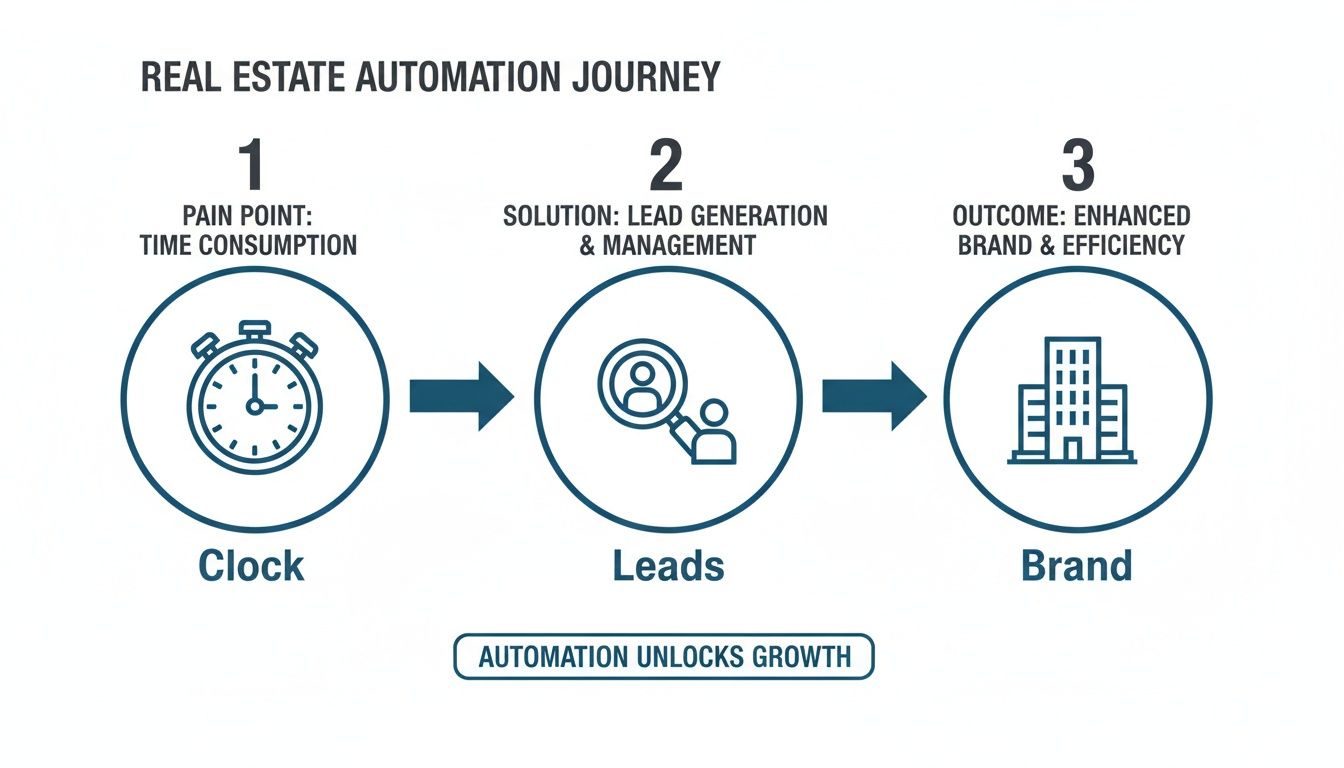
    Diagram illustrating the real estate automation journey from time consumption to lead generation and brand growth.

    It’s a clear path. You start by winning back lost hours, then you systematically generate more leads, and finally, you build a memorable brand. Automation is the engine that powers it all.

    Mapping Your Initial Contact Points

    First things first, you need to know every single digital "front door" a lead can use to enter your world. Don't just guess—sit down and physically list them out. This clarity is the bedrock of any effective real estate marketing automation for agents.

    Your list will probably look something like this:

    • Website Forms: The classic "Contact Us" or "What's My Home Worth?" submissions.
    • Portal Leads: Those high-intent inquiries from Zillow, Redfin, or Realtor.com.
    • Social Media: A DM on Instagram asking about a listing or a lead from a Facebook ad campaign.
    • Open House Sign-ins: Digital sign-in sheets are goldmines that can—and should—feed directly into your CRM.

    Once you have this map, the fun begins. You can craft a unique, automated response for each source. That Zillow lead? They should get an immediate text: "Hi [Name], just got your inquiry for 123 Main St. Free for a quick call in the next 5 minutes?" Speed is everything here. We all know the stats—something like 90% of buyers go with the agent who gets back to them first.

    Meanwhile, the lead from your website who asked for a home valuation gets a totally different, but equally instant, email. That message can confirm you've received their request and maybe even include a link to your pre-listing guide. You're positioning yourself as the expert before you've even picked up the phone.

    Building the Nurture Sequence

    After that first contact, your system should automatically tag the lead in your CRM based on where they came from and what they want (e.g., "Zillow Buyer Lead" or "Website Seller Lead"). This tag is the trigger. It sets off a tailored sequence of emails, texts, and even tasks for you to complete.

    A great workflow doesn't just respond; it anticipates the client's next question. By sending a pre-listing packet or a neighborhood guide automatically, you're not just saving time—you're building trust and demonstrating expertise from the first click.

    Let's walk through a real-world scenario for a seller lead who filled out your "Home Valuation" form:

    1. The Instant Response: The moment they hit "submit," an email and a text message go out. The email confirms their request and attaches your guide on the "5 Mistakes to Avoid When Selling in [Your City]."
    2. Day 2 Follow-Up: An automated email goes out sharing a recent client success story or a glowing testimonial. Hello, social proof.
    3. Day 4 Insight: Another email lands in their inbox with a quick market update for their specific neighborhood, showing off your local knowledge.
    4. Day 7 Task Creation: The system stops sending messages and instead creates a task directly in your calendar: "Call Jane Doe." By now, she's been warmed up with genuinely useful content, making your call feel helpful, not pushy.

    This kind of multi-step, multi-channel approach keeps you top-of-mind without you having to manually track every single lead. It turns follow-up from a dreaded chore into a reliable system that consistently guides potential clients from a casual click to a signed listing agreement.

    Using AI to Create Real Estate Content That Actually Sells

    Let's be honest: for most agents, writing content feels like a chore. You're juggling showings, offers, and a mountain of paperwork. The last thing you have time for is crafting the perfect Instagram caption or a compelling property description.

    This is where AI automation changes the game. I'm not talking about replacing your unique voice, but about giving you a powerful assistant that can handle up to 90% of the tedious writing, freeing you up to do what you do best—sell homes.

    Modern AI tools aren't just spitting out generic, robotic text. They can craft descriptions specifically tuned for the platform you're posting on. An MLS description, for instance, needs to be dense with facts and keywords for other agents. But a Zillow description? That needs to tell a story and paint a picture for a potential buyer.

    One Property, Multiple Platforms, Zero Extra Work

    Think of a good AI tool as your in-house copywriter, one who’s an expert on every single marketing channel. It knows what makes a buyer pause their scroll on Facebook and what they’re searching for on Redfin. This means you can create multiple, optimized versions of a listing's story in a matter of seconds.

    For just one property, a smart AI platform can instantly generate:

    • An MLS-ready description that’s all business—packed with keywords, specs, and the critical details agents look for.
    • A compelling Zillow & Redfin narrative that sells the lifestyle. Think less about square footage and more about "sipping your morning coffee on the sun-drenched patio."
    • Quick, eye-catching social media captions and posts designed for likes, comments, and shares.

    All you do is plug in the property address and basic details, and out comes a full suite of marketing materials. It’s a massive time-saver.

    Man typing on a laptop displaying AI-generated real estate listings and content outdoors.

    Build a 30-Day Content Calendar Before Your Coffee Gets Cold

    The real magic of real estate marketing automation for agents is achieving consistency without the daily grind. Forget waking up and thinking, "Ugh, what do I post today?" You can generate a complete 30-day social media calendar faster than you can finish your morning coffee.

    And this isn't just a bunch of random posts. A good system will create a strategic mix of content designed to engage your audience and build your brand.

    AI doesn't just write words; it builds a strategy. It can weave in proven psychological triggers like scarcity ("This gem won't last long!") or social proof ("Join the wave of buyers discovering this amazing neighborhood!") to turn passive followers into active leads.

    These calendars go beyond just your listings. They’ll mix in local market updates, spotlights on neighborhood coffee shops, and genuinely helpful homebuyer tips. This is how you stop being just another agent and become the go-to expert for your area. For more strategies on this, we've got a ton of great articles over on the ListingBooster.ai blog.

    Stay Compliant Without Even Thinking About It

    Here's a benefit most people overlook: built-in compliance. When you're writing everything yourself, it’s surprisingly easy to accidentally use a phrase that could get you in hot water with Fair Housing guidelines. It's a risk you might not even realize you're taking.

    The best AI platforms have compliance checks baked right in. They automatically scan every sentence they generate to flag and remove problematic language. It’s a critical layer of protection for you and your brokerage that works behind the scenes.

    This automated safety net ensures your marketing is not only powerful but also ethical and legally sound. It gives you the confidence to move fast and publish great content, which is exactly what you need to do. After all, buyers consistently rank detailed property info and quality photos as the most important features on a real estate website.

    Automating Lead Nurture Campaigns That Actually Convert

    Here’s a tough truth in real estate: most agents give up on a lead way too early. A couple of calls, an email or two, and then… crickets. That lead gets dumped into the "cold" pile, never to be seen again. This is exactly where setting up smart, automated marketing becomes your secret weapon.

    It's not about spamming people with generic junk. It’s about building nurture sequences that feel personal, targeted, and genuinely helpful. These campaigns work for you in the background, long after you would have manually moved on.
    A smartphone displaying marketing icons, a coffee cup, a calendar, and a document with 'NURTURE SEQUENCE' text.

    Different Leads Need Different Conversations

    A one-size-fits-all follow-up script just doesn't cut it. The real magic in lead nurturing comes from segmentation. Think of your CRM as your command center, automatically tagging leads based on where they came from and what they’re looking for. This lets you send the right message to the right person, every time.

    Every agent should have at least these three campaigns running on autopilot:

    • The New Online Lead Sequence: A 10-day mix of emails and texts for those fresh Zillow or website leads. The goal here is to build trust fast with valuable content that isn't just a sales pitch.
    • The Past Client Referral Engine: This is a long-term, low-touch campaign that keeps you top-of-mind. Automate birthday wishes, send a "Happy Home-iversary" email, or share a quarterly local market report. It's all about staying relevant.
    • The "Wake the Dead" Campaign: You know all those leads that went silent months ago? This sequence is built to re-engage them. A big market shift or a new listing in their old area of interest is the perfect trigger to get back in touch.

    Personalization at scale is the name of the game. Your system should automatically send a first-time homebuyer guide to a new lead tagged as a 'renter' and a neighborhood market report to someone who inquired about a specific zip code.

    A Look at a Real-World Nurture Sequence

    Let's walk through how this actually works. Imagine a new buyer lead fills out a form on your website. Instead of just a single "thanks for your inquiry" email, your automated system can kick off a multi-day, multi-channel strategy that starts building real rapport.

    The table below lays out a simple but incredibly effective sequence. It’s designed to position you as an expert resource from day one, not just another agent hunting for a commission.

    Sample 7-Day Nurture Sequence for New Buyer Leads

    Day Channel (Email/SMS) Content Focus Goal
    1 Instant SMS & Email Acknowledge inquiry, attach a buyer's guide for your city, and suggest a quick 5-minute call. Demonstrate speed and value immediately.
    3 Email Share a recent client testimonial or success story about finding the perfect home in a competitive market. Build social proof and credibility.
    5 Email Send a concise market update for a neighborhood they showed interest in. Showcase your local market expertise.
    7 SMS A simple, low-pressure text: "Hi [Name], just checking in. Find any homes online that caught your eye this week?" Re-engage and prompt a direct conversation.

    This kind of automated approach guarantees every single lead gets consistent, high-value follow-up, which dramatically increases your chances of turning them into a client. You're not just pestering them; you're educating, building trust, and proving your worth before you ever shake their hand.

    Are Your Automations Actually Working? How to Measure and Optimize

    Setting up your automation system is a huge first step, but it's not the end of the road. Think of it like a new car—you don't just buy it and never check the oil. The real magic happens when you start consistently measuring what’s working, what isn't, and refining your approach. This is how you transform your marketing from a series of one-off tasks into a predictable machine for growing your business.

    To get there, you have to ignore the "vanity metrics." Things like social media likes feel good, but they don't tell you if you're actually getting closer to a commission check. We need to focus on the numbers that directly impact your bottom line.

    Zeroing In on Your Key Performance Indicators

    The best way to see what's really going on is to track a few Key Performance Indicators, or KPIs. These are just simple, powerful numbers that tell a clear story about your marketing's health. Your automation platform should make these easy to find.

    Here are the KPIs I always tell agents to live by:

    • Email Open Rate: Are people even opening your emails? A low open rate is a red flag that your subject lines aren't cutting through the noise of a crowded inbox.
    • Click-Through Rate (CTR): This shows how many people who opened your email actually clicked a link inside. It's the true measure of whether your message and call-to-action are compelling.
    • Lead-to-Appointment Conversion Rate: This is the big one. It tracks the percentage of leads from your automated campaigns that actually book a meeting with you. This KPI tells you everything about the quality of your leads and the power of your nurture sequences.

    A classic scenario I see all the time is a high open rate but a rock-bottom CTR. That tells you the subject line was great—it got their attention—but the email content itself didn't deliver on the promise. That's a clear signal to tweak your email body or your call-to-action.

    Using A/B Testing to Make Smart Changes

    Once you know your numbers, you can start making them better with A/B testing. Don't let the term intimidate you; it's just a simple experiment. You test one small change at a time to see what your audience responds to. The goal is to make small, informed improvements that stack up into massive gains.

    Let's say you're sending out a "Just Listed" email. Instead of guessing the best subject line, you test two versions:

    • Version A: "Just Listed: 123 Main Street"
    • Version B: "Your Chance to Live in the Perfect Neighborhood"

    Your automation tool sends Version A to one half of your list and Version B to the other. You let it run for 24 hours and check the results. If Version B gets a 20% higher open rate, you've just learned something valuable about what grabs your audience's attention.

    You can apply this same simple logic to everything—the call-to-action on a Facebook ad, the timing of an SMS follow-up, or the image you use in a newsletter. By constantly testing, you stop guessing and start building a strategy that you know works.

    Your Top Questions About Real Estate Marketing Automation, Answered

    Jumping into marketing automation can feel like a huge leap. I get it. Agents often ask me if these systems are too complicated, too pricey, or just too… robotic. Let's cut through the noise and talk about what's really on your mind when you think about automating your workflow.

    How Tech-Savvy Do I Really Need to Be?

    Honestly, not very. If you've ever posted on Facebook or figured out how to use your email, you've got this.

    Today’s best platforms are built for busy agents, not coders. The whole point is to make your life easier, not give you another technical headache. Getting started usually just means connecting your social media accounts and plugging in some basic info about your brand—a process that often takes less than 10 minutes. The interfaces are designed to be intuitive, guiding you through each step without any confusing jargon.

    Will My Marketing Lose Its Personal Touch and Sound Like a Robot Wrote It?

    That’s a completely fair question. We've all seen clunky, obviously automated marketing, and nobody wants that. But the AI we have today is a different beast entirely.

    Good platforms now use incredibly sophisticated language models that produce content that feels natural and human. They can even adapt their tone of voice—shifting from a formal, professional property description for the MLS to a fun, punchy caption for an Instagram Reel.

    Think of it this way: the AI is your junior copywriter, not your replacement. It does 90% of the heavy lifting, and then you swoop in for the final polish. You can always edit every single word, add a personal anecdote, or tweak a phrase to sound exactly like you.

    It's the ultimate combination: the lightning speed of automation paired with your authentic voice.

    Is This Really Affordable for a Solo Agent or Someone on a Tight Budget?

    Yes, and here's why: it’s not about the monthly subscription cost, it’s about the value of your time. Time is the one thing you can never get back, and it's your most valuable asset in this business.

    Think about it. If a platform saves you just 5-10 hours of marketing work every month, it’s almost certainly paying for itself. That’s time you can now pour back into dollar-producing activities like showing homes, nurturing high-value leads, or negotiating contracts. Most services, including ours, offer scalable plans and free trials so you can see the ROI for yourself. You can take a look at the different pricing options available for agents to see how it might fit into your budget.

    How Does Automation Help with Compliance?

    This is a huge benefit that often gets overlooked. A good real estate marketing automation for agents platform is your secret weapon for staying on the right side of MLS rules and Fair Housing laws.

    The best tools have compliance baked right in.

    • Pre-Publication Scanning: The AI automatically scans your text for trigger words and problematic phrases that could land you in hot water with Fair Housing regulations.
    • Consistency for Teams: For brokers, this is a lifesaver. It ensures every agent on the team is marketing properties with the same compliant language.
    • A Built-In Safety Net: It’s an extra layer of protection for your license and your reputation, minimizing the risk of a costly, accidental mistake.

    This built-in oversight lets you market properties confidently and quickly. You can focus on selling without constantly looking over your shoulder, worrying about compliance issues. It’s an essential tool for any agent who's serious about their career.


    Ready to turn your marketing from a constant grind into a powerful growth machine? ListingBooster.ai is the command center designed to give you back your time and establish you as the expert in your market. See how it works at https://listingbooster.ai.

  • Your Guide to Real Estate Listing Marketing Software

    Your Guide to Real Estate Listing Marketing Software

    If you’ve ever felt like you’re spending more time playing marketing coordinator than real estate agent, you’re not alone. The hours spent writing property descriptions, designing flyers, and mapping out a social media plan for each new listing add up fast.

    That’s where real estate listing marketing software comes in. Think of it as your dedicated marketing engine, built specifically to tackle the mountain of prep work that comes before a home hits the market. It’s a specialized toolkit that turns hours of tedious manual tasks into just a few clicks.

    Understanding Your New Marketing Engine

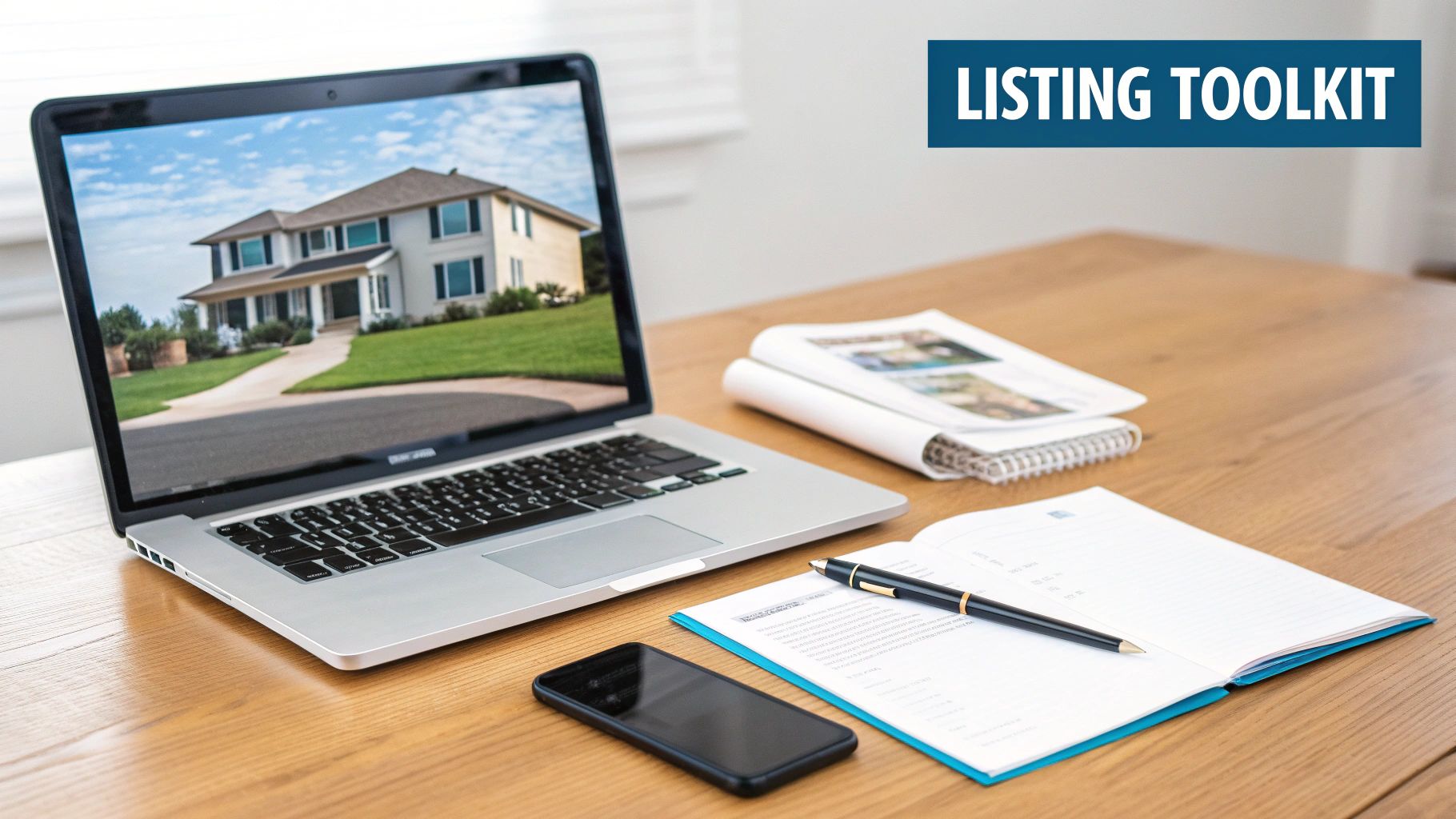
    A modern workspace with a laptop showing a house, a pen, notebook, phone, and 'LISTING TOOLKIT' text.

    So, what exactly is this software? While your CRM is all about managing your client relationships, listing marketing software is laser-focused on the property itself. Its entire purpose is to help you win the listing and then promote it effectively.

    Instead of staring at a blank screen trying to find the perfect words, you can generate a compelling, MLS-compliant property description in seconds. Rather than guessing what to post on Facebook, you get a complete content calendar tailored to your new listing. This completely flips the script, moving you from a content creator to a strategic director, freeing you up to do what you do best: serve your clients and close deals.

    From Manual Grind to Automated Edge

    The core idea is to give you speed, polish, and a serious competitive advantage. The software pulls together property data, market trends, and even your own branding to generate a full-blown marketing kit. Imagine walking into a listing appointment not just with a CMA, but with tangible, professional marketing assets that show sellers you mean business.

    This isn’t just a niche tool; it’s where the industry is heading. The global market for real estate marketing automation software hit USD 1.12 billion in 2024 and is on track to reach USD 4.26 billion by 2034. This explosive growth signals a massive shift towards platforms like ListingBooster.ai that empower agents to work smarter. You can dive deeper into the numbers in this full research report.

    The whole point is to turn hours of prep into minutes of production. It’s about spending less time behind a keyboard and more time in front of sellers, demonstrating your value.

    The shift from the old way of doing things to a software-powered approach is night and day. Let's break down the difference.

    Traditional vs Software-Powered Listing Prep

    Marketing Task Traditional Method (Time & Effort) Software-Powered Method (Time & Effort)
    Property Description 1-2 hours: Manual writing, editing, and ensuring MLS compliance. 5 minutes: AI-generated drafts, with options for different tones and lengths.
    Social Media Plan 2-3 hours: Brainstorming posts, finding images, scheduling for multiple platforms. 10 minutes: Auto-generated, multi-week content calendar with copy and images ready to go.
    Flyer/Brochure Design 1-3 hours: Fiddling with templates in Canva or hiring a designer. 5 minutes: Professionally designed, brand-consistent templates auto-filled with property info.
    Competitive Analysis 1 hour+: Manually pulling comps and summarizing market position. 15 minutes: Automated report showing how the property stacks up against the competition.

    As you can see, the time savings are massive, allowing agents to focus on high-value activities instead of getting bogged down in administrative work.

    How It Works in Practice

    At its core, this software is about two things: preparation and presentation. It gives you a structured workflow to make sure every listing you go after is backed by a solid, data-driven marketing plan.

    Here’s what’s happening under the hood:

    • Data Aggregation: It starts by pulling all the essential property details, photos, and local market data from just an address.
    • Content Generation: It uses AI to write unique property descriptions, engaging social media posts, and persuasive email copy.
    • Asset Creation: It instantly produces print-ready flyers, detailed reports, and polished digital presentations.
    • Strategic Planning: It helps you build out a competitive analysis and a week-by-week marketing timeline.

    Ultimately, real estate listing marketing software gives you a powerful, immediate answer to a seller’s most important question: "How will you market my home better than anyone else?" By arming you with impressive, customized marketing materials on the spot, it helps you win the listing before you even walk out the door.

    Core Features That Help You Win Listings

    Laptop displaying real estate listings with marketing cards and a 'Win More Listings' banner on a desk.

    The best real estate listing marketing software isn't just about shaving a few minutes off your day. It’s about walking into a listing appointment armed with an entire marketing arsenal designed to wow sellers and lock down the contract. These platforms are built to address a seller's biggest questions head-on: "How will you make my home stand out?" and "What's your plan?"

    At their core, these tools let you generate impressive, client-facing materials on the spot. You stop telling sellers what you’re going to do and start showing them exactly what your high-end marketing looks like, right then and there.

    AI Property Descriptions

    Let's face it: writing compelling property descriptions is a chore. It takes creativity, time, and a knack for storytelling. AI description generators completely change the game. In a matter of seconds, they can spin up captivating narratives that put a home’s best features in the spotlight.

    But it’s not just about speed. A good tool crafts multiple versions of the description, each one tailored for different platforms—one for the character-limited MLS, another for Zillow, and a different angle for Realtor.com. This ensures your listing's story resonates with buyers wherever they're looking, all while keeping the language compliant with Fair Housing laws.

    Deployable Social Media Calendars

    Imagine sitting down with a potential seller and handing them a complete, multi-week social media plan for their property. That’s the power of a built-in social media calendar feature.

    Instead of just promising to post on Facebook, you can present a detailed, day-by-day schedule showing exactly what you’ll do. This isn't a vague promise; it's a concrete plan.

    • "Just Listed" announcements ready to go with professional graphics.
    • Feature highlights that call out the renovated kitchen or the perfect backyard for entertaining.
    • "Open House" reminders and engaging follow-up posts.
    • Neighborhood spotlights that sell the lifestyle, not just the house.

    This simple feature transforms your entire pitch. You’re no longer just an agent who says they’ll market the home; you’re the agent who showed up with the marketing plan already done.

    You’re not just selling a service; you’re selling confidence. When you can hand a seller a detailed 30-day marketing plan, it proves you are prepared, professional, and ready to execute from day one.

    This is the kind of preparation that drives growth in the U.S. real estate software market, which was valued at USD 2.45 billion in 2022 and is expected to hit USD 5.10 billion by 2030. It's no surprise the agent segment is projected to grow fastest at a 10.9% CAGR, fueled by tools that make marketing and client service more efficient. You can dive deeper into these trends in this market report.

    Competitive Analysis Tools

    Gut feelings don't win listings, but solid data does. A competitive analysis feature is your secret weapon for pricing conversations. It pulls real-time, hyper-local market data to show sellers exactly how their property compares to others on the market right now.

    This isn't a clunky spreadsheet. It’s a clean, easy-to-read report that backs up your pricing strategy with hard evidence, instantly positioning you as the local market expert who came prepared.

    Print and Export Assets

    Finally, you never want to leave a listing appointment empty-handed. Top-tier real estate listing marketing software lets you instantly print or export professional-grade materials like property flyers, market reports, and your marketing plan summary.

    Leaving behind these tangible, high-quality documents keeps you and your modern approach top-of-mind long after you’ve walked out the door. It’s that final, professional touch that helps you stand out and win the business.

    How This Software Gives Agents and Teams an Unfair Advantage

    The real magic of real estate listing marketing software isn't just about the cool features—it's about the leverage it gives you. It turns a bunch of powerful tools into real-world advantages that change how you compete and win listings. It’s the difference between always playing catch-up and finally getting ahead of the game.

    For a solo agent, this kind of software is the great equalizer. Suddenly, you can churn out marketing materials that look like they came from a big brokerage with an entire marketing department. No more choosing between prepping for a listing presentation and actually being out there with clients. You can do both, and your marketing will look sharp every single time, which is huge for building trust.

    This levels the playing field completely. You can walk into any listing appointment with the same polished, data-backed assets that the top producers in your market use.

    Scaling Consistency for Teams

    For teams and boutique brokerages, the biggest win is consistency. When every agent is working from the same playbook—the same software—every single listing presentation, social media post, and flyer reflects your team's brand and quality standards. It kills the wild-west marketing approach where every agent does their own thing.

    This means a brand new agent can present just as professionally as a 20-year veteran. It makes training new hires a breeze and allows you to scale your team without sacrificing the quality of your marketing. As you grow, your marketing muscle grows right with you.

    The core advantage here is flipping the switch from reactive to proactive marketing. You can have a complete promotional campaign ready to launch the second a listing agreement is signed. This shows sellers you mean business and builds a reputation for getting things done—fast.

    The Differentiator for Top Producers

    In a cutthroat market, top producers stay on top by standing out. When every agent is promising the same great service, real estate listing marketing software is your proof. It lets you walk the walk with a modern, tech-savvy approach that your competitors can only talk about.

    This isn't just about saving a few hours. It’s about showing off a superior process. When you can pull up an AI-generated social media calendar or a deep-dive market analysis right in the living room, you instantly look leagues ahead of the agent who showed up with a printed Zillow estimate. You’re not just selling a house; you’re selling a sophisticated marketing engine.

    By exploring the benefits for agents in detail, you can see how this kind of tool helps at every stage of an agent's career. This proactive approach shows sellers you're ready to hit the ground running, making them confident they chose the right person for the job.

    Choosing the Right Listing Marketing Software

    Picking the right real estate listing marketing software isn't just about chasing the platform with the longest feature list. It’s more like choosing a key business partner. You’re looking for something that fits seamlessly into how you already work, protects your license, and gives you a real, measurable return.

    Get this decision right, and the software becomes a powerful secret weapon in your listing presentations. Get it wrong, and you're stuck with wasted time, subscription fees, and a tool that just gathers dust. The best software makes you faster and more effective right out of the box.

    Start with the Must-Haves: Compliance and Data Accuracy

    Before you get dazzled by AI features or fancy templates, your first filter should always be compliance. In our industry, a single mistake can have serious consequences. Your software needs to be your shield, not a liability.

    • MLS & Fair Housing Compliance: This is the big one. The platform absolutely must generate property descriptions and marketing materials that follow all MLS rules and Fair Housing laws to the letter. Any tool that spits out biased or non-compliant language is a direct threat to your license.

    • Accurate Data: The software's market analysis and property details have to be spot-on. If it pulls outdated or just plain wrong information, your credibility with sellers is shot before you even get started.

    Your software is more than a marketing gadget; it’s a direct reflection of your professional standards. If it doesn't bake in compliance with regulations like Fair Housing, it's not worth your time—no matter how cool its features seem.

    Is Your Marketing Ready for What's Next?

    Today's marketing needs to perform on more than just the Zillows and social media platforms of the world. Search is changing fast, and your software should be keeping up.

    This is where an AI & SEO readiness check comes in. You need a tool that creates listing content optimized for how people actually find homes now—which includes traditional search engines like Google and new AI-powered platforms like ChatGPT. Being able to explain this forward-thinking approach to sellers shows them you're not just another agent; you're ahead of the curve.

    A Quick Evaluation Checklist

    To help you cut through the noise, here's a quick checklist you can use when comparing different platforms. Think of it as your cheat sheet for making a smart decision.

    Evaluation Checklist for Listing Software

    Feature/Consideration Importance Level What to Look For
    MLS Compliance Critical Explicit guarantees that all generated content meets local MLS rules.
    Fair Housing Adherence Critical Built-in filters and AI training to avoid discriminatory language.
    AI/SEO Readiness High Content is optimized for both traditional and conversational search.
    Data Accuracy High Direct, reliable data feeds for comps and property details.
    Onboarding Time Medium Can you be up and running in minutes, not days? Is it intuitive?
    Transparent Pricing Medium Clear, flat-rate subscription models. Avoid confusing credit systems.
    Free Trial Availability High A "try before you buy" option to ensure it fits your workflow.

    This table isn't exhaustive, but it covers the non-negotiables. Nail these points, and you'll be well on your way to finding a tool that genuinely helps you win more listings.

    Don't Overlook Practicality and Price

    Finally, the most advanced tool in the world is useless if you never use it. A clunky interface or confusing pricing structure can stop you in your tracks.

    • Onboarding Time: How fast can you go from signing up to creating your first complete listing kit? The answer should be minutes. A great tool feels like an old friend from the moment you log in—it just makes sense.

    • Pricing Models: Look for simple, transparent subscription plans. Platforms with hidden fees or weird credit systems are an immediate red flag. A free trial is also a must, as it lets you see the value for yourself before you pull out your credit card. You should be able to look at a clear pricing page and immediately understand which plan works for your business.

    Putting Your Software Into Action

    Let's walk through what this looks like in the real world. Forget theory for a moment and imagine how real estate listing marketing software actually changes your day-to-day. The moment a potential seller calls you for a listing appointment, the race begins. The old way meant scrambling for hours—pulling comps, wrestling with a CMA, and maybe hastily designing a basic flyer.

    Now, with the right platform, that entire frantic process gets an upgrade. Picture this instead: you get the call, and your only job is to plug the property's address into your software. In that single step, you’re not just prepping for a meeting; you're building a complete, knockout presentation kit.

    From A Single Address To A Full Presentation

    In less than ten minutes, the software does the heavy lifting and hands you a full suite of marketing materials. This isn't just a simple data sheet. It’s a polished, professional package that instantly shows the seller you’re operating on a different level than your competition.

    So, what’s in this instant marketing kit?

    • A Hyper-Local Market Analysis: Think of it as a CMA on steroids. It goes deeper, showing exactly how their home compares to the active competition with compelling visuals and hard data.
    • A Detailed 30-Day Social Media Schedule: You’re not just promising to post on social media; you’re showing them a tangible, day-by-day plan to create buzz and get buyers excited.
    • Professionally Designed Handouts: These aren't your typical templates. They're print-ready materials that clearly explain your modern marketing strategy, including how you use AI to get their listing seen.

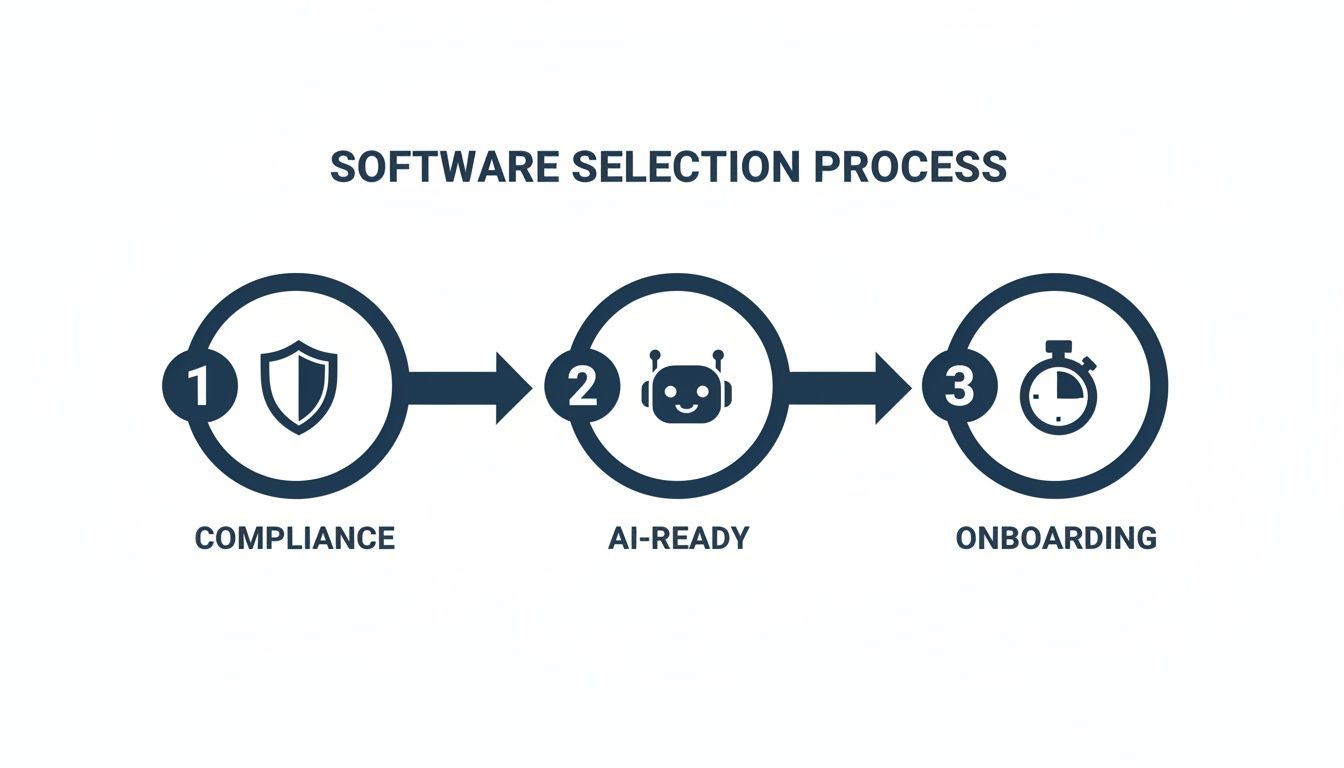
    This simple three-step infographic breaks down the essential criteria for choosing a platform that can deliver these kinds of results.

    Three-step software selection process infographic with icons for compliance, AI-ready, and onboarding.

    As you can see, the foundation is built on compliance and AI readiness—the core ingredients for a tool that truly works—before you even think about how quickly you can get it up and running.

    Changing the Conversation at the Listing Table

    When you walk into a listing appointment armed with this kit, your confidence is through the roof, and the entire vibe of the meeting changes. The conversation pivots away from a defensive haggle over commission and becomes an exciting discussion about the incredible value you bring. You’re not just telling them you have a killer marketing plan; you’re physically handing it to them.

    This simple act changes everything. You can confidently explain how your strategy will get their home maximum exposure, and you have the printed proof right there in their hands. It tells a powerful story that makes it incredibly easy for the seller to see you as the only logical choice.

    When you can show a seller a complete marketing plan before they’ve even signed the listing agreement, you’ve already won. You’re no longer just another agent; you are a marketing expert who came prepared to execute.

    This level of preparation is why so many agents are making the switch. In fact, 75% of pros who use these tools report higher client engagement. For team leads and broker-owners, it can slash pitch prep time by a staggering 80%. And as AI-driven search becomes the norm—with nearly 90% of home searches now happening on mobile or AI-powered platforms—having optimized content is non-negotiable. You can learn more about the commercial real estate software market and its explosive growth to see where things are headed.

    By demonstrating your modern approach right from the start, you effectively pre-sell your expertise and make the decision to hire you an easy one.

    Common Questions About Listing Marketing Software

    Whenever you're thinking about adding a new tool to your tech stack, it's natural to have a few questions. When it comes to real estate listing marketing software, most agents are wondering the same things: Will this really save me time? Is it compliant? And will it actually help me win more business?

    Let’s tackle some of the most common questions head-on so you can see if this kind of platform is right for you.

    One of the first things agents ask is about compliance. It’s a huge deal. "Will the AI get me in trouble?" is a question I hear all the time. A good platform is built from the ground up with compliance in mind. It’s not just a generic AI writer; it's trained specifically on Fair Housing laws and local MLS regulations to ensure every property description and ad it creates protects your license, not risks it.

    Another frequent question is whether this kind of software is meant to replace your CRM. The short answer is no—it's designed to work alongside it. Your CRM is your command center for client relationships and deal flow. Listing marketing software is a highly specialized tool for one critical part of your business: winning the listing and marketing the property effectively. Think of it as your pre-listing secret weapon.

    How Much Time Does It Really Save?

    This is where the rubber meets the road. Agents are rightfully skeptical if the time spent learning a new tool will outweigh the benefits. But a well-built platform can generate a full marketing plan from just a property address in less than 10 minutes.

    Let’s break down what you’re probably doing manually right now:

    • Writing Property Descriptions: At least 1-2 hours of agonizing over every word.
    • Creating a Social Media Plan: Another 2-3 hours of brainstorming posts and scheduling them.
    • Designing a "Just Listed" Flyer: 1+ hours wrestling with a clunky design program.

    This software takes those repetitive, time-sucking tasks off your plate entirely. You get back hours on every single listing, freeing you up to focus on what you do best—building relationships and closing deals.

    Is This Software Difficult to Learn?

    Nobody wants to spend weeks learning a complicated new system. The best listing marketing platforms are built for busy agents, not tech wizards. The whole point is to make your life easier, not harder.

    You should be able to log in and create your first complete, professional marketing presentation within minutes. It’s designed to be intuitive so you can get in, get what you need, and get back to your clients.

    For more deep dives into content strategy and winning listings, the ListingBooster.ai blog is packed with practical advice. It's a great spot to find new ideas.


    Ready to walk into every listing appointment with a marketing presentation that blows the competition away? ListingBooster.ai creates a complete, professional marketing kit in minutes, giving you the confidence and the edge you need to win. Start your 30-day free trial today!