Tag: real estate marketing automation

  • Real Estate Listing Marketing Automation Software 2026 Guide

    Real Estate Listing Marketing Automation Software 2026 Guide

    You’re probably doing this the hard way right now.

    A new listing goes live. You pull photos from one folder, write a description in another tab, resize images for Instagram, text your assistant about a flyer, copy details into the MLS, post to Facebook, forget LinkedIn, then remember you still haven’t followed up with the buyer lead who asked about a similar home yesterday. By the time the property is fully promoted, the first burst of attention is already fading.

    That’s the problem real estate listing marketing automation software solves. It doesn’t just “save time.” It turns scattered marketing tasks into a system that runs in the right order, with the right data, across the right channels, without depending on your memory.

    The shift matters because this category is growing fast. The global market for real estate marketing automation software was valued at USD 1.12 billion in 2024 and is projected to reach USD 4.26 billion by 2034, with a 14.3% CAGR during 2025 to 2034, according to Market.us research on the real estate marketing automation software market. That growth isn’t abstract. It reflects how agents work now, under pressure to market listings faster, respond quicker, and stay visible where buyers are searching.

    What Is Real Estate Marketing Automation

    Real estate listing marketing automation software acts as the operating system behind your listing promotion.

    You enter the property details once, or the platform pulls them in from your listing feed, then the software handles the repeatable work that usually gets scattered across tabs, tools, and reminders. That can include creating listing copy, formatting social posts, updating your website, sending alerts, routing leads into your CRM, assigning follow-up tasks, and tracking what gets attention.

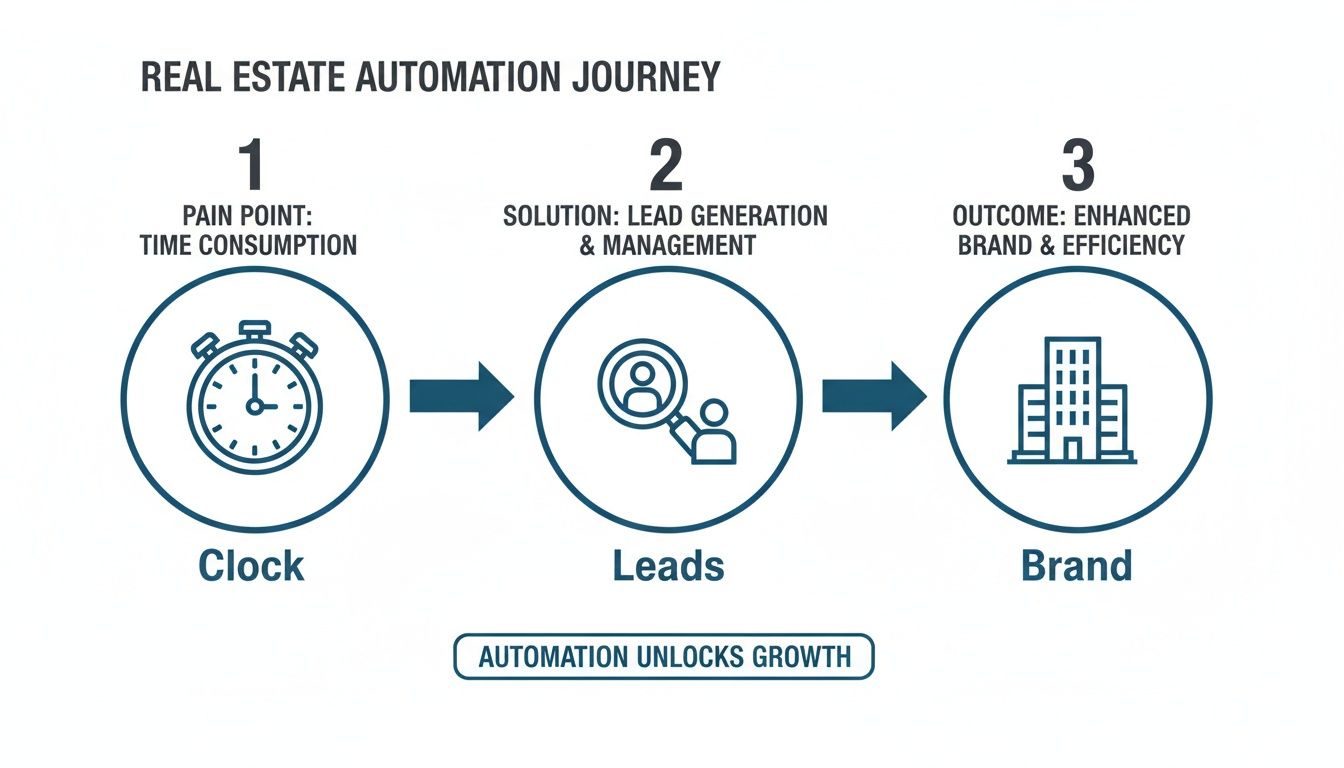
    A diagram illustrating the core components and benefits of a real estate marketing automation software platform.

    The manual version versus the automated version

    Manual listing marketing behaves like a relay race where each baton pass depends on your memory. You write the listing description, shorten it for Instagram, adjust it again for email, upload photos to the website, check whether the open house details match everywhere, then search your CRM for buyers who might care. If the price changes, you repeat the whole routine in smaller pieces.

    Automation changes the job from repeating tasks to managing a system. The listing becomes the source record. From there, connected templates, publishing rules, and follow-up triggers carry the same property facts into each channel. One update can flow through multiple outputs without extra copying and pasting.

    Practical rule: If your listing launch depends on a checklist you carry in your head, you don't have a system yet.

    That distinction matters because busy agents usually do not have a work ethic problem. They have a coordination problem.

    What the software is really doing

    This software connects three moving parts that often live in separate places: property data, marketing content, and lead response.

    A simple analogy helps. Your listing data is the ingredient list. The software is the kitchen process that turns those ingredients into finished dishes. Your channels are the serving stations, your website, email, social platforms, ad audiences, and CRM. If the ingredient list changes, the finished output should change too. Good automation keeps those pieces synchronized.

    For agents, that solves a very specific pain. The same listing facts stop getting rewritten by hand in five formats by three different people. The software standardizes what can be standardized, so your brand sounds consistent and your updates stay accurate.

    For agents who want a broader playbook for bringing in traffic before automation kicks in, this guide on online real estate lead strategies is a solid companion resource because it helps connect lead generation with the follow-up system you build afterward.

    Why agents are adopting it now

    Buyer attention is fragmented. A prospect may first notice a home in a social post, visit your site later, sign up for alerts, ask an AI assistant about nearby schools or pricing, and return after seeing the listing again in search results. If your marketing exists in separate, unconnected pieces, those moments feel random. If your system is automated, they start to reinforce each other.

    That AI-assistant step is the new wrinkle many agents miss.

    Real estate marketing automation used to be discussed mostly as an efficiency tool. It still saves time, but the stronger reason to care now is visibility. The platforms you choose and the way they structure listing data, publish content, and keep details consistent can affect whether your properties and your brand are easy for ChatGPT, Google AI, and other answer engines to interpret. In other words, automation is no longer only about sending messages. It is also about making your listings machine-readable, reusable, and easier to surface in AI-driven search.

    If you want a focused look at how automation supports listing-specific content production, real estate content marketing automation is worth reading because it breaks down how listing assets turn into an ongoing content engine.

    The practical outcome

    A clear definition is this: real estate marketing automation turns each listing into a repeatable marketing process with cleaner data and faster response built in.

    That helps in three practical ways:

    • Launch faster. Listings reach your channels while attention is still fresh.
    • Stay consistent. Price changes, status updates, and branding are less likely to drift out of sync.
    • Build authority. Sellers see a professional system, and buyers encounter accurate information across more touchpoints, including AI-driven search experiences.

    Agents sometimes hear "automation" and picture generic, robotic marketing. Good software handles the repeatable production work so you can spend your time where judgment matters: advising sellers, answering objections, pricing correctly, and building trust.

    Key Features That Power Your Business

    Most platforms look complicated until you sort them into a few working parts. For agents, the easiest way to understand real estate listing marketing automation software is to think in terms of four engines: data, creative, distribution, and relationships.

    Each engine solves a different kind of daily friction.

    The data engine

    The data engine starts with MLS and IDX connections. This is the plumbing. Without it, the rest of the system is mostly manual work wearing nicer clothes.

    Real estate marketing automation platforms rely on direct MLS and IDX integration to enable automated new listing alerts, real-time market report generation, and property search functionality by pulling data directly from the MLS database, according to Saleswise on real estate marketing automation architecture. If that sounds technical, here’s the plain-English version: the software can’t market a listing well if it has to wait for you to copy and paste the listing details everywhere.

    When agents say, “I posted the wrong price on Facebook” or “the portal still showed the old status,” they’re usually describing a broken data engine.

    The creative engine

    Many agents either feel excitement or skepticism at this stage.

    The creative engine uses AI to turn listing facts into marketing assets. That can include listing descriptions, email subject lines, social posts, and visual content variations. The goal isn’t to replace judgment. The goal is to remove blank-page syndrome and repetitive rewriting.

    AI systems such as ChatGPT and specialized real estate AI tools can write listing descriptions, generate email subject lines, and create social content that saves agents hours weekly. Some platforms also deploy 23 psychology frameworks such as scarcity, social proof, and FOMO into generated captions, with Fair Housing compliance scanning before publication, as described in AgentPulse coverage of real estate marketing automation software.

    That last part matters more than many agents realize. A caption that gets attention but creates compliance risk is not a win.

    For a closer look at how these tools approach property copy, real estate listing content generator shows what agents should evaluate in AI-assisted listing writing tools.

    Strong AI copy isn't just faster. It should sound market-aware, match the property type, and avoid language your broker would have to fix later.

    The distribution engine

    Once the content exists, it has to move.

    Distribution features handle scheduling, channel formatting, posting calendars, and asset reuse. They transform one listing into multiple pieces of marketing instead of a single post that disappears by tomorrow morning.

    A practical distribution engine should help with things like:

    • Platform adaptation: It should turn one property story into versions that fit Instagram, Facebook, LinkedIn, email, and print.
    • Status-based publishing: It should trigger fresh content when a listing becomes active, has a price adjustment, adds an open house, goes under contract, or closes.
    • Central updates: It should reduce the need to edit each channel separately when listing details change.

    This engine solves a common seller complaint: “What exactly are you doing to market my home?” When you have a visible publishing system, that answer gets much clearer.

    The relationship engine

    The relationship engine is where marketing stops being broadcasting and starts becoming pipeline management.

    It connects listing activity with your CRM, lead capture forms, website behavior, and follow-up logic. If someone clicks a listing repeatedly, saves a property, or responds to an alert, the system should record that behavior and help you act on it.

    Here’s what to look for inside that engine:

    • Lead capture from multiple sources: Website forms, portals, social ads, and contact requests should flow into one place.
    • Behavior tracking: The software should notice which listings, neighborhoods, or price bands are getting attention from a specific contact.
    • Nurture triggers: Follow-ups should reflect what the person did, not just the date they entered your database.

    The relationship engine is what separates “content software” from an actual business system. A pretty flyer helps. A tracked buyer signal helps you close.

    How the engines work together

    These engines are most valuable when they’re connected. If your data lives in one tool, your copy in another, your scheduler in a third, and your leads in a fourth, you’re still stuck managing handoffs.

    That’s why the category works best when the software feels less like a toolkit and more like an operating system. Your listing enters once. The system creates, distributes, tracks, and updates from there.

    For ambitious agents, that’s the difference between posting more and building real marketing infrastructure.

    Automation Workflows in Action

    Friday at 2:15 p.m., the listing is finally live. Photos just arrived. The seller wants to see it on Instagram before the afternoon school pickup line. Three buyer inquiries are already sitting in email, and none are tagged to the property yet.

    That moment is where real estate listing marketing automation software proves whether it is a real operating system or just another content tool.

    A professional working at a desk using real estate listing marketing automation software on multiple computer monitors.

    A solo agent launches a new listing

    For a solo agent, listing launch day often feels like running a restaurant kitchen alone. You are cooking, plating, answering the phone, and taking payment at the same time. The work is not hard because any one task is complicated. It is hard because all of it lands at once.

    Without automation, the agent rewrites the same property five different ways. One version goes to the MLS. Another gets trimmed for Instagram. A third becomes a Facebook post. Then comes the open house graphic, the email announcement, and the property page update. Speed drops. Quality gets uneven. The seller sees the gaps.

    A better workflow starts with the listing record and builds outward from there.

    1. The property details enter once. Address, price, photos, features, and remarks populate the campaign workspace.
    2. Draft marketing assets appear quickly. The system prepares editable descriptions, captions, and email copy based on the listing details.
    3. Each asset is shaped for its channel. Social posts, website copy, and email announcements are formatted for where they will be published.
    4. Inquiries stay tied to the listing. New leads are connected to the property that triggered them, which makes follow-up more relevant.
    5. The campaign continues after launch day. Instead of one announcement, the agent gets a repeatable sequence for features, open houses, price changes, and status updates.

    That last step matters more than many agents expect. The primary value is not saving 20 minutes on launch copy. It is keeping the listing visible long enough to create search signals, audience engagement, and reusable content that can later surface in AI-generated answers. If you want to see how one property can become a full publishing sequence, this guide on turning one listing into 30 days of content shows the logic.

    A team lead protects brand consistency

    Teams usually do not have a volume problem. They have a variance problem.

    One agent writes clear, polished copy. Another posts cropped photos with weak calls to action. A third forgets seller milestones, so the team appears active on some listings and invisible on others. From the seller's point of view, that inconsistency reads as disorganization.

    Automation gives the team a shared production line. The goal is not to make every agent sound identical. The goal is to make every listing look intentional.

    A solid team workflow often includes approved templates for listing announcements, open house promotions, price improvements, under-contract updates, and just sold posts. Agents can still edit the copy for their own voice, but the structure stays consistent. Fonts, colors, disclosures, and core messaging remain in place. Team leads can review higher-risk content categories before anything goes live.

    That kind of consistency does more than protect the brand on social media. It creates cleaner, repeated patterns across the web. Over time, those patterns make the team's listing content easier for search engines and AI systems to interpret, quote, and connect back to the right agent and brokerage.

    A brokerage scales support without scaling risk

    Brokerages face the same pressure, just at a larger scale. They need agents to market listings quickly, but they also need controls around language, disclosures, and review.

    At that level, automation works like traffic control at a busy airport. Every plane still has a different destination, but the tower keeps departures organized and safe. In marketing terms, the brokerage sets the rules for what can be published, what requires review, and what should happen automatically when a listing changes status.

    That means agents do not need to build every campaign from scratch. The brokerage can predefine workflows for new listings, open houses, price changes, pending updates, and sold announcements. Compliance steps can be built into the process instead of handled later as cleanup.

    One option in this category is ListingBooster.ai, which generates MLS-compliant property descriptions, creates a 30-day social content calendar from listing details, and supports multi-channel posting workflows. At the brokerage level, software like this is usually judged by a practical standard: can it help many agents produce consistent listing marketing without creating more review work for staff?

    What these workflows have in common

    The pattern is simple.

    Automation removes the hand-copying, reformatting, chasing, and remembering that usually break listing marketing at the exact moment speed matters. Agents still choose the message. The system handles the repetition.

    That shift changes more than efficiency. It creates a reliable stream of structured listing content tied to real properties, real updates, and real buyer interest. In a market where AI search is becoming a discovery channel, that discipline gives agents something many competitors still lack: marketing that is not only published, but also organized well enough to be found, reused, and cited.

    The New Frontier of AI Search Readiness

    Most agents still think about visibility the old way. Website SEO. Social posting. Maybe Google Business Profile. Those still matter, but they no longer tell the whole story.

    A growing share of buyers now begin by asking AI tools direct questions. They aren’t typing only “homes for sale in Phoenix.” They’re asking things like “Which neighborhoods are best for first-time buyers?” or “Who are the top agents for downtown condos?” If your content isn’t readable and reusable by AI systems, you can be active online and still be invisible where search behavior is moving.

    A person using advanced AI real estate interface to analyze housing data and property listings digitally.

    Why this matters now

    The gap is larger than many agents realize. The AI search visibility gap for real estate agents remains largely unaddressed, and over 40% of homebuyers start searches in AI tools while major platforms such as kvCORE and BoomTown do not emphasize automation for building AI-readable content at scale, according to Birdeye's analysis of real estate marketing automation and AI discoverability.

    That changes the job of marketing automation software.

    It’s no longer enough for the tool to send drips and listing alerts. It also needs to help agents create a digital footprint that AI systems can interpret with confidence. That means consistent property information, repeated topic coverage, clear local authority signals, and content that exists beyond one disappearing social post.

    What AI-readable content actually looks like

    This phrase confuses people, so let’s make it practical.

    AI-readable content is content that makes your expertise easy to extract, summarize, and cite. It usually includes:

    • Clear property information: Accurate listing details and updates across channels
    • Local authority content: Neighborhood guides, market commentary, buyer tips, seller education
    • Consistent identity signals: Your name, brand, market, specialties, and service areas showing up the same way repeatedly
    • Structured publishing habits: Content that appears regularly enough to form a pattern, not a random burst

    A single great listing post won’t do much here. AI systems respond better to a body of consistent signals.

    If a seller asks, "How will you get my home found?" your answer now has to include both people and machines.

    Why automation is the missing layer

    Consequently, real estate listing marketing automation software becomes a strategic tool, not just a convenience tool.

    Without automation, building AI-search readiness is exhausting. You’d need to keep listing data current, publish local expertise content regularly, maintain consistency across your website and social channels, and keep producing fresh material whenever a listing changes status. Most agents can do some of that. Very few can do all of it every week.

    Automation makes it repeatable.

    A strong system can help you transform listing activity into a broader authority footprint. A new property can generate listing copy, neighborhood angles, buyer education posts, seller-facing proof of marketing execution, and searchable local content that supports future discovery. That’s the part many mainstream guides miss.

    The competitive implication

    The next competitive split in real estate won’t just be between agents who market and agents who don’t.

    It will be between agents who create enough structured, consistent digital evidence to become visible in AI answers, and agents whose expertise lives mostly in private conversations and sporadic posts. The second group may still be excellent at selling homes. They’ll just be harder for modern buyers to discover before the first conversation ever happens.

    That’s why AI-search readiness belongs in your software evaluation now. Not later.

    How to Choose Your Software and Calculate ROI

    Buying software is easy. Buying the right operating system for your listing workflow is harder.

    Most demos look polished. Most platforms promise speed, simplicity, and more leads. The better approach is to judge the software against the work you do every week: launch listings, update statuses, create content, route inquiries, and keep your pipeline moving without dropping details.

    Start with the buyer's checklist

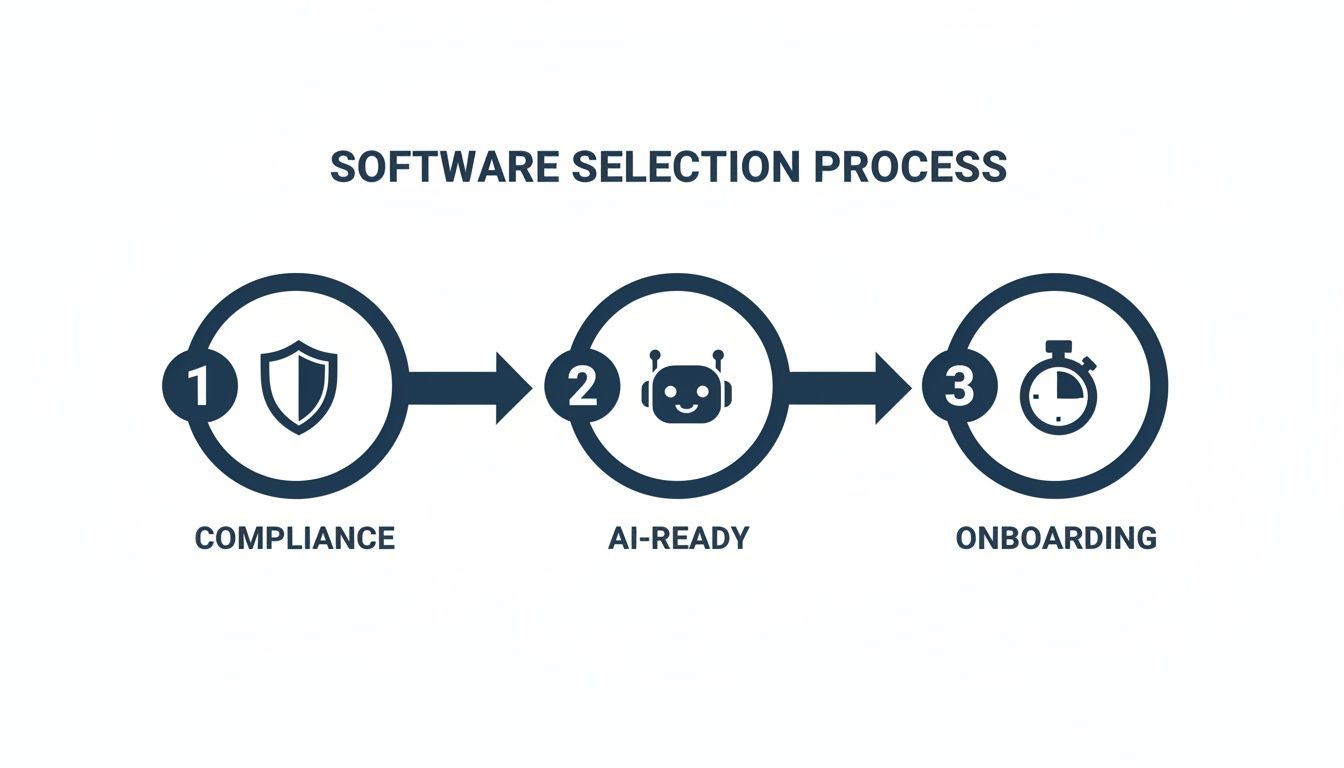
    Use this as a practical scorecard when comparing options.

    Feature/Criteria What to Look For Why It Matters
    MLS and IDX connection Direct listing data flow, automatic updates, property-triggered workflows Prevents copy-paste errors and shortens launch time
    AI content quality Editable listing descriptions, social captions, email copy, tone control Removes blank-page friction without locking you into robotic language
    Compliance controls Fair Housing review, approval steps, brand guardrails Helps teams and brokerages scale marketing with less risk
    Multi-channel publishing Scheduling for social, email, and listing-related campaigns Keeps promotion consistent after the listing goes live
    CRM integration Lead capture, activity tracking, follow-up triggers Connects marketing to actual pipeline movement
    Team management Shared templates, role permissions, oversight tools Protects consistency across multiple agents
    Reporting clarity Clear views into posting activity, engagement signals, and lead actions Lets you improve the system instead of guessing
    Ease of editing Fast revisions, simple approvals, low-friction workflows Software only works if agents will actually use it
    AI-search support Content workflows that build local authority and consistent digital presence Prepares your brand for discovery in AI-driven search experiences
    Scalability Fits solo use today and team or brokerage use later Reduces the chance of another migration in a year

    If you want a broader market scan before narrowing your shortlist, this guide to best real estate marketing tools can help you compare categories around the software itself.

    Questions worth asking on a demo

    The fastest way to cut through sales language is to ask scenario-based questions.

    Try questions like these:

    • When a listing status changes, what updates happen automatically?
    • Can I approve templates centrally but let agents personalize final copy?
    • How does the system connect listing engagement to lead follow-up?
    • What parts of the content are editable before publishing?
    • How does the platform support ongoing authority content, not just listing promotion?

    These questions reveal whether the product is a real workflow tool or just a library of templates.

    How to think about ROI without overcomplicating it

    You don’t need a finance model. You need a simple before-and-after comparison.

    The clearest ROI comes from two buckets: time recovered and conversion improvement.

    Real estate firms using marketing automation achieve 20–40% faster lead response times, generate up to 50% more qualified pipeline opportunities, can increase closed deals by 20–35%, and help agents reclaim 10–15 hours per week, according to NextCTL on marketing automation for real estate lead generation and sales growth.

    That gives you a practical framework.

    A simple ROI model you can run yourself

    Start with time.

    If software gives you back even part of the 10–15 hours per week reported in the source above, ask what those hours are worth in your business. Not your hourly fantasy number. Your actual use of reclaimed time. Would you spend it on listing appointments, lead follow-up, client service, or prospecting?

    Then look at conversion.

    If your response time improves and your follow-up becomes more consistent, your pipeline quality usually improves before your closing numbers do. That’s important because many agents quit evaluating too early. They judge the tool by whether it generated a closing in a month, instead of whether it fixed the middle of the funnel first.

    Decision lens: Don't ask only, "Will this software get me more leads?" Ask, "Will this software help me do more with the leads and listings I already have?"

    Where agents miscalculate value

    Most agents undervalue software when they compare the monthly fee only against direct closings.

    That’s too narrow. Real estate listing marketing automation software also affects:

    • Seller confidence: Your listing presentation becomes more concrete when you can show an organized launch process.
    • Brand consistency: Your online presence starts to look planned instead of improvised.
    • Operational stamina: Busy months stop breaking your marketing rhythm.
    • Future discoverability: Your content footprint compounds instead of disappearing.

    The strongest ROI often comes from preventing missed opportunities that never show up on a report. A late response. An unposted listing update. A seller who chose another agent because your marketing felt thin. Those losses are real, even when they’re hard to count exactly.

    The best fit depends on your business shape

    A solo agent usually needs speed and ease of use. A team lead needs brand controls and visibility. A brokerage needs compliance, standardization, and scalable permissions.

    The right platform is the one that matches your operating reality and helps you publish consistently enough to matter. If the software is powerful but too clunky for daily use, it won’t produce ROI. If it’s easy to use but disconnected from your listing and lead systems, it won’t produce much value.

    Good software should reduce decisions, not add more.

    Your Implementation Plan Getting Started Fast

    Monday morning, a new listing agreement is signed. By noon, the photos are coming. By evening, the seller wants to know when the home will hit the market, what will be posted, and how buyers will find it online. Without a system, that pressure turns into tab-hopping, copy-pasting, and rushed decisions. With automation software, the goal is simpler. Build one repeatable path from listing details to published marketing, then refine it.

    Start small on purpose.

    Agents get into trouble when they treat setup like a full office renovation. Your first version should work like setting the foundation for a house. It does not need custom trim, advanced workflows, or every possible channel. It needs a clear frame that supports the next listing and helps search systems understand who you are, what you list, and where you work.

    Your first-hour setup

    Use this order to avoid wasted effort:

    1. Connect the systems that feed listing marketing
      Start with your MLS-connected source, website or CRM if you use one, and the social channels where you already publish. The goal is simple data flow. If listing facts live in one place and marketing lives in another, automation closes that gap.

    2. Load your brand rules once
      Add your logo, headshot, brokerage disclaimers, colors, contact details, and preferred formatting. This saves you from fixing the same branding issue every time a new property goes live.

    3. Pick one live listing as a test
      Use a single active or upcoming property. That makes the software easier to judge because you can compare the output against real marketing needs, not a hypothetical workflow.

    4. Create a small set of core assets
      Generate a listing description, a few social posts, an open house post if relevant, and a just-listed announcement. Then edit them as if you were preparing them for the public. Those edits teach the platform your tone and show you how much manual cleanup is still required.

    5. Schedule one week, not one month
      A week is enough to test timing, formatting, approval steps, and brand consistency. It also shows whether your content is structured clearly enough to support AI-search visibility, since organized, repeated publishing creates more indexable signals than random one-off posts.

    Keep version one boring

    Boring is good here. Boring means repeatable.

    A clean first workflow usually beats an ambitious one because your team can follow it under pressure. If a seller calls, a photographer is late, and you are prepping for two buyer showings, you need software that behaves like a checklist, not a science project.

    Avoid these early mistakes:

    • Starting on every channel at once: Begin with the places you already update consistently.
    • Building too many workflows: One reliable listing launch workflow creates more value than several unfinished automations.
    • Over-customizing templates: Use the default structure until you can see what needs to change.
    • Ignoring search structure: Name files clearly, keep property details accurate, and publish consistent descriptions across channels. That helps both traditional search engines and AI answer engines connect your brand to your listings and market area.

    If you want a broader view of how teams reduce repetitive publishing work while keeping editorial control, this overview of content marketing automation software is useful.

    What success looks like in week one

    By the end of the first week, you should have a working listing launch process, a small library of branded templates, and a short list of manual steps that still slow you down.

    That is enough.

    From there, you can improve one layer at a time. Add review checkpoints. Tighten your templates. Expand from listing posts into neighborhood content and seller education pages that strengthen your authority footprint. That last part matters more than many agents realize. Consistent, structured publishing does not just save time. It gives AI tools and search platforms more reliable material to surface when someone asks who knows your market.

    The manual version of your business depends on memory and spare energy. The automated version runs on process. New listings trigger action. Brand standards stay consistent. Your market presence grows asset by asset instead of post by post.

    If you want a platform built specifically around AI-search visibility for agents, teams, and brokerages, ListingBooster.ai focuses on turning listing details into MLS-ready descriptions, multi-channel content, and authority-building marketing that supports discoverability in AI-driven search.

  • Maximize Growth with Real Estate Agent Content Automation Software 2026

    Maximize Growth with Real Estate Agent Content Automation Software 2026

    If you're a real estate agent trying to stay relevant in 2026, you've probably noticed a massive shift in how clients find you. It's not just about Google anymore. With over 40% of homebuyers now beginning their search with AI assistants like ChatGPT and Google AI, the old marketing playbook is officially broken.

    Content automation software is your new essential. It’s a tool designed specifically to create marketing materials that AI can find, understand, and recommend to the next generation of buyers, ensuring your listings don’t get lost in the noise.

    Why Your Content Strategy Must Evolve in 2026

    Hand holds a smartphone showing a sound wave next to real estate marketing brochures on a wooden table.

    For years, the game was simple: master Google. We all learned how to sprinkle keywords throughout our websites and listings, hoping to catch the eye of someone typing into a search bar. That era is over.

    In 2026, the first touchpoint for a huge chunk of the market isn't a search box; it's a conversation. People are now asking AI assistants direct, detailed questions like, "Find me a three-bedroom home with a yard in a good school district under $600,000," or "Who is the best real estate agent for first-time buyers in Denver?"

    If your online content isn't built to answer these kinds of AI-driven questions, you are essentially invisible to a fast-growing segment of your potential clients.

    The New Gatekeepers of Information

    Think of your online presence—every listing, your agent bio, your neighborhood guides—as books in a giant library. A few years ago, Google was the librarian, and keywords were the card catalog. Buyers had to know what to look for.

    Today, AI assistants are the new, incredibly smart librarians. They don't just point you to an aisle; they listen to what a buyer wants and then walk over to the shelf, pull out the perfect book, and personally recommend it.

    If your "books" aren't written and structured in a way this new librarian can read and understand, they'll never get recommended. It doesn't matter if you have the perfect listing or unmatched expertise; it will just sit on the shelf, gathering dust.

    This means your content needs to be more than just discoverable by keywords. It has to be explainable to an AI. This is exactly why content automation software has become so critical.

    This isn't some far-off trend; the industry is already scrambling to adapt. The market for real estate marketing automation tools hit a value of USD 1.21 billion in 2026 and is expected to explode to USD 3.46 billion by 2035. That's a compound annual growth rate of 12.54% for a reason: agents are ditching manual work for smart tools that keep them visible. You can explore further details on this market expansion and the forces behind it.

    To put it in perspective, let’s look at the old way versus the new standard.

    Traditional Marketing vs AI-Powered Automation in 2026

    The table below paints a clear picture of how the demands on agents have changed. The old, manual methods simply can't compete with the speed and intelligence required to show up in AI-driven search results.

    Aspect Traditional Marketing (Pre-2026) AI-Powered Content Automation (2026 Forward)
    Effort Hours spent writing one description, copied everywhere. Generates multiple, unique, AI-readable content versions in minutes.
    Messaging Broad, generic content hoping to appeal to everyone. Creates highly targeted messages using proven psychology for specific buyers.
    Consistency Sporadic posts when you have the time, leading to a weak online presence. Schedules a consistent stream of content, building the authority AI algorithms look for.
    Discovery Relied on basic keywords for search engine ranking. Optimized for conversational queries and structured data that AI assistants understand.

    The takeaway is simple. The gap between those who adapt and those who don't is widening every day.

    The core problem is that one agent, working manually, can't possibly keep up. You can't write unique, AI-friendly descriptions, social posts, video scripts, and market reports for every single listing across every channel while also giving your clients the attention they deserve.

    This is where the right software makes all the difference. For instance, a platform like ListingBooster.ai doesn't just write text; it uses proven psychological frameworks to craft messages that actually connect with buyers and drive them to act.

    Agents who adopt content automation aren't just saving time—they're securing their visibility and future-proofing their business. Sticking with the old ways is a surefire path to being overlooked by the modern homebuyer.

    How Content Automation Actually Works for Agents Like You

    Alright, so we've established why you need to automate your content. Now, let's get into the nuts and bolts of what this kind of software really does.

    Forget thinking of real estate agent content automation software 2026 as just a fancy article spinner. It's so much more. The best way to picture it is as a dedicated marketing department that lives inside your computer—one part focused on selling your listings, the other on selling you. This dual-focus system is designed to build a powerful digital presence that both clients and the new AI search engines can't help but notice.

    Let's break down these two functions.

    The Listing Commander Engine

    First up is what we call the Listing Commander. This is your rapid-response marketing team for every single property you list.

    Think about the usual grind. You get a new listing, and the clock starts ticking. You need to write descriptions, create social posts, prep ads… it's a ton of work. The Listing Commander takes that entire process and puts it on autopilot. You feed it the basic details—address, beds, baths, photos, and a few unique features.

    From there, it creates an entire marketing package. We're talking:

    • Polished MLS Descriptions: Not just one, but several versions written to grab attention on the MLS, Zillow, or Redfin, using language that speaks directly to your target buyers.
    • A Full Social Media Rollout: It generates a complete campaign of posts for every stage: "Coming Soon," "Just Listed," "Open House," and "Just Sold." Each one is formatted perfectly for Instagram, Facebook, or LinkedIn.
    • Video and Ad Scripts: Need a quick script for a property tour video or a catchy headline for a Facebook ad? It generates those, too.

    This isn't just about saving time. It's about launching a property with a professional, consistent, and wide-reaching campaign from the moment you get the listing agreement signed.

    The Authority Builder Engine

    The second half of the equation is the Authority Builder. If the Listing Commander sells the house, the Authority Builder sells your expertise. This is what turns you from just another agent into the go-to expert for your area.

    This engine focuses on creating the kind of content that proves your value long before a potential client is ready to make a call. It's the secret to building a brand that attracts business instead of constantly having to chase it.

    This is how you shift from being seen as a salesperson to becoming a trusted advisor. The Authority Builder creates the exact kind of expert content that, when someone asks an AI, "Who's the best real estate agent in [Your Town]?" your name is the answer.

    So what kind of content does it create? Think about things like:

    • Local Market Updates: Sharp, data-driven reports on what's happening in your local market, proving you have your finger on the pulse.
    • In-Depth Neighborhood Guides: Content that dives deep into local communities, covering everything from schools and restaurants to commute times.
    • Helpful Buyer and Seller Guides: Practical, evergreen articles that answer the questions your clients are already asking.

    The demand for this kind of expertise-driven content is exploding. The broader real estate software market is expected to reach USD 15.60 billion in 2026 and then jump to an incredible USD 39.49 billion by 2033, growing at a 14.2% compound annual rate. That growth is being fueled by agents who use tools like the Authority Builder to become a trusted resource. You can see more data on this trend in this in-depth industry report.

    When you put these two engines together in a platform like ListingBooster.ai, something powerful happens. Your listings get top-tier marketing, and your personal brand grows stronger every day. To see this in action, check out our guide on real estate content marketing automation. It's this combined approach that truly separates the top agents from the rest.

    Essential Features of Top Content Automation Platforms in 2026

    When you start looking at real estate agent content automation software in 2026, it’s easy to get lost in a sea of features. But here’s the truth: most platforms are not ready for the AI-first world we now live in. A truly great tool doesn't just help you post more; it helps you create smarter content that gets seen by both algorithms and actual clients.

    What you're looking for is more than a simple content scheduler. You need a strategic partner, a system built with the unique challenges of modern real estate in mind. Let’s cut through the noise and talk about the five non-negotiable features you should demand from any platform you’re considering.

    This workflow shows how the right system separates its work into two key jobs—handling your listings and building your brand—all managed from one central place.

    Workflow diagram showing Listing Commander managing real estate data, connecting to Command Center, which enhances Authority Builder for online presence.

    As you can see, it’s all about connecting your property-specific marketing (the here and now) with your long-term brand building. That's the secret to dominating a market.

    AI Readability and Optimization

    It's 2026. Writing for people is only half the job. Your content—everything from MLS descriptions to neighborhood guides—must be perfectly clear to AI assistants like ChatGPT and Google's AI. This is what we mean by AI-readability.

    This isn't about stuffing keywords. It's about structuring your writing so that an AI can instantly understand the key details and confidently use your content to answer a potential homebuyer's question. If your content isn't easy for an AI to parse, it simply won't get recommended.

    Think of it this way: If your property listing is a book, AI-readability makes sure it's written in a language the world's most influential librarian can understand and recommend. Without it, your book just gathers dust on the shelf.

    The right platform does this automatically, crafting posts that are not only engaging for your clients but are also first in line to be served up in AI-driven search.

    Automated Schema Markup Integration

    If AI-readability is about speaking the right language, schema markup is the behind-the-scenes translator that tells search engines what your words mean. It’s a bit of code that adds context.

    For example, schema tells Google that "123 Main Street" is an address, "$500,000" is a price, and "3" is the bedroom count. This is how you get your listings to show up in those eye-catching map results and special information boxes. It's absolutely critical.

    A top-tier automation platform handles this for you.

    • No Coding Needed: It automatically builds and embeds the correct schema code for every listing, blog post, and community page.
    • Enhanced Visibility: This helps search engines categorize your information perfectly, dramatically increasing your chances of getting featured.
    • Future-Proofs Your Content: This structured data is the foundation of modern search. Having it is no longer optional.

    This one feature takes a highly technical—but essential—SEO task completely off your plate.

    Built-in Compliance Scanning

    In our industry, what you don't say is just as important as what you do. With Fair Housing laws and local regulations, creating content at scale can feel like walking through a minefield.

    That's where automated compliance scanning comes in. This feature is your digital safety net. Before anything goes live, the system scans the text for words and phrases that could get you into hot water. It flags language that might unintentionally violate Fair Housing guidelines by implying a preference or limitation. For a brokerage, this isn't just a nice-to-have; it's a vital risk management tool.

    Seamless Multi-Channel Output

    Your clients are everywhere. They're scrolling Instagram, connecting on LinkedIn, reading emails, and browsing blogs. Trying to manually create tailored content for each channel is a recipe for burnout.

    Multi-channel output is the solution. A smart platform can take a single piece of information—like a new listing hitting the MLS—and automatically spin it into an entire campaign optimized for every single one of your marketing channels.

    That means in one click, the software generates:

    • A short, punchy caption with the right emojis for Instagram.
    • A professional, detailed update for your LinkedIn network.
    • An engaging summary for your weekly email newsletter.
    • A complete, SEO-friendly blog post for your website.

    It’s about being omnipresent without being overwhelmed. You maintain a powerful, consistent brand everywhere your clients are, without spending your days copying, pasting, and rewriting.

    Team and Brand Controls

    For brokers and team leads, the biggest headache is often consistency. How do you ensure dozens of agents are all representing the brand properly and maintaining a high standard of quality?

    Team and brand controls are the answer. These features let you lock in your brokerage’s brand identity at the platform level. You can set up approved templates, define the brand voice, and upload official logos and color palettes.

    Agents can then generate marketing materials that are perfectly on-brand every single time. This gives your agents powerful, effective tools while you retain control over the brand's image and compliance. It's empowerment with guardrails.

    Getting Your Automation Software Up and Running

    Alright, let's get down to brass tacks. Choosing the right real estate agent content automation software for 2026 is half the battle. The other half—the part that actually makes you money—is putting it to work and making sure it’s delivering a real return. We're not just bolting another subscription onto your tech stack; we're integrating a system that should immediately start freeing up your time, bringing in better leads, and making your brand look incredible.

    A great platform goes way beyond a list of features. It needs to sync effortlessly with your CRM and MLS, and the content it creates should feel custom-written, not like it came from a generic template. The real test? You should see its value within hours, not weeks. The goal is to be up and running, seeing results, in less time than it takes to finish your morning coffee.

    Your Quick Start Implementation Guide

    Modern automation tools should be fast and intuitive. Forget about the clunky software setups of the past. You can get from sign-up to a full-blown content machine in under 30 minutes. Here’s how it should look.

    1. Connect Your Accounts (Under 10 Minutes): First things first, you'll link up your essential tools. This means connecting your social media profiles (like Facebook, Instagram, and LinkedIn), your CRM for seamless lead capture, and your MLS feed so the system can pull listing data automatically.
    2. Generate Your First Marketing Suite: Grab one of your current listings and plug in the MLS number. The software should instantly create a complete marketing package—we're talking multiple MLS descriptions, social posts for every marketing stage ("Just Listed," "Open House," "Under Contract"), and even video scripts.
    3. Build a 30-Day Content Calendar: Now, find the "Authority Builder" or brand-building feature. With just a couple of clicks, you should be able to generate a full month's worth of posts like market updates, neighborhood spotlights, and homebuyer tips. This is how the platform proves it can build your personal brand while you're out with clients.
    4. Schedule and Go Live: Give the content a quick once-over, add your personal touch where you see fit, and use the built-in scheduler to set it and forget it. Just like that, your online presence for the next month is completely automated.

    This quick-launch capability is a huge part of your evaluation. If you can’t get high-quality, client-facing content out the door on day one, the tool is probably too complicated for a busy agent's life.

    Evaluating the Real ROI Beyond the Price Tag

    Thinking about the return on investment just in terms of the monthly fee is a rookie mistake. You need to look at how the software impacts your entire business. This is where you find the true value.

    A great platform doesn't just save you time; it creates opportunities. The real ROI is in the listing appointment you landed because you walked in with a complete marketing plan already built, or the lead you caught from an AI search because your content was perfectly optimized while your competitor was invisible.

    To see if your investment is truly paying off, start tracking these key metrics:

    • Time Savings: Add up the hours you used to spend writing property descriptions, creating social media posts, and designing marketing materials. A solid platform should easily give you back at least 5-10 hours per week.
    • Lead Quality and Source: Keep an eye on your CRM. Are more leads coming in from your website and social channels? Are they better qualified? The ultimate sign of success is when a new lead says they found you because of a helpful article or saw your listing pop up in an AI search.
    • Listing Presentation Impact: How do you feel walking into a listing presentation? Are sellers wowed when you show them a pre-built, professional marketing campaign for their home? That "wow factor" is a real metric, and it translates directly into a higher win rate.

    There’s a reason agents are flocking to these tools. The real estate software market is expected to hit USD 14.08 billion in 2026, growing at 10.8% from last year, and is on track to reach USD 21.62 billion by 2030. That explosion is driven by agents who are tired of manual marketing tasks. Platforms like ListingBooster.ai, which know how to create scroll-stopping content for TikTok and LinkedIn using psychological triggers, are quickly becoming essential. To see how these market forces are shaping the industry, you can discover more insights on the real estate software boom.

    In the end, the right software should fit into your daily workflow so naturally that you'll wonder how you ever managed without it. If you're comparing your options, take a look at our detailed real estate marketing software comparison to see how the top platforms stack up.

    Seeing Automation in Action: Real-World Agent Scenarios

    A professional man talks on a phone at a desk with a laptop and photos of real estate and happy clients.

    It’s one thing to talk about features and specs. It’s another to see how this technology actually works on the ground, in the day-to-day chaos of a real estate career. How does content automation really change an agent's workflow and, more importantly, their bottom line?

    To get a clear picture, let's walk a mile in the shoes of three very different real estate professionals. We'll see how each of them uses these tools not just to save time, but to win more listings, build authority from scratch, and protect their brand.

    Scenario 1: The Top Producer Juggling Multiple Deals

    Meet Sarah. She's a rockstar agent, closing over 50 deals a year. Her phone is constantly buzzing, and her calendar is a battlefield of showings, closings, and client meetings. Her problem isn't getting business—it's managing it all while maintaining the high-quality online presence that got her here in the first place.

    Before automation, Sarah’s social media was an afterthought. A "Just Sold" post might go up days late, with a rushed caption copied from the last one. She knew she was dropping the ball on marketing, but there just weren't enough hours in the day.

    With content automation, her entire marketing process gets a reset.

    • Instant Listing Launch: When Sarah lands a new listing, she drops the MLS number into her platform. In minutes, she has three unique, AI-optimized property descriptions to choose from, a full week of social media content scheduled (from "Coming Soon" to "Open House"), and even a script for a quick video tour.
    • Always-On Authority: While she's tied up in appointments, her system is automatically posting pre-approved market updates and neighborhood spotlights. To the public, she looks like a deeply engaged local expert, even on her busiest days.

    The Tangible Outcome: Sarah walks into a listing appointment to compete against two other top agents. The homeowners mention they've been following her market analysis on Facebook and are impressed by her expertise. The deal is sealed when she presents a complete, professionally designed marketing campaign for their home—a campaign the software already built for her. She wins the listing by being more prepared than anyone else. To see more on this, you can check out our guide to real estate social media automation.

    Scenario 2: The New Agent Building Credibility from Day One

    Now, let's look at David. He’s been licensed for six months and has all the hustle in the world, but he’s fighting an uphill battle against agents with decades of experience and huge marketing budgets. His number one goal is to look just as professional and established as the biggest names in town.

    David’s on a tight budget, so hiring a marketing assistant is a non-starter. He has to build a polished, credible brand all by himself.

    For new agents like David, automation isn't just an efficiency tool—it's a great equalizer. It gives him the marketing firepower of a full-time team without the payroll, letting him compete with agents far outside his weight class.

    Here’s how David uses automation to build his brand from the ground up:

    1. Building a Content Foundation: He uses the platform’s "Authority Builder" to generate a 30-day backlog of evergreen content, like guides for first-time homebuyers and articles explaining different mortgage types.
    2. Polished Listing Promotion: Even with just one listing, David’s marketing looks world-class. His automated posts are well-written, have schema embedded for better search engine visibility, and carry a consistent, professional voice.

    The Tangible Outcome: A young couple, starting their home search, finds one of David’s articles about navigating a competitive market through an AI search. Blown away by the helpful advice, they explore his site and see his impeccably marketed listing. Assuming he's a seasoned pro, they reach out. Just like that, David secures his first buyer clients, skipping the painful "newbie" phase many agents get stuck in.

    Scenario 3: The Brokerage Owner Protecting the Brand

    Finally, there’s Maria, the owner of a boutique brokerage with 25 agents. She’s passionate about giving her team the best tools, but she’s also kept up at night by the fear of brand inconsistency and compliance headaches. She’s seen it all: agents using questionable language, off-brand colors, and marketing that looks like it was made in 1999.

    Maria needs to give her agents creative freedom but within a safe, controlled environment.

    • Brand & Compliance Guardrails: Maria sets up the brokerage's official brand kit—logos, color palettes, and fonts—directly in the automation platform. She also works with her legal counsel to customize the compliance scanner to flag risky local terms and phrases.
    • Team Empowerment: Now, her agents can create their own marketing materials with just a few clicks. The best part? Every single piece of content is automatically branded correctly and scanned for compliance before it can be published.

    The Tangible Outcome: One of Maria’s agents, who always shied away from marketing, generates a complete social media campaign for a new luxury listing. The posts are stunning, perfectly on-brand, and 100% compliant. The campaign pulls in two qualified leads within 48 hours, giving the agent a huge confidence boost and strengthening the brokerage's reputation for quality.

    Your Next Steps to Dominate the AI-Powered Market

    Let's be blunt: the way buyers and sellers find real estate agents has changed for good. We've officially moved past the days of simple Google searches. Now, AI assistants are the new gatekeepers, the trusted advisors people turn to first. Sitting on the sidelines and waiting to see what happens isn't a strategy—it’s a surefire way to become invisible to a huge, and growing, part of your market.

    The key takeaway here is that real estate agent content automation software in 2026 isn't some luxury add-on. It's the essential tool for staying visible and competitive. This is what connects your expertise to the new AI platforms that decide which agents get recommended. Getting on board is probably the single most important decision you can make to secure the future of your business.

    From Theory to Action in Minutes

    The good news is that making this change doesn't mean you have to tear down your business and start over. The right platform is built for immediate impact. It’s about taking one small, low-risk step that delivers real, valuable results right away.

    Think about what you could do in the time it takes to brew a pot of coffee. With a solution like ListingBooster.ai, you can go from signing up to holding a tangible, client-ready marketing asset in your hands in less than ten minutes.

    This isn't about spending weeks learning complex software. It's about proving the value to yourself by creating something in minutes that would have normally taken you hours.

    Imagine leaving a seller's driveway and having a complete, AI-optimized marketing suite for their new listing already done. Or picture creating a full 30-day social media calendar packed with authority-building content with just a few clicks. That's the power we're talking about.

    Your Invitation to Lead

    This is where the rubber meets the road. Your competitors are already figuring this out. Sticking to the old playbook is a losing game. You can be the agent who walks into a listing appointment with promises, or you can be the one who walks in with a polished, professional, AI-powered marketing plan already in hand.

    Take the first step today. Don't just read about it—see for yourself what a purpose-built tool can do.

    • Generate an AI-optimized property description. See how it creates a compelling story that speaks to both buyers and the algorithms that find them.
    • Create a social media campaign. Watch it turn a single listing into a full week of engaging, on-brand content for all your channels.
    • Build an authority post. Produce a neighborhood market update that instantly positions you as the go-to expert.

    The choice is pretty clear. By trying a solution like ListingBooster.ai, you're not just testing software; you’re proving to yourself and your clients that you are prepared, differentiated, and ready to lead in this new era of real estate.

    Your Questions, Answered

    I get it. Bringing a new piece of technology into your business can feel like a big step. Let's tackle some of the most common questions and hesitations agents have about using real estate agent content automation software in 2026. I want to give you clear, honest answers to help you feel confident.

    "But will my content sound like a robot wrote it?"

    This is probably the number one concern I hear, and it’s a fair one. Early AI was clunky and impersonal, no doubt about it. But the tools we have today are a completely different animal. The best platforms are specifically designed to learn and adopt your unique voice and brand.

    Think of it this way: the AI is your new marketing assistant. It does the heavy lifting—researching keywords, structuring the blog post, ensuring compliance, and hitting all the SEO marks—to give you a fantastic first draft. You then come in to add your local insights, your personal stories, and that final polish. It saves you hours of work without sacrificing an ounce of your authenticity.

    "Can I actually afford this as a solo agent?"

    Absolutely. In fact, these tools were built with the solo agent and small team in mind. Most solutions have a monthly subscription that costs less than what you’d spend on a few client coffee meetings.

    The real question isn't about the monthly cost, but the return on your investment. Think about the time you'll get back. What if this tool helps you land just one extra client this year because your online presence is suddenly so sharp and consistent? The software pays for itself almost immediately. Most even offer a free trial so you can see the results for yourself before spending a dime.

    "Do I need to be a tech wizard to use this?"

    Not at all. If you can post on social media, you can use this software. The leading platforms are designed for busy agents, not coders.

    Getting started is surprisingly fast—we're talking 5-10 minutes to get fully up and running. You connect your accounts, give it a few details about a new listing, and it can generate an entire marketing campaign in moments. The whole point is to be intuitive and fast, letting you create professional, AI-ready content from day one with zero headaches.

    "Can this really help me go up against the big teams?"

    Yes, and this is where it gets really exciting. This technology is the ultimate equalizer.

    It gives you the marketing firepower that, just a few years ago, was only available to large brokerages with full-time marketing departments. You can now maintain a constant, high-quality online presence, build authority in your niche, and compete based on the power of your ideas and expertise—not the size of your marketing budget.


    Ready to see how ListingBooster.ai can give you that competitive edge? Start your free trial today and feel the power of effortless, expert-level marketing for yourself.

  • Automated listing marketing platform for realtors: Revolutionize Your Business w

    Automated listing marketing platform for realtors: Revolutionize Your Business w

    So, what exactly is an automated listing marketing platform? Think of it as a digital marketing assistant that never sleeps. It's a specialized tool for real estate agents that takes the basic details of a property—usually just from an MLS link—and automatically creates an entire marketing campaign around it. The goal is to save agents dozens of hours of tedious work for every single listing.

    The New Reality of Real Estate Marketing

    Man uses smartphone and laptop to browse real estate listings with location pins.

    The way people find homes has completely changed. Not long ago, a yard sign, a stack of flyers, and a simple MLS entry were enough. But today’s home search is far more complex. Buyers aren't just scrolling through Zillow; they're asking AI tools like ChatGPT, "Who is the top realtor in my town?" or "Find me a starter home in downtown Austin with a backyard."

    This has thrown agents into a new, invisible fight for attention. Your ability to get in front of clients now hinges on whether you show up in these AI-driven conversations. While traditional marketing still has its place, it’s no longer enough to reach a modern, tech-first audience.

    The Problem of AI Invisibility

    If your online presence isn't built to be understood by these new conversational search tools, you might as well be invisible. When someone asks an AI to recommend an agent, it scours the internet for clues that point to your authority, recent activity, and deep local knowledge.

    Without a consistent flow of relevant, high-quality content about your listings and your market, you simply don’t show up. This is the biggest challenge realtors face right now: being completely left out of the AI-powered conversations that are already connecting buyers and sellers with their competition. The end result is a pipeline that starts to dry up and opportunities that just pass you by.

    An automated listing marketing platform for realtors is the most direct way to solve this. It's designed to make sure you're not just found online, but actively recommended by the same AI tools that modern buyers now trust.

    This is precisely where a dedicated platform becomes a non-negotiable part of your toolkit. It handles the heavy lifting of creating and sharing the content that builds your digital reputation.

    Bridging the Gap with Automation

    An automated platform essentially becomes your 24/7 marketing hire, connecting your traditional real estate expertise with the demands of AI-powered search. Instead of losing hours creating social media posts, writing property descriptions, or designing flyers from scratch, you can generate everything you need in an instant.

    Here’s how this technology changes the game for you:

    • Stay Top-of-Mind: You can consistently share great-looking content across all your social channels without the daily grind.
    • Build Your Authority: It helps you publish market reports and neighborhood guides that establish you as the go-to local expert.
    • Get Seen by AI: The platform produces content that’s already optimized to help search engines and chatbots recognize your expertise.
    • Win Back Your Time: You get to focus on what actually makes you money—building relationships and closing deals—while the software handles the repetitive marketing chores.

    Imagine having a full-time marketing pro on your team, but for a fraction of the cost. A platform like ListingBooster.ai, for example, takes a property's basic info and immediately spins it into a complete suite of marketing materials. It’s not just about scheduling a few posts; it’s about launching a strategic, well-branded campaign that makes you visible to both human buyers and the AI assistants guiding them.

    What Is an Automated Listing Marketing Platform?

    Let’s be clear: an automated listing marketing platform is not just another social media scheduler. It’s a complete command center built specifically for real estate agents, designed to take one small piece of information about a property and spin it into a full-blown marketing campaign.

    Think of it this way: you have a new listing. You hand over one thing—the MLS link—and a master marketing strategist instantly gets to work. They don't just schedule your posts; they write the ad copy, design the visuals, and create everything you need to launch. You don't have to do any of the prep work.

    This completely changes the game. It gets rid of the hours agents sink into repetitive tasks for every new property. No more staring at a blank page trying to write catchy property descriptions or messing around with design templates. You get a professional, polished campaign ready to deploy in minutes.

    From One Link to a Full Campaign

    That "master strategist" idea is exactly how a powerful automated listing marketing platform for realtors operates. It pulls the basic data from your MLS—photos, price, square footage, address—and uses that as the raw material for an entire collection of marketing assets. The whole point is to automate the creation and distribution of your content, giving you huge chunks of your time back.

    A real automated platform doesn't just help you schedule posts; it actually creates them for you from scratch. It's the difference between having a kitchen timer and having a private chef who also does all the shopping and prep.

    For instance, a tool like ListingBooster.ai's 'Listing Commander' function is built on this very principle. You feed it a property URL, and it immediately starts generating a wide range of marketing materials for every step of the selling process. This is where automation stops being a simple tool and starts acting like a true business partner.

    The Automated Marketing Toolkit

    Instead of you building every flyer, social post, and email one by one, the platform generates them all at once. Here’s a taste of what you can expect to have created for you automatically:

    • AI-Optimized Property Descriptions: The system writes compelling, descriptive narratives for your MLS, Zillow, and other portals, all crafted to grab a buyer's attention and sell the home's best features.
    • A Complete Social Media Calendar: It builds out a full calendar of social media content for all the key moments, from the big announcement to the final celebration.
    • Print-Ready Materials: Need professional flyers for an open house? They're generated instantly, no graphic designer required.

    And we're not talking about generic, cookie-cutter stuff. The best platforms weave proven marketing strategies into every single asset they create.

    Content for Every Stage of the Sale

    A smart platform knows that selling a home isn't a single event; it's a journey with distinct phases. It automatically prepares tailored content for each of those moments, making sure your message always hits the mark.

    Imagine having a complete set of marketing assets ready to go for these key milestones:

    1. Just Listed: Announce the new property with eye-catching visuals and a strong call to action to create immediate buzz.
    2. Open House: Promote your event with all the essential details, send out reminders, and post content designed to drive foot traffic.
    3. Price Drop: Strategically announce a price change to re-engage buyers who showed interest and attract a fresh set of eyes.
    4. Under Contract: Share the great news that the property is pending. This works as powerful social proof, showing everyone you get results.
    5. Just Sold: Celebrate the successful closing! This highlights your expertise and creates a little FOMO (fear of missing out) for potential sellers watching you online.

    By having all of this content generated for you upfront, an automated listing marketing platform for realtors lets you run a perfect campaign for every single property with almost no effort. All you have to do is review, approve, and post. This frees you up to focus on what really grows your business: building client relationships and closing deals.

    Core Features That Drive Realtor Success

    To really get what an automated listing marketing platform for realtors can do, you have to look beyond the buzzword "automation." It’s the specific, nuts-and-bolts features that actually solve the daily headaches agents face and deliver real results.

    These aren't just flashy add-ons. Think of a good platform as a marketing force multiplier. Imagine getting a complete, professionally branded, and compliant marketing package for every new listing—all done in less time than it takes to brew your morning coffee. That's the power these core features bring to the table.

    AI-Powered Content Creation

    The engine of any modern platform is its AI content writer. This is so much more than just filling in a generic template. Instead, the AI pulls all the property details directly from your MLS feed and spins that raw data into compelling, human-sounding marketing copy.

    This AI can write everything from your official MLS property description to punchy social media captions. Platforms like ListingBooster.ai, for example, use AI to craft descriptions that don’t just list a home’s features but are also optimized to pop on sites like Zillow and Redfin. You get content that appeals to both a buyer's emotions and the search engine's algorithms.

    This diagram shows how a platform takes a single MLS link and turns it into a full-blown marketing campaign.

    A marketing automation hierarchy illustrating data flow from MLS link to a platform and then to marketing campaigns.

    As you can see, the platform sits at the center of your marketing, taking one piece of information and broadcasting it across multiple channels. The whole point is to get the most impact from the least amount of effort.

    Automated Multi-Platform Distribution

    Just creating the content is only half the job. A true automated listing marketing platform for realtors also handles the tedious work of distribution, preparing perfectly formatted assets for all your key marketing channels.

    This means you automatically get content designed for:

    • Social Media: Scroll-stopping posts for Facebook, Instagram, and LinkedIn that are built to drive comments and shares.
    • Listing Portals: Optimized descriptions for your MLS, Zillow, and other major real estate sites, boosting your listing’s visibility.
    • Print Materials: Instantly generated, print-ready flyers and brochures for your open houses and neighborhood mailings.

    This hands-off approach ensures your brand and message are consistent and professional everywhere your listing shows up. No more manually resizing photos or copying and pasting text a dozen times. If you want to explore this further, you can learn more about how to use automated content for real estate agents in our dedicated guide.

    Marketing Psychology That Converts

    The best platforms don't just create content; they create content that actually sells. They achieve this by weaving proven psychological triggers right into the marketing materials they generate.

    For instance, ListingBooster.ai uses a few powerful frameworks to grab a buyer's attention and prompt action:

    • Scarcity: It generates posts with headlines like ‘Hot Home!’ to signal high demand and create a sense of urgency.
    • Social Proof: It creates ‘Just Sold!’ announcements that build your credibility and show potential sellers you know how to close a deal.
    • Aspiration: It writes copy that helps buyers truly picture themselves living in the home, effectively selling a lifestyle, not just four walls and a roof.

    By baking these principles into the automated content, the platform helps you connect with buyers on a deeper, emotional level. The result? More inquiries, more showings, and faster sales.

    These features transform marketing from just another task on your to-do list into a genuine strategic advantage. The question is no longer whether you have time to market a listing, but how powerfully you can do it with the right tools.

    Built-In Compliance Scanning

    Let’s be honest: staying compliant with Fair Housing laws and local board rules is a constant source of anxiety. One wrong word in a social media post or property description can spiral into a serious legal and financial nightmare.

    This is where an integrated compliance scanner becomes an absolute game-changer. This tool, found in any professional-grade automated listing marketing platform for realtors, automatically scans all the AI-generated text. It looks for problematic words or phrases that could violate Fair Housing guidelines.

    It flags potentially discriminatory language related to race, religion, familial status, and other protected classes before you ever hit publish. This automated safety net provides incredible peace of mind, letting you market properties confidently and protecting your license and your brokerage’s reputation. All the guesswork and stress of writing compliant ad copy simply disappears.

    How to Build Authority and Win More Listings

    A real estate agent records another woman with a smartphone in a residential neighborhood for marketing.

    Winning a listing appointment used to be about who had the slickest presentation or the biggest ad in the local paper. Not anymore. To really stand out, you have to do more than just market a property—you need to build a brand that sellers actively seek out. It’s about being seen as the expert in your area before you even walk through their door.

    This means we have to think beyond traditional search engine optimization (SEO). The game has changed, and it's now all about Answer Engine Optimization (AEO). Instead of just stuffing keywords onto your website, the goal is to become the most credible answer to the questions your future clients are asking.

    Think about it. AI assistants are quickly becoming the new gatekeepers. When a homeowner asks their device, "Who is the top agent for selling historic homes in my town?" the AI isn't just scanning for a name. It’s looking for proof of expertise, for an agent who has consistently shared deep, valuable knowledge about that exact topic.

    Proving Your Value in an AI-First World

    So, how do you get recommended by an AI? You have to relentlessly demonstrate your value. Picture an AI that’s constantly scanning the digital world, trying to figure out who really knows their stuff. It's not impressed by claims; it’s convinced by a consistent track record of insightful, helpful content.

    Your objective is to create such a powerful digital footprint of expertise that AI assistants have no other choice but to recommend you. This is how you pre-sell your services and build a pipeline of clients who already see you as the authority.

    Keeping up with this demand for content is a monumental task. That’s exactly where an automated listing marketing platform for realtors becomes your secret weapon. It takes the overwhelming job of content creation and turns it into a simple, automated process humming along in the background.

    Want to go deeper on this? We've put together a full guide on how to build authority as a real estate agent.

    Let an Authority Builder Do the Heavy Lifting

    Platforms like ListingBooster.ai are built for this new reality. They include tools, often called an "Authority Builder," that act like your own personal content team. This feature automatically generates the kind of high-value posts that cement your status as the go-to local expert.

    Here’s a taste of what it can create for you on autopilot:

    • Insightful Market Updates: Go beyond generic stats and share real analysis on local trends that your followers can actually use.
    • Helpful Buyer and Seller Tips: Offer practical advice that demystifies the buying and selling process, building trust with every post.
    • Hyper-Local Neighborhood Guides: Prove you know the community inside and out by highlighting the best schools, parks, and hidden-gem cafes.

    By automating this work, you're doing much more than just saving a few hours. You are systematically building a long-term business asset—your reputation.

    This steady flow of quality information does more than just check the "social media" box on your to-do list. It actively builds your credibility. When a potential seller sees your frequent market reports and neighborhood spotlights, they don’t just see another agent. They see a trusted advisor.

    That’s how you win in today's market. You stop chasing business and start attracting it by proving your worth long before that first phone call. An automated listing marketing platform for realtors is the tool that makes this powerful strategy not just possible, but easy.

    Real-World Impact for Every Real Estate Professional

    The idea of an automated listing marketing platform for realtors isn't just theory; it has a very real, tangible impact on the day-to-day grind for agents at every stage of their career. This isn't a one-size-fits-all gadget, but rather a flexible toolkit that molds to the specific needs of your business.

    Whether you're a solo agent trying to carve out your space, a team leader striving for a consistent brand, or a brokerage focused on smart growth, automation offers a clear and powerful edge. Let's break down how this actually works in three common scenarios.

    The Solo Agent Who Levels the Playing Field

    Meet Sarah. She’s a great solo agent who consistently closes a good number of deals. Her biggest struggle isn’t her skill with clients—it's the simple, brutal lack of time. While she’s out at showings and inspections, her social media feeds are dead, her past clients haven't heard from her, and her marketing for a new listing feels chaotic and rushed.

    She constantly feels like she’s playing catch-up with bigger teams that have their own marketing people. They seem to be everywhere online, posting slick videos, timely market updates, and perfectly branded "Just Sold" announcements.

    By bringing on an automated platform like ListingBooster.ai, Sarah closes that gap almost overnight. The second she lands a new listing, the system creates a complete marketing package for her. Suddenly, she has a flawless online presence without having to sacrifice the face-to-face client time that actually fuels her business. She can finally go toe-to-toe with larger operations, projecting the image of a well-oiled machine, even as a one-person show.

    The impact is immediate. Automation gives solo agents the marketing firepower of an entire team, letting them build their personal brand and win more listings without burning out.

    The Team Leader Who Ensures Quality and Consistency

    Now, let's look at Mark, the leader of a successful team of eight agents. His headache is quality control. Every agent on his team markets listings their own way. Some create decent graphics in Canva, others post blurry photos to Instagram, and a few barely post anything at all.

    This fractured approach is hurting the team's brand. It projects a disjointed and unprofessional image, making it hard to promise sellers a specific standard of marketing service. Mark finds himself spending way too much time chasing agents about their posts or fixing content that's gone off-brand.

    Mark decides to implement an automated listing marketing platform for realtors for his entire team. Now, every agent has the same powerful tool at their fingertips. When a team member secures a listing, the platform generates marketing assets that are automatically locked into the team's brand—the right logos, colors, and messaging, every single time.

    The results for his business are huge:

    • Unified Brand Voice: Every "Just Listed" or "Open House" post looks sharp and consistent, reinforcing the team's high-end brand.
    • Guaranteed Activity: Mark can rest easy knowing every single listing will get a solid baseline of high-quality promotion, without him having to micromanage.
    • Empowered Agents: His agents don't feel controlled; they feel supported. They get access to top-tier marketing that helps them look great and sell homes faster.

    Automation gives Mark the structure he needs to scale his team's marketing properly, ensuring every agent represents the brand with the polish it deserves.

    The Brokerage That Provides Scalable Value

    Finally, think about a brokerage with over 150 agents. The leadership team wants to offer a high-value tech stack that helps them recruit and retain the best talent. But providing individual marketing support for every agent is financially impossible, and the legal risk that comes with inconsistent, non-compliant marketing is a major worry.

    The brokerage makes an automated listing marketing platform for realtors a core part of its agent value proposition. This single move solves several big problems at scale. With a tool like ListingBooster.ai, the brokerage provides something that empowers its agents while protecting the business.

    The platform's built-in compliance scanner automatically reviews all AI-generated content for potential Fair Housing violations, significantly reducing the brokerage's liability. Agents feel like they're getting a massive perk—a sophisticated marketing engine—that directly helps them win more business. This makes the brokerage far more attractive to new recruits and helps keep its current agents productive and loyal. The platform becomes a scalable, compliant, and high-impact benefit that strengthens the entire organization.

    Choosing and Implementing Your Automated Platform

    Picking the right automated listing marketing platform for realtors can feel overwhelming. With so many options, how do you know which one is worth your money? The secret is to find a tool that actually removes work from your plate, rather than adding another new system you have to manage. You need to look past the flashy promises and focus on what the platform actually produces.

    The first thing to look at is the quality of the AI-generated content. Does the copy sound like it was written by a person who knows how to sell a home's lifestyle, or is it just a robotic list of features? Just as important is how easy it is to use. An automation tool with a steep learning curve completely defeats the purpose.

    Key Evaluation Criteria

    When you're comparing platforms, there are a few things that are simply not up for negotiation. Your time is your most valuable asset, and the right tool should guard it fiercely. A platform that takes weeks to master isn't a solution; it's just another problem.

    • Speed to Value: How quickly can you go from signing up to having a full marketing campaign ready to launch? Look for a platform that gets you up and running in under ten minutes.
    • Built-in Compliance: Does the tool automatically check your marketing materials for Fair Housing language and other compliance risks? This is a crucial safety net that helps protect your license.
    • Transparent Pricing and Trials: Steer clear of platforms with confusing pricing tiers or no free trial. A confident company, like ListingBooster.ai, will offer something like a 30-day free trial to give you a risk-free way to see the results for yourself.

    Choosing a platform is like hiring a new team member. You want someone who is effective from day one, understands the rules, and clearly demonstrates their value upfront.

    Your Simple Implementation Roadmap

    Getting started shouldn't feel like a technical project. Adopting an automated listing marketing platform for realtors is supposed to be simple. Here’s a straightforward path to getting your first campaign live in just a few minutes.

    1. Connect Your MLS: The first step is almost always linking your MLS account. This is what allows the platform to pull in property photos and data automatically, so you never have to waste time with manual entry.
    2. Define Your Brand: Next, you’ll upload your headshot, brokerage logo, brand colors, and contact info. The platform uses these assets to make sure every single piece of marketing is perfectly branded to you.
    3. Generate Your First Campaign: Grab the MLS link for an active listing, paste it into the platform, and let the AI go to work. In just a few moments, you should have a complete set of marketing materials ready to go.
    4. Review and Publish: Give the AI-generated content a quick review, add any personal notes you’d like, and start sharing your new, professional-grade marketing everywhere.

    For a deeper look at specific tools on the market, our guide comparing real estate marketing software can help you weigh the pros and cons. The right platform should prove its worth almost immediately.

    A Few Common Questions

    It’s completely normal to have a few questions before jumping into a new system. Let's tackle some of the most common things agents ask when considering an automated listing marketing platform for realtors, so you can feel confident this is the right move for your business.

    How Much Of a "Tech Person" Do I Need To Be?

    Here’s the good news: almost none. These platforms are built for busy real estate agents, not software engineers. If you can copy and paste a link from your MLS, you’ve got all the technical skill you need to get started.

    The whole point is to make your life easier. Everything from entering your listing details to launching a complete marketing campaign is designed to be straightforward. Most agents get their first campaign up and running in less than 10 minutes.

    Can I Still Make The Content Sound Like Me?

    Absolutely. In fact, you should. The best platforms get that your personal brand and unique voice are your biggest strengths. The AI is there to give you a fantastic first draft, but you always have the final word.

    Think of the AI content like a top-notch assistant's work. It does 90% of the heavy lifting, but you add that final 10% of polish and personality that makes it unmistakably yours.

    You can easily edit every single piece of content before it goes live. This is your chance to tweak the tone, drop in a personal story about the neighborhood, or add a specific detail only a local expert like you would know.

    What’s The Real Return on Investment Here?

    The ROI you get from an automated listing marketing platform for realtors is twofold: you get your time back, and you open the door to new business.

    First, think about all the hours you spend creating marketing materials for every new listing. By automating that work, you free yourself up to focus on the things that actually make you money—negotiating contracts, showing homes, and connecting with clients.

    Second, the platform works behind the scenes as a powerful lead-generation engine. By consistently putting out high-quality, AI-optimized content, you build a powerful online presence that establishes you as the go-to expert in your market. This naturally attracts more inbound leads and helps you win more listings without the constant grind of cold prospecting.


    Ready to see how you can win back your time and elevate your marketing? ListingBooster.ai gives you everything you need to create stunning listing campaigns in minutes and build real authority in your market. Start your free 30-day trial and feel the difference for yourself.

  • Real estate marketing automation for agents: A Modern Agent’s Guide

    Real estate marketing automation for agents: A Modern Agent’s Guide

    If you're a real estate agent, you know the grind. The constant juggling act of client calls, showings, and mountains of paperwork often leaves the most crucial part of your business—marketing—on the back burner.

    This is where marketing automation comes in. It's not about being less personal; it's about being more strategic. Think of it as a system that handles the repetitive, time-consuming tasks so you can pour your energy into what you do best: building relationships and closing deals. It’s your secret weapon for turning manual follow-ups and late-night content creation into a smooth, background process that works for you 24/7.

    Why Automation Is a Non-Negotiable Advantage

    Let’s be real for a moment. The old-school agent playbook is stretched thin. You're trying to be everywhere at once: posting on social media, instantly responding to new Zillow leads, and nurturing past clients for referrals. It feels impossible because, frankly, it is. Doing it all manually is a recipe for burnout.

    The problem isn't that you're not working hard enough. It's that you're trading your most valuable asset—your time—for tasks that don't directly make you money. When you're manually crafting a "just checking in" email for the tenth time, you're not negotiating a deal or meeting a new client. And in an age where home buyers start their journey online, your digital presence and speed-to-lead are everything.

    The Shift from Hustle to System

    This is where building an automated system changes the game entirely. It’s not about replacing your personal touch; it’s about creating more time for it. When you have smart systems in place, every lead gets an immediate, relevant response, instantly positioning you as an organized and on-the-ball professional.

    Instead of a scattered, "hope-this-works" approach, automation gives you a reliable framework.

    • A Consistent Brand Presence: Your marketing is active and engaging even when you’re tied up in a closing or showing homes all day.
    • Smarter Lead Nurturing: No more leads falling through the cracks. Every single contact is guided thoughtfully through your pipeline.
    • Winning Back Your Time: Imagine getting hours back each week to focus on the dollar-productive activities that only you can do.

    The difference is staggering. Agents who put these systems to work see 80% more leads and achieve 77% higher conversion rates than those sticking to manual methods. Even better, these systems can drive a 451% increase in qualified leads, filling your pipeline with people who are actually ready to transact.

    By automating the repetitive, you amplify the personal. Automation isn't about doing less; it's about achieving more with focused, high-impact effort. It’s your silent partner that never sleeps, ensuring your marketing engine is always running.

    A quick look at the difference between the old way and the new way makes it crystal clear.

    Manual vs Automated Marketing Tasks A Time and Impact Comparison

    Here’s a quick comparison showing the time saved and improved outcomes when agents switch from manual marketing efforts to an automated system for key tasks.

    Marketing Task Manual Approach (Time/Effort) Automated Approach (Time/Effort) Result
    New Lead Follow-Up 15-30 mins per lead (if you're fast). Often delayed, inconsistent. Instantaneous. Triggered email/SMS sequence, task created in CRM. 90% of buyers choose the agent who responds first. You win the conversation.
    Social Media Posting 1-2 hours daily. Sporadic, often done in "batch" and feels forced. 1 hour setup for a 30-day calendar. Posts automatically on schedule. Consistent brand visibility without the daily time suck. Stays top-of-mind.
    "Just Listed" Promo 2-4 hours per listing. Manually creating emails, social posts, flyers. 5 minutes. System generates property website, emails, and social posts. Faster promotion, broader reach, and more time to serve the client.
    Past Client Nurturing Hours per month (if it happens at all). Often forgotten. Fully automated. Sends birthday wishes, home anniversaries, market reports. Dramatically increased repeat and referral business.

    As you can see, it's not even close. The automated approach buys you back time while delivering a far more professional and consistent client experience.

    Ultimately, this is a business decision. It’s about moving from a reactive agent constantly chasing the next task to a proactive business owner with a predictable system for growth. As you start digging into these tools, learn more about how to get started with our guide on leveraging AI for real estate agents.

    Designing Your Automated Lead-To-Listing Workflow

    Picture this: a new lead comes in, and a system instantly kicks into gear to capture, qualify, and nurture them—all without you having to drop everything and grab your phone. This isn’t some futuristic fantasy. It’s what a well-oiled, automated lead-to-listing workflow can do for your real estate business.

    Building this system is all about swapping chaos for control. You're moving from a purely reactive, "firefighting" mode to a smooth, predictable engine that consistently drives your business forward. The core idea is simple: every lead, no matter where they come from, gets a specific, automated path to follow. A hot lead from Zillow has a completely different mindset than someone who casually filled out a home valuation form on your website. Your automation needs to recognize and respect that from the very first touchpoint.

    This diagram really nails the journey—from clawing back your time to generating a steady stream of leads and building a brand that sticks.

    Diagram illustrating the real estate automation journey from time consumption to lead generation and brand growth.

    It’s a clear path. You start by winning back lost hours, then you systematically generate more leads, and finally, you build a memorable brand. Automation is the engine that powers it all.

    Mapping Your Initial Contact Points

    First things first, you need to know every single digital "front door" a lead can use to enter your world. Don't just guess—sit down and physically list them out. This clarity is the bedrock of any effective real estate marketing automation for agents.

    Your list will probably look something like this:

    • Website Forms: The classic "Contact Us" or "What's My Home Worth?" submissions.
    • Portal Leads: Those high-intent inquiries from Zillow, Redfin, or Realtor.com.
    • Social Media: A DM on Instagram asking about a listing or a lead from a Facebook ad campaign.
    • Open House Sign-ins: Digital sign-in sheets are goldmines that can—and should—feed directly into your CRM.

    Once you have this map, the fun begins. You can craft a unique, automated response for each source. That Zillow lead? They should get an immediate text: "Hi [Name], just got your inquiry for 123 Main St. Free for a quick call in the next 5 minutes?" Speed is everything here. We all know the stats—something like 90% of buyers go with the agent who gets back to them first.

    Meanwhile, the lead from your website who asked for a home valuation gets a totally different, but equally instant, email. That message can confirm you've received their request and maybe even include a link to your pre-listing guide. You're positioning yourself as the expert before you've even picked up the phone.

    Building the Nurture Sequence

    After that first contact, your system should automatically tag the lead in your CRM based on where they came from and what they want (e.g., "Zillow Buyer Lead" or "Website Seller Lead"). This tag is the trigger. It sets off a tailored sequence of emails, texts, and even tasks for you to complete.

    A great workflow doesn't just respond; it anticipates the client's next question. By sending a pre-listing packet or a neighborhood guide automatically, you're not just saving time—you're building trust and demonstrating expertise from the first click.

    Let's walk through a real-world scenario for a seller lead who filled out your "Home Valuation" form:

    1. The Instant Response: The moment they hit "submit," an email and a text message go out. The email confirms their request and attaches your guide on the "5 Mistakes to Avoid When Selling in [Your City]."
    2. Day 2 Follow-Up: An automated email goes out sharing a recent client success story or a glowing testimonial. Hello, social proof.
    3. Day 4 Insight: Another email lands in their inbox with a quick market update for their specific neighborhood, showing off your local knowledge.
    4. Day 7 Task Creation: The system stops sending messages and instead creates a task directly in your calendar: "Call Jane Doe." By now, she's been warmed up with genuinely useful content, making your call feel helpful, not pushy.

    This kind of multi-step, multi-channel approach keeps you top-of-mind without you having to manually track every single lead. It turns follow-up from a dreaded chore into a reliable system that consistently guides potential clients from a casual click to a signed listing agreement.

    Using AI to Create Real Estate Content That Actually Sells

    Let's be honest: for most agents, writing content feels like a chore. You're juggling showings, offers, and a mountain of paperwork. The last thing you have time for is crafting the perfect Instagram caption or a compelling property description.

    This is where AI automation changes the game. I'm not talking about replacing your unique voice, but about giving you a powerful assistant that can handle up to 90% of the tedious writing, freeing you up to do what you do best—sell homes.

    Modern AI tools aren't just spitting out generic, robotic text. They can craft descriptions specifically tuned for the platform you're posting on. An MLS description, for instance, needs to be dense with facts and keywords for other agents. But a Zillow description? That needs to tell a story and paint a picture for a potential buyer.

    One Property, Multiple Platforms, Zero Extra Work

    Think of a good AI tool as your in-house copywriter, one who’s an expert on every single marketing channel. It knows what makes a buyer pause their scroll on Facebook and what they’re searching for on Redfin. This means you can create multiple, optimized versions of a listing's story in a matter of seconds.

    For just one property, a smart AI platform can instantly generate:

    • An MLS-ready description that’s all business—packed with keywords, specs, and the critical details agents look for.
    • A compelling Zillow & Redfin narrative that sells the lifestyle. Think less about square footage and more about "sipping your morning coffee on the sun-drenched patio."
    • Quick, eye-catching social media captions and posts designed for likes, comments, and shares.

    All you do is plug in the property address and basic details, and out comes a full suite of marketing materials. It’s a massive time-saver.

    Man typing on a laptop displaying AI-generated real estate listings and content outdoors.

    Build a 30-Day Content Calendar Before Your Coffee Gets Cold

    The real magic of real estate marketing automation for agents is achieving consistency without the daily grind. Forget waking up and thinking, "Ugh, what do I post today?" You can generate a complete 30-day social media calendar faster than you can finish your morning coffee.

    And this isn't just a bunch of random posts. A good system will create a strategic mix of content designed to engage your audience and build your brand.

    AI doesn't just write words; it builds a strategy. It can weave in proven psychological triggers like scarcity ("This gem won't last long!") or social proof ("Join the wave of buyers discovering this amazing neighborhood!") to turn passive followers into active leads.

    These calendars go beyond just your listings. They’ll mix in local market updates, spotlights on neighborhood coffee shops, and genuinely helpful homebuyer tips. This is how you stop being just another agent and become the go-to expert for your area. For more strategies on this, we've got a ton of great articles over on the ListingBooster.ai blog.

    Stay Compliant Without Even Thinking About It

    Here's a benefit most people overlook: built-in compliance. When you're writing everything yourself, it’s surprisingly easy to accidentally use a phrase that could get you in hot water with Fair Housing guidelines. It's a risk you might not even realize you're taking.

    The best AI platforms have compliance checks baked right in. They automatically scan every sentence they generate to flag and remove problematic language. It’s a critical layer of protection for you and your brokerage that works behind the scenes.

    This automated safety net ensures your marketing is not only powerful but also ethical and legally sound. It gives you the confidence to move fast and publish great content, which is exactly what you need to do. After all, buyers consistently rank detailed property info and quality photos as the most important features on a real estate website.

    Automating Lead Nurture Campaigns That Actually Convert

    Here’s a tough truth in real estate: most agents give up on a lead way too early. A couple of calls, an email or two, and then… crickets. That lead gets dumped into the "cold" pile, never to be seen again. This is exactly where setting up smart, automated marketing becomes your secret weapon.

    It's not about spamming people with generic junk. It’s about building nurture sequences that feel personal, targeted, and genuinely helpful. These campaigns work for you in the background, long after you would have manually moved on.

    A smartphone displaying marketing icons, a coffee cup, a calendar, and a document with 'NURTURE SEQUENCE' text.

    Different Leads Need Different Conversations

    A one-size-fits-all follow-up script just doesn't cut it. The real magic in lead nurturing comes from segmentation. Think of your CRM as your command center, automatically tagging leads based on where they came from and what they’re looking for. This lets you send the right message to the right person, every time.

    Every agent should have at least these three campaigns running on autopilot:

    • The New Online Lead Sequence: A 10-day mix of emails and texts for those fresh Zillow or website leads. The goal here is to build trust fast with valuable content that isn't just a sales pitch.
    • The Past Client Referral Engine: This is a long-term, low-touch campaign that keeps you top-of-mind. Automate birthday wishes, send a "Happy Home-iversary" email, or share a quarterly local market report. It's all about staying relevant.
    • The "Wake the Dead" Campaign: You know all those leads that went silent months ago? This sequence is built to re-engage them. A big market shift or a new listing in their old area of interest is the perfect trigger to get back in touch.

    Personalization at scale is the name of the game. Your system should automatically send a first-time homebuyer guide to a new lead tagged as a 'renter' and a neighborhood market report to someone who inquired about a specific zip code.

    A Look at a Real-World Nurture Sequence

    Let's walk through how this actually works. Imagine a new buyer lead fills out a form on your website. Instead of just a single "thanks for your inquiry" email, your automated system can kick off a multi-day, multi-channel strategy that starts building real rapport.

    The table below lays out a simple but incredibly effective sequence. It’s designed to position you as an expert resource from day one, not just another agent hunting for a commission.

    Sample 7-Day Nurture Sequence for New Buyer Leads

    Day Channel (Email/SMS) Content Focus Goal
    1 Instant SMS & Email Acknowledge inquiry, attach a buyer's guide for your city, and suggest a quick 5-minute call. Demonstrate speed and value immediately.
    3 Email Share a recent client testimonial or success story about finding the perfect home in a competitive market. Build social proof and credibility.
    5 Email Send a concise market update for a neighborhood they showed interest in. Showcase your local market expertise.
    7 SMS A simple, low-pressure text: "Hi [Name], just checking in. Find any homes online that caught your eye this week?" Re-engage and prompt a direct conversation.

    This kind of automated approach guarantees every single lead gets consistent, high-value follow-up, which dramatically increases your chances of turning them into a client. You're not just pestering them; you're educating, building trust, and proving your worth before you ever shake their hand.

    Are Your Automations Actually Working? How to Measure and Optimize

    Setting up your automation system is a huge first step, but it's not the end of the road. Think of it like a new car—you don't just buy it and never check the oil. The real magic happens when you start consistently measuring what’s working, what isn't, and refining your approach. This is how you transform your marketing from a series of one-off tasks into a predictable machine for growing your business.

    To get there, you have to ignore the "vanity metrics." Things like social media likes feel good, but they don't tell you if you're actually getting closer to a commission check. We need to focus on the numbers that directly impact your bottom line.

    Zeroing In on Your Key Performance Indicators

    The best way to see what's really going on is to track a few Key Performance Indicators, or KPIs. These are just simple, powerful numbers that tell a clear story about your marketing's health. Your automation platform should make these easy to find.

    Here are the KPIs I always tell agents to live by:

    • Email Open Rate: Are people even opening your emails? A low open rate is a red flag that your subject lines aren't cutting through the noise of a crowded inbox.
    • Click-Through Rate (CTR): This shows how many people who opened your email actually clicked a link inside. It's the true measure of whether your message and call-to-action are compelling.
    • Lead-to-Appointment Conversion Rate: This is the big one. It tracks the percentage of leads from your automated campaigns that actually book a meeting with you. This KPI tells you everything about the quality of your leads and the power of your nurture sequences.

    A classic scenario I see all the time is a high open rate but a rock-bottom CTR. That tells you the subject line was great—it got their attention—but the email content itself didn't deliver on the promise. That's a clear signal to tweak your email body or your call-to-action.

    Using A/B Testing to Make Smart Changes

    Once you know your numbers, you can start making them better with A/B testing. Don't let the term intimidate you; it's just a simple experiment. You test one small change at a time to see what your audience responds to. The goal is to make small, informed improvements that stack up into massive gains.

    Let's say you're sending out a "Just Listed" email. Instead of guessing the best subject line, you test two versions:

    • Version A: "Just Listed: 123 Main Street"
    • Version B: "Your Chance to Live in the Perfect Neighborhood"

    Your automation tool sends Version A to one half of your list and Version B to the other. You let it run for 24 hours and check the results. If Version B gets a 20% higher open rate, you've just learned something valuable about what grabs your audience's attention.

    You can apply this same simple logic to everything—the call-to-action on a Facebook ad, the timing of an SMS follow-up, or the image you use in a newsletter. By constantly testing, you stop guessing and start building a strategy that you know works.

    Your Top Questions About Real Estate Marketing Automation, Answered

    Jumping into marketing automation can feel like a huge leap. I get it. Agents often ask me if these systems are too complicated, too pricey, or just too… robotic. Let's cut through the noise and talk about what's really on your mind when you think about automating your workflow.

    How Tech-Savvy Do I Really Need to Be?

    Honestly, not very. If you've ever posted on Facebook or figured out how to use your email, you've got this.

    Today’s best platforms are built for busy agents, not coders. The whole point is to make your life easier, not give you another technical headache. Getting started usually just means connecting your social media accounts and plugging in some basic info about your brand—a process that often takes less than 10 minutes. The interfaces are designed to be intuitive, guiding you through each step without any confusing jargon.

    Will My Marketing Lose Its Personal Touch and Sound Like a Robot Wrote It?

    That’s a completely fair question. We've all seen clunky, obviously automated marketing, and nobody wants that. But the AI we have today is a different beast entirely.

    Good platforms now use incredibly sophisticated language models that produce content that feels natural and human. They can even adapt their tone of voice—shifting from a formal, professional property description for the MLS to a fun, punchy caption for an Instagram Reel.

    Think of it this way: the AI is your junior copywriter, not your replacement. It does 90% of the heavy lifting, and then you swoop in for the final polish. You can always edit every single word, add a personal anecdote, or tweak a phrase to sound exactly like you.

    It's the ultimate combination: the lightning speed of automation paired with your authentic voice.

    Is This Really Affordable for a Solo Agent or Someone on a Tight Budget?

    Yes, and here's why: it’s not about the monthly subscription cost, it’s about the value of your time. Time is the one thing you can never get back, and it's your most valuable asset in this business.

    Think about it. If a platform saves you just 5-10 hours of marketing work every month, it’s almost certainly paying for itself. That’s time you can now pour back into dollar-producing activities like showing homes, nurturing high-value leads, or negotiating contracts. Most services, including ours, offer scalable plans and free trials so you can see the ROI for yourself. You can take a look at the different pricing options available for agents to see how it might fit into your budget.

    How Does Automation Help with Compliance?

    This is a huge benefit that often gets overlooked. A good real estate marketing automation for agents platform is your secret weapon for staying on the right side of MLS rules and Fair Housing laws.

    The best tools have compliance baked right in.

    • Pre-Publication Scanning: The AI automatically scans your text for trigger words and problematic phrases that could land you in hot water with Fair Housing regulations.
    • Consistency for Teams: For brokers, this is a lifesaver. It ensures every agent on the team is marketing properties with the same compliant language.
    • A Built-In Safety Net: It’s an extra layer of protection for your license and your reputation, minimizing the risk of a costly, accidental mistake.

    This built-in oversight lets you market properties confidently and quickly. You can focus on selling without constantly looking over your shoulder, worrying about compliance issues. It’s an essential tool for any agent who's serious about their career.


    Ready to turn your marketing from a constant grind into a powerful growth machine? ListingBooster.ai is the command center designed to give you back your time and establish you as the expert in your market. See how it works at https://listingbooster.ai.

  • Your Guide to Real Estate Listing Marketing Software

    Your Guide to Real Estate Listing Marketing Software

    If you’ve ever felt like you’re spending more time playing marketing coordinator than real estate agent, you’re not alone. The hours spent writing property descriptions, designing flyers, and mapping out a social media plan for each new listing add up fast.

    That’s where real estate listing marketing software comes in. Think of it as your dedicated marketing engine, built specifically to tackle the mountain of prep work that comes before a home hits the market. It’s a specialized toolkit that turns hours of tedious manual tasks into just a few clicks.

    Understanding Your New Marketing Engine

    A modern workspace with a laptop showing a house, a pen, notebook, phone, and 'LISTING TOOLKIT' text.

    So, what exactly is this software? While your CRM is all about managing your client relationships, listing marketing software is laser-focused on the property itself. Its entire purpose is to help you win the listing and then promote it effectively.

    Instead of staring at a blank screen trying to find the perfect words, you can generate a compelling, MLS-compliant property description in seconds. Rather than guessing what to post on Facebook, you get a complete content calendar tailored to your new listing. This completely flips the script, moving you from a content creator to a strategic director, freeing you up to do what you do best: serve your clients and close deals.

    From Manual Grind to Automated Edge

    The core idea is to give you speed, polish, and a serious competitive advantage. The software pulls together property data, market trends, and even your own branding to generate a full-blown marketing kit. Imagine walking into a listing appointment not just with a CMA, but with tangible, professional marketing assets that show sellers you mean business.

    This isn’t just a niche tool; it’s where the industry is heading. The global market for real estate marketing automation software hit USD 1.12 billion in 2024 and is on track to reach USD 4.26 billion by 2034. This explosive growth signals a massive shift towards platforms like ListingBooster.ai that empower agents to work smarter. You can dive deeper into the numbers in this full research report.

    The whole point is to turn hours of prep into minutes of production. It’s about spending less time behind a keyboard and more time in front of sellers, demonstrating your value.

    The shift from the old way of doing things to a software-powered approach is night and day. Let's break down the difference.

    Traditional vs Software-Powered Listing Prep

    Marketing Task Traditional Method (Time & Effort) Software-Powered Method (Time & Effort)
    Property Description 1-2 hours: Manual writing, editing, and ensuring MLS compliance. 5 minutes: AI-generated drafts, with options for different tones and lengths.
    Social Media Plan 2-3 hours: Brainstorming posts, finding images, scheduling for multiple platforms. 10 minutes: Auto-generated, multi-week content calendar with copy and images ready to go.
    Flyer/Brochure Design 1-3 hours: Fiddling with templates in Canva or hiring a designer. 5 minutes: Professionally designed, brand-consistent templates auto-filled with property info.
    Competitive Analysis 1 hour+: Manually pulling comps and summarizing market position. 15 minutes: Automated report showing how the property stacks up against the competition.

    As you can see, the time savings are massive, allowing agents to focus on high-value activities instead of getting bogged down in administrative work.

    How It Works in Practice

    At its core, this software is about two things: preparation and presentation. It gives you a structured workflow to make sure every listing you go after is backed by a solid, data-driven marketing plan.

    Here’s what’s happening under the hood:

    • Data Aggregation: It starts by pulling all the essential property details, photos, and local market data from just an address.
    • Content Generation: It uses AI to write unique property descriptions, engaging social media posts, and persuasive email copy.
    • Asset Creation: It instantly produces print-ready flyers, detailed reports, and polished digital presentations.
    • Strategic Planning: It helps you build out a competitive analysis and a week-by-week marketing timeline.

    Ultimately, real estate listing marketing software gives you a powerful, immediate answer to a seller’s most important question: "How will you market my home better than anyone else?" By arming you with impressive, customized marketing materials on the spot, it helps you win the listing before you even walk out the door.

    Core Features That Help You Win Listings

    Laptop displaying real estate listings with marketing cards and a 'Win More Listings' banner on a desk.

    The best real estate listing marketing software isn't just about shaving a few minutes off your day. It’s about walking into a listing appointment armed with an entire marketing arsenal designed to wow sellers and lock down the contract. These platforms are built to address a seller's biggest questions head-on: "How will you make my home stand out?" and "What's your plan?"

    At their core, these tools let you generate impressive, client-facing materials on the spot. You stop telling sellers what you’re going to do and start showing them exactly what your high-end marketing looks like, right then and there.

    AI Property Descriptions

    Let's face it: writing compelling property descriptions is a chore. It takes creativity, time, and a knack for storytelling. AI description generators completely change the game. In a matter of seconds, they can spin up captivating narratives that put a home’s best features in the spotlight.

    But it’s not just about speed. A good tool crafts multiple versions of the description, each one tailored for different platforms—one for the character-limited MLS, another for Zillow, and a different angle for Realtor.com. This ensures your listing's story resonates with buyers wherever they're looking, all while keeping the language compliant with Fair Housing laws.

    Deployable Social Media Calendars

    Imagine sitting down with a potential seller and handing them a complete, multi-week social media plan for their property. That’s the power of a built-in social media calendar feature.

    Instead of just promising to post on Facebook, you can present a detailed, day-by-day schedule showing exactly what you’ll do. This isn't a vague promise; it's a concrete plan.

    • "Just Listed" announcements ready to go with professional graphics.
    • Feature highlights that call out the renovated kitchen or the perfect backyard for entertaining.
    • "Open House" reminders and engaging follow-up posts.
    • Neighborhood spotlights that sell the lifestyle, not just the house.

    This simple feature transforms your entire pitch. You’re no longer just an agent who says they’ll market the home; you’re the agent who showed up with the marketing plan already done.

    You’re not just selling a service; you’re selling confidence. When you can hand a seller a detailed 30-day marketing plan, it proves you are prepared, professional, and ready to execute from day one.

    This is the kind of preparation that drives growth in the U.S. real estate software market, which was valued at USD 2.45 billion in 2022 and is expected to hit USD 5.10 billion by 2030. It's no surprise the agent segment is projected to grow fastest at a 10.9% CAGR, fueled by tools that make marketing and client service more efficient. You can dive deeper into these trends in this market report.

    Competitive Analysis Tools

    Gut feelings don't win listings, but solid data does. A competitive analysis feature is your secret weapon for pricing conversations. It pulls real-time, hyper-local market data to show sellers exactly how their property compares to others on the market right now.

    This isn't a clunky spreadsheet. It’s a clean, easy-to-read report that backs up your pricing strategy with hard evidence, instantly positioning you as the local market expert who came prepared.

    Print and Export Assets

    Finally, you never want to leave a listing appointment empty-handed. Top-tier real estate listing marketing software lets you instantly print or export professional-grade materials like property flyers, market reports, and your marketing plan summary.

    Leaving behind these tangible, high-quality documents keeps you and your modern approach top-of-mind long after you’ve walked out the door. It’s that final, professional touch that helps you stand out and win the business.

    How This Software Gives Agents and Teams an Unfair Advantage

    The real magic of real estate listing marketing software isn't just about the cool features—it's about the leverage it gives you. It turns a bunch of powerful tools into real-world advantages that change how you compete and win listings. It’s the difference between always playing catch-up and finally getting ahead of the game.

    For a solo agent, this kind of software is the great equalizer. Suddenly, you can churn out marketing materials that look like they came from a big brokerage with an entire marketing department. No more choosing between prepping for a listing presentation and actually being out there with clients. You can do both, and your marketing will look sharp every single time, which is huge for building trust.

    This levels the playing field completely. You can walk into any listing appointment with the same polished, data-backed assets that the top producers in your market use.

    Scaling Consistency for Teams

    For teams and boutique brokerages, the biggest win is consistency. When every agent is working from the same playbook—the same software—every single listing presentation, social media post, and flyer reflects your team's brand and quality standards. It kills the wild-west marketing approach where every agent does their own thing.

    This means a brand new agent can present just as professionally as a 20-year veteran. It makes training new hires a breeze and allows you to scale your team without sacrificing the quality of your marketing. As you grow, your marketing muscle grows right with you.

    The core advantage here is flipping the switch from reactive to proactive marketing. You can have a complete promotional campaign ready to launch the second a listing agreement is signed. This shows sellers you mean business and builds a reputation for getting things done—fast.

    The Differentiator for Top Producers

    In a cutthroat market, top producers stay on top by standing out. When every agent is promising the same great service, real estate listing marketing software is your proof. It lets you walk the walk with a modern, tech-savvy approach that your competitors can only talk about.

    This isn't just about saving a few hours. It’s about showing off a superior process. When you can pull up an AI-generated social media calendar or a deep-dive market analysis right in the living room, you instantly look leagues ahead of the agent who showed up with a printed Zillow estimate. You’re not just selling a house; you’re selling a sophisticated marketing engine.

    By exploring the benefits for agents in detail, you can see how this kind of tool helps at every stage of an agent's career. This proactive approach shows sellers you're ready to hit the ground running, making them confident they chose the right person for the job.

    Choosing the Right Listing Marketing Software

    Picking the right real estate listing marketing software isn't just about chasing the platform with the longest feature list. It’s more like choosing a key business partner. You’re looking for something that fits seamlessly into how you already work, protects your license, and gives you a real, measurable return.

    Get this decision right, and the software becomes a powerful secret weapon in your listing presentations. Get it wrong, and you're stuck with wasted time, subscription fees, and a tool that just gathers dust. The best software makes you faster and more effective right out of the box.

    Start with the Must-Haves: Compliance and Data Accuracy

    Before you get dazzled by AI features or fancy templates, your first filter should always be compliance. In our industry, a single mistake can have serious consequences. Your software needs to be your shield, not a liability.

    • MLS & Fair Housing Compliance: This is the big one. The platform absolutely must generate property descriptions and marketing materials that follow all MLS rules and Fair Housing laws to the letter. Any tool that spits out biased or non-compliant language is a direct threat to your license.

    • Accurate Data: The software's market analysis and property details have to be spot-on. If it pulls outdated or just plain wrong information, your credibility with sellers is shot before you even get started.

    Your software is more than a marketing gadget; it’s a direct reflection of your professional standards. If it doesn't bake in compliance with regulations like Fair Housing, it's not worth your time—no matter how cool its features seem.

    Is Your Marketing Ready for What's Next?

    Today's marketing needs to perform on more than just the Zillows and social media platforms of the world. Search is changing fast, and your software should be keeping up.

    This is where an AI & SEO readiness check comes in. You need a tool that creates listing content optimized for how people actually find homes now—which includes traditional search engines like Google and new AI-powered platforms like ChatGPT. Being able to explain this forward-thinking approach to sellers shows them you're not just another agent; you're ahead of the curve.

    A Quick Evaluation Checklist

    To help you cut through the noise, here's a quick checklist you can use when comparing different platforms. Think of it as your cheat sheet for making a smart decision.

    Evaluation Checklist for Listing Software

    Feature/Consideration Importance Level What to Look For
    MLS Compliance Critical Explicit guarantees that all generated content meets local MLS rules.
    Fair Housing Adherence Critical Built-in filters and AI training to avoid discriminatory language.
    AI/SEO Readiness High Content is optimized for both traditional and conversational search.
    Data Accuracy High Direct, reliable data feeds for comps and property details.
    Onboarding Time Medium Can you be up and running in minutes, not days? Is it intuitive?
    Transparent Pricing Medium Clear, flat-rate subscription models. Avoid confusing credit systems.
    Free Trial Availability High A "try before you buy" option to ensure it fits your workflow.

    This table isn't exhaustive, but it covers the non-negotiables. Nail these points, and you'll be well on your way to finding a tool that genuinely helps you win more listings.

    Don't Overlook Practicality and Price

    Finally, the most advanced tool in the world is useless if you never use it. A clunky interface or confusing pricing structure can stop you in your tracks.

    • Onboarding Time: How fast can you go from signing up to creating your first complete listing kit? The answer should be minutes. A great tool feels like an old friend from the moment you log in—it just makes sense.

    • Pricing Models: Look for simple, transparent subscription plans. Platforms with hidden fees or weird credit systems are an immediate red flag. A free trial is also a must, as it lets you see the value for yourself before you pull out your credit card. You should be able to look at a clear pricing page and immediately understand which plan works for your business.

    Putting Your Software Into Action

    Let's walk through what this looks like in the real world. Forget theory for a moment and imagine how real estate listing marketing software actually changes your day-to-day. The moment a potential seller calls you for a listing appointment, the race begins. The old way meant scrambling for hours—pulling comps, wrestling with a CMA, and maybe hastily designing a basic flyer.

    Now, with the right platform, that entire frantic process gets an upgrade. Picture this instead: you get the call, and your only job is to plug the property's address into your software. In that single step, you’re not just prepping for a meeting; you're building a complete, knockout presentation kit.

    From A Single Address To A Full Presentation

    In less than ten minutes, the software does the heavy lifting and hands you a full suite of marketing materials. This isn't just a simple data sheet. It’s a polished, professional package that instantly shows the seller you’re operating on a different level than your competition.

    So, what’s in this instant marketing kit?

    • A Hyper-Local Market Analysis: Think of it as a CMA on steroids. It goes deeper, showing exactly how their home compares to the active competition with compelling visuals and hard data.
    • A Detailed 30-Day Social Media Schedule: You’re not just promising to post on social media; you’re showing them a tangible, day-by-day plan to create buzz and get buyers excited.
    • Professionally Designed Handouts: These aren't your typical templates. They're print-ready materials that clearly explain your modern marketing strategy, including how you use AI to get their listing seen.

    This simple three-step infographic breaks down the essential criteria for choosing a platform that can deliver these kinds of results.

    Three-step software selection process infographic with icons for compliance, AI-ready, and onboarding.

    As you can see, the foundation is built on compliance and AI readiness—the core ingredients for a tool that truly works—before you even think about how quickly you can get it up and running.

    Changing the Conversation at the Listing Table

    When you walk into a listing appointment armed with this kit, your confidence is through the roof, and the entire vibe of the meeting changes. The conversation pivots away from a defensive haggle over commission and becomes an exciting discussion about the incredible value you bring. You’re not just telling them you have a killer marketing plan; you’re physically handing it to them.

    This simple act changes everything. You can confidently explain how your strategy will get their home maximum exposure, and you have the printed proof right there in their hands. It tells a powerful story that makes it incredibly easy for the seller to see you as the only logical choice.

    When you can show a seller a complete marketing plan before they’ve even signed the listing agreement, you’ve already won. You’re no longer just another agent; you are a marketing expert who came prepared to execute.

    This level of preparation is why so many agents are making the switch. In fact, 75% of pros who use these tools report higher client engagement. For team leads and broker-owners, it can slash pitch prep time by a staggering 80%. And as AI-driven search becomes the norm—with nearly 90% of home searches now happening on mobile or AI-powered platforms—having optimized content is non-negotiable. You can learn more about the commercial real estate software market and its explosive growth to see where things are headed.

    By demonstrating your modern approach right from the start, you effectively pre-sell your expertise and make the decision to hire you an easy one.

    Common Questions About Listing Marketing Software

    Whenever you're thinking about adding a new tool to your tech stack, it's natural to have a few questions. When it comes to real estate listing marketing software, most agents are wondering the same things: Will this really save me time? Is it compliant? And will it actually help me win more business?

    Let’s tackle some of the most common questions head-on so you can see if this kind of platform is right for you.

    One of the first things agents ask is about compliance. It’s a huge deal. "Will the AI get me in trouble?" is a question I hear all the time. A good platform is built from the ground up with compliance in mind. It’s not just a generic AI writer; it's trained specifically on Fair Housing laws and local MLS regulations to ensure every property description and ad it creates protects your license, not risks it.

    Another frequent question is whether this kind of software is meant to replace your CRM. The short answer is no—it's designed to work alongside it. Your CRM is your command center for client relationships and deal flow. Listing marketing software is a highly specialized tool for one critical part of your business: winning the listing and marketing the property effectively. Think of it as your pre-listing secret weapon.

    How Much Time Does It Really Save?

    This is where the rubber meets the road. Agents are rightfully skeptical if the time spent learning a new tool will outweigh the benefits. But a well-built platform can generate a full marketing plan from just a property address in less than 10 minutes.

    Let’s break down what you’re probably doing manually right now:

    • Writing Property Descriptions: At least 1-2 hours of agonizing over every word.
    • Creating a Social Media Plan: Another 2-3 hours of brainstorming posts and scheduling them.
    • Designing a "Just Listed" Flyer: 1+ hours wrestling with a clunky design program.

    This software takes those repetitive, time-sucking tasks off your plate entirely. You get back hours on every single listing, freeing you up to focus on what you do best—building relationships and closing deals.

    Is This Software Difficult to Learn?

    Nobody wants to spend weeks learning a complicated new system. The best listing marketing platforms are built for busy agents, not tech wizards. The whole point is to make your life easier, not harder.

    You should be able to log in and create your first complete, professional marketing presentation within minutes. It’s designed to be intuitive so you can get in, get what you need, and get back to your clients.

    For more deep dives into content strategy and winning listings, the ListingBooster.ai blog is packed with practical advice. It's a great spot to find new ideas.


    Ready to walk into every listing appointment with a marketing presentation that blows the competition away? ListingBooster.ai creates a complete, professional marketing kit in minutes, giving you the confidence and the edge you need to win. Start your 30-day free trial today!