Stop Staring at a Blank Page: The AI That Writes Your Listings
The photos are back, the staging is perfect, and the listing is ready to go live. Then you hit the last step. Writing the MLS description. That's where a lot of agents lose time, second-guess phrasing, and start rewriting the same property story for the MLS, Zillow, Realtor.com, email, and social.
That pressure is bigger than it used to be. The National Association of Realtors reported that in 2024, 65% of real estate brokers and sales agents used social media to promote listings, and 47% used AI tools for work-related tasks, up from 14% in 2023, according to ListingAI's summary of NAR usage data. At that point, AI-assisted writing stops being a novelty and starts being part of the baseline workflow.
The hard part is that most “AI writer” roundups don't evaluate what matters in real estate. An MLS description tool can sound great in a demo and still fail in production because it ignores character limits, invents upgrades, uses risky phrasing, or gives you one polished paragraph that can't be reused anywhere else. In 2026, that's not enough.
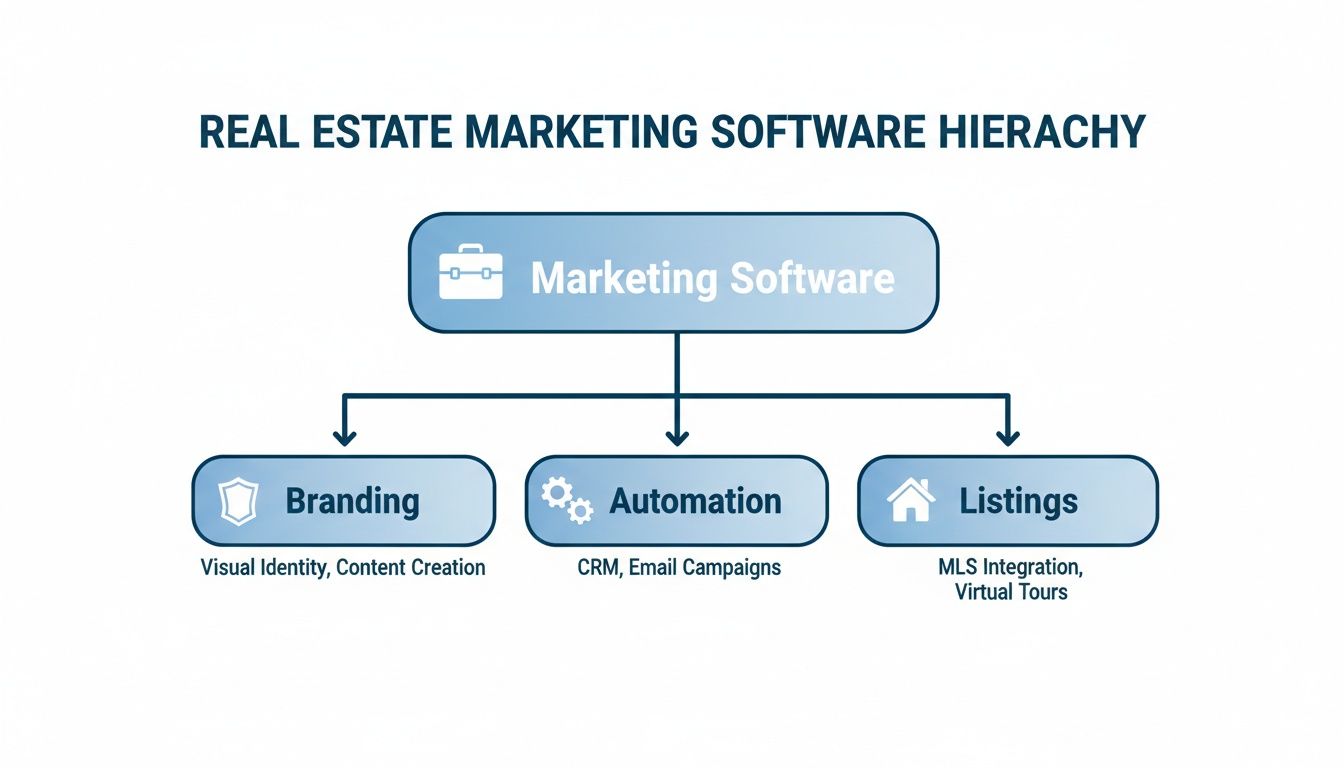
This guide gets to the point. It compares 10 tools through the lens that matters now: MLS-safe formatting, Fair Housing controls, AI-search discoverability for tools like ChatGPT and Google AI, local marketing usefulness, and scalability for solo agents, teams, and brokerages. If you also want the broader workflow around automated marketing, this AI content creation guide is worth bookmarking.
1. ListingBooster.ai

An agent uploads the listing once, then still has to rewrite it five more times for the MLS, portals, Instagram, email, and a just-listed post. ListingBooster.ai is built to cut that repeat work. It takes an MLS import, property URL, or short brief and turns that input into channel-specific copy for the MLS, Zillow, Realtor.com, Redfin, and social platforms.
That makes it more useful than a generic paragraph generator. For actual production work, the question is not whether a tool can write one polished description. The question is whether it can produce clean, reusable property language across every place the listing will appear, while keeping the facts consistent.
Where it stands out
ListingBooster.ai works best for agents and marketing teams that treat listing content as a system. The platform generates the MLS description, then extends that same source material into a 30-day social calendar, multi-photo posts, Stories, market insights, and print-ready assets. It also supports direct publishing to Instagram, Facebook, LinkedIn, and X.
That wider content output matters for 2026 buying behavior. AI-search discoverability is tied to how often your listing story shows up in consistent, well-structured formats across the web. A tool that only gives you one block of copy leaves the repackaging work on your desk. A tool that creates platform-specific variants gives your team more surface area for ChatGPT-style discovery, Google AI summaries, and standard portal search.
Compliance is another strong point. ListingBooster.ai includes Fair Housing checks, banned-phrase detection, price and financial-fidelity checks, and status-aware CTA changes. That last part matters in day-to-day use. A lot of tools will still suggest active-market language after a listing is pending or under contract, which creates cleanup work and avoidable risk.
Best fit and trade-offs
For solo agents, the value is time saved after the listing is entered. For teams, it is consistency. For brokerages, it is control. Those are three different buying criteria, and ListingBooster.ai covers all of them better than single-output writers.
It also has a learning curve. The voice model improves as you use it, but early drafts may need edits before the system reflects your tone accurately. Larger teams should also check permissions, approval flow, and credit usage before rolling it out broadly. Those details decide whether the platform scales inside a brokerage or just looks good in a demo.
I would put ListingBooster.ai near the top for agents who want one tool to handle drafting, repurposing, and publishing with compliance guardrails built in. I would not pick it for someone who only wants the cheapest possible MLS paragraph writer and has no interest in multi-channel marketing.
A useful starting point is their guide on how to write a real estate listing description with AI, because it shows the input structure that tends to produce stronger outputs.
- Best for solo agents: One property input can produce listing copy plus enough marketing content to keep a new listing visible for weeks.
- Best for teams: Shared voice controls and status-aware copy reduce revision cycles.
- Best for brokerages: Fair Housing and phrasing guardrails are easier to manage centrally than by manual review alone.
- Watch out for: The product delivers more value as a content workflow tool than as a stand-alone description generator.
2. AgentQuill.ai

AgentQuill.ai takes the opposite approach from all-in-one platforms. It stays focused. You fill out a short property form, and it gives you three MLS description variants, along with social captions and email subject lines. For a lot of agents, that's enough.
The appeal is speed and low friction. If your main bottleneck is getting from property notes to a workable first draft without opening a giant marketing suite, AgentQuill feels appropriately narrow.
What it gets right
The tool is built around MLS-friendly defaults, tone and length controls, and Fair Housing-aware language. That makes it practical for agents who already know how they like to market listings and just need a fast drafting assistant. I also like that it saves listing history and uses an agent profile for lightweight personalization.
The photo-aware copy in Pro is where the tool gets more useful. Without photos, many generators stay too generic. With photos, the copy usually gets more specific about finishes, light, layout, and standout visual details.
The best lightweight tools don't try to run your whole marketing stack. They help you get to a strong draft fast, then get out of the way.
Who should use it
AgentQuill is a good fit for solo agents and small teams that care more about speed-to-draft than full campaign automation. It's also a smart option if you want to trial a listing writer without changing the rest of your workflow, since the first listing can be tried without creating an account.
- Good fit: Agents who want MLS copy, captions, and subject lines from one simple form.
- Less ideal: Teams that need brochures, workflow automation, or cross-channel publishing.
- Main trade-off: The strongest specificity is tied to the paid photo-based tier.
- Website: AgentQuill.ai
3. Montaic

Montaic is one of the better choices when brand consistency matters as much as speed. Instead of stopping at an MLS description, it generates multiple outputs from one listing input, including social content, headlines, highlights, and a print-ready fact sheet. That's more useful than it sounds when you're trying to standardize marketing across several agents.
Its voice calibration feature is the main differentiator. Montaic uses samples of prior listings to tune output toward your existing style, which is exactly what many teams need when they're tired of generic “sun-drenched” copy that sounds like everyone else.
Why teams tend to like it
The broader market has been moving toward AI use in marketing and content creation as a common agent workflow, with independent industry coverage repeatedly identifying listing descriptions as one of the earliest and most frequent use cases, as summarized in Xara's review of real estate AI listing tools. Montaic fits that pattern well because it doesn't treat the listing description as a standalone task. It treats it as the source asset for the rest of the campaign.
It also includes MLS rules, character limits, and Fair Housing screening in the workflow. Add-ons like market context and branded PDFs make it more useful for team operations than single-purpose generators.
Where it can slow you down
Montaic has more moving parts than a quick-write tool. If you only need a short MLS paragraph and nothing else, the setup may feel heavier than necessary. The value appears when you use voice calibration, market context, and multi-output generation together.
- Strongest use case: Teams and brokerages that want brand consistency without hand-editing every agent draft.
- Underrated feature: Branded PDFs and collateral from the same property input.
- Trade-off: More setup and a steeper learning curve than basic generators.
- Website: Montaic
4. MLSDrafter (SnapListing)

MLSDrafter, from SnapListing, feels like it was built by people who understand the unglamorous part of listing work. Compliance checks. PDFs. Open-house assets. Neighborhood snapshots. It's less flashy than some broader AI platforms, but the workflow is grounded in real tasks agents repeat every week.
The MLS Description Generator is the entry point, but the surrounding toolkit is what gives it value. If you're already creating flyers, sign-in sheets, social posts, and neighborhood PDFs separately, SnapListing pulls those jobs into one place.
Practical value in day-to-day use
The compliance-minded defaults are the reason to consider this tool. It includes Fair Housing checks and photo compliance features, which is useful if you'd rather catch problems before a listing coordinator or MLS flags them.
There's also a nice operational logic to the product. Once the listing data is in, you can branch into open-house kits, offer summarizers, and neighborhood collateral without rebuilding the asset from scratch.
Smaller vendors sometimes win on workflow realism. They don't always have the broadest integration map, but they often solve the exact job agents need done.
Best use case
SnapListing makes the most sense for agents and small teams that want compliance-aware drafting plus practical collateral. It's less ideal if you need a closely connected publishing ecosystem or broad third-party integrations.
- Best for: Agents who want the MLS paragraph and the follow-up collateral in one workflow.
- Why it works: The kit-based structure mirrors how listings get marketed.
- Limitation: More advanced outputs are tied to higher tiers.
- Website: MLSDrafter by SnapListing
5. PadScribe

PadScribe solves one of the biggest AI-listing problems. Made-up details. Instead of relying mostly on text prompts, it asks you to upload photos and uses computer vision to detect finishes and amenities before writing the copy. That grounds the description in what's visible.
For agents who've been burned by AI inventing a chef's kitchen where there's clearly a basic galley layout, this is a meaningful difference. It also supports both MLS and short-term rental copy, so it has more range than the typical residential listing writer.
Where photo-grounded writing helps
PadScribe is strongest when the visuals tell the property story better than the intake form. Renovations, premium finishes, outdoor spaces, staging choices, and architectural details often come through more accurately in images than in rushed notes from a field sheet.
The output range also helps if your MLS allows longer descriptions. PadScribe supports longer-form listing copy, which can be useful in markets or systems where you want more room to sell the lifestyle of the property.
Who should skip it
If your photos aren't ready until late in the process, PadScribe may slow you down rather than speed you up. It works best after media is available. Heavy users should also compare the credit model against monthly subscription tools, because occasional use and high-volume use are two different economics.
- Best fit: Agents who want AI grounded in visual evidence, not just prompts.
- Useful bonus: Short-term rental formats for Airbnb and Vrbo-style listings.
- Main drawback: You need to upload photos first.
- Website: PadScribe
6. RealPropertiesAI

RealPropertiesAI is built for the agent who wants one-click variety. From one listing input, it generates MLS copy, social posts, email copy, and a tour or video script. That bundle makes sense if you want your first marketing pass done in one sitting.
It's marketed around MLS compliance and Fair Housing-aware language, with higher tiers adding virtual staging, video credits, market reports, and agent sites. That means the product sits somewhere between a writing tool and a lightweight marketing suite.
Where it earns its place
The strongest reason to use RealPropertiesAI is convenience. If you're the kind of agent who likes having the script, social caption, and email drafted together, this saves context switching. It's also useful for agents who want creative support but aren't ready to buy separate tools for copy, staging, and listing presentation assets.
The free trial on real listings is another plus. AI tools are easy to oversell in abstract demos. Running your own property through the workflow tells you much more than a sales page ever will.
Best and worst fit
RealPropertiesAI works well for agents who want enough breadth without moving into a brokerage-scale platform. It's less compelling if you only need MLS descriptions, because you may be paying for features you won't use.
- Strong for: Agents who want copy plus simple creative deliverables from one dashboard.
- Less strong for: Writers or teams who already have staging and video handled elsewhere.
- Watch for: Usage limits tied to staging or video quotas on lower plans.
- Website: RealPropertiesAI
7. AgentEdge AI
AgentEdge AI, hosted at easyrealai.com, is for agents who want the lowest possible barrier between “I need a description” and “I have a draft.” It's quick, simple, and doesn't force account creation for basic use. That matters more than vendors think.
The interface is intentionally lean. Choose property type, choose tone, enter details, and get a draft fast. If you're writing listings on the fly between appointments, this kind of simplicity has real value.
Good friction and bad friction
Good friction is when a tool slows you down just enough to improve quality. Bad friction is registration walls, bloated setup, and features you don't need. AgentEdge AI keeps bad friction low.
The trade-off is obvious. You don't get the deeper compliance support, collateral generation, or workflow automation found in more complete platforms. That means the final review burden stays more heavily on the agent.
If a tool is this lightweight, assume it's giving you a draft, not a finished compliance decision.
Who it's for
AgentEdge AI is a fit for solo agents, newer agents, and anyone who wants quick MLS paragraphs without investing in a larger system. It's also a reasonable backup generator to keep in your stack for emergencies.
- Best reason to use it: Fast, low-friction draft generation.
- Why some teams won't: Limited extras beyond the core writing function.
- Bottom line: Great for speed, weaker for governance.
- Website: AgentEdge AI
8. vProp Listing Description Generator

vProp's Listing Description Generator is one of the more practical free options. Enter a U.S. address, let it pull public-record details when available, and it creates three styles of listing copy, including MLS, social, and luxury variants. For quick draft work, that's useful.
The address-based autofill is the main draw. Anything that reduces manual entry helps, especially for common listing types where core property facts are already accessible.
Where it helps and where it misses
This tool is best used as a starting point, not the final word. Public-record autofill can save time, but it also means newer construction, unusual properties, or off-market data may need careful correction. The editing path is easy, which helps.
The optional bridge into narrated listing video creation is also smart. If you want to turn a written description into another asset without starting over, that's a nice handoff.
Best use case
vProp works well for quick drafts, occasional users, and agents testing AI listing writers without paying upfront. It's less compelling if you need richer compliance controls or a broader content system.
- Best for: Fast first drafts from an address.
- Helpful extra: Easy transition from text to video workflow.
- Caution: Always verify public-record fields before publishing.
- Website: vProp Listing Description Generator
9. Restb.ai

Restb.ai is a different category of product. It's not mainly a self-serve writer for an individual agent. It's enterprise-grade computer vision infrastructure used by MLSs, portals, and vendors, with a Property Descriptions module layered into that environment.
That distinction matters. If you're an agent shopping for a simple writing app, Restb.ai may be overkill. If you're an MLS, portal, or technology vendor that wants automated photo-driven descriptions built where users already work, it becomes far more interesting.
Why the enterprise angle matters
Restb.ai's core strength is photo analysis at scale. It can tag rooms, detect amenities, support image captions, and plug into compliance functions like watermark or duplicate detection. For organizations that manage listing quality across many users, that's far more valuable than a polished standalone text box.
This also makes it one of the more credible options for reducing hallucinated property details. The description generation is grounded in image analysis rather than pure language generation alone.
Who should consider it
Restb.ai is best suited to organizations embedding listing intelligence into products or MLS environments. Most individual agents won't buy it standalone, and access often comes through larger vendor or MLS relationships.
- Best for: MLSs, portals, and PropTech vendors.
- Standout capability: Computer vision tied to descriptions and compliance layers.
- Weak point for solo users: Not a typical self-serve copy tool.
- Website: Restb.ai
10. ListGenie.ai

ListGenie.ai sits in the practical middle of the market. It gives you MLS-friendly copy generation, tone toggles for different styles, a listings library, and flyer outputs on Pro. Nothing here feels overbuilt, which is a compliment.
The 14-day Pro trial is also useful because listing tools need to be tested on your own inventory, under your own deadlines, not judged on a polished homepage demo.
Why it works for many agents
The simple tone controls are well chosen. MLS, social caption, luxury, and concise are the kinds of modes agents use. The listings library also helps if you want to revisit, refine, and reuse language across multiple campaigns without digging through random documents.
Pro flyer creation adds just enough extra marketing utility to make the platform more than a one-task writer. For many solo agents, that's the sweet spot.
Main reservation
The biggest caution is that ListGenie.ai discloses fewer compliance specifics publicly than some competitors. That doesn't make it unsafe, but it does mean you should review output carefully and ask direct questions if compliance support is a deciding factor for your office.
- Best for: Agents who want a practical trial and a balanced feature set.
- Nice addition: Copy plus simple flyer workflow.
- Main concern: Less public detail on compliance controls.
- Website: ListGenie.ai
Comparison of Top 10 AI Tools for MLS Listing Descriptions
| Product | Core Features ✨ | Quality ★ | Value 💰 | Target Audience 👥 |
|---|---|---|---|---|
| ListingBooster.ai 🏆 | AI-search optimized listings + 30‑day social calendar, direct publishing, non‑skippable Fair Housing checks | ★★★★★ | 💰 ~$35–60/mo (credit model); 25 free credits/no card trial | 👥 Solo agents, teams, brokerages |
| AgentQuill.ai | 3 MLS variants, social captions, photo‑enhanced Pro, Fair Housing defaults | ★★★★☆ | 💰 Free/no‑account trial; Pro for photo features | 👥 Agents needing fast, MLS‑focused copy |
| Montaic | Multi‑output (MLS, social, PDFs), voice calibration, market context | ★★★★☆ | 💰 Free tier; higher Pro price for advanced features | 👥 Teams & brokerages seeking brand consistency |
| MLSDrafter (SnapListing) | MLS generator, open‑house kits, neighborhood snapshots, photo checks | ★★★★☆ | 💰 Tiered pricing; collateral gated to higher tiers | 👥 Compliance‑focused agents needing collateral |
| PadScribe | Photo‑verified copy with amenity detection; long MLS formats; STR support | ★★★★☆ | 💰 Credit‑based per generation; good for occasional use | 👥 Photo‑ready agents; short‑term rental hosts |
| RealPropertiesAI | MLS + social + email + tour/video script; staging/video in higher tiers | ★★★★☆ | 💰 Free trial (3 listings); add‑ons for staging/video | 👥 Agents wanting copy plus basic creative services |
| AgentEdge AI (easyrealai.com) | Ultra‑fast MLS paragraphs, tone options, 3 free gens/day, one‑click copy | ★★★☆☆ | 💰 Very low‑cost/unlimited plans; high trial accessibility | 👥 Agents who prioritize speed and simplicity |
| vProp Listing Description Generator | Address autofill from public records, 3 styles, Fair Housing, video path | ★★★☆☆ | 💰 Free daily usage; optional paid video product | 👥 Agents needing free quick drafts & video bridge |
| Restb.ai (Property Descriptions) | Enterprise computer‑vision tagging, photo‑driven descriptions, MLS compliance modules | ★★★★☆ | 💰 MLS/vendor contracts, enterprise pricing | 👥 MLSs, portals, large vendors |
| ListGenie.ai | Tone toggles, listings library, one‑tap refine, Pro flyers/open‑house outputs | ★★★☆☆ | 💰 14‑day free Pro trial; practical pricing for small teams | 👥 Agents wanting simple flyer + copy workflows |
Choosing Your AI Co-Pilot for Your Business
An agent leaves a listing appointment at 6:15 p.m., needs the MLS copy ready before morning, and still has to prep social posts, an email, and a property page. In that moment, the strongest AI tool is rarely the one with the prettiest first draft. It is the one that cuts production time, reduces compliance risk, and gives that listing a usable content package across every channel that matters in 2026.
That changes how these tools should be judged.
For a solo agent, the practical question is simple. How much work does one set of property inputs remove from the week? A basic generator can save 10 minutes on the MLS description and give all of it back when the same listing has to be rewritten for portals, social, email, and website copy. A broader platform earns its keep when it turns one intake into several finished assets without creating extra review work.
Teams have a different problem. Speed still matters, but inconsistency becomes expensive fast. If five agents describe similar listings in five different voices, the brand starts to look loose, and the marketing lead becomes the cleanup crew. Tools with voice controls, reusable prompts, and review structure tend to hold up better here. Montaic fits that use case well. ListingBooster.ai also deserves consideration because it extends beyond the core MLS draft into multi-channel output that teams can standardize.
Brokerages should be stricter. Fair Housing safeguards, approval workflows, and repeatable outputs matter more than novelty features. Many lightweight tools can write acceptable copy. Fewer can support a process that keeps risk low across dozens or hundreds of agents while still producing marketing assets people will use.
AI-search discoverability also belongs in the decision. Buyers and sellers are finding agents and listings through Google AI overviews, ChatGPT-style research flows, and other answer-driven surfaces, not just portal search. That raises the value of tools that create structured, reusable copy for multiple channels instead of a single MLS paragraph that dies in one field.
Use this filter when choosing:
- Choose a lightweight generator if your only goal is getting a draft fast. AgentQuill.ai and AgentEdge AI fit that job.
- Choose photo-grounded tools if accuracy from images matters more than style. PadScribe and Restb.ai stand out there.
- Choose voice-controlled workflows if you manage multiple agents and care about brand consistency. Montaic is a serious option.
- Choose broader listing-to-marketing systems if you want one property intake to feed MLS, social, website, and print outputs with less manual rewriting.
- Choose enterprise-grade infrastructure if you support MLSs, large brokerages, or vendors. Restb.ai is built for that level.
Selection is only half the job.
The firms getting real value from these tools build them into listing intake, define required inputs, and review outputs against a clear compliance standard. They save approved examples, tighten prompts, and treat the system like part of operations instead of a novelty tab someone opens when they are behind.
If you want a wider view of adjacent content workflows, this guide on AI tools for creators is a useful companion read.
For agents and teams that want one system to handle MLS copy plus the surrounding marketing workload, ListingBooster.ai is the strongest all-around fit in this roundup. As noted earlier, its advantage is not just writing quality. It is the ability to turn listing information into channel-ready content with stronger brand control and less manual repackaging.