Tag: real estate marketing

  • The Ultimate Real Estate Listing Description Playbook

    The Ultimate Real Estate Listing Description Playbook

    You've seen this happen. The photographer delivers strong images, the seller wants the home live today, and the MLS text box is still blank. That last step looks simple, but it isn't. A real estate listing description now has to persuade, stay compliant, and read cleanly on platforms where buyers skim in seconds.

    That's why weak copy costs more than most agents realize. It doesn't just make the listing sound flat. It can dilute the positioning of the property, create avoidable review issues, and waste the quality of everything else you've already done to launch well.

    Why Your Listing Description Is Your Most Important Asset

    A person typing a listing description on a laptop screen for an online real estate platform.

    The MLS description field is one of the few places where your judgment is fully visible. Photos show the property. Price signals strategy. But the words show whether the agent understands how to market a home with precision.

    A strong real estate listing description does three jobs at once. It frames the home's value, helps the right buyer quickly understand what matters, and keeps the marketing grounded in language that won't create unnecessary risk. That's a very different task from tossing features into a paragraph and calling it done.

    Why the text box matters more than agents think

    Most agents were taught to treat listing copy like a summary. That's outdated. Buyers already see the core data in the listing interface. What they need from the description is context, priority, and momentum.

    Zillow's guidance reflects that shift. It notes that a widely used benchmark is 250 words or less, including the headline, and that if space is limited, agents can leave out basics like beds, baths, and square footage when those details already appear elsewhere in the listing display on Zillow's listing description guidance.

    Practical rule: Don't use your description to repeat the database. Use it to explain why this home is worth a closer look.

    That same mindset improves everything downstream. Better listing copy gives you cleaner ad copy, stronger social captions, and more focused talking points for buyer inquiries. If you want examples of messaging angles that translate well from listing language into paid promotion, Contesimal has a useful roundup on ads that convert more deals.

    What works and what usually fails

    The descriptions that perform well tend to feel selective. They don't try to mention everything. They identify the few features that shape buyer perception, then present them in an order that makes sense.

    What fails is familiar:

    • Feature dumping with no hierarchy
    • Generic adjectives like “stunning,” “beautiful,” and “must-see” doing all the work
    • Wall-of-text formatting that collapses on mobile
    • Buyer-targeting language that drifts into compliance trouble

    You're not filling space. You're building a marketing asset.

    The Four-Part Structure of a Winning Description

    An infographic detailing the four essential components for creating a highly effective real estate listing description.

    Most weak descriptions have the same problem. They have information, but no sequence. The fix is a repeatable structure that helps buyers absorb the listing quickly and helps you write faster without sounding templated.

    Start with an opening feature

    Your first line has one job. It needs to surface the property's strongest angle immediately.

    Lead with what changes perception fastest. That might be a renovated kitchen, a panoramic view, a rare layout, a detached workspace, or outdoor living that adds selling power. Don't open with “Welcome to” or “Don't miss this.” Those phrases take up space and say nothing.

    Use this approach instead:

    • Weak opening
      “Beautiful 4 bedroom home in a great area.”

    • Stronger opening
      “Renovated kitchen, vaulted great room, and a covered patio that extends the living space outdoors.”

    The second version gives the buyer something concrete to picture.

    Add the facts buyers need first

    After the hook, give a concise factual summary. Practitioner guidance commonly recommends short blocks, including a brief property summary of about 60 words, followed by 150 to 200 words on highlights and standout features, with 2 to 3 versions written for different buyer segments and a peer review pass before publishing, as outlined in this practitioner video on description tips for real estate agents.

    That structure works because it respects the way people read on mobile. It also aligns with the platform constraint already noted above. Keep the copy lean. Prioritize upgrades, layout benefits, and details that don't already appear in a standard data field.

    A clean factual block often covers:

    • Layout essentials such as split-bedroom plan, main-level primary, flex room, or finished lower level
    • Notable updates like new roof, replaced windows, remodeled bath, or upgraded appliances
    • Operational details buyers care about, including storage, parking, outdoor space, or work-from-home functionality

    Use lifestyle language carefully

    Lifestyle sells when it's tied to the property, not to the person who should buy it. That distinction matters.

    Good lifestyle language describes the experience of the space:

    • morning light in the breakfast area
    • direct flow from kitchen to patio
    • a quiet home office with built-ins
    • a fenced yard with room for gardening, entertaining, or pets

    Bad lifestyle language describes the occupant:

    • perfect for families
    • ideal for young professionals
    • safe neighborhood
    • exclusive community

    Good listing copy lets the buyer imagine a life in the home without telling them who they are.

    End with a real call to action

    The CTA should be simple and specific. Not clever.

    Examples that work:

    • Schedule a private showing.
    • Ask for the full feature sheet.
    • Tour the home in person to see the updates and layout flow.

    That final sentence matters because many descriptions just stop. A clear closing gives the buyer a next step and makes the marketing feel complete.

    Before and after example

    Before
    “Beautiful move-in ready home with lots of updates. This home has a great floor plan, spacious rooms, nice backyard, and is close to shopping, dining, and schools. Must see.”

    After
    “Updated kitchen, generous natural light, and a backyard setup designed for everyday use. This home offers a functional layout with spacious living areas, refreshed finishes, and flexible rooms that work for guests, work, or hobbies. The main living spaces connect easily to the outdoor area, creating a practical flow for relaxing or entertaining. Convenient access to shopping, dining, parks, and commuter routes adds everyday ease. Schedule a private showing to experience the layout and upgrades in person.”

    The difference isn't style alone. It's structure.

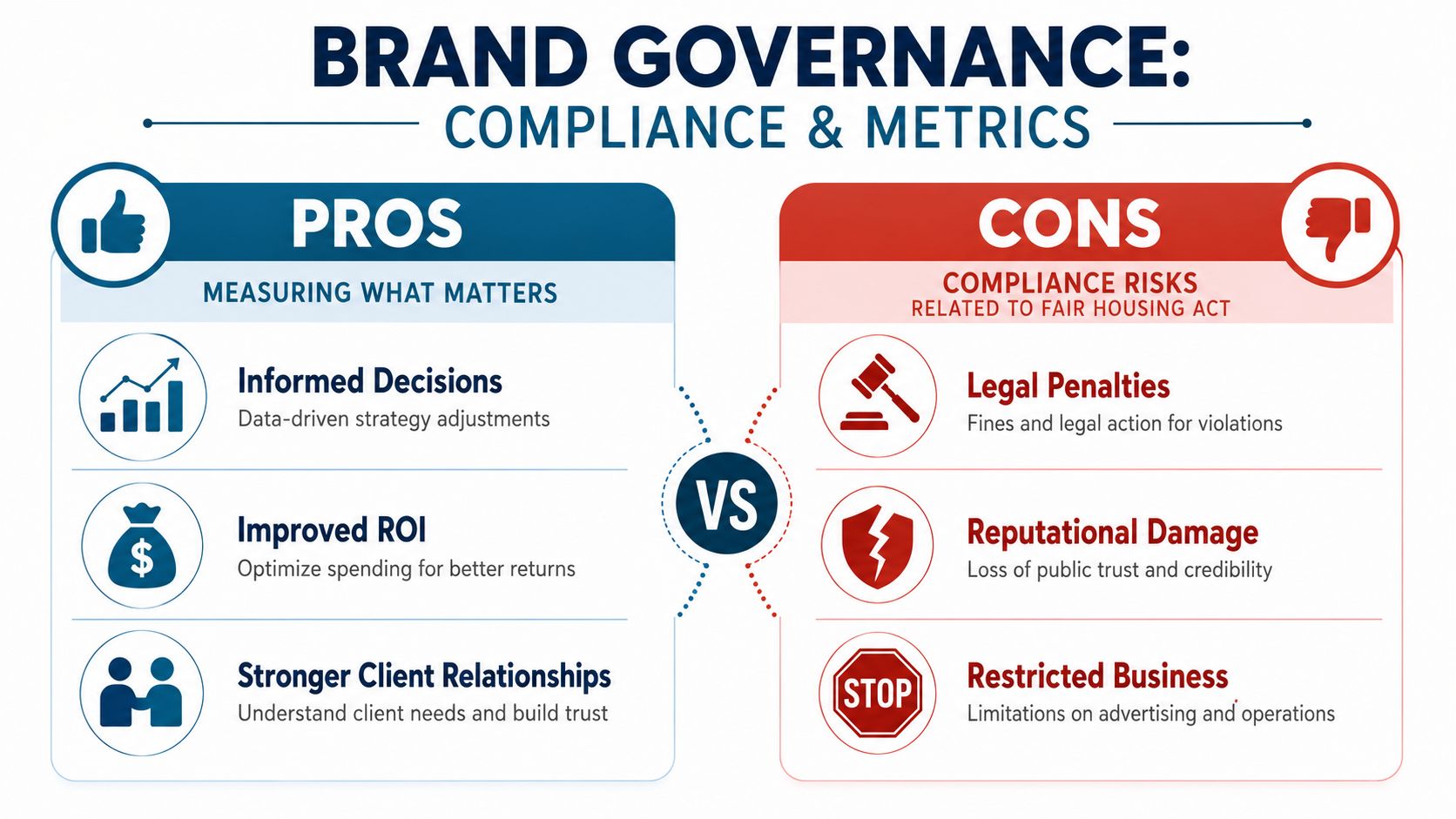
    Mastering Compliant Copy to Avoid Fair Housing Pitfalls

    A fair housing compliance infographic displaying do's and don'ts for writing real estate listing descriptions.

    A lot of listing advice tells agents to “sell the dream.” That sounds good until the copy starts implying who should live there. Then you're not marketing creatively. You're creating risk.

    The safer standard is simpler. Describe the property, not the people. Dotloop's guidance highlights this exact gap in common training and notes that the safest copy is often the copy that is specific, factual, and avoids assumptions about the buyer, as discussed in Dotloop's article on writing great real estate listings.

    Problem phrases and better replacements

    Some phrases are common because agents hear them all the time. That doesn't make them safe.

    Risky wording Better direction
    Perfect for families Spacious backyard, multiple bedrooms, flexible living area
    Safe neighborhood Nearby parks, sidewalks, lighting, community amenities
    Walk to church Close to local services and neighborhood destinations
    Ideal for young professionals Home office, low-maintenance exterior, easy commute access
    Exclusive area Gated entry, private lot, limited through traffic

    This isn't about stripping personality out of the copy. It's about putting the personality in the home itself.

    Keep persuasion tied to observable facts

    The cleanest persuasive writing uses details a buyer can verify:

    • Feature-based language like “floor-to-ceiling windows” or “covered rear patio”
    • Location context such as “near public park,” “close to downtown dining,” or “convenient access to commuter routes”
    • Accessibility features if present, described factually

    Avoid euphemisms that blur meaning. If a home needs work, say what needs updating. If there's an unusual condition, don't hide it behind vague phrases.

    Specific beats clever. In listing compliance, clarity is usually the safer choice.

    A practical workflow helps. Draft the copy. Then do one review pass for accuracy and one separate pass only for compliance language. If you want help systematizing that review, ListingBooster.ai's compliant listing tool covers a real estate specific approach to generating and checking listing language.

    Writing for Algorithms, MLS, Portals, and AI Search

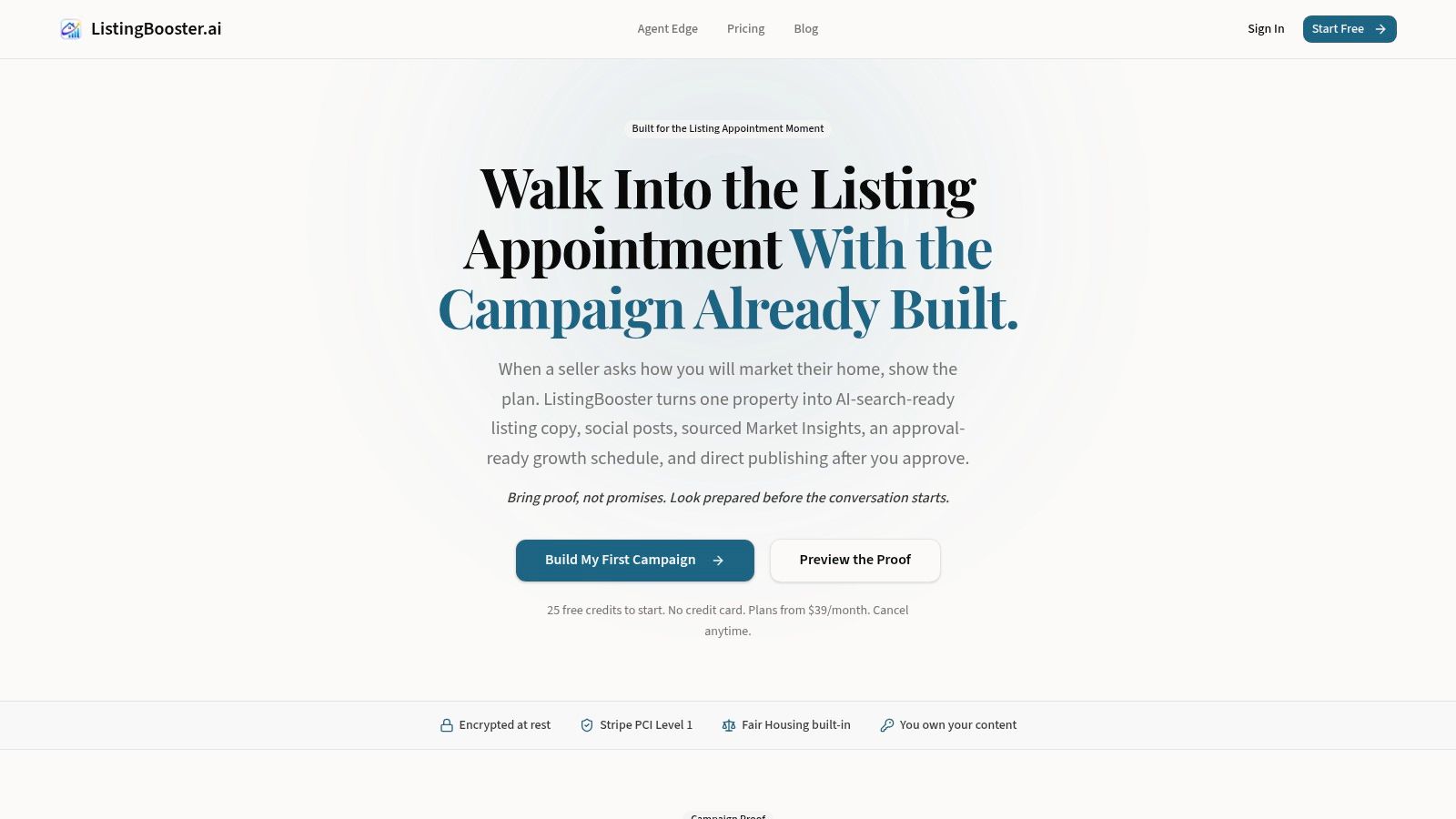
    Screenshot from https://listingbooster.ai

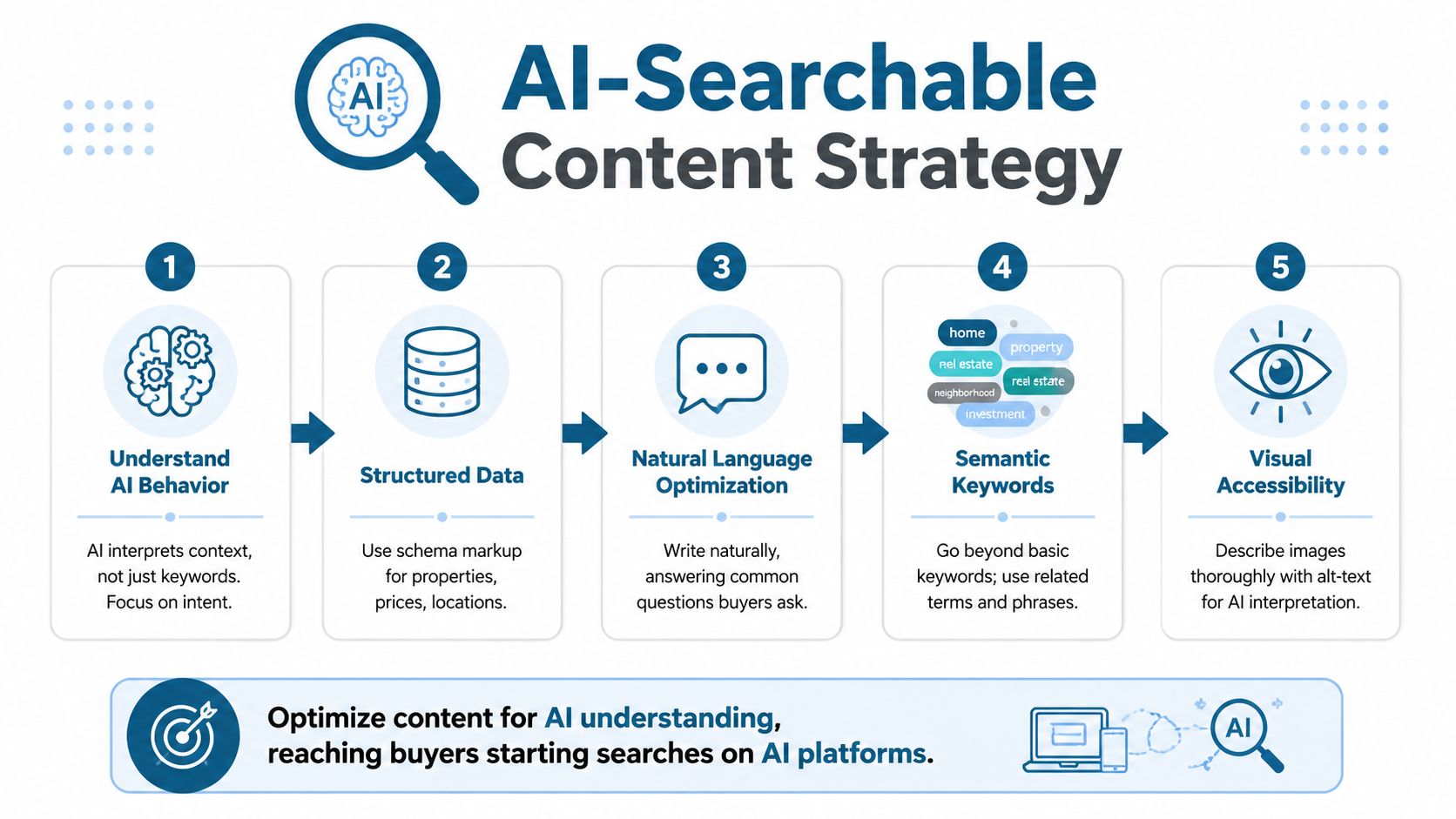
    Your description isn't read only by buyers. It's also parsed by listing portals, MLS systems, and AI tools that summarize homes in response to prompts and search queries.

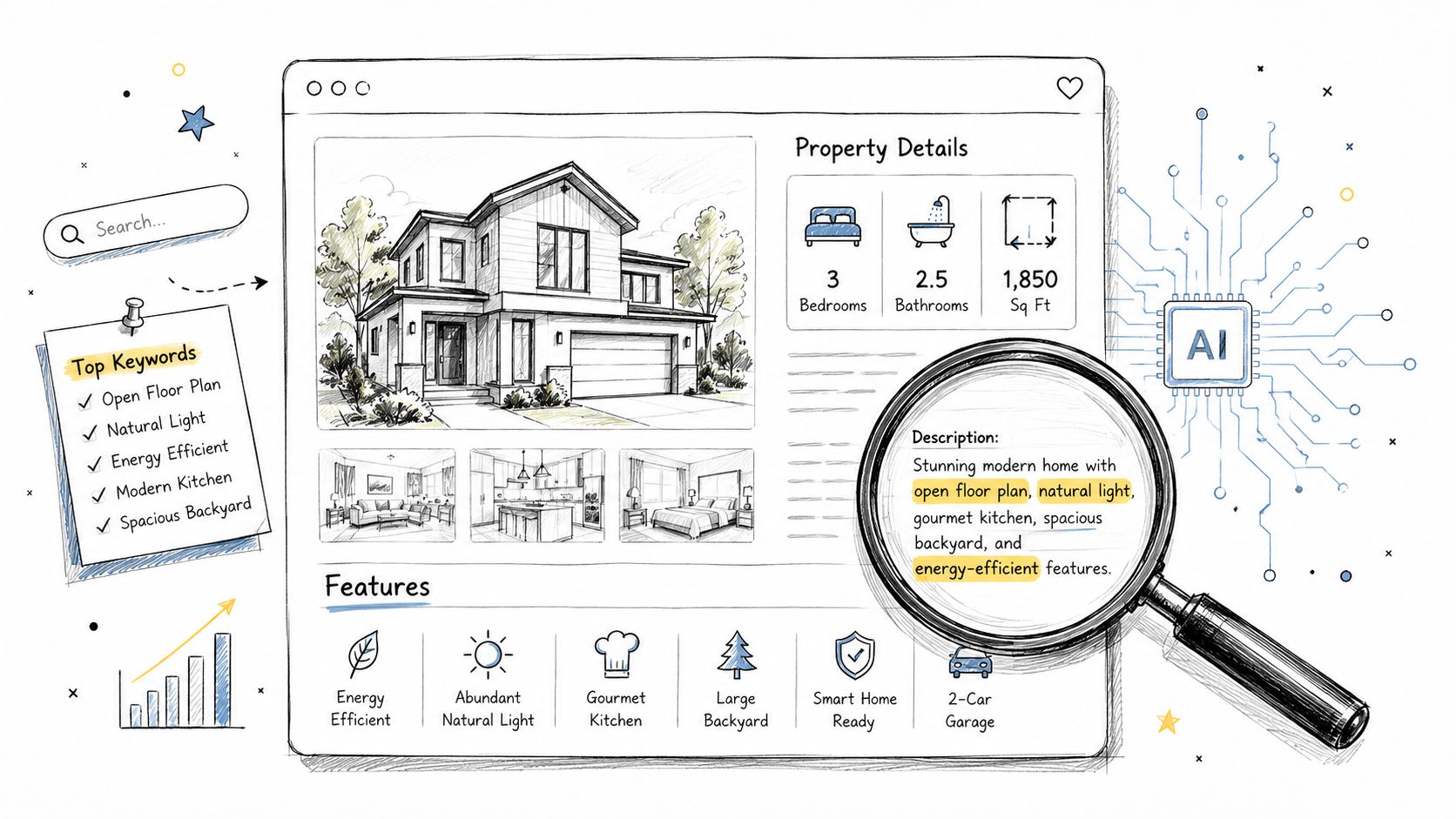
    That changes the writing standard. Fluffy prose may sound polished, but it often hides the exact signals these systems look for. Perry Real Estate College points to this newer shift, noting that buyers increasingly start with AI tools and that concise, specific, mobile-friendly phrasing with concrete attributes and location context may outperform vague copy because AI systems extract structured signals from explicit facts in its discussion of modern listing writing.

    What machine-readable copy looks like

    Think in searchable attributes, not just mood.

    Instead of:

    • upgraded throughout
    • designer touches
    • amazing location

    Write:

    • white oak flooring
    • quartz countertops
    • dual-pane windows
    • detached two-car garage
    • near Greenway Trail and downtown retail corridor

    That doesn't mean robotic writing. It means using real nouns. The systems that surface listings can do more with “Bosch appliances” than with “chef-inspired kitchen.”

    Adapt the same listing for each platform

    A single version rarely fits every use case. MLS copy, portal copy, social captions, and AI-facing summaries often need different levels of compression and different emphasis.

    One practical option is to build variants manually. Another is to use a purpose-built platform that understands real estate inputs and outputs platform-specific versions. ListingBooster.ai is one example. It generates listing descriptions and related marketing content from property details for different real estate platforms.

    For a broader look at the underlying idea, MyMentions has a solid primer on optimizing for generative AI. The big takeaway is straightforward. Clear structure and explicit property facts travel better across new search environments.

    Turn Your Listing Description into a Content Goldmine

    A diagram illustrating how a real estate listing description can be used to generate diverse marketing content assets.

    Writing a strong listing description takes effort. You should get more than one use out of it.

    The smartest agents treat the final description as source material for every other marketing asset around the listing. That approach also improves consistency. Your Instagram caption, email teaser, open house post, and brochure copy all stay aligned because they came from the same core message.

    Pull the description apart by format

    Practitioner guidance suggests descriptions perform best in short blocks and recommends writing 2 to 3 versions for different buyer segments. That same discipline makes repurposing easier, as noted in this guidance on multi-channel content for agents.

    Here's how to break one description into working parts:

    • Headline for social posts
      Use the opening hook as your “Just Listed” caption starter.

    • Facts for email and flyers
      Pull the factual block into a concise summary for newsletters, postcards, and brochures.

    • Lifestyle lines for Instagram or Facebook
      Use one or two benefit-focused sentences that describe how the space lives, while staying property-focused.

    • Feature details for video narration
      Turn your room-by-room highlights into a short walkthrough script.

    One solid listing description should feed the entire launch, not sit in the MLS and die there.

    Platform variants that actually make sense

    You don't need endless rewrites. You need smart versions.

    One version should be MLS-clean and tightly compliant. Another can be slightly warmer for social. A third can be stripped down for mobile-first platforms where skimming dominates. The point is not more words. It's better fit.

    That's why agents who rely on one generic paragraph usually look repetitive across channels. The listing starts to feel copied, not marketed.

    The Modern Agent's Advantage

    The agents who stand out now don't just “write better.” They position properties with more discipline. They know when to lead with the feature, when to tighten the facts, when to cut a risky phrase, and when to create a shorter variant for a different platform.

    That's a key advantage. A polished real estate listing description signals competence before a buyer ever schedules a showing and before a seller ever asks how you'll market the home. It shows that your process is deliberate.

    If you want to keep sharpening that edge, it helps to follow marketing resources built around visual merchandising and listing presentation as well. aiStager regularly publishes useful ideas in aiStager's latest posts that complement the copy side of the listing launch.

    The blank MLS field isn't a writing chore anymore. It's a test of whether your marketing can hold up across compliance review, mobile attention spans, and AI-driven discovery.


    If you want a faster way to produce platform-specific, real-estate-focused copy without relying on generic AI prompts, ListingBooster.ai is built for that workflow. It helps agents turn property details into MLS-ready descriptions and supporting social content while keeping the process structured, editable, and practical for day-to-day listing launches.

  • AI Real Estate Listing Description Generator: A 2026 Guide

    AI Real Estate Listing Description Generator: A 2026 Guide

    You know the drill. A new listing is going live, photos are in, the MLS deadline is close, your phone is ringing, and you still need a description, an Instagram caption, a Facebook post, a LinkedIn update, and something usable for email. Most agents don't lose time on marketing because they lack ideas. They lose it because every listing creates a fresh content pileup.

    That pileup used to be annoying. Now it affects visibility.

    Over 40% of homebuyers now incorporate AI tools like ChatGPT, Perplexity, and Google AI into their search process, which means agents without a consistent, AI-readable digital footprint risk getting overlooked, as noted in Propphy's real estate AI guide. That changes the job. You're not just writing one description for the MLS anymore. You're building a listing marketing system that has to work across search, social, and syndication.

    An AI real estate listing description generator earns its keep when it removes that scramble. Not by replacing your judgment. By giving you a repeatable starting point that turns verified property facts into clean first drafts you can adapt fast, review carefully, and publish everywhere with confidence.

    The End of the Late-Night Content Scramble

    A lot of agents still treat listing content as a last-minute writing task. That's the bottleneck.

    You finish pricing strategy, coordinate staging, approve photos, and handle seller questions. Then marketing gets compressed into whatever time is left. The result is familiar: a rushed MLS description, copied captions across platforms, and inconsistent messaging from one listing to the next.

    That approach breaks down fast when your listing has to do more than fill a text box.

    The real problem isn't the blank page

    The issue usually isn't writing skill. It's production capacity. One property now needs multiple versions of the same core message. The MLS needs factual, compliant copy. Instagram needs a concise hook. Facebook needs more context. LinkedIn needs a professional angle. Email needs a reason to click.

    Good listing marketing starts with one verified source of truth, then branches into channel-specific versions.

    That's why a solid AI workflow matters. It lets you start with structured property data and generate usable drafts quickly, while keeping your message aligned across every place the listing appears.

    What changes when you use AI well

    A strong system does three things at once:

    • Cuts the initial drafting burden: You stop writing every asset from scratch.
    • Improves consistency: The same property story carries across MLS, social, and email.
    • Protects your time: You spend more energy on review, positioning, and client service than on repetitive copywriting.

    Used this way, AI isn't a novelty. It's an operating layer for listing launch.

    Choosing the Right AI Generator for Your Business

    Not every AI tool belongs in a real estate workflow. Generic AI can write fluent text, but fluent text is not the same thing as listing-ready marketing.

    The difference starts with data. Effective real estate AI is built on structured data, and a purpose-built tool can process inputs like address, beds, baths, and square footage to generate compliant, localized, and channel-specific assets, according to ListingAI's description generator workflow. That matters because real estate content isn't just creative. It's operational.

    Generic AI versus real estate-specific AI

    Here's the practical comparison.

    Feature Generic AI (e.g., ChatGPT) Purpose-Built Tool (e.g., ListingBooster.ai)
    Property fact intake Manual prompt entry Structured fields for listing data
    MLS-ready copy Possible, but inconsistent Designed for MLS-style output
    Social versions Requires extra prompting Built to produce multiple channel variants
    Fair Housing screening Manual review required Often included as a workflow guardrail
    Brand voice control Prompt-dependent Usually guided by saved preferences or templates
    Editable drafts Yes Yes, usually within a listing workflow
    Fact grounding Depends on what you type Anchored to listing fields and source inputs

    A generic tool is fine for brainstorming. It's less reliable when you need repeatable output from verified facts, especially under deadline.

    What a good generator must do

    If you're evaluating an AI real estate listing description generator, don't get distracted by how polished the demo sounds. Check whether it handles the parts that matter in daily practice:

    • MLS-ready copy: The draft should be concise, factual, and easy to edit for local MLS rules.
    • Social media versions: One listing should generate short-form posts without forcing you to reprompt from scratch.
    • Fair Housing screening: This should be part of the workflow, not an afterthought.
    • Editable drafts: You need to tighten language, remove weak claims, and tailor the message.
    • Brand voice support: Luxury, new construction, relocation, urban condo, and suburban move-up listings shouldn't all sound identical.
    • Fact grounding: The tool should work from actual property inputs, not guesswork.

    Practical rule: If a tool saves time on drafting but creates more review risk, it's not efficient.

    For a broader look at category options, this guide to AI content tools is useful as a general overview. For a more industry-specific roundup, this overview of top AI solutions for agents is a better fit for real estate workflows.

    Where purpose-built tools fit

    A platform like ListingBooster.ai fits naturally. It's built around real estate inputs and multi-channel output, rather than asking you to build the entire workflow from prompts alone. That's a meaningful distinction if your goal is speed with control, not just speed.

    Establishing Your AI Content Workflow and Compliance Guardrails

    The most important decision happens before you generate anything. You need a review process.

    The biggest risk in AI content generation isn't poor writing. It's liability. A single unsupported claim or Fair Housing issue can spread across MLS, portals, and social posts, which is why a human approval workflow is essential, as discussed in Hypotenuse AI's real estate generator guide.

    A five-step AI content workflow checklist designed for managing AI-generated real estate listing descriptions professionally.

    Verify facts before style

    The AI draft should only be as strong as the facts you feed it. Manually confirm the fields that commonly cause problems:

    • Property basics: Bedrooms, bathrooms, square footage, lot size, parking, year built.
    • Upgrades and features: Renovation details, appliance brands, roof or HVAC updates, outdoor improvements.
    • Location details: School names, HOA references, transit claims, neighborhood amenities.
    • Status-sensitive details: Open house timing, price changes, concessions, occupancy notes.

    If you can't verify it, don't publish it.

    Screen for Fair Housing risk every time

    Many agents get casual at this stage. Don't.

    Avoid language that describes who should live in the home or implies anything about protected classes. Skip phrases like “perfect for families,” “safe neighborhood,” or “ideal for young professionals.” Describe the property itself instead.

    Use this kind of translation:

    • Instead of: “Perfect for families”
      Use: “Flexible floor plan with multiple living areas and a fenced yard”
    • Instead of: “Safe, quiet street”
      Use: “Located on a cul-de-sac” or “set on a low-traffic residential street,” if accurate
    • Instead of: “Walk to church”
      Use: “Close to neighborhood services and community amenities,” if verified and appropriate

    For a more focused look at compliant workflow standards, review how to generate legal property descriptions.

    Your license doesn't care whether a problematic phrase came from you or from software. You're still responsible for the final copy.

    Build a simple approval sequence

    Keep it tight:

    1. Load verified listing facts
    2. Generate draft variations
    3. Review for factual accuracy
    4. Screen for compliance and unsupported claims
    5. Approve platform versions for publishing

    That process is what turns AI from a risk into an asset.

    Executing Your 30-Day Listing Marketing Plan

    The best use of an AI real estate listing description generator is to treat the MLS description as the core asset, not the final deliverable. One approved draft can drive a month of coordinated marketing if you plan it correctly.

    A 30-day AI marketing plan roadmap for real estate listings broken down into five distinct phases.

    Days 1 to 3 with the cornerstone asset

    Start with the verified property record and your own notes from the home. Generate:

    • An MLS description: Clear, accurate, and stripped of fluff
    • A longer website version: More room for narrative and feature grouping
    • A short-form summary: Useful for portals, email intros, and teaser posts

    At this stage, you're deciding what story the listing will tell. Is the angle architectural detail, updated interiors, lot utility, outdoor living, or location convenience? Pick one primary angle and one secondary angle. Don't try to make every feature the headline.

    Days 4 to 10 with launch content

    Once the core description is approved, derive launch assets from it.

    A practical sequence looks like this:

    • Coming soon post: Focus on anticipation. Tease the strongest visual or functional feature.
    • Just listed post: Use the clearest summary version and strongest first image.
    • Story or Reel script: Turn the description into a walkthrough voiceover.
    • Email announcement: Keep the first paragraph tight and direct readers to photos or a tour page.

    Days 11 to 20 with event-based updates

    Most listings need more than one announcement. Build around the actual sales cycle.

    Listing stage Best content angle What AI should generate
    Open house Access and urgency Caption, story slides, reminder text
    Price adjustment Fresh value framing Updated copy emphasizing features and positioning
    Under contract Momentum and proof of activity Status post and seller-facing credibility content
    Just sold Marketing recap and market presence Closing announcement and authority post

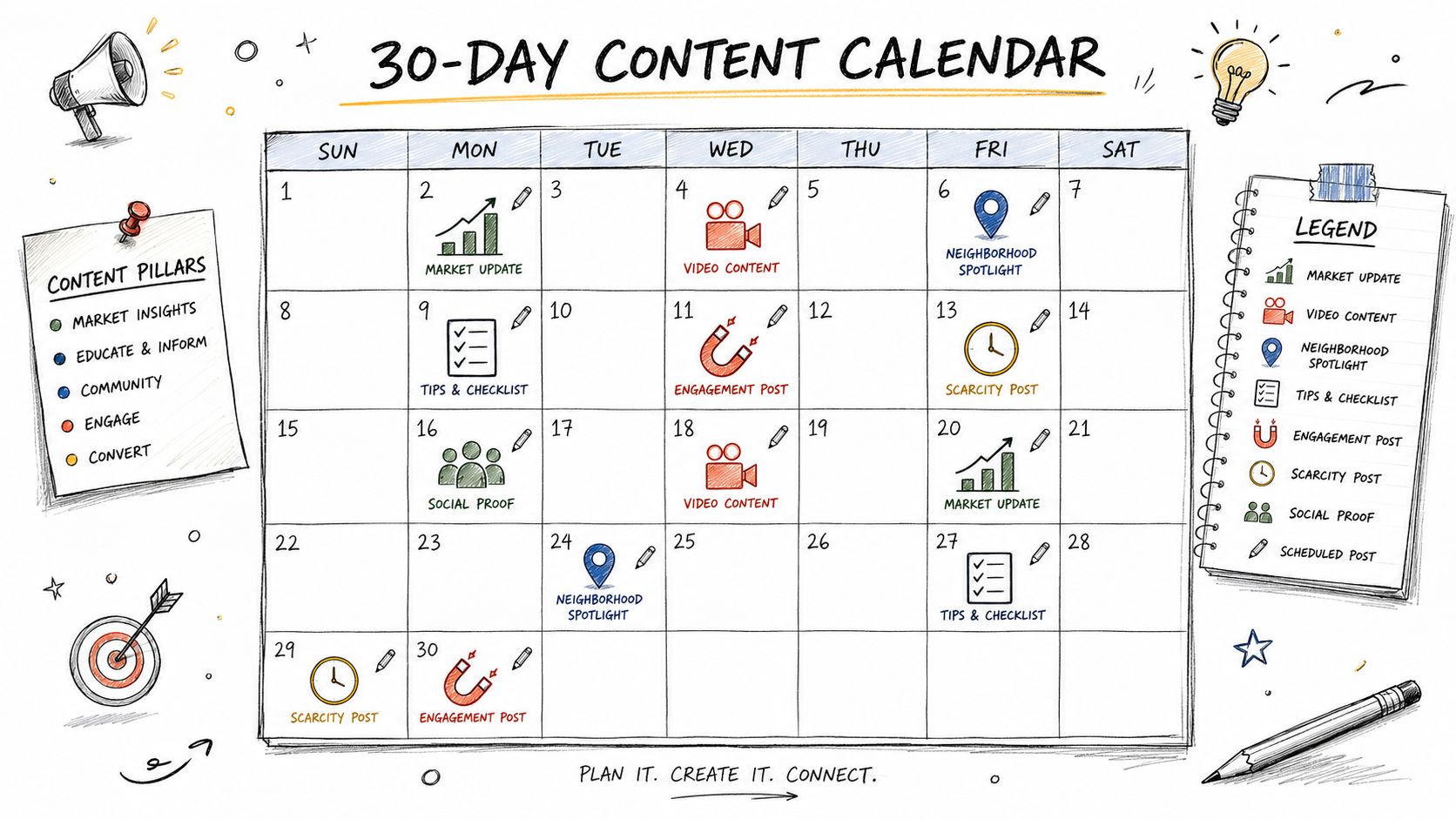
    Content planning offers assistance. If you want a repeatable schedule instead of posting ad hoc, use a framework that helps you attract clients with content planning.

    Days 21 to 30 with follow-up and reuse

    After the listing has been live for a while, don't abandon the content. Recut it.

    Use the original description to create a feature spotlight post, a behind-the-scenes caption about prep and launch, or a market positioning post that explains what the property represented in the local market. The same listing can support both lead generation and authority building when the workflow is organized from the start.

    Adapting AI-Generated Content for Each Social Platform

    The draft shouldn't be identical everywhere. Platform-native packaging matters.

    A woman working on a laptop while using her smartphone in a bright, professional home office setting.

    Instagram and TikTok need movement

    Instagram captions work best when they lead with a visual hook, then quickly anchor the property's strongest selling point. Reels need a short script with scene-by-scene pacing, not a pasted MLS paragraph.

    For TikTok, use the listing description as raw material for voiceover structure:

    • opening hook tied to the standout feature
    • quick room-to-room progression
    • short closing line with next action

    If you're turning approved listing copy into video ads or short-form creative, tools like ShortGenius automated ad generation can help speed up video production after the messaging is finalized.

    Facebook needs context and conversation

    Facebook still works well for community-aware listing posts and event promotion. The copy can be a little longer. Give enough detail for someone to understand why the property stands out, then invite a practical next step such as attending an open house or requesting details.

    Good Facebook posts often combine:

    • a concise lead sentence
    • two to three verified features
    • one action prompt

    LinkedIn should build professional credibility

    LinkedIn is the place to frame the listing as evidence of your marketing process and market knowledge. Don't write like you're posting to Instagram with a suit on.

    A LinkedIn listing post should sound like a professional market update attached to a property, not a sales flyer.

    Use angles like pricing strategy, presentation quality, neighborhood demand patterns, or the importance of clean syndication-ready content. The property is still the hook, but your expertise is the core subject.

    Building Your Authority Engine with AI

    The smartest agents use listing content to build a body of work, not just fill a weekly posting slot.

    A professional woman presenting real estate market data charts on a large digital screen to an audience.

    With 43% of shoppers willing to use generative AI in their home search, discoverability now depends on a consistent footprint of authority content that helps AI systems recognize trusted local expertise, according to Skyline School's write-up on listing description generators.

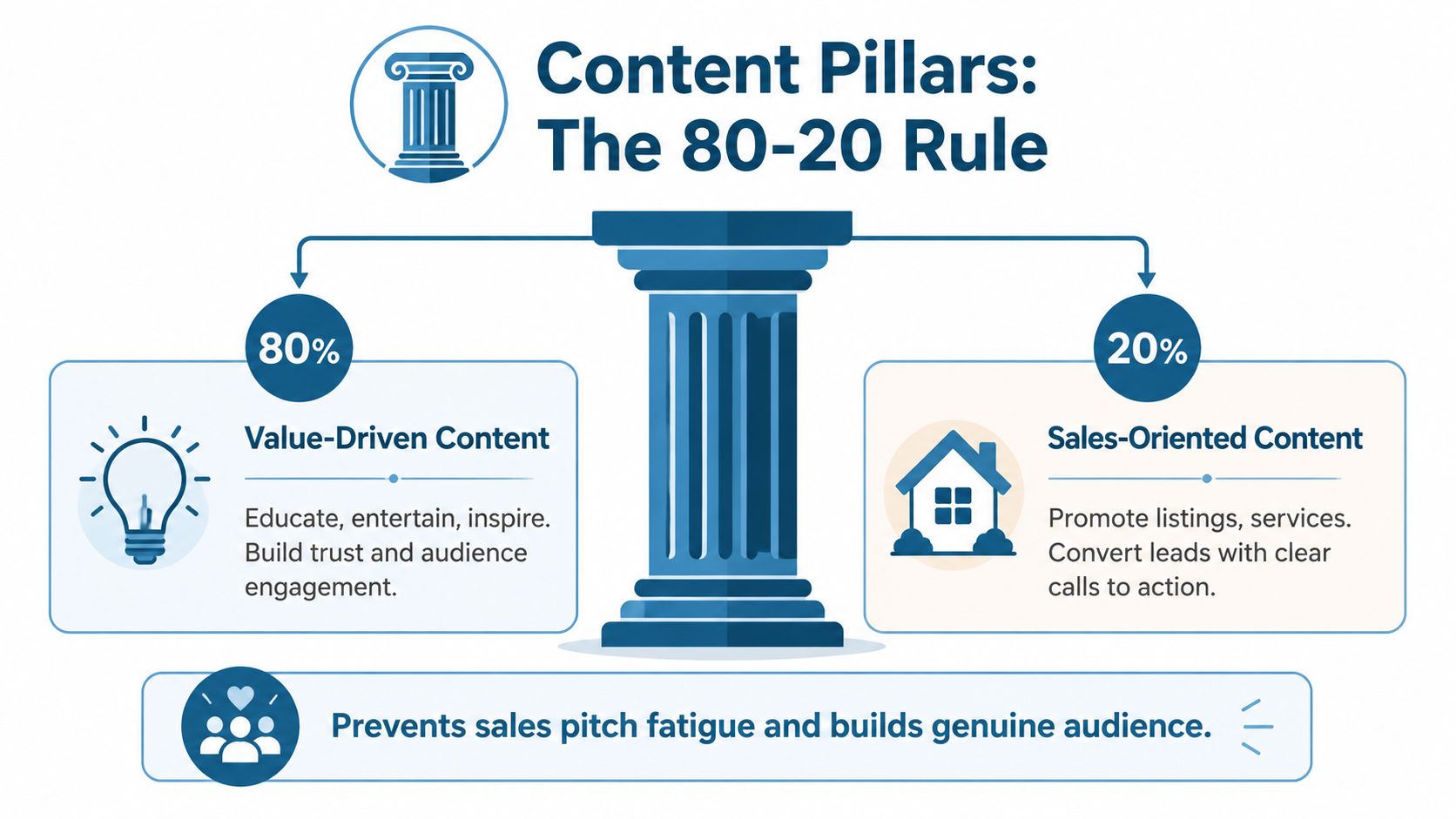
    The content pillars that actually help

    Your AI workflow shouldn't stop at active listings. Build around a few durable themes:

    • Local market interpretation: Short commentary on inventory, pricing patterns, or buyer behavior in your area
    • Buyer guidance: Financing prep, showing strategy, offer readiness, inspection expectations
    • Seller preparation: Pre-listing updates, pricing discipline, launch planning, presentation tips
    • Neighborhood knowledge: Amenity access, commute patterns, housing stock, style trends, public-space features

    This kind of content gives AI search systems more evidence about who you are, what market you know, and what topics you consistently cover.

    Why listing-only content isn't enough

    If your digital presence only appears when you have a property to sell, your footprint stays thin. A stronger pattern is to use each listing as a content trigger. One home can lead to an evergreen post about staging decisions, another about lot utility, another about condo positioning, another about pricing communication.

    That's how an AI real estate listing description generator becomes part of your authority engine. It helps you start faster, then expand outward with judgment and local knowledge.

    Measuring What Matters and Refining Your AI Strategy

    If you only watch likes, you won't know whether the content is helping the business.

    A man observing professional real estate analytics dashboard on a tablet while working at a desk.

    Track actions, not applause

    Review your listing content monthly and focus on signals tied to actual intent:

    • Comments and direct messages: Did the post start real conversations?
    • Saves and shares: Did people treat it as useful enough to revisit or send along?
    • Website clicks: Did the content move people to the listing page or contact form?
    • Lead quality: Did inquiries relate to the property, the neighborhood, or future selling plans?
    • Appointments set: Did any content lead to a showing, consultation, or listing conversation?

    Use the review to improve prompts

    Look for patterns in what worked. Maybe feature-focused captions drove better inquiries than generic launch posts. Maybe your LinkedIn market commentary brought in referral conversations. Maybe short walkthrough scripts held attention better than static image posts.

    Then adjust the workflow. Refine the source inputs, improve your prompts, shorten weak openings, and keep your review process tight. AI should make your system sharper over time, not just faster.

    Conclusion: From Content Creator to Content Strategist

    An AI real estate listing description generator is most useful when you stop treating it like a writing shortcut and start using it like marketing infrastructure. The win isn't just faster copy. It's a cleaner launch process, stronger consistency across channels, and fewer last-minute content decisions.

    Agents still need to verify facts, apply judgment, and protect compliance. That part doesn't change. What changes is the amount of manual drafting required to get a listing in front of buyers professionally.

    Used well, AI moves you out of production mode and into strategy mode. You spend less time wrestling captions and more time guiding positioning, reviewing quality, and serving clients. That's the right role for a working agent or team.


    If you want to see what that kind of workflow looks like in practice, ListingBooster.ai is worth exploring. It's built for real estate-specific inputs and can help turn one set of verified listing facts into MLS-ready copy and supporting social content, while keeping editing and compliance review in your hands.

  • AI Listing Description Generator for Real Estate Agents

    AI Listing Description Generator for Real Estate Agents

    Traditional listing visibility is no longer just an MLS problem. It's a discoverability problem across AI-driven answer engines, buyer-facing search experiences, and every channel where your property details get repeated, summarized, and recommended.

    That's why an AI listing description generator for real estate agents matters now. Not because it saves you from writing one paragraph. Because it helps you publish cleaner, more structured, more reusable listing content that can surface across MLS, portals, social, email, and the new layer of AI-assisted search. If your description is vague, inconsistent, or non-compliant, your listing doesn't just read poorly. It gets harder to trust, harder to repurpose, and easier to miss.

    Why Your Listings Are Becoming Invisible

    The old assumption was simple. Get the listing into MLS, syndicate it, add photos, and let the portals do the rest.

    That assumption is breaking.

    Why Your Listings Are Becoming Invisible

    Buyers now ask longer, more specific questions. They don't just search for “3 bed home in Austin.” They ask for homes with office space, walkability, updated kitchens, room for guests, low-maintenance yards, or proximity to a certain lifestyle. AI search tools are built to interpret those layered requests. Your listing needs to be written in a way that machines can parse cleanly and buyers can trust instantly.

    MLS copy alone isn't enough

    A strong listing description used to be a nice marketing touch. Now it's closer to marketing infrastructure.

    One workflow example shows property data pulled from Google Sheets, processed by ChatGPT, and written back as a finished listing description. The bigger takeaway is that listing copy has moved from one-off manual writing to a repeatable system. Current guidance also recommends creating multiple channel-specific versions from the same verified facts, including MLS copy, portal copy, Instagram hooks, LinkedIn posts, and broker-email snippets, so the description functions as a content engine rather than a single paragraph for MLS in a broader real estate marketing workflow documented in this automation example and channel-variant guidance.

    If your listing exists in only one format, you're under-publishing.

    Visibility now depends on structure and reuse

    Agents who still treat descriptions as last-minute copy are giving up reach. AI-powered search systems work better when your property facts are consistent across channels and repeated in platform-appropriate formats.

    That doesn't mean stuffing keywords. It means publishing:

    • Verified facts first so every version starts from the same source data
    • Clear feature language that describes what the property offers
    • Channel-specific variants so your listing can travel beyond MLS
    • Compliance-reviewed copy before anything goes live

    Practical rule: If the same listing facts can't cleanly power your MLS description, portal summary, social captions, and follow-up email, your marketing system is too fragile.

    The agents who stay visible are the ones who turn one listing into a network of accurate, readable assets.

    How an AI Description Generator Actually Works

    Most agents don't need a technical explanation. They need to know where the tool helps, where it fails, and what to feed it so the output is usable.

    The simplest way to think about an AI description generator is this. It's a fast drafting assistant that works well when you give it structure and works badly when you give it scraps.

    How an AI Description Generator Actually Works

    Step one is input quality

    Good output starts with a structured property brief, not a loose sentence like “cute home with lots of charm.”

    Purpose-built real estate tools now reflect that standard. HAR.com launched an AI Property Description Generator that can create a unique property description and social-media posts with a click, and the broader workflow standard is to feed the model structured facts such as beds, baths, and neighborhood context, then review the result for accuracy and compliance, as described by HAR's AI property description workflow.

    Useful inputs usually include:

    • Core property facts such as beds, baths, square footage, lot details, parking, and major updates
    • Community details like neighborhood context, school names, HOA details, and nearby amenities when relevant and permissible
    • Marketing intent such as desired tone, channel, and whether the copy is for MLS, a portal, social, or email
    • Agent notes about standout features that photos alone don't explain

    Step two is controlled generation

    If the prompt is weak, agents lose control.

    A reliable workflow separates factual inputs from creative instructions. The model should receive the facts first, then the rules. Tone. Length. Format. Claims to avoid. That's the difference between a usable draft and a liability.

    This same logic shows up in adjacent marketing workflows where teams use AI to drive engagement with AI personalization. The point isn't just faster content. It's controlled relevance based on structured inputs.

    The model is only “smart” in proportion to the clarity of the brief you hand it.

    Step three is output expansion

    The best tools don't stop at one description. They create several versions from the same approved facts.

    That matters because one listing now supports multiple surfaces:

    1. MLS copy that stays concise and factual
    2. Portal copy with a little more narrative pull
    3. Social captions built around hooks and standout features
    4. Email snippets for agent outreach or buyer follow-up

    This is why I treat the generator as a marketing assistant, not a writer replacement. It assembles drafts quickly, but the agent still owns the facts, the edits, and the final approval.

    The SEO and AI Search Advantage

    Most agents still talk about these tools as writing shortcuts. That undersells the true opportunity.

    The advantage is search legibility.

    The SEO and AI Search Advantage

    AI search systems don't read listings the way a casual buyer does. They look for signals that help them interpret the property accurately. That includes consistent facts, semantic context, and repeated descriptions across trusted surfaces. A generic paragraph full of vague adjectives doesn't help much. A structured, feature-rich, channel-adapted set of assets does.

    Better descriptions create better search surfaces

    Modern listing-description guidance recommends generating multiple channel-specific variants from the same verified facts, including MLS copy, portal copy, Instagram hooks, and LinkedIn posts. The practical shift is that the listing description is no longer just MLS text. It becomes a content engine that supports social, email, and follow-up workflows, letting the same facts be repurposed across assets almost instantly, as outlined in this guide to multi-channel listing content workflows.

    That matters for both traditional SEO and AI-assisted search because every high-quality variation gives search systems more context about the property and the agent behind it.

    Semantic detail beats empty hype

    Buyers ask conversational questions. AI engines try to answer them conversationally.

    A description that says “stunning home with endless possibilities” contributes almost nothing. A description that clearly references layout, outdoor space, home office potential, recent updates, parking setup, and neighborhood context gives search systems more to work with.

    Here's the difference in practice:

    Weak description trait Useful search-ready trait
    Generic praise Specific features grounded in facts
    One-size-fits-all copy Variants tailored to MLS, portals, social, and email
    Isolated listing text Repeated, consistent messaging across channels
    Unverified claims Approved facts carried through every version

    AI search readiness is a distribution strategy

    This is the point many agents miss. The generator is not the win by itself. The win is what the generator enables.

    It lets you build a consistent digital footprint from one fact set:

    • A concise MLS version that stays clean and compliant
    • A portal version that adds readable context
    • An Instagram caption that highlights one memorable angle
    • A LinkedIn post that frames the property professionally
    • An email summary for sphere, buyer leads, or broker outreach

    Each piece reinforces the others. That gives AI systems more chances to understand what you're listing and whom you serve.

    If AI search is summarizing the web for buyers, your job is to publish listing content that can be summarized correctly.

    Agents who do that won't just save time. They'll own more of the search surface around every new listing.

    Navigating Compliance and Accuracy Risks

    In this scenario, agents need to be disciplined.

    AI can draft polished copy fast. It can also invent details, overstate upgrades, blur distinctions between opinion and fact, or produce language that creates Fair Housing exposure. That's why the key question isn't whether the tool writes well. It's whether your workflow catches risk before publishing.

    The main risk isn't bad style

    The biggest failure mode is factual error and prohibited language.

    Several AI tools explicitly tell users to review outputs and check for any incorrect facts or claims, while also emphasizing Fair Housing compliance. That's an important signal. The category is still positioned as a drafting aid, not a fully trustworthy automation layer, as noted in this discussion of real estate AI drafting and review requirements.

    If the model inserts the wrong square footage, invents an upgrade, or implies a buyer type you shouldn't reference, you own that mistake.

    Human review is non-negotiable

    Every generated description should go through a simple approval pass before it reaches MLS, a portal, social, or email.

    Use a checklist like this:

    • Verify property facts against the listing input sheet, floor plan, or source documents
    • Remove buyer-targeting language that could imply preference, exclusion, family status, age, or other protected characteristics
    • Check feature claims so the copy doesn't overpromise views, upgrades, amenities, or neighborhood benefits
    • Match local MLS rules on formatting, abbreviations, and prohibited phrasing
    • Confirm tone and brand fit so the text still sounds like your business, not generic software

    For a deeper operational approach, this guide to a Fair Housing compliant listing description generator workflow is worth reviewing.

    Clean copy is not compliant copy. Compliance comes from the review process.

    What to avoid in prompts and outputs

    Agents often create risk upstream. They ask the tool to “make it sound perfect for young families” or “position it for executives.” That framing pushes the model toward language you may need to strip out later.

    Safer prompting stays anchored to the property itself:

    • Layout
    • Finish quality
    • Functional spaces
    • Outdoor features
    • Verified location context
    • Allowed amenities

    The discipline here is simple. Use AI to draft. Use your license judgment to publish.

    Practical Workflows for Agents Teams and Brokerages

    The same tool solves different problems depending on who's using it. A solo agent needs efficiency. A team lead needs consistency. A brokerage needs scale without opening compliance gaps.

    Practical Workflows for Agents Teams and Brokerages

    Solo agents need output, not another dashboard

    A solo agent usually isn't short on ideas. They're short on time.

    The practical workflow looks like this. Enter verified property facts once. Generate an MLS draft, a portal version, a short Instagram caption, and an email snippet. Review facts. Clean up the tone. Publish. The listing now has a full content package instead of one rushed paragraph.

    That matters at the appointment too. Sellers notice when you can explain how one listing becomes a full distribution set.

    Teams need one voice across many agents

    Team leads run into a different problem. Every agent writes differently. Some overhype. Some underwrite. Some ignore compliance language until the last minute.

    A shared AI workflow fixes that if the inputs are standardized and the review process is centralized.

    A useful team setup includes:

    • Shared property intake forms so every listing starts with the same required facts
    • Approved brand prompts for tone, format, and prohibited phrasing
    • Editor review before publishing to catch factual drift and voice inconsistency
    • Channel templates so the MLS version, social version, and email version follow a repeatable pattern

    The benefit isn't just speed. It's quality control.

    Brokerages need scalable support

    At the brokerage level, the question becomes operational. How do you help a large group of agents market listings consistently without forcing everyone through a bottleneck?

    That's where platform choice matters. Some brokerages use broad AI tools plus internal SOPs. Others use purpose-built systems. One option in that category is ListingBooster.ai, which positions listing content as part of a broader real estate marketing command center with AI-optimized descriptions, multi-channel outputs, and compliance-oriented review features. For firms thinking at that level, this article on a real estate brokerage content automation tool maps the workflow well.

    A brokerage doesn't need agents writing more content from scratch. It needs agents publishing better content from the same approved facts.

    The firms that get this right don't just produce cleaner listings. They make agent marketing easier to manage and easier to trust.

    Sample AI-Generated Descriptions and Templates

    The fastest way to judge a tool is to look at what happens when one fact sheet gets turned into different assets.

    The strongest workflow separates fact extraction from copy generation. Independent guidance recommends a concise core description of about 80 to 100 words for the main version, then separate variants for MLS, portals, Instagram, and LinkedIn to reduce factual drift and keep publishing consistent across channels, according to this real estate AI description workflow guide.

    Sample property input

    Use a simple property brief like this:

    • Property type Townhome
    • Beds and baths 3 bedrooms, 2.5 bathrooms
    • Key features Updated kitchen, open main living area, private patio, attached garage
    • Location context Close to shopping, dining, and commuter routes
    • Tone request Professional, clear, benefit-oriented
    • Compliance note Avoid assumptions about buyer type or lifestyle category

    Sample AI Content Generation from a Single Property

    Platform Generated Content Example
    MLS Well-maintained 3-bedroom, 2.5-bath townhome with an updated kitchen, open-concept main living area, private patio, and attached garage. The layout offers functional daily living with comfortable indoor-outdoor flow. Conveniently located near shopping, dining, and major commuter routes. Verify all property details, features, and community information prior to publication.
    Portal This 3-bedroom, 2.5-bath townhome combines practical design with everyday comfort. An updated kitchen opens to the main living area, creating a connected space for daily routines and entertaining. Outside, the private patio adds usable outdoor space, while the attached garage supports storage and convenience. Located near shopping, dining, and commuter routes, the home offers easy access to key amenities.
    Instagram New on the market. This 3BR townhome pairs an updated kitchen, open living space, private patio, and attached garage in a location close to shopping, dining, and commuter routes. Clean layout, useful outdoor space, and easy everyday convenience. DM for details or a private showing.
    LinkedIn New listing content should do more than describe a home. It should clarify value quickly. This 3-bedroom, 2.5-bath townhome offers an updated kitchen, open main living space, private patio, attached garage, and strong access to shopping, dining, and commuter routes. The marketing angle here is functionality, convenience, and clean presentation grounded in verified property facts.

    What changes across channels

    The facts stay stable. The packaging changes.

    MLS needs economy and restraint. Portals can support more texture. Instagram needs a hook and quick readability. LinkedIn works better when the framing is professional and market-aware.

    That's why one-size-fits-all copy has become obsolete.

    A practical production rule:

    1. Start from one approved property brief
    2. Generate the shortest compliant version first
    3. Expand only after the core facts are locked
    4. Review every variant against the same source notes

    The goal isn't creativity for its own sake. It's controlled variation without factual drift.

    Calculating Your ROI and Getting Started

    The ROI on an AI listing description generator usually shows up in three places.

    First, you reduce repetitive writing work. Second, you publish more consistently across the channels that support a listing launch. Third, you improve the quality of your marketing system because every asset starts from the same verified facts.

    What to measure

    Don't overcomplicate it. Track the few inputs that matter:

    • Time spent per listing from intake to publish-ready copy
    • Number of channels covered for each listing launch
    • Revision load caused by missing facts or compliance cleanup
    • Lead quality from listing-related inquiries
    • Seller-facing marketing readiness at listing presentations

    If you want a clean way to think about the economics behind acquired business, this CPA guide for local businesses is a useful framework. It helps you connect marketing effort to actual client acquisition instead of just content output.

    What works and what doesn't

    What works:

    • structured inputs
    • short factual source briefs
    • separate outputs by platform
    • mandatory human review
    • reusable prompts tied to brand standards

    What doesn't:

    • vague prompts
    • publishing the first draft untouched
    • mixing verified facts with assumptions
    • using the same copy everywhere
    • treating compliance as a final skim

    If you're evaluating tools, look for the basics first. Can it turn one property brief into multiple usable assets? Can you edit easily? Can your team standardize prompts and review? Can it support AI-search readiness instead of only writing pretty copy?

    That's the difference between a novelty app and a working system.


    If you want to see how this looks in practice, ListingBooster.ai is built around that exact use case: turning verified listing details into multi-channel real estate marketing content designed for AI-search visibility, editable publishing, and compliance-conscious review. Start with one active listing and judge it the only way that matters. By whether it helps you publish faster, cleaner, and with more confidence.

  • How to Write a Real Estate Listing Description with AI

    How to Write a Real Estate Listing Description with AI

    You've got the photos back. The seller wants the listing live today. The property has a few standout features, a few awkward ones, and just enough nuance that the usual “charming home with endless potential” filler will make it sound like everything else on the market.

    That's where most agents open a blank document, lose twenty minutes, and still end up rewriting the whole thing twice.

    AI helps, but only when you use it like a marketing system instead of a shortcut. If you treat it like a magic paragraph machine, it will give you generic copy, miss the key selling points, and sometimes invent details you never provided. If you treat it like a trained assistant with guardrails, it becomes one of the fastest ways to produce clean, usable listing copy.

    The shift is bigger than speed. By the mid-2020s, real estate AI tools had moved beyond simple text generation into specialized workflows for discoverability, compliance, and multi-channel distribution, with some platforms generating descriptions, neighborhood guides, and email templates in seconds, as noted by Write.Homes. That matters because your listing description now has to work in more than one place. It needs to read well for buyers, fit MLS rules, support portal visibility, and feed your social content pipeline.

    Agents in adjacent parts of the marketing stack are seeing the same trend. If you want a useful parallel, Dronedesk's drone operations insights show how AI and automation become valuable when they're built into repeatable operational workflows, not bolted on as a novelty.

    Moving Beyond the Blank Page with AI

    A professional real estate agent sits at a desk working on her laptop in a modern office.

    A lot of agents still approach AI the wrong way. They paste in an address, ask for a “compelling listing description,” and hope the model reads their mind. It won't. Generic prompts produce generic copy.

    A stronger approach starts with a simple mindset shift. AI is your drafting engine, not your judgment engine. It can organize features, vary sentence structure, and produce fast first drafts. It can't walk the property, sense buyer objections, or protect your license.

    What AI does well

    AI is useful when you need momentum. It's good at turning structured facts into readable copy, creating multiple angle variations, and reformatting one core description for different channels.

    Used properly, it helps with work like:

    • First drafts: Turning raw property notes into something readable.
    • Angle testing: Writing one version for move-up buyers and another for downsizers.
    • Repurposing: Converting listing copy into email blurbs, social captions, or neighborhood snippets.
    • Consistency: Keeping your output steady when you're juggling multiple listings at once.

    What AI does badly

    AI struggles when the input is vague, messy, or incomplete. If you feed it scraps, it fills gaps with assumptions. That's where agents get burned.

    Practical rule: Never ask AI to “describe the property” until you've already decided what facts are non-negotiable, what angles matter, and what language is off limits.

    It also tends to default to clichés. Words like “stunning,” “nestled,” “boasts,” and “won't last” show up fast when the prompt is weak. Those phrases don't differentiate the property, and they don't sound like a serious marketer wrote them.

    The real competitive edge

    Knowing how to write a real estate listing description with AI isn't about replacing your skill. It's about packaging your skill into a workflow you can repeat under pressure.

    The agents getting strong results aren't just better at prompting. They're better at collecting data, setting constraints, reviewing for compliance, and publishing across platforms without rewriting from scratch each time.

    That's the part worth mastering.

    Prepare Your Property Data for AI Success

    The quality of your listing description is decided before you open ChatGPT, Claude, Gemini, or any real estate-specific writing tool. If your property details live in scattered texts, shorthand notes, and your memory from a rushed walkthrough, AI will amplify that mess.

    A strong AI-assisted listing starts with structured, verified property data because language models are prone to inventing details when they aren't tightly constrained, as discussed in this real estate AI workflow breakdown. The practical takeaway is simple. Give the model clean inputs such as beds, baths, square footage, and upgrades before prompting it.

    A six-step checklist titled Prepare Your Property Data for AI Success for real estate listing creation.

    Build one property sheet before you write anything

    Use a repeatable intake sheet, not a blank note. A spreadsheet, form, CRM field set, or transaction template all work fine. The format matters less than consistency.

    Include these categories:

    • Core facts: Property type, location, beds, baths, square footage, lot size, year built, parking, HOA details if relevant.
    • Interior highlights: Renovations, flooring, kitchen finishes, ceiling height, storage, layout details, appliance upgrades, office space, natural light.
    • Exterior features: Yard, deck, patio, pool, landscaping, views, fencing, outbuildings, curb appeal notes.
    • Functional benefits: New roof, energy-efficient windows, updated systems, smart home features, workshop space, mudroom, laundry placement.
    • Lifestyle context: Nearby parks, transport links, shopping, dining, schools, waterfront access, trail access, commute convenience.
    • Selling angle: Who is this home likely to resonate with, based on the property itself, not a protected-class assumption.

    Add the details agents often skip

    The difference between average AI copy and useful AI copy usually sits in the specifics. “Updated kitchen” is weak. “Kitchen renovated with quartz counters and expanded pantry storage” gives the model something real to work with.

    Past listing files can help here too, especially if you're trying to preserve tone and avoid missing a key feature. High-quality imagery also sharpens your notes. Strong visual presentation often reveals what should lead the copy, and Andy Barker Photography's real estate insights are a good reminder that marketing quality starts with how clearly the property is documented.

    A listing description shouldn't be your first attempt to understand the home. It should be the final expression of information you've already organized.

    Use a pre-prompt checklist

    Before you ask AI for anything, verify these points:

    1. Facts are confirmed: No guessing on measurements, dates, or upgrades.
    2. Features are prioritized: Decide which three to five details best sell the home.
    3. Neighborhood notes are relevant: Include what supports the property's appeal without slipping into loaded language.
    4. Your exclusions are clear: If a detail is uncertain, leave it out.
    5. Your source of truth is centralized: One sheet, one version, one clean reference.

    When agents ask me what makes AI listing copy work, this is the answer. Not the prompt. Not the model. The intake.

    How to Craft the Perfect Listing Description Prompt

    Once your data is clean, the prompt becomes much easier. You're no longer asking AI to invent. You're asking it to organize, emphasize, and format.

    The most effective prompt does four jobs at once. It defines the role, supplies the data, states the audience and tone, and sets hard boundaries. Guidance for real estate AI copy also recommends three controls that make drafts stronger and safer: SEO keyword guidance, audience segmentation, and grammar or compliance review, as outlined in Xara's guidance for AI real estate listings.

    A prompt template that actually works

    Copy this framework and adapt it:

    You are an experienced real estate copywriter. Write a professional real estate listing description based only on the property details below. Do not invent features, measurements, views, upgrades, or neighborhood claims not included in the input.

    Property details:
    [paste structured property data]

    Target buyer:
    [example: buyers seeking low-maintenance city living]

    Tone:
    [example: polished, clear, modern, not overly salesy]

    Requirements:

    • Keep it concise and natural
    • Lead with the strongest selling points in the opening
    • Include relevant local keywords naturally
    • Avoid clichés and exaggerated language
    • Avoid Fair Housing risk language or phrases that imply preferred types of people
    • Do not mention anything not listed in the property details
    • End with a clear invitation to schedule a showing or learn more

    Output format:

    • Version 1 for MLS
    • Version 2 for portal use
    • Version 3 as a short social caption

    That last line matters. Don't waste a good prompt on one output when the same inputs can generate three.

    Prompt decisions that change the result

    Small prompt changes create big quality differences. These are the levers worth controlling:

    • Role framing: “Experienced real estate copywriter” usually produces sharper output than “marketing expert.”
    • Audience direction: “Urban professionals” or “buyers seeking single-level living” gives the model a lens. Keep it property-based and compliant.
    • Tone controls: Ask for “clear and professional” if you want restraint. Ask for “luxury-focused and editorial” only when the listing supports it.
    • Exclusion rules: Explicitly banning clichés and invented details reduces cleanup time.
    • Length limits: If you don't specify length, AI often rambles.

    AI Prompt Variations by Property Type

    Property Type Key Prompt Elements to Include
    Downtown condo Emphasize walkability, low-maintenance living, building amenities, storage, views, and proximity to dining or transit if verified
    Suburban family home Focus on layout flow, yard use, flexible rooms, updated systems, and nearby everyday conveniences if verified
    Luxury property Highlight craftsmanship, architectural details, premium materials, privacy, entertaining features, and restrained tone
    Investment property Prioritize property configuration, updates, income-use practicality, location fundamentals, and factual wording
    Vacation or second home Stress setting, outdoor living, lock-and-leave convenience, and lifestyle features grounded in the actual property

    If you want a broader look at tool options before deciding where to run these prompts, this roundup of AI tools for listing agents is a useful comparison point.

    What not to put in the prompt

    Don't overload the model with emotional instructions like “make this irresistible” or “sound ultra persuasive.” That's how you get inflated copy. Don't ask it to “target families,” “appeal to young professionals,” or anything else that can drift into risky territory. Focus on the home, the features, and the lifestyle benefits those features support.

    A good prompt is less like giving a speech and more like writing a creative brief. Clear in. Clean out.

    The Critical Edit for Compliance, Voice, and Accuracy

    The most expensive mistake agents make with AI listing copy is assuming the draft is done when it sounds polished. It isn't. The cleaner the draft, the easier it is to miss what's wrong.

    Real estate listings can create Fair Housing risk if AI-generated language implies preferences or excludes protected classes. The U.S. Department of Housing and Urban Development has warned that digital advertising and algorithmic tools can create Fair Housing issues, which is why human review and policy checks matter before anything goes live, as noted in this overview of AI property description risks.

    An infographic showing the benefits of AI for real estate listing drafts and essential human review steps.

    Run a three-pass edit

    Don't edit everything at once. Split the review into separate passes to ensure you catch problems.

    Pass one for factual accuracy

    Open the property sheet and compare line by line.

    Check:

    • Measurements and counts: Beds, baths, square footage, lot size, garage spaces.
    • Feature claims: If the notes say “updated bath,” the copy shouldn't say “fully renovated spa-like bathroom.”
    • Location statements: Only keep claims you can support from your verified notes.
    • Upgrade language: “Newer” and “recent” can be slippery. If you can't confirm, trim it back.

    This pass is mechanical. Don't rewrite for style yet.

    Pass two for Fair Housing and policy risk

    Many AI guides get shallow on this particular topic. They tell you to “review for compliance” without giving a process. You need one.

    Watch for language that implies the “right” kind of buyer or references protected categories indirectly. Problem phrases can include things like references to religion, family status, age assumptions, or coded lifestyle language.

    Examples to examine closely:

    • “Perfect for singles”
    • “Ideal for young couples”
    • “Great for families with children”
    • “Walk to church”
    • “Safe neighborhood”
    • “Exclusive community” when used in a way that suggests social filtering rather than property characteristics

    Describe the property. Describe the location. Describe amenities. Don't describe who belongs there.

    If a phrase answers “what kind of person should live here?” instead of “what does the property offer?”, rewrite it.

    If your brokerage has a review process, use it every time. If it doesn't, build a short internal checklist and keep records of your final approved language. That's especially important for teams.

    For a deeper operational approach, this guide to MLS-compliant AI content is worth reviewing alongside your brokerage standards.

    Pass three for voice and distinctiveness

    Compliance keeps you safe. Voice keeps you competitive.

    AI likes symmetry, polished rhythm, and broad adjectives. That can make every listing sound like it came from the same machine. Your last pass is where you bring back taste and specificity.

    Try these edits:

    • Replace vague praise with concrete appeal.
    • Cut repeated sentence patterns.
    • Move the strongest feature into the opening line.
    • Swap canned language for how you speak to buyers.
    • Remove anything you wouldn't confidently say at the front door.

    A quick before-and-after mindset

    A weak AI line might say a home “boasts spacious living and endless charm.” That tells the buyer almost nothing.

    A stronger edited line points to what matters: the open main living area, the kitchen storage, the backyard setup, the flexibility of a bonus room, the light in the morning, the privacy from the rear patio. That's where an agent still beats a machine.

    Adapting Descriptions for MLS, Zillow, and Social Media

    One draft should not be copied everywhere unchanged. The same property needs different packaging depending on where the buyer or agent encounters it.

    An MLS reader scans for facts fast. A portal user wants readability and a reason to click deeper. A social media user needs a hook strong enough to stop the scroll before they move on.

    An infographic showing how to adapt real estate listing descriptions for MLS, Zillow, and social media platforms.

    MLS needs discipline

    MLS copy works best when it is tight, factual, and front-loaded with relevant features. Don't waste the opening on soft adjectives.

    For MLS, prioritize:

    • Core specs early: Type, bed and bath count, standout upgrades, lot or layout highlights.
    • Clean phrasing: Shorter sentences usually scan better.
    • Compliance and restraint: No loose claims, no puffed-up wording, no unsupported superlatives.
    • Searchable wording: Use the terms buyers and agents use for that property type and area.

    Zillow and portals need flow

    Portal readers aren't reading like agents. They're browsing, comparing, and reacting emotionally while skimming photos. A slightly longer narrative often works better here, as long as it's easy to read.

    Use a structure like this:

    1. Opening hook with real substance
    2. Two or three strongest interior and exterior benefits
    3. Lifestyle context tied to verified local details
    4. Simple closing invitation

    Buyers on portals want enough detail to picture daily life in the home. They don't want a wall of adjectives.

    Social media needs a different angle

    Instagram, Facebook, and similar channels aren't listing databases. They're attention markets. Your social caption should feel more conversational and selective, not like a pasted MLS paragraph.

    Here's a practical transformation:

    Platform Approach
    MLS “Updated 3-bedroom, 2-bath home with renovated kitchen, fenced yard, and flexible bonus space in a convenient location.”
    Zillow or portal “This updated 3-bedroom, 2-bath home combines practical upgrades with comfortable everyday living, from the renovated kitchen and bright main living area to the fenced yard and bonus room that can flex with your needs.”
    Social “New listing. Updated kitchen, bonus space, fenced yard, and a layout that actually lives well. If you've been waiting for a home that feels functional and polished, this one deserves a look. DM for details or a private tour.”

    For social, you can also ask AI to produce a few caption styles:

    • Curiosity-led: Focus on one standout feature.
    • Lifestyle-led: Focus on how the home lives.
    • Event-led: Promote an open house or just-listed launch.
    • Agent-led: Add your voice and quick market commentary.

    The core message stays the same. The packaging changes to fit the room.

    From Single Listing to Automated Marketing Engine

    A listing goes live on Thursday. By Friday morning, the same approved property language should already be feeding the MLS description, a portal version, an email draft, social captions, and the agent's notes for follow-up. That is where AI starts paying off. The gain is not faster writing on one property. The gain is a repeatable system your team can trust under deadline.

    The workflow matters because speed without controls creates risk. If the intake is messy, the prompt is vague, or no one reviews the output for Fair Housing issues and factual errors, you can scale bad copy just as fast as good copy. A usable system starts with structured inputs, routes those details through proven prompts, and sends every draft through a human editor before anything is published.

    What a scalable workflow looks like

    In practice, the strongest setups are boring in the best way. They reduce improvisation.

    You need:

    • One intake standard for every listing
    • Prompt templates by property type, audience, and channel
    • A review pass for accuracy, compliance, and brand voice
    • Channel-specific outputs for MLS, portals, email, and social
    • A shared storage point for approved copy, so the team reuses the right version

    That structure turns one approved description into a reusable asset library, not a one-time task.

    Where automation helps most

    Automation works best after the manual process is clear. First define who enters the property data, who checks AI output for compliance, who approves final copy, and where each version gets stored. Then connect the tools. Forms can feed spreadsheets, spreadsheets can feed prompts, and approved copy can move into your CRM, CMS, or scheduling platform with much less rework.

    This is also where many teams miss the bigger opportunity. They use AI to draft the listing, but stop there. The better approach is to let approved messaging flow into launch content, follow-up campaigns, and scheduled promotion, while keeping a human checkpoint before anything public goes out. If you want an example of that broader setup, this AI social media agent solution shows how listing content can connect to ongoing marketing.

    For teams building the full process, this guide to an automated real estate content marketing system is a useful next step. One platform option in this category is ListingBooster.ai, which turns a property address or listing details into editable listing descriptions and related marketing assets that fit into a broader real estate workflow.

    The agents who get the strongest results from AI treat it like production infrastructure. They build the pipeline, document the review standard, protect compliance, and improve the system every month.

  • How to Get More Seller Leads with Real Estate SEO in 2026

    How to Get More Seller Leads with Real Estate SEO in 2026

    Organic search still produces seller leads. The difference is how those leads are discovered, filtered, and trusted before a homeowner ever contacts you.

    For years, agents treated SEO as a way to rank a few pages and wait for form fills. That approach misses what seller SEO does. It puts your name, market coverage, and listing expertise in front of homeowners who are already comparing options, and it gives them enough confidence to raise their hand.

    Speed still matters once that inquiry comes in, but the bigger shift happens earlier in the process. Sellers now ask ChatGPT, Perplexity, and Google's AI results who knows their neighborhood, what repairs are worth making before listing, and what price strategy makes sense in a specific zip code. If your site only offers generic service pages, copied MLS content, and broad claims about being a top producer, you give both search engines and AI tools very little to work with.

    That changes how to get more seller leads with real estate SEO.

    The job now is to publish clear local signals, answer seller questions in plain language, and structure your site so machines can extract the right facts fast. Busylike's LLM SEO guide is a useful reference here because it explains how AI systems interpret content differently from traditional search. Ranking still matters. Being cited, summarized, and trusted in AI-generated answers matters too.

    Agents who adapt to that shift build a seller pipeline that holds up as search behavior changes. Agents who keep chasing old-school ranking tricks lose visibility exactly where high-intent sellers are starting their research.

    The New Search Landscape for Seller Leads

    Homeowners still use Google. They also ask ChatGPT, Perplexity, and Google's AI results direct seller questions before they ever click a website. That shift changes how seller SEO works.

    A prospective seller in Arcadia might ask which upgrades matter before listing, what pricing mistakes hurt high-end homes, or which agent knows that pocket of the market. AI systems often answer by summarizing a handful of sources instead of sending the searcher through ten blue links. If your site does not state clear local facts, seller guidance, and proof of experience in a format machines can parse quickly, you lose visibility before the comparison process even starts.

    AI search rewards pages that are easy to summarize

    Traditional SEO put a lot of weight on ranking a page for a keyword. That still matters. Seller lead generation now depends on a second outcome too: whether AI tools can confidently extract and restate your expertise.

    Pages that perform well in this environment usually share three characteristics:

    • Specific local signals tied to neighborhoods, property types, and seller situations
    • Direct answers to pricing, prep, timing, and agent-selection questions
    • Credibility markers such as recent listings, transaction context, testimonials, market observations, and consistent business information

    Busylike's LLM SEO guide explains the mechanics well. The practical takeaway for agents is simple. Ranking helps you get discovered. Being clear enough to be quoted or summarized helps you stay in the consideration set.

    One test works well here. Read a page and ask: could an AI assistant tell, in one pass, where you work, which sellers you help, and why your advice should be trusted? If the answer is no, the page is underbuilt for the current search environment.

    Seller intent has become more fragmented and more valuable

    Seller searches no longer follow one neat path from "real estate agent near me" to contact form. Homeowners bounce between valuation questions, prep questions, tax concerns, neighborhood timing, and agent comparison. They may never use the same query twice.

    That creates a real trade-off. Broad pages can target larger search themes, but they usually sound generic and give AI little to cite. Narrow pages earn less traffic on paper, yet they do a better job matching intent and proving market authority. In practice, the narrower page wins more seller conversations.

    That is why strong seller SEO now looks more like a tightly built local knowledge base than a stack of generic service pages. Neighborhood explainers, seller FAQ pages, pricing strategy content, and market-specific listing prep articles give search engines and AI systems more usable material. For agents building that foundation, this guide on creating neighborhood pages that rank in search is a strong starting point.

    Organic visibility still compounds, but only with operational discipline

    Organic search can keep producing seller opportunities long after a page is published. Paid traffic stops when spend stops. But SEO only compounds when the business behind it is set up to convert attention into appointments.

    Use this operating model:

    Stage What wins
    Discovery Local pages built around seller intent and AI-readable structure
    Evaluation Clear answers, local proof, and visible market knowledge
    Conversion Simple calls to action, short forms, click-to-call, and obvious next steps
    Follow-up Fast response, tight qualification, and consistent nurture

    I see the same failure point repeatedly. Agents spend months trying to rank, then send traffic to thin pages with weak offers and slow follow-up. The result is not an SEO problem. It is a pipeline problem.

    Seller SEO now sits at the intersection of search visibility, machine-readable authority, and conversion discipline. Agents who adapt to that reality will keep showing up as search behavior changes.

    Blueprint Your Attack Market and Keyword Strategy

    Agents who win seller SEO usually make the same decision early. They stop chasing broad visibility and build authority around a tight market, a clear seller problem, and pages that AI search systems can confidently cite.

    That matters more now than it did a year ago. ChatGPT, Perplexity, and Google's AI results do not reward random publishing volume. They pull from sources that show consistent local expertise, clear topical coverage, and strong entity signals across related pages. If your site talks vaguely about “real estate services” across ten towns, AI search has little reason to trust you as the answer for a homeowner deciding whether to sell in one specific neighborhood.

    Pick the market you can actually own

    Start with market selection, not keywords.

    A good attack market sits at the overlap of three things: places you know well, seller demand you can monetize, and competition you can realistically beat. I would rather see an agent dominate two ZIP codes and one seller niche than publish weak pages across an entire metro.

    Define these four variables before you build a single page:

    1. Geography
      Choose the city, neighborhood, subdivision, or ZIP codes where you already have market familiarity, listing history, or referral momentum.

    2. Seller type
      Probate sellers, move-up owners, downsizers, absentee owners, luxury sellers, and relocation households search with different questions and different urgency.

    3. Property type
      Condos, equestrian properties, historic homes, waterfront listings, and suburban tract homes need different proof points and different content angles.

    4. Decision stage
      Early-stage sellers want pricing guidance and timing insight. Mid-stage sellers compare agents and process. Ready-to-list sellers want proof, clarity, and a simple next step.

    A four-step strategy diagram for real estate SEO planning including market analysis and keyword mapping.

    This kind of focus improves more than rankings. It gives search engines a tighter topical map of your business. It also makes your content easier for AI systems to summarize, quote, and connect back to seller intent.

    Build keyword clusters around real seller decisions

    Keyword research for seller leads is not a volume exercise. It is a decision-path exercise.

    The best targets usually combine place, seller intent, and a concrete question. That structure matches how homeowners search and how AI engines interpret intent. A query like “home value in North Scottsdale” signals a different need than “best listing agent in North Scottsdale,” and each deserves its own page.

    Use clusters like these:

    Cluster type Example theme Best page type
    Location + action Sell my home in Downtown Austin Service page
    Location + valuation Home value in North Scottsdale Valuation page
    Location + agent selection Best listing agent in Winter Park Positioning page
    Location + education How to sell a condo in Brickell Blog or guide
    Location + market timing Is now a good time to sell in Naperville Market update page

    The trade-off is simple. Narrow clusters produce less raw traffic than broad head terms, but the traffic is usually closer to an actual listing conversation. That is the right trade for seller SEO.

    If you want to master real estate local search, study how your core locations, seller scenarios, and page types support each other instead of treating every keyword as a separate project.

    Prioritize pages by revenue potential

    Build the pages that can create listing appointments first.

    For most agents, the order looks like this:

    • Core seller pages for “sell my house” and “home value” terms in the main service area
    • Neighborhood seller pages in the farm areas where local proof is strongest
    • Agent selection pages that answer why a seller should list with you
    • Market timing pages tied to specific locations and seller concerns
    • Special situation pages for niches like probate, downsizing, divorce, or luxury transitions

    This sequence works because it mirrors seller economics. Core pages capture broad intent. Neighborhood pages build local authority. Niche pages deepen relevance and often convert at a higher rate once the foundation is in place.

    If your location strategy still produces copy-paste pages, use this guide on creating neighborhood pages that rank in search to structure them around distinct seller questions, proof, and local details.

    Avoid the keyword patterns that break trust

    Weak seller SEO usually traces back to one of three planning errors.

    • One page trying to rank for everything
      A page cannot serve valuation intent, agent-comparison intent, and neighborhood education equally well. Pick one primary job.

    • Near-duplicate location pages
      Swapping city names across the same template gives Google and AI tools very little unique information to work with.

    • Head-term fixation
      Broad terms look attractive in a keyword tool, but long-tail local queries often line up better with listings, not just clicks.

    The fix is disciplined page mapping. Give each page one primary keyword theme, a defined seller stage, and local evidence that supports the promise of the page. Then connect related pages through clean internal linking so both users and AI systems can see the full topic cluster.

    That is how keyword strategy turns into market authority, instead of a spreadsheet full of phrases that never produce sellers.

    Optimize Your Digital Curb Appeal On-Page and Local SEO

    Seller SEO often breaks at the page level. The keyword target is right, but the page is slow to understand, weak on local proof, or too vague for Google, ChatGPT, Perplexity, and buyers and sellers alike to trust.

    That matters more now because AI-powered search does not just rank pages. It extracts answers, compares agents, and summarizes local expertise. If your page structure is muddy, your brand gets left out of that summary layer even when your site has decent traditional rankings.

    A checklist infographic detailing On-Page and Local SEO strategies for real estate digital marketing optimization.

    Fix the page-level signals first

    Every seller page needs to answer three questions fast. What is this page about? Where do you work? Why should a homeowner trust you with a major asset?

    Start there. Then tighten the core elements:

    • Title tag
      Use the primary local seller query in natural language. Skip titles that read like a keyword list.

    • H1 heading
      Match the page's actual job. A page about selling in one neighborhood should say that directly.

    • H2 structure
      Organize around seller decision points such as timing, pricing, preparation, fees, objections, and next steps.

    • Meta description
      Write for the click. Include the market, the seller problem, and a reason to visit now.

    • Internal links
      Link to valuation pages, neighborhood guides, market updates, testimonials, and contact paths that support the page's promise.

    • Mobile presentation
      Check forms, tap targets, font size, and page speed on a phone, not just a desktop preview.

    Small execution gaps hurt more than agents expect. A weak title lowers click-through. A vague H1 confuses search engines. Thin internal linking makes it harder for AI systems to connect your seller pages into one clear authority cluster.

    Write for extraction, not just for reading

    Dense copy is harder to quote, summarize, and surface in AI answers. Seller pages need to be readable by humans and parsable by machines.

    Use formatting that makes your expertise easy to lift:

    • Put the clearest answer near the top of each section
    • Phrase subheads around real seller questions
    • Keep paragraphs tight before adding detail
    • Add FAQ blocks where sellers need direct answers
    • Separate local observations into short, self-contained sections
    • Define fees, timelines, prep work, and pricing decisions in plain English

    Schema helps here too. It gives search systems stronger context about your business, your service area, and the type of page they are indexing. On a practical level, schema improves machine readability. That is useful when AI tools are deciding which local source to cite, summarize, or ignore.

    A page that is easy to scan is usually easier to surface.

    Your Google Business Profile is part of seller SEO

    Google Business Profile is often the first local asset a seller sees. In many markets, it shapes trust before the website visit happens.

    Treat it like a live conversion asset, not a directory listing. Keep the basics accurate, then build seller-specific relevance.

    Area What to improve
    Primary business info Keep name, address, phone, website, and hours consistent
    Services List seller services in direct, homeowner-friendly language
    Business description Mention service areas, listing expertise, and property types naturally
    Photos Use current headshots, listing photos, neighborhood visuals, and office branding
    Posts Publish updates tied to pricing shifts, local demand, and seller concerns
    Q&A Add common seller questions and answer them clearly
    Reviews Ask for reviews that mention communication, pricing guidance, negotiation, and local knowledge

    For a broader tactical view of local optimization, this guide on how to master real estate local search is a strong companion resource. It aligns well with what agents need to improve local visibility.

    If you want a more AI-focused framework for local visibility, this article on local SEO for real estate agents with AI explains how traditional local signals now feed AI-driven discovery as well.

    What agents get wrong with local SEO

    The biggest mistake is making service-area claims that the rest of the site cannot support. An agent says they serve an entire metro, but their pages, reviews, market commentary, and examples only show depth in a handful of neighborhoods.

    Search engines notice that inconsistency. AI systems do too.

    A tighter service map usually wins. If you have real proof in six neighborhoods, build those pages well, strengthen your Google Business Profile around those areas, and collect reviews that mention them by name. Depth beats vague coverage.

    That is what digital curb appeal looks like in AI search. Clear page signals, clean local proof, and enough structure for machines to understand your authority without guessing.

    Create Content That Attracts Sellers and Feeds AI

    Content is where seller SEO either compounds or stalls.

    A lot of real estate websites have pages. Very few have a true content system. They publish occasional market updates, generic “tips for sellers,” and the usual holiday post, then wonder why they're invisible when homeowners search serious listing questions. That content doesn't build authority because it isn't connected to seller intent or structured for modern discovery.

    The goal is to create two kinds of assets at the same time: authority content that broadens your reach and conversion content that captures ready-to-act sellers.

    A funnel diagram illustrating a real estate content strategy to attract seller leads and feed AI.

    Authority content builds recognition before the seller is ready

    Authority content answers the questions sellers ask before they commit to an agent. These pages and articles often sit higher in the funnel, but they're critical because they help AI systems and search engines associate your name with useful expertise in your market.

    Strong authority content includes:

    • Local market updates that explain what sellers should pay attention to right now
    • Neighborhood-specific selling guides that discuss buyer demand, prep priorities, and common objections
    • Educational articles on pricing, staging, showing strategy, offer evaluation, and timing
    • Scenario content for downsizing, relocation, inherited property, condos, or luxury listings

    The important point isn't volume. It's specificity. Generic “How to Sell Your House Fast” content is easy to ignore. “How to Sell a Condo in Downtown Tampa Without Letting Inspection Issues Stall the Deal” signals actual market awareness.

    AI search favors content with original local utility

    AI tools summarize common knowledge easily. They don't need your site to restate generic advice they've seen everywhere. What they need, and what searchers value, is content that adds local texture and practical judgment.

    That means your content should do at least one of these well:

    • Explain a local selling process nuance
    • Compare seller choices in a specific neighborhood or property type
    • Clarify what buyers in your market currently care about
    • Answer a recurring seller objection you hear in appointments
    • Show how timing, preparation, or pricing affects outcomes in a local context

    Many agents can intelligently employ tools. A platform like ListingBooster.ai can help produce consistent authority content such as neighborhood guides, market updates, and positioning posts, but the output still needs your market perspective to be valuable. AI can accelerate consistency. It can't replace actual local judgment.

    Field note: The pages that get cited and shared usually answer a narrow question better than anyone else in the market.

    Bottom-of-funnel content closes the gap between curiosity and contact

    Authority content attracts. Conversion content turns intent into inquiry.

    These are your money pages. They target seller queries that imply readiness, urgency, or active comparison. Every serious seller SEO strategy needs a dedicated set of landing pages built for action.

    Focus on pages like these:

    Page type What it should do
    Home valuation page Offer a clear path to request a value opinion
    Sell my house in [location] page Explain process, local expertise, and next step
    Why list with me page Position your differentiation as a listing agent
    Seller FAQ page Remove friction and answer decision-blocking questions
    Service niche page Speak directly to probate, luxury, condo, or relocation sellers

    These pages should not read like blog posts. They should read like confident sales assets supported by useful information.

    What a high-converting seller page needs

    A strong seller landing page usually includes the following elements:

    1. A headline tied to the exact local intent
      “Sell Your Home in Cherry Creek With a Pricing and Marketing Plan Built for That Market” is more useful than “Top Realtor Services.”

    2. A short opening that identifies the seller's situation
      Show that you understand the problem, not just the keyword.

    3. A clear explanation of your process
      Outline how you price, prepare, market, negotiate, and communicate.

    4. Local proof signals
      Mention neighborhoods served, property types handled, or recurring seller scenarios you know well.

    5. FAQ or objection handling
      Answer concerns about timing, prep, repairs, fees, or market conditions.

    6. One primary call to action
      Too many pages dilute action by offering every option at once.

    Feed AI by making your expertise legible

    To “feed AI” you don't need gimmicks. You need a website that creates repeated, consistent signals around your identity and service area.

    That means publishing content in clusters, not isolation. A valuation page should link to neighborhood selling guides. Those guides should link to market updates. Market updates should link to your service pages. Your Google Business Profile should reflect the same language and markets. Reviews should reinforce the same themes where possible.

    Here's the difference in practice:

    • Weak content system
      One generic seller article, one homepage mention of listings, no neighborhood depth, no conversion page

    • Strong content system
      Neighborhood seller guide, local valuation page, service page, market commentary, FAQ page, and internal links tying them together

    A human visitor experiences that as expertise. An AI system experiences it as corroboration.

    What not to publish

    Not all content helps. Some of it actively muddies your authority.

    Avoid these traps:

    • Thin AI-generated pages with no local insight
    • Near-duplicate neighborhood pages
    • Broad motivational fluff with no seller relevance
    • Pages written for “traffic” that have no path to a listing conversation
    • Content calendars filled with topics unrelated to your actual market position

    Good seller content doesn't try to be everything. It creates a usable trail from question to confidence to contact.

    Amplify Your Reach and Convert Traffic into Contracts

    Publishing is only the midpoint. A seller page that sits unnoticed on your website is an underused asset.

    Strong agents distribute their content aggressively, then tighten the site experience so visitors act when they arrive. That combination matters because SEO visibility is uneven. Some pages will gain traction fast. Others will need repeated exposure across channels before they earn links, branded searches, or direct inquiries.

    Turn one seller asset into multiple touchpoints

    Every useful page on your site can become several smaller assets without creating new ideas from scratch.

    A neighborhood seller guide can become:

    • A short video script for Instagram, Facebook, LinkedIn, or YouTube
    • An email topic for homeowners in your database
    • A carousel post with seller objections and answers
    • A Google Business Profile post tied to local market education
    • A consultation follow-up resource after a listing conversation

    That kind of repurposing does two things. It extends the reach of your content, and it reinforces your market position across platforms where sellers already see you.

    If you want a wider framework for building repeatable organic lead flow, Gorilla's guide to predictable SEO lead generation strategies is useful because it emphasizes systems rather than one-off tactics.

    Distribution should follow intent, not habit

    Most agents share content based on where they like posting. That's the wrong filter. Share content based on where a likely seller will encounter it and what mindset they'll be in.

    Use a simple pairing model:

    Content asset Best supporting channel Why it works
    Home valuation page Email signature, nurture emails, Google Business Profile Reaches warm homeowners near decision stage
    Neighborhood selling guide Social posts and local groups Builds local recognition and relevance
    Market update article Newsletter and LinkedIn Supports authority and referral visibility
    Seller FAQ page Text follow-up and listing presentation follow-up Reduces friction after initial contact

    A consistent multi-channel presence also helps branded search behavior. Sellers may first encounter your advice on social, then search your name later. That second search is often where trust hardens.

    Conversion problems usually come from friction, not traffic

    If seller pages get visits but don't produce leads, don't assume the keyword is wrong. Check the conversion path first.

    The most common problems are operational:

    • Weak CTA placement
      The offer appears too late or competes with too many alternatives.

    • Forms ask for too much
      A homeowner exploring value won't always complete a long intake form.

    • No trust signals near the action point
      If the form sits alone, conversion drops. Add context, reassurance, and proof.

    • Poor mobile layout
      Buttons too small, forms too clunky, or text too dense kills response.

    • Slow lead handling
      A lead that waits too long often goes cold before you ever speak.

    Traffic problems and conversion problems look similar in a CRM. They aren't. One needs better visibility. The other needs less friction.

    Tighten the pages that already get attention

    Before creating more content, improve the pages already attracting organic visitors.

    Review each high-traffic seller page for these elements:

    1. A single primary next step
      Request valuation, book consultation, or ask a seller question. Pick one.

    2. Visible contact options above the fold
      Some sellers want a form. Others want to call or text.

    3. Trust indicators near the CTA
      Reviews, local credentials, market specialization, or concise proof points help.

    4. Clear reason to act now
      Not fake urgency. Real urgency tied to timing, strategy, or current market conditions.

    5. Thank-you flow and follow-up process
      Every form submission should trigger a fast, useful response.

    If you need ideas for extending content performance after publishing, this guide on how to generate leads from real estate blog content offers practical ways to turn informational pages into lead-generating assets.

    The agents who get the most from SEO don't just publish more. They distribute better and remove friction faster.

    Measure Success and Implement Your SEO Action Plan

    Seller SEO performance is getting harder to judge with old metrics because search behavior is fragmenting. A homeowner may find you through Google, an AI overview, a map result, or a cited answer inside ChatGPT or Perplexity. If your reporting only looks at broad rankings and traffic, you will miss whether your content is producing seller conversations.

    The right scoreboard ties visibility to intent, page type, and lead quality.

    Track the metrics that connect to seller intent

    Watch performance in Google Analytics 4, Google Search Console, your CRM, and your call tracking platform if you use one. The goal is simple: identify which pages attract likely sellers, which surfaces send that traffic, and which visits turn into appointments.

    A structured checklist showing key SEO metrics and an ongoing action plan for digital marketing success.

    Focus on these five categories:

    • Organic traffic to seller pages
      Separate seller-focused URLs from blog traffic, buyer traffic, and branded homepage visits.

    • Keyword visibility for local seller topics
      Track phrases tied to valuation, listing strategy, timing, neighborhoods, and property types.

    • Lead conversions by landing page
      Measure form submissions, calls, booked consultations, valuation requests, and reply rates.

    • Engagement quality
      Review time on page, scroll depth, return visits, and pathing to contact pages or valuation pages.

    • Local discovery signals
      Monitor Google Business Profile views, calls, direction requests, and clicks to seller service pages.

    AI search adds one more layer. Watch for pages that earn impressions and clicks from longer, more specific queries. Those pages often reflect the way sellers ask questions in conversational search, and they are strong candidates for expansion.

    Read the data like an operator

    A page with modest traffic can be one of your best assets if it consistently produces listing consultations. A page with strong rankings can still be underperforming if it attracts curious homeowners but no serious inquiries.

    Use the pattern, then act:

    Signal Likely meaning Action
    Traffic rising, conversions flat The page is getting attention but not enough trust or clarity Rewrite the offer, tighten the CTA, add proof close to the contact point
    Rankings improving, traffic weak Your title tag or search snippet is not winning the click Rewrite the title and meta description around seller intent
    Strong engagement, low leads Visitors are interested but the handoff is weak Reduce form fields, clarify the next step, add call and text options
    Low engagement, good keyword match The query matches, but the content does not satisfy the visit Add local detail, examples, FAQs, and a clearer seller angle
    Good page performance, weak sitewide results One page works, but the topic set is too thin Build related pages around nearby neighborhoods, scenarios, and seller questions

    One more trade-off matters now. Some pages are built to rank. Others are built to be cited, summarized, or pulled into AI-generated answers. The pages that do both usually have clearer structure, better local specificity, and stronger entity signals about who you serve, where you work, and what you know.

    Run a practical monthly SEO review

    Keep the review short. Thirty focused minutes beats a polished slide deck nobody uses.

    Check these questions every month:

    • Which seller pages gained qualified traffic
    • Which pages produced actual inquiries or appointments
    • Which neighborhoods, price bands, or seller scenarios are still thin
    • Which pages need fresher examples, updated market context, or sharper CTAs
    • Whether your Google Business Profile matches your current seller focus
    • Whether lead response speed is protecting the traffic you already earned
    • Whether any pages are starting to attract conversational, question-based searches

    This review should end with decisions, not observations. Update three pages. Publish one new page. Retire one weak topic. Improve one conversion path. That is how SEO compounds into listings.

    Operating principle: If a page attracts the right seller and fails to convert, fix the page. If the page is useful and nobody sees it, improve search visibility, internal support, or distribution.

    Your implementation checklist

    Use this as the operating plan:

    1. Choose your primary seller markets
      Focus on the locations and property segments where you have real proof and usable local insight.

    2. Build keyword clusters around seller intent
      Group terms by valuation, prep to sell, timing, neighborhood trends, relocation, downsizing, probate, luxury, or investment resale.

    3. Create the core page set
      Publish seller service pages, valuation pages, neighborhood selling guides, and pages that explain your listing process.

    4. Improve on-page structure
      Tighten titles, headings, schema, FAQs, internal linking, and page sections so both search engines and AI systems can parse the page cleanly.

    5. Strengthen local SEO
      Keep business details consistent, refine your categories, and make your Google Business Profile support your seller positioning.

    6. Publish authority content consistently
      Add market commentary, local seller FAQs, pricing explainers, and pages tied to specific homeowner decisions.

    7. Repurpose your strongest pages
      Turn high-performing seller pages into email follow-up, short video scripts, listing presentation support, and social proof assets.

    8. Fix conversion friction
      Make the next step obvious. Reduce form fields where possible. Show contact options clearly on mobile.

    9. Track outcomes by page and source
      Measure rankings, qualified visits, assisted conversions, and closed-listing influence. AI search will make attribution less clean, so page-level analysis matters more.

    10. Review and refine every month
      Increase effort behind topics and pages that generate seller conversations. Cut or rewrite pages that attract the wrong audience.

    SEO for sellers now works as a visibility system across search engines, local results, and AI answer engines. Agents who adapt their measurement first usually adapt their content faster too, because they can see which pages are earning trust instead of just traffic.

    If you want help building that system without creating every page and post manually, ListingBooster.ai helps real estate agents produce AI-readable neighborhood content, market updates, and seller-facing authority assets that support visibility in both traditional search and AI-driven search experiences.

  • Best Real Estate Marketing Platform for Solo Agents

    Best Real Estate Marketing Platform for Solo Agents

    Google Business profiles with 50+ reviews see 400% more map views than profiles with fewer reviews, according to Agent Elite as cited by FlippingBook's real estate marketing tools roundup. That stat changes the conversation. The best real estate marketing platform for solo agents isn't just a CRM with drip campaigns, and it isn't just a social scheduler.

    It's the system that helps one person stay visible where buyers search, where sellers evaluate credibility, and where AI tools decide which agents look relevant enough to mention.

    That's the part many solo agents miss. They compare inbox features, texting tools, and template libraries. Meanwhile, discoverability has shifted. Buyers don't only scroll Instagram or search listing portals. They also use AI-assisted search experiences that pull from the broader web, local signals, brand consistency, reviews, and structured content. If your marketing platform can't help you produce that footprint without eating your week, it's the wrong platform for a solo business.

    A solo agent doesn't need more tech. A solo agent needs fewer moving parts, better output, and content that gives both humans and machines enough context to trust what they're seeing.

    Platform approach What it does well Where it breaks down for solo agents Best fit
    Lightweight CRM Keeps leads organized, automates follow-up, supports daily pipeline habits Often weak on public-facing content production and discoverability Agents losing deals because follow-up slips
    DIY social stack Low barrier to entry, flexible, works with tools you already know Time-heavy, inconsistent, hard to scale alone Agents with very small volume and lots of hands-on time
    AI content and authority engine Turns listing details into marketing assets fast, supports visibility across channels Usually not a full replacement for deep CRM operations Agents whose biggest problem is content velocity and digital presence
    Full-suite team platform Broad feature set across website, lead gen, CRM, and automation Can be expensive and operationally heavy for one person Teams, expansion agents, lead-gen-heavy operations

    The New Marketing Challenge For Solo Agents

    The old advice was simple. Post consistently, run some ads, and make sure every lead goes into a CRM.

    That advice isn't enough anymore.

    Solo agents are now competing on two fronts at once. First, they still need basic follow-up discipline. Second, they need a digital presence that can be found, understood, and trusted across search, maps, reviews, local content, listing content, and AI-assisted discovery experiences. If your platform only handles nurture after a lead arrives, it's only doing half the job.

    Visibility is now a discoverability problem

    A lot of agents still think marketing starts after they get the listing. In practice, marketing starts much earlier. It starts when a seller searches for neighborhood expertise, when a buyer compares agents in a local area, or when an AI system pulls from the public web and surfaces whoever appears most established and relevant.

    That means the best real estate marketing platform for solo agents has to help with more than contact management. It has to support consistent authority signals. Reviews. local pages. repeated market commentary. listing content that doesn't look copied. brand consistency across channels.

    Buyers and sellers don't care how many tools you have. They care whether you show up, look credible, and respond fast.

    Posting more isn't the same as building authority

    Many solo agents burn hours trying to stay visible through manual posting. The problem isn't effort. The problem is fragmentation. One app for graphics, one for scheduling, one for email, one for listings, one for CRM, and none of them building a coherent footprint.

    If you want to tighten that part of the workflow, this guide on social media automation for real estate is useful because it shows how to reduce repetitive posting work. But social automation alone won't solve discoverability if the rest of your web presence is thin, inconsistent, or outdated.

    The solo agent challenge in 2026 isn't “How do I post more?” It's “How do I stay findable and credible without hiring a marketing department?”

    What Solo Agents Truly Need From a Platform Today

    The baseline has changed again. Solo agents still need contact management and follow-up automation, but that is only part of the job now. A platform also has to help you show up in search, read clearly to AI systems, and build trust before a prospect ever fills out a form.

    A diagram outlining key marketing requirements for solo real estate agents in the age of artificial intelligence.

    AI and SEO readability matter more than another template pack

    A lot of platforms still sell solo agents on design libraries, social calendars, and canned campaigns. Those tools have a place, but they do not solve the bigger visibility problem. If your content is thin, repetitive, or buried inside systems that never create public-facing pages, you stay hard to find.

    AI-readiness changes the standard. Your platform should help you publish clear local pages, listing descriptions with real detail, service copy tied to actual markets, and commentary that reflects how you work. That gives search engines and AI answer engines more usable context. It also gives prospects a better reason to trust what they find.

    I tell agents to ask a blunt question: does this software create assets the public web can discover, or does it just help me post faster inside closed channels?

    If you are comparing options on budget as well as fit, this roundup of affordable real estate marketing tools for solo agents is a useful starting point.

    Content velocity decides whether your strategy survives real life

    Time is the constraint that wrecks good marketing plans.

    Solo agents usually know what they should publish. The problem is the production load. If every new listing, market update, email, and social post starts from scratch, consistency drops the moment the week gets busy.

    A useful platform cuts the work between input and publish. It should let you start with property data, a listing URL, showing notes, or a short prompt. From there, it should turn one set of inputs into multiple usable assets without forcing a full rewrite every time.

    Look for these signs that content production will hold up in a real business week:

    • Listing-first workflow: You can start from a property link, MLS details, or a short intake form.
    • Multi-format output: One input can produce listing copy, email text, social posts, flyer language, and web copy.
    • Low edit burden: The draft is close enough to review and refine, not rebuild.
    • Consistency between listings: The platform helps you stay visible even when you are between launches.

    A platform that still leaves you facing a blank caption box three times a week is adding work, not removing it.

    Authority building has to be part of the system

    Solo agents cannot treat authority content as a side project anymore. Local expertise needs to show up in a format that compounds over time. That includes neighborhood pages, market updates, seller prep content, buyer education, testimonials, and review prompts that run without constant reminders.

    A lot of software falls short. It helps with contact storage or post scheduling, but it does very little to strengthen your public footprint. The better option is a platform that turns normal agent activity into publishable proof of expertise. A pricing conversation can become a seller tip. A new listing can become market commentary. A closed deal can trigger a review request and fresh local content.

    That is how solo agents build discoverability without hiring staff.

    Compliance has to be built into the workflow

    Speed matters. So does control.

    If a platform pushes out content quickly but leaves you to catch risky wording, fair housing issues, missing disclosures, or brand inconsistencies on your own, you have traded one problem for another. Solo agents need guardrails that work during creation, not after something questionable is already ready to publish.

    The right platform makes compliant marketing easier to produce at the first draft stage. It should support location-specific content, accurate property language, and audience-appropriate messaging without making every post feel like a legal review session.

    Your Prioritized Platform Evaluation Checklist

    Choosing software gets easier when you stop asking, “What has the most features?” and start asking, “What removes the most friction from my week?”

    For solo real estate agents, the strongest historical evidence for a “best” platform is the consolidation of CRM, website, lead capture, and automation into one system, as noted by RealTrends. The practical takeaway is simple. If your tools don't talk to each other, you become the integration layer.

    Start with workflow fit, not brand reputation

    Big brand awareness can mislead solo agents. A platform might be popular and still be wrong for the way you work.

    Use this short checklist first:

    • Lead entry point: Does it capture inquiry, form fill, or listing interest without manual copy-paste?
    • Action path: Can you go from new lead to follow-up sequence without bouncing between tabs?
    • Public visibility: Does it help you publish content people can discover?
    • Reuse value: Can one piece of listing data power multiple assets?
    • Maintenance burden: Will this tool create weekly cleanup work?

    If the answer to the last question is yes, be careful. Many solo agents buy software that looks efficient in a demo and turns into admin work three weeks later.

    Evaluate core features in the right order

    Don't start with bells and whistles. Score platforms in this order.

    Contact and lead handling

    A real estate-specific platform should understand that listings and clients are connected. You want property inquiry context, task reminders, lead routing, notes, and automated follow-up that make sense for real transactions.

    If a tool is basically a generic contact manager with real estate branding, you'll feel it quickly. It won't understand listing cycles, showing requests, or transaction-based communication patterns.

    Website and capture layer

    Your public-facing presence still matters. Some solo agents can work with a simple site plus focused landing pages. Others need stronger IDX integration and branded pages. What matters is whether your platform makes the website an active part of lead capture, not just a brochure.

    If you're comparing leaner options, this breakdown of affordable real estate marketing tools can help you pressure-test whether a lower-cost setup still covers your core workflow.

    Automation that saves effort

    Automation should reduce repetitive tasks, not lock you into rigid sequences you'll never update. Ask whether the platform can handle:

    • Immediate responses: Basic first-touch follow-up when someone reaches out
    • Ongoing nurture: Drip campaigns for buyers, sellers, and past clients
    • Task prompts: Reminders tied to real lead stages
    • Content reuse: Repurposing one listing into multiple channels

    Test usability like a busy agent, not a software buyer

    Vendors love feature tours. Ignore them for a minute and test the platform as if you're in the middle of a normal Tuesday.

    Can you log in, find a lead, publish something, and know what to do next without training videos? If not, the tool may be too heavy for a one-person operation.

    A useful test is to assign yourself three timed tasks:

    1. Capture a lead
    2. Create a listing-related marketing asset
    3. Queue a follow-up or nurture step

    If any of those feels clumsy, the friction won't improve just because the software is powerful.

    A solo agent doesn't need software that can do everything. They need software they'll actually use every day.

    Check AI and SEO readiness without getting distracted by buzzwords

    Every platform now says it has AI. That word alone means nothing.

    Ask practical questions instead:

    • Does it generate location-specific, readable content or just generic blurbs?
    • Can it support long-form and short-form output, or only social captions?
    • Does it help build review, website, and content consistency?
    • Does the output sound like an agent in a market, or like a chatbot in a vacuum?

    Look for compliance guardrails and pricing clarity

    The best tool for a solo agent is rarely the one with the most aggressive pitch. It's the one with clear scope, manageable onboarding, and a cost structure you can sustain.

    Before you commit, ask:

    • What's included in the base plan
    • What requires add-ons
    • What setup work falls on you
    • What happens if you stop using one connected tool in the stack

    Many agents find themselves trapped. The monthly fee looks manageable, but the actual cost is the extra systems, cleanup, and content labor that still sit outside the platform.

    Comparing The Three Main Platform Approaches

    Solo agents usually end up in one of three camps. They either buy a CRM-centric system, they piece together a DIY stack, or they move toward an AI-driven content engine that handles the public-facing side of marketing faster.

    Those approaches solve different problems. Confusing them is why agents often buy software twice.

    A comparison table outlining the features and focus of All-in-One CRM Suites, Specialized Marketing Tools, and AI Engines.

    Approach one uses a lightweight CRM as the hub

    Independent 2026 comparisons consistently place lightweight CRMs like Follow Up Boss and Wise Agent near the top for solo agents because they combine essential automation in a manageable stack, while broader suites such as Sierra Interactive or BoomTown are often framed as more team-oriented systems with pricing in the high-hundreds per month, according to this industry comparison video.

    That lines up with what many solo agents experience in practice. A lighter CRM can be the right operational center when your main pain is missed follow-up, poor organization, and weak pipeline discipline.

    Where this approach works

    • Lead management: Stronger than most other categories
    • Daily task control: Good for reminders, notes, and nurture
    • Pipeline visibility: Useful if you're juggling active buyers, sellers, and prospects

    Where it stalls

    A CRM rarely solves your public content bottleneck by itself. You may still need separate tools for graphics, landing pages, listing copy, market posts, and brand consistency. That's manageable if you enjoy assembling systems. It's not ideal if you're already stretched thin.

    Approach two relies on a DIY social and marketing stack

    This is the Canva plus scheduler plus email tool plus form builder route. It's common because it feels affordable and flexible. It also gives agents a sense of control.

    The downside is simple. You become the operations manager of five small systems.

    If you're building campaign pages outside a traditional website, these best no-code landing page tools are worth looking at because they can reduce technical bottlenecks. But they don't remove the larger issue. You still have to write, design, schedule, monitor, and connect the pieces yourself.

    What this stack is good for

    Strength Why it appeals to solo agents
    Flexibility You can swap parts in and out
    Lower entry cost Easy to start small
    Tool familiarity Many agents already know Canva or Buffer-type tools

    What it costs you

    Hidden cost Why it becomes a problem
    Context switching Every campaign requires moving across apps
    Inconsistent output Voice and message drift fast
    Slower execution Listings need speed, not multi-tool assembly
    Weak discoverability strategy Scheduling posts doesn't automatically build authority

    Approach three focuses on AI content and authority generation

    This category solves a different pain point. Instead of centering the database, it centers output. The goal is to take listing data, market expertise, and brand inputs and turn them into ready-to-publish content that keeps you visible.

    That matters because solo agents often don't lose on service. They lose on consistency. The market doesn't see their expertise often enough.

    One example in this category is ListingBooster.ai's real estate marketing software comparison, which looks at how AI-centered systems differ from standard software stacks. The key distinction is that this kind of platform is built to produce listing assets, authority content, and AI-readable web presence faster than a manual workflow can.

    Best use case for this category

    This approach fits agents who say things like:

    • “I'm fine with follow-up. I can't keep up with content.”
    • “I need listing marketing done fast without outsourcing every asset.”
    • “I want to show up more consistently online without writing everything from scratch.”

    Limitation to understand

    An AI content engine isn't always a deep CRM replacement. If your database is messy and your lead follow-up is inconsistent, you may still need a CRM at the center of your operation. But if your real bottleneck is producing discoverable, polished, multi-channel content at the pace your business requires, this category can remove the biggest drag on your marketing.

    The wrong platform type doesn't fail because it's bad software. It fails because it solves the problem you don't actually have.

    Which path usually fits which agent

    • Choose a lightweight CRM if leads already exist and your biggest leak is follow-up.
    • Choose a DIY stack if budget is tight, volume is low, and you don't mind doing the assembly yourself.
    • Choose an AI content engine if your main issue is keeping your brand visible, current, and discoverable without spending half your week creating assets.

    That's the true comparison. Not feature count. Problem fit.

    A Simple Decision Flow For Choosing Your Path

    Most solo agents don't need another long software shortlist. They need a cleaner choice based on the bottleneck that hurts the business right now.

    A flowchart infographic titled Choosing Your Solo Agent Marketing Platform to help agents decide on software.

    Start with the problem you feel every week

    If your biggest issue is that leads come in and nobody gets a clean, timely follow-up sequence, your first move is usually a lightweight CRM. That gives you structure, reminders, and a repeatable process.

    If your biggest issue is that you know what to say but never have time to create the listing posts, market updates, email copy, and neighborhood content, your first move is usually an AI content and automation engine.

    If your business is still small, your marketing is simple, and you prefer piecing tools together as needed, a specialized tool stack can still work. Just be honest about whether you're saving money or buying yourself more admin.

    Use this quick self-diagnosis

    • Choose CRM-first when your pipeline is disorganized, follow-up is uneven, and contacts slip through.
    • Choose AI-content-first when your online presence is inconsistent, listing marketing is too slow, and you're invisible between transactions.
    • Choose specialized tools when you already have a basic system and only need a focused add-on for one narrow job.

    The easiest way to get this wrong

    Agents often buy based on aspiration. They choose the platform that fits the business they imagine having, not the bottleneck in the business they're running today.

    That usually backfires.

    A solo agent with weak content production who buys a complex operations suite will still struggle to stay visible. A solo agent with sloppy lead handling who buys an AI content tool will still lose inquiries through poor follow-up. Match the platform type to the immediate constraint. Then add the next layer only when the first one is working.

    How ListingBoosterai Fulfills These Needs

    From a feature-performance standpoint, the most valuable marketing platforms for solo agents are the ones that reduce content-production time from hours to minutes. Modern AI platforms can generate property descriptions, social posts, and marketing automation in seconds, according to Bounti's analysis of AI real estate marketing workflows. That's the practical lens to use here.

    If your main problem is content throughput and discoverability, this type of workflow matters more than a long feature list.

    Screenshot from https://listingbooster.ai

    Workflow one handles listing launch without the usual scramble

    A common solo-agent problem looks like this. You get a new listing. Then the extensive work begins. MLS remarks. social captions. flyer language. open house posts. price-drop versions. maybe a seller update. All of it needs to sound polished, not duplicated.

    A listing-centered AI workflow changes that sequence.

    Instead of opening five tools, the agent starts with the property details or URL. From there, the system generates a set of marketing assets built around the same property narrative. That matters because consistency is hard to maintain when every asset is written separately under time pressure.

    What this workflow should produce

    • MLS-ready description drafts that still allow editing for compliance and tone
    • Social copy variations for different listing moments
    • Print or flyer-ready language that doesn't need to be rewritten from scratch
    • Brand-consistent messaging across channels

    For a solo agent, the value isn't novelty. It's compression. One source input becomes multiple usable outputs fast enough to keep the listing launch tight.

    Workflow two builds authority between listings

    The second workflow matters just as much. Most agents go silent when they don't have a fresh listing. That creates a credibility gap. Buyers and sellers don't see consistent evidence of expertise, and AI-driven discovery systems have less current material to work from.

    An authority-building workflow fixes that by turning routine expertise into publishable content.

    What a useful authority engine should help create

    Content type Why it matters for a solo agent
    Market updates Shows active local knowledge
    Buyer education posts Builds trust with early-stage leads
    Seller prep content Supports listing conversations before they happen
    Neighborhood commentary Reinforces local relevance
    Positioning posts Clarifies who you help and how you work

    Platforms provide a significant advantage for many solo agents. They already know the market. They just don't have the time to package that knowledge consistently.

    Strong marketing systems don't invent your expertise. They turn your existing knowledge into output people can actually find.

    Where this fits in a real business

    This kind of system fits agents who already know they should be visible more often but can't sustain the manual workload. It also fits agents who are tired of publishing generic social content that disappears without helping search visibility, brand memory, or listing credibility.

    The strongest use case is not replacing every tool in your stack. It's removing the most exhausting part of marketing production so you can spend more time on clients, negotiations, and appointments.

    That's why many solo agents won't find the best real estate marketing platform for solo agents by comparing CRM fields alone. They'll find it by asking which system makes them easier to discover and easier to stay consistent with.

    Your 30-Day Action Plan For Marketing Automation

    Most agents don't need more research. They need a controlled way to implement one better system without blowing up their week.

    Week one audits where your time actually goes

    Track your marketing work for a week. Don't overcomplicate it. Just note where time disappears.

    Look at:

    • Listing promotion work
    • Social posting
    • Email follow-up
    • Website edits
    • Manual content creation
    • Review requests and reputation tasks

    You're looking for repeated friction, not perfection.

    Week two narrows the field fast

    Use the checklist from earlier and cut your options down to one or two platform types. If you need examples of what a repeatable posting rhythm looks like, this guide to a real estate content calendar for agents can help you map your weekly output before you buy anything.

    At this stage, rule out any platform that requires too much setup, too many add-ons, or too much content assembly.

    Week three runs a real trial, not a casual tour

    Activate a free trial and set up one live workflow. If you're evaluating ListingBooster.ai, use its 30-day trial to test a real listing and a real month of authority content, not just sample templates.

    For process ideas, Scheduler.social's automation guide is worth reading because it shows how to think about scheduling and repetition without doing everything manually.

    Week four launches one repeatable system

    Pick one use case and make it operational.

    That might be:

    • A listing launch workflow
    • A weekly buyer or seller content sequence
    • A monthly neighborhood authority plan
    • A review request and local visibility routine

    Don't try to automate the whole business in one month. Build one system you'll keep using. Then expand from there.

    The best real estate marketing platform for solo agents is the one that removes your biggest weekly bottleneck and helps you stay visible without turning marketing into a second job.


    If you want a platform built around AI-readable listing content, authority building, and faster content production for real estate workflows, take a look at ListingBooster.ai. It's designed for agents who need a practical way to turn property details and market knowledge into consistent marketing output without spending hours creating everything by hand.

  • Real Estate Marketing Command Center for Agents: Your Guide

    Real Estate Marketing Command Center for Agents: Your Guide

    Agents used to think of marketing as a visibility problem. Post often, run a few ads, stay active on Instagram, and keep your CRM reasonably organized. That old playbook is breaking down.

    A real estate marketing command center for agents solves a different problem. It doesn't just help you publish. It helps you run marketing, pipeline, brand standards, and content governance from one place so your business can operate with less chaos and more consistency.

    That shift matters because most conversations about command centers still stay at the dashboard level. They talk about lead capture, reports, and campaign stats. They rarely deal with the harder question that slows real adoption inside teams and brokerages: how to produce content that stays compliant, on-brand, and scalable across multiple agents without turning the broker, team lead, or marketing coordinator into a bottleneck.

    The End of the Old Real Estate Marketing Playbook

    The old system looked manageable on paper. One tool for your CRM. Another for social scheduling. Another for graphics. Your MLS in a separate tab. A few notes in your phone. A folder of logos someone emailed you six months ago. It works until it doesn't.

    The cracks show up in ordinary moments. An agent posts a new listing with the wrong brand colors. A team member writes a caption that sounds nothing like the rest of the company. A broker catches risky language right before publish. Someone forgets to update the CRM after an open house, so follow-up gets delayed. None of these failures feel dramatic on their own. Together, they create a business that looks busy but operates inconsistently.

    Why disconnected tools stop working

    A fragmented setup forces you to do your own integration work every day. You become the bridge between systems.

    That means you're manually translating listing details into social posts, manually checking whether messaging aligns with office standards, and manually guessing whether your marketing is moving people toward appointments, listings, and closed deals. The work isn't only time-consuming. It creates drift.

    Most existing command center conversations focus on dashboards and lead capture. The more urgent operational issue is how agents and brokerages keep marketing consistent, compliant, and scalable across many people. That gap is highlighted in Relitix's brokerage command center announcement.

    The new challenge is operational, not just promotional

    A lot of agents still think they need more content ideas. Usually they need a better system. The question isn't only, “What should I post today?” It's, “How do I create repeatable marketing that supports the business, reflects the brand, and doesn't add risk?”

    That's why the command center matters. It acts more like an operating system than a single app. It brings together the work of marketing production, follow-up, oversight, and measurement.

    If you've been piecing together your process one tool at a time, it helps to first understand digital marketing for real estate agents in terms of systems rather than channels. The agents gaining ground aren't always posting more. They're managing the entire marketing pipeline more deliberately.

    Defining the Real Estate Marketing Command Center

    A CRM stores relationships. A scheduler queues posts. A reporting tool shows numbers after the fact. A real estate marketing command center for agents sits above those tools and coordinates them.

    The easiest analogy is an air traffic control tower.

    A single plane can fly without seeing the whole airport. A pilot only needs the instruments in the cockpit. But once many planes are moving at once, someone has to oversee routes, timing, congestion, and risk. That's what a command center does for an agent or brokerage. It doesn't replace every tool. It orchestrates them.

    A diagram illustrating a Real Estate Marketing Command Center as a central hub for business control.

    From contact database to business control tower

    Real estate technology moved here in stages. First, agents needed somewhere to keep names, notes, and follow-up reminders. That was the early CRM era. Over time, those systems became more central to the business.

    One marketing automation article described the CRM as a command center for contact and interaction history and reported that having a CRM drives 41% better lead conversions in real estate marketing automation contexts, while newer systems also expanded into tools that forecast market shifts and surface intelligence on price trajectories, inventory, and days-on-market trends, according to Saleswise's real estate marketing automation overview.

    That evolution changed expectations. Agents no longer want software that only stores information. They want software that helps decide what to do next.

    What belongs inside a real command center

    A command center earns the name when it combines several layers of work in one operating environment:

    • Content production: Create listing marketing, market updates, authority posts, and campaign assets.
    • Coordination: Keep messaging aligned across agents, listings, and channels.
    • Intelligence: Surface what's working, what's stalled, and where attention should go next.
    • Governance: Apply templates, approvals, and brand controls before content goes live.

    A plain dashboard tells you what happened. A command center helps shape what happens next.

    Why this matters in the AI search era

    Traditional SEO focused heavily on ranking pages in a search engine result. Agents now face a broader discovery environment where buyers and sellers may ask an AI assistant for market guidance, local agent recommendations, neighborhood context, or listing comparisons.

    That changes the content requirement. Your content can't only exist. It has to be readable, structured, consistent, and authoritative enough to be useful across AI-driven discovery systems. If your digital presence is sporadic, contradictory, or generic, your brand becomes harder to surface and harder to trust.

    Practical rule: If your CRM knows the client, your marketing system knows the listing, and your brand guide lives in a PDF nobody opens, you don't yet have a command center. You have software clutter.

    Core Components of a Modern Command Center

    A useful command center isn't one giant blob of features. It usually has a few clear operating layers. If you understand those layers, software demos become much easier to evaluate.

    A diagram illustrating the three pillars of a real estate marketing command center for agents.

    The property marketing engine

    This is the part most agents recognize first. You input a listing, and the system helps you turn it into a campaign instead of a single post.

    That campaign may include MLS-friendly descriptions, social copy for a new listing, open house promotions, price change updates, just sold content, flyers, brochures, and email assets. The goal is simple. One property should not require you to restart the creative process from zero every time you need a new piece.

    A strong property engine solves three persistent problems:

    • Repetition: You don't rewrite the same listing angle for every channel.
    • Delay: You can move from intake to publish faster.
    • Message drift: The home's story stays coherent across platforms.

    For newer agents, this matters because property marketing is often where confidence breaks down. You know the house. You just don't have time to package it well.

    The authority engine

    Listing marketing is temporary. Authority marketing compounds.

    An authority engine helps agents create the kind of content that makes them discoverable and credible even when they don't have a fresh listing to promote. That includes neighborhood explainers, buyer education, seller prep advice, local market observations, and short-form perspective pieces that show how the agent thinks.

    Brand assets hold greater importance than many agents realize. Professional visuals, especially profile photography, influence how consistent and trustworthy your presence feels across channels. If you're refreshing that layer of your brand, this guide on how to boost your agent brand can help tighten the visual side before you build heavier content automation around it.

    A practical authority engine should answer questions like these:

    1. What topics fit my market and audience?
    2. How do I post regularly without sounding robotic?
    3. How do I keep the same voice across Instagram, LinkedIn, email, and my website?

    Some platforms handle this through content prompts. Others generate drafts from your niche, service area, and existing brand tone. Tools in this category may include systems like real estate agent marketing automation platforms, which focus on repeatable content production tied to an agent's business goals rather than random posting.

    The performance and compliance layer

    This is the layer many agents skip until they join a team or run into a brand issue. It's also the layer that separates a nice content tool from a real command center.

    You need visibility into what content is being produced, who's publishing it, how it aligns with standards, and whether it connects back to business outcomes. Compliance and brand governance belong here too. Not in a Slack message. Not in someone's memory. In the workflow.

    What this layer often includes:

    Function Why it matters
    Content approvals Prevents risky or off-brand posts from going live
    Brand templates Keeps layouts, logos, and tone consistent
    Audit trails Helps teams review who changed what
    Performance signals Connects marketing output to actual pipeline activity

    The big idea is that content production, authority building, and oversight shouldn't operate as separate islands. When they do, agents post more but learn less.

    Command Center Versus Traditional Agent Marketing

    The difference becomes obvious when you compare daily workflow, not feature lists.

    Traditional agent marketing is usually reactive. A listing comes in. You hunt for photos, open Canva, search for old captions, text the broker for the latest logo, write something quickly, post it, and hope it's good enough. Then you try to remember whether the lead responses tied back to that campaign.

    A command center workflow is coordinated. The listing enters the system once. Content variations generate from the same source data. Brand rules are already built into templates. Publishing connects back to the records and reporting environment where the rest of the business runs.

    Marketing Workflow Traditional vs. Command Center

    Marketing Function Traditional Workflow (Fragmented) Command Center Workflow (Unified)
    Content creation Built manually in separate apps, often from scratch Generated and organized from one central listing or campaign input
    Lead handling CRM and marketing activity often live apart Marketing actions connect back to contact and pipeline records
    Brand consistency Depends on each agent remembering the rules Templates and approvals standardize output
    Compliance review Done manually, late, or inconsistently Built into the publishing process
    Performance analysis Based on scattered reports and gut instinct Tracked in one environment with shared visibility

    What this feels like in practice

    A traditional setup asks the agent to be the integrator.

    You're copying listing details between tabs. You're rewriting short captions, resizing images, checking if wording is acceptable, and trying to keep up with follow-up at the same time. Every marketing task interrupts a sales task.

    The command center model reduces switching costs. You spend less energy assembling assets and more energy refining the message and responding to live opportunities.

    One system helps you market. The other helps you operate.

    Why the difference compounds

    Most agents don't lose momentum because they lack ideas. They lose it because every action has too many steps.

    That friction changes behavior. You post less often. You delay updates. You avoid authority content because listings feel more urgent. Team leaders stop enforcing standards because reviewing everything manually takes too long. Brokerages tolerate inconsistency because fixing it one piece at a time doesn't scale.

    A command center doesn't make judgment unnecessary. It removes avoidable manual work so judgment can be used where it matters most.

    Real-World Use Cases for Every Agent Structure

    The value of a command center changes depending on who's using it. A solo agent doesn't need the same controls as a multi-office brokerage. But both need clarity, speed, and consistency.

    A professional woman working at her desk using a multi-monitor setup for real estate marketing analytics.

    Solo agent

    A solo agent usually feels the pain first in content creation. There's no in-house marketer. No compliance reviewer down the hall. No designer resizing graphics. Marketing happens between showings, listing appointments, and paperwork.

    In that environment, a command center acts like structured advantage. The agent can turn one listing into a full campaign, keep authority content going between transactions, and avoid rebuilding every asset from scratch each week.

    The solo use case is less about corporate oversight and more about consistency under pressure. A good system helps the agent stay visible when the calendar gets crowded.

    Team leader

    A team leader faces a different problem. Volume increases, but message discipline usually decreases.

    One agent writes polished market commentary. Another posts inconsistent graphics. A third forgets the team voice entirely and improvises every caption. The team may look like several unrelated businesses sharing a logo.

    A command center gives the leader a way to standardize without micromanaging every post. Shared templates, reusable prompts, approval flows, and common content libraries let agents move faster without sounding disconnected from the team brand.

    This also affects discoverability. Teams trying to improve their digital footprint often need better site experience, messaging alignment, and AI-assisted interaction on owned channels. If that's part of your roadmap, this piece on transforming real estate websites with AI is useful context because it shows how website experience and automated engagement increasingly connect to broader marketing operations.

    Brokerage

    At the brokerage level, the command center becomes a management layer.

    The most advanced versions pull in CRM and MLS signals, not just marketing assets. According to Matterport's real estate agent tools overview, AI-powered performance layers can ingest MLS and CRM data to monitor listing health, flag aging inventory, benchmark offices or agents across 50+ metrics, and surface at-risk deals or coaching opportunities in real time.

    That matters because brokerages don't just need more content. They need oversight.

    A brokerage command center can help answer questions like these:

    • Which listings need attention right now
    • Which agents are active but inconsistent
    • Where brand drift is showing up
    • Which offices need coaching based on live performance signals

    The brokerage use case isn't just “help agents post.” It's “create a shared operating environment where marketing, listing health, and agent performance can be seen together.”

    One category, different benefits

    The same category of software can solve very different pains:

    Structure Main pain Command center benefit
    Solo agent Time shortage Faster campaign creation and steadier authority content
    Team Brand inconsistency Shared standards without daily micromanagement
    Brokerage Oversight and risk Central visibility across listings, agents, and outputs

    Putting Your Command Center into Operation

    The hardest part of adoption usually isn't the software. It's deciding what the system should control and what the team should stop doing manually.

    A good rollout starts with one principle. Your CRM should be the system of record.

    Start with the source of truth

    When every tool keeps its own version of the customer story, confusion spreads fast. One platform has the latest email exchange. Another has campaign history. A third has notes from the last showing. That's how duplicate outreach and missed context happen.

    According to iHomeFinder's real estate tech stack guidance, a real estate marketing command center works best when the CRM is the system of record and every other tool feeds it, centralizing contact data, communication history, pipeline stages, and automation rules in one place so multiple users can see the same client timeline and reduce duplicated outreach and inconsistent messaging.

    That should shape your setup decisions. Don't ask, “Which tool has the prettiest dashboard?” Ask, “Which system owns the relationship record?”

    Build the operating rules before you scale

    Real estate teams often rush to templates and automation before defining standards. That usually creates polished inconsistency.

    Get four things clear first:

    1. Brand voice
      Decide how your business sounds. Formal, conversational, luxury-focused, neighborhood-expert, investor-oriented, first-time-buyer friendly. If you can't describe the voice, the system can't reproduce it well.

    2. Visual guardrails
      Set approved logos, colors, image treatments, and layout rules. Agents should have room to personalize without improvising the whole brand.

    3. Compliance checkpoints
      Decide what content needs automatic scanning, what needs human review, and which claims or phrasing require extra caution.

    4. Content rhythm
      Separate listing content from authority content. One is event-driven. The other should run continuously.

    If you're planning that content cadence, this guide to real estate content marketing automation is a useful companion because it focuses on turning sporadic posting into a repeatable workflow.

    Roll out in phases

    For a solo agent, implementation can be simple. Connect the CRM, define templates, and begin with one listing workflow plus one authority series.

    For teams and brokerages, phased rollout works better than a company-wide switch on day one.

    Try this sequence:

    • Pilot group first: Choose a few agents with different working styles.
    • Refine the templates: See where brand rules are too rigid or too loose.
    • Watch actual usage: Don't measure enthusiasm in training. Measure behavior after two weeks.
    • Expand with examples: Agents adopt faster when they can copy a proven workflow.

    One factual example in this category is ListingBooster.ai, which is positioned as an AI-powered marketing command center for real estate agents, teams, and brokerages and offers listing-based campaign generation plus agent authority content from a centralized workflow.

    Measuring Success and Ensuring Total Compliance

    A command center is only valuable if it improves business decisions and lowers avoidable risk. That means measuring outcomes that matter.

    Vanity metrics can still be interesting. They just can't be the main scoreboard.

    An infographic titled Measuring Success Beyond Vanity Metrics showing five key performance indicators for business growth.

    The KPIs that deserve your attention

    Industry guidance for agents and teams has converged around a practical group of performance indicators. Brokerage dashboards commonly track metrics such as appointment-to-listing conversion rate, new leads, conversion rate, number of client meetings, number of offers and closed deals, average commission per transaction, client satisfaction scores, and average time from listing to sale, as summarized in Geckoboard's real estate metrics guide.

    Those metrics matter because they connect marketing activity to operational results. They tell you whether your system is helping people move through the pipeline, not just whether a post got attention.

    A simple way to think about the scoreboard:

    • Pipeline movement: Are leads becoming appointments?
    • Listing velocity: Are properties moving efficiently from exposure to sale?
    • Production quality: Are agents producing enough content without quality collapsing?
    • Client outcome signals: Are satisfaction and closed deal patterns staying healthy?

    Compliance should live inside the workflow

    Many agents treat compliance as a final check. That's too late.

    The safer model is to embed compliance into content production itself. If your team has to remember every policy manually, errors become inevitable. Brand-approved templates, required review steps, and language checks reduce that risk before publish, not after.

    A true command center earns its keep. It doesn't just help people make more content. It helps them make content within boundaries.

    A useful test: If an agent can create and publish a campaign without touching any approved templates, review rules, or shared standards, your system may be convenient, but it isn't governing anything.

    What success looks like over time

    Success usually appears in three forms.

    First, work gets cleaner. Agents stop hunting for assets, rewriting common content, and improvising brand decisions. Second, leaders gain visibility. They can coach from live signals rather than scattered anecdotes. Third, risk drops. Fewer off-brand and questionable pieces reach the public unchecked.

    That's why this category shouldn't be viewed as a marketing expense alone. It's part efficiency tool, part oversight system, and part authority engine for an environment where discoverability depends on structured, consistent, useful content.


    If you want a practical way to apply this model, ListingBooster.ai is built around the command center approach for agents, teams, and brokerages. It focuses on turning listing details into campaign assets, producing authority content on an ongoing basis, and helping real estate businesses maintain a stronger digital footprint in AI-driven search.

  • Local SEO for Real Estate Agents with AI: A 2026 Guide

    Local SEO for Real Estate Agents with AI: A 2026 Guide

    Real estate leads are still won or lost in local search, but the way agents earn visibility has changed. A strong position in search no longer guarantees attention, because buyers and sellers increasingly see AI-generated summaries before they ever click a website.

    That changes the job. Agents now need a web presence that search engines can rank and AI systems can interpret, trust, and recommend. Polaris Marketing Solutions' local SEO covers the traditional side of that work well. The bigger opportunity is building answerability across your site, Google Business Profile, reviews, listings, and local content so platforms like ChatGPT and Google AI Overviews can pull a clear, consistent picture of who you help and where you work.

    For real estate agents, local seo for real estate agents with ai is not a side project. It is the system that turns scattered online signals into visibility, credibility, and more qualified local leads.

    The New Battlefield Why AI Changes Local SEO for Agents

    Nearly every serious local search decision now happens before a click. Buyers and sellers see map results, AI summaries, business profiles, review snippets, and recommendation boxes first. If your information is inconsistent or thin, you can rank on page one and still get skipped.

    That changes what local SEO needs to do for agents. Traditional ranking signals still matter, but the job is now broader. Your online presence has to be readable enough for search engines to index, specific enough for local intent, and clear enough for AI systems to summarize without filling in gaps on their own.

    Search results now act like recommendation engines

    A buyer who asks, “Who's a good agent for downtown condos?” is not asking for ten blue links. The system tries to return a credible answer. To do that, it looks for a stable business identity, clear service-area relevance, recent proof of activity, and content framed in a way it can quote or condense.

    That is where answerability matters.

    Answerability means your site, Google Business Profile, listings, reviews, and local content give AI assistants enough evidence to recommend you with confidence. If those signals conflict, the system usually does not investigate further. It chooses a source that looks cleaner and easier to verify.

    A practical way to separate the jobs:

    • Ranking asks: can your page appear for the query?
    • Local SEO asks: can your business show for map and local-intent searches?
    • AI visibility asks: can a model identify, trust, and restate your expertise accurately?

    Those jobs overlap. They do not produce the same outcome.

    I see this mistake often. An agent has a decent website, active listings, and a profile that is partially filled out. On paper, that looks acceptable. In AI search, it often is not enough because the system needs a complete, consistent picture, not scattered signals.

    If you need a solid refresher on the search fundamentals underneath this shift, Polaris Marketing Solutions' local SEO is a useful companion resource.

    The fundamental shift is from webpages to entities

    AI systems evaluate businesses more like entities than isolated pages. They want to confirm who you are, where you work, what property types you handle, and whether the rest of the web supports that description.

    That is why these signals carry so much weight:

    • Business identity consistency: your name, address, phone, categories, and service areas need to align everywhere
    • Geographic precision: neighborhoods, ZIP codes, landmarks, school zones, and city-specific language need to be explicit
    • Machine-readable structure: clean headings, FAQs, and real estate schema markup that clarifies your services and locations help systems interpret what the page means
    • Current evidence: recent reviews, listing activity, profile updates, and local mentions show that you are active in the market now

    Agents who understand this shift stop treating local SEO as a page-level checklist. They start treating it as digital identity management. That is a better model for AI search because recommendation systems prefer sources they can verify quickly.

    Why this matters for lead flow

    Visibility in AI search compounds. Once your business information is clear, your local expertise is documented, and your content answers recurring market questions directly, you have a better chance of being reused in future summaries and recommendations.

    That creates a practical advantage. Agents who publish only for human readers often leave too much implied. Agents who publish for humans and structure their presence for machine interpretation make it easier for ChatGPT, Google AI Overviews, and similar tools to cite them, summarize them, and surface them in local decision moments.

    In other words, the new battlefield is not just ranking. It is being understood well enough to be recommended.

    Building Your Foundational AI-Readable Footprint

    If your business entity is messy, every content effort on top of it gets weaker. Before you write neighborhood guides or optimize listing pages, build the layer AI systems rely on to identify you correctly.

    A five-step infographic showing how to build an AI-readable digital footprint for local business search optimization.

    Start with measurement before you touch content

    Set up Google Analytics 4 and Google Search Console first. Not because setup is exciting, but because you need a baseline before you change profile fields, page structure, or internal linking.

    Then audit the site for basic technical issues:

    1. Indexation problems: pages that should rank but aren't indexed
    2. Duplicate pages: old area pages, tag archives, or duplicate listing variations
    3. Redirect issues: retired URLs that send users to the wrong destination
    4. Thin local pages: pages with almost no local context

    A proven AI SEO playbook for agents starts with auditing indexation, optimizing the Google Business Profile with a real-estate primary category and service areas, and enforcing NAP consistency. Local pack visibility is highly sensitive to this, and NAP mismatches can materially suppress rankings, as explained in the SEO Solved playbook for real estate agents.

    Build a Google Business Profile AI can trust

    Your Google Business Profile is one of the strongest local identity assets you control. Don't treat it like a directory listing. Treat it like an authority record.

    Focus on these fields first:

    • Primary category: choose the most accurate real-estate category for your business
    • Service areas: define the cities, neighborhoods, or territories you actively serve
    • Business description: write it in plain language with actual local context, not generic branding
    • Website links: use UTM-tagged links so you can separate profile-driven traffic in GA4
    • Photos and updates: use real market, neighborhood, and listing imagery instead of stock

    A lot of agents weaken this profile by trying to sound broad. AI works better when you sound specific.

    For example, “Helping buyers and sellers across the metro area” is weak. “Serving buyers and sellers in Midtown, Oak Park, Land Park, and East Sacramento” is stronger because it gives the system clear geographic anchors.

    Clean up NAP and citations everywhere

    NAP consistency means your name, address, and phone number appear the same way across your site, Google Business Profile, directories, portals, and social platforms. If one source says “Suite 2” and another omits it, humans won't care. Machines might.

    A CRM can help operationally. If your contact data, lead routing, and follow-up systems are spread across disconnected tools, updates drift. A system like Glue Sky real estate CRM can help teams keep operational records tighter, which makes public-facing consistency easier to maintain.

    Use a simple audit sheet and check:

    Asset What to verify
    Website footer Exact business name, address, phone
    Google Business Profile Matching business details and service areas
    Zillow, Realtor.com, Homes.com Same NAP and same core branding
    Social profiles Website link, business name, contact info
    Local directories No outdated phone numbers or office locations

    One outdated phone number on a directory doesn't just create friction for a lead. It creates ambiguity about which entity record is correct.

    Add structure your website can explain to machines

    Schema matters. AI systems and search engines both benefit when your pages explicitly identify the business, page type, and local relationships.

    The minimum useful schema set for most agents includes:

    • LocalBusiness
    • RealEstateAgent
    • FAQPage
    • RealEstateListing where appropriate

    If you want a practical breakdown of what to mark up and where, this primer on real estate schema markup is worth reviewing.

    Organize the site by geo-clusters, not random pages

    A clean structure beats a bloated one. Instead of publishing disconnected local pages, build a hierarchy like:

    • City page
    • Neighborhood page
    • ZIP or micro-area page
    • Intent page such as buy, sell, rent, luxury, or new construction

    That structure does two things. It helps humans follow a logical path, and it helps AI understand the relationship between your service areas and your expertise.

    What doesn't work is one giant “areas we serve” page with a list of place names and no depth. That page might exist for navigation, but it won't establish authority on its own.

    Creating Hyperlocal Content AI Assistants Trust

    Agents who publish generic area pages rarely get cited by AI tools for neighborhood-specific questions. AI assistants favor sources that are easy to extract answers from, easy to verify, and clearly tied to a place.

    That changes the content job. The goal is no longer just to rank a page for a city keyword. The goal is to make your site answerable enough that ChatGPT, Google AI Overviews, and other systems can pull a clean, confident response from it.

    A real estate agent points to a neighborhood map with a highlighted area for localized property research.

    Build neighborhood pages that sound like field experience

    Dedicated pages for each neighborhood still matter, but only if each one earns its place. A thin page with swapped place names does not help. A page with local market context, buyer questions, nearby landmarks, commute realities, and current inventory signals gives AI more to work with and gives prospects a better reason to contact you.

    The pages that perform best usually cover four things well:

    • Who the area fits: first-time buyers, downsizers, investors, luxury buyers, relocation clients
    • What daily life looks like: parks, school options, traffic patterns, shopping nodes, noise levels, walkability
    • What the market feels like: price range, inventory pressure, property mix, common negotiation patterns
    • What to do next: book a tour, ask about off-market options, request a CMA, get listing alerts

    I usually tell agents to write these pages like they are answering a relocation client's real email, not filling a template. That shift alone improves quality.

    If you want a better model than the standard IDX stub, study these examples of how to create neighborhood pages that rank in search.

    Write for answer extraction

    AI search rewards pages that answer one local question clearly and early. Long introductions, vague lifestyle copy, and keyword padding get in the way.

    Start with the direct answer near the top of the page. If the query is "Is Midtown a good neighborhood for young professionals?" answer it in the first paragraph, then support that answer with specifics. Mention housing mix, commute options, nightlife pockets, parking reality, and the trade-offs buyers should know before they tour.

    That trade-off piece matters. Pages AI systems trust usually do not read like sales copy. They read like informed guidance.

    A practical page structure looks like this:

    Lead with the strongest local answer

    Give the summary first. Then add the reasons.

    Add FAQ sections that match real prompts

    Use the wording clients use:

    • Is this neighborhood quiet or busy?
    • How long is the commute during rush hour?
    • Are homes here mostly older or newer?
    • Is this area better for condos or single-family homes?
    • What do buyers usually miss about this neighborhood?

    Use place references a local would recognize

    Specificity builds confidence. "Close to dining and parks" is weak. Mentioning the restaurant row on a known street, the park entrance locals use, or the shopping center buyers ask about gives the page a stronger local signal.

    Analysts and trade publishers covering AI in real estate have pointed to the same pattern. Structured, specific content is easier for AI systems to summarize accurately, especially when it reflects how people search and ask questions in natural language, as discussed in Inman's guide to using AI in real estate marketing.

    Add enough local proof to support the claims

    Strong hyperlocal content is not just descriptive. It is supported.

    Useful proof points include recent listings, price direction, days on market trends, school boundary notes when handled carefully, nearby amenities, and short explanations of why buyers choose one pocket over another. Keep the commentary factual and fair housing safe. Describe the housing stock, transit access, and local features. Do not describe who should or should not live there in protected-class terms.

    This same discipline also helps you boost your local search rankings because your site, business profile, and local content start reinforcing the same service areas and expertise.

    Use schema to make the page easier to classify

    Good hyperlocal pages work best when the visible content and the code agree. If the page is a neighborhood guide with FAQs, market context, and agent information, mark it up that way.

    A practical schema stack for this page type often includes:

    Page element Useful schema
    Agent or brokerage identity RealEstateAgent or LocalBusiness
    FAQ section FAQPage
    Individual property page RealEstateListing
    Organization details Organization where applicable

    The common mistake is treating schema like a one-time technical task. It helps only when the underlying page is strong enough to deserve citation.

    What tends to earn trust from AI systems

    More likely to work

    • Original neighborhood commentary based on actual client questions
    • Specific landmarks, streets, transit routes, and commercial areas
    • FAQ sections written in plain language
    • One page focused on one area and one search intent
    • Regular updates when listings or market conditions change

    Less likely to work

    • Near-duplicate pages with city names swapped out
    • Generic "best neighborhoods" posts with no evidence
    • Overwritten AI copy that no local expert reviewed
    • Broad claims with no market support
    • Pages built only for clicks, with no clear answer structure

    The standard is simple. If an AI assistant pulled two paragraphs from your page and showed them to a buyer, would that answer feel grounded, useful, and locally credible. If not, the page needs more than optimization. It needs firsthand local substance.

    Optimizing Listings and Social Media for AI Discovery

    Most agents create listing content and social posts as separate tasks. That's a mistake. In practice, they're part of the same visibility system.

    A listing description is local content. A just-listed post is local content. An open house caption with neighborhood context is local content. When those assets reinforce the same places, buyer intent, and market identity, AI systems get a more coherent picture of your authority.

    Turn property facts into market-specific stories

    Most MLS descriptions are technically accurate and strategically useless. They list bed count, bath count, and finishes, but they don't help an AI assistant understand who the property suits, what local context matters, or why the listing is relevant to a specific buyer query.

    A better workflow is to create one master description, then adapt it for each channel:

    • MLS version: compliant, factual, clean, no risky phrasing
    • Website version: richer context, nearby amenities, buyer-fit language
    • Portal version: shorter, sharper, scannable
    • Social version: emotional hook plus local reason to care

    That's also where teams can decide whether to do the work manually or systematize it. Tools vary. Some agents use ChatGPT plus their own editing workflow. Some use CRM-linked content systems. Some use real-estate-specific generators. ListingBooster.ai is one option in that category because it creates AI-optimized listing descriptions, social content, and related marketing assets from property details or a listing URL.

    Use prompts that force specificity

    If your prompt is broad, the output will be broad. Ask for details that make the listing discoverable in local and AI-driven contexts.

    Here's a practical table you can use.

    Goal Prompt Template
    Highlight local lifestyle Write a real estate listing description for a home in [neighborhood/city]. Include buyer-friendly details about nearby parks, commute convenience, walkable amenities, and the kind of lifestyle the location supports. Keep it MLS-appropriate and avoid unsupported claims.
    Create a portal-friendly version Rewrite this listing description for Zillow or Realtor.com. Make it concise, readable, and locally relevant. Emphasize features most buyers scan for first and include neighborhood context in natural language.
    Generate an open house post Create a social post for an upcoming open house at [address or area]. Mention one or two home features, a local attraction nearby, and a clear invitation to attend.
    Position for move-up buyers Rewrite this property description for move-up buyers looking in [area]. Focus on layout, flexibility of space, and neighborhood convenience without using exaggerated language.
    Turn specs into emotion Convert the following property facts into a narrative listing description. Keep all factual details accurate, but make the copy feel warm, specific, and market-aware.

    If the prompt doesn't include neighborhood, buyer type, platform, and compliance constraints, expect generic copy.

    Social content should echo your local authority

    Agents often post listings as isolated promotions. AI discovery improves when your social cadence reinforces the same local narrative around those listings.

    A simple pattern works well:

    For a new listing

    Talk about the home, but tie it to the micro-market. Mention the neighborhood rhythm, a local feature, or the type of buyer who usually asks about that area.

    For an open house

    Use the event to reinforce place familiarity. “Open this Sunday” is weaker than “Open this Sunday in one of the most requested pockets near the park corridor.”

    For under contract and just sold posts

    These aren't vanity posts. They signal active market participation in specific places. Keep the geographic language intact so the post contributes to your local footprint.

    Google Business Profile and listings should support each other

    Listing content doesn't live only on listing portals. Good agents reuse it inside Google Business Profile updates, localized website pages, and social distribution.

    If you want a practical walkthrough on GBP actions that support visibility, this guide on how to boost your local search rankings is useful because it focuses on profile optimization details many agents neglect.

    What doesn't work is posting the same generic caption to every channel. That creates content volume, but not authority. AI discovery improves when each asset says something slightly different while reinforcing the same local truth.

    Amplify Your Authority with Reviews and Social Signals

    Reviews and social activity do more than make your brand look active. They give AI systems repeated, public proof that you work in specific places, handle specific transaction types, and create real client outcomes. That matters because AI assistants do not recommend agents based on one strong page alone. They pull from patterns across your website, Google Business Profile, reviews, and social profiles to decide who looks answerable for a local question.

    A diagram outlining strategies for amplifying real estate authority through online reviews and social media engagement.

    Reviews confirm the entity you've built

    Analysts at ALM Corp note that AI systems rely heavily on assets businesses control. About 44% of citations come from first-party websites and about 42% from business listings such as Google Business Profiles, while reviews and social content account for about 8%, as noted in the ALM Corp discussion of AI SEO best practices for real estate agents.

    That split is useful. It shows why reviews are not the foundation of your local visibility. They are proof layers that strengthen the digital entity you already built through your site, listings, and profile data.

    For agents, the practical takeaway is simple. Ask for reviews consistently, collect them on the platforms that matter, and make sure the language around those reviews gives useful local context.

    A review process that supports local seo for real estate agents with ai usually includes:

    • A fixed trigger: ask after a clear milestone such as closing, accepted offer, or a successful listing launch
    • Platform priority: send clients to Google first, then to other platforms that fit your market
    • Useful responses: reply with natural references to location, property type, or process
    • One operating system: run every request through the same workflow so volume does not depend on memory

    Response quality affects AI understanding

    A generic reply keeps the review thread alive, but it does not add much meaning.

    Specific replies help AI connect your name to a place and service. If a client mentions a condo purchase downtown or a quick sale in a certain neighborhood, reflect that back in plain language. Keep it accurate. Keep it brief. Do not force keywords into every sentence.

    For example:

    • “Thanks for the great review.”

    is weaker than:

    • “It was a pleasure helping you buy in Midtown and stay competitive through the offer process.”

    That second response adds locality, service evidence, and transaction context. Over time, those details build answerability. If someone asks an AI assistant which agent knows Midtown condos or who has recent experience in that pocket, those review patterns help support the recommendation.

    Social signals work when they document real market activity

    AI discovery improves when your social profiles read like field notes from the markets you serve, not a stream of generic branding. The goal is not more posts. The goal is more evidence.

    The strongest social content usually fits four categories:

    Content type Why it helps
    Market updates Shows active knowledge of pricing, inventory, and buyer behavior in a place
    Client wins Ties your brand to real outcomes and service types
    Community posts Builds place association around neighborhoods and local landmarks
    Listing lifecycle posts Confirms active participation in live inventory and transactions

    Agents often encounter a dilemma: Manual posting creates better local nuance, but it is hard to maintain. Full automation creates volume, but the content often loses the details that make it believable.

    Rainstream Web makes that trade-off clear in its analysis of AI-driven local SEO for real estate agencies. I see the same pattern in practice. AI is useful for drafting captions, turning one market update into several post variations, and keeping a schedule on track. The final version still needs an agent's judgment, especially around neighborhood language, pricing context, and compliance. For agents creating content at scale, this guide to MLS-compliant AI content workflows is a practical reference.

    Strong authority comes from consistency plus specificity. Publish enough to stay visible, but make every review response and social post add another clear signal about where you work, what you handle, and why a buyer or seller should trust your guidance there.

    Measuring Success and Staying Fair Housing Compliant

    Agents waste a lot of time on AI SEO because they measure activity instead of evidence. The key question is simple. Are AI systems and local search platforms finding your business, understanding what you do, and sending higher-intent prospects your way?

    As noted earlier, buyer use of AI tools for agent research has climbed fast, and early movers are earning a disproportionate share of AI citations. That changes what success looks like. A good month is not just more impressions. It is more discovery from neighborhood and service-specific queries, more branded follow-up searches, and more leads asking precise questions that show they already trust your expertise.

    Track performance monthly with a tight scorecard:

    • Google Business Profile: calls, direction requests, website clicks, and the search terms that triggered discovery
    • Google Search Console: neighborhood, city, and service-intent queries that bring impressions and clicks
    • GA4 landing pages: entrances on community pages, FAQ pages, seller guides, and other local-intent assets
    • Lead intake notes: phrases prospects use when they contact you, especially if they mention a neighborhood, property type, or relocation need
    • Citation checks in AI results: whether ChatGPT, Google AI Overviews, and similar tools surface your site, profiles, reviews, or branded content when asked local real estate questions

    That last point matters more than many agents realize. AI visibility is an answerability problem. If your pages, profiles, reviews, and listing-adjacent content give clear, consistent answers about place, service area, and transaction type, AI systems have more confidence citing you. If those signals are thin or inconsistent, your name gets skipped even if your site still ranks for a few traditional keywords.

    You will not get a clean attribution line that says a lead came from ChatGPT. In practice, I look for patterns. More branded searches. More entrances on hyperlocal pages. More prospects asking specific questions about an area before the first call. Those are strong signs that your digital footprint is becoming easier for AI systems to recommend.

    Compliance belongs in the same workflow as measurement. If you scale production with AI but skip review, risk rises fast.

    Check every draft across these formats:

    • Listing descriptions
    • Neighborhood pages
    • FAQ content
    • Social captions
    • Review responses

    Keep the language tied to property facts, public amenities, market conditions, commute realities, school information presented carefully, and transaction details. Remove anything that implies who should live there, who the home is perfect for, or what kind of residents define the area. Fair Housing compliance is not separate from local SEO. It affects whether your content is safe to publish at scale.

    For a practical process, use this guide to MLS-compliant AI content workflows.

    ListingBooster.ai fits that operational need in a factual way. It helps agents, teams, and brokerages produce AI-readable listing content, neighborhood content, and social assets while keeping brand review and compliance review in the publishing process.

  • How to Build Topical Authority as a Real Estate Agent: 2026

    How to Build Topical Authority as a Real Estate Agent: 2026

    Real estate SEO used to reward volume. Publish enough pages, target enough keywords, and you could usually earn some visibility. That playbook is fading. The stronger model now is a connected authority system, built around pillar pages and supporting clusters that cover the buyer and seller journey in depth, as outlined in this real estate topical authority guide.

    That shift matters even more in AI search. Buyers don't just click ten blue links anymore. They ask ChatGPT, Perplexity, and Google AI-style interfaces direct questions about neighborhoods, schools, pricing strategy, market conditions, and who they should trust locally. If your online presence is thin, scattered, or generic, you won't just rank poorly. You'll be absent from the recommendation layer entirely.

    The agents winning now aren't the ones with the most blog posts. They're the ones with the clearest expertise footprint across their website, local content, branded mentions, and supporting media. That's what topical authority has become in practice. A system that helps both search engines and AI tools understand exactly what you know, where you know it, and why your name belongs in the answer.

    The New Rules of Real Estate Visibility

    Topical authority no longer lives only on your website. Recent SEO thinking increasingly treats authority as multi-surface and relational, where YouTube, podcasts, guest appearances, branded mentions, and other entity signals strengthen how both people and AI systems interpret your expertise, as discussed in this multi-surface authority analysis.

    That changes the job for real estate agents.

    A few years ago, an agent could publish occasional market updates, a couple neighborhood pages, and a buyer guide, then call it content marketing. Today that usually produces a weak signal. AI answer engines prefer consistency, completeness, and clarity. They need enough context to understand that you're not just another licensee with a headshot and a slogan. You're a credible local entity tied to specific topics, places, and transaction types.

    What visibility means now

    Visibility has split into three layers:

    • Website authority: Your site needs clear topic coverage around the services and local markets you want to own.
    • Platform authority: Your expertise needs to show up in formats people consume, like video, short-form social, interviews, and recurring local commentary.
    • Entity authority: Your name, brand, and market specialization need to appear consistently enough across the web that AI tools can connect the dots.

    If those layers don't reinforce each other, you stay hard to trust algorithmically.

    Practical rule: If your content could be swapped with an agent from another city and still read the same, it won't build local authority.

    What still doesn't work

    Agents still waste time on isolated blog posts like "Best Time to Sell a House" with no local context, no internal links, no supporting pages, and no tie-in to an actual service area. That content rarely compounds.

    What works is a structured library that answers real market questions in sequence. Buyers ask broad questions first, then narrow ones. Sellers do the same. Your content should mirror that journey and make your expertise easy to verify.

    If you're learning how to build topical authority as a real estate agent, the ultimate objective isn't more content. It's becoming the local source that AI can confidently summarize, cite, and recommend.

    Designing Your Authority Blueprint

    Agents disappear online when their site tries to cover every audience, every price point, and every part of town at once. Broad positioning feels safe. In search and AI answer engines, it reads as weak topic ownership.

    Authority starts with a narrower decision. Choose the subjects, locations, and transaction types you want your name associated with, then build around those.

    Choose themes based on business reality

    Pick 3 to 5 themes you can publish on for the next year without forcing it. The right themes usually sit where three factors overlap:

    1. The business you already win
    2. The search demand in your market
    3. The questions you can answer better than a generic portal

    That sounds simple, but the trade-off matters. Go too broad and you blend in with every other agent producing generic buyer and seller advice. Go too narrow and you create topics that never build enough supporting coverage to matter.

    Good examples:

    • First-time buyers in Charlotte
    • Luxury condo sellers in Brickell
    • Relocation buyers moving to Nashville
    • Investors comparing small multifamily opportunities in specific zip codes
    • Move-up families searching by school zone in suburban markets

    Weak examples are easy to spot. "Real estate tips" has no edge. A hyper-specific topic with no repeatable content path also stalls fast.

    A diagram illustrating a real estate authority content blueprint with a central pillar topic and four supporting cluster topics.

    Build one authority page that deserves to rank and get cited

    Each theme needs a pillar page. This is the page that gives Google, ChatGPT, and Perplexity a clear summary of what you know, where you know it, and what related questions your site answers.

    A strong pillar is detailed, local, and connected to supporting pages. It does not stop at a short intro, a few stock paragraphs, and a form.

    For a theme like Buying a Home in Austin, the structure could look like this:

    • Pillar page: Buying a Home in Austin
    • Support page: First-Time Buyer Programs in Austin
    • Support page: Best Neighborhoods for Young Families in Austin
    • Support page: How Austin Property Taxes Affect Homebuyers
    • Support page: How to Win in a Competitive Austin Offer Process

    That structure helps in two ways. Traditional search engines can understand breadth and internal relationships. AI answer engines can pull cleaner summaries because the site gives them a clear topic center and supporting evidence.

    Agents building neighborhood coverage should also plan those pages with intent, not as thin location pages. This guide on how to create neighborhood pages that rank in search is a useful model for shaping those assets.

    Map the topic before you publish

    Random publishing produces random results. A market update here, a staging post there, then a short video about interest rates. The content exists, but it does not strengthen a defined topic.

    Document each theme on one page before writing anything. Include:

    Element What to define
    Pillar topic The local subject you want to own
    Primary audience Buyer, seller, investor, relocation client, luxury client
    Geography City, neighborhood, zip code, school zone, condo district
    Search intent Informational, commercial, transactional
    Supporting assets Articles, FAQs, video scripts, listing copy, market updates

    I usually tell agents to pressure-test the map with one question: if an AI tool scanned only this cluster, would it understand who you help, where you work, and what you know better than a national portal? If the answer is no, the topic is still too vague.

    Build a blueprint your team can repeat

    A workable starting blueprint for many agents includes four pillars:

    • Buying in your market
    • Selling in your market
    • Neighborhood expertise
    • Market trends and pricing

    That is enough to create momentum without creating a content backlog your team never catches up on.

    If you want examples of how authority assets and proof points can be organized around a clear offer, Authority Brand Builder – All gives a useful reference library.

    The goal is not to publish more pages. The goal is to publish pages that fit a system, reinforce each other, and make your expertise easy for search engines and AI tools to trust.

    Executing Your Content Cluster Strategy

    Planning is the easy part. Execution is where most agents fall off. They know they need neighborhood guides, seller content, market updates, and buyer FAQs. Then client work takes over, and the site sits untouched for weeks.

    The answer isn't random output. It's publishing by intent stage, so each piece has a job.

    A woman sketching a topical cluster strategy for a real estate blog content plan on a wooden table.

    A practical framework is to choose 3 to 5 core market themes, build a pillar for each, and organize supporting content by intent stage. In real estate, that usually means informational pages like "how to buy in [city]," commercial pages like "best neighborhoods for families," and transactional pages like "list my home in [area]." Guidance on topical authority also stresses mapping keywords into a hierarchy and covering long-tail variations thoroughly so search engines can see breadth, as outlined in this seven-step topical authority process.

    What a cluster looks like in real life

    Take a pillar like Living in Scottsdale.

    That single topic can branch into several content types:

    Informational content

    This is the top-of-funnel layer. These pages attract people who are researching a move, trying to understand the area, or comparing lifestyles.

    Examples:

    • Cost of living in Scottsdale
    • What to know before moving to Scottsdale
    • Scottsdale school and commute considerations
    • Desert home maintenance basics for new residents

    These pages shouldn't hard-sell. Their job is to make your site useful early.

    Commercial content

    At this stage, the prospect starts evaluating options, neighborhoods, and trade-offs.

    Examples:

    • Best Scottsdale neighborhoods for retirees
    • Old Town vs North Scottsdale for condo buyers
    • Scottsdale golf communities explained
    • New construction vs resale in Scottsdale

    Strong local judgment matters. Generic writing fails here because buyers want nuance. They want to know what changes block by block, not what "the area offers."

    Transactional content

    This is the conversion layer. These pages serve people close to action.

    Examples:

    • Homes for sale in McCormick Ranch
    • Sell my home in North Scottsdale
    • What sellers need before listing in Gainey Ranch
    • Scottsdale home valuation request page

    These pages should connect directly to your service offer, not float as standalone SEO pages.

    The four cluster types every agent should maintain

    Most strong authority systems include these recurring assets:

    • Neighborhood guides: Deep local pages with lifestyle, housing stock, buyer fit, and practical considerations. This guide on creating neighborhood pages that rank in search is useful if you're trying to structure these pages around real demand instead of filler.
    • Market reports: Recurring commentary that shows you follow pricing, supply, and buyer behavior closely.
    • Buyer and seller FAQ content: Specific answers to recurring objections and process questions.
    • Property-level content: Listing pages, listing videos, walkthroughs, and community tie-ins that reinforce the broader cluster.

    The strongest cluster pages don't just answer the immediate question. They point readers to the next question they'll have.

    Where automation helps and where it doesn't

    Tools are essential here. While you can write every market report, neighborhood guide, and FAQ by hand, doing so is exactly why many agents give up after just a few weeks.

    One option in this category is ListingBooster.ai, which includes an Authority Builder for market-facing expertise content and a Listing Commander for property marketing assets. Used well, that helps an agent create neighborhood guides, market updates, buyer education content, and listing support materials in a format that's easier to scale without treating every page like a blank document.

    But automation doesn't remove judgment. It removes production friction.

    You still need to decide:

    • Which neighborhoods deserve full guides
    • Which client segments you want to attract
    • Which pages need local examples, photos, or commentary
    • Which topics are tied directly to revenue

    The execution rhythm that works

    A practical cadence is to publish in clusters, not one-offs.

    For example, if your monthly theme is selling in Westchester County, your output might include:

    1. A pillar guide on selling in the county
    2. A pricing strategy article
    3. A staging article tied to local buyer expectations
    4. A neighborhood-specific seller page
    5. A short-form video or carousel summarizing the market angle

    That rhythm creates density around one topic. Density is what starts to make your expertise legible to both search engines and AI systems.

    Optimizing Content for AI Search and SEO

    Good content still underperforms when it's published as isolated pages. That's the most common technical failure in real estate content systems. SEO guidance consistently points to strong internal linking and content clustering as core authority signals, while disconnected or shallow coverage weakens the whole site. A common benchmark is that pillar pages should be detailed enough to act as central references, often in the 1,500 to 3,000 word range, with contextual links to supporting pages, as explained in this topical authority implementation guide.

    A laptop and smartphone displaying real estate search results on a wooden table outdoors.

    Make content easy for humans and machines to parse

    AI-readability isn't mystical. It's mostly structure.

    Your pages should make the answer obvious fast. That means:

    • Clear headings that reflect real questions
    • Short paragraphs with one main point
    • Plain language instead of marketing slogans
    • Specific local references
    • FAQ sections where useful
    • Internal links that explain what to read next

    If an AI system scans your page and can't quickly identify the topic, location, audience, and answer, your content becomes harder to use in summaries and recommendations.

    Internal links should follow intent, not convenience

    Many agents link only when they remember to. That's not enough.

    A better system is to link based on journey progression:

    Page type Should link to
    Broad buyer guide Financing page, neighborhood comparisons, offer strategy page
    Neighborhood page Homes for sale page, school-area guide, local market page
    Seller article Pricing guide, staging checklist, listing consultation page
    Market update Relevant neighborhood pages, buyer strategy page, seller strategy page

    That structure tells search engines your pages belong to one knowledge system, not a pile of blog posts.

    Field note: When an article has no obvious parent page and no obvious child pages, it's probably not part of a cluster yet.

    Add structured data where it matters

    Schema markup helps machines interpret your pages more accurately. For real estate, the most useful schema types usually include listing-related markup, local business details, article markup, and FAQ markup where appropriate.

    You don't need to become a developer to benefit from this. You do need a site setup that consistently applies structured data to the right page types. If you're trying to understand how AI visibility fits into that broader technical layer, this piece on AI search optimization for real estate agents breaks down the mechanics in practical terms.

    For the operating side of agent efficiency, this overview of RealEstateCRM platform insights is also useful because it frames how AI tools can support repetitive marketing work without turning your brand voice into generic noise.

    Avoid these optimization mistakes

    Three errors show up constantly:

    • Disconnected publishing: Articles go live with no links into or out of the cluster.
    • Topic sizing problems: Agents either chase giant topics they can't realistically own or tiny topics with no strategic value.
    • Thin local adaptation: A national-style article gets a city name inserted and nothing else.

    AI search tends to punish vague content more than old-school SEO ever did. If your page doesn't sound like it came from someone embedded in the market, it won't carry much authority.

    What works is simple. Build a central pillar. Support it with related pages. Link them intelligently. Add structure that machines can parse. Then update the cluster often enough that it stays credible.

    Playbooks for Scaling Your Authority Engine

    The hard part isn't publishing one strong month of content. It's building a system you can keep running while listings, clients, showings, contracts, and recruiting compete for attention.

    Most agents don't need more ideas. They need a repeatable operating model.

    Start with a cadence you can sustain

    A weak but consistent cadence beats an ambitious plan you abandon. For most real estate businesses, the right rhythm is based on content types, not random inspiration.

    A workable mix looks like this:

    • One pillar or major refresh cycle: Expand or update a core buyer, seller, or neighborhood hub.
    • A small batch of cluster pieces: Add supporting FAQs, comparisons, or process content around that hub.
    • One market-facing update: Publish commentary that proves you're paying attention locally.
    • Short-form repurposing: Turn the same theme into social posts, email copy, and video talking points.

    That last part matters. Repurposing is how you stay visible without rewriting the same idea from scratch every time. If you want a clean primer on the mechanics, Klap's guide to proven strategies to transform your existing content is a practical reference.

    Repurpose by asset class, not by platform

    Agents often think in channels first. Instagram post. Email. Blog. Video. That's backward.

    Think in source assets first:

    Source asset Repurpose into
    Neighborhood guide Reel script, carousel, email series, buyer handout
    Market update Short video, seller talking points, listing appointment slide
    Buyer FAQ article Story series, newsletter answer, website FAQ block
    Listing content Just listed post, walkthrough script, area spotlight post

    That approach cuts decision fatigue. One researched asset can feed multiple surfaces where clients and AI systems encounter your brand.

    Authority building playbooks by role

    Different business structures need different systems. A solo agent can move fast but has limited time. A team leader needs consistency across multiple personalities. A brokerage needs scale, compliance, and control.

    Here is the practical split.

    Role Primary Challenge Key Goal ListingBooster.ai Solution
    Solo agent Limited time and inconsistent posting Build visible local expertise without sacrificing client work Generate a structured monthly authority calendar and listing-related content from a small input set
    Team leader Multiple agents creating uneven brand content Standardize quality while preserving some local specialization Create repeatable authority themes and templated content workflows across the team
    Brokerage Scale, brand control, and compliance risk Give agents usable marketing support without chaos Centralize content generation with guardrails for consistency and Fair Housing-aware review

    Solo agent playbook

    The solo agent should stay narrow.

    Pick a service area and a buyer or seller profile you want more of. Build one cluster at a time. Don't try to own the entire metro.

    A practical monthly pattern:

    1. Refresh one core service page
    2. Publish two supporting local articles
    3. Record one short video from those articles
    4. Reuse that material for email and social

    The solo advantage is authenticity. Use that. Your content doesn't need corporate polish. It needs local specificity and steady output.

    Team leader playbook

    Team leaders need content governance.

    If every agent posts whatever they feel like, the brand fragments quickly. One agent sounds polished. Another sounds generic. A third posts almost nothing. That weakens authority because the public footprint becomes inconsistent.

    A better system is to define:

    • Core themes the team will own
    • Approved messaging for market commentary
    • Shared neighborhood assets
    • Agent-level personalization rules

    The team leader's job isn't to make every agent identical. It's to make every agent recognizable as part of one credible brand.

    Brokerage playbook

    Brokerages need infrastructure more than inspiration.

    Their best play is usually to create a central authority library with approved templates, local market frameworks, recurring content prompts, and compliance review standards. Then agents can adapt from a trusted base instead of improvising from zero.

    This matters most when the brokerage wants to support many agents at once without inviting quality drift or avoidable compliance headaches.

    A brokerage that gives agents usable authority assets becomes more valuable than one that just asks them to "post more."

    The scaling rule that matters most

    Don't scale content by producing more disconnected pages. Scale by deepening the clusters that already matter.

    If a neighborhood guide is attracting attention, extend it. Add school-zone pages, commute comparisons, market commentary, video, and listing tie-ins. If a seller cluster converts, build more transactional support around it.

    Authority grows when each new asset strengthens the rest of the system.

    Measuring Topical Authority and Proving ROI

    If you measure authority with likes, follower counts, or whether a post "felt strong," you won't know what's working. Topical authority needs a tighter scoreboard.

    One of the most practical ways to measure it is Topic Share, which Kevin Indig's framework describes as a site's share of traffic from a topic. Keyword Insights similarly treats topic share of voice as the most direct way to assess visibility across a basket of 100 to 500+ topic keywords. For real estate, that matters because one guide estimates there are over 3.5 million licensed agents competing for visibility, which makes broad topic ownership more valuable than ranking for a few branded searches alone, as explained in this topic share and topical authority framework.

    A professional woman holding a tablet showing an authority ranking graph and lead conversion statistics.

    What to track instead of vanity metrics

    A good authority dashboard focuses on topic ownership and business movement.

    Track these categories:

    • Pillar visibility: Are your main buyer, seller, and neighborhood pages gaining search visibility over time?
    • Cluster coverage: Are you expanding useful subtopics around each core theme?
    • Internal traffic flow: Are visitors moving from educational pages into commercial and transactional pages?
    • Lead source quality: Are consultations and inquiries coming from authority content, not just listing portals?

    A simple way to think about it is this. You don't need every page to become a lead magnet. You need the cluster to make your brand easier to discover and easier to trust.

    Build a keyword basket for each market theme

    For each pillar, define a basket of relevant phrases.

    If your pillar is buying in Raleigh, your basket might include:

    • buying in Raleigh
    • first-time buyer Raleigh
    • best neighborhoods in Raleigh
    • Raleigh home buying process
    • moving to Raleigh
    • Raleigh school district home search

    You don't need to obsess over one exact keyword per page. The point is to monitor whether your content footprint is growing across the full topic universe.

    This resource on real estate marketing ROI tools is useful if you want a more operational lens on tying marketing activity back to outcomes rather than just output.

    Tie traffic to business actions

    Too many agents stop at ranking reports. Rankings matter, but only if they support action.

    Review your authority pages for signals like:

    Metric Why it matters
    Growth in organic entrances to pillar pages Shows topic-level discoverability is improving
    Contact actions from cluster pages Indicates supporting content is assisting conversion
    Time spent across linked pages Suggests users see the cluster as useful and connected
    Leads mentioning neighborhood pages or guides Shows authority content is shaping trust before contact

    If prospects show up already familiar with your market perspective, your authority content is doing its job before the first call.

    How to judge ROI realistically

    Authority content usually compounds unevenly. A neighborhood guide may sit quiet, then become useful once connected to newer pages. A market report may not convert directly but may help a seller trust your pricing advice later. A buyer FAQ might never rank high by itself but still strengthen the cluster.

    So judge ROI in layers:

    1. Visibility layer: More topic presence across important searches
    2. Trust layer: Better-informed prospects and stronger brand recall
    3. Revenue layer: More qualified inquiries and smoother conversion paths

    The agents who win long term don't ask whether one article closed a deal. They ask whether their authority footprint is expanding in the parts of the market they want to own.

    Becoming the Go-To Agent in the AI Era

    The old visibility game was about getting indexed. The new one is about getting understood.

    If you want to know how to build topical authority as a real estate agent now, the answer is straightforward. Choose a few market themes you can actually own. Build strong pillar pages. Add supporting cluster content that matches buyer and seller intent. Connect everything with clear internal links. Make the content readable for both humans and AI systems. Then keep publishing in a way that reinforces your name as a credible local entity.

    This is not just an SEO exercise anymore. It's market positioning.

    Agents who keep publishing disconnected posts will stay hard to find and harder to trust. Agents who build structured authority systems create something much more durable. They become easier to surface in search, easier to summarize in AI answers, and easier for prospects to believe before the first conversation ever happens.

    You don't need a huge content team to do this. You need focus, consistency, and a system that turns expertise into assets instead of leaving it trapped in your head.


    If you want a faster way to turn your local expertise into AI-readable marketing assets, ListingBooster.ai helps real estate agents, teams, and brokerages produce authority content, listing marketing, and branded materials without building every page and post from scratch.

  • Real Estate Content Calendar for Agents: A 30-Day Plan

    Real Estate Content Calendar for Agents: A 30-Day Plan

    Recent industry coverage points to a clear shift. Homebuyers are starting their search inside AI tools such as ChatGPT, Perplexity, and Google AI, which changes the job of a real estate content calendar for agents.

    A content calendar now has to do more than keep Instagram or LinkedIn active. It needs to create a body of clear, local, well-structured content that AI systems can interpret, surface, and cite when buyers and sellers ask market-specific questions.

    Many agents still publish in bursts. A new listing goes live, so they post. An open house gets a quick photo. A market opinion goes up when the pipeline feels soft. That routine keeps content moving, but it does not build a reliable knowledge base. Solo agents run into time limits. Teams run into inconsistency between agents. Brokerages run into scale and compliance issues. In every case, scattered posting makes the business harder to find and harder to trust.

    A strong calendar solves a more practical problem. It gives you a repeatable system for publishing neighborhood explainers, buyer and seller guidance, listing stories, market commentary, and proof of local expertise in a format that keeps working after the day of the post. That is the shift. Content is no longer a daily chore. It is a strategic asset, and the agents who treat it that way are more likely to show up where future clients are searching.

    Why Your Old Content Strategy Is Now Invisible

    The old model was simple. Stay active on social media and hope people see enough of your posts to remember your name.

    That model breaks down fast when buyers ask AI tools questions like who knows a neighborhood, what price trends look like, or which agent seems credible in a specific market. AI doesn't reward random activity. It favors content that is easy to parse, clearly written, locally relevant, and consistent over time.

    A lot of agent marketing still depends on improvisation. One week gets a flurry of listing posts. The next week goes quiet because showings, offers, and contract work take over. Then the cycle repeats. That rhythm feels normal in real estate, but it creates a thin digital footprint.

    What invisible content looks like

    Invisible content usually has one or more of these problems:

    • It's too reactive. Posts only appear when there's a new listing, open house, or closing.
    • It lacks local structure. The agent mentions an area but doesn't explain the market, buyer fit, housing style, or neighborhood context.
    • It's platform-first. The post is built to fill a social slot, not answer a real client question.
    • It's inconsistent. AI systems and human readers both struggle to identify a reliable authority when content appears irregularly.

    Practical rule: If your content can't answer a buyer's or seller's question without you being in the room to explain it, it probably isn't doing enough work.

    A modern real estate content calendar for agents should create a pattern of proof. Not noise. Not filler. Proof.

    That means planning topics that demonstrate expertise before a client ever reaches out. It means publishing content that can be reused across social, blog, email, listing pages, and neighborhood resources. It also means thinking beyond “what should I post today?” and asking a better question: what content would make an AI system confident enough to surface my name when someone asks for help in my market?

    Building Your Content Foundation Before You Post

    Before you draft a single caption, decide what the calendar is supposed to produce for the business. Industry guidance consistently treats a content calendar as the master plan for what to post, where to post it, and when to post it, with recommended pillars that include market updates, listings, testimonials, local events, educational content, and personal-brand moments. More structured guidance also points to a recurring cadence of 1 to 2 blog posts per week, 1 email newsletter per month, and 3 social media posts per week, or roughly 16 content pieces per month, as a workable baseline for consistency in real estate marketing, as outlined in PartnerWithEZ's real estate content calendar guide.

    A person organizing wooden blocks on a table with a network diagram visible on the screen behind.

    If you need a plain-language primer before building your own system, this explanation of what a content calendar is is a useful starting point.

    Start with business goals, not post ideas

    Most weak calendars are built backward. The agent starts with formats. Reels, carousels, stories, newsletters. That's the wrong order.

    Start with the result you want:

    Business goal Content job
    Win more listings Build seller confidence through pricing, prep, marketing process, and local proof
    Attract buyers Answer financing, neighborhood, inventory, and timing questions
    Generate referrals Stay visible with useful local content and clear professional positioning
    Strengthen team brand Standardize topics, voice, and market authority across agents
    Reduce content chaos Pre-plan repeatable topics so marketing doesn't depend on spare time

    A solo agent usually needs efficiency first. A team often needs consistency first. A brokerage usually needs systems and compliance first. The calendar can serve all three, but only if the goal is clear.

    Pick pillars that match how clients make decisions

    The pillars below work because they match real buyer and seller behavior. They also create a healthier content mix than endless listing promotion.

    • Market updates
      These posts build authority. They help sellers decide whether to enter the market and help buyers understand conditions without relying on headlines alone. A strong market update explains movement in plain English, ties it to local neighborhoods, and gives practical next steps.

    • Listing showcases
      These posts prove inventory access and marketing capability. But don't just upload photos with “just listed.” Explain what makes the property relevant, who it suits, what lifestyle it offers, and how it compares within the local market.

    • Educational guidance
      Buyers and sellers hire clarity. Content in this pillar answers recurring questions, reduces confusion, and shortens trust-building time. Think inspection expectations, pricing strategy, prep before listing, relocation logistics, or how to evaluate neighborhoods.

    Add the pillars most agents underuse

    Two pillars often get neglected even though they create strong differentiation.

    Community and local spotlights

    Local authority becomes visible through targeted hyper-local insights. A neighborhood guide, school-area explainer, parks roundup, coffee-shop feature, or relocation FAQ gives your content depth. It also creates material that can surface when someone searches for an area before they're ready to search for an agent.

    A local spotlight should answer practical questions. What kind of buyer tends to like this area? What's the pace of life? What do residents utilize nearby? What housing stock shows up most often?

    Agent authority and behind the scenes

    Clients don't just hire information. They hire judgment.

    Use this pillar to show how you think. Break down why you'd price a home a certain way. Explain how you handle multiple-offer situations. Share what happens before photography, after inspection, or during negotiation prep. This content gives prospects a preview of how you work under pressure.

    The best-performing agents rarely sound like broadcasters. They sound like trusted guides who make the process easier to understand.

    Build your pillar mix with intent

    A good monthly mix doesn't feel repetitive because each pillar serves a different business purpose.

    Pillar What it builds Example angle
    Market update Credibility “What changed for buyers in this ZIP code”
    Listing showcase Visibility and proof “Why this floor plan fits move-up buyers”
    Educational tip Trust “What sellers should fix before photography”
    Community spotlight Local authority “What it's like living near downtown parks”
    Agent authority Differentiation “How I prepare a pricing conversation”

    If every post is promotional, people tune out. If every post is educational, people may trust you but forget you sell homes. The balance matters.

    The Ultimate 30-Day Real Estate Content Calendar

    Here's a practical calendar you can run immediately. It's designed to create authority, keep your feed varied, and produce content you can reuse across channels. The daily prompts are simple on purpose. Complexity kills consistency.

    The mix leans on educational and local authority content because that's what keeps your marketing from becoming a stream of sales announcements. Listing promotion still belongs in the calendar, but it works better when it sits inside a broader pattern of useful content.

    If you want extra seasonal prompts to layer into your monthly plan, it helps to find popular social media holiday trends and only use the ones that fit your market and brand.

    You can also expand a single property into a full month of posts with this guide on how to turn one listing into 30 days of content.

    30-Day Real Estate Content Calendar Template

    Day Pillar Post Type / Idea Caption Starter Primary Platform
    1 Market update Short-form video on local market shift “If you're wondering what's happening in our market right now, start here…” Instagram
    2 Educational Carousel on buyer mistakes “Most buyers don't realize this until they're already under pressure…” Instagram
    3 Community Neighborhood photo post “One reason people keep asking about this area…” Facebook
    4 Authority Text post on your process “Here's what I look at before I ever suggest a listing price…” LinkedIn
    5 Listing showcase Video walkthrough teaser “This home stands out for a reason…” Instagram
    6 Educational FAQ post for sellers “If you're planning to sell, this is one question worth answering early…” Facebook
    7 Personal brand Behind-the-scenes story “A lot of real estate work happens before the client ever sees it…” Instagram Stories
    8 Market update Graph or chart explanation “This local trend matters more than the headline numbers…” LinkedIn
    9 Community Local business spotlight “One spot I recommend to almost every client moving here…” Instagram
    10 Listing showcase Photo carousel with buyer-fit angle “If you've wanted more space without leaving this area…” Facebook
    11 Educational Short video on financing prep “Before you start touring homes, do this first…” TikTok
    12 Authority Client question answered “I got asked this recently, and it's a smart question…” LinkedIn
    13 Community Weekend roundup “If you're exploring the area this weekend, add these to your list…” Facebook
    14 Personal brand Day-in-the-life clip “What an actual workday looks like in real estate…” Instagram Reels
    15 Market update Mid-month insight post “Here's what active buyers and sellers should pay attention to now…” Facebook
    16 Educational Seller prep checklist “Before photos, showings, or open houses, handle these first…” Instagram
    17 Listing showcase Feature-focused reel “The detail buyers keep reacting to in this home…” Instagram
    18 Community Relocation Q&A “Moving to this area? Start with these practical questions…” Blog
    19 Authority Myth-busting post “A lot of people still believe this about pricing. It's usually wrong…” LinkedIn
    20 Educational Closing-process explainer “The last stretch of a deal is where details matter most…” Facebook
    21 Personal brand Values post “Clients usually remember this part of working with me…” Instagram
    22 Community Neighborhood comparison “Choosing between these two areas comes down to this…” Blog
    23 Listing showcase Open house invite with context “If you've been waiting for a home in this part of town…” Facebook
    24 Market update Buyer or seller perspective post “What current conditions mean if you're planning a move…” Email newsletter
    25 Educational FAQ about inspections or negotiations “This step feels stressful until you know how it usually works…” Instagram
    26 Authority Case-style lesson from a recent transaction “A recent deal reinforced why preparation matters…” LinkedIn
    27 Community Local guide post “New to the area? Here's a better way to get your bearings…” Blog
    28 Listing showcase Just sold or under contract post “This result didn't happen by accident…” Facebook
    29 Educational First-time buyer explainer “If buying feels complicated, focus on these decisions first…” TikTok
    30 Personal brand Reflection and invitation post “If you've followed along this month, you already know how I work…” Instagram

    How to use the calendar without burning out

    Don't treat this like a rulebook. Treat it like a base layer.

    Some days will swap because a listing goes live, a price changes, or a closing happens. That's fine. What matters is that the pillar balance stays intact. If you replace three educational posts with three listing promos, your feed gets narrower and less useful.

    A practical rhythm looks like this:

    • Keep market and education recurring. These build durable trust.
    • Use community posts to widen discoverability. They attract people before they're ready to transact.
    • Let listings punctuate the calendar. They should reinforce authority, not replace it.
    • Repeat proven formats. If a neighborhood FAQ or myth-busting post consistently starts conversations, keep it in rotation.

    A working calendar doesn't remove spontaneity. It gives spontaneity a structure so your business isn't relying on last-minute inspiration.

    Your High-Efficiency Content Production Workflow

    Most agents don't fail because they lack ideas. They fail because content creation gets squeezed between client work and everything else. The pattern that performs best in real estate content operations is more disciplined than that: batch production, scheduled distribution, and monthly performance review, as described in Transactly's guide to creating a real estate marketing calendar.

    A circular flow diagram illustrating a high-efficiency content production workflow for marketing strategies and productivity.

    The agents who stay visible don't create from scratch every day. They run a loop.

    Plan, batch, schedule, measure

    Plan

    Choose topics from your calendar before the week starts. That sounds obvious, but most inconsistency begins at this point. If you wait until posting day to decide what to say, production time expands and quality drops.

    For a solo agent, planning can be one short session. For a team, it may be a weekly marketing meeting. For a brokerage, it may be a central set of approved themes distributed to agents.

    Batch

    Batching means producing multiple pieces in one focused block. Write several captions together. Record several short videos in one outfit change cycle. Gather listing photos, market notes, and neighborhood details at the same time.

    A single listing is the easiest example. One property can become:

    Source asset Repurposed version Platform
    Listing photos Carousel with feature-by-feature commentary Instagram
    Property video Short walkthrough clip TikTok
    Listing description More detailed property story Facebook
    Home details and local context Professional market angle LinkedIn
    Property facts and highlights AI-readable listing page copy Website or MLS support content

    If you want a broader framework for this process, these proven content repurposing strategies are useful because they focus on adapting one idea into multiple formats instead of chasing new ideas nonstop.

    Scheduling saves consistency

    Once content is created, schedule it. Don't rely on memory. Don't keep finished posts sitting in drafts.

    Tools like Buffer, Publer, Hootsuite, and native platform schedulers can handle basic distribution. In real estate-specific workflows, some agents also use real estate listing to social media automation to turn listing events into ready-to-edit social content instead of manually rewriting the same property details for every platform.

    Scheduling does two things. It protects visibility during busy transaction weeks, and it creates enough distance for review. You can catch weak captions, compliance issues, or repetitive phrasing before the post goes live.

    Stop asking whether you have time to post today. Ask whether your system already handled today before the day started.

    Measure the system, not just the post

    The final step is where agents either improve or plateau. Review what produced conversations, site visits, inquiries, and useful engagement. Look for themes, not vanity spikes.

    Good questions include:

    • Which topics led to direct messages or email replies?
    • Which post types were easiest to produce without hurting quality?
    • Which neighborhood or seller topics deserve a deeper follow-up piece?
    • Which listing posts attracted serious interest versus passive likes?

    The goal isn't constant novelty. The goal is repeatable output with room for refinement.

    Optimizing Content for AI Search and Compliance

    Agents who still treat content as social-only are getting harder to find. AI search tools pull from pages, profiles, transcripts, FAQs, and local business data that are clear enough to quote with confidence. If your calendar produces clever posts but weak structure, you publish often and still lose visibility.

    A hand reaching towards a digital network of glowing spheres and lines representing artificial intelligence connectivity.

    What AI-readable content actually looks like

    AI-readable content answers a specific question, names the market clearly, and gives enough context to stand on its own. That matters for solo agents trying to compete with larger brands, for teams standardizing output across multiple agents, and for brokerages that need local expertise to show up consistently across markets.

    Vague social copy rarely helps here. A post that says “market update” gives AI systems almost nothing to work with. A post titled “What changed for buyers in North Austin this month” gives them a topic, place, audience, and time frame.

    Use these rules:

    • Answer one real question per piece. “What should sellers fix before listing in North Austin?” works better than “Seller tips.”
    • Keep identity details consistent. Use the same agent name, brokerage name, service area wording, and contact information across platforms.
    • Name entities directly. Neighborhoods, school districts, price bands, property types, and buyer or seller scenarios should be explicit.
    • Turn repeat questions into durable assets. FAQ pages, neighborhood explainers, market summaries, and listing walkthroughs are easier for AI systems to retrieve than fragmented captions.

    Format for clarity, not cleverness

    Clear packaging beats novelty when the goal is discoverability.

    Here is the difference:

    Weak format Stronger AI-readable format
    “You won't believe this hidden gem” “What buyers should know about this renovated bungalow in [neighborhood]”
    “Market update time” “What changed for buyers and sellers in [area] this month”
    “Another busy week” “How I prepared this listing for photography, pricing, and launch”

    This does not mean every caption needs to sound stiff. It means the subject should be obvious to a human reader, a search engine, and an AI retrieval system within seconds.

    Video needs the same discipline. Title the clip clearly. Say the location out loud. Add captions. Write a description that explains the takeaway instead of dropping in filler text. If short-form video is part of your calendar, this guide on how to optimize YouTube Shorts performance is useful for packaging educational and local authority clips in a way that improves completion and reach.

    Compliance has to be built into the calendar

    Discoverability without compliance creates risk. Real estate content gets agents into trouble when AI drafts go live without review, neighborhood language slips into protected-class territory, or older listing copy gets reused in a new context.

    Fair Housing problems often show up in fast-turn content. Listing captions, open house posts, relocation copy, and “perfect for” language are common trouble spots. Teams feel this at scale because multiple people are publishing under one brand. Brokerages feel it even more because one bad post can become a management issue, not just an agent issue.

    A workable review standard usually includes:

    • Approved language rules for listings, neighborhoods, and audience targeting
    • A review step before scheduled posts publish
    • Templates that reduce improvisation in high-risk categories
    • Documentation so agents know what changed and why

    Tool choice matters here. General-purpose platforms like Buffer or Canva handle scheduling and design well. Real estate-specific tools such as ListingBooster.ai are built for listing-based workflows, including AI-generated calendars and Fair Housing compliance checks before publishing. The right fit depends on your operating model. A solo agent may need speed and guardrails. A team may need shared templates and approvals. A brokerage may need oversight across many agents and markets.

    The practical standard is simple. Publish content that can be quoted, trusted, and defended. That is what makes a content calendar useful in AI search and safe in real estate marketing.

    Measuring What Matters and Scaling Your System

    A real estate content calendar for agents only earns its place if it influences pipeline. Likes can be useful signals, but they aren't the score.

    The better review starts with business outcomes. Which posts generated inquiries. Which topics led to consultation calls. Which listing content produced showing interest. Which educational posts triggered direct messages from future clients.

    Use a monthly review, not daily guesswork

    A calendar works best when you review it in monthly cycles. That keeps you from overreacting to one good post or one quiet week.

    Use a simple framework:

    • Lead indicators
      Website clicks, lead form activity, reply messages, saved posts, email responses, and conversation starts.

    • Sales indicators
      Consultation requests, listing conversations, buyer consultations, showing requests, and clients referencing a specific post.

    • Efficiency indicators
      Which content formats were easiest to produce consistently, which ones stalled, and which should be retired or simplified.

    This kind of review also helps you adjust content to market timing. Seasonal planning matters in real estate. One industry guide recommends that January and February emphasize market predictions and pre-listing advice, March through May focus on curb appeal and pricing strategy during peak listing season, and summer shift toward relocation and local topics, as noted in Luxury Presence's real estate content calendar guide.

    What scaling looks like for different business models

    The same calendar framework should behave differently depending on who's using it.

    Solo agents

    The priority is efficiency. Keep fewer pillars, repeat formats that are easy to produce, and let one strong weekly batch session feed the month. The mistake here is overcommitting to content volume and then abandoning the plan.

    Teams

    The priority is controlled consistency. Team leaders should define pillar ownership, review standards, visual rules, and posting boundaries. Without that, each agent builds a different brand, and the team loses the trust benefit of repetition.

    Brokerages

    The priority is scalable governance. Brokerages need approved topic banks, reusable templates, and compliance review that doesn't depend on one person manually checking everything. The biggest risk at this level isn't silence. It's inconsistent public messaging across many agents.

    A strong system scales because it standardizes the parts that should be standardized and leaves room for personal voice where that helps.

    Frequently Asked Questions

    How far in advance should agents build a content calendar?

    Build the core calendar a month at a time, but leave room for live events. Real estate changes quickly. New listings, price moves, inspections, closings, and local news can all create better content than what was planned. The fixed part should be your recurring pillars. The flexible part is the exact subject for a few open slots.

    What if I'm too busy to post every day?

    Then don't design a daily system unless you have support for it. A calendar only works if you can sustain it. A smaller schedule executed consistently beats an ambitious one that collapses after two weeks. Focus on recurring educational, local, and authority content first. Add more only when production feels stable.

    Should every post include a call to action?

    No. Some posts should invite action, but not every piece needs to ask for a call, consultation, or showing. If every post sells, your audience starts filtering you out. A better mix is to let educational and community content build trust, then use selective calls to action when the topic naturally supports it.

    How personal should my content be?

    Personal is useful when it supports trust. It becomes weak when it replaces expertise. Behind-the-scenes material works because it shows your process, standards, and decision-making. Random lifestyle posting only helps if it reinforces your local presence or brand voice.

    The question isn't whether content feels personal. The question is whether it helps a prospect understand why working with you would be easier, smarter, or safer.

    Can AI help without making the content sound generic?

    Yes, if you use AI for structure, repurposing, first drafts, and formatting rather than blind one-click publishing. AI is strong at speeding up production. It's much weaker at sounding local and nuanced unless you give it real context. Add your market knowledge, transaction experience, and point of view before anything goes live.

    What's the biggest mistake agents make with content calendars?

    They confuse activity with asset-building. Posting often isn't the same as building authority. A useful calendar creates content that can keep working across search, AI discovery, social distribution, and client trust-building. If the content disappears the moment a platform feed moves on, it probably needs a stronger foundation.

    Do I need different calendars for buyers and sellers?

    You don't need separate master calendars, but you do need separate intent tracks inside the same system. Buyer content and seller content solve different problems. Keep both in rotation, then adjust the mix based on your business goals and current pipeline.


    If you want a simpler way to turn listings, market insights, and authority topics into a working content system, ListingBooster.ai helps agents, teams, and brokerages generate AI-readable real estate marketing content built for social publishing, listing promotion, and compliance-aware workflows.