Tag: real estate technology

  • Real Estate Marketing Command Center for Agents: Your Guide

    Real Estate Marketing Command Center for Agents: Your Guide

    Agents used to think of marketing as a visibility problem. Post often, run a few ads, stay active on Instagram, and keep your CRM reasonably organized. That old playbook is breaking down.

    A real estate marketing command center for agents solves a different problem. It doesn't just help you publish. It helps you run marketing, pipeline, brand standards, and content governance from one place so your business can operate with less chaos and more consistency.

    That shift matters because most conversations about command centers still stay at the dashboard level. They talk about lead capture, reports, and campaign stats. They rarely deal with the harder question that slows real adoption inside teams and brokerages: how to produce content that stays compliant, on-brand, and scalable across multiple agents without turning the broker, team lead, or marketing coordinator into a bottleneck.

    The End of the Old Real Estate Marketing Playbook

    The old system looked manageable on paper. One tool for your CRM. Another for social scheduling. Another for graphics. Your MLS in a separate tab. A few notes in your phone. A folder of logos someone emailed you six months ago. It works until it doesn't.

    The cracks show up in ordinary moments. An agent posts a new listing with the wrong brand colors. A team member writes a caption that sounds nothing like the rest of the company. A broker catches risky language right before publish. Someone forgets to update the CRM after an open house, so follow-up gets delayed. None of these failures feel dramatic on their own. Together, they create a business that looks busy but operates inconsistently.

    Why disconnected tools stop working

    A fragmented setup forces you to do your own integration work every day. You become the bridge between systems.

    That means you're manually translating listing details into social posts, manually checking whether messaging aligns with office standards, and manually guessing whether your marketing is moving people toward appointments, listings, and closed deals. The work isn't only time-consuming. It creates drift.

    Most existing command center conversations focus on dashboards and lead capture. The more urgent operational issue is how agents and brokerages keep marketing consistent, compliant, and scalable across many people. That gap is highlighted in Relitix's brokerage command center announcement.

    The new challenge is operational, not just promotional

    A lot of agents still think they need more content ideas. Usually they need a better system. The question isn't only, “What should I post today?” It's, “How do I create repeatable marketing that supports the business, reflects the brand, and doesn't add risk?”

    That's why the command center matters. It acts more like an operating system than a single app. It brings together the work of marketing production, follow-up, oversight, and measurement.

    If you've been piecing together your process one tool at a time, it helps to first understand digital marketing for real estate agents in terms of systems rather than channels. The agents gaining ground aren't always posting more. They're managing the entire marketing pipeline more deliberately.

    Defining the Real Estate Marketing Command Center

    A CRM stores relationships. A scheduler queues posts. A reporting tool shows numbers after the fact. A real estate marketing command center for agents sits above those tools and coordinates them.

    The easiest analogy is an air traffic control tower.

    A single plane can fly without seeing the whole airport. A pilot only needs the instruments in the cockpit. But once many planes are moving at once, someone has to oversee routes, timing, congestion, and risk. That's what a command center does for an agent or brokerage. It doesn't replace every tool. It orchestrates them.

    A diagram illustrating a Real Estate Marketing Command Center as a central hub for business control.

    From contact database to business control tower

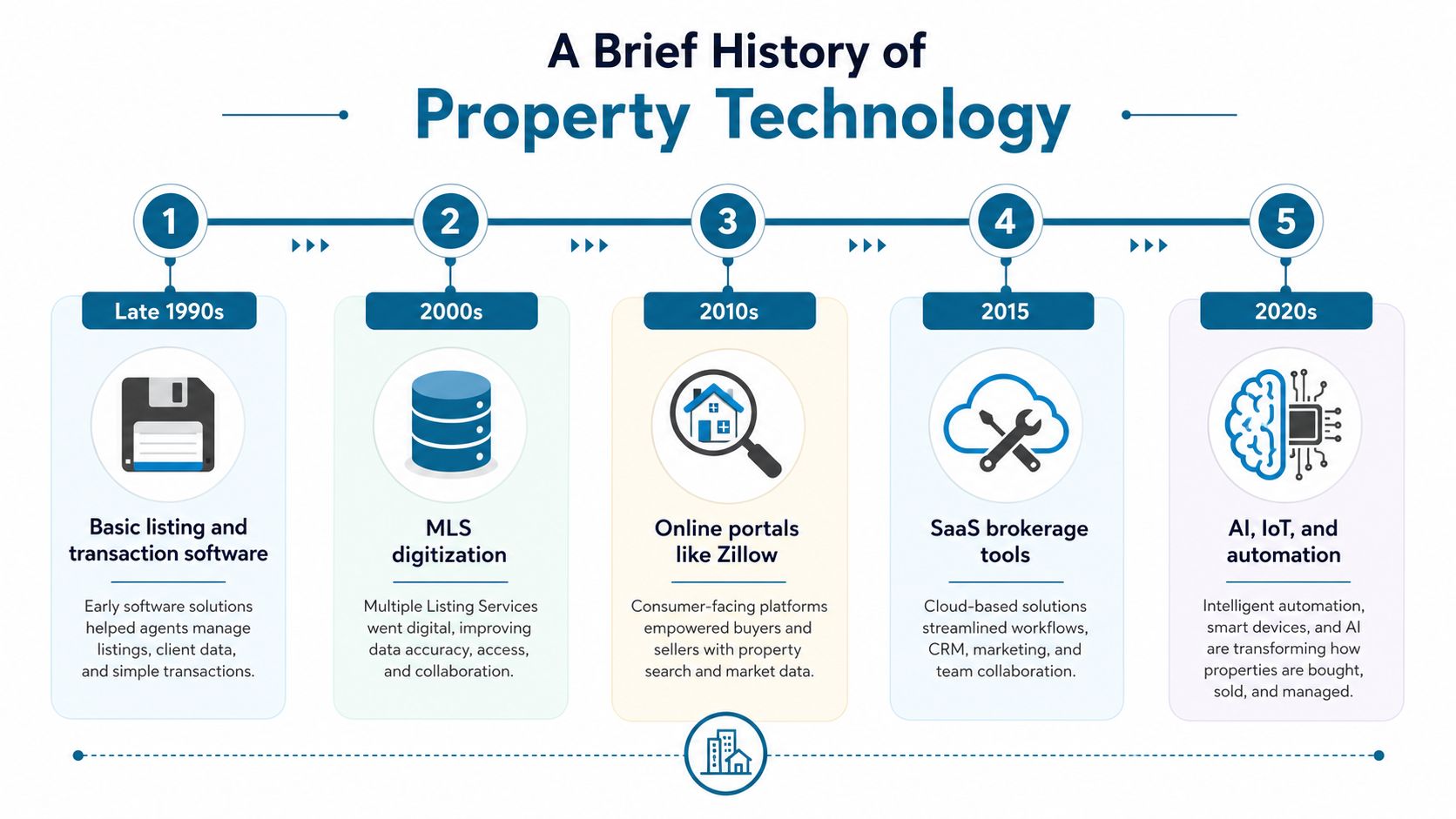
    Real estate technology moved here in stages. First, agents needed somewhere to keep names, notes, and follow-up reminders. That was the early CRM era. Over time, those systems became more central to the business.

    One marketing automation article described the CRM as a command center for contact and interaction history and reported that having a CRM drives 41% better lead conversions in real estate marketing automation contexts, while newer systems also expanded into tools that forecast market shifts and surface intelligence on price trajectories, inventory, and days-on-market trends, according to Saleswise's real estate marketing automation overview.

    That evolution changed expectations. Agents no longer want software that only stores information. They want software that helps decide what to do next.

    What belongs inside a real command center

    A command center earns the name when it combines several layers of work in one operating environment:

    • Content production: Create listing marketing, market updates, authority posts, and campaign assets.
    • Coordination: Keep messaging aligned across agents, listings, and channels.
    • Intelligence: Surface what's working, what's stalled, and where attention should go next.
    • Governance: Apply templates, approvals, and brand controls before content goes live.

    A plain dashboard tells you what happened. A command center helps shape what happens next.

    Why this matters in the AI search era

    Traditional SEO focused heavily on ranking pages in a search engine result. Agents now face a broader discovery environment where buyers and sellers may ask an AI assistant for market guidance, local agent recommendations, neighborhood context, or listing comparisons.

    That changes the content requirement. Your content can't only exist. It has to be readable, structured, consistent, and authoritative enough to be useful across AI-driven discovery systems. If your digital presence is sporadic, contradictory, or generic, your brand becomes harder to surface and harder to trust.

    Practical rule: If your CRM knows the client, your marketing system knows the listing, and your brand guide lives in a PDF nobody opens, you don't yet have a command center. You have software clutter.

    Core Components of a Modern Command Center

    A useful command center isn't one giant blob of features. It usually has a few clear operating layers. If you understand those layers, software demos become much easier to evaluate.

    A diagram illustrating the three pillars of a real estate marketing command center for agents.

    The property marketing engine

    This is the part most agents recognize first. You input a listing, and the system helps you turn it into a campaign instead of a single post.

    That campaign may include MLS-friendly descriptions, social copy for a new listing, open house promotions, price change updates, just sold content, flyers, brochures, and email assets. The goal is simple. One property should not require you to restart the creative process from zero every time you need a new piece.

    A strong property engine solves three persistent problems:

    • Repetition: You don't rewrite the same listing angle for every channel.
    • Delay: You can move from intake to publish faster.
    • Message drift: The home's story stays coherent across platforms.

    For newer agents, this matters because property marketing is often where confidence breaks down. You know the house. You just don't have time to package it well.

    The authority engine

    Listing marketing is temporary. Authority marketing compounds.

    An authority engine helps agents create the kind of content that makes them discoverable and credible even when they don't have a fresh listing to promote. That includes neighborhood explainers, buyer education, seller prep advice, local market observations, and short-form perspective pieces that show how the agent thinks.

    Brand assets hold greater importance than many agents realize. Professional visuals, especially profile photography, influence how consistent and trustworthy your presence feels across channels. If you're refreshing that layer of your brand, this guide on how to boost your agent brand can help tighten the visual side before you build heavier content automation around it.

    A practical authority engine should answer questions like these:

    1. What topics fit my market and audience?
    2. How do I post regularly without sounding robotic?
    3. How do I keep the same voice across Instagram, LinkedIn, email, and my website?

    Some platforms handle this through content prompts. Others generate drafts from your niche, service area, and existing brand tone. Tools in this category may include systems like real estate agent marketing automation platforms, which focus on repeatable content production tied to an agent's business goals rather than random posting.

    The performance and compliance layer

    This is the layer many agents skip until they join a team or run into a brand issue. It's also the layer that separates a nice content tool from a real command center.

    You need visibility into what content is being produced, who's publishing it, how it aligns with standards, and whether it connects back to business outcomes. Compliance and brand governance belong here too. Not in a Slack message. Not in someone's memory. In the workflow.

    What this layer often includes:

    Function Why it matters
    Content approvals Prevents risky or off-brand posts from going live
    Brand templates Keeps layouts, logos, and tone consistent
    Audit trails Helps teams review who changed what
    Performance signals Connects marketing output to actual pipeline activity

    The big idea is that content production, authority building, and oversight shouldn't operate as separate islands. When they do, agents post more but learn less.

    Command Center Versus Traditional Agent Marketing

    The difference becomes obvious when you compare daily workflow, not feature lists.

    Traditional agent marketing is usually reactive. A listing comes in. You hunt for photos, open Canva, search for old captions, text the broker for the latest logo, write something quickly, post it, and hope it's good enough. Then you try to remember whether the lead responses tied back to that campaign.

    A command center workflow is coordinated. The listing enters the system once. Content variations generate from the same source data. Brand rules are already built into templates. Publishing connects back to the records and reporting environment where the rest of the business runs.

    Marketing Workflow Traditional vs. Command Center

    Marketing Function Traditional Workflow (Fragmented) Command Center Workflow (Unified)
    Content creation Built manually in separate apps, often from scratch Generated and organized from one central listing or campaign input
    Lead handling CRM and marketing activity often live apart Marketing actions connect back to contact and pipeline records
    Brand consistency Depends on each agent remembering the rules Templates and approvals standardize output
    Compliance review Done manually, late, or inconsistently Built into the publishing process
    Performance analysis Based on scattered reports and gut instinct Tracked in one environment with shared visibility

    What this feels like in practice

    A traditional setup asks the agent to be the integrator.

    You're copying listing details between tabs. You're rewriting short captions, resizing images, checking if wording is acceptable, and trying to keep up with follow-up at the same time. Every marketing task interrupts a sales task.

    The command center model reduces switching costs. You spend less energy assembling assets and more energy refining the message and responding to live opportunities.

    One system helps you market. The other helps you operate.

    Why the difference compounds

    Most agents don't lose momentum because they lack ideas. They lose it because every action has too many steps.

    That friction changes behavior. You post less often. You delay updates. You avoid authority content because listings feel more urgent. Team leaders stop enforcing standards because reviewing everything manually takes too long. Brokerages tolerate inconsistency because fixing it one piece at a time doesn't scale.

    A command center doesn't make judgment unnecessary. It removes avoidable manual work so judgment can be used where it matters most.

    Real-World Use Cases for Every Agent Structure

    The value of a command center changes depending on who's using it. A solo agent doesn't need the same controls as a multi-office brokerage. But both need clarity, speed, and consistency.

    A professional woman working at her desk using a multi-monitor setup for real estate marketing analytics.

    Solo agent

    A solo agent usually feels the pain first in content creation. There's no in-house marketer. No compliance reviewer down the hall. No designer resizing graphics. Marketing happens between showings, listing appointments, and paperwork.

    In that environment, a command center acts like structured advantage. The agent can turn one listing into a full campaign, keep authority content going between transactions, and avoid rebuilding every asset from scratch each week.

    The solo use case is less about corporate oversight and more about consistency under pressure. A good system helps the agent stay visible when the calendar gets crowded.

    Team leader

    A team leader faces a different problem. Volume increases, but message discipline usually decreases.

    One agent writes polished market commentary. Another posts inconsistent graphics. A third forgets the team voice entirely and improvises every caption. The team may look like several unrelated businesses sharing a logo.

    A command center gives the leader a way to standardize without micromanaging every post. Shared templates, reusable prompts, approval flows, and common content libraries let agents move faster without sounding disconnected from the team brand.

    This also affects discoverability. Teams trying to improve their digital footprint often need better site experience, messaging alignment, and AI-assisted interaction on owned channels. If that's part of your roadmap, this piece on transforming real estate websites with AI is useful context because it shows how website experience and automated engagement increasingly connect to broader marketing operations.

    Brokerage

    At the brokerage level, the command center becomes a management layer.

    The most advanced versions pull in CRM and MLS signals, not just marketing assets. According to Matterport's real estate agent tools overview, AI-powered performance layers can ingest MLS and CRM data to monitor listing health, flag aging inventory, benchmark offices or agents across 50+ metrics, and surface at-risk deals or coaching opportunities in real time.

    That matters because brokerages don't just need more content. They need oversight.

    A brokerage command center can help answer questions like these:

    • Which listings need attention right now
    • Which agents are active but inconsistent
    • Where brand drift is showing up
    • Which offices need coaching based on live performance signals

    The brokerage use case isn't just “help agents post.” It's “create a shared operating environment where marketing, listing health, and agent performance can be seen together.”

    One category, different benefits

    The same category of software can solve very different pains:

    Structure Main pain Command center benefit
    Solo agent Time shortage Faster campaign creation and steadier authority content
    Team Brand inconsistency Shared standards without daily micromanagement
    Brokerage Oversight and risk Central visibility across listings, agents, and outputs

    Putting Your Command Center into Operation

    The hardest part of adoption usually isn't the software. It's deciding what the system should control and what the team should stop doing manually.

    A good rollout starts with one principle. Your CRM should be the system of record.

    Start with the source of truth

    When every tool keeps its own version of the customer story, confusion spreads fast. One platform has the latest email exchange. Another has campaign history. A third has notes from the last showing. That's how duplicate outreach and missed context happen.

    According to iHomeFinder's real estate tech stack guidance, a real estate marketing command center works best when the CRM is the system of record and every other tool feeds it, centralizing contact data, communication history, pipeline stages, and automation rules in one place so multiple users can see the same client timeline and reduce duplicated outreach and inconsistent messaging.

    That should shape your setup decisions. Don't ask, “Which tool has the prettiest dashboard?” Ask, “Which system owns the relationship record?”

    Build the operating rules before you scale

    Real estate teams often rush to templates and automation before defining standards. That usually creates polished inconsistency.

    Get four things clear first:

    1. Brand voice
      Decide how your business sounds. Formal, conversational, luxury-focused, neighborhood-expert, investor-oriented, first-time-buyer friendly. If you can't describe the voice, the system can't reproduce it well.

    2. Visual guardrails
      Set approved logos, colors, image treatments, and layout rules. Agents should have room to personalize without improvising the whole brand.

    3. Compliance checkpoints
      Decide what content needs automatic scanning, what needs human review, and which claims or phrasing require extra caution.

    4. Content rhythm
      Separate listing content from authority content. One is event-driven. The other should run continuously.

    If you're planning that content cadence, this guide to real estate content marketing automation is a useful companion because it focuses on turning sporadic posting into a repeatable workflow.

    Roll out in phases

    For a solo agent, implementation can be simple. Connect the CRM, define templates, and begin with one listing workflow plus one authority series.

    For teams and brokerages, phased rollout works better than a company-wide switch on day one.

    Try this sequence:

    • Pilot group first: Choose a few agents with different working styles.
    • Refine the templates: See where brand rules are too rigid or too loose.
    • Watch actual usage: Don't measure enthusiasm in training. Measure behavior after two weeks.
    • Expand with examples: Agents adopt faster when they can copy a proven workflow.

    One factual example in this category is ListingBooster.ai, which is positioned as an AI-powered marketing command center for real estate agents, teams, and brokerages and offers listing-based campaign generation plus agent authority content from a centralized workflow.

    Measuring Success and Ensuring Total Compliance

    A command center is only valuable if it improves business decisions and lowers avoidable risk. That means measuring outcomes that matter.

    Vanity metrics can still be interesting. They just can't be the main scoreboard.

    An infographic titled Measuring Success Beyond Vanity Metrics showing five key performance indicators for business growth.

    The KPIs that deserve your attention

    Industry guidance for agents and teams has converged around a practical group of performance indicators. Brokerage dashboards commonly track metrics such as appointment-to-listing conversion rate, new leads, conversion rate, number of client meetings, number of offers and closed deals, average commission per transaction, client satisfaction scores, and average time from listing to sale, as summarized in Geckoboard's real estate metrics guide.

    Those metrics matter because they connect marketing activity to operational results. They tell you whether your system is helping people move through the pipeline, not just whether a post got attention.

    A simple way to think about the scoreboard:

    • Pipeline movement: Are leads becoming appointments?
    • Listing velocity: Are properties moving efficiently from exposure to sale?
    • Production quality: Are agents producing enough content without quality collapsing?
    • Client outcome signals: Are satisfaction and closed deal patterns staying healthy?

    Compliance should live inside the workflow

    Many agents treat compliance as a final check. That's too late.

    The safer model is to embed compliance into content production itself. If your team has to remember every policy manually, errors become inevitable. Brand-approved templates, required review steps, and language checks reduce that risk before publish, not after.

    A true command center earns its keep. It doesn't just help people make more content. It helps them make content within boundaries.

    A useful test: If an agent can create and publish a campaign without touching any approved templates, review rules, or shared standards, your system may be convenient, but it isn't governing anything.

    What success looks like over time

    Success usually appears in three forms.

    First, work gets cleaner. Agents stop hunting for assets, rewriting common content, and improvising brand decisions. Second, leaders gain visibility. They can coach from live signals rather than scattered anecdotes. Third, risk drops. Fewer off-brand and questionable pieces reach the public unchecked.

    That's why this category shouldn't be viewed as a marketing expense alone. It's part efficiency tool, part oversight system, and part authority engine for an environment where discoverability depends on structured, consistent, useful content.


    If you want a practical way to apply this model, ListingBooster.ai is built around the command center approach for agents, teams, and brokerages. It focuses on turning listing details into campaign assets, producing authority content on an ongoing basis, and helping real estate businesses maintain a stronger digital footprint in AI-driven search.

  • Real Estate Listing Marketing Automation Software 2026 Guide

    Real Estate Listing Marketing Automation Software 2026 Guide

    You’re probably doing this the hard way right now.

    A new listing goes live. You pull photos from one folder, write a description in another tab, resize images for Instagram, text your assistant about a flyer, copy details into the MLS, post to Facebook, forget LinkedIn, then remember you still haven’t followed up with the buyer lead who asked about a similar home yesterday. By the time the property is fully promoted, the first burst of attention is already fading.

    That’s the problem real estate listing marketing automation software solves. It doesn’t just “save time.” It turns scattered marketing tasks into a system that runs in the right order, with the right data, across the right channels, without depending on your memory.

    The shift matters because this category is growing fast. The global market for real estate marketing automation software was valued at USD 1.12 billion in 2024 and is projected to reach USD 4.26 billion by 2034, with a 14.3% CAGR during 2025 to 2034, according to Market.us research on the real estate marketing automation software market. That growth isn’t abstract. It reflects how agents work now, under pressure to market listings faster, respond quicker, and stay visible where buyers are searching.

    What Is Real Estate Marketing Automation

    Real estate listing marketing automation software acts as the operating system behind your listing promotion.

    You enter the property details once, or the platform pulls them in from your listing feed, then the software handles the repeatable work that usually gets scattered across tabs, tools, and reminders. That can include creating listing copy, formatting social posts, updating your website, sending alerts, routing leads into your CRM, assigning follow-up tasks, and tracking what gets attention.

    A diagram illustrating the core components and benefits of a real estate marketing automation software platform.

    The manual version versus the automated version

    Manual listing marketing behaves like a relay race where each baton pass depends on your memory. You write the listing description, shorten it for Instagram, adjust it again for email, upload photos to the website, check whether the open house details match everywhere, then search your CRM for buyers who might care. If the price changes, you repeat the whole routine in smaller pieces.

    Automation changes the job from repeating tasks to managing a system. The listing becomes the source record. From there, connected templates, publishing rules, and follow-up triggers carry the same property facts into each channel. One update can flow through multiple outputs without extra copying and pasting.

    Practical rule: If your listing launch depends on a checklist you carry in your head, you don't have a system yet.

    That distinction matters because busy agents usually do not have a work ethic problem. They have a coordination problem.

    What the software is really doing

    This software connects three moving parts that often live in separate places: property data, marketing content, and lead response.

    A simple analogy helps. Your listing data is the ingredient list. The software is the kitchen process that turns those ingredients into finished dishes. Your channels are the serving stations, your website, email, social platforms, ad audiences, and CRM. If the ingredient list changes, the finished output should change too. Good automation keeps those pieces synchronized.

    For agents, that solves a very specific pain. The same listing facts stop getting rewritten by hand in five formats by three different people. The software standardizes what can be standardized, so your brand sounds consistent and your updates stay accurate.

    For agents who want a broader playbook for bringing in traffic before automation kicks in, this guide on online real estate lead strategies is a solid companion resource because it helps connect lead generation with the follow-up system you build afterward.

    Why agents are adopting it now

    Buyer attention is fragmented. A prospect may first notice a home in a social post, visit your site later, sign up for alerts, ask an AI assistant about nearby schools or pricing, and return after seeing the listing again in search results. If your marketing exists in separate, unconnected pieces, those moments feel random. If your system is automated, they start to reinforce each other.

    That AI-assistant step is the new wrinkle many agents miss.

    Real estate marketing automation used to be discussed mostly as an efficiency tool. It still saves time, but the stronger reason to care now is visibility. The platforms you choose and the way they structure listing data, publish content, and keep details consistent can affect whether your properties and your brand are easy for ChatGPT, Google AI, and other answer engines to interpret. In other words, automation is no longer only about sending messages. It is also about making your listings machine-readable, reusable, and easier to surface in AI-driven search.

    If you want a focused look at how automation supports listing-specific content production, real estate content marketing automation is worth reading because it breaks down how listing assets turn into an ongoing content engine.

    The practical outcome

    A clear definition is this: real estate marketing automation turns each listing into a repeatable marketing process with cleaner data and faster response built in.

    That helps in three practical ways:

    • Launch faster. Listings reach your channels while attention is still fresh.
    • Stay consistent. Price changes, status updates, and branding are less likely to drift out of sync.
    • Build authority. Sellers see a professional system, and buyers encounter accurate information across more touchpoints, including AI-driven search experiences.

    Agents sometimes hear "automation" and picture generic, robotic marketing. Good software handles the repeatable production work so you can spend your time where judgment matters: advising sellers, answering objections, pricing correctly, and building trust.

    Key Features That Power Your Business

    Most platforms look complicated until you sort them into a few working parts. For agents, the easiest way to understand real estate listing marketing automation software is to think in terms of four engines: data, creative, distribution, and relationships.

    Each engine solves a different kind of daily friction.

    The data engine

    The data engine starts with MLS and IDX connections. This is the plumbing. Without it, the rest of the system is mostly manual work wearing nicer clothes.

    Real estate marketing automation platforms rely on direct MLS and IDX integration to enable automated new listing alerts, real-time market report generation, and property search functionality by pulling data directly from the MLS database, according to Saleswise on real estate marketing automation architecture. If that sounds technical, here’s the plain-English version: the software can’t market a listing well if it has to wait for you to copy and paste the listing details everywhere.

    When agents say, “I posted the wrong price on Facebook” or “the portal still showed the old status,” they’re usually describing a broken data engine.

    The creative engine

    Many agents either feel excitement or skepticism at this stage.

    The creative engine uses AI to turn listing facts into marketing assets. That can include listing descriptions, email subject lines, social posts, and visual content variations. The goal isn’t to replace judgment. The goal is to remove blank-page syndrome and repetitive rewriting.

    AI systems such as ChatGPT and specialized real estate AI tools can write listing descriptions, generate email subject lines, and create social content that saves agents hours weekly. Some platforms also deploy 23 psychology frameworks such as scarcity, social proof, and FOMO into generated captions, with Fair Housing compliance scanning before publication, as described in AgentPulse coverage of real estate marketing automation software.

    That last part matters more than many agents realize. A caption that gets attention but creates compliance risk is not a win.

    For a closer look at how these tools approach property copy, real estate listing content generator shows what agents should evaluate in AI-assisted listing writing tools.

    Strong AI copy isn't just faster. It should sound market-aware, match the property type, and avoid language your broker would have to fix later.

    The distribution engine

    Once the content exists, it has to move.

    Distribution features handle scheduling, channel formatting, posting calendars, and asset reuse. They transform one listing into multiple pieces of marketing instead of a single post that disappears by tomorrow morning.

    A practical distribution engine should help with things like:

    • Platform adaptation: It should turn one property story into versions that fit Instagram, Facebook, LinkedIn, email, and print.
    • Status-based publishing: It should trigger fresh content when a listing becomes active, has a price adjustment, adds an open house, goes under contract, or closes.
    • Central updates: It should reduce the need to edit each channel separately when listing details change.

    This engine solves a common seller complaint: “What exactly are you doing to market my home?” When you have a visible publishing system, that answer gets much clearer.

    The relationship engine

    The relationship engine is where marketing stops being broadcasting and starts becoming pipeline management.

    It connects listing activity with your CRM, lead capture forms, website behavior, and follow-up logic. If someone clicks a listing repeatedly, saves a property, or responds to an alert, the system should record that behavior and help you act on it.

    Here’s what to look for inside that engine:

    • Lead capture from multiple sources: Website forms, portals, social ads, and contact requests should flow into one place.
    • Behavior tracking: The software should notice which listings, neighborhoods, or price bands are getting attention from a specific contact.
    • Nurture triggers: Follow-ups should reflect what the person did, not just the date they entered your database.

    The relationship engine is what separates “content software” from an actual business system. A pretty flyer helps. A tracked buyer signal helps you close.

    How the engines work together

    These engines are most valuable when they’re connected. If your data lives in one tool, your copy in another, your scheduler in a third, and your leads in a fourth, you’re still stuck managing handoffs.

    That’s why the category works best when the software feels less like a toolkit and more like an operating system. Your listing enters once. The system creates, distributes, tracks, and updates from there.

    For ambitious agents, that’s the difference between posting more and building real marketing infrastructure.

    Automation Workflows in Action

    Friday at 2:15 p.m., the listing is finally live. Photos just arrived. The seller wants to see it on Instagram before the afternoon school pickup line. Three buyer inquiries are already sitting in email, and none are tagged to the property yet.

    That moment is where real estate listing marketing automation software proves whether it is a real operating system or just another content tool.

    A professional working at a desk using real estate listing marketing automation software on multiple computer monitors.

    A solo agent launches a new listing

    For a solo agent, listing launch day often feels like running a restaurant kitchen alone. You are cooking, plating, answering the phone, and taking payment at the same time. The work is not hard because any one task is complicated. It is hard because all of it lands at once.

    Without automation, the agent rewrites the same property five different ways. One version goes to the MLS. Another gets trimmed for Instagram. A third becomes a Facebook post. Then comes the open house graphic, the email announcement, and the property page update. Speed drops. Quality gets uneven. The seller sees the gaps.

    A better workflow starts with the listing record and builds outward from there.

    1. The property details enter once. Address, price, photos, features, and remarks populate the campaign workspace.
    2. Draft marketing assets appear quickly. The system prepares editable descriptions, captions, and email copy based on the listing details.
    3. Each asset is shaped for its channel. Social posts, website copy, and email announcements are formatted for where they will be published.
    4. Inquiries stay tied to the listing. New leads are connected to the property that triggered them, which makes follow-up more relevant.
    5. The campaign continues after launch day. Instead of one announcement, the agent gets a repeatable sequence for features, open houses, price changes, and status updates.

    That last step matters more than many agents expect. The primary value is not saving 20 minutes on launch copy. It is keeping the listing visible long enough to create search signals, audience engagement, and reusable content that can later surface in AI-generated answers. If you want to see how one property can become a full publishing sequence, this guide on turning one listing into 30 days of content shows the logic.

    A team lead protects brand consistency

    Teams usually do not have a volume problem. They have a variance problem.

    One agent writes clear, polished copy. Another posts cropped photos with weak calls to action. A third forgets seller milestones, so the team appears active on some listings and invisible on others. From the seller's point of view, that inconsistency reads as disorganization.

    Automation gives the team a shared production line. The goal is not to make every agent sound identical. The goal is to make every listing look intentional.

    A solid team workflow often includes approved templates for listing announcements, open house promotions, price improvements, under-contract updates, and just sold posts. Agents can still edit the copy for their own voice, but the structure stays consistent. Fonts, colors, disclosures, and core messaging remain in place. Team leads can review higher-risk content categories before anything goes live.

    That kind of consistency does more than protect the brand on social media. It creates cleaner, repeated patterns across the web. Over time, those patterns make the team's listing content easier for search engines and AI systems to interpret, quote, and connect back to the right agent and brokerage.

    A brokerage scales support without scaling risk

    Brokerages face the same pressure, just at a larger scale. They need agents to market listings quickly, but they also need controls around language, disclosures, and review.

    At that level, automation works like traffic control at a busy airport. Every plane still has a different destination, but the tower keeps departures organized and safe. In marketing terms, the brokerage sets the rules for what can be published, what requires review, and what should happen automatically when a listing changes status.

    That means agents do not need to build every campaign from scratch. The brokerage can predefine workflows for new listings, open houses, price changes, pending updates, and sold announcements. Compliance steps can be built into the process instead of handled later as cleanup.

    One option in this category is ListingBooster.ai, which generates MLS-compliant property descriptions, creates a 30-day social content calendar from listing details, and supports multi-channel posting workflows. At the brokerage level, software like this is usually judged by a practical standard: can it help many agents produce consistent listing marketing without creating more review work for staff?

    What these workflows have in common

    The pattern is simple.

    Automation removes the hand-copying, reformatting, chasing, and remembering that usually break listing marketing at the exact moment speed matters. Agents still choose the message. The system handles the repetition.

    That shift changes more than efficiency. It creates a reliable stream of structured listing content tied to real properties, real updates, and real buyer interest. In a market where AI search is becoming a discovery channel, that discipline gives agents something many competitors still lack: marketing that is not only published, but also organized well enough to be found, reused, and cited.

    The New Frontier of AI Search Readiness

    Most agents still think about visibility the old way. Website SEO. Social posting. Maybe Google Business Profile. Those still matter, but they no longer tell the whole story.

    A growing share of buyers now begin by asking AI tools direct questions. They aren’t typing only “homes for sale in Phoenix.” They’re asking things like “Which neighborhoods are best for first-time buyers?” or “Who are the top agents for downtown condos?” If your content isn’t readable and reusable by AI systems, you can be active online and still be invisible where search behavior is moving.

    A person using advanced AI real estate interface to analyze housing data and property listings digitally.

    Why this matters now

    The gap is larger than many agents realize. The AI search visibility gap for real estate agents remains largely unaddressed, and over 40% of homebuyers start searches in AI tools while major platforms such as kvCORE and BoomTown do not emphasize automation for building AI-readable content at scale, according to Birdeye's analysis of real estate marketing automation and AI discoverability.

    That changes the job of marketing automation software.

    It’s no longer enough for the tool to send drips and listing alerts. It also needs to help agents create a digital footprint that AI systems can interpret with confidence. That means consistent property information, repeated topic coverage, clear local authority signals, and content that exists beyond one disappearing social post.

    What AI-readable content actually looks like

    This phrase confuses people, so let’s make it practical.

    AI-readable content is content that makes your expertise easy to extract, summarize, and cite. It usually includes:

    • Clear property information: Accurate listing details and updates across channels
    • Local authority content: Neighborhood guides, market commentary, buyer tips, seller education
    • Consistent identity signals: Your name, brand, market, specialties, and service areas showing up the same way repeatedly
    • Structured publishing habits: Content that appears regularly enough to form a pattern, not a random burst

    A single great listing post won’t do much here. AI systems respond better to a body of consistent signals.

    If a seller asks, "How will you get my home found?" your answer now has to include both people and machines.

    Why automation is the missing layer

    Consequently, real estate listing marketing automation software becomes a strategic tool, not just a convenience tool.

    Without automation, building AI-search readiness is exhausting. You’d need to keep listing data current, publish local expertise content regularly, maintain consistency across your website and social channels, and keep producing fresh material whenever a listing changes status. Most agents can do some of that. Very few can do all of it every week.

    Automation makes it repeatable.

    A strong system can help you transform listing activity into a broader authority footprint. A new property can generate listing copy, neighborhood angles, buyer education posts, seller-facing proof of marketing execution, and searchable local content that supports future discovery. That’s the part many mainstream guides miss.

    The competitive implication

    The next competitive split in real estate won’t just be between agents who market and agents who don’t.

    It will be between agents who create enough structured, consistent digital evidence to become visible in AI answers, and agents whose expertise lives mostly in private conversations and sporadic posts. The second group may still be excellent at selling homes. They’ll just be harder for modern buyers to discover before the first conversation ever happens.

    That’s why AI-search readiness belongs in your software evaluation now. Not later.

    How to Choose Your Software and Calculate ROI

    Buying software is easy. Buying the right operating system for your listing workflow is harder.

    Most demos look polished. Most platforms promise speed, simplicity, and more leads. The better approach is to judge the software against the work you do every week: launch listings, update statuses, create content, route inquiries, and keep your pipeline moving without dropping details.

    Start with the buyer's checklist

    Use this as a practical scorecard when comparing options.

    Feature/Criteria What to Look For Why It Matters
    MLS and IDX connection Direct listing data flow, automatic updates, property-triggered workflows Prevents copy-paste errors and shortens launch time
    AI content quality Editable listing descriptions, social captions, email copy, tone control Removes blank-page friction without locking you into robotic language
    Compliance controls Fair Housing review, approval steps, brand guardrails Helps teams and brokerages scale marketing with less risk
    Multi-channel publishing Scheduling for social, email, and listing-related campaigns Keeps promotion consistent after the listing goes live
    CRM integration Lead capture, activity tracking, follow-up triggers Connects marketing to actual pipeline movement
    Team management Shared templates, role permissions, oversight tools Protects consistency across multiple agents
    Reporting clarity Clear views into posting activity, engagement signals, and lead actions Lets you improve the system instead of guessing
    Ease of editing Fast revisions, simple approvals, low-friction workflows Software only works if agents will actually use it
    AI-search support Content workflows that build local authority and consistent digital presence Prepares your brand for discovery in AI-driven search experiences
    Scalability Fits solo use today and team or brokerage use later Reduces the chance of another migration in a year

    If you want a broader market scan before narrowing your shortlist, this guide to best real estate marketing tools can help you compare categories around the software itself.

    Questions worth asking on a demo

    The fastest way to cut through sales language is to ask scenario-based questions.

    Try questions like these:

    • When a listing status changes, what updates happen automatically?
    • Can I approve templates centrally but let agents personalize final copy?
    • How does the system connect listing engagement to lead follow-up?
    • What parts of the content are editable before publishing?
    • How does the platform support ongoing authority content, not just listing promotion?

    These questions reveal whether the product is a real workflow tool or just a library of templates.

    How to think about ROI without overcomplicating it

    You don’t need a finance model. You need a simple before-and-after comparison.

    The clearest ROI comes from two buckets: time recovered and conversion improvement.

    Real estate firms using marketing automation achieve 20–40% faster lead response times, generate up to 50% more qualified pipeline opportunities, can increase closed deals by 20–35%, and help agents reclaim 10–15 hours per week, according to NextCTL on marketing automation for real estate lead generation and sales growth.

    That gives you a practical framework.

    A simple ROI model you can run yourself

    Start with time.

    If software gives you back even part of the 10–15 hours per week reported in the source above, ask what those hours are worth in your business. Not your hourly fantasy number. Your actual use of reclaimed time. Would you spend it on listing appointments, lead follow-up, client service, or prospecting?

    Then look at conversion.

    If your response time improves and your follow-up becomes more consistent, your pipeline quality usually improves before your closing numbers do. That’s important because many agents quit evaluating too early. They judge the tool by whether it generated a closing in a month, instead of whether it fixed the middle of the funnel first.

    Decision lens: Don't ask only, "Will this software get me more leads?" Ask, "Will this software help me do more with the leads and listings I already have?"

    Where agents miscalculate value

    Most agents undervalue software when they compare the monthly fee only against direct closings.

    That’s too narrow. Real estate listing marketing automation software also affects:

    • Seller confidence: Your listing presentation becomes more concrete when you can show an organized launch process.
    • Brand consistency: Your online presence starts to look planned instead of improvised.
    • Operational stamina: Busy months stop breaking your marketing rhythm.
    • Future discoverability: Your content footprint compounds instead of disappearing.

    The strongest ROI often comes from preventing missed opportunities that never show up on a report. A late response. An unposted listing update. A seller who chose another agent because your marketing felt thin. Those losses are real, even when they’re hard to count exactly.

    The best fit depends on your business shape

    A solo agent usually needs speed and ease of use. A team lead needs brand controls and visibility. A brokerage needs compliance, standardization, and scalable permissions.

    The right platform is the one that matches your operating reality and helps you publish consistently enough to matter. If the software is powerful but too clunky for daily use, it won’t produce ROI. If it’s easy to use but disconnected from your listing and lead systems, it won’t produce much value.

    Good software should reduce decisions, not add more.

    Your Implementation Plan Getting Started Fast

    Monday morning, a new listing agreement is signed. By noon, the photos are coming. By evening, the seller wants to know when the home will hit the market, what will be posted, and how buyers will find it online. Without a system, that pressure turns into tab-hopping, copy-pasting, and rushed decisions. With automation software, the goal is simpler. Build one repeatable path from listing details to published marketing, then refine it.

    Start small on purpose.

    Agents get into trouble when they treat setup like a full office renovation. Your first version should work like setting the foundation for a house. It does not need custom trim, advanced workflows, or every possible channel. It needs a clear frame that supports the next listing and helps search systems understand who you are, what you list, and where you work.

    Your first-hour setup

    Use this order to avoid wasted effort:

    1. Connect the systems that feed listing marketing
      Start with your MLS-connected source, website or CRM if you use one, and the social channels where you already publish. The goal is simple data flow. If listing facts live in one place and marketing lives in another, automation closes that gap.

    2. Load your brand rules once
      Add your logo, headshot, brokerage disclaimers, colors, contact details, and preferred formatting. This saves you from fixing the same branding issue every time a new property goes live.

    3. Pick one live listing as a test
      Use a single active or upcoming property. That makes the software easier to judge because you can compare the output against real marketing needs, not a hypothetical workflow.

    4. Create a small set of core assets
      Generate a listing description, a few social posts, an open house post if relevant, and a just-listed announcement. Then edit them as if you were preparing them for the public. Those edits teach the platform your tone and show you how much manual cleanup is still required.

    5. Schedule one week, not one month
      A week is enough to test timing, formatting, approval steps, and brand consistency. It also shows whether your content is structured clearly enough to support AI-search visibility, since organized, repeated publishing creates more indexable signals than random one-off posts.

    Keep version one boring

    Boring is good here. Boring means repeatable.

    A clean first workflow usually beats an ambitious one because your team can follow it under pressure. If a seller calls, a photographer is late, and you are prepping for two buyer showings, you need software that behaves like a checklist, not a science project.

    Avoid these early mistakes:

    • Starting on every channel at once: Begin with the places you already update consistently.
    • Building too many workflows: One reliable listing launch workflow creates more value than several unfinished automations.
    • Over-customizing templates: Use the default structure until you can see what needs to change.
    • Ignoring search structure: Name files clearly, keep property details accurate, and publish consistent descriptions across channels. That helps both traditional search engines and AI answer engines connect your brand to your listings and market area.

    If you want a broader view of how teams reduce repetitive publishing work while keeping editorial control, this overview of content marketing automation software is useful.

    What success looks like in week one

    By the end of the first week, you should have a working listing launch process, a small library of branded templates, and a short list of manual steps that still slow you down.

    That is enough.

    From there, you can improve one layer at a time. Add review checkpoints. Tighten your templates. Expand from listing posts into neighborhood content and seller education pages that strengthen your authority footprint. That last part matters more than many agents realize. Consistent, structured publishing does not just save time. It gives AI tools and search platforms more reliable material to surface when someone asks who knows your market.

    The manual version of your business depends on memory and spare energy. The automated version runs on process. New listings trigger action. Brand standards stay consistent. Your market presence grows asset by asset instead of post by post.

    If you want a platform built specifically around AI-search visibility for agents, teams, and brokerages, ListingBooster.ai focuses on turning listing details into MLS-ready descriptions, multi-channel content, and authority-building marketing that supports discoverability in AI-driven search.

  • Mastering Social Media Autopilot for Real Estate Brokerages

    Mastering Social Media Autopilot for Real Estate Brokerages

    Most brokerage owners are already living the same scene. One agent posts a listing graphic with the wrong logo. Another posts nothing for three weeks. A top producer records solid video, but it never gets clipped, captioned, or distributed. Someone else writes a neighborhood post that raises compliance questions. Meanwhile, the brokerage account itself looks polished on Monday and abandoned by Thursday.

    That mess used to be mostly a branding problem. Now it's a discoverability problem.

    If your agents publish inconsistently, AI systems don't see a reliable pattern of local authority. When buyers ask ChatGPT or Google AI who knows a market, the brokerage with scattered, thin, or silent content has very little to show. Social media autopilot for real estate brokerages isn't just about saving admins from chasing agents for posts. It's about building a structured digital footprint that machines can parse and people can trust.

    The Brokerage Dilemma Inconsistent Posts and Invisible Agents

    A modern workspace featuring a laptop displaying social media profiles on a cluttered desk with papers and pens.

    A brokerage rarely has a social media problem in just one place. It has dozens of small failures happening at once. Agents use different templates, different tones, different claims, and different posting habits. Some are overposting promotions. Some are relying on old listing copy. Some are waiting until they "have time," which usually means they disappear.

    That creates two risks. The obvious one is brand inconsistency. The less obvious one is digital invisibility.

    In projected 2026 data, 75% of REALTORS® rank social media as one of their top three most-used technologies, and 39% identify it as their primary lead-generation tool, according to digital marketing statistics cited here. At brokerage scale, that level of use creates management pressure fast. If social is this central to lead flow, random posting isn't a harmless habit. It's an operational weakness.

    What chaotic social actually looks like

    In practice, the pattern is usually familiar:

    • The silent middle: A few agents market well. Most post rarely, which leaves the brokerage dependent on a small handful of visible personalities.
    • The off-brand feed: Agents improvise graphics, captions, and calls to action, so the company looks different from post to post.
    • The compliance scramble: Content gets reviewed too late, or not at all, and managers end up policing language after it's already public.
    • The billboard problem: Feeds fill up with just listed, price drop, open house, just sold, and little else.

    A brokerage can survive that for a while in traditional social. It struggles much more in AI search.

    Brokerages don't become visible in AI results because they posted more. They become visible because they published consistent, structured, local signals over time.

    Why invisible agents hurt the whole brokerage

    AI systems reward evidence of expertise. They look for recurring local topics, coherent language, complete property and neighborhood context, and repeated signs that a person or brand is active in a market. A brokerage with ten strong agents and eighty quiet ones has a weak footprint compared with a brokerage that turns average agents into consistent contributors.

    This is why social media autopilot for real estate brokerages matters now. The point isn't to automate personality. The point is to remove randomness.

    A workable system gives agents a baseline content rhythm, applies the same standards across offices, and turns every listing, market update, and neighborhood insight into part of a larger authority graph. Once that happens, social stops being a daily struggle and starts acting like an asset.

    Designing Your Brokerage Automation Blueprint

    Most brokerages make the same mistake at the start. They shop for a scheduler before they define the operating model. Software won't fix a weak process. It just speeds it up.

    The right blueprint starts with objectives that are specific to brokerage operations. Time savings matters, but it isn't the only target. According to an RPR survey, 71% of real estate professionals cite time savings as AI's top benefit, with 34% saving over four hours weekly, as reported in RPR's AI adoption coverage. That gives you a practical reason to automate, but the better reason is control. Control over quality, compliance, speed, and search visibility.

    Set goals that matter to a brokerage

    A brokerage automation system should answer four questions:

    1. How do we keep every agent visible?
      Not famous. Visible. The system needs to make sure agents don't vanish when business gets busy.

    2. How do we create one brand with many voices?
      Agents need room to sound human, but the brokerage still needs consistent standards for visuals, topics, and claims.

    3. How do we review content before risk shows up publicly?
      Approval happens upstream, not after a complaint or a screenshot.

    4. How do we turn social content into AI-readable authority?
      Posts should support local expertise, not just fill a feed.

    Build the system in layers

    A practical blueprint has three layers.

    Content input layer

    The raw material forms the starting point. Listing data, brokerage announcements, market commentary, agent milestones, neighborhood notes, open house details, and buyer or seller advice all belong here. If this intake is messy, the output will be messy too.

    Use a simple rule. Every repeatable content source should have a defined path into the system.

    Production layer

    An automation platform demonstrates its value. The system should generate post drafts, variations by platform, visual assets, and recurring content sequences without forcing agents to build from scratch every time. A tool like ListingBooster.ai fits here because it can turn listing details and brokerage inputs into a structured content calendar that supports both transactional posts and authority content.

    If you want a deeper look at how brokerages structure these workflows, this guide to a real estate brokerage content automation tool is a useful reference.

    Governance layer

    This is the part brokerages often skip. You need role-based approval, rules for edits, content categories that require review, and a clear path for what can publish automatically versus what needs manager signoff. Without that layer, automation becomes outsourced chaos.

    Practical rule: Automate creation and scheduling aggressively. Automate judgment carefully.

    Design for AI search, not just social reach

    A good blueprint treats every post as part of a larger search footprint. That means the content mix can't revolve around listing blasts alone. You need recurring local authority themes such as neighborhood guides, buyer education, seller preparation, market interpretation, and community proof of activity.

    The system also needs consistency. AI search visibility comes from repeated, well-structured local content over time. A brokerage that posts useful, market-specific content across many agents creates a broader surface area for AI systems to recognize. A brokerage that leaves content to chance doesn't.

    Brokerage owners don't need more content ideas. They need a machine that turns routine business activity into structured public proof.

    Building Your Automated Content Engine

    A brokerage content engine should feel more like a newsroom than a dump folder. If every post starts from a blank page, agents won't keep up. If every post looks templated and lifeless, audiences won't care. The engine has to do both jobs at once. It has to scale output and keep the content useful.

    A 3D abstract digital illustration of interconnected pipes and spheres representing a complex content engine system.

    The easiest way to do that is to separate content into two streams. One stream sells property. The other builds authority. Most brokerages overfeed the first and neglect the second.

    Use a two-tier calendar

    Tier one for brokerage-wide authority

    This content belongs to the company and can be shared or adapted by agents.

    Examples include:

    • Market interpretation: Plain-English explanations of what's changing locally
    • Neighborhood education: School zones, commute patterns, lifestyle differences, and community context
    • Buyer and seller guidance: Short posts that answer questions before a lead is ready to call
    • Brand trust signals: Community presence, events, behind-the-scenes operations, and service philosophy

    This is the material that helps AI systems connect your brokerage with a local market, not just with inventory.

    Tier two for agent-specific activity

    This stream is tied to each agent's pipeline and personal visibility.

    Typical categories include:

    • Listing lifecycle posts: New listing, price change, open house, pending, sold
    • Personal authority content: Short opinions on local demand, buyer mistakes, prep advice for sellers
    • Relationship posts: Client wins, neighborhood snapshots, local business mentions
    • Conversation starters: Polls, common objections, quick educational prompts

    Follow a content ratio that protects reach

    Experts recommend a 3:1 ratio of non-promotional to real estate posts to avoid algorithm penalties on major platforms, according to this real estate social autopilot article. That ratio matters for another reason too. It makes an agent's profile useful enough to train audience expectations. People start seeing the account as a resource, not a sequence of ads.

    A strong engine should enforce that balance by default. It shouldn't let an agent queue ten listing posts in a row without inserting value-driven content between them.

    For teams building this into daily workflow, a dedicated social media post scheduler for real estate teams can help centralize the sequence.

    Build templates that don't sound templated

    Templates are fine. Robotic captions aren't.

    A good template gives structure without forcing the same sentence pattern every time. For example:

    Content type What stays fixed What changes every time
    Just listed Brand format, compliance rules, CTA style Hook, feature angle, buyer fit
    Open house Date flow, RSVP prompt, visual frame Event tone, local context, urgency
    Buyer tip Educational format, voice guidelines Topic, example, objection handled
    Neighborhood spotlight Local framing, visual rules Specific places, lifestyle angle, audience fit

    The best-performing brokerage systems usually keep the skeleton stable and vary the opening angle. One post leads with convenience. Another leads with value. Another leads with lifestyle fit. Same property. Different human entry point.

    Don't automate sameness. Automate repeatability.

    Add a compliance layer before publishing

    Brokerages reduce friction for everyone. Agents don't want to study policy every time they post. Managers don't want to chase avoidable mistakes after a post is live.

    Build a pre-publish review path that checks for Fair Housing issues, brokerage-specific language rules, and unsupported claims. That review doesn't need to slow the whole operation down. It just needs to happen before public distribution.

    A practical engine usually works like this:

    1. Listing or topic enters the queue.
    2. Drafts are generated in platform-specific formats.
    3. Content is scanned against compliance and brand rules.
    4. Posts route either to auto-approve or human review.
    5. Approved content publishes on schedule.
    6. Agents handle comments and direct messages afterward.

    That last step matters. Automation can maintain presence. It can't replace conversation.

    Defining Roles and Driving Agent Adoption

    Brokerages usually don't fail at automation because the tool is weak. They fail because nobody knows who owns what. One person assumes marketing handles approvals. Marketing assumes branch managers handle them. Agents think the system is optional. Then usage drifts, and the brokerage ends up right back in manual cleanup mode.

    Role clarity fixes that fast. It also makes agent adoption easier because people stop guessing.

    Assign ownership before launch

    Use simple role definitions. Keep them operational.

    Role Key Responsibilities Primary Tool Access
    Brokerage Admin Sets brand rules, approval thresholds, compliance policies, and publishing permissions Full admin access
    Marketing Lead Builds calendars, reviews shared campaigns, manages templates, monitors content quality Content, approval, analytics access
    Agent User Personalizes assigned posts, submits local updates, publishes approved content, responds to comments and DMs Limited content and publishing access

    This structure prevents the common trap where every user gets every permission. Most agents don't need full control. They need a fast way to customize and publish within guardrails.

    Sell the system on self-interest

    Agents adopt tools when they believe the tool helps them win business without creating another job. They don't care that the brokerage wants cleaner brand consistency. They care whether the new process saves time, makes them look sharper, and helps them stay visible when they're buried in showings and contracts.

    Lead with that.

    • Time back: They don't have to invent a week's worth of captions at night.
    • Better output: Posts look professional even if design isn't their strength.
    • Less guessing: They know what to post and when to post it.
    • More authority: Their profiles stop looking like abandoned listing boards.

    Give agents a narrow lane first

    Don't roll out every feature on day one. Start with a small operating habit:

    • Weekly market or advice posts supplied centrally
    • Listing lifecycle posts generated from new inventory
    • One local authority post each week that the agent can personalize
    • Daily engagement expectation on comments and messages

    That sequence is realistic. It lets agents feel momentum without feeling managed to death.

    The fastest way to lose adoption is to hand agents a powerful system with no posting standard, no training path, and no clear payoff.

    Treat training like field enablement

    The training should feel like brokerage support, not software onboarding. Show agents exactly how to take one draft, adjust the opening line, add a local observation, and publish it in a few minutes. Then show them what still requires a human response, especially comments, direct messages, and community interaction.

    A few rollout practices work better than long manuals:

    • Use live examples: Rewrite actual draft posts during training so agents see what "good" looks like.
    • Create office-level champions: One or two early adopters in each office can answer small workflow questions.
    • Show before-and-after feeds: Agents understand quickly when they can see the difference between a billboard feed and a balanced authority profile.
    • Reward consistency: Recognition still matters. Agents notice when the brokerage highlights strong use of the system.

    The broker's job isn't to force everyone into identical marketing. It's to create a framework where even inconsistent agents can show up professionally, regularly, and safely.

    Measuring Success and Optimizing for ROI

    Once the system is live, most brokerages look at the wrong dashboard first. They check likes, follower counts, and whether a post "felt good." That's normal. It's also how weak systems survive longer than they should.

    A brokerage should measure social media autopilot for real estate brokerages by business effect and operating discipline. Did agents use it? Did it save time? Did it produce conversations, inquiries, and a stronger local footprint? Those are the questions worth tracking.

    A five-step infographic showing the process for optimizing return on investment for real estate social media marketing.

    Watch for the broadcasting trap

    One of the clearest failure modes is simple. The brokerage automates publishing and forgets interaction. A critical pitfall is the pure broadcasting trap, which can kill 90% of a profile's engagement, and top agents who use automation well still engage with others' posts 5x more than they self-post, producing a 10x higher ROI on their time, according to this analysis of real estate social media mistakes.

    That should reset expectations. Automation handles cadence. Humans still handle trust.

    Track a short list of useful metrics

    Operational metrics

    These tell you whether the machine is being used correctly.

    • Agent adoption rate: How many agents are actively publishing from the system
    • Approval turnaround: How long content sits before review
    • Time saved per agent: Reported or estimated reduction in manual content work
    • Content mix compliance: Whether the feed follows your intended authority-to-promotion balance

    Outcome metrics

    These show whether the content is doing commercial work.

    • Lead source attribution: Which inquiries mention a social post, profile, or linked content
    • Website traffic from social: Whether social is sending visitors into owned assets
    • Direct conversations started: Messages, replies, and inquiry forms tied to content
    • Listing presentation support: Whether agents use the system's outputs to strengthen seller meetings

    If you want the measurement framework itself organized, these real estate marketing ROI tools show how many teams structure reporting around actual business outcomes.

    Run a simple optimization loop

    Good brokerages don't overhaul the whole system every month. They make controlled adjustments.

    1. Review what was published
    2. Identify which formats led to replies, clicks, or conversations
    3. Adjust hooks, topics, visuals, or posting cadence
    4. Keep what improved response and remove what didn't

    This works especially well when you compare categories instead of obsessing over individual posts. For example, neighborhood explainers might drive better conversation than generic market recaps. Buyer mistake posts may outperform polished branding graphics. Those patterns are more useful than vanity spikes.

    Field note: If a post type gets polite likes but doesn't start conversations, it may be good branding and weak marketing. Know the difference.

    Keep one manual habit in the system

    Every automated brokerage system still needs a human rhythm. Agents should spend a small block of time each day replying to comments, answering DMs, and interacting with local content. That isn't a software limitation. That's how social stays social.

    The brokerages that get ROI from automation don't use it to disappear. They use it to stay present at scale.

    Your Roadmap From Manual Chaos to Automated Authority

    The path is straightforward once you stop treating social as a side task.

    First, fix the operating model. A brokerage needs a real blueprint, not a pile of tools. Then build a content engine that can produce both listing activity and local authority. After that, assign roles clearly so the workflow doesn't collapse under shared assumptions. Finally, measure business impact, not just feed activity.

    Those steps matter even more because search behavior is shifting. With over 40% of homebuyers now starting their search via AI tools, the core brokerage question is visibility, and this discussion of AI search behavior points to schema-optimized, hyper-local authority content as the direct answer to those "best agent" queries. A brokerage that publishes structured, relevant, local content gives AI systems something to cite, summarize, and recommend.

    What future-proofing looks like

    It doesn't look like more random posting. It looks like operational consistency.

    A future-proof brokerage does a few things well:

    • It turns ordinary business activity into publishable authority content
    • It gives every agent a professional baseline presence
    • It reduces compliance risk before content goes live
    • It creates local signals that support both human trust and AI discoverability

    What doesn't work anymore

    Three habits are losing value quickly.

    • Manual heroics: Relying on a few naturally gifted agents to carry the brokerage online
    • Listing-only feeds: Treating social as a stream of inventory updates
    • Unstructured content: Posting often enough to stay busy, but not clearly enough to be understood by AI systems

    The brokerages that win the next few years won't necessarily be the loudest. They'll be the ones with the clearest and most consistent digital proof of expertise.

    A buyer asking an AI tool for the right agent in a market is really asking for evidence. Your social footprint is part of that evidence now.


    If your brokerage wants a practical way to turn listings, market insight, and agent activity into a consistent AI-readable content system, ListingBooster.ai is built for that workflow. It helps agents, teams, and brokerages generate structured real estate content that supports social publishing and stronger visibility in AI-driven search.

  • 10 Real Estate Agent Differentiation Strategies to Dominate in 2026

    10 Real Estate Agent Differentiation Strategies to Dominate in 2026

    In a market saturated with look-alike agents, differentiation is not just a marketing tactic, it is a survival mechanism. The traditional playbook of prospecting, open houses, and generic mailers is no longer enough to secure your position as a top producer. Today’s clients are digitally savvy, starting their property journey not on traditional portals, but in AI-powered environments like ChatGPT and Google's AI Overviews. If your digital presence isn't optimized for these new search realities, you risk becoming invisible to the next generation of buyers and sellers.

    Blending in is the biggest risk to your career. Being another face in the crowd means competing on price, endlessly chasing cold leads, and struggling to build a sustainable business. True market leaders don't just participate in the market; they define it. They achieve this by establishing a unique value proposition that is impossible to ignore. This requires a deliberate, multi-faceted approach to standing out.

    This guide moves beyond generic advice like ‘be authentic’ or ‘find your niche.’ We are providing a deep dive into ten powerful, actionable real estate agent differentiation strategies designed to create a tangible competitive advantage. Each strategy is a complete roadmap, detailing not just what to do, but precisely how to implement it. You will find step-by-step instructions, methods for measuring success, and practical examples using tools like ListingBooster.ai to automate your growth. Prepare to move from being just another agent to becoming the undeniable authority in your market.

    1. AI-Powered Content Generation & Marketing Automation

    Consistently creating high-quality marketing content is a significant hurdle for most agents, often taking a backseat to client needs and transaction management. This is where AI-powered content generation emerges as one of the most effective real estate agent differentiation strategies. It’s not just about saving time; it's about deploying a systematic, scalable marketing engine that works for you 24/7.

    Platforms like ListingBooster.ai use artificial intelligence to instantly generate complete marketing suites from a simple property URL. This includes everything from psychologically-driven property descriptions and social media posts to blog articles and video scripts. The system automatically ensures Fair Housing compliance, removing a major point of friction and risk from your marketing efforts.

    Why This Strategy Works

    This approach directly addresses the primary bottleneck for agents: a lack of time and marketing expertise. Instead of spending hours staring at a blank screen, you can generate a week's worth of polished, engaging content in minutes. This allows you to maintain a powerful digital presence, build authority, and stay top-of-mind with your sphere of influence without sacrificing time spent on revenue-generating activities. For teams and brokerages, it ensures brand consistency and message control across dozens or even hundreds of agents.

    Key Insight: AI automation turns content creation from a daily chore into a one-time strategic task, allowing agents to focus on relationships and closings while their digital marketing runs on autopilot.

    How to Implement This Strategy

    1. Select Your AI Tool: Choose a real estate-specific platform like ListingBooster.ai designed to understand property marketing nuances.
    2. Start with a Single Listing: Use a tool like the Listing Commander to generate a full marketing kit for one of your current properties. Post the generated content across your social channels to see the immediate impact.
    3. Build Your Authority: Dedicate 15 minutes per week to the Authority Builder feature. Create and schedule content that answers common client questions, positioning you as the go-to expert before a seller even thinks of calling an agent.
    4. Batch and Customize: Set aside a small block of time each week to review the AI-generated content calendar. Add local flavor, market-specific statistics, or personal anecdotes to make the posts uniquely yours.

    By integrating this process, you create a sustainable marketing system that builds momentum over time. For more ideas on what to create, you can learn about real estate content marketing automation and how it frees up your schedule to focus on clients.

    2. AI Search Engine Visibility & Digital Footprint Optimization

    The way clients find agents is changing. Instead of starting with a traditional Google search, over 40% of homebuyers now begin their research on AI platforms like ChatGPT, Perplexity, and Google's AI Overviews. This shift makes AI search visibility one of the most important real estate agent differentiation strategies available today. It involves structuring your digital presence so that these AI algorithms recognize you as a topical authority and recommend you directly in their search results.

    This goes beyond traditional SEO. It's about creating a rich, interconnected digital footprint that AI can easily understand and trust. Agents who do this well appear as direct answers to queries like "best real estate agents in [city]" or "what is the property market like in [neighborhood]". This positions them as the default expert before a prospect ever visits a website.

    Why This Strategy Works

    This approach meets modern buyers and sellers where they are already looking for information. Securing a recommendation from an AI search engine builds instant credibility and authority in a way that a standard search result cannot. It bypasses the noise of paid ads and crowded search pages, putting your name and expertise directly in front of a high-intent audience at the exact moment they need a trusted professional.

    Key Insight: Optimizing for AI search isn't just about being found; it’s about being recommended. It turns your digital content into an automated referral engine powered by the world's most advanced technology.

    How to Implement This Strategy

    1. Establish Topical Authority: Consistently publish high-value content on your blog or website. Focus on weekly market updates, detailed neighborhood guides, and answers to common client questions to build a library of expert content.
    2. Optimize with Schema Markup: Implement real estate-specific schema markup on your agent bio pages, listings, and blog posts. This structured data helps AI engines quickly understand who you are, what you specialize in, and where you operate.
    3. Focus on E-E-A-T Signals: Structure all your content to demonstrate Experience, Expertise, Authoritativeness, and Trustworthiness. Include client testimonials, case studies, professional credentials, and links to reputable local sources.
    4. Maintain Your Digital Profiles: Keep your Google Business Profile and other professional directories completely updated with your correct name, address, phone number, and service areas. Consistency across platforms is a key trust signal for AI.

    By building a digital footprint designed for AI consumption, you create a powerful and sustainable client acquisition channel. You can discover more about this method by reading about real estate AI search optimization and how to make it work for your business.

    3. Personal Brand Authority Building Through Consistent Expert Positioning

    Most agents are seen as interchangeable service providers, waiting for clients to call. This strategy flips the model by turning you into a trusted authority figure that clients proactively seek out. This is one of the most powerful real estate agent differentiation strategies because it shifts the power dynamic; instead of chasing leads, you attract them by consistently demonstrating your deep market expertise.

    This involves the regular publication of original insights, hyper-local market analysis, and valuable buyer or seller education. By doing so, you build a library of content that proves your value long before a potential client is ready to transact, making you the only logical choice when the time comes.

    A smiling male real estate agent stands beside a large map displaying 'Local Market Expert'.

    Why This Strategy Works

    Authority building directly counters the commoditization of real estate agents. When sellers see you publishing weekly market updates with data they can't find on Zillow, or buyers read your detailed neighborhood guides, they perceive you as a genuine expert, not just a salesperson. This trust compounds over time, leading to higher-quality inbound leads and the ability to command premium commission rates because your value is self-evident.

    Key Insight: Becoming an authority figure means you stop competing on price and start competing on expertise. Your content becomes your most valuable asset, generating leads and building trust while you sleep.

    How to Implement This Strategy

    1. Choose Your Content Pillar: Don't try to be an expert on everything at once. Start by focusing on one core area: hyper-local market data, specific neighborhood profiles, or first-time homebuyer education.
    2. Commit to a Schedule: Consistency is non-negotiable for building authority. Commit to publishing at least one piece of core content weekly, whether it's a blog post, a video, or a detailed market report.
    3. Use Unique, Local Data: Go beyond generic national headlines. Provide specific statistics about a particular school district, the absorption rate in a single zip code, or an analysis of recent sales in a popular subdivision.
    4. Repurpose and Distribute: Turn one well-researched blog post into multiple pieces of micro-content. Create 4-6 social media posts, a short video script, and an email newsletter summary from that single piece of content to maximize your reach.

    By consistently delivering valuable, hard-to-find information, you establish an unshakeable position as a market leader. For a deeper dive into this topic, you can learn more about how to build authority as a real estate agent and make it a cornerstone of your business.

    4. Omnichannel Social Media Presence & Platform-Specific Optimization

    Simply posting the same content across every social media platform is a common but ineffective shortcut. A truly impactful digital footprint, one that serves as a powerful real estate agent differentiation strategy, requires an omnichannel approach. This means tailoring your content to the unique audience, algorithm, and format of each platform, from Instagram and Facebook to TikTok and LinkedIn.

    An agent who understands this will post a polished, professional market update on LinkedIn, a quick-paced "day in the life" video on TikTok, a visually stunning carousel of listing photos on Instagram, and a community-focused event announcement on Facebook. Instead of a one-size-fits-all broadcast, they create a cohesive brand experience where each channel offers distinct value, capturing different segments of their potential client base.

    Why This Strategy Works

    This method works because it meets consumers where they are and speaks their language. Users have different expectations for each app; they scroll TikTok for entertainment, LinkedIn for professional insights, and Instagram for visual inspiration. By optimizing for each platform, you increase engagement, signal to the algorithms that your content is high-value, and build deeper connections with niche audiences. Agents with massive TikTok followings, for example, often generate a steady stream of first-time homebuyer leads who would never have found them on LinkedIn.

    Key Insight: Platform-specific optimization transforms your social media from a simple megaphone into a network of targeted conversations, building authority and attracting the right clients from each distinct channel.

    How to Implement This Strategy

    1. Select Your Core Platforms: Don't try to be everywhere at once. Choose 2-3 platforms where your ideal clients spend the most time and commit to mastering them first.
    2. Create a Content Pillar: Start with a central idea (e.g., a new listing, a market update). Then, create platform-specific variations. A new listing might become a beautiful photo carousel for Instagram, a behind-the-scenes tour for TikTok, and a detailed post about the investment potential on Facebook.
    3. Engage Natively: Dedicate 15 minutes daily to interacting with your audience on each platform. Respond to comments with video replies on TikTok, answer DMs on Instagram, and participate in group discussions on Facebook. Engagement is a powerful signal to the algorithm.
    4. Batch and Schedule: Use a scheduling tool to plan your platform-specific content 2-3 weeks in advance. This ensures consistency even during busy periods and prevents you from defaulting to generic cross-posting.

    5. Data-Driven Market Intelligence & Competitive Advantage Positioning

    Any agent can claim to "know the market," but few can back it up with hard data. Using market intelligence as a core part of your value proposition is a powerful way to stand out. This approach moves your expertise from a vague assertion to a tangible, provable asset that clients can see and understand. It's about becoming the go-to economic advisor for their biggest investment.

    Instead of just presenting a standard CMA, you're providing a comprehensive analysis of price trends, absorption rates, neighborhood appreciation, and demographic shifts. This data-first method builds immense trust and positions you as a strategic partner, not just a transactional agent. It shows sellers why your pricing strategy is sound and gives buyers the confidence to make a strong offer.

    Hands analyzing market insights on a laptop displaying charts and graphs, pointing with a pen.

    Why This Strategy Works

    This strategy works because it directly counters the commoditization of real estate agents. When a client sees you presenting clear, insightful data that other agents aren't, you immediately establish a higher level of professionalism and expertise. It answers the client's unspoken question: "Why should I hire you?" with undeniable proof. This is one of the most effective real estate agent differentiation strategies because it shifts the conversation from commission to value, justifying your fee with concrete insights that lead to better financial outcomes for your clients.

    Key Insight: Data transforms your opinion into evidence. It provides the foundation for your advice, making your recommendations more credible and compelling than those of competitors who rely solely on gut feelings.

    How to Implement This Strategy

    1. Access Quality Data Sources: Subscribe to services that provide deeper insights than the standard MLS, such as CoreLogic, Altos Research, or local market-specific analytics platforms.
    2. Create Templated Reports: Develop a standardized, visually appealing market report template for both buyers and sellers. Create versions for specific neighborhoods or property types you specialize in.
    3. Integrate Data into Your Listing Presentation: Don't just show comps. Present charts on 5-year price appreciation, average days on market trends, and sale-to-list price ratios to justify your proposed listing price and marketing plan.
    4. Publish Monthly Insights: Release a monthly "Market Snapshot" via your blog, email newsletter, and social media. Consistently sharing this information will position you as the definitive local market authority.

    6. Niche Specialization & Vertical Market Expertise

    Attempting to serve every type of client in every neighborhood is a recipe for becoming a commodity. A powerful alternative is to adopt niche specialization, one of the most effective real estate agent differentiation strategies available. This involves concentrating your expertise and marketing efforts on a specific, well-defined market segment, such as luxury homes, first-time buyers, or relocating executives.

    Instead of being a generalist, you become "the" go-to expert for a particular type of client or property. An agent known for handling historic homes in a specific district will always have an advantage over a generalist when a seller with such a property is looking for representation. This focused expertise not only attracts your ideal clients but also often justifies premium pricing for your specialized knowledge.

    Why This Strategy Works

    This approach works by building deep authority and trust within a targeted community. Your marketing becomes more efficient and resonant because you are speaking directly to the unique needs and pain points of a single audience. General marketing messages get lost in the noise, but a message about navigating FHA loans for first-time buyers will capture the attention of that exact group. This focus creates a strong brand identity and a referral network that perpetuates itself within the niche.

    Key Insight: Specializing transforms you from a jack-of-all-trades into a master of one. Clients seek out and pay a premium for masters, not for generalists who can do a bit of everything.

    How to Implement This Strategy

    1. Identify a Viable Niche: Research your market to find a segment that is both interesting to you and large enough to sustain your business. Consider your personal passions, professional background, and local market opportunities.
    2. Invest in Specialized Knowledge: Pursue certifications relevant to your chosen niche, such as the Certified Luxury Home Marketing Specialist (CLHMS) or Accredited Buyer's Representative (ABR). Deepen your knowledge of niche-specific financing, contracts, and market trends.
    3. Tailor Your Marketing: All your branding, from your website to your social media content, must reflect your specialty. Create content that speaks directly to your niche, such as blog posts on "5 Common Mistakes First-Time Investors Make" or a market report on the local $2M+ property segment.
    4. Network Strategically: Immerse yourself in your niche community. Join investor meetups, build relationships with estate planners if you're in the luxury market, or connect with HR departments of large local companies if you focus on corporate relocations.

    7. Exceptional Client Experience & Relationship-Driven Differentiation

    In a market saturated with technology and automated outreach, providing a genuinely exceptional client experience stands out as one of the most powerful real estate agent differentiation strategies. This approach goes beyond standard service; it involves creating memorable, personalized interactions that exceed expectations at every single touchpoint, from the initial consultation to well after the closing table.

    This strategy is about transforming a transaction into a long-term relationship. Agents who master this build businesses where 80% or more of their work comes from repeat clients and direct referrals. They focus on superior communication, proactive problem-solving, and personal touches that make clients feel valued and cared for, not just like another commission check.

    Why This Strategy Works

    An exceptional client experience directly counteracts the commoditization of real estate services. While other agents compete on price or technology, you compete on trust and service quality. This builds an emotional connection, turning clients into enthusiastic advocates for your brand. This word-of-mouth marketing is more credible and effective than any paid advertisement, creating a sustainable business model that requires less prospecting over time.

    Key Insight: Delivering a five-star experience is not a cost; it's an investment in your most potent marketing asset: your past clients. Their referrals become the foundation of a predictable and profitable business.

    How to Implement This Strategy

    1. Develop Client Service SOPs: Create a checklist of non-negotiable service standards for every transaction. This should include communication frequency (e.g., a guaranteed weekly update call), key milestones, and post-closing follow-up plans to ensure consistency.
    2. Prepare Obsessively: Before any client meeting, do your homework. Research the property, the neighborhood, and review past notes on the client’s goals and personal details. Arriving prepared shows you respect their time and are serious about their success.
    3. Over-Communicate Proactively: Don't wait for clients to ask for an update. Provide information before they feel the need to ask, especially during periods of uncertainty like negotiations or inspection resolutions. A simple "just wanted to let you know we're still waiting on X, and I'll call you the moment I hear" can alleviate significant anxiety.
    4. Create a "Closing and Beyond" Plan: The relationship doesn't end at closing. Schedule follow-ups at one month, six months, and on their homeownership anniversary. Send a thoughtful, non-salesy gift or a valuable local market update that reinforces your role as their lifelong real estate advisor.

    8. Visual Content Excellence & Professional Photography/Videography Showcase

    In a market where buyers make snap judgments based on online listings, the quality of your visual content is no longer optional; it’s a critical component of your value proposition. Committing to professional-grade photography, videography, and immersive tours for every listing is one of the most impactful real estate agent differentiation strategies. This isn't just about making properties look good; it's about creating an emotional connection and conveying a standard of quality that reflects on you as an agent.

    A camera on a tripod capturing a professional photograph of a modern living room interior.

    This commitment extends beyond a single high-end listing. When you standardize excellence across your entire portfolio, from starter homes to luxury estates, you build a brand recognized for quality. Sellers see the superior marketing you provide for others and want that same level of service for their own property, making your listing presentation far more compelling than competitors who rely on smartphone photos.

    Why This Strategy Works

    This approach directly targets the buyer's decision-making process. Listings with professional photos receive significantly more views, sell faster, and often command higher prices. For sellers, this tangible result is a powerful reason to choose you over another agent. It demonstrates a serious investment in their success and positions you as a premium service provider who understands how to market a property effectively in a visually-driven world.

    Key Insight: Exceptional visual marketing is not an expense; it's an investment that pays for itself through faster sales, higher closing prices, and a powerful brand reputation that attracts future clients.

    How to Implement This Strategy

    1. Build a Professional Partnership: Find a reliable real estate photographer and videographer and build a long-term relationship. This ensures consistency in quality, style, and turnaround times for all your listings.
    2. Define Your Visual Package: Create a non-negotiable "standard package" for every listing. This should include professional HDR photography, a simple video walkthrough, and drone shots of the property and its surroundings.
    3. Prioritize Property Preparation: Always schedule a professional staging consultation or provide sellers with a detailed pre-shoot checklist. A well-prepared home is the foundation for stunning visuals.
    4. Incorporate 3D Tours: For every listing, invest in a Matterport or similar 3D virtual tour. This allows potential buyers to explore the property in-depth 24/7, qualifying leads and attracting out-of-town interest.
    5. Showcase Your Work: Create a dedicated "Our Marketing" page on your website featuring a gallery of your best property photos and videos. This serves as a powerful portfolio to win over prospective sellers.

    9. Technology Integration & Client-Facing Tools & Apps

    In a market where convenience is currency, the technology you provide to clients can be a powerful differentiator. This strategy moves beyond internal agent-focused software and centers on providing clients with modern, intuitive tools that simplify the complex buying or selling process. Adopting client-facing technology is a clear signal that you are a forward-thinking, organized professional dedicated to creating a seamless, transparent experience.

    This includes everything from client portals that show transaction progress in real-time to sophisticated mortgage calculators embedded on your website. When a seller can digitally sign documents from their phone at 10 PM or a buyer can track inspection deadlines through a shared app, you remove friction and anxiety from the process. This creates a high-touch feel through high-tech means, making you an indispensable part of their journey.

    Why This Strategy Works

    This approach directly addresses the modern consumer's expectation for on-demand information and digital convenience. By providing tools that empower clients and offer clarity, you reduce their reliance on constant phone calls and emails, freeing up your time while increasing their satisfaction. It establishes "switching costs"; once a client is integrated into your convenient digital ecosystem, the thought of moving to an agent who operates via scattered emails and phone calls becomes far less appealing. This makes your service "sticky" and memorable.

    Key Insight: Client-facing technology transforms the agent-client relationship from purely transactional to a collaborative partnership, building trust through transparency and exceptional user experience.

    How to Implement This Strategy

    1. Identify Client Pain Points: Start by mapping the client journey. Where do they express the most confusion or frustration? Common areas include understanding financing, tracking deadlines, and managing documents.
    2. Select User-Friendly Tools: Choose platforms with a clean, simple interface. A complex tool, no matter how powerful, will go unused. Look for transaction management systems like Follow Up Boss or dedicated client portals.
    3. Provide Clear Onboarding: Don't just send an invite link. Create a short video or a one-page guide explaining how to use the tool and highlighting its key benefits for them (e.g., "See every document and deadline in one place, 24/7").
    4. Integrate and Automate: Ensure your chosen tools work together. For example, your CRM should sync with your transaction management platform to avoid duplicate data entry and provide a single source of truth for your client's information.

    10. Strategic Partnerships & Network Leverage Differentiation

    Your value as an agent extends far beyond the transaction itself; it encompasses the entire ecosystem of services a client needs when buying or selling a home. Building a network of trusted, high-quality service providers is one of the most powerful real estate agent differentiation strategies. This approach transforms you from a transactional agent into a full-service concierge, offering clients a seamless experience from pre-approval to post-closing.

    This isn't just about having a list of names. It’s about creating formal and informal alliances with lenders, inspectors, contractors, designers, and movers who you have personally vetted. For example, an agent with a preferred lender can offer buyers a faster, more reliable pre-qualification process. A team with a dedicated network of contractors can help sellers execute pre-sale renovations that significantly increase a home's value, paid at closing.

    Why This Strategy Works

    This strategy works because it directly solves multiple client pain points simultaneously. Homebuyers and sellers are often overwhelmed by the sheer number of decisions and vendors they need to coordinate. By presenting a pre-vetted team of professionals, you remove immense stress and uncertainty from the process. It positions you as a deeply connected resource, building trust and demonstrating a level of care that goes far beyond simply opening doors or negotiating offers.

    Key Insight: A strong partner network turns your service from a single offering into a comprehensive solution, making you the indispensable hub for every client need and generating a powerful referral loop.

    How to Implement This Strategy

    1. Identify and Vet Partners: Start by auditing the vendors you already know and trust. For new categories, ask for recommendations and personally interview potential partners to ensure their service standards match your own.
    2. Formalize Key Relationships: Create simple referral agreements with your core partners (lender, title company, inspector). This clarifies expectations for communication, service levels, and any reciprocal benefits.
    3. Co-Create Marketing Content: Feature your partners in your marketing. Create a blog post titled "5 Things to Ask Your Home Inspector" featuring a Q&A with your preferred inspector, or film a short video with a staging expert on preparing a home for sale.
    4. Build a 'Preferred Partner' Package: Assemble a professional-looking guide or webpage that lists your network. Include this in your listing presentations and buyer consultation packets to showcase the extended value you provide from day one.

    10-Point Real Estate Agent Differentiation Comparison

    Strategy 🔄 Implementation complexity ⚡ Resource requirements 📊 Expected outcomes 💡 Ideal use cases ⭐ Key advantages
    AI-Powered Content Generation & Marketing Automation Medium — initial setup & voice tuning Low–Medium — subscription + quality inputs High volume, consistent compliant content quickly Solo agents, teams needing scale and consistency Time savings, compliance checks, multichannel reach
    AI Search Engine Visibility & Digital Footprint Optimization Medium–High — schema & technical setup Medium — content + technical implementation Improved discovery in AI platforms over weeks–months Agents targeting early-stage AI-driven buyers Long-term authority, lower ad spend, AI recommendations
    Personal Brand Authority Building Through Consistent Expert Positioning Medium — sustained content discipline Medium — time for research and publishing Increased inbound leads and premium positioning over months Agents aiming to become local market experts Trust, referrals, higher commissions
    Omnichannel Social Media Presence & Platform-Specific Optimization High — platform-specific strategies & workflows High — ongoing content creation and analytics Broader audience reach and higher engagement Agents targeting diverse demographics via social channels Higher engagement, diversified audience, algorithm advantage
    Data-Driven Market Intelligence & Competitive Advantage Positioning Medium — data collection and analysis Medium–High — data subscriptions and analyst time Defensible pricing, faster sales, stronger listing arguments Competitive markets and complex listings Objective pricing rationale, credibility, content fuel
    Niche Specialization & Vertical Market Expertise Medium — focused positioning and credentialing Medium — niche education, tools, network building Higher-value, targeted leads with premium pricing Luxury, investors, specific neighborhoods or verticals Premium pricing, efficient marketing, strong referrals
    Exceptional Client Experience & Relationship-Driven Differentiation Low–Medium — SOPs and service design High per-client — time and personalization High referral rates and lifetime client value Referral-focused agents and high-touch service models Strong referrals, client loyalty, reputation-based growth
    Visual Content Excellence & Professional Photography/Videography Showcase Medium — coordination & production standards High — professional photographers/videographers Better first impressions, increased inquiries, faster sales Luxury and visually competitive listings Higher inquiries, reduced DOM, justifies premium pricing
    Technology Integration & Client-Facing Tools & Apps High — integration, training, maintenance High — software, support, training costs Improved client experience and operational efficiency Teams scaling operations or offering remote transactions Convenience, retention, process automation
    Strategic Partnerships & Network Leverage Differentiation Medium — vetting and relationship management Low–Medium — time to build and formalize agreements Expanded services, co-marketing leads, referral flow Agents seeking service bundles and local networks One-stop client experience, partner-driven referrals

    From Strategy to Action: Your Differentiation Blueprint

    The journey through these ten real estate agent differentiation strategies reveals a powerful, unifying truth: success in modern real estate is about intentional action, not accidental discovery. We have moved far beyond the traditional playbook of open houses and yard signs. Your path forward is paved with a blend of intelligent technology, authentic branding, and a deep, unwavering commitment to client value. The strategies discussed are not a menu where you pick just one; they are interconnected components of a powerful business engine.

    The core message is a shift in mindset. Instead of being a passive participant waiting for the market to bring you clients, you must become the architect of your own demand. This means actively building a digital footprint that answers questions before they are asked, creating content that establishes you as a go-to expert, and designing a client experience so memorable it generates its own momentum through referrals and glowing reviews. Each strategy, from mastering AI-powered marketing to cultivating niche market authority, builds upon the others to create a formidable professional presence.

    Synthesizing Your Blueprint for Success

    To avoid feeling overwhelmed, it's crucial to distill these concepts into a manageable plan. Your next steps should not be to try everything at once. Instead, focus on a strategic, phased implementation that aligns with your current business needs and personal strengths.

    Here’s a simple framework to get started:

    • Audit Your Current Position: Where do you stand right now? Are you a tech-savvy agent who needs to build a personal brand, or a relationship expert who needs to improve your digital presence? A clear-eyed assessment will reveal your biggest opportunities.
    • Select Your "Power Duo": Choose one technology-focused strategy (like AI-Powered Content Generation) and one client-focused strategy (like Exceptional Client Experience). This balanced approach ensures you are improving both your efficiency and your service quality simultaneously.
    • Commit to Consistency: The most brilliant strategy fails without consistent execution. Whether it’s posting daily market insights generated by AI or implementing a new client onboarding system, commitment is what separates the high-performers from the rest. The key is to turn these advanced real estate agent differentiation strategies from abstract ideas into daily habits.

    The Lasting Impact of True Differentiation

    Ultimately, differentiation is not about being different for the sake of it. It's about being distinctly valuable. When you successfully implement these strategies, the benefits extend far beyond a single commission check. You build a brand that is resilient to market fluctuations, attracts a steady stream of ideal clients, and allows you to command your worth with confidence. You stop competing on price and start competing on expertise, service, and trust.

    This is your opportunity to construct a business that doesn't just survive, but thrives. By combining smart automation, a strong personal brand, and a genuine focus on client success, you create a competitive moat that is nearly impossible for others to replicate. The tools and tactics are here. The blueprint is laid out. Now is the time to build.


    Ready to put these strategies into action without the heavy lifting? ListingBooster.ai is the AI engine designed to execute your content and social media differentiation plan, creating expert-level posts, blogs, and marketing materials in seconds. See how you can build a standout brand with less effort at ListingBooster.ai.