Tag: win more listings

  • Listing Presentation Marketing Strategy: listing presentation marketing strategy

    Listing Presentation Marketing Strategy: listing presentation marketing strategy

    A solid listing presentation marketing strategy is your digital-first game plan. It’s how you prove your value before you even walk in the door, showing a seller exactly how you'll market their home online to get the best buyers in the door. It’s less about a binder full of comps and more about a tangible, tech-forward marketing blueprint.

    Why The Old Way of Pitching Listings Is Failing Agents

    Let's get real for a minute: the old-school approach to listing presentations is completely broken. Showing up with a printed CMA and a binder of your past sales just doesn't cut it anymore with today's homeowners. They expect more. They don't just want to know what you’ve done in the past; they need to see precisely what you will do to sell their home.

    A person holds a binder while a tablet displays a house image, with 'Digital-First Pitch' text.

    This isn't just a trend; it's a fundamental shift in how people find and buy homes. Buyer behavior has been completely reshaped by digital marketing. Consider this: 99% of millennials and Gen X shoppers kick off their home search online. Even 97% of baby boomers are starting their research on a screen.

    This simple fact makes your online marketing skill the single most important part of your pitch. If you're interested in the data behind this, you can find more insights about this digital shift and how it affects who sellers choose to hire.

    The New Player: AI in Home Discovery

    Just when you thought you had digital figured out, the game is changing again. AI is here. Potential sellers are literally asking tools like ChatGPT, "Who is the best real estate agent in my area?" or "How should I market my three-bedroom home?"

    If your marketing strategy doesn't have an answer for AI visibility, you're already playing catch-up.

    A modern listing presentation needs to tackle this head-on. It's not a pitch; it's a demonstration. You show up with a fully baked marketing plan ready to go. Imagine walking in with:

    • AI-optimized property descriptions ready for Zillow, Redfin, and Realtor.com.
    • A complete 30-day social media calendar, mapped out and ready to execute.
    • A data-driven competitive analysis showing how you'll position their home against others on the market.

    This is exactly what a forward-thinking, modern strategy delivers. Tools like ListingBooster.ai are built for this, letting you generate an entire marketing suite in minutes. You're no longer making abstract promises; you're handing them a concrete plan they can see and touch.

    The goal is to completely shift the conversation. You want to go from "Why should I hire you?" to "When can we get started?" You do that by proving your marketing expertise from the very first contact, making the decision to list with you feel like the only logical choice.

    The difference between the old way and the new way is stark. Let's break it down.

    Traditional vs Modern Listing Presentation Marketing Strategy

    This table clearly shows the evolution from outdated tactics to the modern, tech-driven strategies that are winning listings today.

    Component The Traditional Approach The Modern AI-Powered Strategy
    Pre-Appointment Send a generic "about me" email or mailer. Send a "pre-sell" package with a custom marketing plan and digital presence audit.
    Property Marketing A basic description and a "just listed" social post. AI-generated, portal-optimized descriptions and a full 30-day social media calendar.
    Competitive Analysis A printed CMA with sold properties from the last 6 months. A live, data-backed analysis of current competing listings and their marketing.
    Presentation Assets A physical binder with paper printouts. A digital-first presentation with interactive elements, videos, and a website mockup.
    Technology Relying on the MLS and a syndicated feed. Actively positioning the listing for AI and search engines using schema markup.
    Follow-Up A thank you email and a phone call. A shared dashboard to track marketing performance and campaign results in real-time.

    As you can see, the modern approach is proactive, transparent, and built around tangible proof. It’s about showing, not just telling, and giving homeowners the confidence that you have the skills to market their most valuable asset effectively in today's world.

    Build Authority Before The First Handshake

    Imagine walking into a listing appointment where the seller is already sold on you. That’s the entire game. A killer listing presentation strategy doesn't start at their kitchen table; it begins weeks, even months, earlier in the digital world where your future clients are already looking for answers.

    This is all about pre-selling your expertise. It’s the art of shaping a seller's perspective so that when you finally meet, they don't see another salesperson. They see the market expert. You get there by becoming their go-to source for valuable, hyper-local information.

    Become The Go-To Local Expert

    Your mission is to build a digital "Authority Engine" that works for you around the clock. This isn’t about posting generic real estate tips. It’s about owning a specific conversation in your market. Your content needs to answer the questions sellers are asking themselves before they even know who to ask.

    This means consistently creating content that proves you have your finger on the pulse of the community. Forget another "5 Tips for Staging." You need to create stuff they can't find anywhere else.

    • Deep-Dive Neighborhood Guides: Go way beyond school ratings. Talk about the new coffee shop on the corner, the best dog park for sunny afternoons, or that annual block party everyone loves.
    • Market Updates with a Twist: Don't just spit out the median sales price. Explain why it changed. Was it a couple of big luxury sales? New construction finally hitting the market? Or maybe a shortage of homes in a specific price range?
    • Property Tax Breakdowns: Demystify the local millage rates. Show homeowners how their bottom line is impacted compared to the next town over.

    When you provide this kind of specific, genuinely useful information, you build incredible trust. You become an indispensable resource. When a seller has a question, your name should be the first one that pops into their head.

    Automate Your Expertise for AI Visibility

    Here’s something most agents miss: your audience isn't just human anymore. AI assistants like ChatGPT are now the first stop for a lot of initial research. When a potential seller asks, "Who is the best real estate agent in [Your Town]?", the AI scours the web for signals of true expertise and authority.

    Guess who gets recommended? The agent with a massive library of localized, expert content. This is where automation is no longer a "nice-to-have"—it's a critical part of your strategy. You need a system that can consistently pump out high-quality, relevant content without you having to spend all day writing. This is where tools built for agents give you a massive leg up. You can learn more about AI marketing tools for real estate agents to see how automation makes building authority manageable.

    The key is consistency. One great blog post is a drop in the bucket. But a steady stream of valuable, hyper-local content creates a digital footprint that both sellers and AI algorithms will recognize as the real deal.

    All this work fundamentally changes the dynamic of your listing presentation. You're no longer walking in cold, trying to prove your worth from a standing start. Instead, you’re simply confirming what the seller has already decided: that you are the clear expert with the best plan.

    Think of it this way: your digital content is the opening act. It warms up the crowd, builds the hype, and sets the stage for your main performance. When you finally walk through their door, you’re not just an agent; you’re the trusted advisor they already know and respect. This flips your entire listing presentation on its head, turning a sales pitch into a collaborative strategy session for getting their home sold.

    Craft a Property Marketing Blueprint That Sells Itself

    Any agent can walk into a listing presentation and promise to market a home. Promises are cheap. The agents who win are the ones who walk in and show the seller exactly how it’s going to be done.

    This is where a tangible, fully realized marketing blueprint for their specific property becomes your secret weapon. This isn't some generic checklist. It's a suite of custom-built marketing assets that prove your value before they even think about signing. You're not just talking about what you will do; you're handing them the finished product upfront. That's how you stand out.

    Generate AI-Optimized Portal Descriptions

    Think of your property description as the digital curb appeal. It's the first thing serious buyers read, and a generic, fluffy paragraph just won't cut it. To really get noticed, your descriptions need to be optimized for the big portals where buyers live: Zillow, Redfin, Realtor.com, and your local MLS.

    Here's something most agents miss: each of these platforms is a little different. Zillow’s search algorithm loves scannable, feature-rich text packed with specific keywords like "quartz countertops" or "fenced-in yard." The MLS, on the other hand, often has tight character limits and needs a more direct, to-the-point tone for other agents.

    Using AI, you can quickly generate several versions of the description, each one tuned for the specific platform it will live on. This isn't just about showing off; it's about showing the seller you know how to play the game on every field to get their home maximum exposure.

    Pro Tip: Don't just write one description and call it a day. Walk into the presentation with three or four distinct, optimized versions. Explain why the Zillow version is different from the MLS version. This demonstrates a strategic depth that builds instant confidence and trust.

    Develop a Compelling Video Marketing Angle

    Let's be clear: video is no longer a "nice-to-have." It’s an absolute necessity. Listings with video get a staggering 403% more inquiries than those without. On top of that, 73% of homeowners say they are more likely to list with an agent who uses video. If you need more convincing, you can dig into the numbers and learn about the impact of video in real estate marketing.

    But a simple, shaky walkthrough video shot on your phone isn't going to impress anyone. Your marketing blueprint needs to include a creative angle—a real concept or a brief script that tells the home's unique story.

    • For the entertainer's dream home: "Our video will open with a sweeping sunset shot from the back patio, then flow into the open-concept kitchen. We'll stage it to feel like a lively gathering, showcasing how perfect the space is for hosting family and friends."
    • For the quiet, private sanctuary: "The video will focus on tranquility. We'll start in the master suite, highlighting the spa-like bathroom and private balcony. The whole feel will be about creating a sense of escape from the daily grind."

    When you present a clear video concept, you prove you see more than just four walls and a roof—you see the story their home has to tell.

    The infographic below breaks down the simple but powerful process I use to create content, automate its delivery, and rank it to build digital authority for every listing.
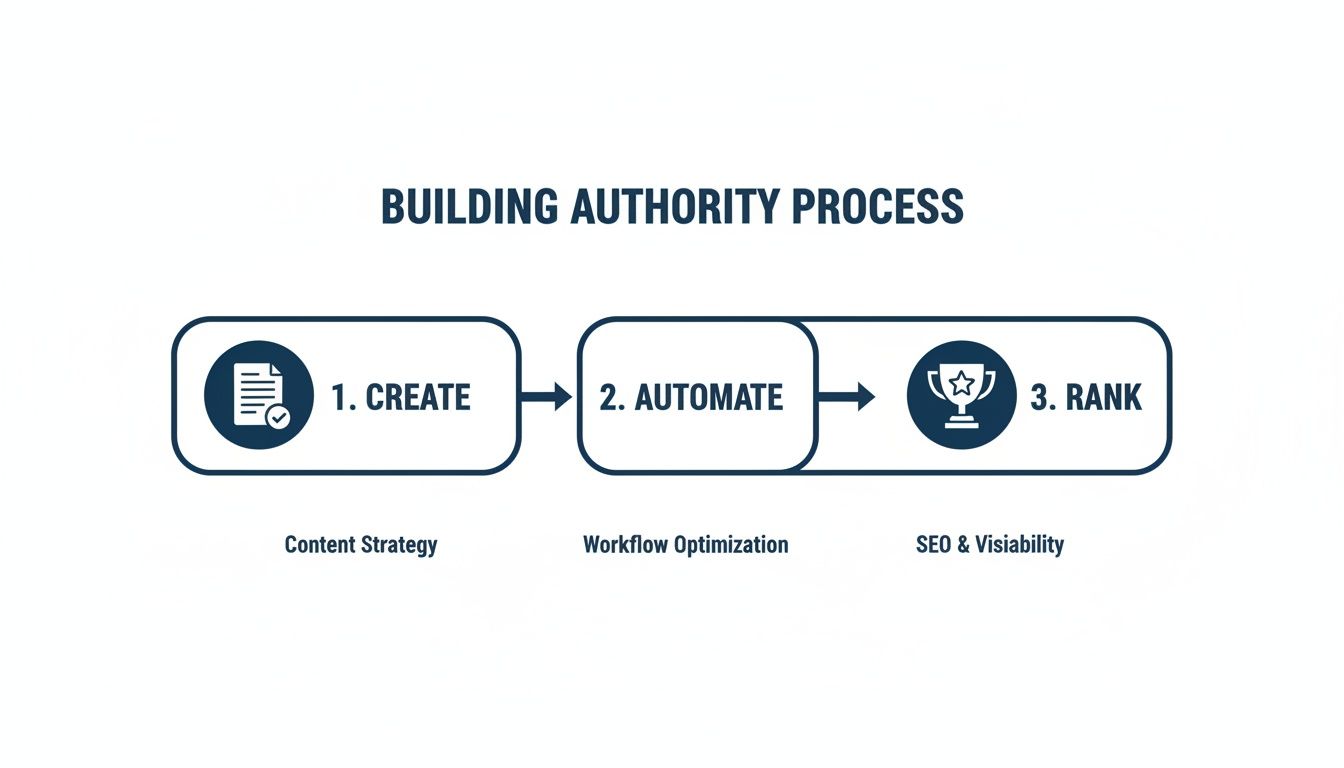
    Infographic illustrating the 3-step building authority process: create, automate, and rank for SEO visibility.

    This visual shows exactly how targeted content creation and smart automation lead directly to better search visibility and a stronger market presence.

    Map Out a 30-Day Social Media Calendar

    Want to really blow your potential clients away? Bring a pre-built, 30-day social media calendar to the listing appointment. This single document turns the vague promise of "social media marketing" into a concrete, week-by-week action plan. It shows an incredible amount of preparation and strategic thinking.

    This isn't just about posting "Just Listed" a few times. A truly effective social calendar tells a story, building excitement from the pre-launch phase all the way to the closing table.

    Here's a sample of what that looks like in practice. Presenting this shows sellers you have a sophisticated plan to create buzz at every stage.

    Sample 30-Day AI-Powered Social Media Calendar

    Week Post Type Platform Focus Key Marketing Angle
    Week 1 Coming Soon Teasers & Sneak Peeks Instagram Stories & Reels Build curiosity by showing off unique features (the custom tile, the backyard view) without giving it all away. Create a sense of anticipation.
    Week 2 Grand "Just Listed" Launch & Video Tour Facebook & Instagram Feed Go live with the best photos and the full video tour. The goal here is maximum impact and a clear call-to-action to schedule a showing.
    Week 3 Open House Push & Neighborhood Spotlight Facebook Events & Local Groups Drive foot traffic for the open house. We'll also highlight the lifestyle—the local coffee shop, the nearby park, the great schools.
    Week 4 Feature Deep Dive & Behind-the-Scenes LinkedIn & Instagram Stories Focus on one standout feature, like the chef's kitchen or the home office. Keep the conversation going with behind-the-scenes content.

    Walking into a meeting with this calendar in hand is a total power move. It proves you're not just thinking about getting the listing—you're already executing the plan to get it sold for top dollar. It makes your commission feel earned before the ink on the contract is even dry.

    Present Your Competitive Edge with Data

    Let's be honest. Sellers are numb to the same old pitch. Every agent walks in promising the "best service" and "top dollar." To actually get noticed, you have to stop telling them you're better and start showing them with cold, hard proof.

    This is where a sharp competitive analysis becomes your secret weapon. It’s the tool that shifts your entire listing presentation from a pile of opinions to a fact-based argument for why your marketing strategy will smoke the competition.

    A man outdoors views real estate data and a house graphic on a tablet screen.

    The classic CMA is useful, but it only looks in the rearview mirror—it shows what’s already sold. A modern competitive analysis, on the other hand, puts a spotlight on the active competition. You'll evaluate how their current marketing stacks up against the killer plan you've already built for your client.

    Suddenly, the conversation isn't just about price. It's about marketing effectiveness, which is exactly where you can prove your undeniable value.

    Analyze Your Competitors' Digital Footprint

    Your mission is to create a crystal-clear "Us vs. Them" story backed by evidence. Start by pinpointing the top three to five comparable homes currently for sale in the seller’s immediate area. Don't just stop at square footage and bed/bath counts. You’re going to run a full digital marketing audit on each one.

    Keep the analysis simple and visual. You want a homeowner to glance at it and immediately see the difference. You're essentially grading the competition's online presence to expose the weak spots you're about to exploit.

    • Photo and Video Quality: Are the photos crisp and professional, or are they dark, blurry shots from an iPhone? Did they invest in a real video tour, or is it just a cheesy slideshow set to elevator music?
    • Property Description Persuasiveness: Does the description read like a laundry list of features ("3bd, 2ba, granite…"), or does it paint a picture of the lifestyle? Is it written to catch a buyer’s eye on Zillow?
    • Portal Optimization: Check out the listing on the big portals. Is the agent taking advantage of all the bells and whistles, like 3D tours and interactive floor plans? Or is it a bare-bones effort?
    • Social Media Presence: Did the agent even bother to post the home on social media? If they did, is it a sad "Just Listed" graphic with two likes (one from their mom), or is there actual engagement?

    When you document these marketing gaps, you create a powerful visual contrast. You're no longer just another agent promising to do a good job; you're a marketing strategist who has already identified the flaws in the competition's playbook and is ready to execute a superior one.

    The most powerful moment in a listing presentation is when you can slide a one-sheet across the table that visually compares your multi-platform, AI-optimized marketing plan against a competitor’s single, weak MLS photo and generic description. That single piece of paper makes your value tangible.

    Build a Simple Competitive Analysis One-Sheet

    Don't bury the seller in a 20-page report they'll never read. You need a single, clean document that tells the story in a few seconds. Think of it as a report card for the competition where you’ve already secured the A+.

    This one-sheet should be something you can physically leave behind. It will keep selling for you long after you’ve left the kitchen table.

    Here’s a dead-simple way to frame that "Us vs. Them" comparison:

    Marketing Component Their Approach (Competitor Listing) Our Strategy (Your Plan)
    Photography 12 dark, phone-quality photos 35+ professional HDR photos & drone shots
    Video Tour None provided A 90-second cinematic lifestyle video
    Property Description A generic, 3-sentence paragraph AI-optimized descriptions for Zillow & MLS
    Social Media One "Just Listed" post on Facebook Full 30-day calendar with daily content
    AI Visibility Not optimized for modern search Schema markup for Google & ChatGPT

    This simple chart does more to justify your commission than any script you could memorize. It proves you don't just stick a sign in the yard and pray. You execute a sophisticated marketing campaign designed to make every other property on the block look like an amateur effort.

    When you present your edge with clear, compelling data, the decision to hire you becomes less of a choice and more of an obvious conclusion.

    Assemble Your High-Impact Presentation Assets

    Your digital strategy is solid, but sellers are still human. To truly grasp the power of your plan, they need to see it, touch it, and feel it. This is where you bring your entire marketing blueprint to life with a collection of high-impact assets that make your value impossible to ignore.

    Think about it: while other agents are talking about what they'll do, you'll be handing it over. This simple act gives you a massive psychological edge. It instantly shifts the dynamic from a sales pitch to a working session, proving you’re not just prepared—you’re already invested in their success.

    From Digital Concept to Tangible Proof

    The goal here is to leave behind a professional package that keeps selling for you long after you’ve left the kitchen table. These aren’t just printouts; they’re physical evidence of your superior marketing machine. They show you’ve put real time and strategic thought into their specific property before even asking for the listing.

    Your package should include a few key items that perfectly mirror the digital plan you've built. Each piece serves as a powerful, physical reminder of the expertise you bring.

    • The 30-Day Social Media Calendar: Don’t just show this on your iPad. Print it out on high-quality paper. When a seller can actually hold a detailed, week-by-week marketing schedule, the vague idea of "social media promotion" becomes a concrete and seriously impressive reality.
    • AI-Crafted Property Descriptions: Bring printed copies of the different property descriptions you generated, each one tuned for a specific platform. Have one for Zillow, another for the MLS, and maybe a third for a luxury portal if it fits the property.
    • The Competitive Analysis One-Sheet: This is your knockout punch. A single, clean page that visually stacks your comprehensive marketing plan against the lackluster efforts of competing listings.

    When a seller sees a detailed, multi-platform plan laid out in front of them, it builds immediate and lasting trust. It’s no longer just your word against another agent's; it's your tangible, documented strategy against their vague promises.

    Translating Tech into Tangible Benefits

    A lot of agents get nervous talking about AI or search visibility, worrying it will go over a seller's head. The secret is to ditch the jargon and focus entirely on the benefit to them. You don't need to explain how the car's engine works—just that it will get them where they want to go, faster.

    It all comes down to simple, benefit-driven language. Frame every technical piece of your listing presentation marketing strategy around the outcomes that matter most to a seller: more qualified buyers, a faster sale, and a better final price.

    Here’s a simple way to explain these powerful features so they land with maximum impact:

    Technical Feature What to Say to the Seller
    AI-Optimized Descriptions "We write descriptions specifically for how sites like Zillow show homes to buyers. This helps us attract more qualified people who are actively searching for a home just like yours."
    Schema Markup for AI "We add a special layer of code to your listing that helps tools like Google and ChatGPT understand its best features. This means when someone asks AI for homes with a great backyard in this area, yours is more likely to be recommended."
    Portal-Specific Strategy "Buyers behave differently on Zillow than they do on Realtor.com. We create a slightly different marketing angle for each platform to make sure your home gets noticed everywhere."

    By translating tech features into clear benefits, you demystify the process and turn your advanced methods into a powerful selling point. You can find more ideas for building a compelling story in our other guides, like the one on improving your real estate marketing blog.

    The Final Package

    Assemble these documents in a clean, professional folder. This isn't just a pile of papers; it's a physical representation of your commitment and expertise. When you walk into that appointment, you’re not just bringing your laptop and a smile. You’re bringing a fully-formed, tangible marketing campaign ready for deployment.

    This level of preparation is what separates the true marketers from the average agent. It proves to homeowners that you’re not just there to get a listing—you’re there to execute a winning strategy designed specifically for them.

    From Presentation to Performance: Execute and Measure

    Winning the listing is a fantastic feeling, but it’s really just the starting line. Now, it's time to execute the very listing presentation marketing strategy that got you the job. Your reputation is officially on the line, and flawlessly delivering on that 30-day plan is how you build the trust that turns one client into five.

    This isn't just about going through the motions. You need to keep your seller in the loop with simple, consistent updates on how the marketing is performing. That transparency is everything—it proves you’re not just talk and reinforces that they made the right call in hiring you. They need to see that the powerful marketing engine you described is fired up and working hard.

    Show, Don't Just Tell: Tracking What Matters

    You don't need to drown your clients in a sea of analytics. The key is to focus on a handful of high-impact metrics that clearly demonstrate momentum. These data points are the proof in the pudding, showing that your strategy is getting eyeballs on their home.

    Here's what I always share with my clients:

    • Portal Views & Saves: A simple weekly screenshot from Zillow or your MLS dashboard showing total views and saves is powerful. It’s the digital version of foot traffic, and it’s a number sellers easily understand.
    • Social Media Buzz: Give them the highlights. How many people did the "Just Listed" post reach? How many likes and comments did the video tour get? Make sure to point out any direct messages or inquiries that came from platforms like Facebook or Instagram.
    • Website Clicks: If you built a dedicated property website, share the number of unique visitors and, more importantly, how long they stuck around. This shows real, dedicated interest.

    Your marketing plan shouldn't be a "set it and forget it" document. It’s a dynamic roadmap. When you show a seller how you track performance, you prove you're an agent who measures, adapts, and holds yourself accountable. That's what builds unshakable confidence and turns them into your biggest fans.

    This feedback loop is your secret weapon. By seeing what’s resonating—and what’s falling flat—you can make smart, agile adjustments.

    For example, maybe that Instagram Reel you posted of the backyard got way more engagement than you expected. Great. That’s a clear signal to put a small ad spend behind it to amplify its reach even further.

    This whole process of executing, measuring, and refining your plan brings your presentation full circle. It validates everything you promised, cementing your status as a data-savvy marketer who delivers on their word. That’s how a successful sale becomes the seed for your next wave of business.

    Your Questions, Answered

    Jumping into a new way of marketing your listings is bound to bring up a few questions. Let's tackle some of the most common ones so you can feel confident putting this strategy to work.

    How Tech-Savvy Do I Really Need to Be?

    Honestly, not very. That’s the whole point of these new tools. You don't need a computer science degree or any knowledge of coding to make this work for you.

    Platforms like ListingBooster.ai were built specifically for real estate agents, not developers. If you can type in a property address and click a button, you're golden. The system handles all the heavy lifting, generating everything from portal-ready descriptions to social media plans and competitor reports. The focus is on your strategy, not your technical abilities.

    Think of this technology as your marketing assistant. It takes care of the tedious, time-consuming tasks so you can get back to what you do best: connecting with clients and closing deals.

    How Do I Talk About AI With a Seller and Not Sound Like a Robot?

    Great question. The key is to keep it simple and laser-focused on the benefits for them. Homeowners don't care about the intricacies of schema markup or natural language processing. They just want to know you have a plan to sell their home faster and for more money.

    Translate the tech into tangible results.

    • Instead of: "We use AI to optimize for search algorithms."
    • Try this: "Our marketing tools ensure that when serious buyers search for homes like yours online, your property is front and center."
    • Instead of: "Our content is optimized for ChatGPT."
    • Try this: "When people use new AI assistants to ask about homes in the area, our strategy helps make sure your property is one of the first they see."

    Frame every feature as a direct advantage for the seller: more eyes on their listing, more qualified buyers through the door, and a stronger edge over competing properties. When you’re ready to see how these tools can fit into your business, you can explore the different pricing and feature options available.

    How Much Time Does It Take to Put Together an AI-Powered Presentation?

    This is where it gets really exciting. The tasks that used to eat up hours—writing compelling listing descriptions, digging up comps, and creating a social media schedule—can now be done in minutes.

    Using the right platform, you can generate an entire suite of custom marketing materials for a specific property in about 5 to 10 minutes. That’s it. This incredible efficiency means you can build a personalized, data-driven marketing plan for every single listing appointment, not just the luxury ones. It’s a total game-changer, allowing you to walk into every meeting better prepared than anyone else.


    Ready to build a listing presentation marketing strategy that wins before you even walk in the door? ListingBooster.ai generates a complete, AI-powered marketing suite in minutes. Start your free trial today and see the difference preparation makes. Visit us at https://listingbooster.ai.

  • 8 Unbeatable Real Estate Listing Presentation Ideas to Dominate 2026

    8 Unbeatable Real Estate Listing Presentation Ideas to Dominate 2026

    The modern real estate landscape demands more than a standard CMA and a firm handshake. Home sellers aren't just looking for an agent; they're seeking a strategic marketing partner who can navigate the complexities of AI-driven search and digital-first buyer expectations. A generic, one-size-fits-all approach is a relic of the past. To win in today's market, your real estate listing presentation must be a compelling demonstration of expertise, technological prowess, and a deep understanding of what truly motivates buyers.

    This guide moves beyond obvious advice, offering a comprehensive blueprint packed with actionable real estate listing presentation ideas designed to differentiate you from the competition. We'll explore how to leverage AI tools to automate your marketing, use data visualization to build undeniable trust, and create immersive digital experiences that secure the listing before you even leave the table. These strategies are engineered to prove your value, justify your commission, and position you as the definitive market leader.

    You'll discover how to transform a standard presentation into a dynamic, persuasive experience that addresses a seller's most pressing questions: How will you market my home effectively? How will you attract the right buyers? And how will you secure the best possible price? From interactive property tours to data-rich market analysis and compelling buyer-focused narratives, each idea provides a clear path to execution. Prepare to replace your outdated binder with a powerful toolkit that not only showcases properties but also solidifies your authority and wins more business.

    1. Virtual Property Tours & 3D Walkthroughs

    Showcasing a property with an immersive virtual tour is one of the most powerful real estate listing presentation ideas an agent can employ. This strategy moves beyond static photos, offering a dynamic, 24/7 open house that allows potential buyers to digitally walk through a home from anywhere in the world. Using technology like Matterport, these tours create a realistic 3D model of the property, giving buyers a true sense of the space, layout, and flow.

    A brightly lit and well-decorated living room featuring a blue sofa, area rug, hardwood floors, and a mirror.

    When presented to a seller, a virtual tour demonstrates your commitment to leveraging cutting-edge marketing to attract the most qualified buyers. It immediately positions you as a tech-savvy agent dedicated to maximizing the property's exposure. This approach is invaluable for reaching out-of-town buyers and significantly reduces the number of casual, unqualified physical showings.

    How to Implement This Strategy

    To effectively integrate this into your listing presentation, come prepared with a sample tour on a tablet or laptop. Show the seller how a potential buyer can navigate from room to room, view floor plans, and even measure spaces. Explain that platforms like Zillow and Realtor.com often prioritize listings with 3D tours, leading to more views and higher-quality leads.

    Actionable Tips for Maximum Impact:

    • Create Highlight Reels: Edit your full virtual tour into a 30 to 60-second video clip. This bite-sized content is perfect for sharing on Instagram Reels, TikTok, and Facebook to capture attention and drive traffic to the full interactive experience.
    • Optimize for Search: Pair your virtual tour with an AI-generated property description. Tools like ListingBooster can create keyword-rich narratives that enhance MLS and search engine discoverability, ensuring buyers find your immersive tour first.
    • Integrate Drone Footage: For properties with significant land or unique exterior features, begin your virtual tour with a dramatic aerial shot captured by a drone. This provides context and creates an impressive opening that hooks viewers instantly.
    • Showcase Your Tech Stack: In your presentation, don’t just offer the tour; explain why it works. Mention that it filters out less serious inquiries and attracts motivated buyers, saving the seller time and inconvenience. This frames the technology as a direct benefit to them.

    2. Comparative Market Analysis (CMA) Presentations with Data Visualization

    Presenting a data-driven Comparative Market Analysis (CMA) is a cornerstone real estate listing presentation idea that establishes you as a market expert. Instead of just listing comparable properties, this approach uses powerful data visualization tools like interactive charts, heat maps, and trend graphs to tell a compelling story about the market. This transforms a standard report into a strategic consultation, showing sellers precisely how their property fits into the current landscape of active, pending, and sold listings.

    A vibrant community street lined with lush trees, charming storefronts, outdoor seating, and a 'Community Guide' banner.

    When you walk into a listing appointment armed with a visually engaging CMA, you immediately differentiate yourself from competitors who rely on simple printouts. This method demonstrates meticulous preparation and a deep understanding of market dynamics, building trust and justifying your recommended pricing strategy. By framing the conversation around clear, digestible data, you position yourself as a data-backed advisor, not just a salesperson.

    How to Implement This Strategy

    To effectively use this strategy, leverage modern real estate analytics platforms to build a professional, branded CMA. During your presentation, use a tablet or laptop to walk the seller through interactive elements, such as a map showing the proximity of comps or a chart illustrating average days on market over time. Explain what each piece of data means for their sale, turning complex market information into a clear roadmap for success.

    Actionable Tips for Maximum Impact:

    • Create Reusable Templates: Use tools to build branded CMA templates. This allows you to generate a comprehensive, visually appealing market analysis in minutes, ensuring consistency and professionalism for every listing appointment.
    • Visualize Key Insights: Don’t just state facts; show them. Use a bar chart to compare the seller's home features against recent sales or a line graph to show pricing trends in their specific neighborhood. Visuals make complex data easy to understand and remember.
    • Leverage Predictive Analytics: Incorporate data from services like Altos Research that provide predictive market analytics. Showing sellers where the market is headed, not just where it has been, demonstrates a forward-thinking approach that helps them make more informed decisions.
    • Repurpose CMA Content: Transform key data points and charts from your CMA into social media graphics or a short video. Share these as "Local Market Updates" on platforms like LinkedIn and Instagram to build your authority and attract future seller leads.

    3. Before-and-After Renovation/Staging Narratives with Progress Documentation

    Transforming a property’s story from "as-is" to "aspirational" is a powerful real estate listing presentation idea that demonstrates tangible value. This strategy involves documenting a home's renovation or staging process and presenting it as a compelling before-and-after narrative. It’s visual storytelling that shows sellers exactly how you can maximize their property's potential and justify a higher asking price, moving beyond promises to provable results.

    An augmented reality tablet displays a virtually furnished room contrasting with the empty living space.

    Presenting this concept to a seller positions you not just as an agent, but as a project manager and marketing visionary. By showcasing past "project" portfolios, you prove your ability to oversee transformations that yield a high return on investment. This approach is especially effective for fixer-uppers, outdated homes, or properties that need significant decluttering and staging to appeal to modern buyers.

    How to Implement This Strategy

    During your listing presentation, bring a digital or physical portfolio showcasing a past transformation. Walk the seller through the journey: start with the initial "before" photos, show mid-renovation progress shots, and culminate with the stunning "after" images. Explain the design choices, the budget, and most importantly, the final sale price compared to the initial valuation. This creates a clear, undeniable case for your expertise.

    Actionable Tips for Maximum Impact:

    • Create Transformation Reels: Edit the progress photos and videos into a quick, 15- to 30-second reveal video for Instagram Reels or TikTok. HGTV-style transformation content is highly shareable and can dramatically increase your online visibility and authority.
    • Narrate the 'Why': When posting, write compelling captions that explain the design philosophy. Frame choices around buyer psychology, such as using a neutral color palette to create a "blank canvas" or opening a wall to enhance "flow and family connection."
    • Show the ROI: In your social media posts and listing presentation materials, always include the numbers. Detail the renovation investment and the resulting increase in sale price. This data-driven approach builds immense credibility with sellers and investor clients.
    • Document Everything: Start taking photos and videos from day one, even before any work begins. Capture the messy, in-progress stages. This authentic documentation makes the final reveal more dramatic and relatable, building an engaged audience that follows the journey.

    4. Lifestyle & Community Integration Presentations

    Selling a home is about selling a lifestyle, not just bricks and mortar. This is where lifestyle and community integration becomes one of the most compelling real estate listing presentation ideas. This strategy elevates your marketing by showcasing the property within its broader community context, highlighting local amenities, schools, parks, dining, and the overall neighborhood vibe. It answers the buyer’s unasked question: "What would my life be like if I lived here?"

    Presenting this to a seller demonstrates that you understand the emotional drivers behind a purchase. You’re not just marketing their house; you’re marketing the entire experience of living in their community. This is especially powerful for attracting relocating buyers who are unfamiliar with the area and builds your authority as a true local market expert.

    How to Implement This Strategy

    In your listing presentation, present a pre-made "Neighborhood Guide" for the seller's area. This can be a digital slideshow or a high-quality printout. Feature a map highlighting key spots like the best local coffee shop, the closest park, and top-rated schools. Explain how this content will be used across social media, in blog posts, and within the property listing itself to attract buyers looking for that specific lifestyle.

    Actionable Tips for Maximum Impact:

    • Create Cornerstone Content: Develop comprehensive neighborhood guides on your website that become a go-to resource. A blog post titled "The Ultimate Guide to Living in [Neighborhood]" can attract organic search traffic and establish you as the area expert.
    • Show, Don't Just Tell: Film short video tours of neighborhood hotspots. A quick walkthrough of the local farmers market or a tour of a popular park provides authentic, engaging content that photos alone cannot capture.
    • Leverage Local Voices: Interview local business owners or long-time residents for your blog or social media. Their authentic testimonials add a layer of credibility and community connection that resonates deeply with potential buyers.
    • Use AI for Hyper-Local Content: Utilize a tool like ListingBooster to generate neighborhood-specific descriptions and social media captions. This ensures your content is rich with local keywords, enhancing discoverability and framing the property within its desirable community. This is a key part of your real estate listing presentation ideas that shows sellers you are efficient and effective.

    5. Buyer-Focused Educational Series & ROI Breakdown Presentations

    Shifting the focus from a simple property showcase to a detailed financial analysis is a sophisticated real estate listing presentation idea that positions you as a true market advisor. This strategy involves presenting the property not just as a home, but as a sound financial asset. By creating educational content that breaks down the return on investment (ROI), potential appreciation, and cost of ownership, you demonstrate a level of financial acumen that builds immense trust and justifies your value far beyond transactional coordination.

    When you present this to a seller, you're not just showing them a marketing plan; you're showing them how you will attract serious, financially savvy buyers. By arming potential buyers with compelling data on investment potential and tax benefits, you pre-emptively answer their biggest questions and build confidence in their decision to make a strong offer. This approach is particularly effective for investment properties, luxury homes, and any listing where financial upside is a key selling point.

    How to Implement This Strategy

    In your listing presentation, present a sample "Buyer Financial Guide" for the seller’s property. This can be a one-page PDF or a slide that includes projected appreciation based on historical data, a cost-of-ownership calculator (including taxes, insurance, and HOA), and potential rental income analysis. Explain to the seller that this content will be used in marketing materials to attract qualified buyers who are thinking long-term, effectively filtering for quality leads.

    Actionable Tips for Maximum Impact:

    • Collaborate with Experts: Partner with a trusted local mortgage lender and a CPA to co-create and verify your financial breakdowns. This adds a layer of credibility and ensures all information is accurate and compliant, while also providing cross-promotional opportunities.
    • Create Interactive Calculators: Develop a simple, visual calculator using Google Sheets or an embedded website widget that allows buyers to input their own financial details to see their estimated monthly costs and potential equity growth. This interactive element is highly engaging.
    • Publish Market Updates: Create a monthly or quarterly "Market Update + Financial Impact" report. This content can be shared via email newsletters and social media, consistently reinforcing your expertise and keeping your audience informed on rate changes and appreciation trends.
    • Showcase Testimonials as Proof: Instead of just claiming a property is a good investment, use real data. Share anonymized testimonials or case studies like, "My clients who purchased in this neighborhood saw an average appreciation of X% over the last five years." Always ensure you have permission and use proper attribution.

    6. Social Proof & Testimonial Presentation Strategy with Video Case Studies

    Leveraging social proof is one of the most persuasive real estate listing presentation ideas, as it shifts the focus from what you say you can do to what you have proven you can do for others. This strategy involves compiling past client testimonials, success stories, and compelling video case studies to build immediate credibility and trust. Instead of relying on generic text reviews, this method uses authentic video interviews and quantified results to show a seller that you deliver on your promises.

    Presenting a video compilation of satisfied clients immediately addresses a seller's primary concern: "Can this agent get the job done for me?" It demonstrates your effectiveness through peer validation, positioning you as a trusted advisor with a track record of success. This approach is particularly powerful for overcoming objections and differentiating your services in a competitive market.

    How to Implement This Strategy

    Integrate this directly into your presentation by opening with a 60-second highlight reel of your best video testimonials. Play this on a tablet or laptop to set a powerful, trust-building tone from the very beginning. Follow up by showing them your Instagram grid featuring weekly client success stories or a LinkedIn article with an embedded video from a client who had a similar property. This tangible proof builds confidence and makes your promises feel more concrete.

    Actionable Tips for Maximum Impact:

    • Ask Targeted Questions: When recording testimonials, ask specific questions like, "What was your biggest worry before listing your home?" and "How did our strategy help you achieve your goals?" This elicits detailed, authentic responses rather than generic praise.
    • Quantify the Success: Encourage clients to mention specific results. A testimonial that says, "She sold our home for 8% over asking in just 15 days," is far more impactful than one that just says, "She did a great job."
    • Create a Testimonial Library: Organize your video case studies by client type, such as first-time sellers, luxury property owners, or investors. This allows you to present the most relevant success story to each potential client, making the proof highly personal and effective.
    • Amplify with AI-Generated Content: Use tools to create compelling social media captions to pair with your testimonial videos. This can help you frame the success story with relevant market insights, extending its reach and impact. You can find more strategies for blending AI and marketing on the ListingBooster blog.

    7. Market Positioning & Authority Content Calendar Strategy

    One of the most powerful real estate listing presentation ideas is to win the seller's trust before you even walk through their door. A proactive authority content calendar strategy does exactly that. Instead of only posting about active listings, this approach involves consistently publishing valuable, non-promotional content that positions you as the go-to local market expert. Think market updates, neighborhood guides, home maintenance tips, and buyer education shared across your platforms for 30-90 days.

    When you arrive at the listing presentation, you're not just an agent; you're the trusted authority the seller has been following online. This strategy transforms the conversation from "Why should I hire you?" to "How do we get started?". It demonstrates your market knowledge, marketing prowess, and dedication long before the formal pitch, making the decision to sign with you feel natural and obvious.

    How to Implement This Strategy

    In your listing presentation, showcase your content calendar on a tablet or in your handout. Display a 30-day grid filled with topics like "Market Monday," "Buyer Tips Wednesday," and "Local Spotlight Friday." Explain that this consistent, high-value content not only builds your expert reputation but also creates a warm audience of potential buyers for their property. Show them how your online presence is designed to educate, engage, and ultimately attract the right people.

    Actionable Tips for Maximum Impact:

    • Automate Your Calendar: Use an AI tool to instantly generate a 30-day, hyper-local content calendar. This saves hours of brainstorming and ensures a steady stream of relevant, authoritative posts that build your brand while you focus on clients. Platforms like ListingBooster for Agents are designed for this purpose.
    • Theme Your Content Days: Structure your week with clear themes. For example, Monday for market data, Tuesday for home improvement tips, Wednesday for mortgage info, Thursday for neighborhood deep dives, and Friday for a community event spotlight. This creates a predictable and engaging rhythm for your audience.
    • Leverage Psychological Triggers: Weave proven psychological frameworks into your content. Discuss inventory trends to create a sense of scarcity, highlight recent sales to show social proof, and feature local lifestyle content to tap into aspirational desires.
    • Batch and Schedule: Dedicate a few hours every two weeks to create and schedule all your content at once. Use scheduling tools like Buffer or Later to automate posting across all platforms, ensuring you remain consistent even during your busiest periods. This makes the strategy manageable and sustainable.

    8. Interactive Property Features & Buyer Visualization Tools

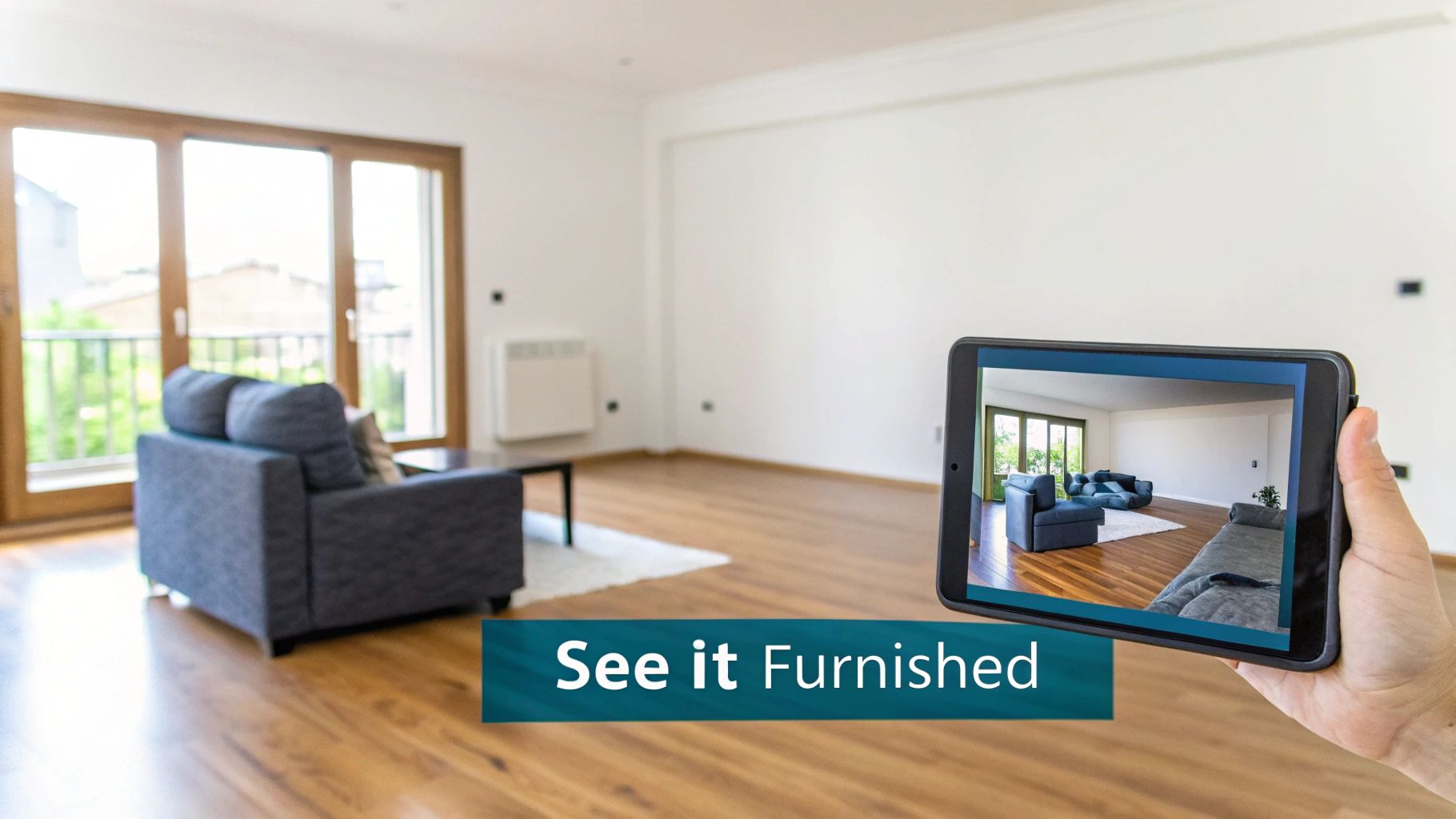
    Going beyond static photos, interactive visualization tools are some of the most innovative real estate listing presentation ideas available. This approach empowers potential buyers to emotionally connect with a space by helping them overcome visualization barriers. Using technologies like augmented reality (AR) for virtual furniture placement or interactive room dimension tools, you can transform an empty room into a buyer's potential future home, right before their eyes.

    When you present these tools to a seller, you demonstrate a sophisticated, buyer-centric marketing strategy. This shows you're not just listing their property; you're providing a solution that helps buyers make confident, decisive choices. By reducing uncertainty, you attract more serious offers and position yourself as a tech-forward agent who understands modern consumer behavior.

    How to Implement This Strategy

    During your listing appointment, use a tablet to showcase an AR application. Let the seller virtually place a sofa or a dining table in an empty room, demonstrating how a buyer can do the same. Explain that this technology is particularly powerful for vacant properties, as it helps buyers envision a lived-in space without the cost of physical staging. Frame these tools as "confidence builders" that reduce surprises and accelerate the buyer's decision-making process.

    Actionable Tips for Maximum Impact:

    • Create AR Demo Reels: Record a short, 30-second video of yourself using an AR tool to furnish a room. Share it on Instagram Reels and TikTok with a caption like, "What would YOU do with this space?" This showcases your tech and engages a wider audience.
    • Pair Visualization with Rich Descriptions: Interactive tools work best when supported by detailed context. Use a tool like ListingBooster to generate AI property descriptions that are rich with specifics about dimensions, finishes, and potential uses, giving buyers the information they need to visualize effectively.
    • Showcase Before-and-After Content: Combine AR or virtual staging with photos of the empty space. This powerful before-and-after contrast creates a compelling visual narrative that highlights the property's full potential and is perfect for social media and property websites.
    • Train Your Team Thoroughly: Before promoting these tools, ensure you and your team are experts in using them. A clunky or unprofessional demonstration can undermine your credibility. A smooth, confident presentation reinforces your image as a knowledgeable professional.

    8-Point Comparison of Real Estate Listing Presentation Ideas

    Presentation Type Implementation Complexity 🔄 Resource Requirements 💡 Expected Outcomes 📊 Ideal Use Cases ⚡ Key Advantages ⭐
    Virtual Property Tours & 3D Walkthroughs 🔄 Medium–High — professional 360° scans, platform setup 💡 Matterport/photographer, drone, hosting, good internet 📊 Higher qualified leads; 24/7 showings; reduced in-person tours ⚡ Out‑of‑town buyers, luxury listings, high-volume markets ⭐ Immersive engagement; differentiates agent; better conversion
    Comparative Market Analysis (CMA) Presentations 🔄 Medium — data aggregation and modeling, regular updates 💡 MLS/analytics access (Redfin/CoreLogic), visualization tools 📊 Justified pricing; increased seller confidence; fewer disputes ⚡ Pricing strategy, listing appointments, competitive markets ⭐ Data-backed credibility; supports pricing decisions
    Before-and-After Renovation/Staging Narratives 🔄 Medium — coordinated documentation and timeline management 💡 Photographer/stager, renovation tracking, editing time 📊 High social engagement; increased perceived value; stronger offers ⚡ Fixer‑uppers, renovation projects, investor listings ⭐ Demonstrates tangible value-add; viral social content potential
    Lifestyle & Community Integration Presentations 🔄 Medium — research, compliance (Fair Housing), curation 💡 Local research, maps, interviews, multimedia assets 📊 Evergreen authority content; attracts relocators; emotional appeal ⚡ Relocation buyers, neighborhood‑centric listings ⭐ Positions agent as community expert; builds trust
    Buyer-Focused Educational Series & ROI Breakdown 🔄 Medium–High — financial modeling and compliance review 💡 Lender/CPA partners, calculators, up‑to‑date market data 📊 Increased buyer confidence; positions agent as advisor ⚡ First‑time buyers, investors, high‑financial‑focus clients ⭐ Financial credibility; supports premium commission
    Social Proof & Testimonial Video Case Studies 🔄 Medium — client outreach & production coordination 💡 Video production, client releases, editing resources 📊 Strong trust lift and higher conversion rates ⚡ Listing presentations, trust‑building, recruiting ⭐ Authentic third‑party validation; persuasive social proof
    Market Positioning & Authority Content Calendar Strategy 🔄 Low–Medium — planning discipline and regular updates 💡 Content tools (ListingBooster), scheduling, analytics 📊 Consistent inbound leads; cumulative authority growth ⚡ Long‑term branding, lead generation, team consistency ⭐ Scalable expertise; reduces ad‑hoc content work
    Interactive Property Features & Buyer Visualization Tools 🔄 High — AR/VR integration and user training required 💡 AR platforms, virtual staging services, device compatibility 📊 Faster decisions; higher buyer confidence; qualified showings ⚡ Empty homes, tech‑savvy buyers, luxury/modern listings ⭐ Reduces visualization barriers; strong innovation differentiator

    From Presentation to Partnership: Building Your Unbeatable Strategy

    The days of a one-size-fits-all listing presentation are over. As we've explored, winning in today's competitive market requires a multi-faceted approach that blends cutting-edge technology, deep market analysis, and authentic human connection. The real estate listing presentation ideas shared in this guide are not just individual tactics; they are building blocks for a comprehensive, client-centric strategy designed to showcase your undeniable value.

    Moving forward, your goal is to transition from simply presenting data to telling a compelling story. A powerful narrative is what transforms a standard Comparative Market Analysis into a clear vision of market potential. It’s what elevates a simple property tour into an immersive lifestyle experience and turns client testimonials into undeniable social proof of your expertise. Each idea, from interactive buyer visualization tools to data-rich CMA presentations, serves a singular purpose: to answer the seller's unspoken questions and eliminate any doubt that you are the best agent for the job.

    Synthesizing Your Strategy for Maximum Impact

    The true power of these concepts is realized when they are integrated. Imagine a presentation that begins with a hyper-personalized video message, transitions into an interactive 3D walkthrough, and is supported by a visually stunning CMA that uses heat maps to illustrate buyer demand. You can then pivot to a documented before-and-after staging success story, reinforcing your value proposition with hard evidence of ROI.

    This integrated approach demonstrates a level of preparation and strategic thinking that immediately sets you apart. It shows sellers you are not just there to list their home; you have a concrete, sophisticated plan to market it effectively and attract the right buyers.

    Key Takeaway: Your presentation should be a seamless journey. It should guide the seller from understanding the market data (the 'what') to appreciating your unique marketing strategy (the 'how') and, finally, to trusting your ability to deliver results (the 'why').

    Actionable Next Steps to Win More Listings

    To avoid feeling overwhelmed, start by selecting two or three ideas that resonate most with your personal brand and target clientele.

    • For the tech-savvy agent: Begin by mastering Virtual Property Tours and integrating Interactive Property Features into your digital assets. This positions you as a forward-thinking expert who leverages technology for a competitive edge.
    • For the data-driven analyst: Double down on creating visually compelling CMA Presentations. Use data visualization to tell a story about market trends, absorption rates, and optimal pricing strategies.
    • For the master storyteller: Focus on building a library of Before-and-After Renovation Narratives and powerful Video Case Studies. Use these assets to emotionally connect with sellers and prove your ability to maximize a property's value.

    By mastering a few of these real estate listing presentation ideas first, you can build a solid foundation. Once you are comfortable, you can begin layering in other elements to create a truly unbeatable presentation. The ultimate objective is to make the seller’s choice feel less like a decision and more like an obvious conclusion. You aren't just another agent competing for their business; you are the indispensable partner they need to navigate the market and achieve their financial goals. This is how you transform a single presentation into a lifelong client relationship.


    Ready to create stunning, data-driven marketing content for your presentations in minutes, not hours? ListingBooster.ai uses AI to generate everything from compelling listing descriptions to market-focused social media campaigns, ensuring you walk into every appointment armed with professionally crafted materials. Elevate your next listing presentation by visiting ListingBooster.ai and discover how to automate your marketing and win more clients.

  • Listing Presentation Software for Agents: Win More Listings

    Listing Presentation Software for Agents: Win More Listings

    If you're still walking into listing appointments with a clunky folder stuffed with printed comps, it's time for a serious upgrade. Listing presentation software is no longer a "nice-to-have"—it's the new standard for agents who want to win in a crowded market. It swaps out those static, boring documents for a dynamic, data-rich experience that actually impresses today's sellers.

    Why a Polished Presentation Wins More Listings

    A smiling woman presents a tablet with a house image and a sign saying 'Digital FIRST PITCH' in a modern living room.

    Let's be honest, today’s homeowners expect a lot more than a simple Comparative Market Analysis (CMA). They want to see a clear, professional marketing plan that proves you know how to sell their home in a world dominated by Zillow, social media, and digital ads. A stack of paper doesn't just look unprepared; it feels completely out of touch.

    Your presentation is your first real chance to demonstrate your value. This isn't just about looking tech-savvy for the sake of it. It's about showing a potential client, right from the get-go, that you have a repeatable, strategic process to give their property the spotlight it deserves.

    The Pitfalls of "Old School" Presentations

    Relying on outdated methods can create friction and plant seeds of doubt before you even start talking. A hastily printed report can scream "last minute," while a generic, one-size-fits-all deck feels impersonal and lazy. The moment a seller asks a question you can't answer because your data is locked on paper, you start losing credibility.

    Here’s where traditional methods fall short:

    • Stale Data: The information is old the second the printer ink dries. You can't adapt to a new comp that hit the market an hour before your meeting.
    • Zero Engagement: Monologuing over a stack of papers is a surefire way to make a client's eyes glaze over. It's a lecture, not a conversation.
    • Massive Time Sink: Manually pulling comps, designing pages, and printing everything takes hours you could be spending on lead generation or client follow-up.

    The Digital Advantage

    This is where sophisticated listing presentation software for agents completely changes the game. Instead of just telling a seller what you're going to do, you can show them. You walk in with a polished, beautifully branded presentation on a tablet or laptop that’s interactive and loaded with live data.

    This is more than a simple upgrade—it's a fundamental shift in how you prove your expertise. You’re no longer just a reporter of static facts. You become a strategist, building a winning plan right alongside your client, which builds instant trust.

    To see just how big this shift is, let’s compare the old way with the new.

    Traditional vs. Modern Listing Presentations

    This table breaks down the difference between showing up with a folder and showing up with a modern, digital toolkit.

    Feature Traditional Method (Static PDF/Print) Modern Software (Dynamic & AI-Powered)
    First Impression Can appear dated, disorganized, or generic. Professional, tech-forward, and branded.
    Data & Comps Fixed data, can't be updated on the fly. Real-time MLS data, interactive maps, and charts.
    Interactivity None. A one-way presentation. Fully interactive; clients can engage with the data.
    Personalization Difficult and time-consuming to customize. Easily personalized for each client in minutes.
    Follow-Up A physical leave-behind that gets lost. Digital link for clients to review and share.
    Agent's Role Reporter of information. Trusted advisor and marketing strategist.

    The difference is night and day. Modern tools allow you to lead a collaborative, value-driven conversation that positions you as the obvious expert in the room.

    The industry is already moving in this direction at lightning speed. The market for the MLS listing software that powers these tools was valued at $5 billion in 2025 and is expected to skyrocket to around $14 billion by 2033. This explosion in growth shows that top agents are leaning heavily on better software to craft compelling, data-rich pitches that win over sellers. You can dig deeper into these real estate technology market trends to see where the industry is headed.

    Ultimately, a modern presentation proves you’re the right choice. It sets a professional tone for the entire relationship and shows sellers you have the strategy—and the tools—to deliver on your promises.

    Evaluating The Features That Actually Matter

    When you start shopping for listing presentation software, it's easy to get lost in a sea of sameness. Every platform flashes shiny templates and promises easy CMAs. But honestly, the features that will actually make a difference in your business are rarely the ones they lead with.

    To pick the right tool, you have to look past the slick marketing and zero in on the capabilities that save you time, amplify your marketing, and ultimately, put more money in your pocket. Think of it less like buying software and more like hiring a top-notch digital assistant—you want one that's smart, proactive, and genuinely makes your job easier.

    Beyond Basic Templates

    Sure, every platform has standard templates. That’s table stakes. The best software, however, goes way beyond that. You should be looking for platforms with AI-powered content generation. This is a game-changer. Imagine typing in a property address and getting back well-written MLS remarks, social media captions, and detailed property descriptions—all optimized for Zillow and Redfin. For a busy agent, that feature alone can easily save 10+ hours a week.

    Another must-have is truly integrated market analytics. The software should pull real-time data directly from the MLS, not just static, month-old reports. This lets you show sellers live, interactive charts and the absolute latest comps, turning your presentation from a boring report into a dynamic, hands-on strategy session.

    Automation and Intelligence Features

    The real magic happens with automation that cements your status as the go-to expert. Here are a few non-negotiable features you should look for:

    • Schema Markup Integration: This sounds technical, but it's a huge deal. Schema is code that helps search engines like Google understand your listing's content. Software that automatically generates this for you is essentially giving your listings a "VIP pass" to better placement in search results.
    • Brand Consistency Controls: This is critical, especially for teams and brokerages. The right tool lets you lock down brand colors, logos, and fonts. That way, every single agent's presentation looks polished and professional, reinforcing the brokerage's brand with every single pitch.
    • Fair Housing Compliance Scanners: Protecting your license is everything. Good platforms now include automated scanners that review your AI-generated copy for any words or phrases that could be flagged as discriminatory. It's a simple backstop that can save you from a massive headache.

    The goal isn't just to make a pretty presentation. It's to build a complete marketing machine for every listing. The right software handles the grunt work so you can focus on what you do best: connecting with clients and closing deals.

    There's a reason the real estate brokerage software market is projected to hit $14.15 billion by 2035—it’s all about these intelligent tools. According to recent market analysis, modern cloud-based systems can boost client engagement by up to 40% by using interactive, AI-driven visuals. For agents, that means more powerful, persuasive presentations. You can read more about the growth of real estate software tools and how it’s changing the game.

    When you're evaluating listing presentation software for agents, always focus on the outcome. Does it save you time? Does it make your marketing better? Does it protect your business? The answers will point you to the platform that will become a core part of your success. If you want to see these kinds of advanced features in action, check out our guide on AI-powered tools for real estate agents.

    Build a Winning Presentation in 5–10 Minutes

    The best listing presentation software gives you incredible power without a steep learning curve. We’ve all been there: you get a call for a last-minute listing appointment, and you need to look like you've been preparing for a week, not scrambling for an hour.

    With the right platform, you can actually go from a simple property address to a polished, data-rich presentation in less than ten minutes. I know that sounds like an exaggeration, but it's quickly becoming the new standard for top agents. The whole process is designed to get you out the door fast with a pitch that feels custom and compelling.

    It all starts with the property address. You plug that in, and the software’s AI engine gets to work, instantly drafting sharp MLS remarks, a social media rollout plan, and even copy for print flyers. This completely removes the creative guesswork and tedious writing that used to eat up hours of your time.

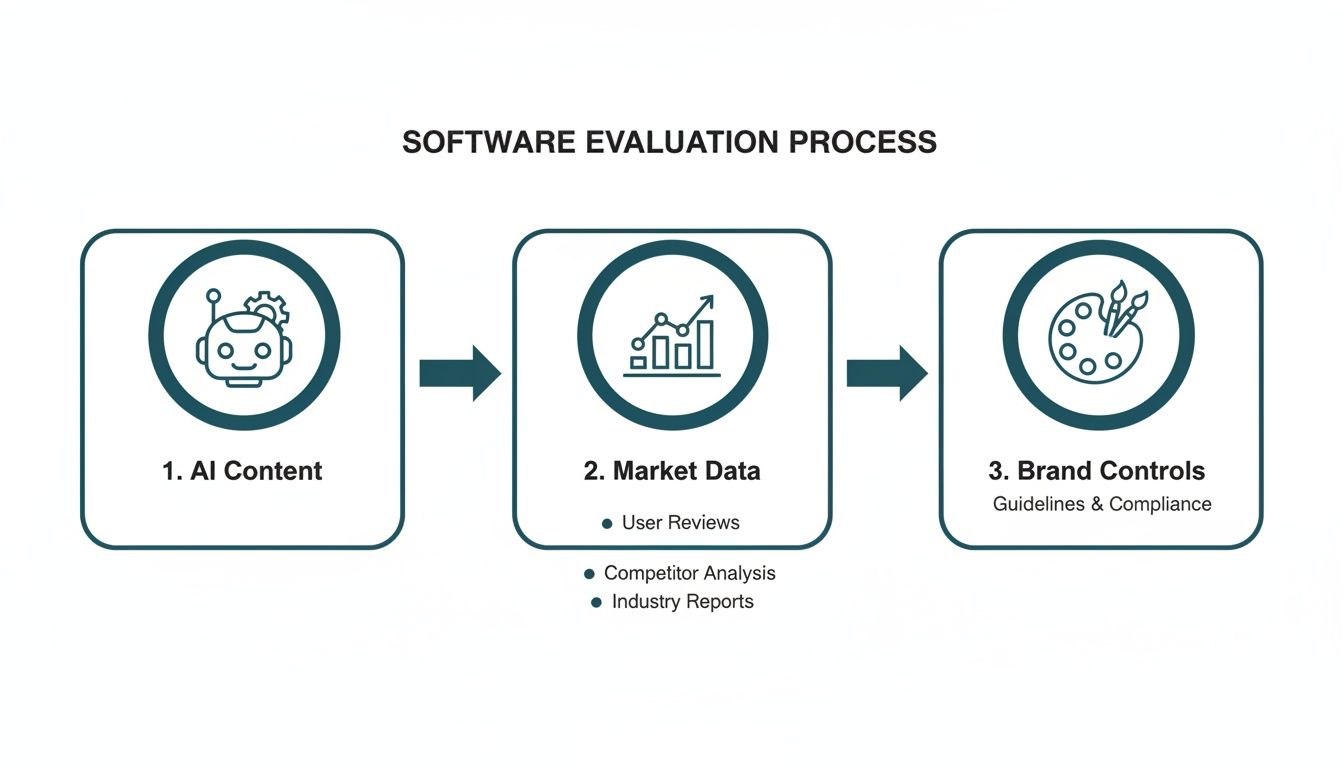
    This diagram shows how the three core elements work together to make this speed possible: smart AI content, real-time market data, and your own brand controls.

    Diagram illustrating a software evaluation process with steps: AI content, market data, and brand controls.

    Think of it as a smart system that layers AI-generated marketing copy on top of live data, then wraps it all up in your professional brand identity.

    Dial in Your Template and Branding

    After the heavy lifting of content generation is done, you get to the fun part: picking a template. Good platforms offer a range of designs, from clean and minimalist to high-end luxury.

    But here’s the magic—the moment you choose a template, your branding is automatically applied to every single page. Your logo, headshot, and brand colors are instantly populated, ensuring consistency from start to finish.

    This is what elevates your presentation from a generic data dump to a high-impact pitch. It establishes you as a serious professional before you even say a word. The seller sees a cohesive, polished package that screams attention to detail.

    The real goal here is to show you just how fast you can create something that genuinely wins business. It's about using the right tools to prove your value from the very first handshake, turning a rushed meeting into a confident, strategic conversation.

    A modern dashboard, for example, boils this entire workflow down to a few clicks.

    From Data to Done

    With your presentation built, you're ready to walk into that appointment. The final output isn't just a static PDF; it's a dynamic, digital-first asset you can present on a tablet, laptop, or even send as a link.

    Here's a quick recap of what you can knock out in just a few minutes:

    • Input Property Details: Just the address and a few basics.
    • Generate AI Content: Get instant MLS remarks, social media posts, and marketing copy.
    • Select a Template: Choose a professional design that matches the property and the client.
    • Apply Your Brand: Automatically add your logo, colors, and contact info everywhere.

    What used to be a frantic, multi-hour scramble is now a simple, almost effortless workflow. You arrive at your appointment not just prepared, but armed with a toolkit that immediately shows why you're the right agent for the job.

    Crafting a Narrative That Connects With Sellers

    Having powerful listing presentation software for agents gives you a serious edge, but let's be clear: the technology doesn't win the listing—you do. The best agents I know use their software as a storytelling tool, not just a data-dumping machine. It’s your narrative that turns cold, hard facts into a vision a seller can get excited about.

    Forget clicking through charts and graphs on autopilot. You need to build a story that taps into their hopes and fears. Remember, they aren't just selling a house; they're closing one chapter and starting another. Your presentation has to show you get that on a deep level.

    This means every feature, every statistic, and every marketing plan you show them has to be translated into a direct benefit. You’re the expert guide, confidently explaining how your modern, tech-forward approach gets them exactly what they want: a faster sale for the best possible price.

    From Tech Jargon to Tangible Benefits

    I see a lot of agents get bogged down explaining the nitty-gritty of their marketing tools. Here's a secret: sellers don't care about the technical details. They just want to know what's in it for them. Your job is to connect the dots.

    The easiest way to do this is with simple, powerful analogies. They make sophisticated concepts feel instantly understandable and valuable. This builds trust and positions you as a savvy guide, not some pushy tech salesperson.

    Here’s how you can reframe those complex features:

    • Instead of: "Our software generates schema markup for SEO."

    • Try this: "Think of this as a 'VIP guide for Google.' It tells search engines exactly what your home offers, making sure serious buyers find it the moment they start searching online."

    • Instead of: "We use AI to generate marketing descriptions."

    • Try this: "I use a special tool that helps me craft property descriptions proven to get more clicks on sites like Zillow. It means more qualified eyes on your listing from the second it goes live."

    That subtle shift in language makes a world of difference. It moves the entire conversation from "here's what my software does" to "here's what I do for you."

    The best presentations don't just show data; they interpret it. Your narrative should connect every chart, graph, and marketing plan directly back to the seller's ultimate goal—selling their home successfully and with as little stress as possible.

    Scripts That Build Confidence and Trust

    Think of your talking points as conversation starters, not a rigid script you have to memorize. They need to sound natural and give you the flexibility to adapt to each client's personality and questions. The goal is to steer the conversation, answer objections before they even come up, and consistently reinforce your value.

    Here are a few practical talking points you can weave into your next appointment:

    • When presenting the CMA: "The data here gives us a snapshot of where the market is right now. But my strategy isn't just to compete—it's to position your home so it stands out as the clear winner in this price range."
    • When showing marketing assets: "As you can see, we don't just list your home; we launch it. I've already drafted this 30-day marketing plan to ensure we build massive momentum from day one."
    • When discussing online visibility: "We know over 90% of buyers start their hunt online. That’s why my entire strategy is built from the ground up to make your home look incredible on every single screen, from a tiny phone to a huge desktop."

    Each of these points is confident, client-focused, and highlights a clear benefit. You're not just reading off facts; you’re laying out a proven roadmap to success. For even more ideas on this, check out our guide on crafting compelling real estate content that truly resonates with sellers.

    Using Demo Assets To Create A Wow Factor

    Real estate presentation tools including a calendar, tablet displaying a house, and a brochure.

    Talking a big game is one thing. Walking into a listing appointment with marketing assets already created for the seller's property? That’s a completely different level of professional. It’s how you instantly stop being just another salesperson and become a proactive marketing partner in their eyes.

    The right listing presentation software for agents makes this not only possible but surprisingly easy.

    Imagine their reaction when you slide a sample 30-day social media calendar across the table, already filled with eye-catching posts designed to feature their home. You aren't just promising to market their property; you're handing them tangible proof before they’ve even signed on the dotted line.

    Demonstrate Your Marketing Prowess

    Your goal here is to give them undeniable proof of the value you bring. Let's be honest, most sellers have heard the same old "comprehensive marketing plan" pitch before. You can shatter that skepticism by showing them your specific strategy for their house, right then and there.

    Before you head to the appointment, use your software to whip up a few key assets:

    • AI-Optimized Property Descriptions: Create a side-by-side comparison. Show them a typical, bland description, and then show them the version your AI tool wrote—one crafted to stop a buyer scrolling on Zillow.
    • Sample Social Media Posts: Mock up a few sharp-looking posts for Instagram or Facebook. This immediately proves you know how to reach buyers where they spend their time.
    • A Professionally Designed Flyer: Generating a beautiful, custom flyer in just a few clicks shows you’re efficient and have a great eye for detail.

    Putting these physical or digital examples in their hands creates a genuine "wow" moment. You’re showing them you've already started working, building a massive amount of trust and setting yourself miles apart from the competition.

    This simple prep work completely changes the dynamic of the meeting. You're no longer asking them to imagine what you can do. You're showing them what you've already done. It’s the ultimate confidence-builder for both of you.

    Leveraging Technology To Impress

    There's a reason the real estate software market hit USD 12.2 billion in 2024 and is on track to hit USD 28.2 billion by 2033. Agents are demanding tools that can pull off this kind of sophisticated marketing. For a deeper dive, you can explore the data on the real estate software market evolution.

    For instance, today's cloud-based software, which is now the go-to for 60% of agents, can generate that 30-day content calendar complete with psychology-driven hooks, all while keeping everything Fair Housing compliant.

    Presenting these demo assets doesn't just impress a potential client; it educates them on the quality and depth of your process. When you can actually show them a flyer or a content calendar, your marketing strategy suddenly feels real and immediate. This preemptive effort shows a level of commitment that very few agents are willing to demonstrate, and it makes their decision to hire you a whole lot easier.

    Tracking Your Success and Refining Your Pitch

    So you’ve invested in some solid listing presentation software for agents. That’s a huge first step, but how do you actually know it’s working? The real magic happens when you start looking at the data and continuously tweaking your approach.

    Sure, winning more listings is the ultimate goal. But to really understand what's making an impact, you need to track the smaller wins along the way. These are the metrics that tell you if you're on the right track long before you get a signed agreement.

    Forget just looking at your overall win/loss record for the year. The most immediate and powerful metric to watch is your appointment-to-listing conversion rate. Think about it: if you were consistently converting 3 out of 10 appointments before and now you're landing 5 out of 10, that’s a crystal-clear sign your new presentation is hitting the mark. It's a direct measure of how well your pitch is connecting with sellers.

    Key Performance Indicators to Monitor

    To get the full story, you need to look at a few different numbers. Don't just obsess over the final signature; measure the steps that get you there. This is how you spot weak points in your process and fix them.

    Here are a few essential metrics I always recommend keeping an eye on:

    • Time Spent Per Presentation: How long does it actually take you to create a top-notch presentation from scratch? If your new software cuts that time in half, that’s a massive ROI. That's time you can now spend prospecting or following up with leads.
    • Client Engagement Analytics: This is a goldmine. Most modern platforms will show you when a seller opens the digital presentation you sent and, even better, which slides they spent the most time looking at. If you see every seller lingering on your marketing plan slide, you know that's a key selling point to double down on.
    • Direct Seller Feedback: You can’t beat old-fashioned feedback. Just ask. After a decision has been made (win or lose), a simple follow-up like, "Was there a particular part of my presentation that you found most helpful?" can give you incredible insights you'll never find in a data report.

    When you start tracking these things, your listing presentation stops being a static document and becomes a dynamic tool for growing your business. You stop guessing what sellers care about and start knowing.

    A Simple Framework for A/B Testing Your Pitch

    Once you have a baseline for your metrics, it's time to start experimenting. Think of yourself as a scientist testing a theory. For your next ten appointments, try making one small, specific change to your presentation and see what happens to your conversion rate.

    For example, let's say you want to test two different ways of explaining your marketing plan.

    1. Group A: Stick with your current detailed, text-heavy slide that outlines every single step.
    2. Group B: Create a new, highly visual timeline or infographic that shows the seller's marketing journey at a glance.

    Show the Group A version to five sellers and the Group B version to another five. Then, compare the conversion rates. You might discover that the visual approach (Group B) results in a 15% higher conversion rate simply because it’s easier for sellers to digest and remember. Boom. That's a data-backed improvement you can now roll out to all your future presentations.

    By consistently measuring, testing, and refining, your software becomes more than just a tool—it becomes a strategic asset. It sharpens your skills, boosts your confidence, and drives real, measurable growth for your business.

    Frequently Asked Questions

    When you're looking into listing presentation software for agents, a few questions always seem to pop up. Let's tackle them head-on, drawing from what I've seen work for agents just like you.

    How Much Should I Expect to Pay?

    The price tag on these tools can really swing, depending on what you’re getting. You'll find everything from basic template builders to comprehensive AI marketing suites.

    The good news is that most of the best cloud-based platforms are well within reach. You're typically looking at a monthly subscription model, often starting around $35 to $50 per agent. This approach avoids a big, scary upfront cost and makes some seriously powerful tech accessible.

    The real question isn't just about the cost, but the return. A modest monthly fee that saves you hours of tedious work and helps you land even one extra listing a year? That’s an investment that pays for itself many times over.

    Don't forget to look for free trials—they are your best friend for test-driving software before you pull out your credit card. You can explore different real estate software pricing models to get a feel for what aligns with your budget and business needs.

    Will This Software Actually Connect to My MLS?

    Seamless MLS integration isn't just a "nice-to-have"; it's a must. The top-tier platforms are built to do this effortlessly. They can pull property data directly from an MLS feed or even a simple property URL, instantly populating your presentations, marketing flyers, and analytics.

    Think about what that means for your workflow. No more hours spent manually punching in data or double-checking details. This single feature frees you up to focus on what really matters: your client strategy, not your spreadsheets. It ensures every piece of information you present is spot-on accurate.

    Can I Make the Presentations Look Like My Brand?

    Yes, and you should absolutely demand it. Any platform worth its salt will put branding front and center. Look for the ability to easily upload your logo, plug in your brand's color palette, and add your headshot and contact details to every single thing you create.

    This is non-negotiable. Consistent branding across your presentations and marketing materials builds recognition and reinforces your authority. It’s how you go from being just another agent to the agent in your market.


    Ready to transform your listing presentations from static reports into deal-winning experiences? See how ListingBooster.ai can help you build a complete marketing suite for your next property in minutes. https://listingbooster.ai